
9 factors to evaluate ecommerce operations automation in 2026.
Scaling a multichannel operation means more channels, more orders, more SKUs, all of which have to stay in sync. The problem isn’t finding automation tools. It’s finding tools that cover all of it, without ending up with five platforms that don’t talk to each other.
Most sellers reach a point where the tools they started with (spreadsheets, disconnected apps, manual processes) can’t keep up. There are plenty of automation tools. Far fewer cover all of it: inventory, listings, orders, fulfillment, pricing, reporting.
Here’s a practical framework for evaluating ecommerce operations automation: what to look for, what to pressure-test, and where platforms fall short.
Does it actually cover your workflows, not just the common ones?
Every platform leads with inventory sync, order management, and shipping. Those are expected. The real question is whether it handles the workflows eating your team’s time.
List your five most manual, most repetitive tasks first. Then verify, specifically, whether each one is automated, or whether you’d still be doing it by hand.
✓Invoice, label and customs doc generation
✓Returns and refund processing
✓Payment reconciliation across channels
✓Supplier and purchase order management
✓Reporting that needs manual data pulls
Walk me through how your platform handles [specific workflow] for a seller at my order volume.
How deep is the inventory automation?

Accuracy across channels isn’t just about how often stock syncs. It’s about what rules govern it, what happens when stock runs low, and whether your team makes those calls manually.
✓Listing suppression at a stock threshold
✓Supplier stock pooling without oversell
✓Rule-based multi-warehouse routing
✓Purchase orders triggered at reorder points
✓High-frequency sync on every channel
An unsupervised sync across three channels during a promotion is an oversell event waiting to happen. The suppression logic around it is what keeps you safe.
How does suppression work when stock runs low? What controls do we have over sync frequency and channel-specific allocation?
How does it handle catalog and listing management at scale?
Every marketplace has its own requirements: title limits, required attributes, category taxonomy, image specs. A listing optimized for Shopify can underperform on Amazon and fail validation on Walmart entirely.
✓One catalog, channel-specific output
✓Listing agents that map categories for you
✓Bulk edits across thousands of SKUs
✓AI enrichment for titles, descriptions, and attributes
✓New products listed on set conditions
Catalog reformatting is the biggest hidden cost of expanding. Getting 5,000 SKUs compliant for a new marketplace by hand can take weeks.
If we expand to a new marketplace, how does your platform reformat our existing catalog for that channel?
What does order routing automation look like?
At low volume, routing orders manually is annoying. At scale, it’s untenable. The decisions that happen per order have to be rule-driven.
Look for order flows configurable by channel, product type, destination and weight; multi-warehouse routing that picks the fulfillment point automatically; support for Amazon Multi-Channel Fulfillment (MCF), which uses FBA inventory for orders from other channels; and exception handling for orders outside the rules.
How granular can routing rules get? Can we build separate flows by channel and fulfillment condition without engineering help?
How flexible is the workflow automation engine?
Pre-built automations cover the common scenarios. A platform’s real depth shows when your operation needs something more specific.
Think about logic like: suppress a listing when a supplier’s stock drops below a threshold. Flag orders above a certain value for review. Trigger a restocking notification based on velocity, not quantity.
Some platforms offer fixed flows. Others give ops teams a rule-based engine to build their own logic without code. That matters more as your workflows get more specific.
✓Custom trigger conditions, or presets only?
✓Rule changes without a support ticket?
✓A ceiling on active automations?
Can I see your automation rule builder? What’s the most complex custom flow a customer has built on it?
Does pricing stay in sync across channels?
Pricing consistency is a basic requirement that breaks often. When a price changes in one place, it has to propagate correctly to every connected channel, with no manual updates per marketplace.
✓Price changes sync to every channel
✓Channel-specific pricing rules
✓MAP enforcement where applicable
✓Price floors against underselling
Some platforms also include competitive repricing on supported marketplaces. Where it’s available, it protects margin without someone monitoring competitor moves by hand.
How do price updates propagate across channels? Which marketplaces support automated repricing?
How does it perform when volume spikes?
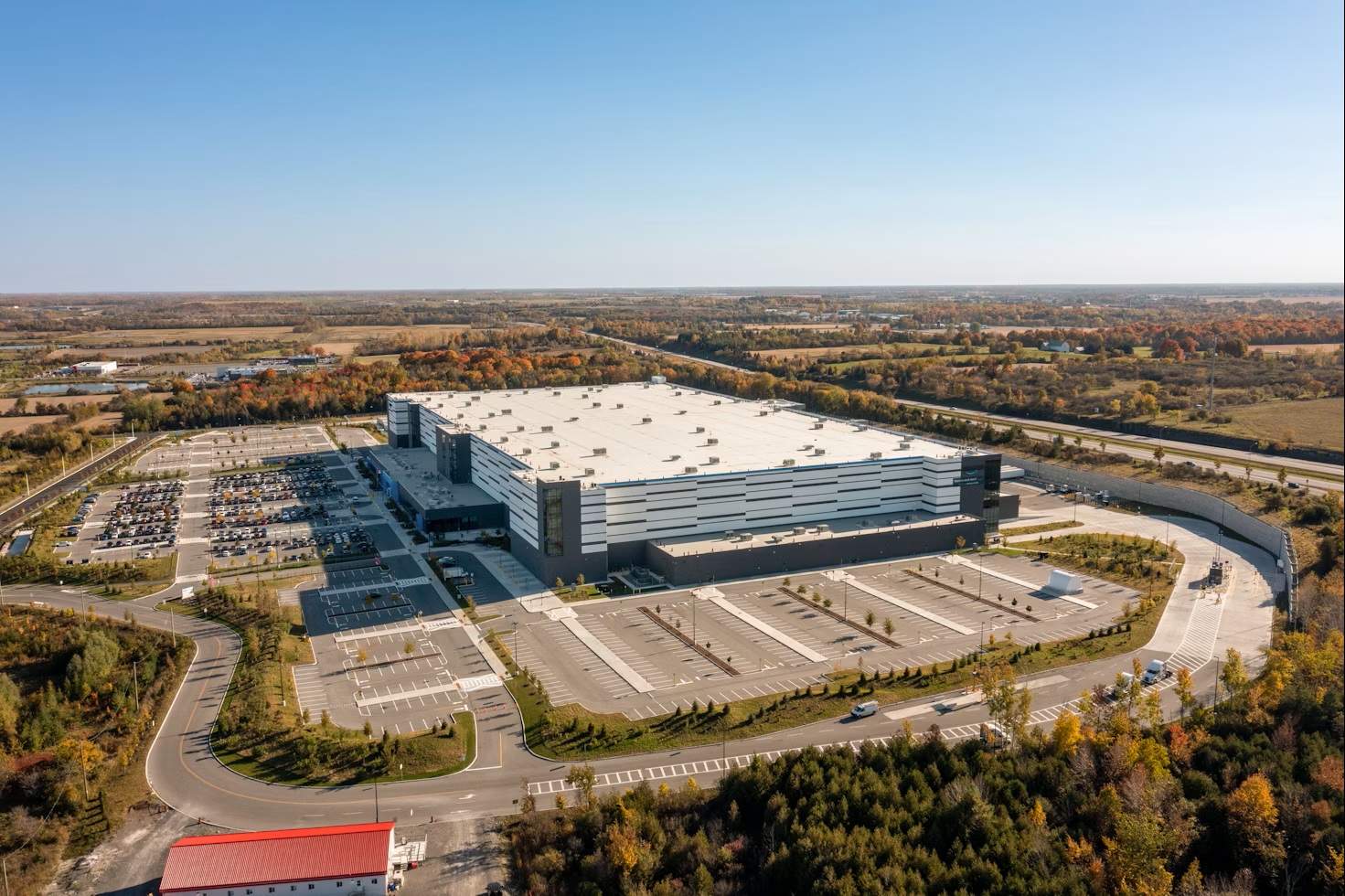
The question is simple: do you know how a platform performs before you’re already on it during peak season?
✓Documented uptime, last 12 months
✓A protocol for marketplace API outages
✓Referenceable customers at your volume
✓Sync behavior during volume surges
An outage during a promotion isn’t just a lost-orders problem. It can mean oversells, account health penalties, and Buy Box loss where SLA enforcement is strict.
What’s your documented uptime over the last year? How have you handled volume spikes or marketplace API outages?
Does it connect with what you already have?
Mid-market operations have systems that aren’t going anywhere: an ERP, a WMS, a 3PL with its own stack, an accounting tool. The right platform works with that reality, not against it.
✓Bidirectional data, not one-way pushes
✓API, EDI, SFTP and URL support
✓Named integrations, not category claims
✓Native tools to fill the gaps
Verify channel coverage specifically. A list of 400+ integrations only helps if the channels you want are included and actively maintained.
Which protocols do you support for ERP and WMS integration? Show me the channels we want. Are they live and bidirectional?
Can your ops team run it without engineering involvement?
Automation only a developer can configure slows down every process change. New marketplace launch? Support ticket. Workflow adjustment? Development queue. Pricing rule update? Same.
The platforms that hold up at scale are the ones where ops teams build, adjust and troubleshoot automations directly, with guardrails rather than gatekeepers.
The same applies to channel expansion. Some platforms build new integrations on request. Others decline, or add them to a roadmap with no committed timeline.
If our ops team needs to adjust a workflow or add an automation rule, what does that look like day-to-day?
Before you evaluate anything
Map your actual bottlenecks first. The right platform covers the workflows creating friction today, not the one with the longest feature list in a demo.
Run these nine factors past each vendor. Push on the specifics. And pay attention to the questions that get vague answers. That’s usually where the real gaps are.
Base is a multichannel ecommerce management platform used by 35,000+ brands globally. It unifies orders, inventory, listings, fulfillment, pricing, and performance data across 400+ marketplaces from one platform.
No credit card required · 15 days free
Frequently asked questions
01
What is ecommerce operations automation?
Ecommerce operations automation is the use of software to handle repeatable operational tasks without manual intervention. This includes inventory syncing across channels, order routing to the right fulfillment point, listing updates when stock changes, pricing adjustments, document generation, and back-office workflows like invoicing and returns. The goal is to reduce the manual work that scales linearly with order volume so the business can grow without adding headcount at the same rate.
02
What’s the difference between workflow automation and inventory automation in ecommerce?
Inventory automation manages stock levels, sync frequency, listing suppression, and reorder triggers across channels. Workflow automation handles the broader logic that governs your operation: routing rules, conditional actions, document generation, exception handling, and custom triggers based on order or product attributes. Most platforms offer both, but the depth of each varies significantly. Inventory automation is table stakes; workflow automation flexibility is where platforms differentiate.
03
How do I evaluate multichannel ecommerce management software?
Start with your actual operational bottlenecks, not the vendor’s feature list. Map the five most time-consuming manual processes in your operation and verify specifically whether each one is automated on the platform. Then pressure-test inventory sync rules and listing suppression logic, catalog management at scale, order routing flexibility, pricing consistency across channels, reliability under volume, and integration depth with your existing systems. The questions a vendor can’t answer clearly are usually more informative than the ones they can.
04
What should I look for in ecommerce inventory automation?
Beyond basic sync, look for rule-based listing suppression when stock drops below defined thresholds, channel-specific allocation controls, multi-warehouse routing logic, supplier stock pooling, and automated purchase order triggers. The sync frequency matters less than the guardrails around it. An inventory update that runs slightly behind schedule is manageable; one with no suppression rules is an oversell waiting to happen across multiple channels simultaneously.
05
Why do multichannel sellers struggle with pricing consistency?
Each marketplace has its own pricing interface, and without centralized price management, updates have to be made channel by channel. This creates lag between when a price changes and when it’s reflected everywhere, which leads to inconsistencies, margin errors, and potential MAP violations. The fix is a platform that propagates price changes across all connected channels automatically, with the ability to set channel-specific rules and price floors as guardrails.
06
How important is uptime when evaluating an ecommerce platform?
Uptime is directly tied to revenue and account health. A platform outage during a peak period doesn’t just pause order processing. On marketplaces like Amazon and Walmart, it can trigger SLA violations, Buy Box loss, and account health flags that take time to recover from. When evaluating a platform, ask for specific uptime data over the past 12 months and ask how they’ve handled third-party marketplace API disruptions. A general claim of “high availability” is not a track record.
07
What does order routing automation do in a multichannel operation?
Order routing automation applies pre-defined rules to determine where each order gets fulfilled. Rules can be based on the channel the order came from, the destination, the product’s size or weight, available warehouse stock, fulfillment SLAs, or order value. Without automation, these decisions get made manually or inconsistently. With it, every order routes to the right fulfillment point automatically, and exceptions surface for review rather than getting lost.
08
Can ecommerce automation platforms work alongside existing ERP or WMS systems?
Yes, and the best ones are built to do exactly that. Look for platforms that support bidirectional integrations via standard protocols (API, EDI, SFTP) and have documented connections to the specific systems you already use. The right platform supplements your existing stack with native tools where you have gaps, rather than requiring a full replacement. For mid-market and enterprise operations in particular, the integration story is often more important than the feature list.