The speed at which retail in India is changing can feel dizzying. We’re not just talking about products being delivered faster; we’re talking about an entire consumer mindset shifting overnight. The promise of getting anything from your morning coffee filters to an urgent charger cable in 10 to 20 minutes has completely reset what customers expect, especially across our major cities. For you, the Indian seller, whether you’re running a thriving D2C brand or managing a large distribution network, this quick commerce (Q-commerce) explosion is both an incredible opportunity and a genuine source of worry.

The numbers are huge. This market is barreling towards an estimated $7.1 billion by FY 2025. But this phenomenal growth is largely fueled by serious venture capital and high operational costs. That forces us to confront the core question: Are we witnessing a sustainable, long-term evolution of retail that we must be part of, or are we just riding a short-term hype wave that could crash our margins?
Navigating this space successfully demands what we call an EEAT approach, Expertise, Experience, Authoritativeness, and Trustworthiness. This means going beyond simply listing your products. You need to actively understand and manage the logistics, the margins, and the data being generated. You need to leverage Q-commerce as a strategic tool for growth, not just as another sales channel. Let’s break down the reality of this lightning-fast market so you can secure your profits and build a resilient brand.
Why Is Quick Commerce Suddenly Such a Big Deal in India, and Should Sellers Really Care?
The speed of the quick commerce boom isn’t an accident; it’s a logical outcome of India’s unique environment. Think about it: we have massive urban populations concentrated in dense hubs, an explosion of smartphone users, and a young, digitally-savvy middle class that has zero patience for waiting. They want things now.
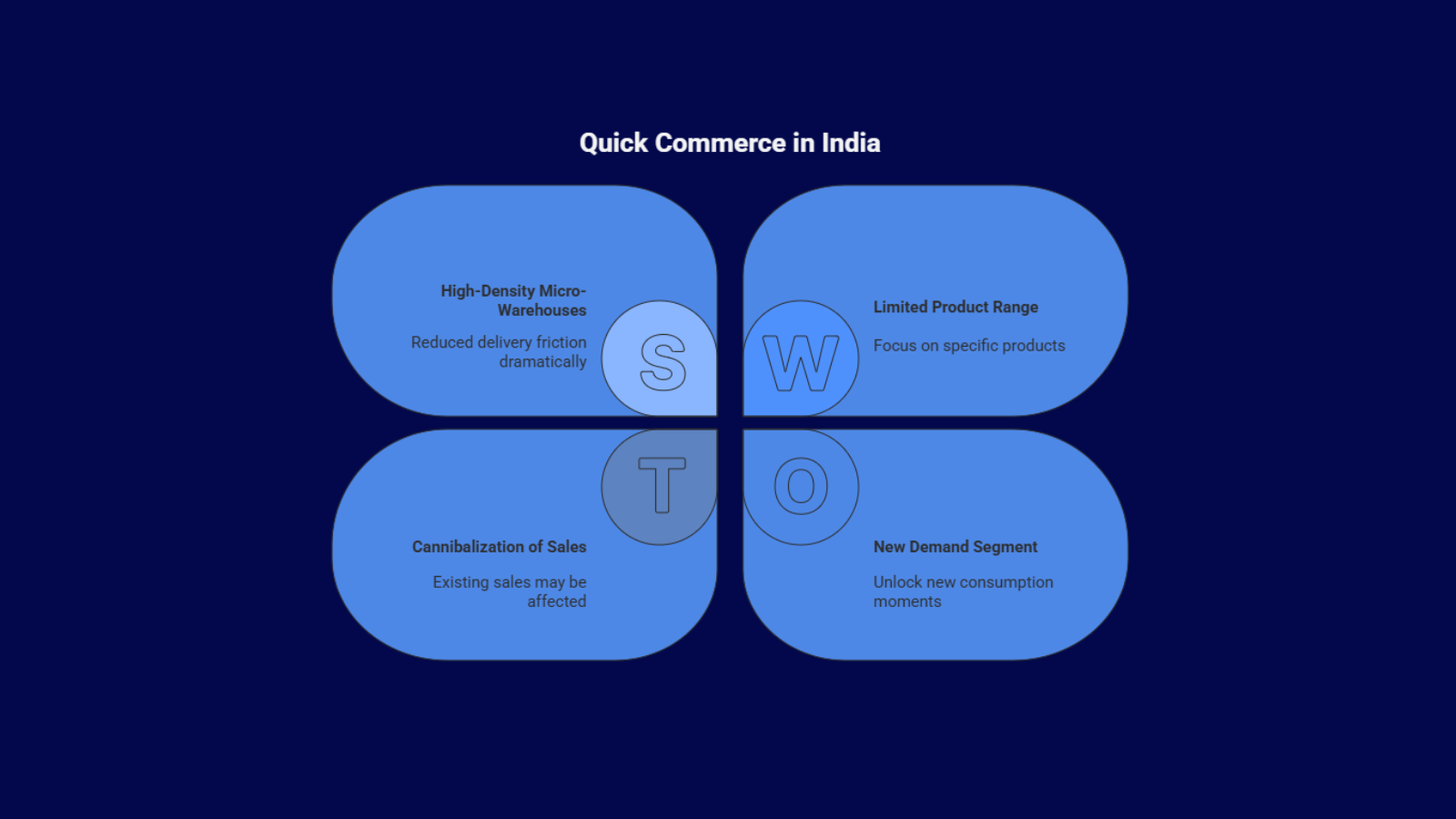
For you, the seller, this translates directly into a new, hungry segment of demand. We are seeing studies that show Q-commerce platforms drive a solid 6 to 8 percent incremental demand in households. This isn’t cannibalizing your existing sales; it’s unlocking new consumption moments, the forgotten grocery item, the late-night craving, or the urgent need for a small electronic gadget.
Suddenly, you have an opportunity to test new products, see real-time consumer reactions to pricing, and gain market feedback faster than ever before. This channel is tailor-made for specific products, giving you unparalleled access to the customer’s immediate need cycle.
Here are the critical factors sellers should focus on:
- The Power of Density: Because platforms can deploy dense networks of ‘dark stores’ (their micro-warehouses) in metros and Tier 1 cities, your product is now physically closer to the customer than it would be in traditional e-commerce. This reduces delivery friction dramatically.
- The Impulse Purchase Engine: Q-commerce is designed for impulse. This is your chance to strategically package smaller, high-margin SKUs, think specific snacks, personal care trial packs, or seasonal impulse buys, that thrive on instant availability.
- Moving Beyond Groceries: While the initial focus was groceries, the real margin opportunities are opening up in non-food categories like small electronics, beauty products, and wellness supplements. The Average Order Value (AOV) is rising because of these high-value additions.
- D2C’s Best Friend: If you’re a Direct-to-Consumer brand, Q-commerce can feel like a cheat code. It allows you to launch, iterate, and scale product lines almost instantly without the multi-month lead times required by traditional wholesale distribution.
Does Partnering with Quick Commerce Platforms Actually Create Sustainable Value for Sellers?
This is where the rubber meets the road. Speed is great, but if the economics don’t work, it’s just a costly distraction. For a seller, sustainability isn’t about how fast a bike can ride; it’s about the net margin you retain after all platform fees and expenses. Q-commerce fundamentally changes your relationship with inventory and logistics, forcing you to focus on efficiency like never before. The challenge is clear: how do you capture that huge volume without letting the platforms’ inherent high operational costs eat away at your bottom line?
Complex Inventory Management Challenges of Q-Commerce
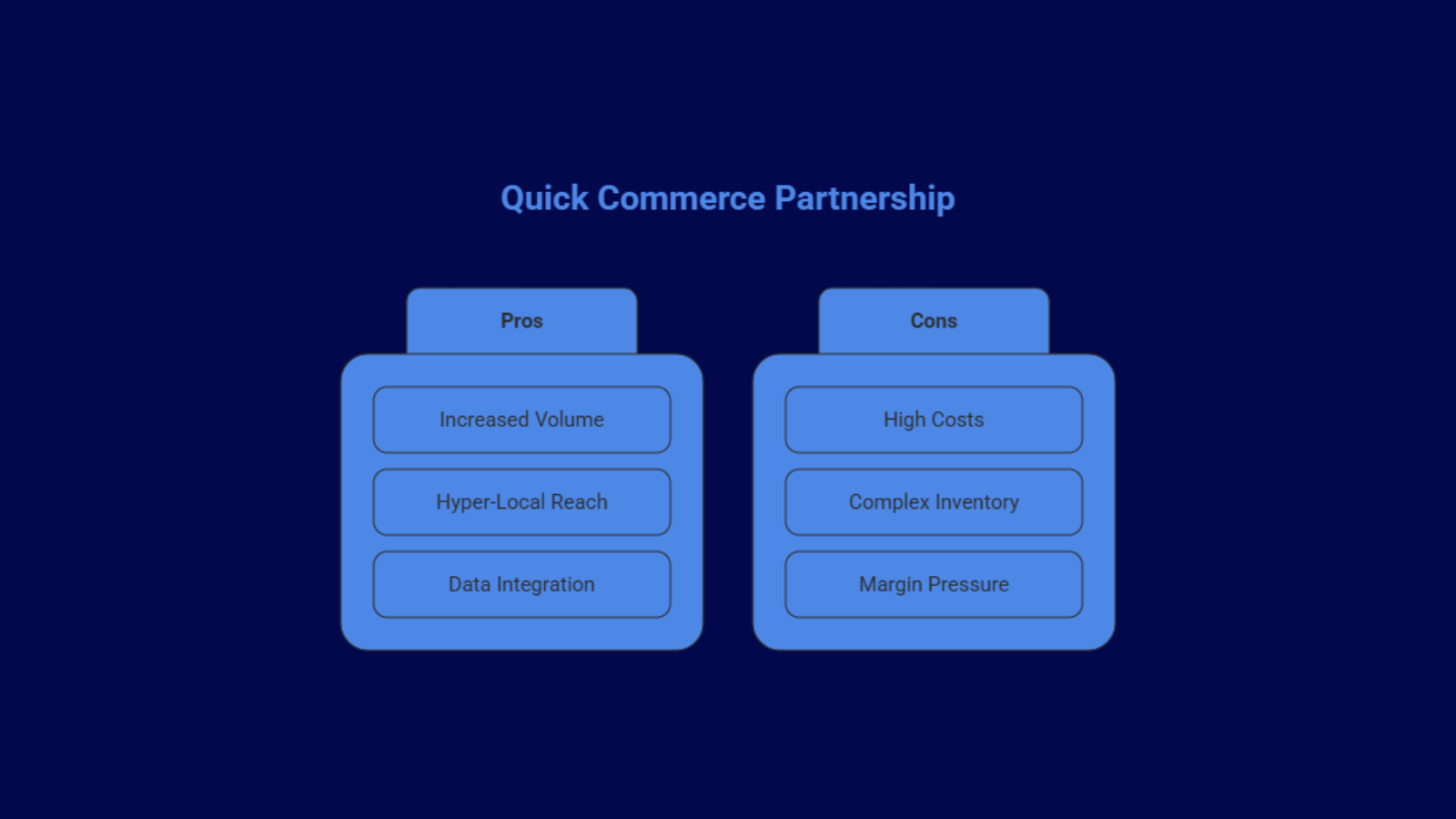
The quick commerce model requires you to scatter your inventory across a platform’s decentralized dark store network. This means saying goodbye to simple, centralized warehousing and hello to complex, hyper-local demand planning.
You must become a master of optimizing your Stock Keeping Units (SKUs) and making sure you have the right product in the right dark store at the right time. Get this wrong, and you face stock-outs (lost sales) or costly overstocking (inventory write-offs). This is where strong data integration is non-negotiable.
It’s about knowing which pin codes prefer which products, and managing this complexity with robust technological tools.
Real Profitability Concerns Sellers Face in the 10-Minute Model
We can’t ignore the elephant in the room: this model is expensive to run. The last-mile delivery cost is staggering, and the need for strategically placed, often high-rent dark stores strains platform finances. Ultimately, this strain trickles down to us through high commission rates and continuous demands for discounting.
As a seller, you must rigorously calculate your Effective Net Realization Value (NRV) for every single order. Focus on higher-margin categories like specialty items or specific personal care products. The simple truth is, you need to be selling items with higher intrinsic margins to comfortably absorb the logistics and commission pressure on staple goods.
| Feature | Traditional E-commerce (3-5 Day) | Quick Commerce (10-20 Min) | What This Means for Your Business |
|---|---|---|---|
| Inventory Model | Centralized, Large Warehouses | Small, Highly Decentralized Dark Stores | You must be flexible: Inventory needs to be allocated dynamically based on neighborhood demand. |
| Average Order Value (AOV) | High (Usually bulk, planned buys) | Medium-Low (Mostly impulse, immediate need) | Focus on high frequency: Win customer loyalty through reliability and repeat, smaller orders. |
| Logistics Cost | Lower per shipment (long distance, bulk handling) | Extremely High (cost of guaranteed speed) | Prioritize Premium: Sell higher-margin goods that can comfortably absorb the platform’s high commission structure. |
| Competitive Pressure | Price and product selection | Availability and speed | Zero tolerance for stock-outs: Your core products must always be available in every relevant micro-market. |
What are the Key Strategic Moves Indian Sellers Should Make Right Now?
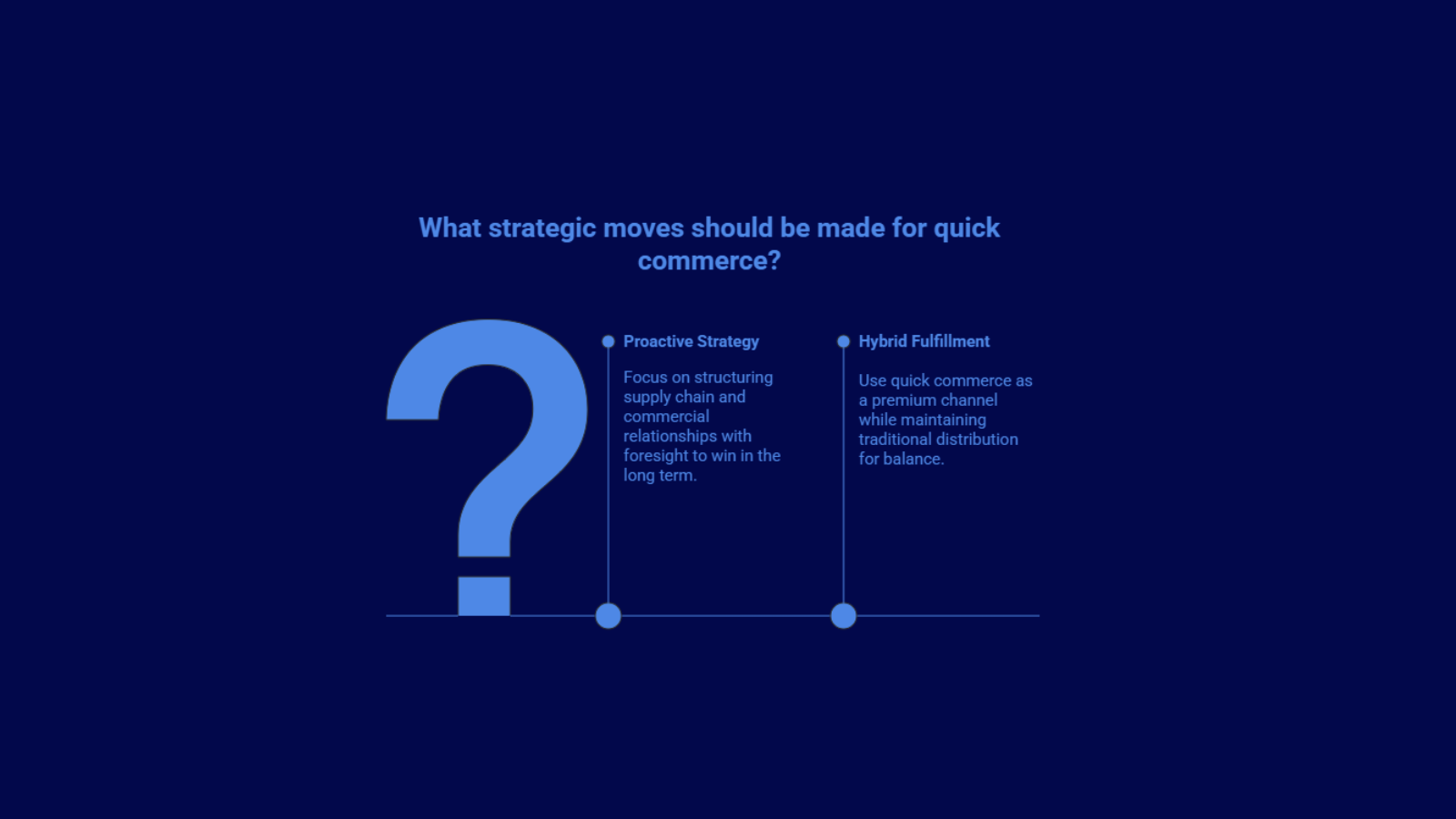
If you view the quick commerce wave as a long-term fixture, then your strategy needs to be proactive, not reactive. For Indian sellers, particularly our emerging D2C brands and MSMEs, this means structuring your supply chain and commercial relationships with foresight. The sellers who win the next few years won’t just be the fastest; they’ll be the most organized and the most margin-aware.
Should Sellers Build a Hybrid Fulfillment Strategy to Mitigate Market Risks?
Putting all your eggs into one quick commerce basket is risky. You become vulnerable to sudden commission hikes, abrupt pricing changes, or shifts in platform policy. That’s why a hybrid model is essential.
You should use Q-commerce as a premium, high-visibility channel for instant needs, but simultaneously maintain a strong, stable presence on large marketplaces and with your traditional distributor network. The goal is to create channel balance, ensuring that aggressive Q-commerce commissions don’t secretly erode the reliable margins you earn from traditional distribution or other e-commerce platforms.
How Crucial is Technology Adoption for Long-Term Success in the Hyperlocal Space?
Technology is the very core of quick commerce, and you need to treat it as your partner, not just a necessity. This is more than just connecting your system via an API; it involves using data to predict where your products will sell before the platforms do. Q-commerce only works because the platforms use advanced AI to position high-moving SKUs just a 90-second ‘pick path’ away from the rider.
By feeding the platforms accurate, real-time demand forecasts and being ready to physically shift stock based on that data, you make yourself an invaluable partner. This operational excellence gives you leverage in negotiating better commercial terms and ensuring your brand gets the preferential placement it deserves.
Here are 5 Actionable Steps to Take Today:
- Segment Your Offerings: Clearly define a product mix specifically for quick commerce. Focus on premium, impulse-driven, or immediate need products, and avoid listing your highest-volume, lowest-margin staples which drag down profitability.
- Invest in Reliable Data Integration: You need rock-solid inventory management software (IMS) that prevents phantom inventory. A stock-out is a lost sale for you, and a potential penalty from the platform.
- Look to ONDC: Actively investigate and prepare for integration with the Open Network for Digital Commerce (ONDC). This government-backed initiative is designed to democratize access and reduce reliance on just a few large, private players, offering you a crucial hedge against market dominance risks.
- Capitalize on Niche & Premium: Use Q-commerce to push specialty goods, festive gifting, or unique imported items that naturally command higher price points and better margins, making the high delivery cost justifiable.
- Avoid Pricing Lock-in: Read exclusivity and pricing clauses carefully. Ensure you maintain the flexibility to control your Maximum Retail Price (MRP) and your discounting structure across all channels, protecting you if a platform suddenly changes its commission strategy.
Click here to integrate Base Printer with Base.com to automate the label printing.
Conclusion: The Final Verdict on Long-Term Value
The quick commerce surge in India is much more than short-term hype; it is a permanent structural change in how consumers buy. But for you, the seller, it is only a source of long-term value if you approach it strategically. Your success hinges not on the platform’s speed, but on your operational discipline and your mastery of hybrid channel management. By integrating Q-commerce intelligently, using it to capture new demand while protecting your margins elsewhere, you can turn this lightning-fast channel into a powerful asset. The future of Indian commerce belongs to those who blend speed with financial foresight.
Ready to Build Your Multi-Channel Strategy?
If you are an Indian seller looking to integrate high-speed Q-commerce operations with a strong, scalable digital storefront, take control of your brand’s core platform as the first step. You need a dedicated space to manage customer data, unify inventory across all channels (dark store, marketplace, D2C), and future-proof your business.
Don’t wait for the market to dictate your terms. Take the next definitive step in your digital journey, get started with your personalized e-commerce solution today at Base.com.
Frequently Asked Questions (FAQ) for Q-Commerce Sellers
1. Will the rapid expansion of Q-commerce into non-grocery items intensify margin pressure for sellers across all product categories?
Yes, absolutely. As Q-commerce expands into categories like beauty, electronics, and fashion, it brings its aggressive, speed-first, and highly discounted pricing strategy with it. This creates direct competition with your pricing on standard e-commerce marketplaces. Sellers must maintain tight control over their Cost of Goods Sold (COGS) and be strategically selective about which premium items they allow to be discounted to protect their overall profit margins.
2. What is the long-term impact of Q-commerce on the profitability of traditional distributors and Kirana stores in my network?
The disruption is real. Q-commerce platforms are increasingly acting as direct distributors for large FMCG companies, effectively bypassing traditional middlemen. However, your local Kirana stores are resilient; they are not disappearing, but rather evolving. They retain value through personalized customer service, trust, and credit, which platforms can’t replicate. We are seeing many Kirana stores successfully digitize and integrate into the hyper-local supply chain rather than being completely replaced.
3. Since Q-commerce platforms are currently dependent on large amounts of venture capital, is this reliance a major risk factor for sellers?
It’s certainly a risk factor we cannot ignore. The industry has been built on heavy cash burn and deep discounting to quickly gain market share. Once platforms are pressured by investors to achieve profitability, we will inevitably see higher commission rates and reduced seller incentives. Smart sellers must diversify their channels and ensure they have a financial buffer to manage any sudden changes in the commercial terms of their Q-commerce partnerships.