In Indian e-commerce circles, crossing the ₹50 Cr GMV mark is quietly known as the Valley of Death. It’s the stage where momentum stalls, margins thin out, and ambition collides with reality. Data consistently shows that nearly 65% of Indian brands remain trapped in the ₹1–50 Cr GMV revenue band, unable to make the leap to the coveted ₹100 Cr milestone.

The reason isn’t demand. It isn’t marketing. And it certainly isn’t a hustle.
It’s operations.
What helped you sprint from zero to ₹10 Cr, manual controls, founder-led firefighting, spreadsheet-based decisions, starts working against you at scale. The very instincts that once made you fast now make you fragile.
At ₹50 Cr GMV, your business is no longer a startup.
It’s an enterprise, whether you’re ready to admit it or not.
And enterprises break differently.
The small inefficiencies you ignored at ₹10 Cr don’t stay small. Missed reconciliations, delayed dispatch logic, ad hoc inventory planning, manual RTO handling, these hairline fractures widen into operational canyons. Cash gets locked. Error compound. Teams react instead of plan.
This is what seasoned operators call operational debt.
Operational debt is the cumulative cost of choosing “quick fixes” over scalable systems. It builds silently every time you postpone automation, defer process design, or rely on human oversight where software should lead. Unlike financial debt, it doesn’t show up on your balance sheet, but it relentlessly drags down your bottom line.
Breaking past ₹50 Cr GMV isn’t about working harder.
It’s about unlearning survival-mode decisions and replacing them with repeatable, automated, insight-driven operations.
Ops maturity isn’t optional at this stage, it’s the price of admission to the next growth curve.
Understanding the Lifecycle of Operational Debt
Before diving into the specific decisions, it is crucial to understand why they fail. In the early stages, doing things that don’t scale is a badge of honor. However, as your order volume crosses the threshold of 1,500 to 2,000 orders per day, the human middleware approach starts to bleed cash.
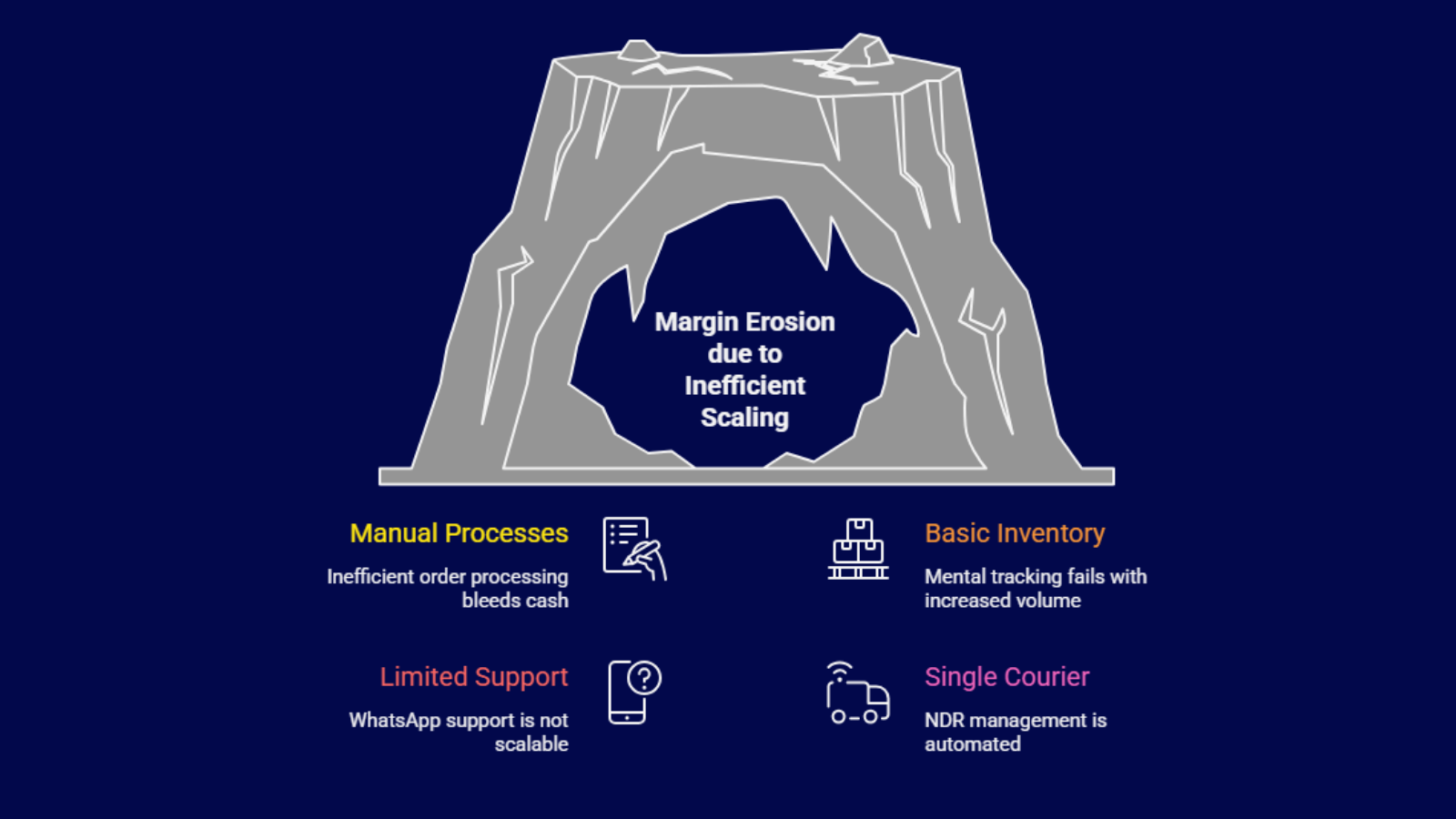
| Metric | The ₹10 Cr Setup (Agile) | The ₹50 Cr+ Reality (Fragile) |
|---|---|---|
| Order Processing | Manual export import of sheets | Needs real-time API syncing |
| Inventory | Mental tracking or basic Excel | Requires multi-node WMS |
| Customer Support | WhatsApp and founder phone | Needs ticketing with SOPs |
| Logistics | Single courier partner | Needs automated NDR management |
The transition requires moving from a hero culture where one person saves the day to a process culture where the system prevents the fire. This is the only way to overcome ecommerce scaling challenges effectively.
1. Relying on Human Middleware for Order Management
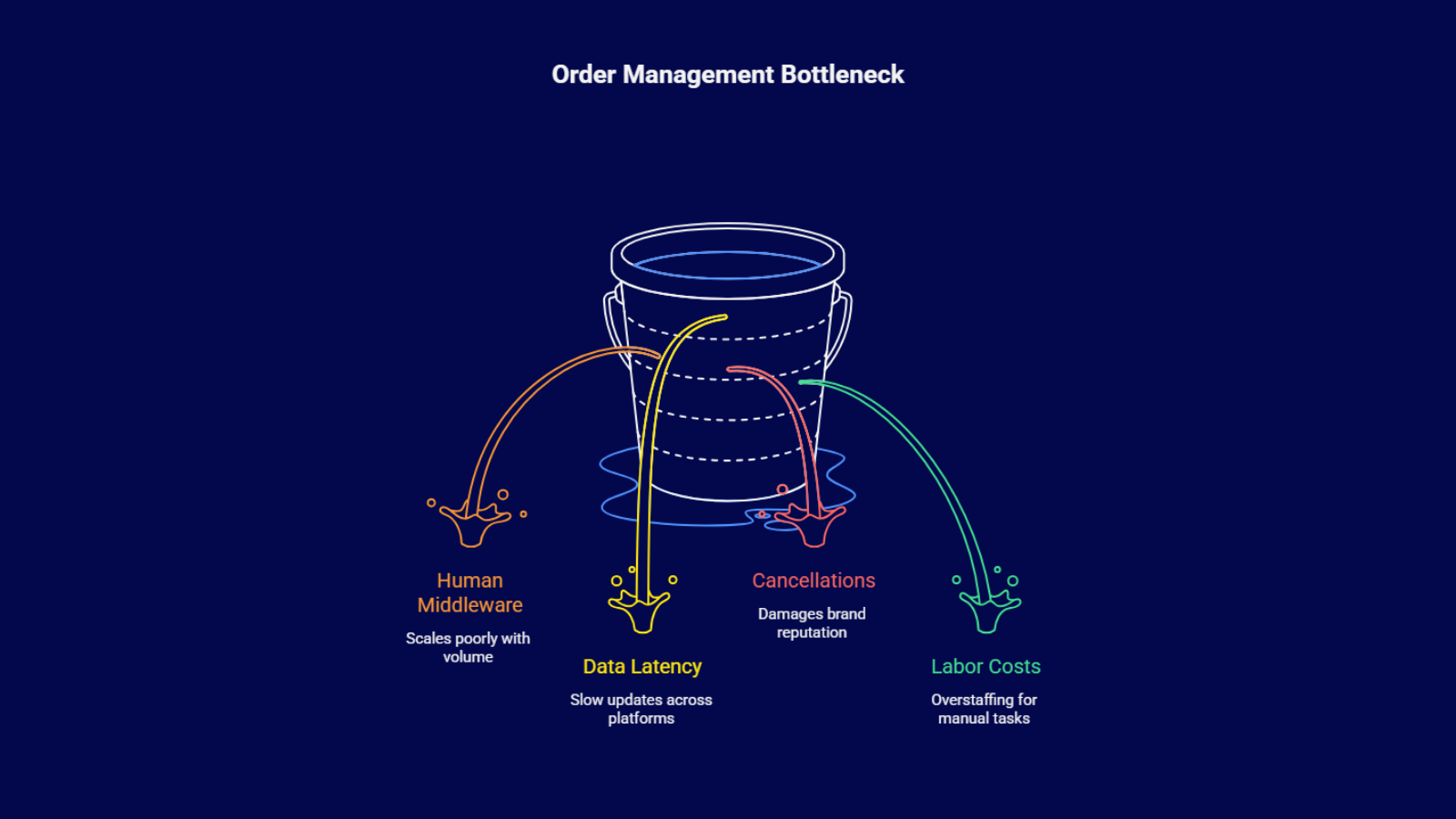
When you are small, having a dispatch manager who manually confirms orders on WhatsApp and updates a Google Sheet feels efficient. But at ₹50 Cr GMV, this becomes a massive growth bottleneck. Every manual entry is a potential for a wrong SKU being shipped or a delayed tracking link.
This decision scales poorly because human error rates increase exponentially with volume. Relying on people to move data between your Shopify store, your ERP, and your warehouse leads to phantom inventory where your website says a product is in stock, but the physical shelf is empty. This results in cancellations, which in the Indian market, can destroy your brand reputation overnight.
The Inefficiency of Manual Syncing
- Data Latency: It takes hours to update stock across Amazon, Flipkart, and your D2C site.
- Cancellations: High out of stock cancellation rates lead to marketplace penalties.
- Labor Costs: You end up hiring 5 people to do the job that one robust system could do better.
2. Managing Returns and RTO via Spreadsheets
In India, Cash on Delivery (COD) still accounts for over 60% of transactions. With COD comes the nightmare of Return to Origin (RTO). At ₹50 Cr GMV, an RTO rate of 20 to 30% is not just a nuisance; it is a capital drain that can kill your cash flow. If your strategy for handling RTO is still to let the warehouse guy check it when it arrives, you are accumulating massive scale inefficiencies.
Scaling requires a proactive NDR (Non-Delivery Report) management system. You cannot afford to wait for a package to come back; you need to intervene the moment a delivery fails. Without automated IVR calls or WhatsApp bots to verify addresses and intent, your logistics costs will grow faster than your revenue.
RTO Management Comparison
- Manual Approach: Team calls customers after the package is already returning.
- Automated Approach: Real-time NDR alerts and automated address correction.
3. The Single Warehouse Centralization Trap
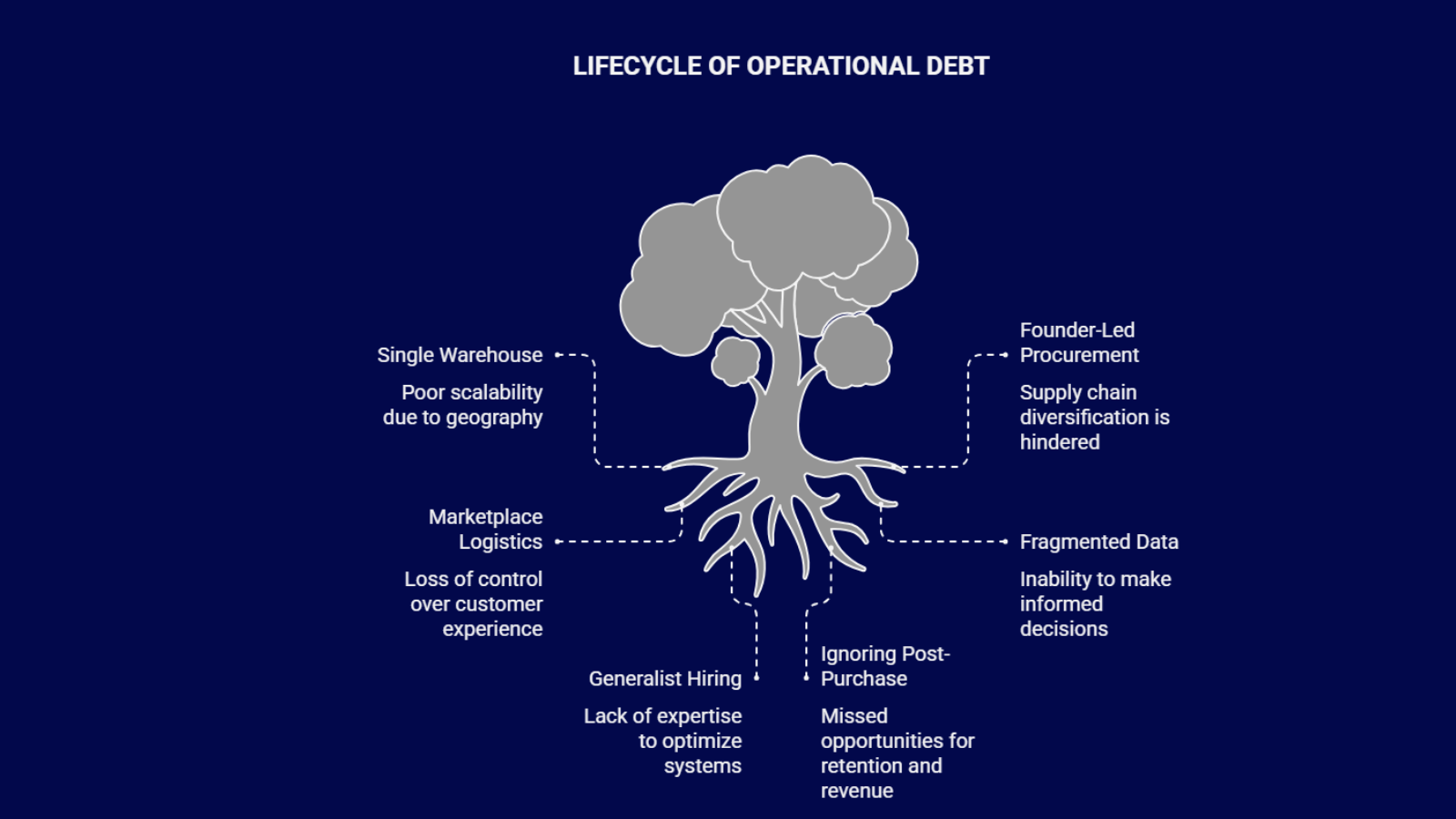
Many Indian sellers start with a single warehouse in a hub like Bhiwandi or Gurgaon. While this simplifies management, it scales poorly beyond ₹50 Cr GMV because of India’s geography. Shipping a product from Delhi to Bengaluru takes 4 to 5 days and costs significantly more than a local delivery.
As you scale, your ecommerce scaling challenges shift toward speed. The rise of Quick Commerce has conditioned the Indian consumer to expect delivery within 24 to 48 hours. If your operations are not decentralized through a multi-node fulfillment strategy, your shipping costs will eat your margins and your conversion rates will drop as customers see long delivery timelines.
4. Founder Led Procurement and Vendor Negotiation
At ₹10 Cr, the founder knows every vendor by name and negotiates every rupee. At ₹50 Cr, this founder bottleneck prevents the brand from diversifying the supply chain. If you are the only one who can sign off on a purchase order, your production cycles will always be lagging behind your marketing demand.
Ops maturity means institutionalizing procurement. You need a Vendor Management System and clear quality control (QC) protocols that do not require the founder’s physical presence. Relying on trust with a single supplier without a backup is a high-risk decision that fails as soon as that supplier hits their own capacity limit.
5. Over-reliance on First-Mile Marketplace Logistics
While using marketplace specific shipping is great for beginners, it scales poorly for a brand trying to optimize unit economics. At ₹50 Cr GMV, you have the volume to negotiate directly with 3PL players like BlueDart, Delhivery, or Ecom Express.
By staying solely dependent on marketplace logistics, you lose control over the customer experience and data. You cannot run custom packaging or include surprise and delight inserts. Moving to an independent shipping aggregator or direct 3PL integration is essential for capturing scale inefficiencies in shipping costs.
6. Fragmented Data Silos and Dashboard Fatigue
Scaling involves making decisions based on Contribution Margin, not just ROAS. Most brands at ₹50 Cr GMV are still looking at Meta Ads Manager, Google Analytics, and their Shopify backend separately. These growth bottlenecks occur because the data is not talking to each other.
You might be scaling an ad that has a 4x ROAS, but if that specific product has a 40% RTO rate and high shipping weight, you are actually losing money. Without a centralized Single Source of Truth that pulls in marketing, COGS, logistics, and returns data, you are flying blind.
KPIs to Watch at Scale
- Net-Sales-to-GMV Ratio: Tracks the true revenue after returns.
- LTV to CAC Ratio: Ensures long-term sustainability as ad costs rise.
- Fulfillment Cost Per Order: Identifies leaks in the warehouse and shipping chain.
7. Hiring Generalists Instead of Specialists
In the early days, you need a Swiss Army Knife employee who can do marketing and handle support. Beyond ₹50 Cr, these generalists become overwhelmed. They lack the depth of knowledge to optimize complex systems like a WMS or a performance marketing funnel.
A common mistake is promoting a loyal generalist to a Head of Operations role without the necessary technical expertise. Scaling requires specialists who have managed high scale before and understand the nuances of ops maturity.
8. Ignoring Post-Purchase as a Revenue Driver
Most brands focus 90% of their energy on getting the click. However, at ₹50 Cr GMV, the cost of customer acquisition in India is skyrocketing. If your operational decision is to treat Customer Support as a cost center rather than a retention engine, you will fail. At this scale, the difference between a profitable brand and a loss-making one is the Repeat Purchase Rate. When your operations stop at “shipped,” you leave money on the table and invite high volumes of “Where is my order” (WISMO) queries that clog your system.
Scaling poorly often looks like a support team that only handles complaints through a reactive manual process. A mature operation uses post-purchase automation to turn the waiting period into a brand-building phase. By providing branded tracking pages, you keep the user on your assets rather than sending them to a third-party courier site. This creates an opportunity for cross-selling and up-selling while the customer is at their highest point of intent.
Strategies to enhance post-purchase ops maturity:
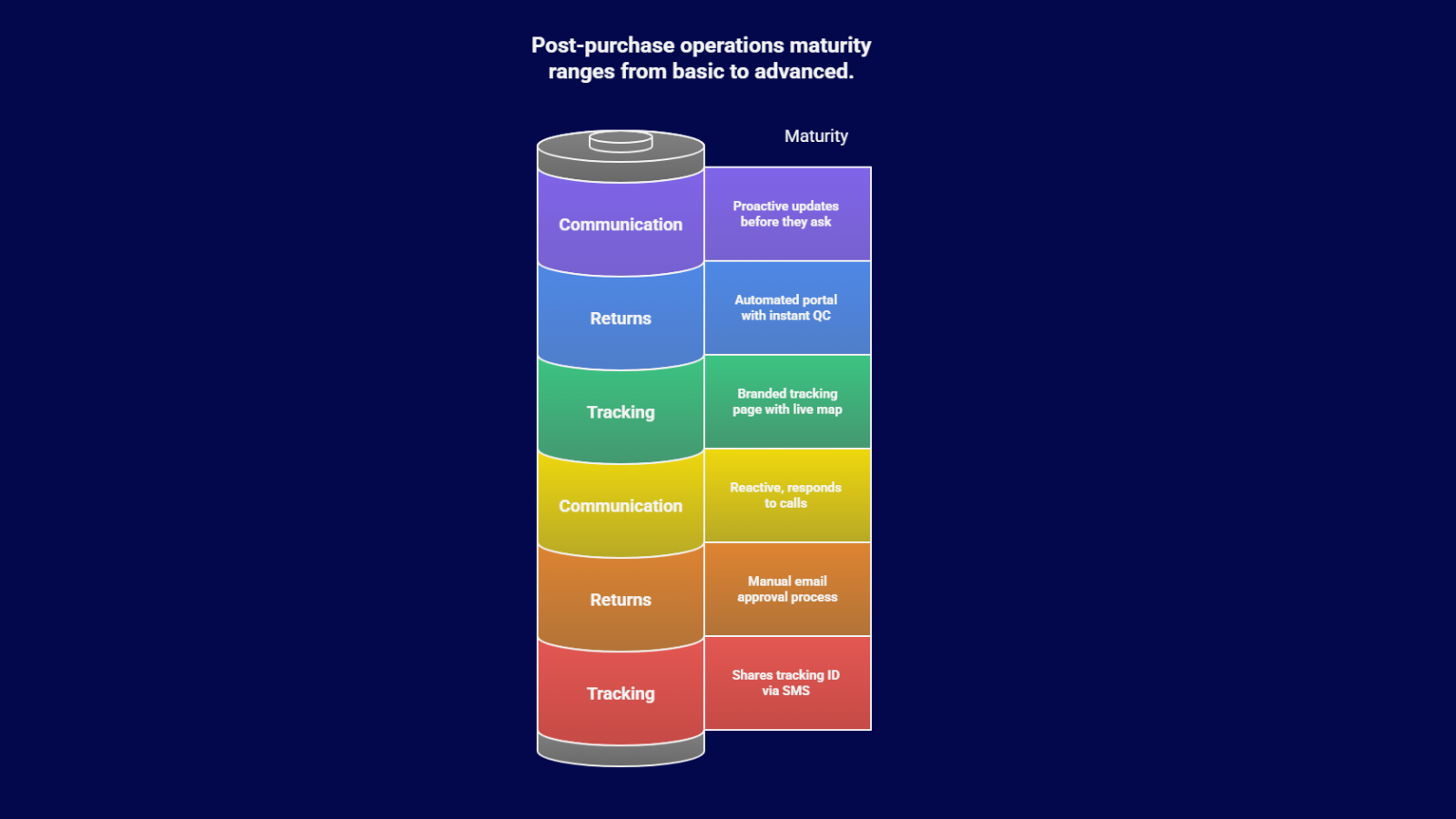
- Automated Communication: Use WhatsApp to send proactive updates at every milestone, order confirmed, packed, out for delivery, and delivered.
- Self-Service Portals: Implement an automated exchange and return portal where customers can raise requests without speaking to an agent.
- Feedback Loops: Set up automated NPS (Net Promoter Score) triggers post-delivery to catch negative experiences before they hit social media.
| Post-Purchase Element | Basic Setup (Fragile) | Advanced Setup (Scalable) |
|---|---|---|
| Tracking | Sharing a tracking ID via SMS | Branded tracking page with live map |
| Returns | Manual email approval process | Automated portal with instant QC |
| Communication | Reactive (responding to calls) | Proactive (updates before they ask) |
9. Manual Quality Control Processes
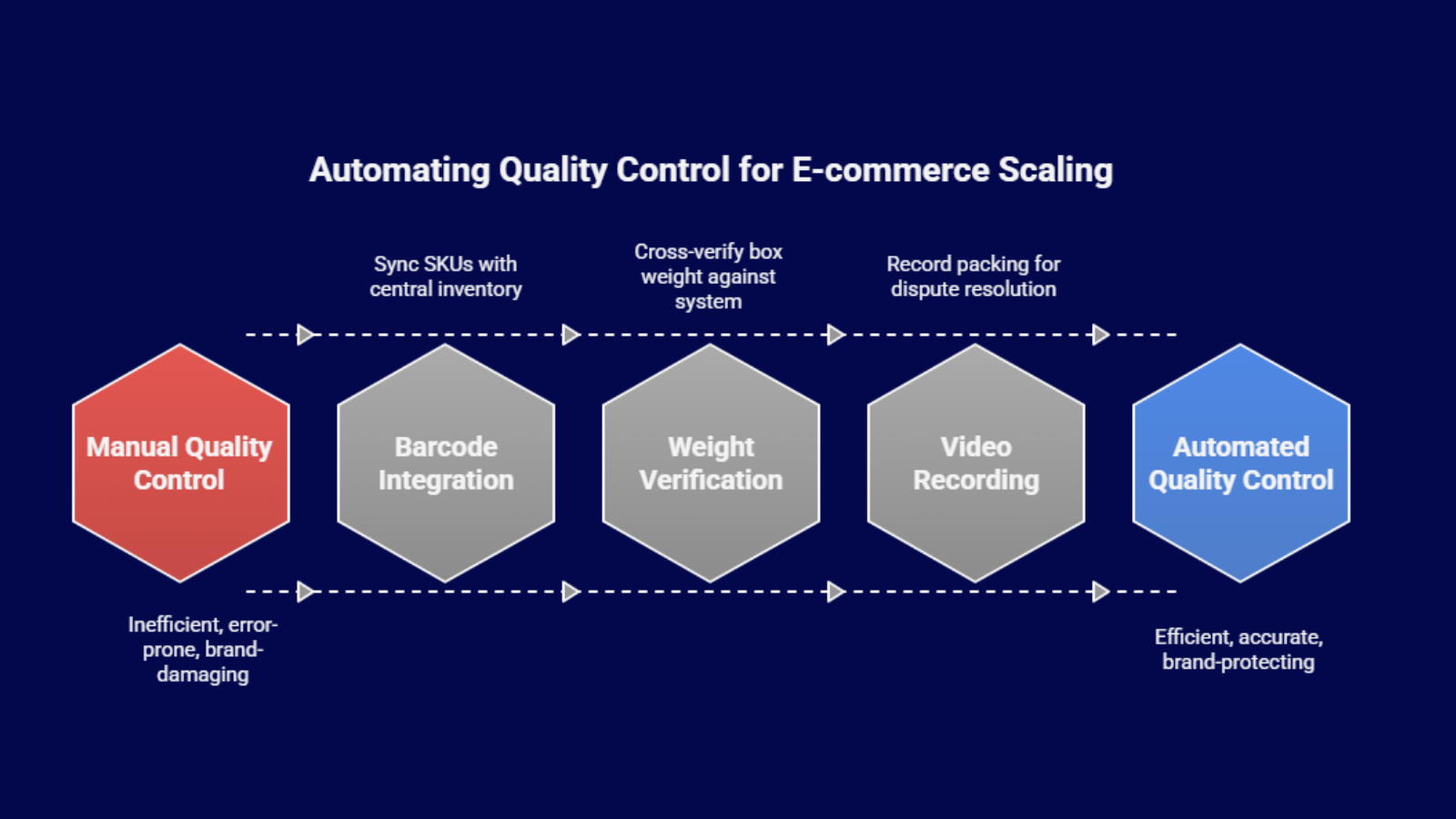
At low volumes, a quick visual check is enough to ensure the right product is in the right box. At 2,000 orders a day, visual checks are impossible and lead to massive scale inefficiencies. If you do not automate your QC using weight-based checks or barcode scanning at the packing station, “wrong item sent” becomes your top reason for returns. In the Indian space, a “wrong item” review on social media can go viral and damage your brand’s ecommerce scaling efforts for months.
Manual QC creates a dangerous growth bottleneck because it relies on the physical and mental fatigue of warehouse staff. As the day progresses, the error rate naturally increases. To scale beyond ₹50 Cr, your warehouse management system must mandate a “Scan to Pack” workflow. This ensures that the shipping label only prints when the correct barcode is scanned, virtually eliminating the human element of “picking the wrong size” or “missing a freebie.”
Barcode Integration
Every single SKU must have a unique barcode that is synced with your central inventory.
Weight Verification
Use digital scales at packing stations to cross-verify the weight of the box against the expected weight of the items in the system.
Video Recording
Implement packing-station cameras that record the packing of each order linked to the AWB number to resolve disputes with customers or couriers.
10. Stickiness to Legacy Tech Stacks
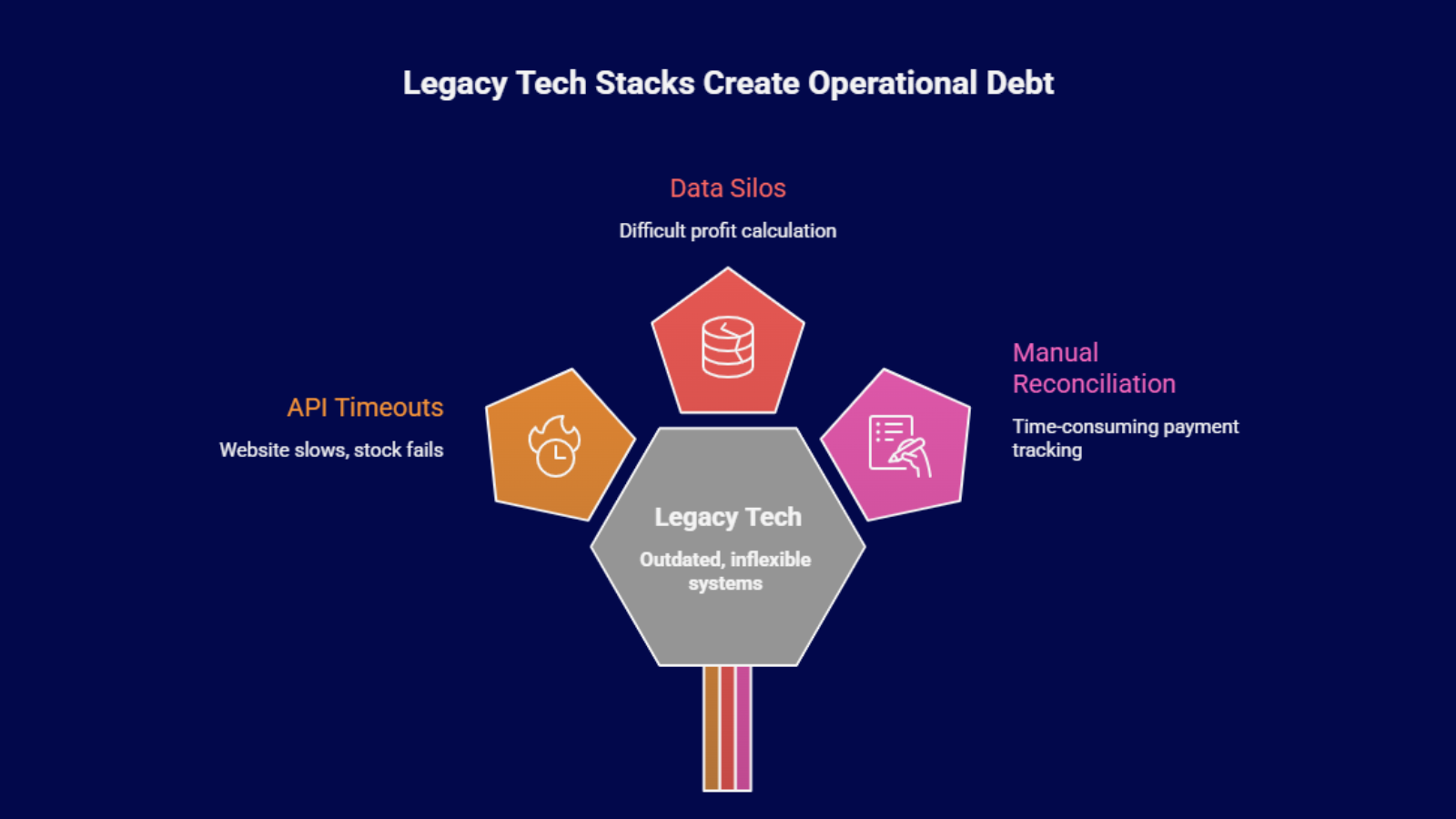
Many sellers are afraid to change their tech stack because “it works for now.” But a basic plan or a cheap local ERP won’t handle the API call volume or the complex tax compliance required at ₹50 Cr. Holding onto legacy systems creates significant operational debt. These systems often crash during high-traffic events like Diwali sales, or they fail to sync inventory in real-time across multiple channels, leading to overselling and marketplace penalties.
The cost of migrating to a robust, enterprise-grade stack is high, but the cost of staying on a failing one is higher. Legacy systems often lack the flexibility to integrate with modern Indian fintech solutions, automated RTO predictors, or multi-node warehouse networks. As you scale, your tech stack needs to transition from a “record-keeping” tool to a “decision-making” engine that provides real-time visibility into every corner of your business.
Signs your tech stack is suffering from operational debt:
- Manual Reconciliation: Your team spends more than 2 days a month reconciling payments and returns manually.
- API Timeouts: Your website slows down or fails to update stock when you run a large influencer marketing campaign.
- Data Silos: You have to download five different CSV files to calculate your true daily profit.
Solving the Scaling Puzzle with Base.com
The journey from ₹50 Cr to ₹200 Cr is not about working harder; it is about building a machine that works for you. At Base.com, we specialize in helping Indian sellers eliminate operational debt by providing a unified platform that integrates inventory, orders, and logistics. We help you move from firefighting to forecasting.
If you are ready to break through the ₹50 Cr barrier and achieve true ops maturity, it is time to audit your systems. Don’t let your operations be the anchor that holds back your growth.
Click here to read more about best shipping aggregators in India for D2C brands.
Frequently Asked Questions (FAQs)
What is the biggest operational bottleneck for Indian sellers at ₹50 Cr?
The biggest bottleneck is typically founder-dependent decision-making. When every procurement, hiring, or marketing decision requires the founder’s approval, the business cannot move faster than the founder’s capacity, leading to missed opportunities and significant delays in scaling.
How does operational debt affect my bottom line?
Operational debt manifests as hidden costs. These include excessive labor for manual tasks, high RTO rates due to poor tracking, and lost revenue from stockouts. Over time, these inefficiencies eat into your margins, making it impossible to reinvest.
Why is RTO management so critical for scaling in India?
With COD being dominant, RTO is a direct hit to profitability. At scale, even a 5% reduction in RTO can save crores of rupees. Automated NDR management and intent verification are essential to prevent logistics costs from spiraling.
When should I move from one warehouse to multiple hubs?
Once your shipping costs exceed 15% of your AOV or your delivery within 2 days percentage is below 60%, it is time to decentralize. Using regional hubs in North, South, and West India significantly improves customer satisfaction and margins.
Can technology really replace human oversight in operations?
Technology doesn’t replace humans; it empowers them. By automating repetitive data entry and syncing, your team can focus on exception management. This allows them to solve complex problems that require intelligence rather than doing the 95% of routine tasks.