The difference between a growing D2C brand and a struggling one often comes down to how they handle the products they don’t have on the shelf yet. Whether it is a sudden surge during the Diwali sale or a high-anticipation product launch, managing inventory gaps is a daily reality for Indian sellers.
When a customer lands on your website and finds a “Sold Out” badge, you aren’t just losing a transaction; you are losing a relationship to a competitor. This is where a strategic approach to stockout management in e-commerce and backorder management in India becomes the backbone of your operations. An Order Management System (OMS) is no longer just a digital ledger; it is the engine that allows you to sell even when your physical bins are empty.

Why Indian Sellers Struggle With Inventory Gaps
The Indian retail landscape is unique because of its logistical complexity and high customer expectations. Most sellers face the “bullwhip effect,” where small fluctuations in customer demand cause massive ripples in supply chain requirements. Without a unified view, a brand might show “In Stock” on Amazon India but be “Out of Stock” on their Shopify store, leading to a nightmare of cancellations and marketplace penalties.
Common Pain Points For D2C Brands In India
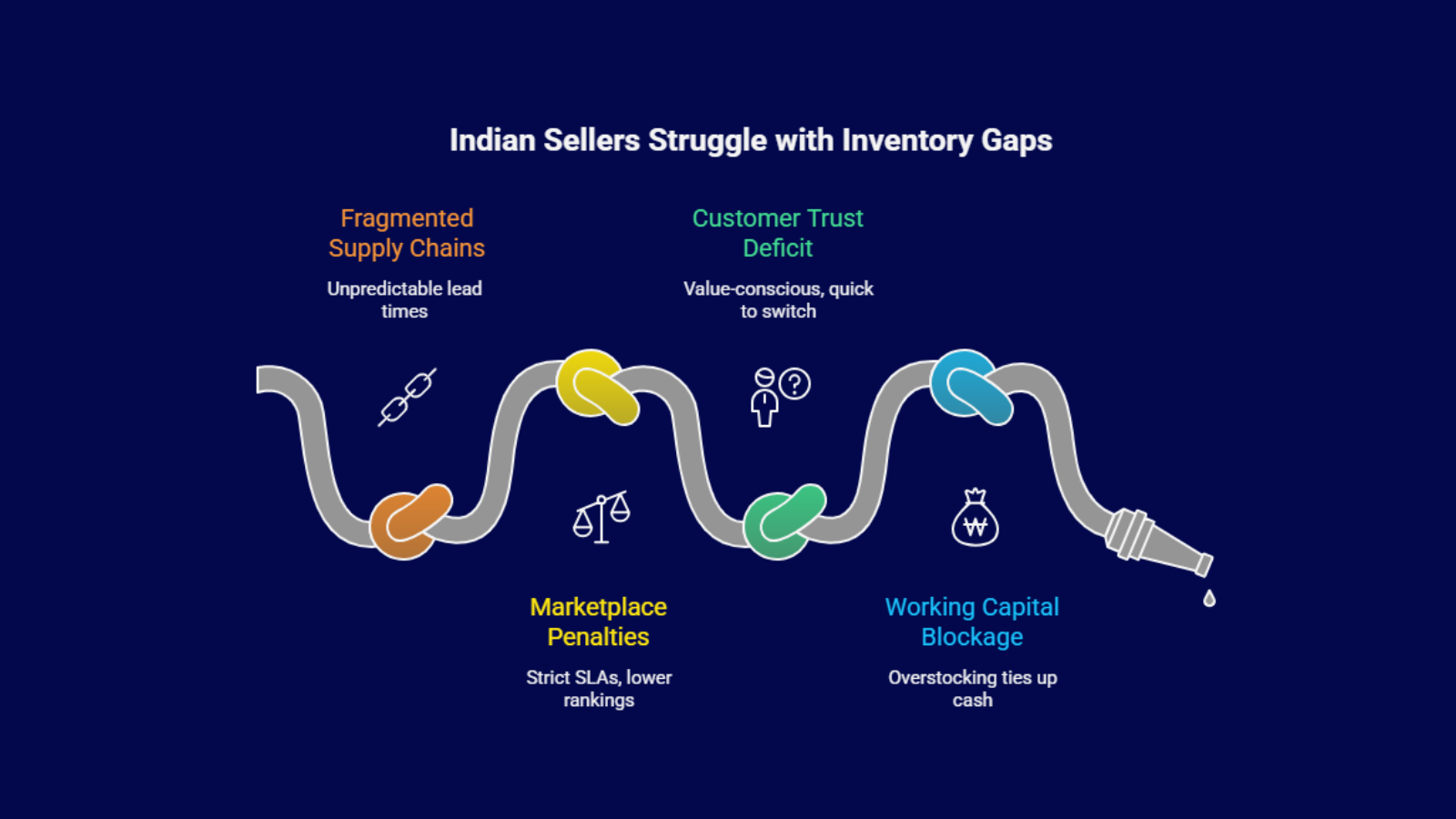
Indian sellers often deal with fragmented supply chains and unpredictable lead times from manufacturers. This makes stockout management in e-commerce particularly difficult during peak seasons like the Big Billion Days.
- Marketplace Penalties: Platforms like Flipkart and Amazon India have strict SLAs. High cancellation rates due to stockouts can lead to lower search rankings or account suspension.
- Customer Trust Deficit: Indian shoppers are value-conscious and quick to switch brands. If a backorder isn’t communicated clearly, it results in high RTO (Return to Origin) rates once the item finally ships.
- Working Capital Blockage: Overcorrecting for stockouts often leads to overstocking, which ties up cash in slow-moving inventory that could have been used for marketing.
| Challenge | Impact on Business | OMS Solution |
|---|---|---|
| Inaccurate Inventory Sync | Overselling and cancellations | Real-time multi-channel syncing |
| Long Manufacturing Leads | Lost revenue during downtime | Backorder management in India |
| High RTO Rates | Lost shipping and handling costs | Proactive automated communication |
| New Launch Uncertainty | Underproduction or overproduction | Preorder strategy and validation |
The Role Of Real Time Visibility In Stockout Management In E-commerce
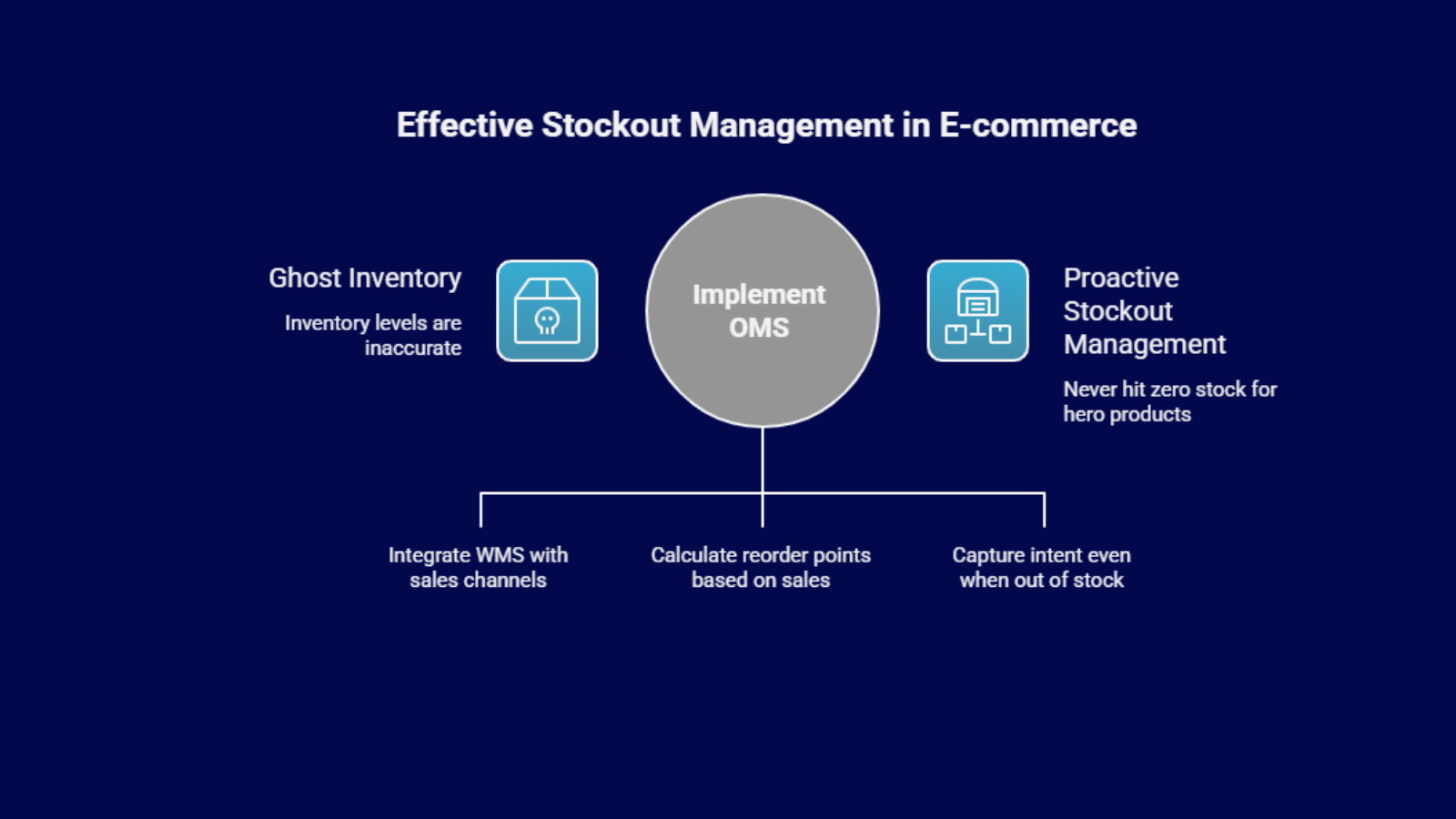
The first step to effective stockout management in e-commerce is knowing exactly what you have and where it is. In India, where a brand might use multiple 3PLs (Third-Party Logistics) across different zones like Bhiwandi, Gurgaon, or Bangalore, having a “Single Source of Truth” is non-negotiable.
An enterprise-grade OMS integrates your warehouse management system (WMS) with your sales channels. When a sale happens on Myntra, the inventory level must drop instantly across your own website and other marketplaces. This prevents the “ghost inventory” problem, which is the primary cause of stockouts and the subsequent need for backorder management in India.
Setting Dynamic Reorder Points
A static reorder point is a recipe for disaster in the fast-paced Indian market. Your OMS should calculate reorder points based on “Sales Velocity.” If a specific SKU is selling 50 units a day in Mumbai but only 5 in Chennai, the system should trigger restocks for the Mumbai hub much earlier. This proactive stockout management in e-commerce ensures you never hit zero stock for your “Hero Products.”
Transforming Lost Sales Into Backorder Revenue
A backorder is an order for a product that is temporarily out of stock but is expected to be replenished by a specific date. In the Indian context, backorder management in India allows brands to capture intent even when the product is in transit.
Instead of showing an “Out of Stock” message, you show “Available on Backorder – Ships in 7 Days.” This keeps the customer on your site and secures the sale. However, this only works if your OMS can handle the accounting and fulfillment logic behind it.
Best Practices For Backorder Management In India
Handling backorders requires more than just a button on your website. It requires a backend that can segregate these orders and prioritize them the moment the truck arrives at the warehouse.
- Transparent Timelines: Always provide a realistic shipping date. Indian consumers are patient if they are informed, but they will cancel if they feel “cheated” by an indefinite wait.
- Split-Order Logic: If a customer orders three items and one is on backorder, your OMS should give you the option to ship the two available items immediately to maintain customer delight.
- Automated Updates: Use WhatsApp and SMS triggers. In India, WhatsApp is the most effective channel for backorder management in India to keep the customer engaged and reduce the “Where Is My Order” (WISMO) queries.
Using Preorders To De-Risk Product Launches
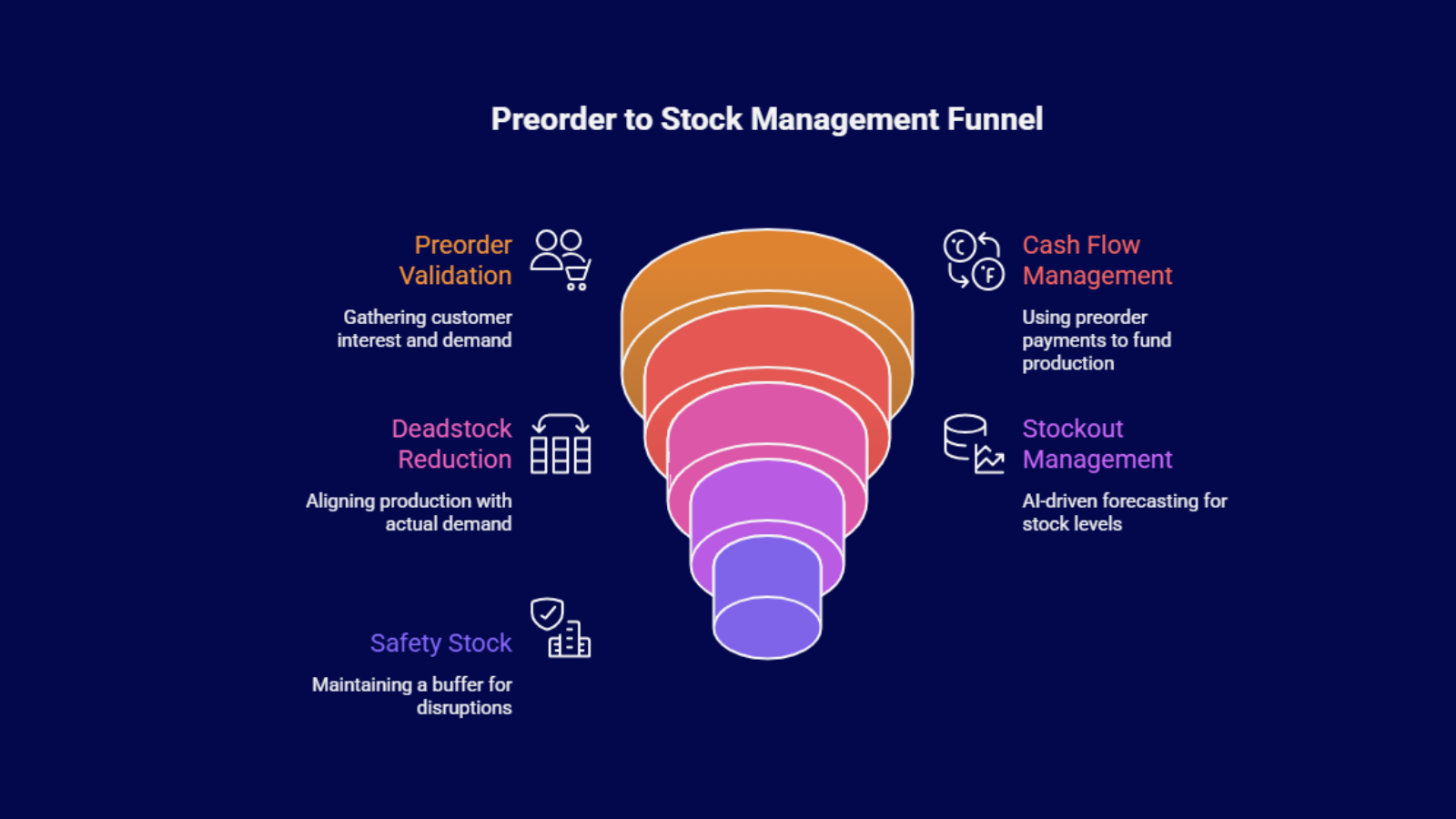
For D2C brands in India, launching a new collection is a capital-intensive risk. Preorders allow you to validate demand before you commit to large-scale production. A SaaS-based OMS enables you to set up “Pay Now” or “Pay Later” preorder models, giving you a clear forecast of how much stock to actually order from your suppliers.
Strategic Benefits Of A Preorder Model
Preorders are not just about early money; they are about data. By analyzing preorder patterns across different pin codes, you can decide which regional warehouses need the most stock for the official launch day.
- Market Validation: If a new lifestyle product gets 1,000 preorders in 48 hours, you know you have a winner.
- Cash Flow Management: Advance payments help small D2C brands fund the manufacturing of the very products they are selling.
- Reducing Deadstock: By aligning production with actual preorder numbers, you significantly reduce the chance of having unsold inventory sitting in a warehouse.
Scaling Operations With Smart Stockout Management In E-commerce
As you scale from 100 orders a day to 10,000, manual tracking becomes impossible. Effective stockout management in e-commerce requires AI-driven forecasting. Modern OMS platforms analyze historical data from previous years, like the sudden spike in ethnic wear during Raksha Bandhan, to suggest stock levels three months in advance.
Inventory Buffer And Safety Stock
In India, logistics can be delayed by anything from monsoon floods to regional strikes. A robust strategy for stockout management in e-commerce includes maintaining “Safety Stock.” This is a small percentage of inventory that is never shown to the customer but acts as a buffer against supply chain disruptions. Your OMS should allow you to “virtually” hide this stock across all channels to ensure you have a fallback for high-priority exchanges or VIP customers.
Why Centralized Backorder Management In India Is Essential
Without a centralized system, backorder management in India becomes a manual nightmare of Excel sheets. When the new stock finally arrives, how do you know which customer ordered first? Who paid for express shipping?
An OMS automates the “First-In, First-Out” (FIFO) logic for backorders. The moment the warehouse team scans the new stock (GRN – Goods Received Note), the system automatically allocates those units to the oldest pending backorders and generates shipping labels. This speed is what prevents cancellations and builds brand loyalty.
Five Key Steps To Implement A Winning OMS Strategy
Setting up a high-performing system doesn’t happen overnight. It requires a shift from “reactive” selling to “proactive” inventory control.
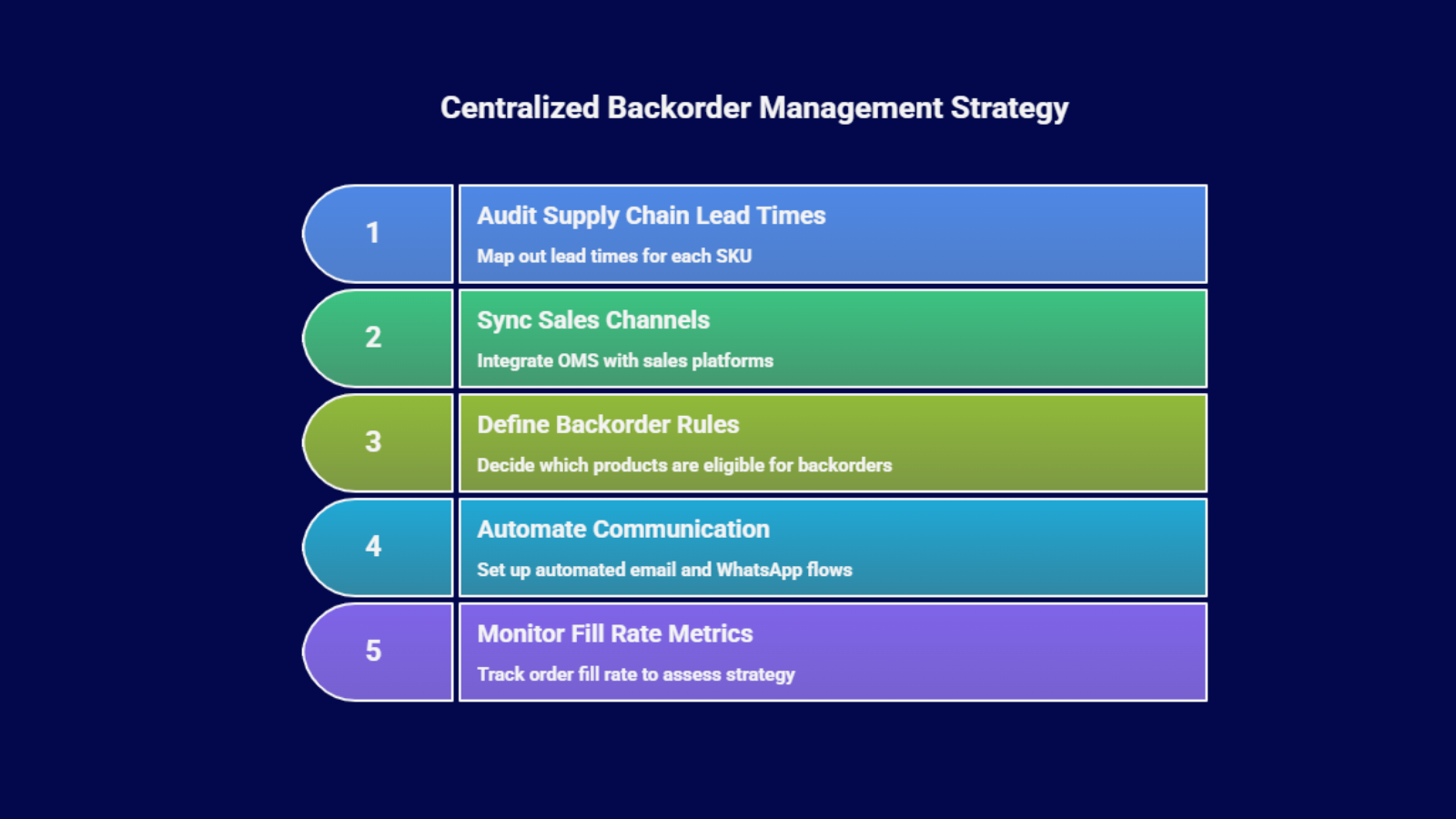
1. Audit Your Supply Chain Lead Times
You cannot manage backorder management in India if you don’t know how long your manufacturers take to deliver. Map out the lead time for every SKU, from the moment you place a PO (Purchase Order) to the moment it is ready for sale.
2. Sync Your Sales Channels In Real-Time
Ensure your OMS has native integrations with platforms like Shopify, Magento, Amazon, and Tata CLiQ. The faster the sync, the less likely you are to need emergency stockout management in e-commerce due to overselling.
3. Define Your Backorder And Preorder Rules
Decide which products are eligible for backorders. Usually, high-margin, unique items are best for this. Low-cost commodity items that the customer can find elsewhere are better off being marked as “Out of Stock” to avoid the high cost of managing backorders.
4. Automate Communication Workflows
Set up automated email and WhatsApp flows for every stage of the backorder journey. This is the “HubSpot way”, focusing on the customer experience even when things don’t go perfectly.
5. Monitor Your Fill Rate Metrics
Track your “Order Fill Rate” (the percentage of orders shipped on time without stockouts). If your fill rate is dropping, it is a sign that your stockout management in e-commerce strategy needs an overhaul or your reorder points are set too low.
Building A Resilient Future For Your Retail Brand
Success in the Indian market comes down to how well you handle the moments when things don’t go according to plan. You cannot always control shipping delays or sudden viral demand, but you can control how your business responds. By adopting a proactive approach to stockout management in e-commerce, you stop reacting to empty shelves and start anticipating your customers’ needs before they even land on your site.
When you put backorder management in India at the center of your operations, you protect your revenue and keep your competitors at bay. You turn a potential “Sold Out” disappointment into a clear promise of delivery. This transparency builds the kind of trust that keeps shoppers coming back to your brand. Use your OMS as more than just a tracking tool, make it the heartbeat of your customer experience. By streamlining these processes now, you ensure that your brand stays profitable and reliable, no matter how fast you scale.
Click here to read more about why FMCG giants are partnering with Q-Commerce players?
Frequently Asked Questions
1. How does an OMS help with stockout management in e-commerce?
An OMS provides real-time visibility across all warehouses and sales channels. It prevents overselling by instantly updating stock levels everywhere a sale occurs. It also uses historical data to predict demand and automate reorder alerts before stock reaches zero.
2. What is the benefit of backorder management in India for D2C brands?
It allows brands to retain customers and capture revenue even when products are temporarily unavailable. By providing clear timelines and automated updates, brands can reduce the chance of customers moving to competitors during a temporary out-of-stock period.
3. How do preorders differ from backorders in an OMS?
Preorders are for new products that haven’t been launched yet, used primarily for demand validation. Backorders are for existing products that are currently out of stock. A good OMS manages both by segregating them from regular “Ready to Ship” inventory.
4. Can stockout management in e-commerce reduce RTO rates?
Yes. Most RTOs happen because of shipping delays or lack of communication. By using an OMS to ensure stock is always available or by providing transparent backorder updates, you set correct expectations, which significantly reduces the likelihood of customer rejection.
5. What should I look for in an OMS for backorder management in India?
Look for features like multi-channel inventory sync, automated “First-In-First-Out” (FIFO) allocation for new stock, and integrated communication tools (SMS/WhatsApp). The system must also handle split-shipments if one part of an order is on backorder.