
In India, the complexity of moving products from a warehouse to a customer’s doorstep has evolved rapidly. For modern brands, the challenge is no longer just about receiving an order but ensuring that the logic behind fulfilling it is airtight.
As businesses scale, they often encounter scenarios where a single order cannot be shipped in one go, perhaps because items are located in different warehouses or one product is out of stock. This is where split order management becomes a non-negotiable part of your operations.
Managing these logistics requires more than just a basic spreadsheet. You need a system that can think for you, routing items based on proximity and availability without losing the thread of the customer’s experience.
In this guide, we will break down the essential workflows for handling partial fulfillment in e-commerce and how an Order Management System (OMS) acts as the brain of your post-purchase journey.
Why Split Order Management Matters For Indian Sellers
The Indian market presents unique logistical hurdles, from varying GST implications across states to the high cost of shipping to remote pincodes. When a customer orders a bundle of products, say, a laptop skin, a mouse, and a keyboard, and the mouse is in a Bengaluru warehouse while the rest is in Delhi, you face a choice. Do you wait for the mouse to arrive in Delhi? Or do you ship what you have?
Split order management allows you to prioritize speed. By breaking the order into multiple shipments, you ensure the customer receives at least a portion of their purchase quickly. This reduces the “where is my order” (WISMO) inquiries that clog up customer support. However, without a robust workflow, this can lead to doubled shipping costs and reconciliation nightmares.
The Real Cost Of Manual Fulfillment
Many growing brands try to manage splits manually. A warehouse manager might realize an item is missing and decide to ship the rest. But if the central system isn’t updated, the customer might get a notification that the whole order is delivered, leading to immediate distrust and potential returns. Handling partial fulfillment in e-commerce manually is a recipe for high Return-to-Origin (RTO) rates because customers often refuse packages if they feel the brand has made a mistake.
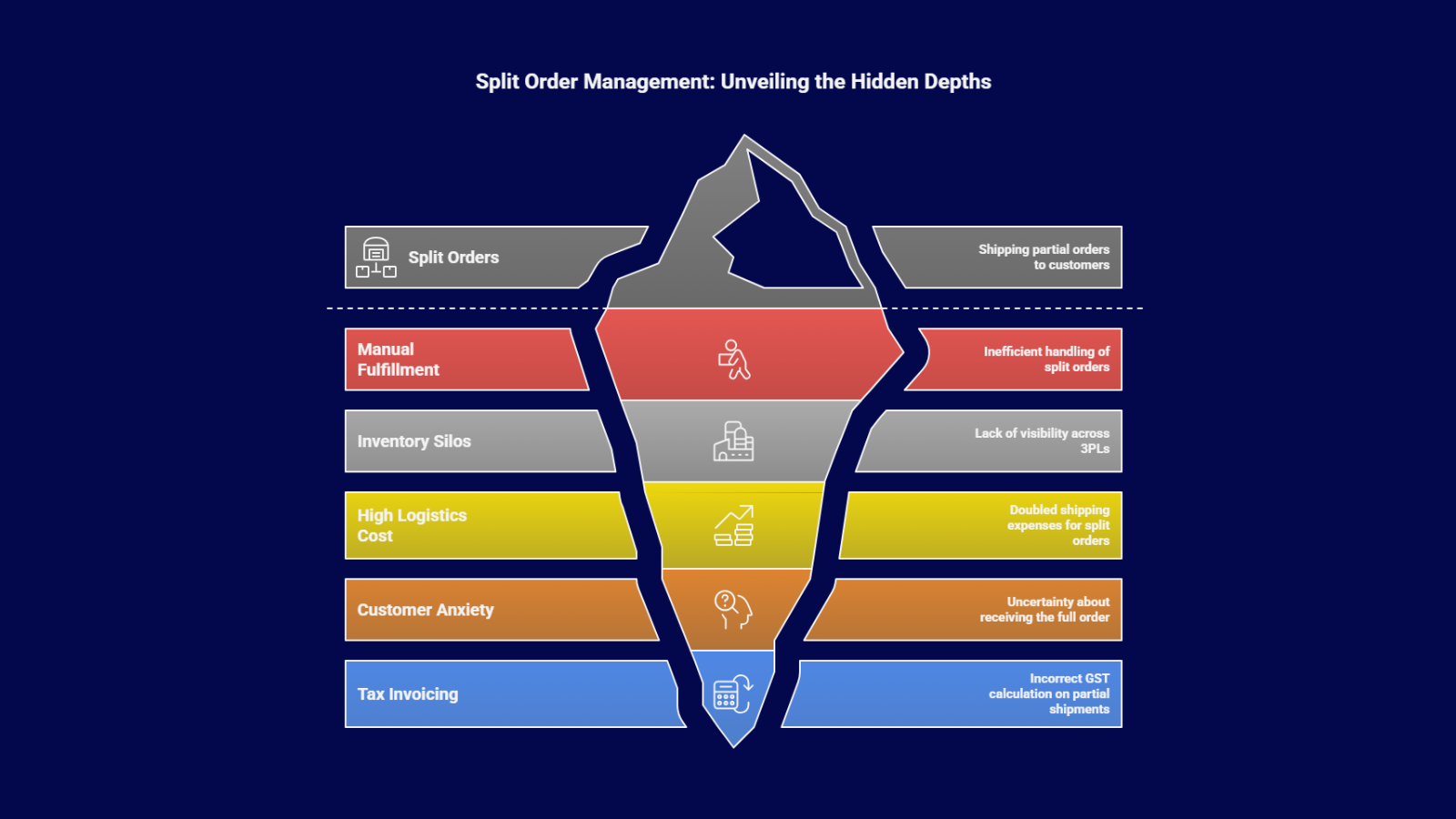
| Pain Point | Impact on Indian Brands | How OMS Solves It |
|---|---|---|
| Inventory Silos | Stock exists but isn’t visible across all 3PLs. | Unified view of inventory across all nodes. |
| High Logistics Cost | Shipping two boxes instead of one doubles the burn. | Intelligent routing to minimize splits. |
| Customer Anxiety | Receiving half an order without prior notice. | Automated, transparent communication for each split. |
| Tax Invoicing | Incorrect GST calculation on partial shipments. | Automated invoice generation per shipment. |
Top 5 Best Practices For Efficient Fulfillment
Implementing a split-order strategy requires a balance between customer satisfaction and operational costs. If you split every order without a plan, your shipping margins will disappear. Here are the top five best practices to keep your operations lean and your customers happy.
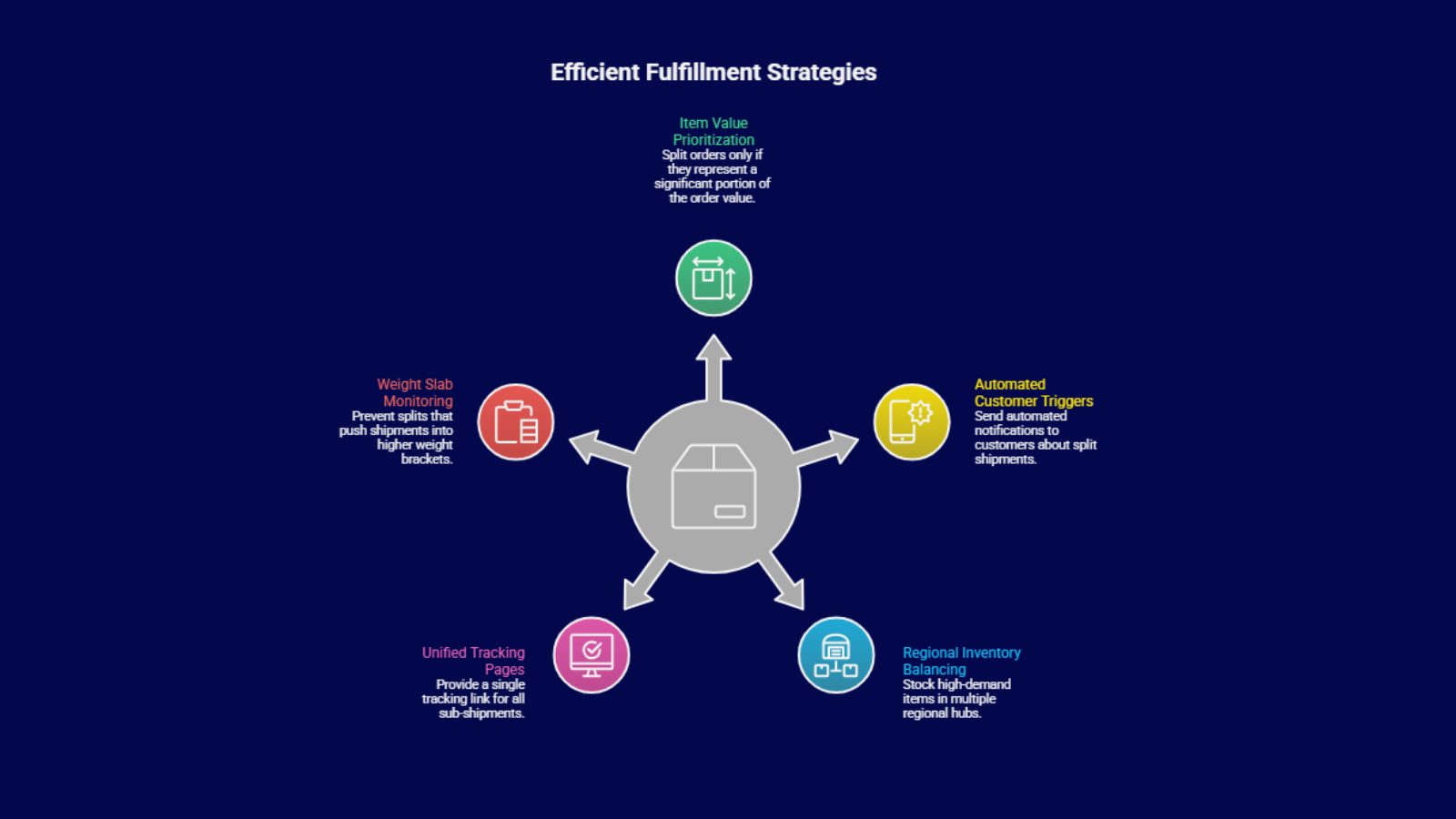
- Prioritize by Item Value: Only trigger a split if the available items represent a significant portion of the total order value to justify the extra shipping cost.
- Automated Customer Triggers: Ensure your system sends an automated WhatsApp or SMS the moment a split is created so the customer knows to expect multiple boxes.
- Regional Inventory Balancing: Use historical data to stock high-demand items in multiple regional hubs, reducing the need for split order management across long distances.
- Unified Tracking Pages: Provide a single tracking link that displays the status of all sub-shipments so the customer doesn’t have to juggle multiple AWB numbers.
- Strict Weight Slab Monitoring: Set rules in your OMS to prevent splits that push shipments into much higher weight brackets unless absolutely necessary for meeting delivery SLAs.
Smart Workflows For Split Order Management
To run a tight ship, your OMS needs to automate the decision-making process. It shouldn’t wait for a human to click “split.” Instead, it should follow pre-defined business rules that trigger split order management based on inventory location, product categories, or even the customer’s tier.
Multi-Node Inventory Allocation
When an order enters your system, the first step is to check where the items are located. If you are using multiple warehouses or “dark stores” in cities like Mumbai, Delhi, and Hyderabad, the OMS looks for the most efficient path. If the items are scattered, the system triggers a split.
This workflow is essential because it prevents the “all-or-nothing” delay. Instead of holding up a 5-item order for one missing SKU, the system clears the 4 available items. In the context of handling partial fulfillment in e-commerce, this keeps the warehouse moving and ensures your “shipped” metrics remain healthy even during stock shortages.
Order Routing Logic By Pincode
In India, shipping costs can vary wildly. A smart OMS won’t just split an order because it can; it will calculate if splitting is actually worth the cost. For example, if the second shipment costs more than the profit margin of the item, the system might flag it for a “ship-from-store” or hold it for a restock.
- Check Availability: The system scans all connected nodes.
- Cost-Benefit Analysis: Compares shipping a split vs. waiting for a restock.
- Automated Splitting: If speed is the priority, the system creates two sub-orders.
- Label Generation: Unique tracking IDs are generated for each box under the same parent order.
Automated Customer Communication
The biggest risk of split order management is the “missing item” panic. If a customer receives a box with only half their items and no explanation, they will call your support line. A HubSpot-style approach to this is proactive communication. Your OMS should trigger a message explaining that the rest of the items are on their way.
Invoice And GST Reconciliation
Indian sellers have to be incredibly careful with documentation. When you split an order, you cannot just use one invoice for both boxes if they are shipping at different times or from different GSTINs.
- Partial Invoicing: Generate separate invoices for the value of items in each specific box.
- TDS and TCS Tracking: Ensure the tax collected at source is accurately mapped to each partial shipment.
- Manifest Accuracy: Each courier partner must receive a manifest that matches exactly what is in the physical box.
Essential Features Of An Indian-Centric OMS
Not all systems are built for the nuances of the Indian market. When you are looking for a partner to help with split order management, you need specific features that cater to the local logistics ecosystem.
Integration With Local Couriers
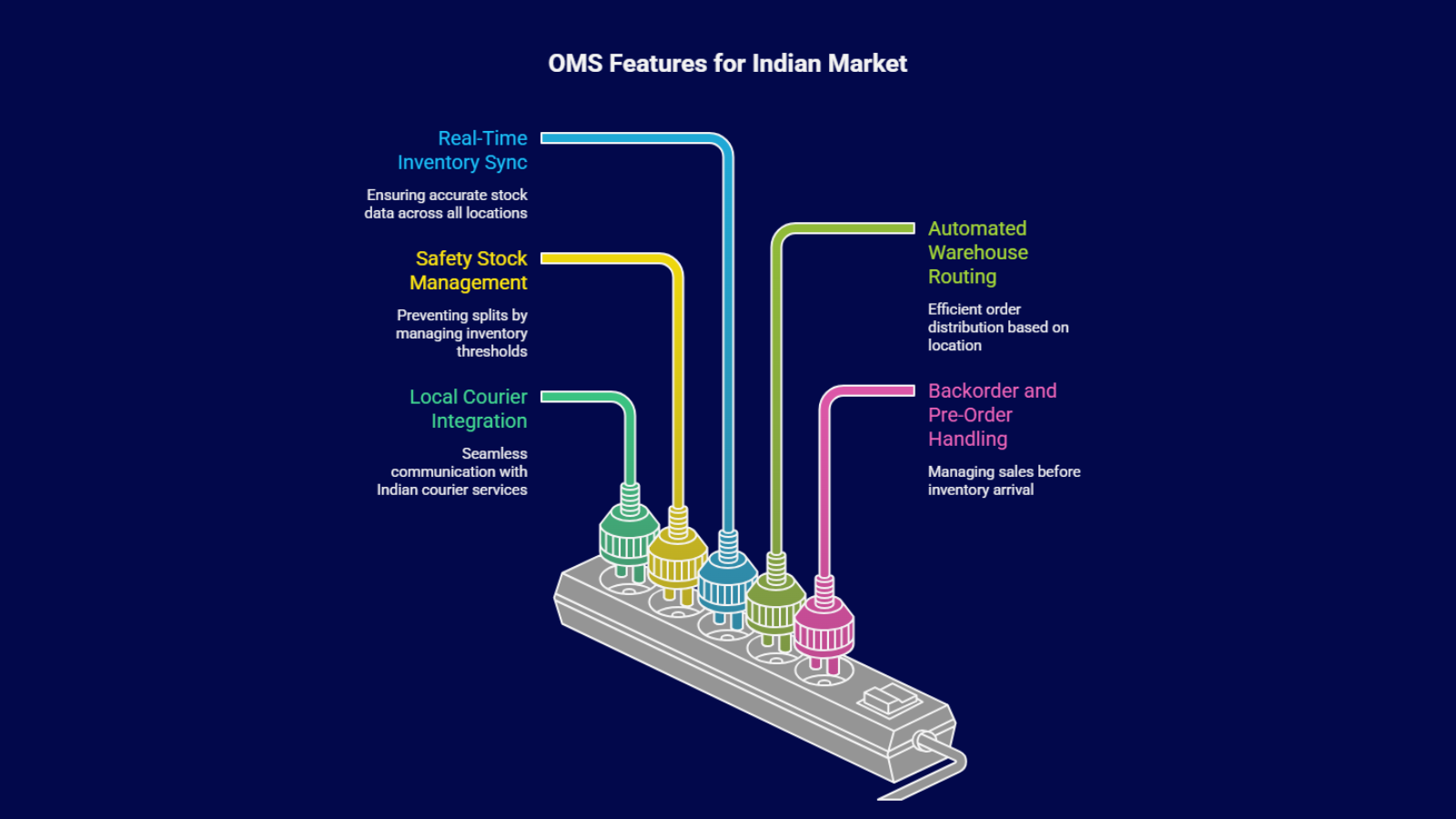
Your OMS must talk to players like Delhivery, BlueDart, and Ecom Express. When handling partial fulfillment in e-commerce, the system needs to be able to request multiple “pickups” for a single parent order. If the system can’t handle multiple AWB numbers per order, your split strategy will fail at the first hurdle.
Safety Stock And Buffer Management
To avoid unnecessary splits, you need “Safety Stock” logic. This tells your storefront to show an item as “out of stock” when it hits a certain threshold, preventing a situation where you sell an item that is actually damaged or missing. This reduces the need for split order management in the first place, saving you on logistics.
Key Headers For OMS Excellence
Operating a high-growth brand requires visibility and control over every fulfillment node. Without these features, you are essentially flying blind, which leads to high operational costs and disgruntled customers.
Real-Time Inventory Syncing Across Nodes
The foundation of handling partial fulfillment in e-commerce is knowing exactly where your stock is at any second. If your storefront thinks you have 10 units but your warehouse in Gurgaon only has 2, you are going to face a lot of manual splits and angry customers. A real-time sync ensures that the split order management logic is working with accurate data.
Automated Warehouse Routing
Instead of a manager deciding where an order goes, the OMS uses Distributed Order Management. It automatically routes the mouse to the Mumbai warehouse and the keyboard to the Chennai one. This is the gold standard for split order management because it removes human error from the equation.
Handling Backorders And Pre-Orders
Sometimes you want to sell an item before it arrives. Handling partial fulfillment in e-commerce allows you to ship the “in-stock” items now and the “pre-order” items later. This keeps your cash flow moving while you wait for your manufacturing run to finish.
How To Reduce The Frequency Of Splits
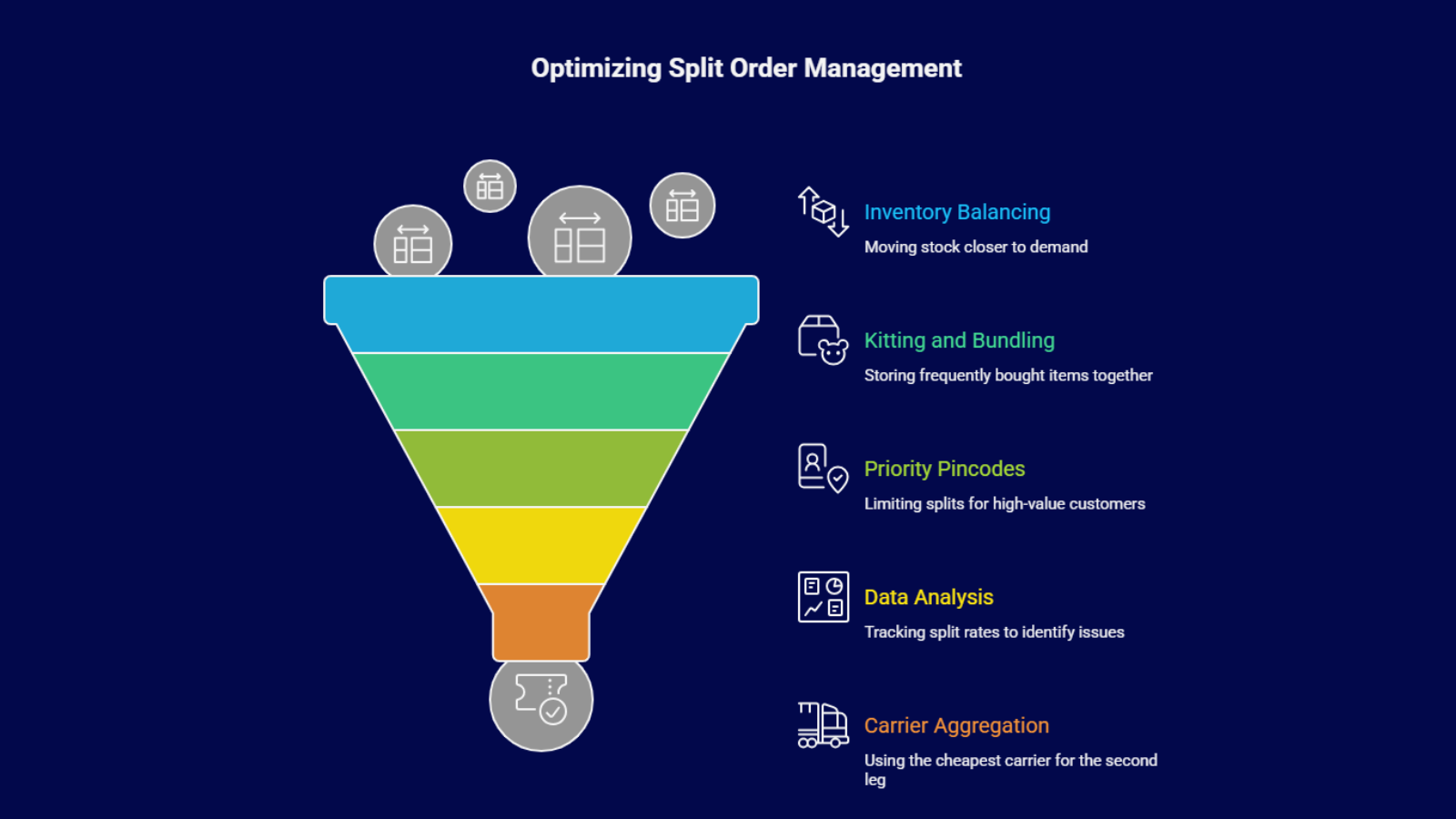
While split order management is a great safety net, it shouldn’t be your primary fulfillment strategy. Every split adds a layer of cost and a potential point of failure.
- Inventory Balancing: Use your OMS data to see which regions buy which products and move stock closer to them.
- Kitting and Bundling: If items are frequently bought together, store them together in the same warehouse.
- Priority Pincodes: Set rules to only allow splits for high-value customers or specific tier-1 cities where shipping is cheaper.
| Strategy | Goal | Benefit for Seller |
|---|---|---|
| Regional Utilization | Stocking based on demand heatmaps. | Lower shipping costs. |
| SLA-Based Splits | Only split if the delay exceeds 48 hours. | Fewer boxes shipped. |
| Carrier Aggregation | Use the cheapest carrier for the second leg. | Improved margins. |
The Role Of Data In Split Order Management
You cannot improve what you don’t measure. A modern OMS provides a dashboard that shows your “Split Rate.” If 30% of your orders are being split, you have an inventory distribution problem. If only 2% are split, your handling partial fulfillment in e-commerce is likely efficient.
Tracking these metrics helps you negotiate better rates with 3PLs. Many Indian logistics providers will offer a discount if they know they are handling a high volume of “last-mile” splits in a specific city. Without the data from your split order management workflow, you have no leverage in these negotiations.
Future-Proofing Your Fulfillment Strategy
As the Indian market grows, the expectations for delivery speed will only increase. We are moving toward a world of 10-minute and same-day delivery. In this environment, handling partial fulfillment in e-commerce becomes a competitive advantage. If you can get the “hero” product to the customer today and the accessories tomorrow, you win the customer’s loyalty.
Investing in split order management today isn’t just about solving a warehouse headache; it’s about building a scalable foundation. Whether you are selling on your own website or a marketplace, a centralized OMS ensures that your brand remains consistent, professional, and profitable.
Click here to integrate Shiprocket with your Base.com account
Frequently Asked Questions
1. Does splitting an order increase my RTO risk?
Yes, if not communicated well. When handling partial fulfillment in e-commerce, customers might think the missing items are lost and refuse the package. Always use automated WhatsApp updates to inform them that more boxes are on the way to their location.
2. How does GST work with split order management?
In India, each shipment must have its own invoice reflecting the value of the items in that specific box. This ensures your GST filings match your shipping manifests and prevents legal issues during audits or transit checks by authorities.
3. Can I choose which items to split manually?
While an OMS automates this, most systems allow for manual intervention. If a specific item is fragile or high-value, you might use split order management to ship it via a premium courier while the rest goes via standard post.
4. Is split shipping more expensive for the brand?
Generally, yes, because you pay for the base weight of two packages instead of one. However, handling partial fulfillment in e-commerce can save money in the long run by preventing order cancellations and maintaining a high customer lifetime value.
5. What is the ideal split rate for a brand?
Most healthy brands aim for a split rate under 5%. If your split order management data shows a higher number, it’s a sign that your inventory is not distributed correctly across your regional warehouses or your safety stock is low.