Operating an e-commerce brand in India is a high-stakes balancing act. On one hand, you have the massive potential of a digital-first population; on the other, you face the unique logistical hurdles of a market that still heavily relies on cash. If you are a founder or a manager at a D2C brand, you know the sinking feeling of seeing a high volume of orders only to realize half of them are either unverified Cash on Delivery (COD) requests or failed UPI transactions.
In the Indian context, COD is not just a payment method; it is a trust exercise. However, for a seller, it often leads to high Return to Origin (RTO) rates, which can eat up to 20% to 30% of your margins. This is where a modern Order Management System (OMS) becomes your most valuable player.
Here is how top Indian brands use OMS technology to fix the COD confirmation process in India and ensure that e-commerce handles UPI failed orders effectively to protect their bottom line.
The Reality of COD and Payment Failures in India
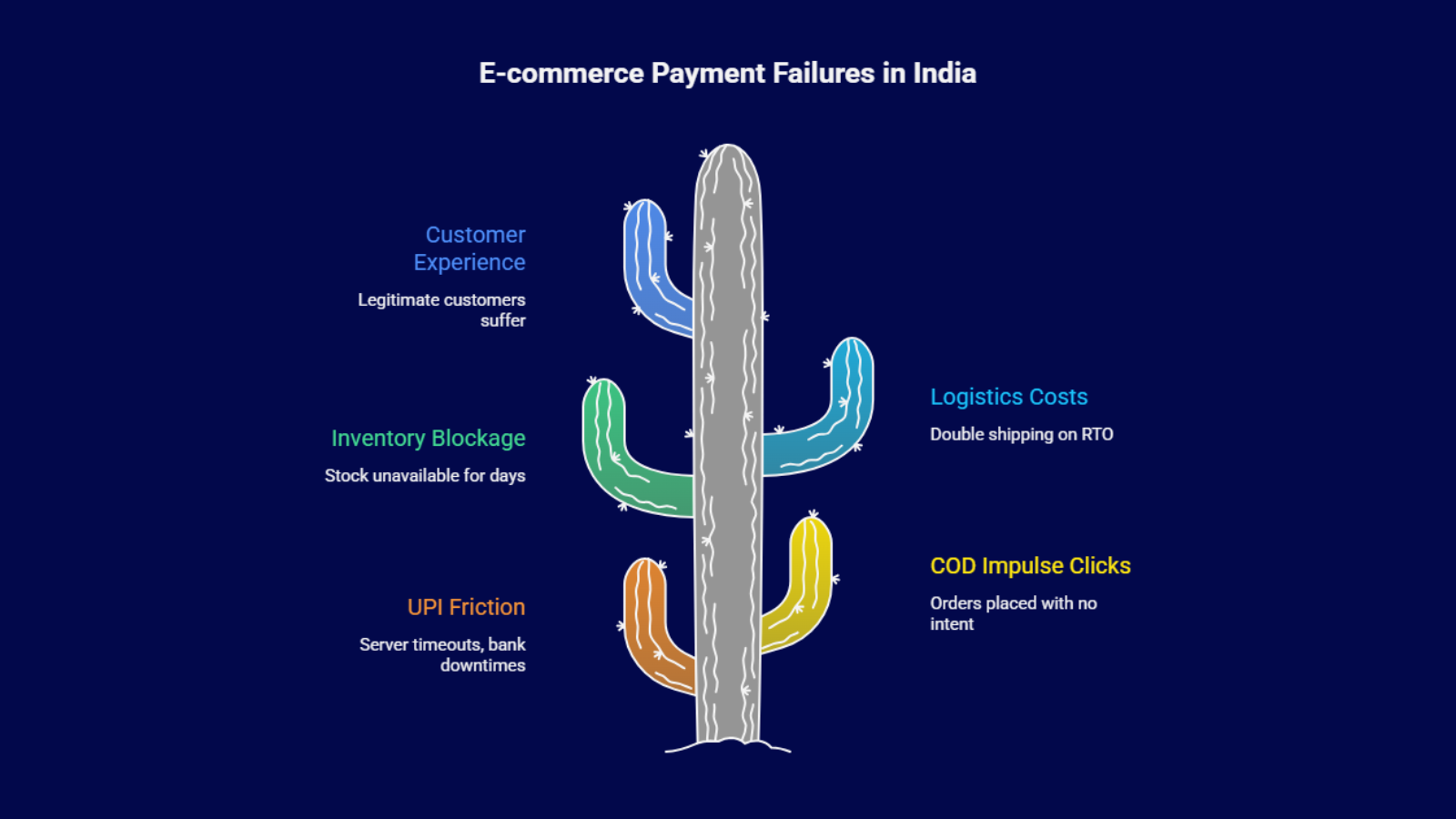
The Indian e-commerce landscape is dominated by two extremes: the “Pay Later” mentality of COD and the “Instant Pay” friction of UPI. While UPI has revolutionized digital payments, it is not foolproof. Server timeouts, bank downtimes, and incorrect PIN entries lead to a significant number of abandoned carts.
Similarly, COD orders are prone to “impulse clicks” where a customer places an order but has no real intention of accepting it. Without a robust system to filter these, your warehouse ends up shipping products that are destined to come back, costing you double in shipping and packaging.
Why You Need an Automated Solution
- Inventory Blockage: Every failed or unverified order keeps a product out of your available stock for 5 to 7 days.
- Logistics Costs: You pay for forward and reverse shipping on every RTO.
- Customer Experience: Legitimate customers suffer when stock is tied up in “ghost” orders.
How OMS Automates the COD Confirmation Process in India
A standard OMS does more than just track packages; it acts as a gatekeeper. By implementing an automated COD confirmation process in India, brands can verify buyer intent before the product even leaves the shelf.
Automated Verification Workflows
Instead of having a manual calling team, which is slow and expensive, an OMS triggers automated workflows immediately after an order is placed. The COD confirmation process in India usually involves a multi-channel approach:
- WhatsApp Bot Integration: The system sends an interactive message with “Confirm” or “Cancel” buttons.
- IVR (Interactive Voice Response): An automated call asks the customer to press ‘1’ to confirm.
- OTP Verification: For high-risk pin codes, the OMS requires a one-time password at the checkout stage.
Impact of Verification on Business Health
| Feature | Manual Process | OMS-Driven Process |
|---|---|---|
| Verification Speed | 2-4 hours | Under 2 minutes |
| Error Rate | High (Human error) | Near Zero |
| RTO Reduction | 5-10% | 25-40% |
| Scalability | Limited by team size | Infinite |
The COD confirmation process in India ensures that only high-intent orders reach the “Ready to Ship” status. If a customer cancels via the WhatsApp bot, the OMS immediately releases that inventory back to the website.
Solving the UPI and Digital Payment Failure Loop
UPI is the backbone of Indian digital payments, but it has a failure rate that can fluctuate during peak hours. When a payment fails, most customers simply close the tab. This is a lost opportunity that can be recovered if the e-commerce handles UPI failed orders with speed.
Real-Time Recovery of Failed Payments
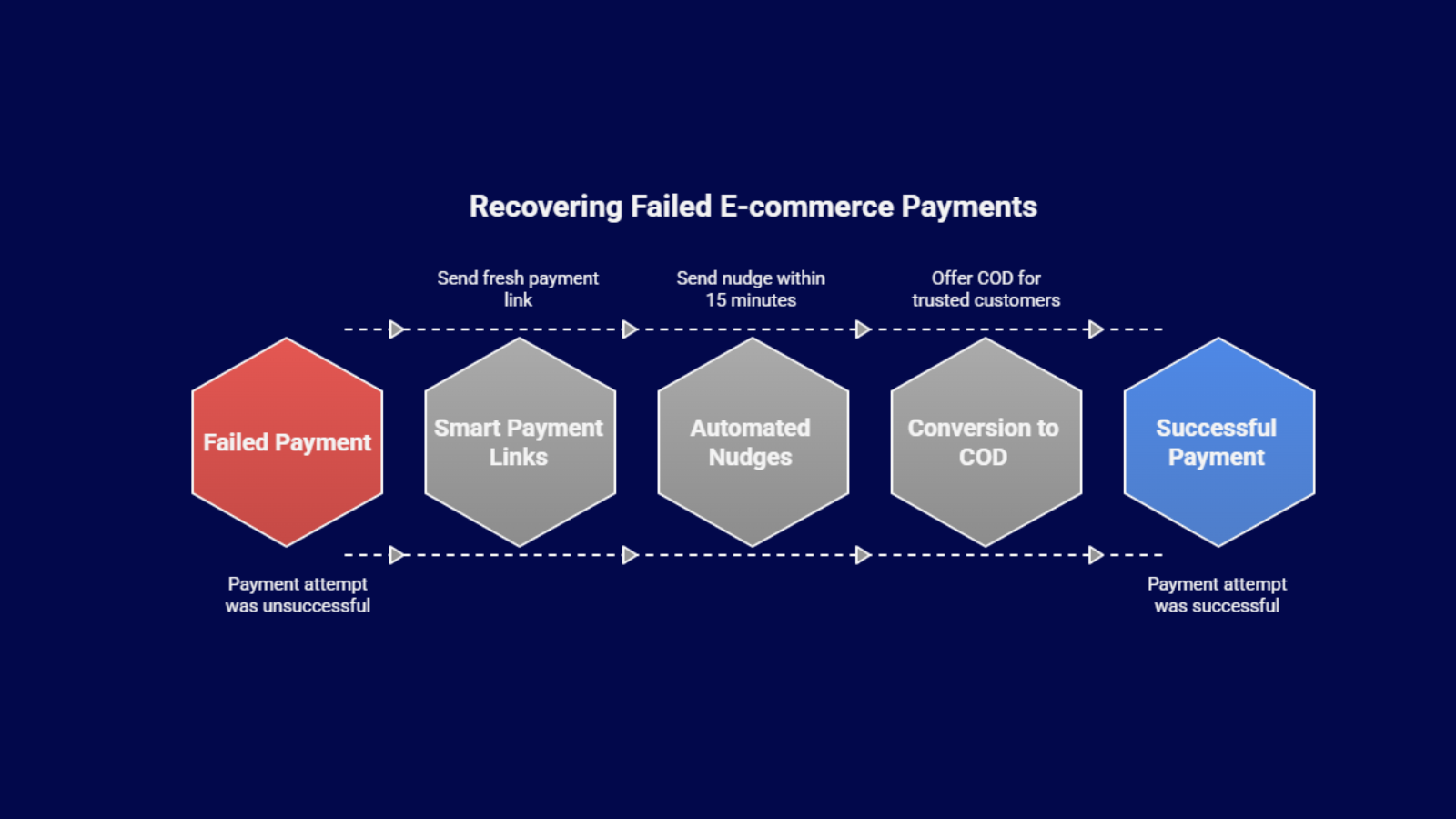
An intelligent OMS tracks the “Payment Pending” or “Payment Failed” status in real-time. Instead of letting that lead go cold, the system initiates a recovery sequence:
- Smart Payment Links: The OMS sends a fresh payment link via SMS or WhatsApp that allows the customer to try a different method or a different bank account.
- Automated Nudges: If the e-commerce handles UPI failed orders correctly, it sends a nudge within 15 minutes of the failure, which is the “golden window” for recovery.
- Conversion to COD: For trusted customers, the OMS can offer an option to convert the failed prepaid order into a COD order to ensure the sale is not lost.
Managing the Technical Side of Failures
When e-commerce handles UPI failed orders, the OMS must distinguish between a “hard fail” (insufficient funds) and a “soft fail” (bank server down). For soft failures, the system can wait and retry the payment status check before bothering the customer, ensuring a seamless experience.
Using Data to Segment Risky Orders
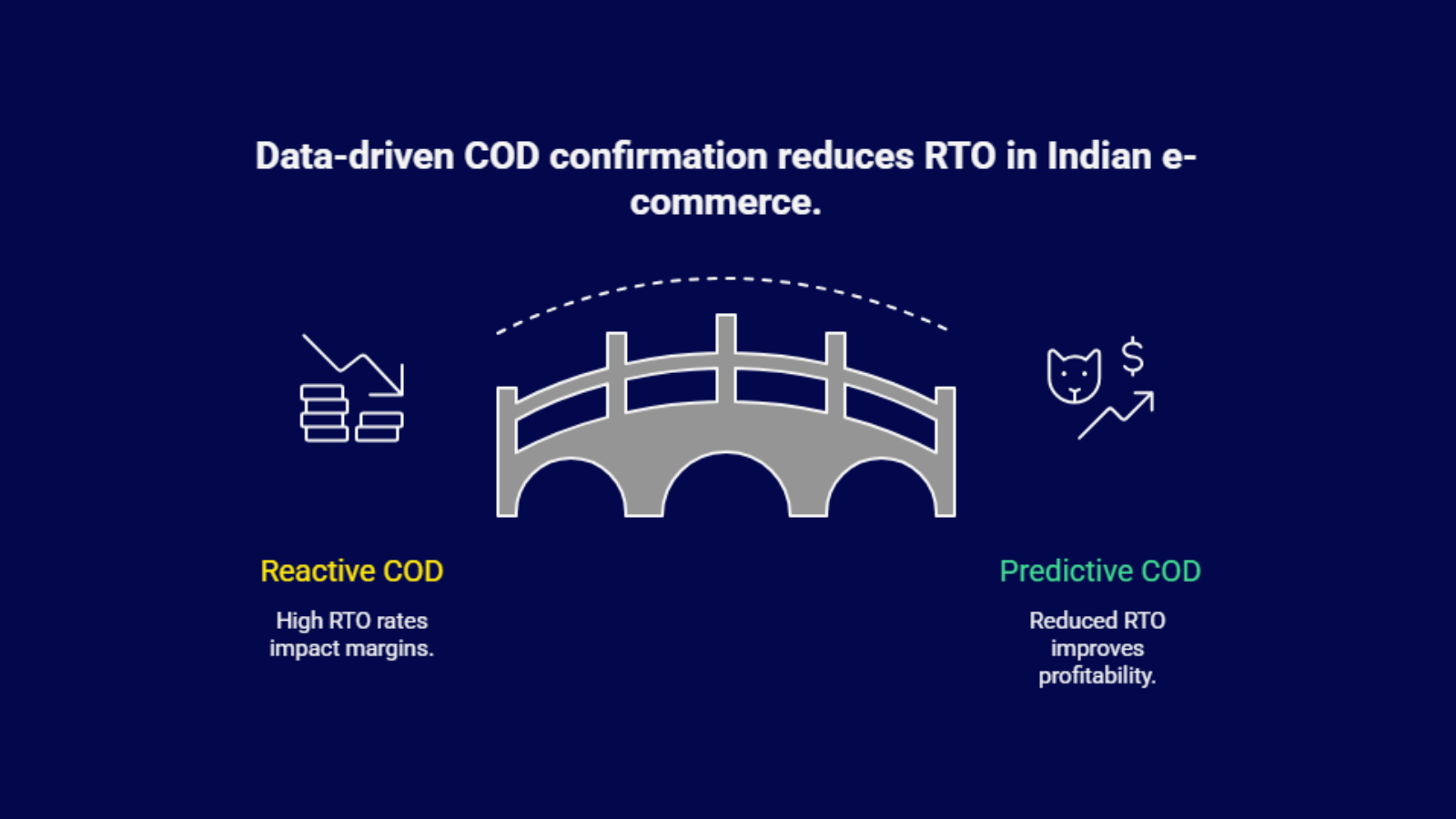
Not all COD orders are created equal. A smart OMS uses historical data to assign a “Risk Score” to every incoming request. This is a critical part of the COD confirmation process in India.
Identifying High-Risk Patterns
The system looks at several variables before moving an order to the warehouse:
- Customer History: Has this phone number returned 3 orders in the last month?
- Address Intelligence: Is the address vague or missing a house number?
- Geography: Is the pin code known for high RTO rates in the industry?
By analyzing these, the COD confirmation process in India becomes predictive rather than just reactive. You can choose to auto-cancel orders from chronic returners or require a small “commitment fee” before shipping.
Better Logistics Through System Integration
When your OMS is tightly integrated with your shipping partners, the way your e-commerce handles UPI failed orders and COD verifications becomes even more efficient.
Seamless Transition from Confirmation to Dispatch
Once the COD confirmation process in India is complete, the OMS automatically moves the order to the “Pick-Pack” stage. There is no manual intervention required. If the system has successfully helped the e-commerce handles UPI failed orders by converting them to prepaid, the shipping label is updated with the correct payment status instantly.
Why Logistics Visibility Matters
- NDR Management: If a delivery fails at the doorstep, the OMS triggers another automated message to the customer to reschedule, further reducing RTO.
- Tracking Transparency: High-quality brands provide a tracking link as soon as the COD confirmation process in India ends, building the trust necessary for the customer to keep the cash ready.
Steps to Implement an OMS for Better Recovery
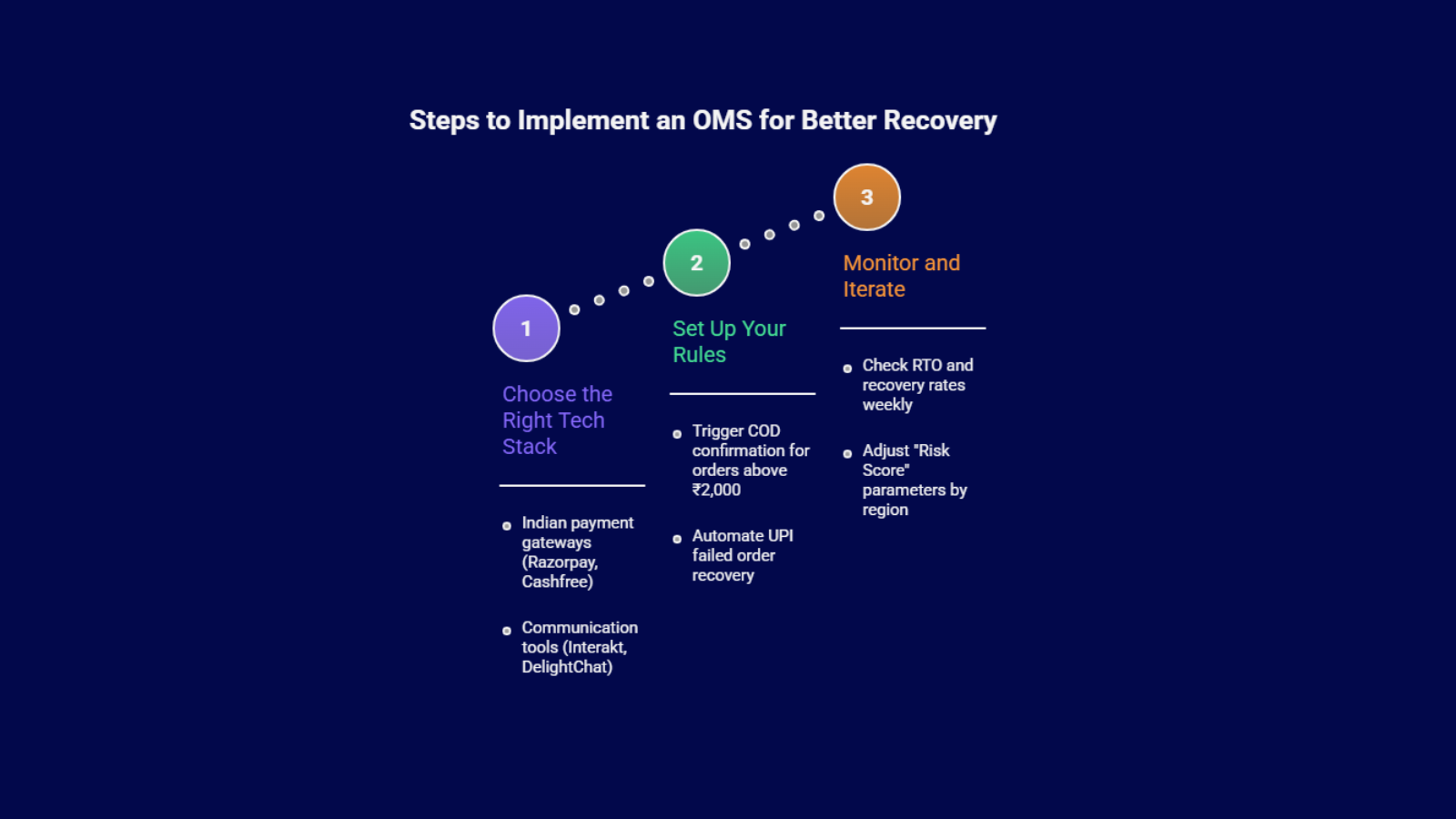
Transitioning to an automated system doesn’t have to be a headache. If you want to ensure your e-commerce handles UPI failed orders and streamlines the COD confirmation process in India, follow these steps:
1. Choose the Right Tech Stack
Look for an OMS that offers native integrations with Indian payment gateways (Razorpay, Cashfree) and communication tools (Interakt, DelightChat).
2. Set Up Your Rules
Define what triggers a verification. For example:
- Trigger the COD confirmation process in India for all orders above ₹2,000.
- Automate how the e-commerce handles UPI failed orders by sending a recovery link 10 minutes after a “Payment Failed” status.
3. Monitor and Iterate
Check your RTO and recovery rates weekly. Adjust your “Risk Score” parameters based on which regions are giving you the most trouble.
Remember that, by automating the COD confirmation process in India and ensuring your e-commerce handles UPI failed orders with intelligence, you are not just managing orders, you are protecting your revenue. In the competitive world of Indian retail, the winner is often the brand that manages its “unseen” losses the best.
Final Thoughts
In conclusion, succeeding in Indian e-commerce requires more than driving traffic and generating orders, it demands intelligent control over what happens after checkout. COD confirmations and UPI failures, if unmanaged, can silently erode margins through RTO, blocked inventory, and lost conversions. These operational leakages often go unnoticed but significantly impact profitability over time.
A modern OMS transforms this challenge into an opportunity by automating verification workflows and recovering failed payments in real time. Automated COD confirmations, smart nudges, and instant payment retries help brands secure genuine buyer intent before dispatch. This reduces unnecessary shipments and improves overall order quality.
Beyond automation, data-driven risk assessment adds another layer of protection. By analyzing customer history, pin codes, and return behavior, brands can proactively filter high-risk orders. This predictive approach shifts operations from reactive firefighting to strategic control.
Ultimately, integrating payments, communication, and logistics within a unified OMS strengthens both margins and customer trust. Operational efficiency is no longer optional, it is a competitive advantage in India’s rapidly evolving e-commerce landscape.
Click here to know more about why is GST-compliant invoicing essential for e-commerce retailers?
Common Questions on Managing Orders in India
1. Why is the COD confirmation process in India so important?
It filters out casual or accidental orders. Since Indian e-commerce has high RTO rates, confirming intent via WhatsApp or IVR ensures you only spend money on shipping orders that have a high probability of being accepted by the customer.
2. How can I reduce RTO for my D2C brand?
The most effective way is to implement an automated COD confirmation process in India. By verifying addresses and buyer intent before shipping, and by offering incentives to switch to prepaid, you can significantly lower your return rates.
3. What happens when e-commerce handles UPI failed orders automatically?
When the system detects a failure, it immediately sends a recovery link. This reduces the friction of the customer having to go back, refill their cart, and restart the checkout process, which often leads to higher conversion rates.
4. Does verifying COD orders annoy customers?
Actually, it often builds trust. In a market where many “fly-by-night” brands exist, a professional COD confirmation process in India via WhatsApp shows the customer that your brand is organized and legitimate, leading to better brand perception.
5. Can an OMS help with address errors?
Yes. Modern systems can flag incomplete addresses during the COD confirmation process in India. The system can send a message asking the customer to provide a landmark or a missing house number before the order is processed for shipping.