
For Indian sellers, growth is often overshadowed by a silent profit-killer: Return to Origin (RTO). For D2C brands, an order is only a “sale” once the cash is in the bank. However, with Cash on Delivery (COD) still accounting for over 60% of transactions in India, the risk of a package traveling across the country only to be refused at the doorstep is a reality that drains margins.
Every RTO incident costs a seller at least ₹300 in forward and reverse shipping, packaging waste, and blocked inventory. When your RTO rate hits 20% or 30%, you aren’t just losing sales; you are paying to lose money. This is where a robust Order Management System (OMS) steps in, not just to track packages, but to protect your revenue from the moment a customer clicks “buy.”
Why Indian Sellers Struggle With RTO Rates
The Indian market has unique challenges. Addresses are often informal, landmarks are subjective, and the “intent to buy” in COD orders can be fickle. Many customers place multiple orders from different brands for the same item and simply accept the one that arrives first.
For a D2C brand, this creates a massive logistics burden. When an order fails, the inventory is stuck in a “transit loop” for 15 to 20 days. By the time it returns to the warehouse, the trend might have shifted, or the packaging might be too damaged for resale. Without RTO prevention in ecommerce, OMS for revenue recovery in India, these operational leaks can easily consume up to 50% of your net profits.
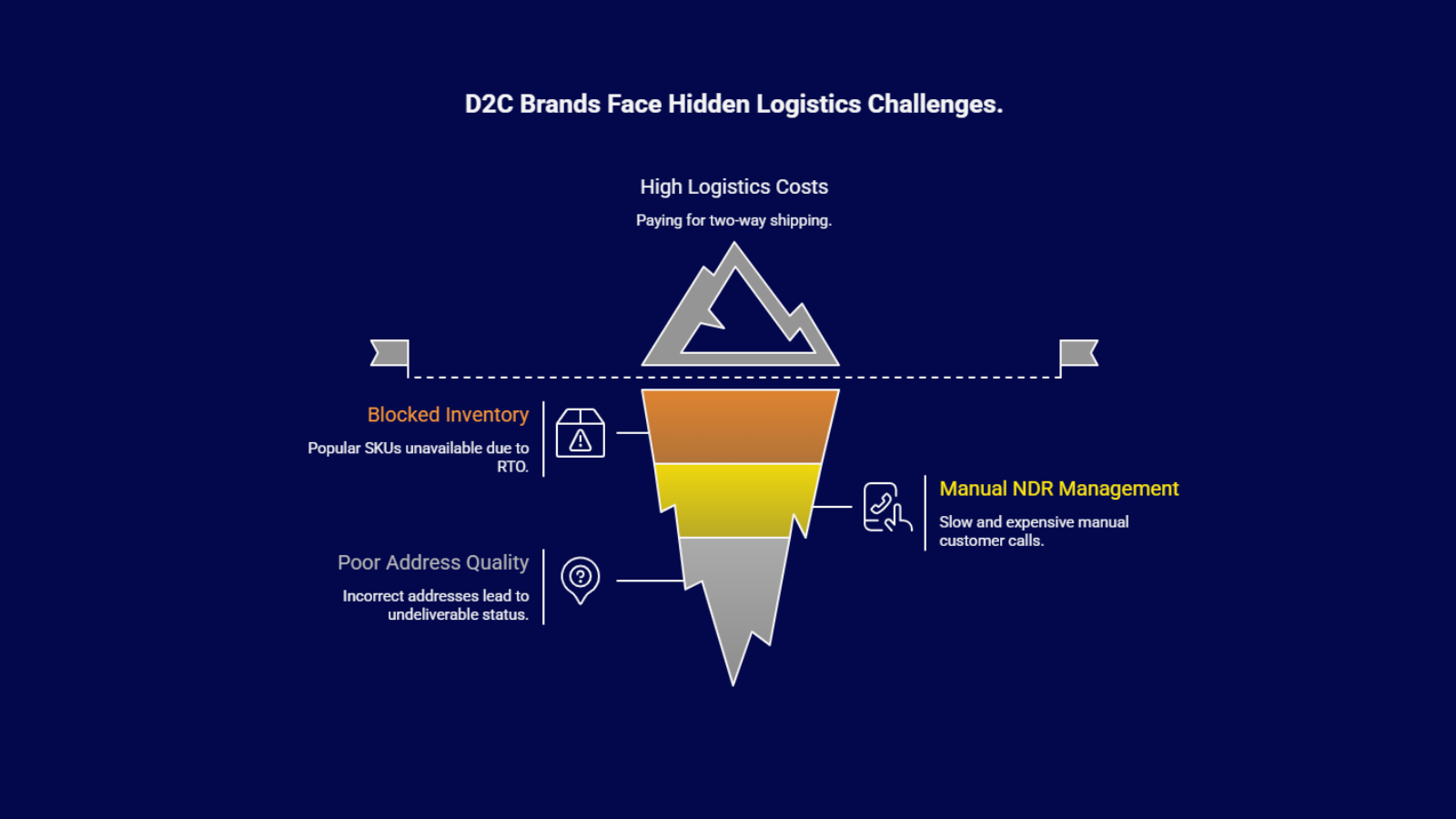
Common Pain Points for D2C Brands
- High Logistics Costs: Paying for two-way shipping without a successful sale.
- Blocked Inventory: Popular SKUs are unavailable for other buyers while stuck in the RTO cycle.
- Manual NDR Management: Manually calling customers to verify failed deliveries is slow and expensive.
- Poor Address Quality: Incorrect PIN codes or missing house numbers lead to “undeliverable” status.
How An OMS Acts As A Shield Against RTO
A modern OMS does more than print labels. It acts as an intelligence layer between your storefront and your courier partners. By using data-driven workflows, it filters out high-risk orders before they ever leave your warehouse, ensuring that your shipping budget is spent on genuine customers.
Implementing RTO prevention in ecommerce, OMS for revenue recovery in India allows brands to automate the “verification” phase of the order lifecycle. Instead of shipping every order blindly, the system uses historical data to flag suspicious patterns.
Smart Address Verification
One of the leading causes of RTO in India is poor address quality. An OMS with built-in address hygiene tools can automatically flag incomplete addresses. It checks if the PIN code matches the city and ensures landmarks are present.
COD To Prepaid Conversion
Since COD orders are 3x more likely to result in RTO than prepaid ones, a smart OMS can trigger automated WhatsApp nudges. These messages can offer a small discount or a free gift if the customer converts their COD order to a prepaid one post-purchase. This is a core strategy for RTO prevention in ecommerce, OMS for revenue recovery in India.
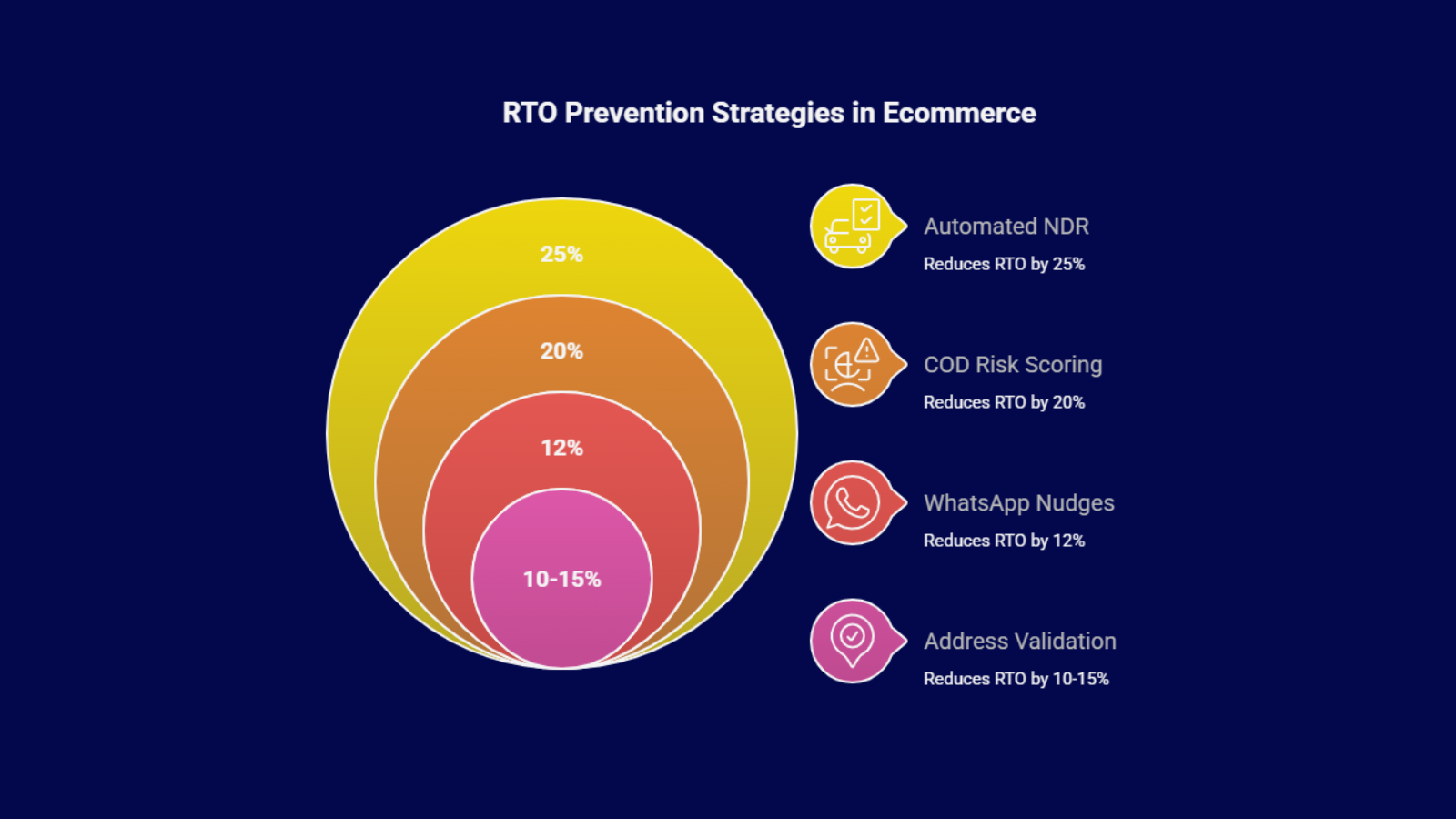
| Strategy | Impact on RTO | Revenue Recovery Potential |
|---|---|---|
| Address Validation | Reduces RTO by 10-15% | High (Prevents failed attempts) |
| COD Risk Scoring | Reduces RTO by 20% | Medium (Filters low-intent) |
| WhatsApp Nudges | Reduces RTO by 12% | High (Increases prepaid share) |
| Automated NDR | Reduces RTO by 25% | Very High (Recovers failed deliveries) |
Recovering Revenue With Post Order Automation
The period between “Order Placed” and “Out for Delivery” is the most critical window for revenue protection. If a customer loses interest or finds a cheaper alternative during this time, the RTO risk spikes. An OMS helps maintain the “excitement” of the purchase through proactive communication.
By using RTO prevention in ecommerce, OMS for revenue recovery in India, brands can set up automated workflows that trigger the moment a delivery attempt fails. This is known as Non-Delivery Report (NDR) management.
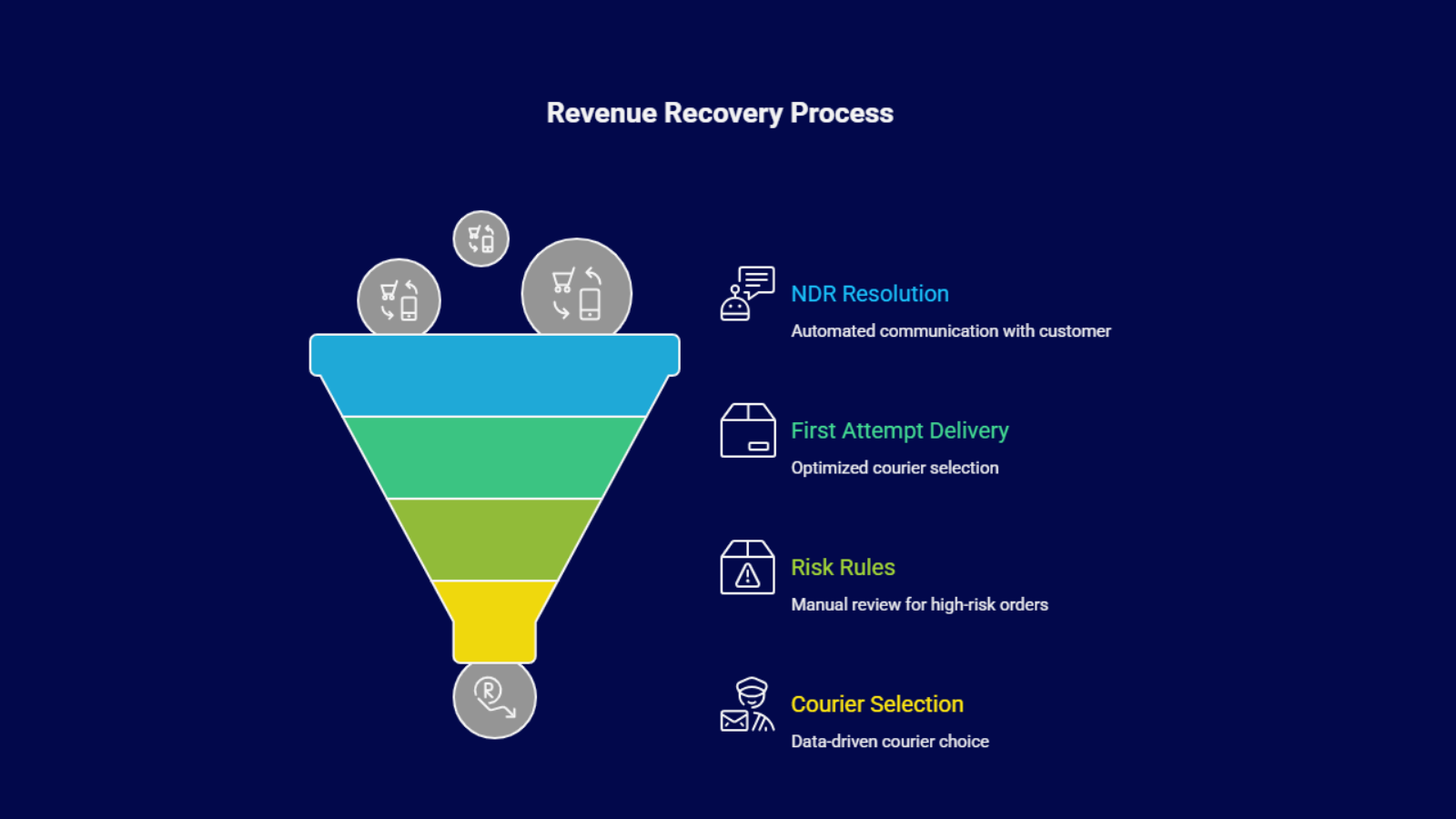
1. Immediate NDR Resolution
When a courier marks an order as “Customer Unavailable,” a traditional seller might not know for 24 hours. A smart OMS receives this data in real-time and immediately sends an automated WhatsApp to the customer. The customer can then click a button to “Reschedule for Tomorrow” or “Provide a Different Number.”
2. Improving First Attempt Delivery Rates
The faster a product reaches the customer, the lower the RTO. An OMS optimizes this by selecting the best-performing courier partner for a specific PIN code based on past performance data. This targeted routing is essential for RTO prevention in ecommerce, OMS for revenue recovery in India.
3. Setting Up Risk Rules
You can instruct your OMS to hold orders that meet certain criteria for manual review. For example, if an order is from a high-risk PIN code and has a high value, the system can automatically put it on “Hold” until a verification call is completed. This level of RTO prevention in ecommerce, OMS for revenue recovery in India ensures you only ship to high-intent buyers.
4 Using Data For Better Courier Selection
- Courier Performance Tracking: Not all couriers are equal in every city. Use your OMS to see which partner has the highest success rate in Tier 3 towns.
- Automated Weight Reconciliation: Prevent overcharging by couriers, which is another form of revenue leakage.
- Real-time Tracking Pages: Give customers a branded tracking page so they don’t have to visit third-party courier sites.
What is the Role Of Customer Communication In Revenue Recovery?
Trust is a major factor in e-commerce. If a customer feels neglected after they place an order, they are more likely to refuse the package. Regular, transparent updates through WhatsApp and SMS build the necessary trust to complete the transaction.
Effective RTO prevention in ecommerce, OMS for revenue recovery in India involves keeping the customer “in the loop.” A simple message saying “Your order is being packed” followed by “Your order has reached the nearest hub” keeps the intent alive.
WhatsApp has an open rate of over 90% in India. Using it to resolve delivery issues is much more effective than cold calling. When the OMS detects a delivery failure, it can send a WhatsApp message with a “Location Pin” button, allowing the customer to share their exact Google Maps location with the delivery agent.
Key Strategies For Indian D2C Brands
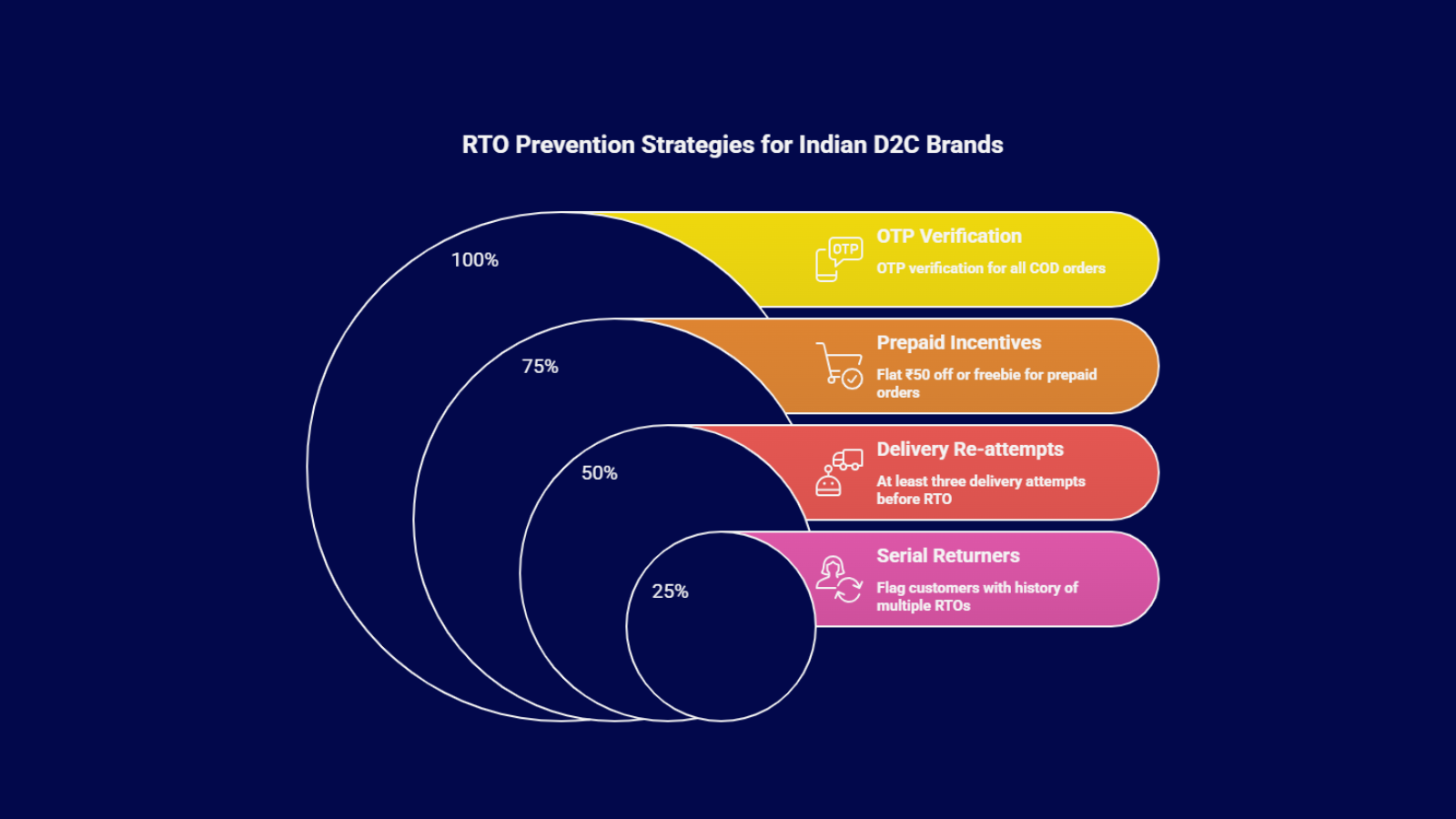
To effectively manage RTO prevention in ecommerce, OMS for revenue recovery in India, brands should adopt a multi-layered approach. It is not just about one tool, but how the data flows between your store and your logistics partners.
Analyzing High-Risk Zones
Data shows that certain regions in India have higher RTO rates due to logistics infrastructure or buyer behavior. Your OMS should allow you to “Block COD” for specific high-risk zones while keeping it open for others.
Pointers for Effective RTO Control
- Implement OTP Verification: Use mobile OTP for all COD orders to ensure the phone number is valid.
- Offer Incentives for Prepaid: Provide a flat ₹50 off or a freebie for prepaid orders to shift the balance.
- Automate Re-attempts: Ensure the system triggers at least three delivery attempts before the order is officially marked as RTO.
- Identify Serial Returners: Use the OMS to flag customers who have a history of multiple RTOs across your store.
Final Thoughts On Revenue Protection
For an Indian e-commerce business to be sustainable, managing RTO is not optional; it is a necessity. A Saas-based OMS provides the automated “check and balance” system required to navigate the complexities of the Indian market.
By investing in RTO prevention in ecommerce, OMS for revenue recovery in India, you are building a resilient business model that thrives on efficiency. You stop chasing “fake growth” and start building a profitable, customer-centric brand.
Click now to integrate Delivery with Base.com.
Frequently Asked Questions
1. How does an OMS reduce RTO in India?
An OMS reduces RTO by validating addresses, verifying COD orders through OTP or WhatsApp, and automating the Non-Delivery Report (NDR) process. This ensures that only high-intent orders are shipped and delivery failures are resolved in real-time with the customer.
2. Can I convert COD orders to prepaid after the order is placed?
Yes, a smart OMS can send automated triggers to COD customers offering a discount or incentive if they switch to a prepaid link. This significantly lowers the risk of refusal at the doorstep and improves your overall business cash flow.
3. What is NDR management and why is it important?
NDR management is the process of handling failed delivery attempts. When a courier fails to deliver, an OMS immediately alerts the customer to reschedule or update their details. This proactive approach recovers sales that would otherwise have become RTO losses.
4. Is it possible to block specific high-risk customers from ordering?
An OMS tracks customer history and can flag “serial returners” or high-risk profiles. You can set rules to disable COD for these specific users or require manual verification before processing their orders to protect your shipping margins and inventory.
5. How much can a brand save by using an OMS for RTO?
By implementing RTO prevention in ecommerce, OMS for revenue recovery in India, brands can typically reduce their RTO rates by 15% to 30%. This translates to significant savings in logistics costs and a direct increase in the net profit margin.