
Three days at Walmart Let’s Grow 2026
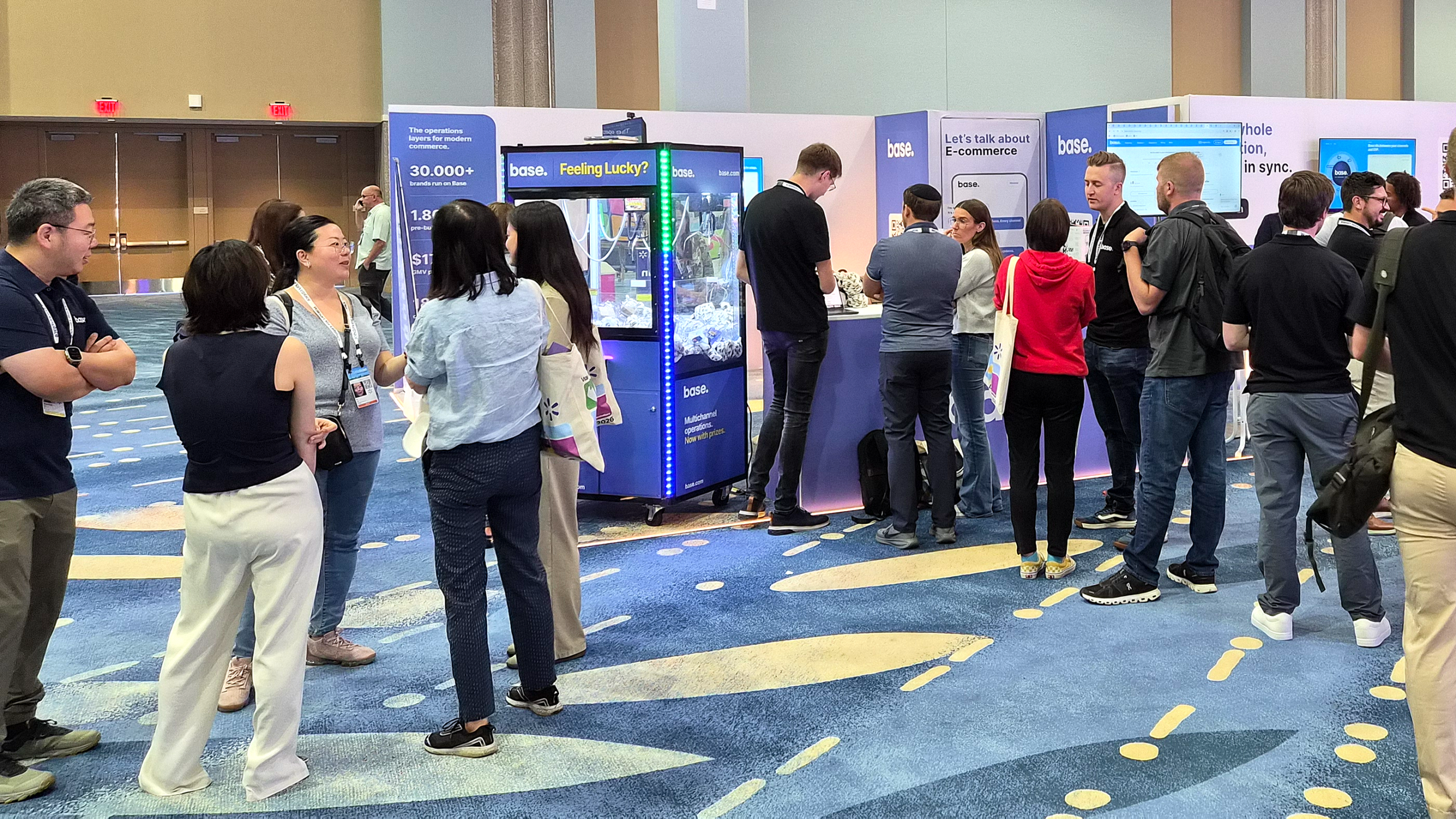
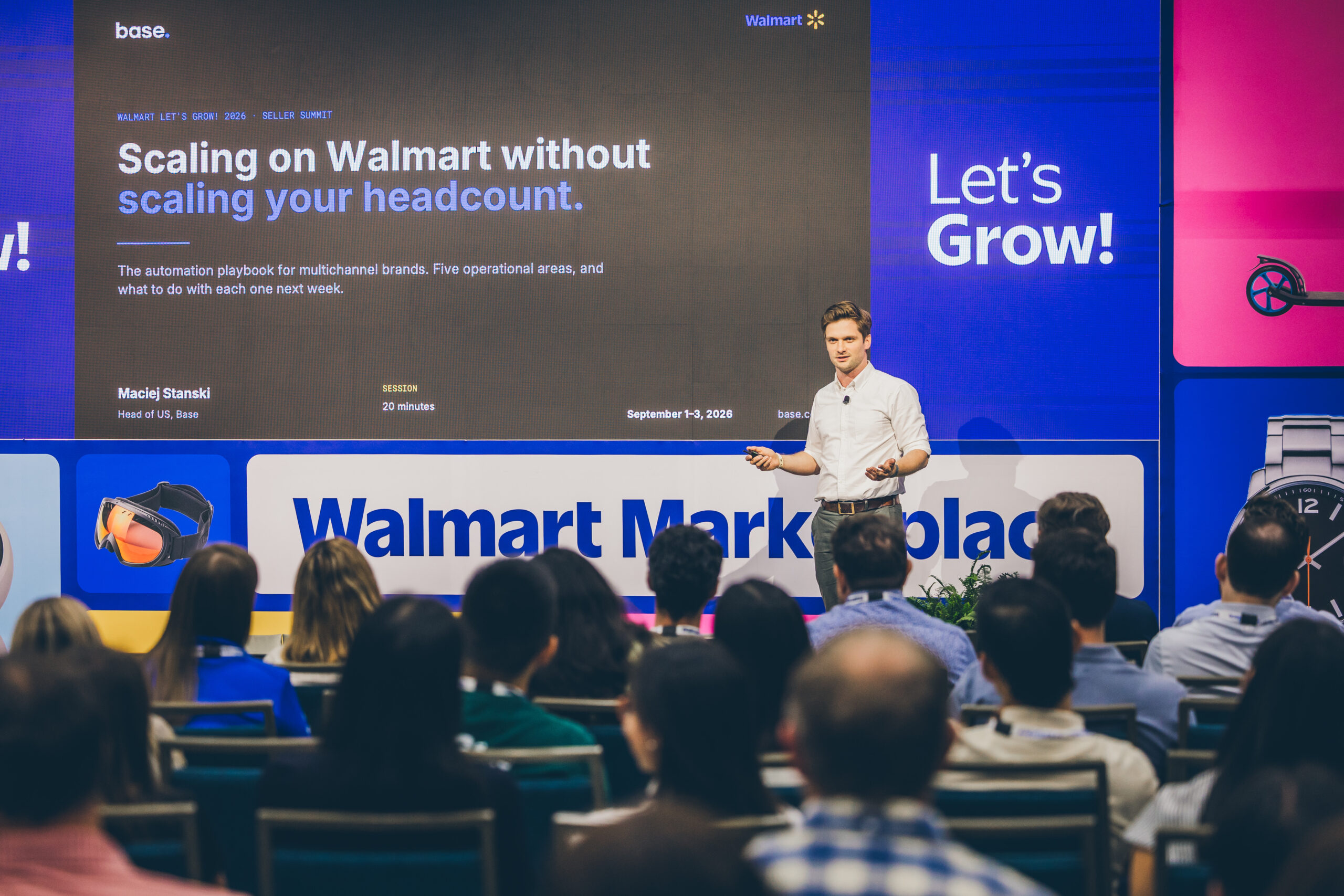
Walmart Marketplace ran Let’s Grow 2026, its annual Seller Summit, September 1 to 3. Base was there as an Inspiration Sponsor at booth 1602.
Turnout was the story of the show. The floor was full when doors opened on day one and it was still busy on the closing morning.
The Base booth had a claw machine loaded with gift cards and swag, and it drew a crowd from the start. People queued up for it, came back with colleagues, and kept coming back for another try. By day two the word going around the floor was that Base had the best swag at the show. That wasn’t the award we came for, but we weren’t going to turn it down.
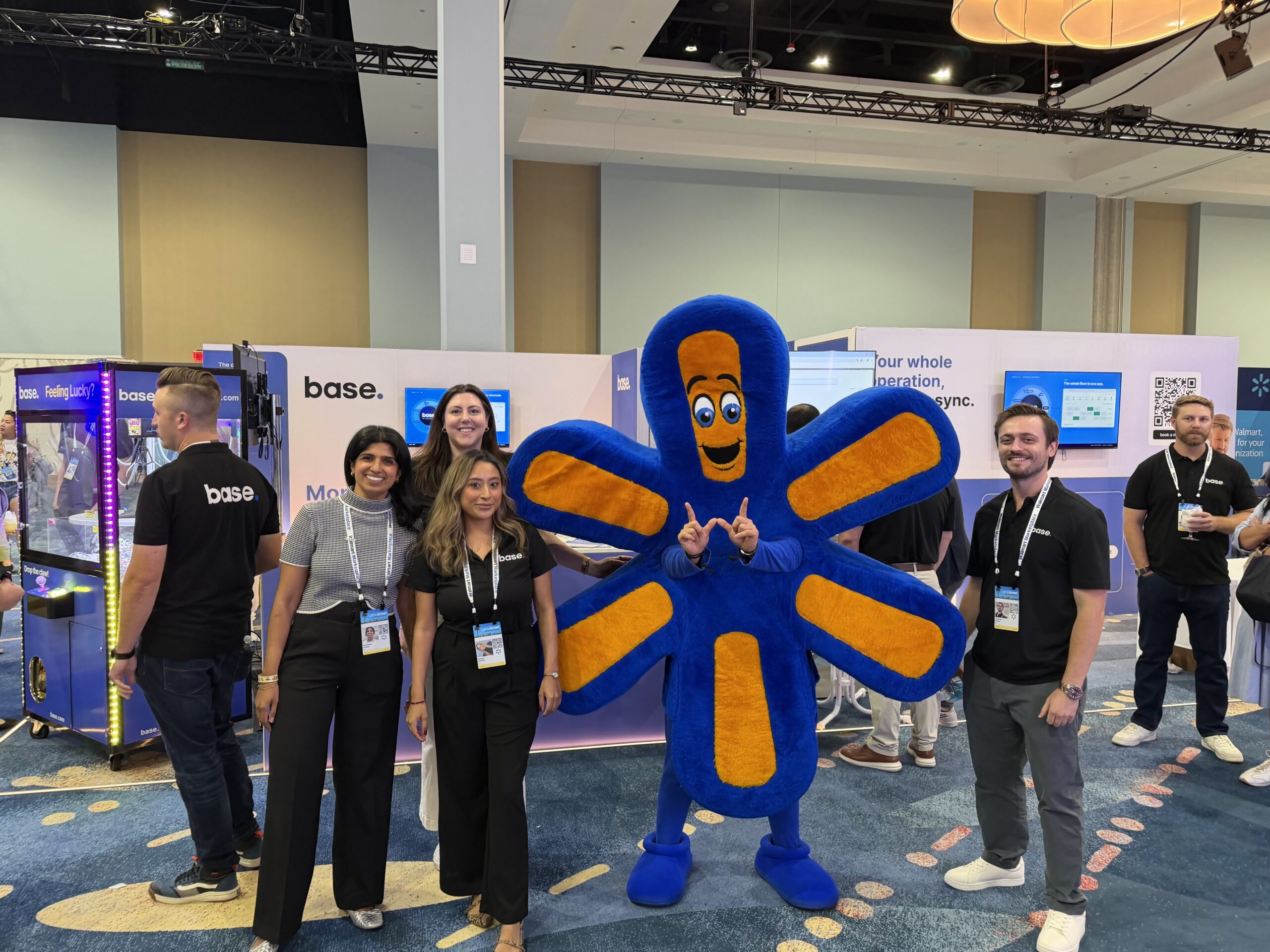
Walmart named Base winner of the Marketplace Innovation Award
Walmart Marketplace gave out its partner awards on the first evening of Let’s Grow 2026, and Base took home the Innovation Award. Radek Klouda and Blane Bremer accepted it on stage.

The award covers a long stretch of work rather than one launch. Walmart’s requirements are specific, so we built each new API and fulfillment program into the platform natively, instead of leaving sellers a workaround to maintain. Sellers running real Walmart volume told us what they needed, and that shaped what we built first.
The payoff is that sellers get one platform for their whole Walmart operation, from catalog to inventory to fulfillment routing. Base handles the complexity without additional dev work or an engineer on call, and Walmart sits alongside every other channel they sell on.
Thank you to the Walmart Marketplace team for the award and a well-run summit, and to everyone who stopped by our booth over the three days. The Base team couldn’t have been more proud of how the show turned out.
What sellers actually wanted to talk about
Over three days we talked with more than 500 brands and partners. Three questions came up over and over:
How do we grow our Walmart assortment without the listing work growing at the same rate?
How do we handle more Walmart volume without hitting a bottleneck?
How do we expand into more channels without impacting our current business?
What stood out was how consistent it was. Sellers of all sizes were asking versions of the same question about how they scale. A brand running a handful of channels and an enterprise ops team running dozens would stop by within an hour of each other and describe the same problem at different volumes.
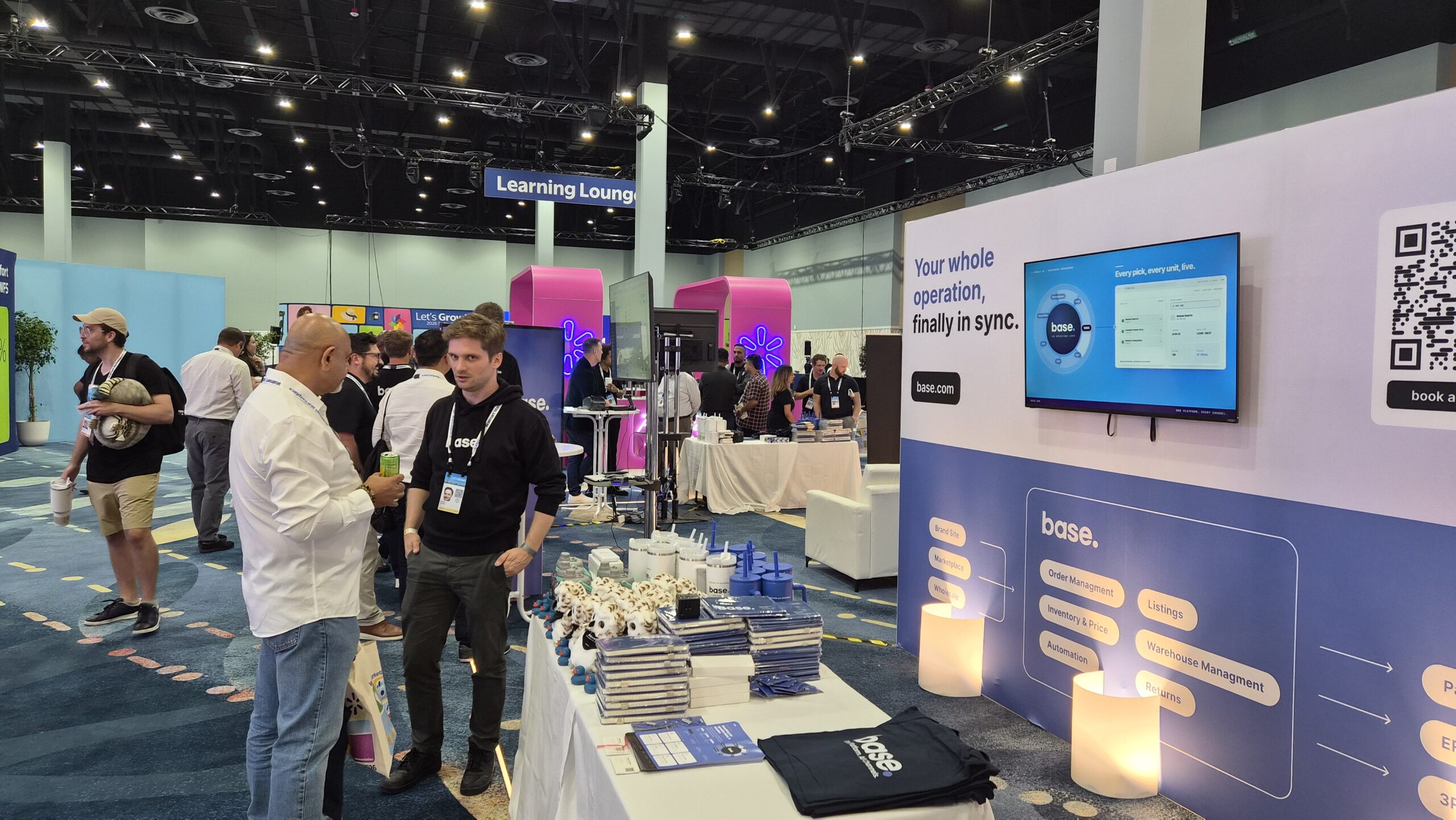
Standing room only for Maciej’s session
That’s the problem Maciej Stanski, our Head of US, built his session around: scaling on Walmart without scaling your headcount. The room filled and then some, with people standing along the back and sides.
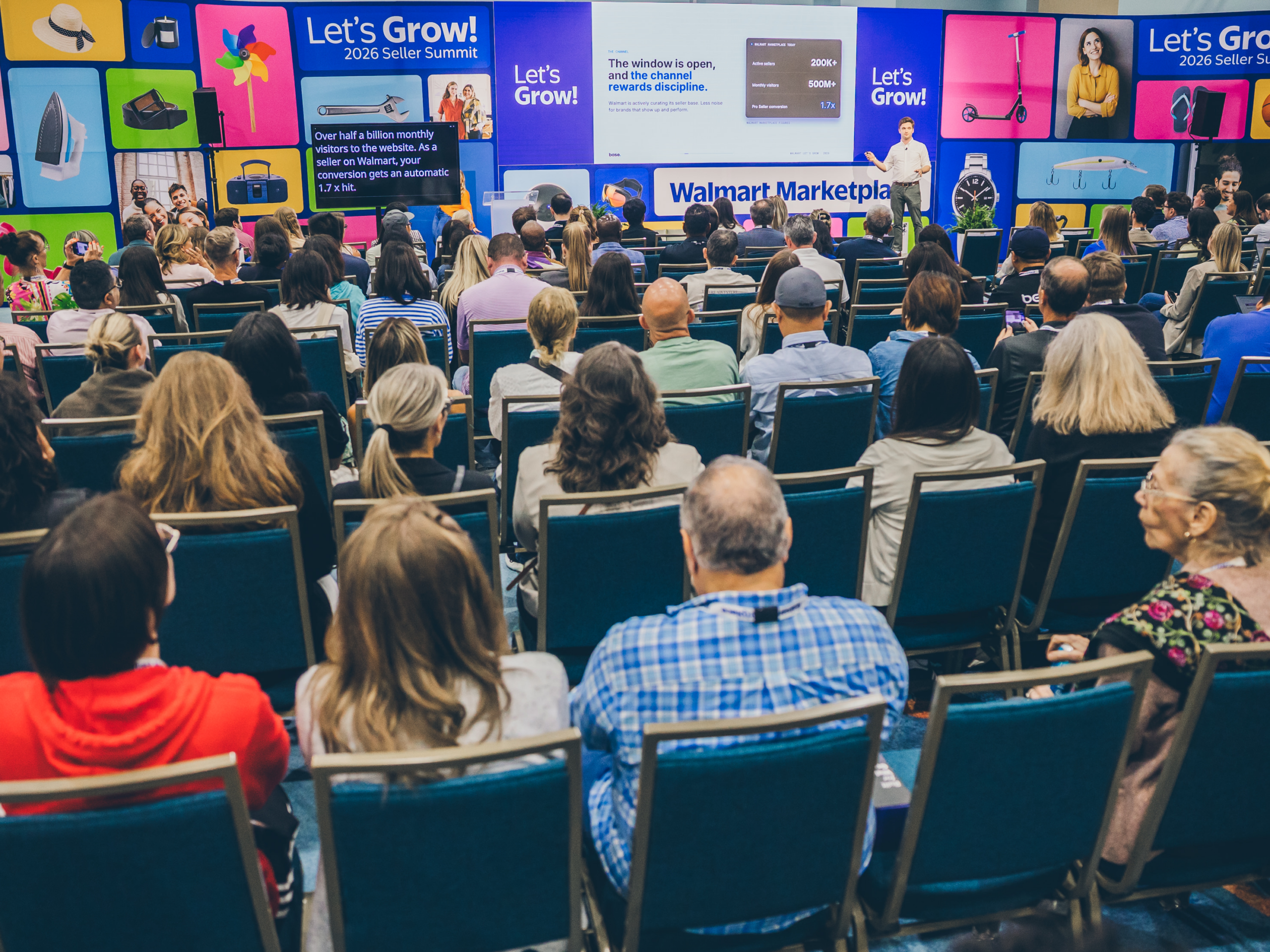
Walmart brings the same five daily jobs every channel does. Listings, stock, orders, shipping, tracking. The difference is that Walmart measures all five. The Seller Scorecard tracks 99%+ on-time shipment, 99%+ valid tracking, and a low cancellation rate, every day, not on average.
Most brands still launch on Walmart and run it as a separate project. Separate dashboard, separate process, often a separate person. That works at 50 orders a week. At 500 it doesn’t, and the problems usually show up on the Scorecard before anyone on the team catches them.
Here are the five places Maciej said it tends to break
Listings get built one at a time
Walmart’s requirements are specific. 75 character titles, white background primary images, validated GTINs, and category attributes that change by category. Handled product by product, those requirements get relearned on every launch.
Map your attributes to Walmart’s required fields once, build offer templates, push in bulk. One template applied to 148 SKUs is a single action. For catalogs too large to template by hand, AI Listing Agents handle the category matching and attribute fill.
Inventory syncs too slowly
A sync that runs every four hours leaves a four hour window. Sell out on Amazon at 9:05 and Walmart keeps taking orders until noon.
Overselling isn’t only a customer service problem. It hits your Scorecard, which affects search visibility, which affects revenue. Most multichannel inventory problems are really latency problems.
Real-time sync, so a sale on any channel updates Walmart right away, with safety stock thresholds per SKU and per channel for the edge cases.
Orders get routed by a person
Walmart expects 99%+ on-time shipment and valid tracking every day. When someone is switching between dashboards to keep that up, it slips on the busy days.
Write the decision down as a rule. An order comes in, the rule checks the conditions, then it routes the order, generates the label, issues the invoice, and pushes tracking. Write it once, it runs from then on.
Assortment gets decided based on guesswork
Walmart’s Assortment Growth program shows you what its shoppers are searching for that you don’t stock, based on real demand signals. Most sellers either never look at it or can’t act quickly enough for the signal to still be useful.
Check the feed on a schedule and treat it like demand data. Keep the path to listing short enough that a recommendation can be live within the week, on the templates you already built.
WFS, your warehouse, and your 3PL live in three systems
WFS is the fastest route to Pro Seller status and a 1.7x conversion lift. Multichannel Solutions then uses the same WFS inventory to fulfill Amazon, eBay, Temu, and TikTok orders, averaging 15% lower fulfillment cost than competing providers with 97% on-time delivery. The problem is running all three fulfillment methods from three places.
One pool of inventory, one panel for stock, orders, labels, and tracking. Routing rules decide which method each order takes.
Where AI actually helps here
The same test every time: is the work high volume, repetitive, and easy to check afterwards?
That covers category and attribute matching on new SKUs. Walmart-formatted titles, descriptions, and bullets generated for a whole set and reviewed once. And asking questions of your own sales, stock, and margin data in plain language so you can act the same day.
You’re still making the decisions. The AI is doing the repetitive work.
Why Walmart sellers run all of this on Base
Walmart orders land next to Amazon, TikTok Shop, Shopify, and every other channel you’ve connected.
Walmart’s formatting applied per listing, from the same product data.
Updated everywhere in real time.
No code. Routes orders across WFS, MCS, a 3PL, or your own warehouse, and handles the labels, invoices, and tracking behind them.
The Walmart-specific pieces are built in.
Two-way sync on listings, orders, inventory, and pricing.
WFS managed next to every other fulfillment method.
The same WFS stock fulfilling Amazon, eBay, Temu, and TikTok orders.
List based on Walmart’s demand signals using templates you already built.
Vendor operations on Walmart, in progress. Early access waitlist is open.
Getting started
See the platform, talk through your setup, and we’ll show you where Base can improve things.
→ New-Seller Savings
Up to $75,000 for new Marketplace sellers going live after February 1, 2026. Referral fee discounts plus fulfillment and advertising credits in the first year.
→ Customer Favorites
Demand signals for products shoppers are searching for that you don’t stock yet.
→ MCS introductory offer
20% off Multichannel Solutions fulfillment fees for 90 days, through January 31, 2027. WFS setup first.
Frequently asked questions
What is Walmart Let’s Grow?
Let’s Grow is Walmart Marketplace’s annual Seller Summit. The 2026 edition ran September 1 to 3 and brought together Marketplace sellers, Walmart teams, and solution providers. Base attended as a sponsor at booth 1602 and presented a session on scaling Walmart operations.
What are the five places Walmart operations tend to break?
Listings built one product at a time instead of from templates, inventory synced on a schedule rather than in real time, orders routed manually by a person, assortment decided internally instead of from Walmart’s demand signals, and WFS, your own warehouse, and your 3PL managed in three separate systems.
Does Base support Walmart Fulfillment Services and Multichannel Solutions?
Yes. WFS and Multichannel Solutions are integrated, alongside your own warehouse and connected 3PLs. Stock sits in one pool and routing rules decide which fulfillment method each order takes, then handle the label, invoice, and tracking push.
What is the Walmart New-Seller Savings program?
Walmart offers up to $75,000 in savings for new Marketplace sellers going live after February 1, 2026, including referral fee discounts and credits on fulfillment and advertising in the first year.
What is the Walmart Marketplace Innovation Award?
The Innovation Award is one of the partner awards Walmart Marketplace presents at its annual Seller Summit. Walmart gave it to Base at Let’s Grow 2026, recognizing Base’s work building native Walmart support throughout its platform.