The Direct-to-Consumer (D2C) model has fundamentally reshaped India’s retail landscape, transitioning from niche digital brands to a dominant force in the e-commerce sector. This transformative journey is driven by a unique confluence of demographic shifts, digital adoption, and technological innovation. The Indian D2C market, valued at approximately $42.59 billion in FY2024, is on an aggressive trajectory, projected to reach over $185 billion by FY2032, underscoring its pivotal role in the nation’s economic growth.

For Indian sellers and entrepreneurs, understanding the core drivers and leveraging cutting-edge technology is no longer optional but a mandate for success in this hyper-competitive environment. The opportunity lies not just in bypassing traditional retail but in forging deep, data-driven relationships directly with the consumer, a feat made possible by the digital ecosystem.
This comprehensive guide delves into the factors fueling the D2C boom across India’s diverse geography, from metros to Tier 2 and Tier 3 cities, and explores the technological pillars that are essential for scalable, sustainable growth for Indian D2C brands.
Why are Indian Consumers Shifting to D2C Brands?
The surge of D2C brands in India is a direct response to, and a catalyst for, evolving consumer preferences and the widespread digital infrastructure development. This shift is pronounced across demographics, especially among digitally native millennials and Gen Z.
Changing Consumer Preferences and Digital Literacy
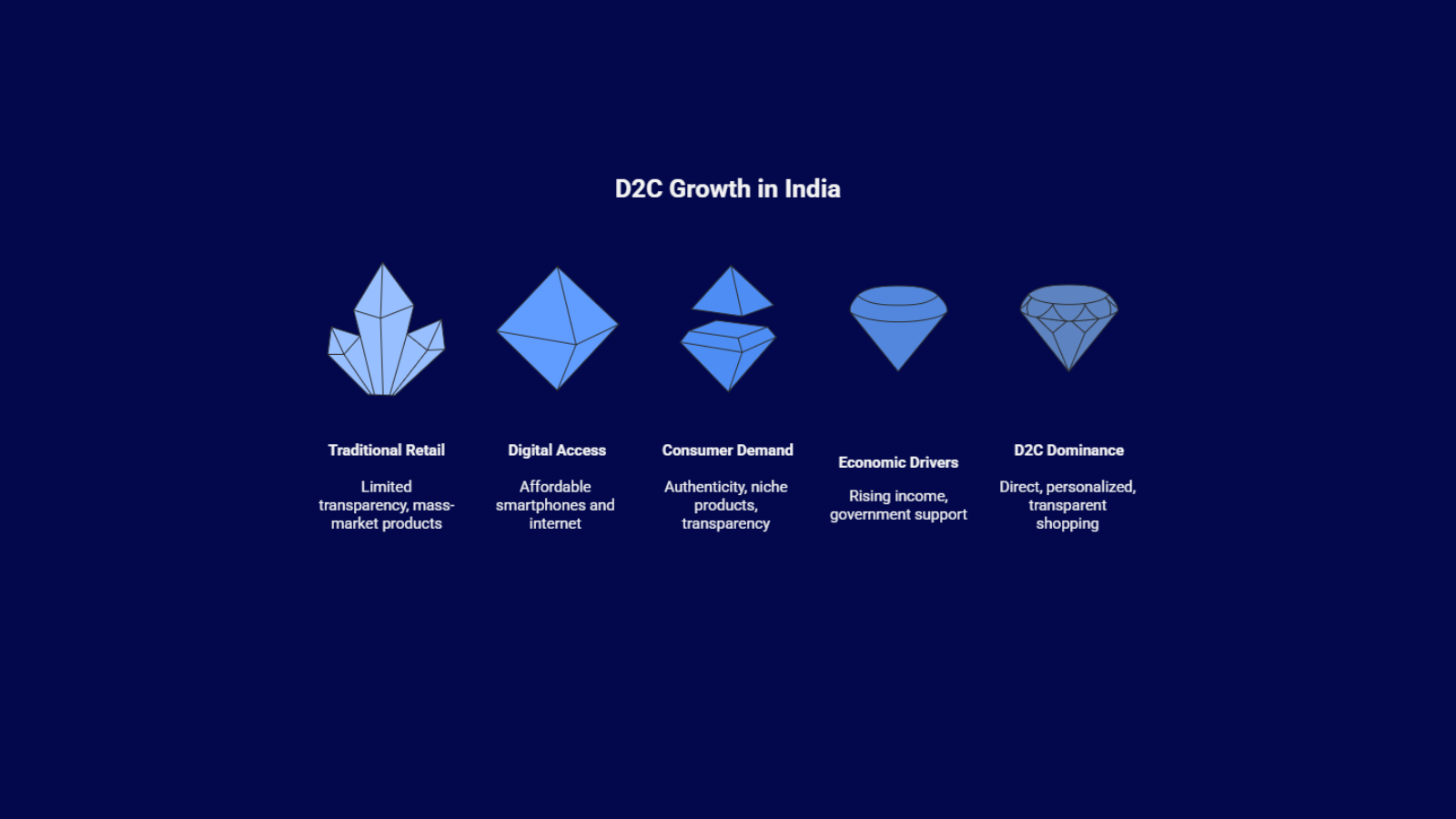
Indian consumers today seek more than just a product; they demand transparency, authenticity, and a personalized shopping experience. Traditional retail often falls short in delivering this bespoke engagement, whereas D2C brands excel.
- Quest for Authenticity and Niche Offerings: Consumers, especially the younger cohort, are moving away from mass-market legacy brands towards D2C players that offer products aligned with specific lifestyles, values (e.g., sustainability, clean ingredients), and identity. Niche categories like premium personal care, health and wellness, and sustainable fashion have particularly benefited.
- Demand for Transparency: By owning the entire customer journey, D2C brands can offer unparalleled product knowledge, supply chain transparency, and direct communication, building a level of trust that traditional multi-layered distribution struggles to match.
- The Digital Gateway: Smartphone and Internet Penetration: The availability of affordable smartphones and low-cost mobile internet, including 4G and the rollout of 5G, has effectively made the entire country addressable. This expanded digital access, particularly in Tier 2 and Tier 3 cities, has brought millions of first-time online shoppers into the D2C fold.
Economic and Geographic Drivers of D2C Growth
The economic landscape and governmental support initiatives have created a fertile ground for D2C entrepreneurship across India.
- Favorable Demographics and Rising Disposable Income: India’s large, young, and increasingly aspirational population, coupled with rising disposable incomes, creates a massive consumer base willing to experiment with new, quality-focused brands. The expansion of the middle class further fuels demand for premium D2C offerings.
- Government Initiatives and Regulatory Ease: Programs like ‘Digital India’ and ‘Vocal for Local’ have provided an impetus, enhancing digital infrastructure and encouraging local entrepreneurship. Platforms like the Open Network for Digital Commerce (ONDC) are further democratizing e-commerce access for smaller D2C sellers.
- Tier 2 and Tier 3 City Consumption Boom: The D2C model’s ability to bypass the complex and costly traditional distribution network is highly effective in serving smaller cities. These regions are showing rapid growth in online consumption, a trend magnified by vernacular content and localized marketing efforts.
How Can Technology Revolutionize D2C Brand Growth in India?
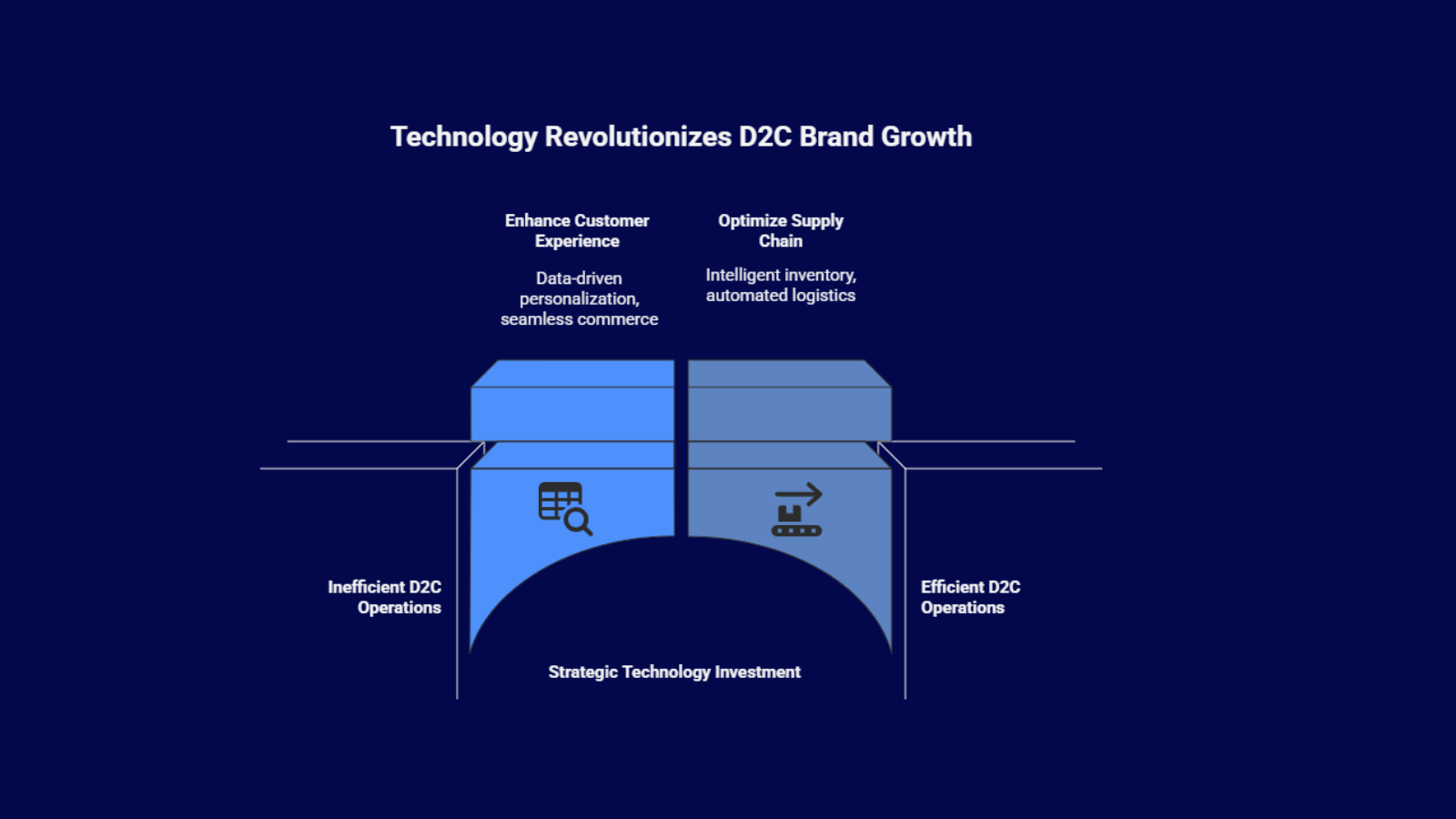
For Indian D2C brands, technology is the backbone that enables scale, personalization, and operational efficiency, transforming a local idea into a national brand. The key lies in strategic investment across the entire value chain.
Enhancing the Customer Experience through Data and Personalization
Direct access to customer data is the single greatest advantage of the D2C model. Leveraging technology to interpret and act on this data is crucial for fostering loyalty and retention.
Artificial Intelligence (AI) and Machine Learning (ML) for Hyper-Personalization:
-
- Recommendation Engines: AI analyzes purchase history, browsing behavior, and demographic data to offer highly relevant product recommendations, significantly boosting conversion rates.
- Personalized Marketing: AI-driven segmentation allows brands to create highly targeted email, SMS, and ad campaigns, reducing Customer Acquisition Cost (CAC) by focusing on high-intent users.
- Virtual Try-Ons and Augmented Reality (AR): For categories like apparel, jewelry, and beauty, AR features allow customers to virtually ‘try’ products, replicating the offline experience and drastically reducing Return-to-Origin (RTO) rates.
Seamless Conversational and Social Commerce:
-
- Chatbots and Live Chat: AI-powered chatbots offer 24/7 customer support, instantly resolving common queries and guiding purchases, improving customer satisfaction and reducing dependence on human agents for basic tasks.
- Live Commerce and Influencer Integration: Utilizing live streaming features on social media platforms for product demonstrations and direct sales, often in collaboration with influencers, drives immediate engagement and sales, leveraging the power of social proof.
Optimizing the Supply Chain and E-commerce Logistics Automation
In a vast and complex market like India, logistics is often the bottleneck for D2C brands. Technology provides the solutions to ensure fast, reliable, and cost-effective delivery.
Intelligent Inventory and Warehouse Management:
-
- Cloud-Based Warehouse Management Systems (WMS): These systems provide real-time visibility into stock levels across all channels, helping prevent stockouts or overstocking and streamlining picking and packing processes.
- Demand Forecasting: ML models analyze historical sales data, seasonal trends, and marketing activities to accurately predict future demand, optimizing inventory distribution across multiple fulfilment centers.
Automated Logistics and Courier Aggregation:
-
- Carrier Selection Automation: Tech platforms automatically select the most reliable and cost-effective courier partner for each order based on delivery location, service quality, and weight, ensuring optimal logistics performance.
- Real-Time Tracking and Transparency: Providing customers with granular, real-time tracking updates enhances the post-purchase experience and proactively manages expectations, a critical factor in building trust.
- Reducing Return-to-Origin (RTO) Risk: AI tools analyze customer risk profiles based on historical data and payment methods (like Cash on Delivery) to flag high-risk orders, allowing brands to take proactive measures to reduce costly returns.
-
Technology Application D2C Challenge Solved Impact on Indian Seller AI/ML Personalization Low Customer Retention Increased Customer Lifetime Value (CLV) AR/VR Try-Ons High RTO Rates in Fashion/Beauty Reduced Returns and Logistics Cost WMS and Demand Forecasting Stockouts and Overstocking Optimized Working Capital and Inventory Automated Courier Aggregation High Shipping Costs and Slow Delivery Faster Pan-India Shipping at Lower Cost Chatbots (24/7 Support) Customer Service Scaling Improved Customer Satisfaction and Reduced Opex
To truly thrive in this landscape, Indian D2C brands must adopt a “tech-first” mindset, viewing technology not as a cost center but as the fundamental engine of growth, scalability, and customer intimacy. The seamless integration of front-end personalization with back-end logistics automation is the key to unlocking the massive potential of the Indian market.
What are the Essential Marketing and Growth Strategies for Indian D2C Success?
Building a recognizable brand from scratch requires strategic marketing that capitalizes on the digital ecosystem and builds authentic connections in a crowded market.
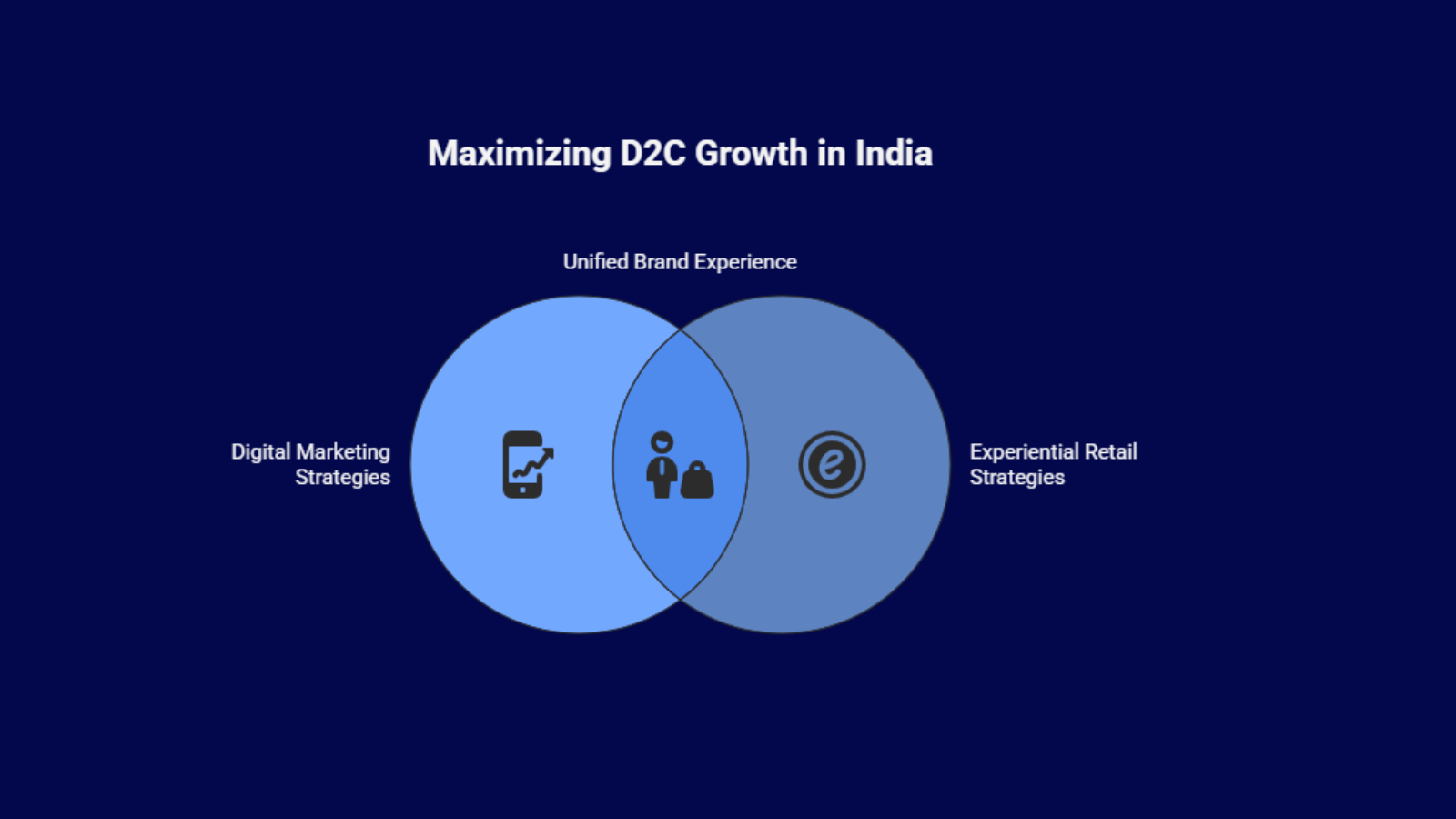
Influencer Marketing and Community Building
In India, where trust in word-of-mouth recommendations is high, partnerships with micro and nano-influencers are highly effective. These collaborations drive localized and authentic content, tapping into niche communities and significantly reducing Customer Acquisition Cost (CAC) compared to mass advertising.
Content-Led Storytelling
Indian consumers resonate deeply with authentic brand stories. Creating content (video, blogs, social media posts) that narrates the brand’s origin, ethos, ingredient sourcing, or community impact helps forge an emotional connection, turning customers into advocates.
The Power of Omnichannel Presence
While born online, D2C growth in India increasingly requires a blend of digital and physical presence. This includes strategic pop-up stores, kiosks in high-footfall areas, or even partnerships with modern retail chains, allowing customers to “touch and feel” the product, which is particularly important for first-time buyers.
What Key Metrics Should Indian D2C Brands Focus On for Sustainable Scaling?
Scaling sustainably requires a sharp focus on unit economics and customer value, moving beyond vanity metrics like total sales or followers.
Customer Lifetime Value (CLV) vs. Customer Acquisition Cost (CAC)
The most crucial metric for D2C longevity. A successful brand must ensure that its CLV is significantly higher than its CAC (a ratio of 3:1 is often considered healthy). Technology for personalization and loyalty programs is key to boosting CLV.
Repeat Purchase Rate and Retention Rate
A high retention rate indicates a strong product-market fit and a loyal customer base, which is inherently more profitable than constantly seeking new customers. Loyalty programs and post-purchase engagement are vital for this.
Net Promoter Score (NPS)
A measure of customer satisfaction and loyalty. High NPS scores directly translate to organic growth through referrals and positive word-of-mouth, which is invaluable in the Indian market.
How to Establish a Strong D2C E-commerce Foundation?
For any Indian seller, the website is the flagship store. A robust, secure, and intuitive e-commerce platform is non-negotiable for success.
- Platform Selection: Choose a scalable, customizable e-commerce platform that can handle peak traffic and integrate seamlessly with third-party logistics (3PL), payment gateways, and marketing tools. The platform must be mobile-first, given the high rate of mobile commerce in India.
- Seamless Checkout Experience: A complex or slow checkout process is a major cause of cart abandonment. Ensure one-click payment options, multiple payment methods (including digital wallets, UPI, and Cash on Delivery), and transparent shipping costs.
- Utilize Your Domain as a Hub: Use your own branded domain (e.g., brandname.com) as the central hub for all customer interactions, data capture, and transactions. Leverage your domain for all digital CTAs.
Why is automation the need of the hour?
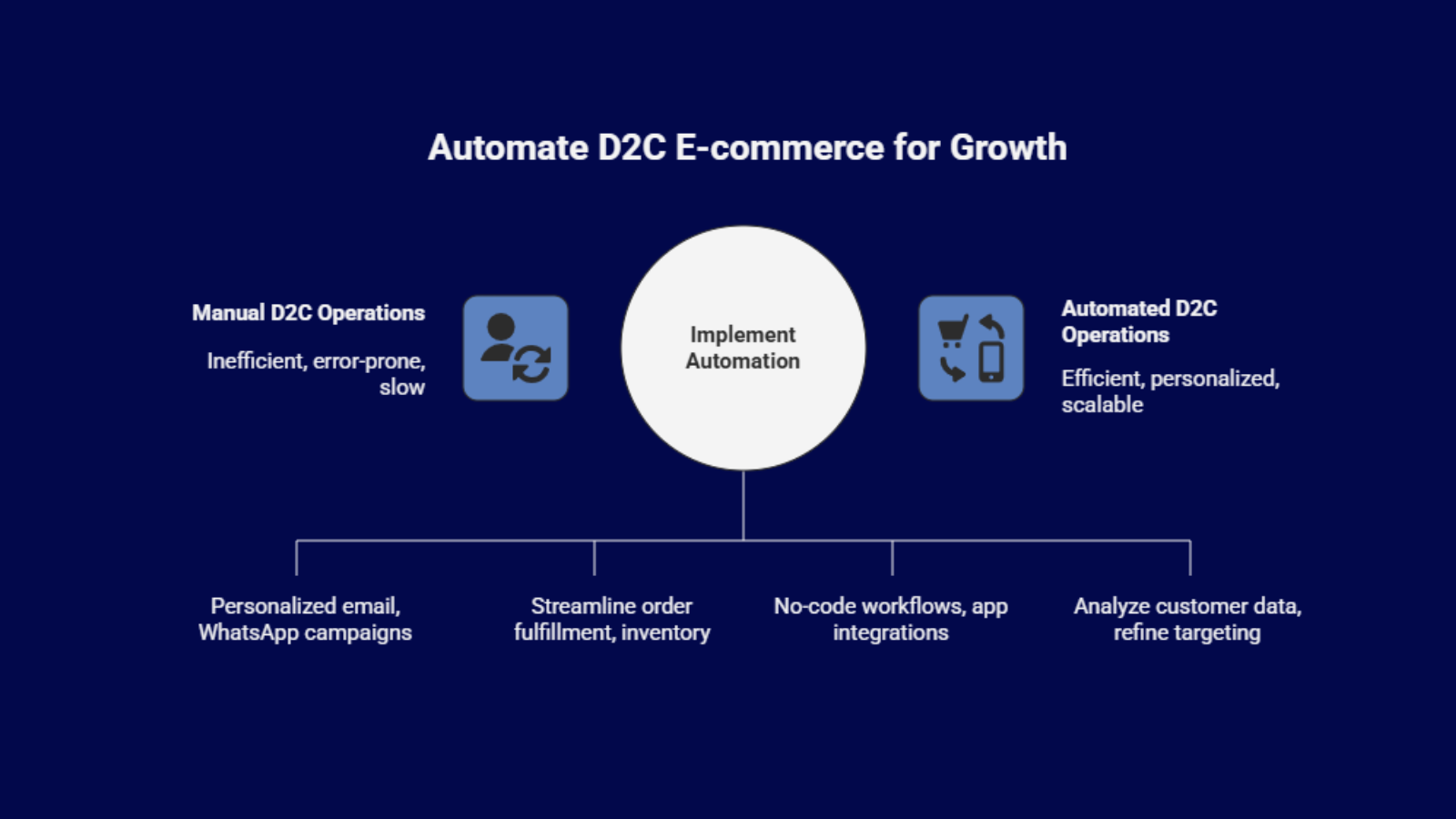
Automation is rapidly becoming the backbone of successful Direct-to-Consumer (D2C) e-commerce brands in India, offering a vital pathway to scale efficiently and manage the complexities of direct customer engagement. By leveraging technology to handle repetitive tasks, D2C sellers can focus on strategy, product innovation, and building the deep customer relationships that define their business model. Automation platforms, such as those built on the Base.com ecosystem with its 1500+ global integrations, provide the essential infrastructure for this growth.
Key Areas of Automation
The key areas for automation span the entire customer lifecycle, from initial acquisition to post-purchase retention.
- Marketing & Customer Acquisition: Automation tools are indispensable for powering highly personalized email and WhatsApp drip campaigns, triggering messages like welcome sequences, abandoned cart reminders, and post-purchase follow-ups based on customer behavior. This level of segmentation and targeted outreach is crucial in the competitive Indian market, ensuring messages are relevant and conversion-driving, thereby optimizing ad spend and improving customer lifetime value (LTV).
- Operations & Fulfillment: The efficiency gains here are transformative. Automation streamlines order fulfillment, a critical function given India’s vast logistics landscape. Systems like Base.com automatically manage inventory tracking, generate shipping labels, update stock levels across different channels, and send real-time order and delivery notifications to customers. As a result, this significantly reduces manual errors. At the same time, it accelerates processing times and enhances overall customer satisfaction. Moreover, automating returns and exchanges management helps turn a potential pain point into a valuable retention opportunity.
- Customer Service: Automated actions in no-code platforms like Base.com focus on allowing D2C brands to create sophisticated workflows using visual builders, eliminating the need for coding. These actions connect various apps and triggers to perform tasks automatically across marketing, sales, and service.
- Data-Driven Strategy: Finally, integrating data analytics with automation platforms is essential. By automatically collecting and analyzing first-party customer data, brands gain real-time insights into consumer preferences, purchase history, and engagement patterns.
In turn, this data then feeds directly back into the automation workflows, continuously refining targeting for personalized product recommendations and loyalty programs. For Indian D2C brands looking to thrive, embracing a robust automation pipeline across marketing, operations, and customer experience is not merely an advantage; it is a necessity for sustainable growth supported by powerful global platforms like Base.com.
Start building your powerful, data-driven e-commerce foundation today. Create your automation pipeline for your ecommerce business and start focusing on things that matter with base.com.
Click Here to know more about benefits of Integrated OMS, PIM, and WMS systems that reduce costs and improve efficiency.
Frequently Asked Questions (FAQs) for Indian D2C Sellers
1. What is the biggest logistical challenge for D2C brands in India?
One of the most significant logistical challenges, however, is managing the high Return-to-Origin (RTO) rate particularly for Cash-on-Delivery (COD) orders, while also ensuring consistent last-mile delivery quality across Tier 2 and Tier 3 cities. Technology solutions like predictive risk-scoring for COD orders and leveraging multiple, aggregated courier partners are essential to mitigate this.
2. What is the role of pricing in the Indian D2C market?
While D2C eliminates middlemen, competitive pricing remains important, especially when competing with marketplaces. The key is to convey the value proposition of higher quality, better ingredients, or unique sustainability credentials to justify the price premium. Brands must optimize their cost structure using technology to protect margins while maintaining competitive positioning.
3. How can a new D2C brand compete with established marketplaces in India?
New D2C brands compete not on volume but on niche focus and direct connection. They should focus on a narrow product category, build an authentic brand narrative, use hyper-personalized marketing, and offer an exceptional post-purchase experience that marketplaces often cannot replicate. This fosters a loyal community base that drives sustainable, profitable growth.
4. Should D2C brands in India go Omnichannel?
Yes, increasingly. While the core sales happen online, physical touchpoints (pop-ups, experience centers) are crucial for building trust, especially in high-touch categories like beauty and home goods. An Omnichannel approach uses online data to inform offline strategy and vice versa, creating a cohesive, cross-platform customer journey.