The retail landscape in India is changing fast. This shift is not cosmetic or driven by hype. It is structural, permanent, and powered by a customer who expects more clarity, more convenience, and more control than at any point in Indian retail history. For decades, brands operated through complex, opaque distribution networks that prioritized reach over relationships. That model worked when customers had limited choices and limited visibility. It does not work today.
The modern Indian consumer is informed, connected, and comfortable jumping between digital and physical touchpoints. This new behaviour is pushing Indian sellers to evolve from depending on Indirect Trade, to building Direct Trade, and ultimately to merging all channels into a unified Omnichannel Retail strategy. This evolution is not about having a website. It is about long-term survival, relevance, and scalable growth.
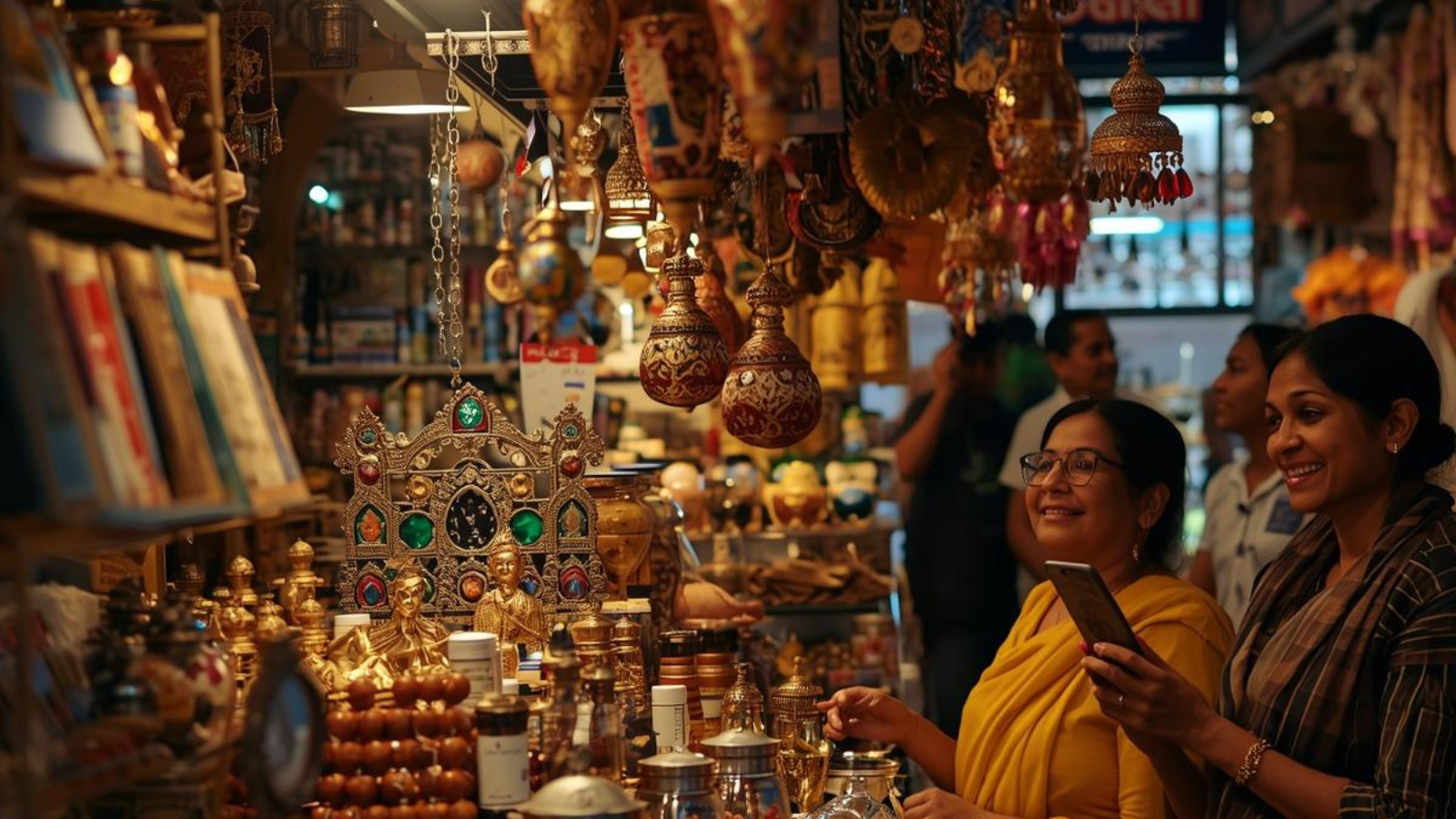
For Indian sellers facing intense digital competition, rising customer expectations, and high operational costs, this shift is becoming a strategic necessity. The logic is simple. If customers want a seamless journey, from discovery to purchase to service, brands must redesign how they distribute, communicate, and fulfil.
The goal is not just selling more. It is building a business that understands customers deeply, controls its brand experience tightly, and moves fast in a demanding market.
The Dawn of Direct Control: Why the Indirect Distributor Model Stopped Working
For years, indirect distribution was the standard approach for Indian brands. Distributors helped reach faraway towns without brands needing to invest in teams, warehouses, or logistics. But the trade-off was heavy. Brands lost visibility, lost data, and ultimately lost control of how they looked and felt at the final point of sale.
The indirect model created a gap between the brand owner and the customer. This gap slowed decision-making, diluted brand messaging, and hid critical market information behind intermediaries.
To scale in today’s market, brands cannot afford this distance.
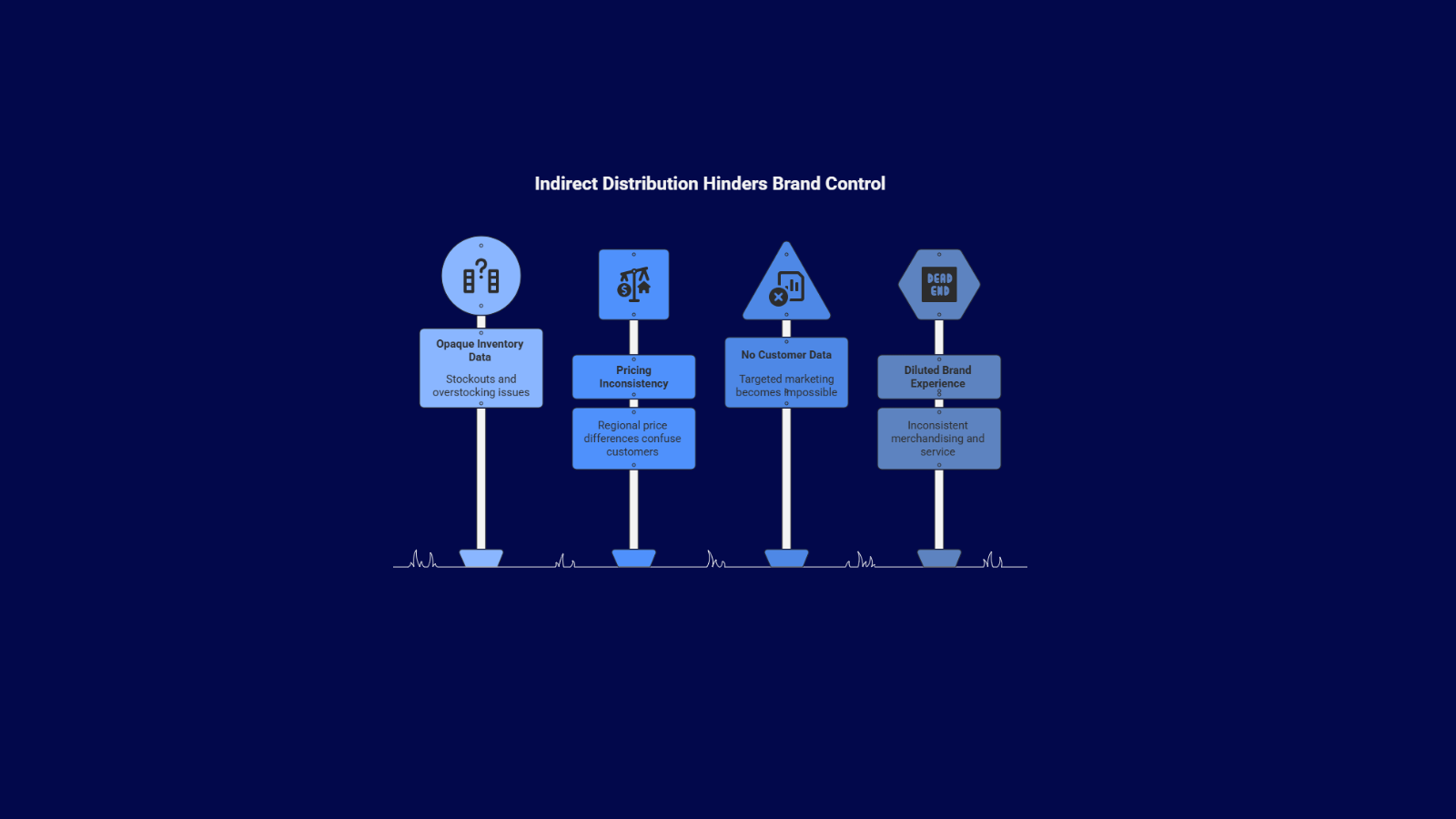
How Control Was Lost
- Opaque Inventory Data: Brands rarely had real-time visibility into how much stock distributors held, where it was being supplied, or when it would run out. This caused both stock-outs and overstocking.
- Pricing Inconsistency: Distributors often set retail prices based on local dynamics. This created wide regional price differences that confused customers and damaged brand credibility and hence, pricing consistency became a very important pivot to gain control back.
- No First-Party Customer Data: Distributors and retailers owned customer information. Brands were left blind to customer preferences, making targeted marketing impossible.
- Diluted Brand Experience: Distributor-led retail execution often focused on volume, not brand story. Merchandising, display, and service quality were inconsistent.
This model helped Indian brands grow initially, but it could not support precision, premium positioning, or personalization. Direct control became a strategic requirement.
The Pandemic Shock: What Forced Brands to Rethink Supply Chains
COVID-19 exposed the biggest weakness of the indirect model. When movement stopped and borders closed, multi-layered supply chains collapsed. Goods were stuck with distributors, retailers were closed, and brands had no direct way to move inventory.
The pandemic showed that agility is not optional. Brands needed the ability to reroute supply fast, communicate directly with retailers, and fulfil directly to consumers if required.
Key Takeaways From the Pandemic
- Fragility Became Obvious: One warehouse shutdown could halt distribution across entire states. The longer the chain, the higher the risk.
- Direct Access Enabled Agility: Brands with direct distribution could shift inventory quickly, meet local demand spikes, and keep sales going.
- Digital B2B Ordering Became Essential: Retailers needed an easy, contactless way to order directly from brands during lockdowns.
- Clear Communication Became Critical: Only direct channels allowed brands to give real-time updates on delivery timelines and safety measures.
This period proved that direct trade is not an efficiency upgrade. It is a resilience strategy.
Why Direct Trade Became a Strategic Advantage
Direct distribution gives brands the control they need to compete in a crowded market.
Core Advantages of Direct Distribution
| Advantage | What It Means | Impact on Indian Sellers |
| Better Supply Chain Control | Brands manage logistics themselves instead of depending on distributors. | • Faster and more predictable product movement across regions.
• Lower transit damage and fewer delays due to controlled routing. • Real-time visibility of stock, helping reduce both stock-outs and overstock. • Ability to react quickly to demand spikes, festival seasons, or local disruptions. |
| Dedicated Sales Teams | Sales teams work only for the brand, not multiple companies like distributors do. | • Better retailer relationships through consistent follow-ups and support.
• Stronger brand displays, store execution, and planogram compliance. • More control over promotions and visibility at the point of sale. • Increased accountability because teams are measured purely on brand success. |
| Digital Integration | Retailers place orders directly through brand-owned apps or platforms. | • Zero dependency on distributor staff to collect or forward orders.
• Accurate, timely orders that reduce manual errors. • Instant data flow that improves forecasting and replenishment. • Faster fulfilment cycles and more reliable delivery timelines. |
| Pricing Discipline | Brands control pricing across all markets instead of letting distributors adjust it. | • Uniform prices across regions, preventing customer confusion.
• Protection from unauthorized discounting or inflated margins. • A stronger, premium brand image built on consistency. • Improved trust from both retailers and customers due to predictable pricing. |
Direct trade improves margins, speeds up operations, and creates a strong base for digital transformation. But even direct trade falls short of what the phygital customer expects today.
Why Direct Trade Alone Is Not Enough for the Modern Indian Consumer?
Direct trade solves supply chain and transparency issues, but the customer experience has moved far beyond simply buying online or offline. Customers jump between channels without thinking. They compare prices online before visiting a store and browse in-store and then buy on the website. They expect uniformity everywhere.
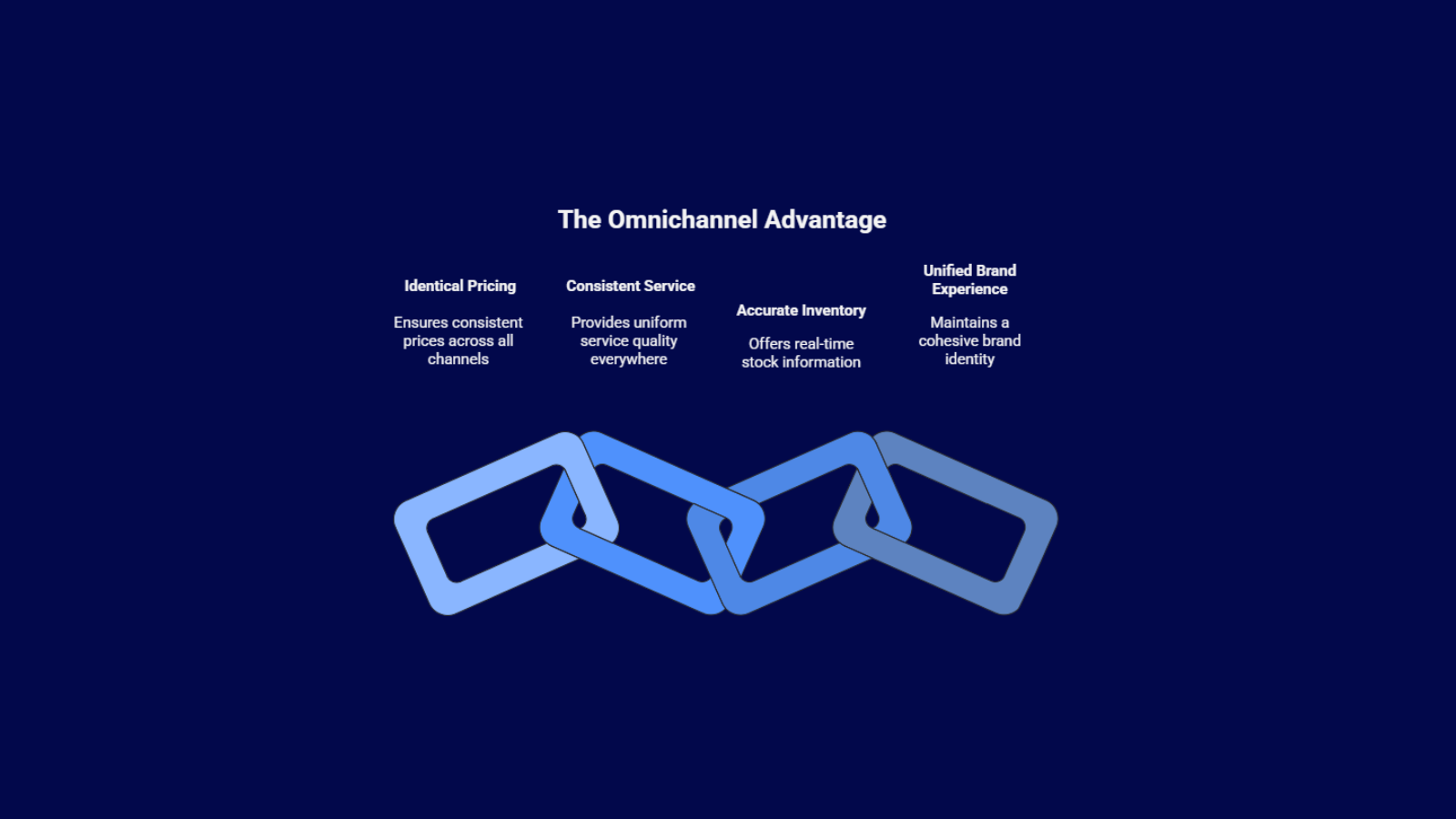
This shift demands a single, connected system.
1. Identical Pricing Across Channels
Customers are empowered by technology and compare prices instantly. If they find a different price for the same product on your website versus your physical store, or even different prices on regional apps, it immediately creates confusion and breaks trust. The modern expectation is transparency: the price seen online must be the price paid offline. Omnichannel solves this by linking all sales channels to a single, unified pricing engine, ensuring consistency and integrity across every touchpoint. This removes consumer friction and prevents revenue loss due to showrooming or price arbitrage.
2. Consistent Service Everywhere
Friction in service is a primary cause of customer churn. A customer who buys an item online must be able to return or exchange it at the nearest physical store, and the warranty process initiated in-store should be trackable via an app. Policies for returns, exchanges, and warranties must work everywhere without friction. Omnichannel integrates the Customer Relationship Management (CRM) and Point-of-Sale (POS) systems, so the customer’s purchase history is accessible across channels. This allows for seamless service transactions like “Buy Online, Return In Store (BORIS),” building lasting loyalty and satisfaction.
3. Accurate Inventory Information
One of the most frustrating experiences for a customer is visiting a physical store only to find the item they saw online is out of stock. Customers now demand accurate, real-time inventory visibility. They want to check online if a nearby store has the item in stock before making a trip. Omnichannel achieves this by creating a single, logical pool of inventory accessible to all channels, websites, apps, and stores. This functionality enables services like “Buy Online, Pick Up In Store (BOPIS),” maximizing sales conversion by leveraging the convenience of digital search with the immediacy of physical fulfillment.
4. Unified Brand Experience
The brand should look, sound, and behave the same online and offline. This consistency reinforces brand identity and trustworthiness. If your store experience feels disconnected or the messaging differs from your digital presence, the brand identity weakens. Omnichannel ensures marketing, visuals, and service interactions adhere to a singular standard. By unifying the experience, omnichannel retail removes channel-based friction, ensuring the customer journey is not disjointed but rather one continuous, predictable, and superior interaction.
Omnichannel retail is the answer to these expectations. It removes channel-based friction and gives the customer one continuous journey.
How Omnichannel Retail Solves Key D2C Challenges
Online-only D2C brands often struggle with high return rates, especially in fashion, footwear, and electronics. Customers return items because they cannot touch, feel, or test products online. Stores help fix this problem.
- Lower Return Rates: Customers can try products in-store before buying or choose to pick up online orders from stores to avoid surprises.
- Cheaper Reverse Logistics: Fewer returns mean less shipping cost and less stock depreciation.
- Store-Based Fulfilment: Stores act as mini-fulfilment hubs for nearby online orders. This cuts delivery time and cost.
- Better Customer Service: Stores provide easy returns and exchanges, improving satisfaction and reducing support load.
In the omnichannel model, the store is no longer just a sales point. It becomes a service hub, an experience center, and a local fulfillment point.
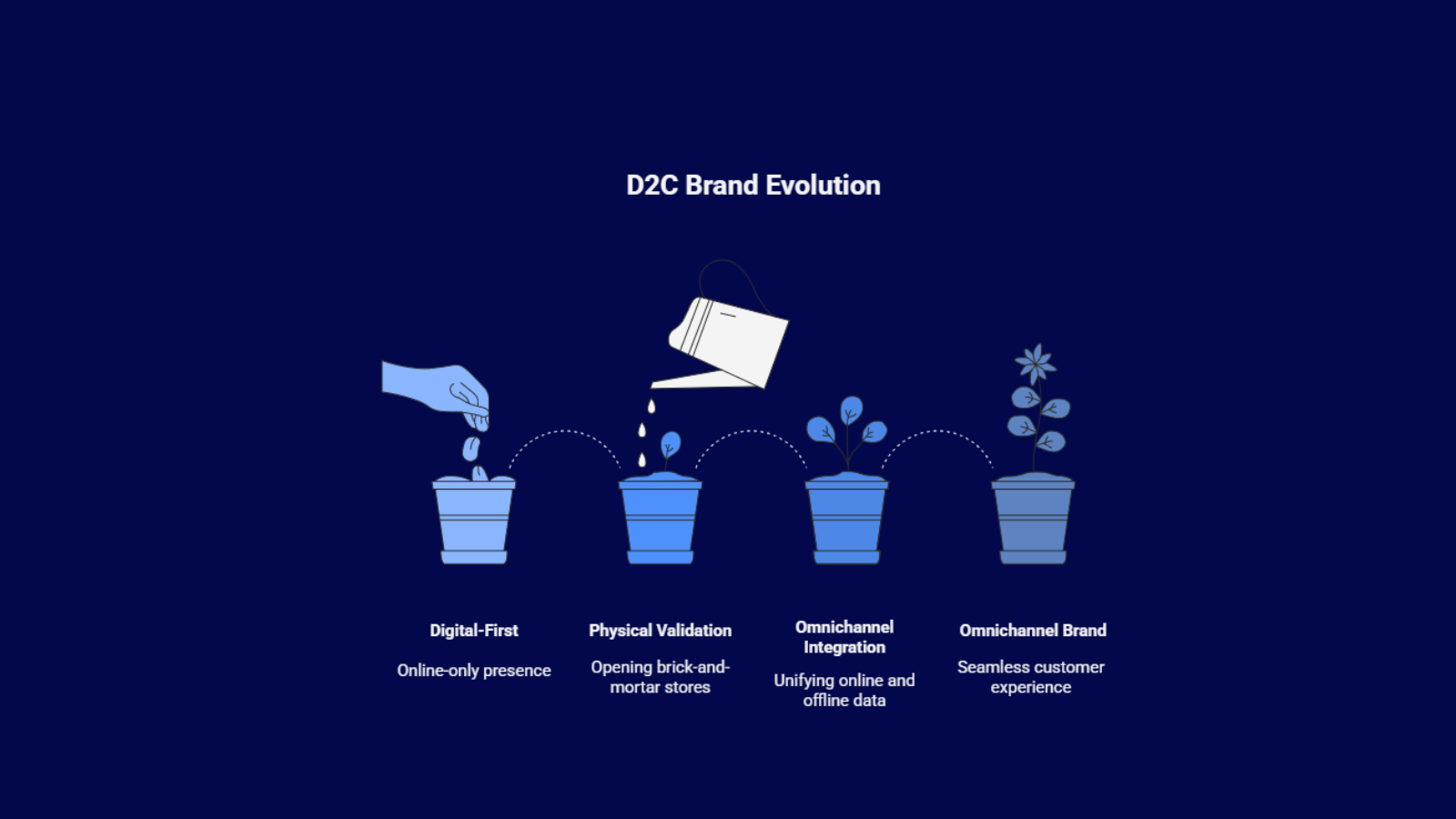
Why D2C Brands Are Opening Stores and Why Omnichannel Is Now Essential
Digital-first brands in India grew fast online, but many soon discovered a limit. Online convenience brings reach, but it does not build long-term trust on its own. Indian customers, especially in categories like fashion, beauty, appliances, and electronics, still want to touch, feel, compare, and experience products before making confident decisions. This need for physical validation is the core reason D2C brands are now opening stores. A store signals stability, credibility, and long-term commitment. It strengthens the brand experience by letting customers explore products in context, understand quality up close, and engage with the brand story in a way a website cannot match. It also cuts through the noise of crowded digital ads and helps the brand stand out. Most importantly, it supports natural phygital buying behaviour, where customers research online and purchase offline, or browse in-store and buy online later. This completes the brand journey and builds genuine loyalty.
As customers blend online and offline behaviour, omnichannel is no longer optional. It is the only way to serve them consistently across all touchpoints. Omnichannel systems consolidate data from websites, apps, stores, CRM tools, loyalty programs, and customer support into one source of truth. This gives brands a full, 360-degree view of how customers browse, buy, return, and engage. With this insight, brands can personalize recommendations, run more efficient marketing campaigns, offer faster support, and plan regional assortments more intelligently.
Omnichannel also boosts sales by removing friction. Customers get services like Buy Online Pick Up In Store, real-time inventory visibility, quicker delivery from nearby stores, and unified loyalty and promotion benefits. Every part of the experience works together, making the path to purchase smoother, stronger, and more predictable for both the buyer and the brand.
Conclusion: Mastering the Unified Customer Journey
The evolution of Indian retail from indirect distribution to direct trade and now to full omnichannel integration reflects one clear reality. The customer is in control, and brands must adapt. This shift gives Indian sellers the chance to move beyond simply pushing products and instead build long-term, high-value customer relationships.
Omnichannel brings together the convenience of online shopping and the trust of the physical store into one seamless, consistent experience. It strengthens brand perception, unlocks powerful customer insights, and creates operational efficiency across every touchpoint. For brands that want to stay relevant and competitive, a unified strategy is no longer optional.
To deliver this level of integration, Indian sellers need a strong technology backbone that connects inventory, CRM, and fulfillment across all channels. The time to modernize is now. Take control of your retail future and explore how to build a unified commerce strategy with Base.com today.
Click here to integrate Amazon MCF with Base.com today.
Frequently Asked Questions (FAQ) for Indian Sellers
1. How can a small Indian seller afford a physical store?
Small sellers can start with pop-up stores, shared spaces, or compact experience centers instead of full stores. These low-cost setups enable Click & Collect, quick returns, and basic service. The key is integrating online inventory with this physical touchpoint to create a fast, affordable phygital presence.
2. What is the most important technical investment?
The essential investment is a cloud-based Unified Commerce Platform that connects POS, inventory, CRM, and online channels. This creates one source of truth, prevents over-selling, and syncs stock in real time across all touchpoints. Without this backbone, an omnichannel strategy cannot function reliably or consistently.
3. How quickly can a brand see ROI?
Many brands see early ROI through reduced return rates and operational efficiency, especially in fashion and footwear. Unified customer data enables sharper, targeted marketing that boosts conversions. Most companies experience noticeable improvements in sales, margins, and customer satisfaction within the first year of implementing omnichannel correctly.