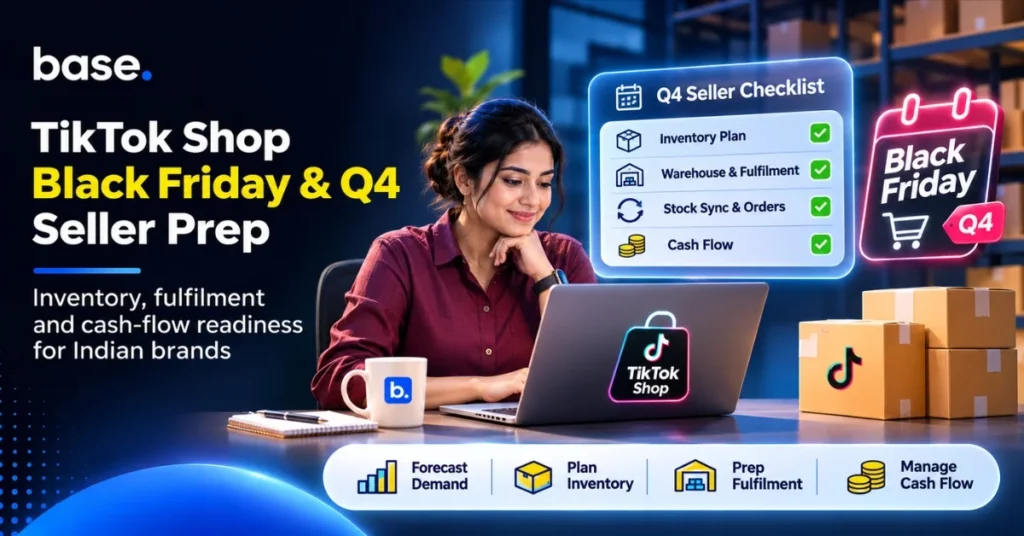
For brands selling on TikTok Shop in eligible markets, Black Friday and Q4 can be a time of focused demand, increased order volumes and shortened fulfilment timelines. Preparation begins before promotions go live: predict product and channel demand, verify sellable inventory, negotiate warehouse allocations, test inventory updates and plan labour, carrier capacity and cash needs. Firstly, Indian brands need to ensure that their seller entity and operating structure is eligible in the TikTok Shop market they wish to operate in; TikTok Shop is not a domestic seller marketplace in India. Campaign rules, fulfilment requirements and settlement timing are market and account specific, so don’t assume based on another country. This guide offers practical TikTok Shop Black Friday seller prep steps and where our integration helps with order and stock workflows, but not with advertising budgets or payout schedules.
Verify market qualification and campaign requirements
TikTok Shop is currently only available in supported markets. Indian brands should not presume that an India based entity can register as a seller in another country or that integration alters marketplace eligibility. Verify legal seller entity, market registration, payout model, product eligibility and fulfilment model prior to committing inventory or marketing spend.
Review campaign registration and product requirements, promotion dates, listing status, dispatch and delivery expectations, return terms and any temporary order or warehouse restrictions in the relevant Seller Center. Seller guidance is published on TikTok for each market and should not be used as a rulebook for sellers in other markets (e.g. a seller guide for the US market should not be used as a guide for sellers in another market). Keep a campaign calendar with the time zone and owner for each deadline. TikTok’s US Seller Center campaign guidance is a good example of why event eligibility and fulfilment rules should be reviewed on a country-by-country basis.
Predict the demand for Black Friday and the Q4 season as a whole
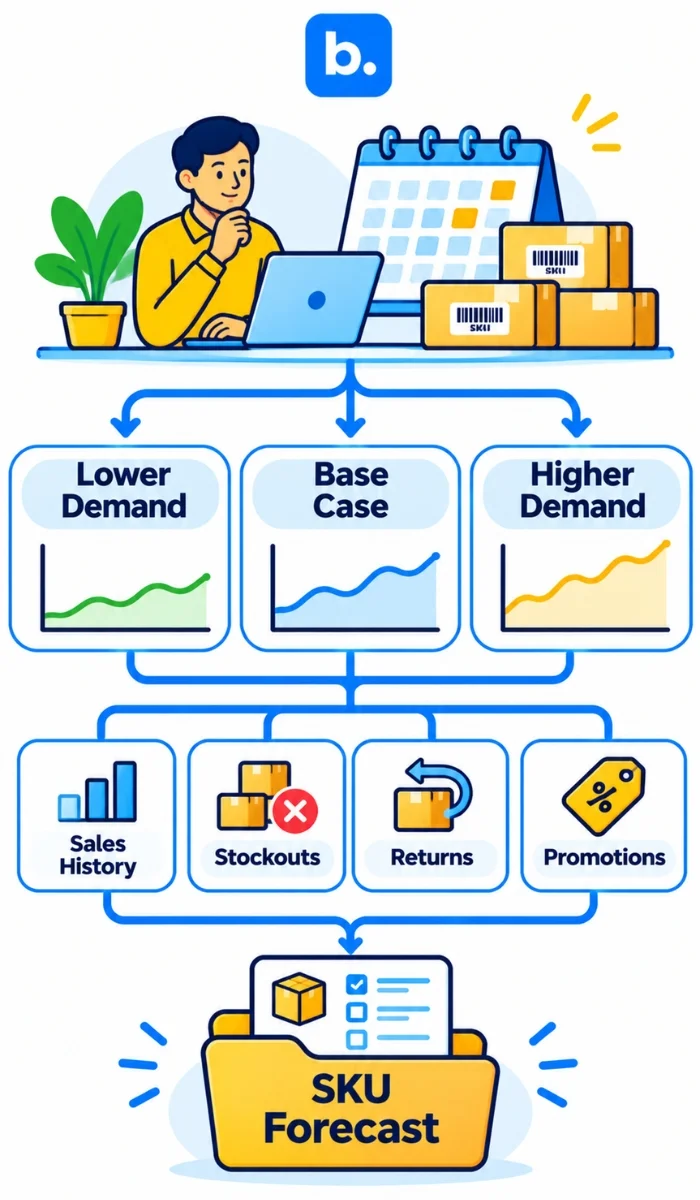
Construct the forecast based on your own data: recent sales velocity, past similar promotions, stockouts, cancellations, returns, planned discounts, creator or advertising plans, and current channel mix. Black Friday is one high point in Q4, but it is not a replacement for planning for the entire quarter. Consider other local or market-specific shopping dates and post-promotion demand.
Predict at SKU and channel level where data is available. The demand of a product on TikTok Shop can vary from the demand on Shopify or other marketplaces. Do not use a single point estimate, but rather scenarios: a base case, a higher-demand case and a lower-demand case. Explicitly state the assumptions so that procurement and operations can adjust them as campaign performance becomes more apparent.
When ordering more stock, consider if previous sales were limited by stock or fulfilment capacity. Do not use a generic growth percentage or stock buffer, validate it with actual order and return records, and consider the product’s lead time and demand variability.
Plan inventory buffers and replenishment
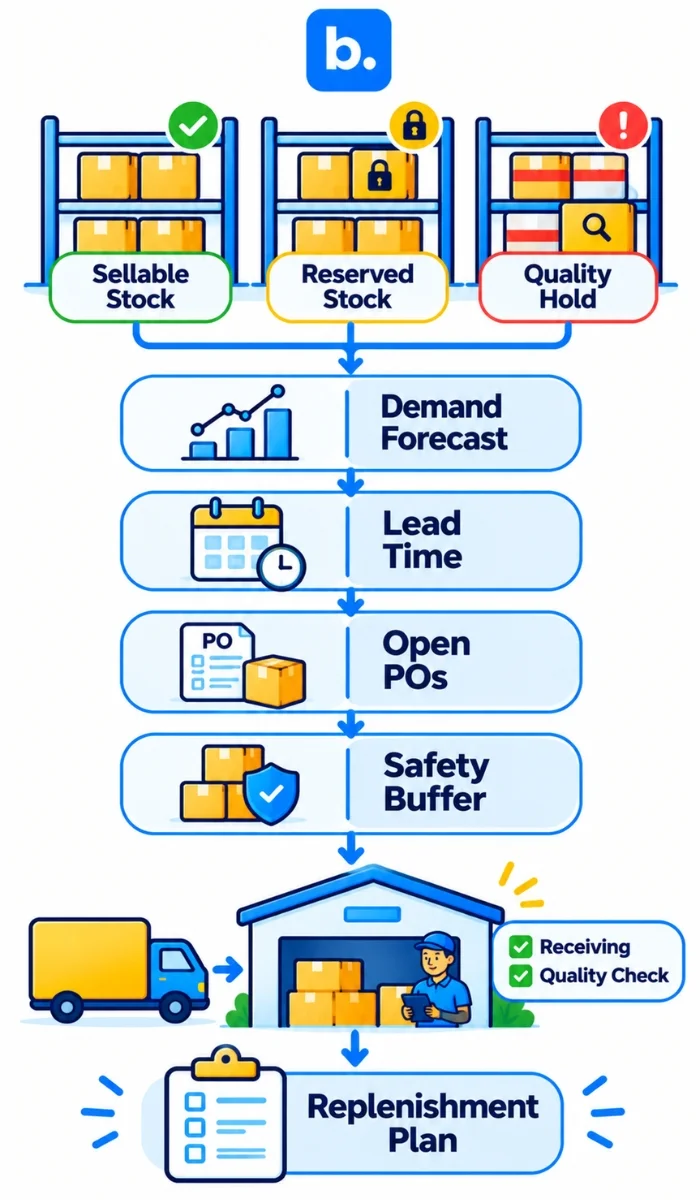
Determine a target quantity for each priority SKU based on the expected demand during the replenishment lead time, available stock, and open purchase orders and a safety buffer that is appropriate for the product. Verify supplier capacity, production and inbound milestones in time to allow for receiving, quality checks and put-away.
Categorize products according to demand, margin, lead time, shelf life and campaign importance. Do not consider reserved, damaged, returned or quality held inventory as freely sellable and protect inventory for already promised orders. Agree who can approve stock transfers or changes to the campaign allocation during the peak.
To learn about how to plan inventory during ecommerce sales in India, read How to Manage Inventory During Ecommerce Sales in India. Pick buffers based on your own sales history; the linked guide is a guide, not a threshold.
Distribute stock to warehouses and fulfilment centres
Select the availability of each SKU according to the demand geography, stock levels, dispatch cut-offs, carrier coverage, warehouse throughput and the marketplace’s fulfilment rules. Do not spread limited stock too thin to be efficiently served. Verify warehouse addresses and dispatch capabilities in the corresponding seller account prior to assigning inventory.
Maintain one view of stock, both total and at each location, including units allocated to orders, samples or other commitments (if applicable). Record the number of documents being transferred and get confirmation that they have been received, to avoid the situation where the documents are shown as available at both the origin and destination when they are being moved. Re-check allocation if there is a material difference between the forecast and the demand.
If you are using a warehouse management system, ensure that the location, reservation and picking records are in line with the stock figures that are sent to each sales channel. Avoid stating a particular multi-warehouse feature for a tool until it has been verified with your configuration.
Sync inventory and be ready for surges in orders
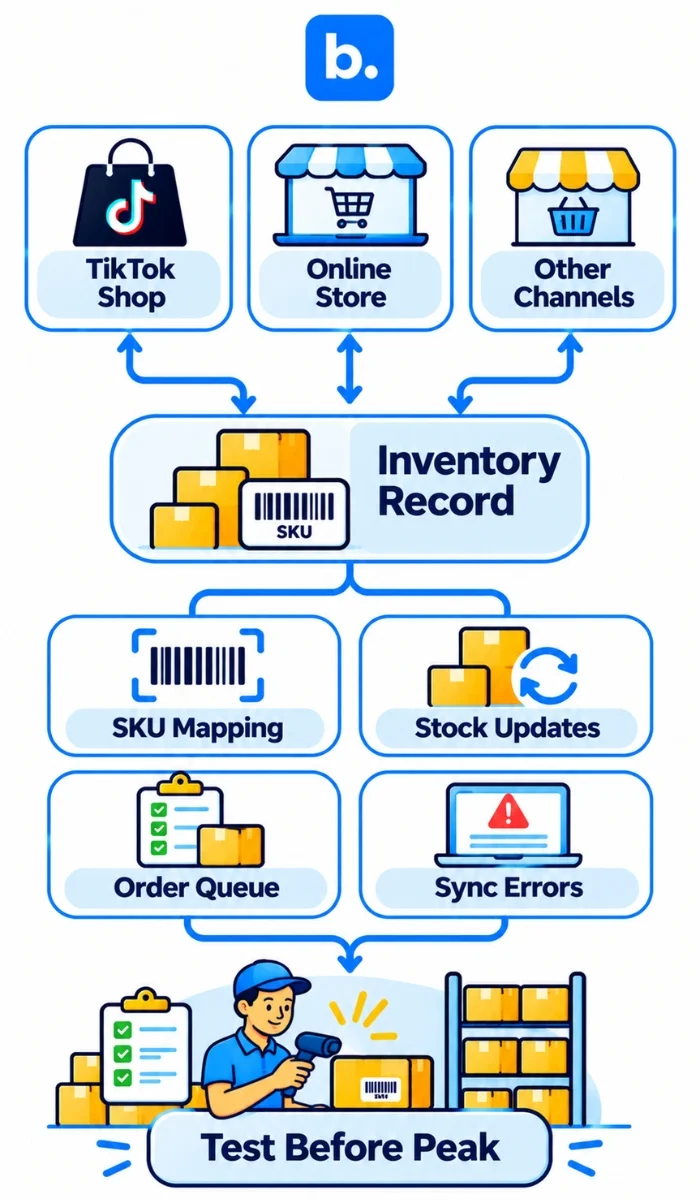
See how inventory flows between TikTok Shop, your store and other connected channels. Review SKU mapping, available-stock calculation, update frequency, error notifications and error behaviour on order cancel/return. Test with a small controlled test prior to peak traffic and fix mismatching SKUs or stale quantities.
The integration of an ecommerce platform should be tested in the same workflow that will be used in the campaign. When you connect a Shopify store or other channel, it does not mean that the stock rules are the same on all marketplaces. Establish a single source of truth for product quantities and determine how reserved, safety and damaged stock are not included in available to sell quantities.
Plan for throughput and demand: ensure staffing, order queues, picking equipment, packing materials, label printing, carrier pickups and escalation contacts are in place. Monitor orders waiting for picking, packed orders waiting for dispatch, sync failures, cancellations and inventory exceptions using a short operational dashboard.
Set up fulfilment, customer service and returns
Prior to the campaign, check the entire order process from import to pick, pack, handover and tracking. Test an order through each of the relevant statuses and ensure teams understand what to do if an order doesn’t have a SKU, an address issue or if it is at risk of not meeting the dispatch target.
Confirm packaging and consumables, shift schedules, carrier capacity and backup arrangements. Have customer service templates and escalation procedures in place for delivery delays, cancellations, returns and refunds. Establish a procedure for the inspection and classification of returned products before they are again available for stock.
Use the marketplace’s current seller policies and campaign terms for its actual dispatch, cancellation, return and refund requirements. Avoid using a fulfilment deadline or holiday season exception from another country or from a previous campaign.
Schedule cash flow to coincide with stock, promotion expenses and settlements
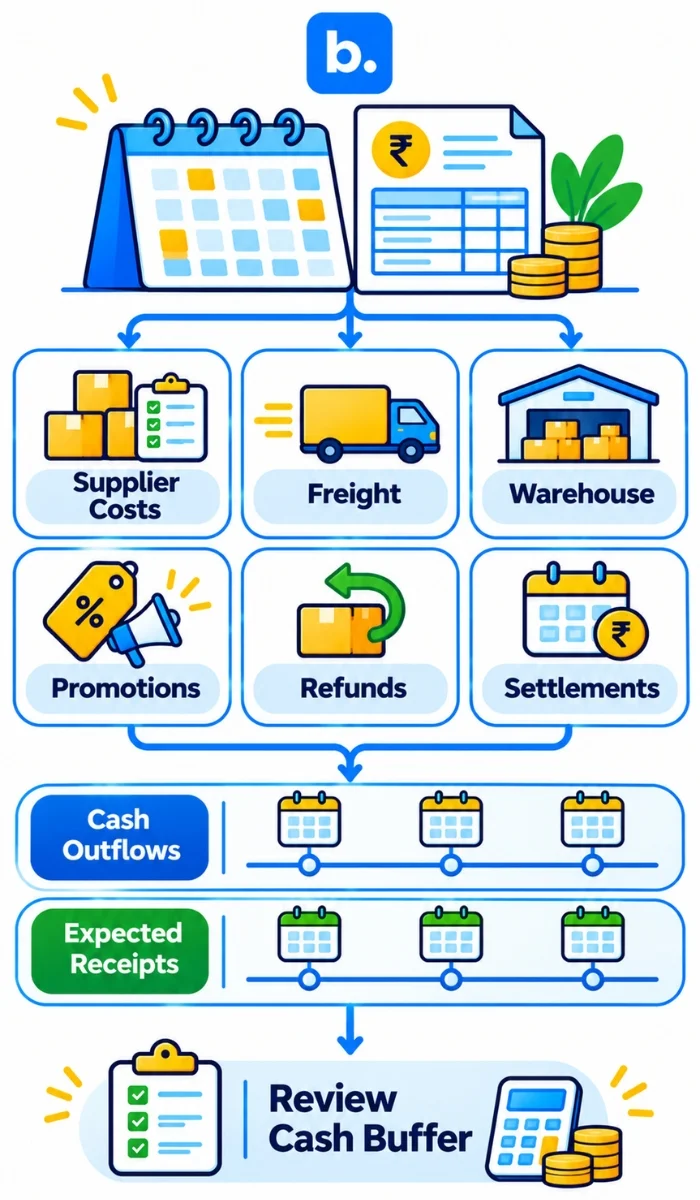
Planning for the peak season may involve spending money before sales revenue is received. Schedule anticipated supplier deposits, production balances, freight and duties if applicable, warehouse labor, packaging, carrier charges, discounts, affiliate/advertising expenditures, refunds and returns against the anticipated sales and settlement cycle.
Refer to the payout schedule and settlement reports provided for your own TikTok Shop account and market. Don’t think that an order date is a payout date, or that gross sales will be cash in hand. Set up a conservative timing case for settlements and returns, and keep liquidity for operating expenses in case of delayed or adjusted payouts in accordance with the rules.
Order, campaign cost, refunds, marketplace deductions and bank receipts are separate records to be reconciled. Make assumptions transparent and adjust the cash forecast if promotion dates, stock arrivals or campaign performance change. If you are a cross-border seller, check with the bank and professional advisers for remittance, currency conversion, tax and documentation requirements.
How our TikTok Shop integration helps operations
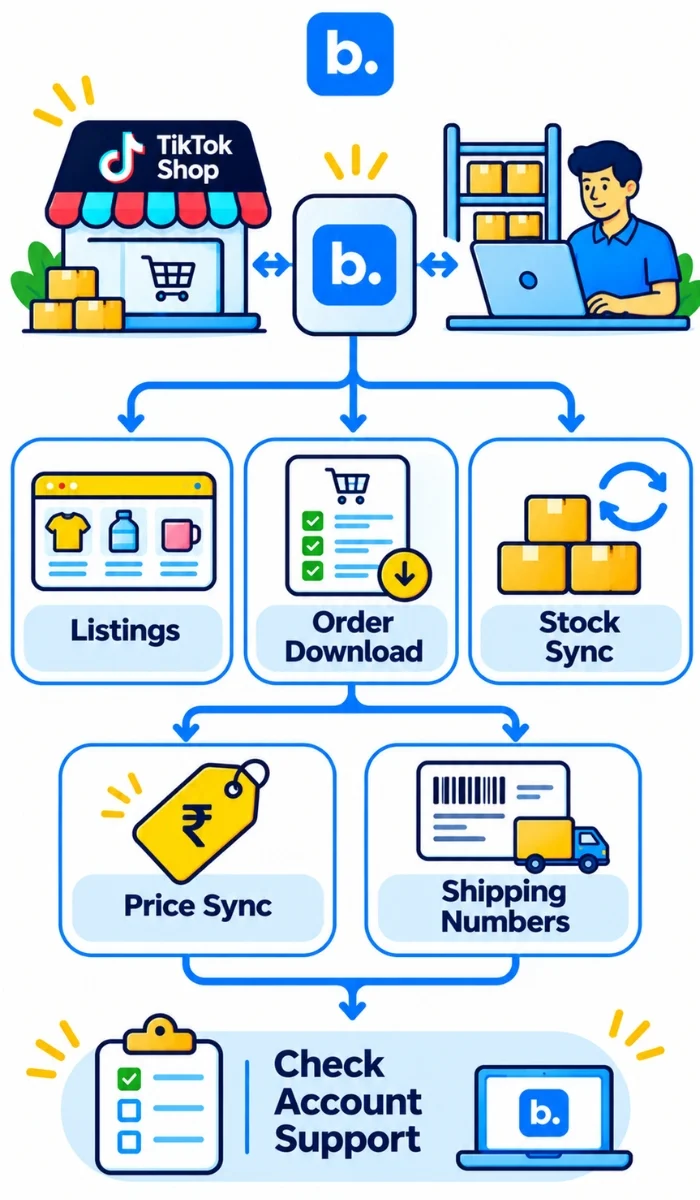
Our TikTok Shop integration at base.com enables listing, order download, stock and price sync, shipping-number forwarding and order processing for connected orders for supported accounts. These operational capabilities can assist teams to maintain order and inventory workflows across channels.
Our integration does not manage Black Friday campaigns, TikTok advertising budgets, campaign eligibility, marketplace payout schedules or cash transfers. Before using any integration during peak trading, verify that the specific account, market, workflow and data fields required are supported.
A realistic preparation schedule
Use this relative timeline as a planning tool, tweak it to supplier lead times, the marketplace campaign calendar and your own fulfilment capacity.
| Timing | Key actions | Owner / evidence |
|---|---|---|
| Several weeks before | Verify market and campaign rules; develop SKU-channel forecast; agree stock and cash assumptions | The owner of the campaign, forecast and approved plan |
| Before stock commitments | Verify supplier quantities, lead times, warehouse capacity and replenishment dates | Procurement and operations; purchase and inbound plan |
| Before promotions open | Assign inventory, test stock sync and SKU mapping, order flow and customer-service coverage | Ecommerce and warehouse teams, test results and exception plan. |
| During the peak | Orders, stock, sync errors, dispatch queue, cancellations, returns and cash position. | Daily review of operations; log and updated forecast. |
| After each promotion | Record lessons, reconcile actual sales, fees, refunds, returns, inventory and timing of settlement | Finance and campaign team; close-out report |
Conclusion
The key to TikTok Shop Black Friday seller prep is to ensure that demand forecasts, sellable inventory, warehouse capacity, stock synchronisation, fulfilment and cash availability are all in sync before the campaign begins. The campaign and settlement rules are market specific, and the first step for Indian brands is to confirm their eligibility to sell in the relevant TikTok Shop market. Our TikTok Shop integration at base.com enables defined listing, order and inventory workflows for supported accounts, and does not handle advertising budgets or payout schedules. Get ready for Black Friday and the rest of Q4 with your own operating data, up-to-date Seller Center guidance and a cross-functional readiness review.