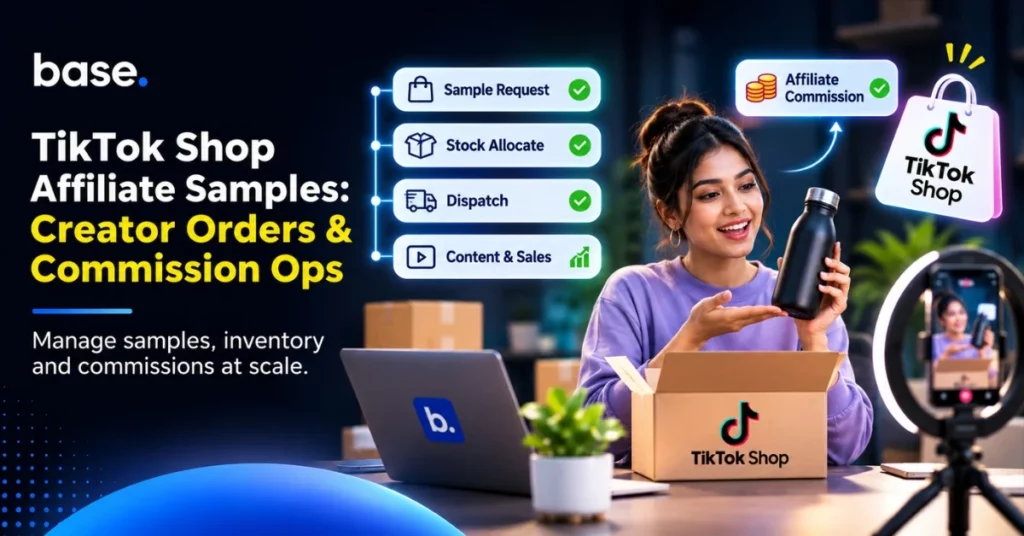
While TikTok Shop affiliate campaigns can lead to product discovery and sales, every creator sample also represents an operational task: a product review, stock to allocate, an order to process, a parcel to dispatch, and a result to track. As campaigns increase, teams must have a uniform method to differentiate samples from paid customer orders, safeguard sellable inventory and track delivery or return exceptions. Sellers should check the rules in Seller Center, as there is no single global process for the exact sample types, creator requirements, approval options and deadlines.
This guide covers a realistic process for dealing with creator samples and regular orders, calculating sample costs and assessing commissions. It also helps to define where connected order tools can help with fulfilment, and where creator approvals, affiliate commission calculations and creator payouts are still distinct processes.
How TikTok Shop affiliate samples work
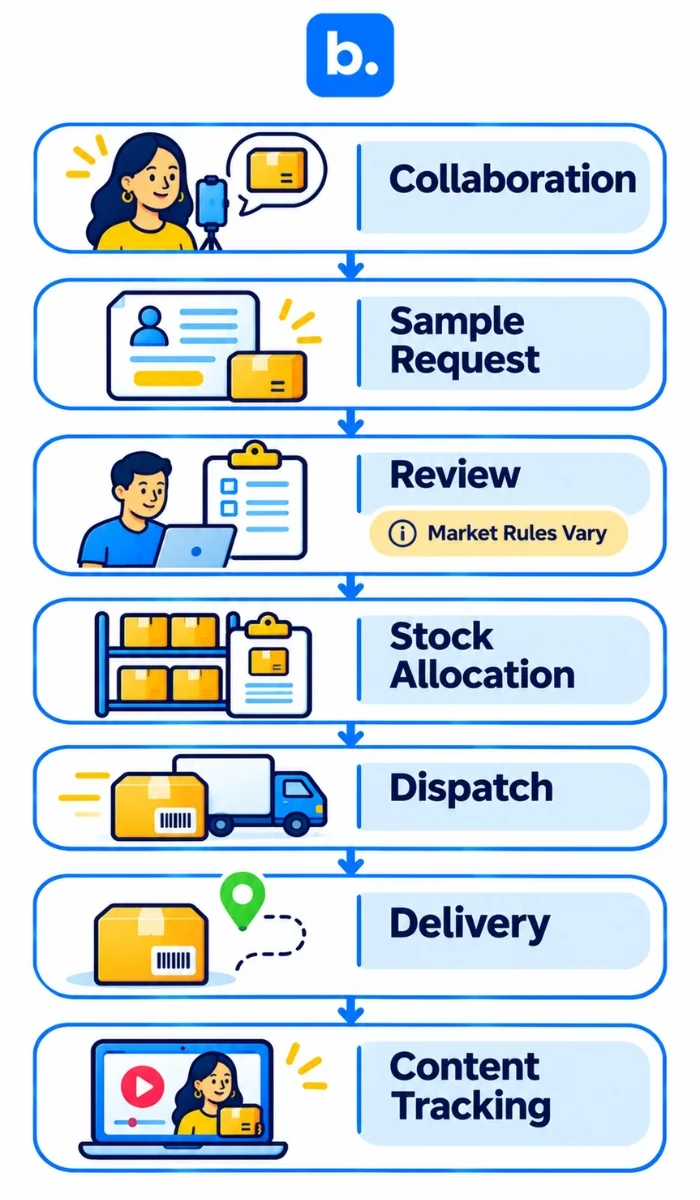
TikTok Shop Affiliate allows sellers to work with creators, typically via open or targeted collaboration options. Depending on the market and the collaboration setup, a seller may offer free samples, refundable samples or other sample arrangements. Some campaign settings may approve requests automatically, while others may need a creator request to be reviewed. The seller should check the current Affiliate Center guidance for its market and the specific campaign before accepting requests or promising a delivery or content deadline. Sellers should not automatically apply the details from TikTok Shop’s US Seller Center sample guidance to other countries.
A sample is not a regular paid customer order, although it may go through the same warehouse procedures. It is for a different commercial use and may have different eligibility, content and campaign conditions. Document the product, SKU, creator or request reference, approval decision, sample type, campaign, dispatch and delivery evidence, and any content or outcome status provided by the platform.
In this guide, “sample order” means the operational fulfilment of a product provided or sold under the applicable creator-sample arrangement. It’s not an order-management platform that approves creator requests or owns the creator relationship. TikTok policies and feature availability may differ from country to country, so please refer to the country-specific Seller Center for the latest information.
Set up a controlled creator sample request process
Prior to a campaign opening, determine who will review requests, who is a good fit, how many units are available, and how quickly approved requests will be processed. Apply objective criteria that are relevant to the product and campaign, including audience fit, content quality, previous campaign performance (if applicable), product suitability and sample budget remaining. Record the decision and the rationale, so that the team can use the same criteria for a long list of requests.
The practical request register can contain creator or account identifier, product/SKU, campaign, request date, request status, reviewer, approval/rejection reason, promised fulfilment date, order reference and follow-up status. Limit personal information to what the business needs and manage it in accordance with the business’ privacy and platform responsibilities.
Establish a review schedule and an escalation process for low stock, incomplete addresses, duplicate requests or requests that are not in line with the campaign rules. If automatic approvals are set up in a platform collaboration, designate a person to review the resulting ready-to-ship queue and ensure that the sample inventory and shipping process can keep up. Automation shouldn’t be silently approving more units than the campaign budget or stock allocation.
Ensure sample stock is kept away from customer availability
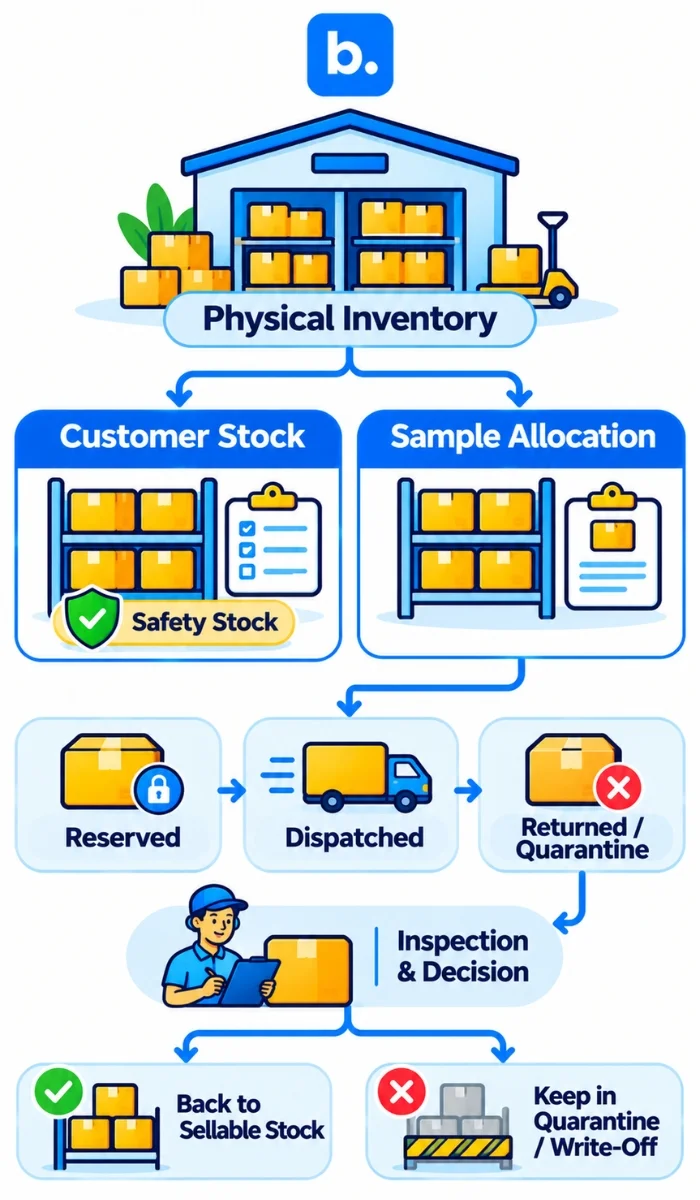
The most important inventory control is to decide how much stock can be used for creator sampling without compromising paid orders. A seller can define an approved sample quantity and/or internal allocation per SKU and campaign, and then check the allocation against the available stock, inbound replenishment, expected customer demand and any safety-stock threshold. This could be a separate location, a stock reservation or a documented allocation process, depending on the seller’s systems.
Don’t consider the sample allocation as additional inventory. Remove dispatched samples from the relevant stock records and ensure that damaged, returned, replacement and quarantined units are separated from other units until they have been inspected and approved for sale. Record batch or expiry controls if applicable when picking and returns.
| Control point | Practical check | Record to retain |
|---|---|---|
| Before campaign launch | Set a sample cap per SKU and verify stock after safety stock | The campaign allocation and date have been approved. |
| On approval | Review the request and compare with the allocation and stock available | Request and approval from creator and SKU |
| At dispatch | Reduce or reserve stock as per actual process. | Order and shipping sample number |
| On return or damage | Check before putting back on saleable availability. | Return reason, condition and disposition |
| During review | Compare planned and actual samples per SKU and campaign | Allocation variance and owner. |
Process and track creator sample orders
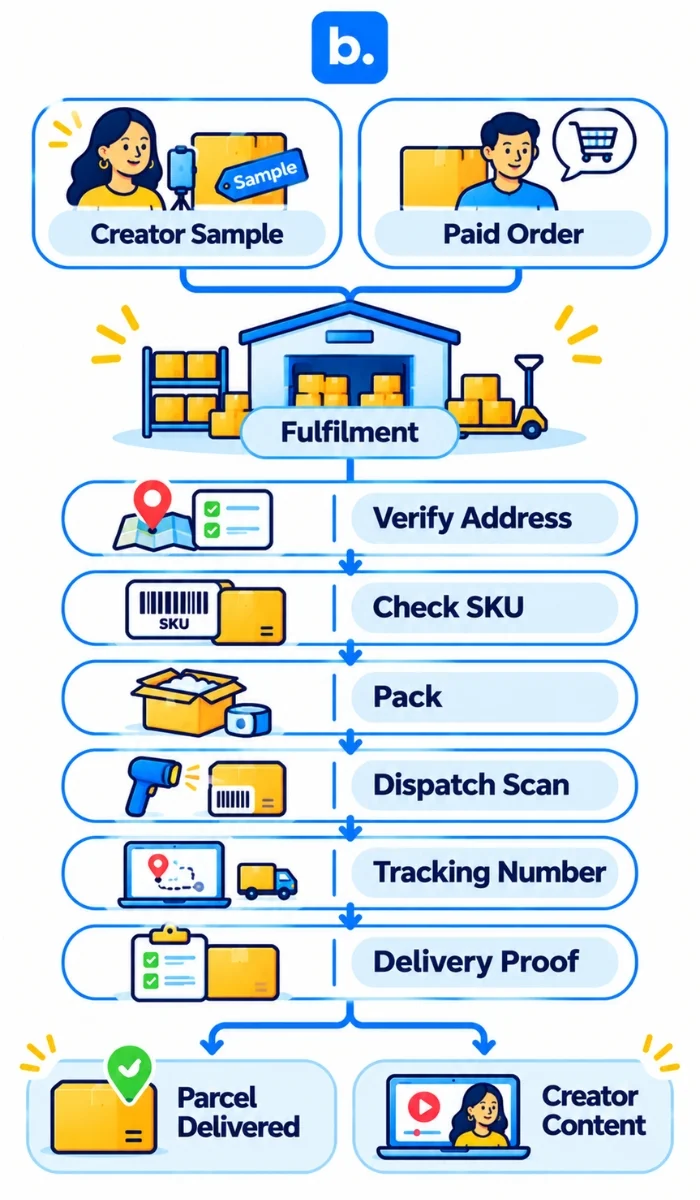
Wherever possible use a separate order tag, source, status or internal identifier for creator samples. Make them visible to fulfillment teams, while keeping them out of reports and reconciliation with regular paid orders. The fulfilment checklist may include address verification, SKU and quantity verification, packing requirements, carrier selection, dispatch scan, tracking number and proof of delivery.
Monitor the sample from the approved request to delivered parcel. Check unshipped approved samples, label or carrier failures, delivery exceptions and aged parcels in-transit at a defined interval. Don’t rely on a delivered status as confirmation that a creator has posted content; treat content fulfilment and parcel delivery as two distinct milestones and use TikTok’s existing campaign tools for the creator’s part.
In multi-channel operations, consistent order identifiers and statuses enable the team to differentiate the workflow without duplicate orders. An Order Manager can centralise orders from connected sales channels and facilitate common order processing steps. The TikTok Shop Integration includes order downloads, listing and synchronisation, shipping-number forwarding and invoice/receipt workflows for supported accounts. These are operational capabilities and not a means of approving creator sample requests or managing affiliate commissions.
Handle exceptions, returns and replacements
Establish a process for requests that are not able to be fulfilled as planned: out of stock products, address errors, dispatch delays, failed delivery, damage in transit, creator cancel and returned samples. There should be an owner, next action and due date for each exception. If a replacement is approved, attach it to the original request and note the extra unit and shipping cost, not as a separate, unrelated sample.
Returned product should not be immediately placed in sellable inventory. Inspect it and document its condition and make a clear decision: return to available stock, repair/rework, quarantine, or write-off. Ensure that the original sample and replacement references are linked together so that reports won’t credit a single creator relationship as two separate campaign successes.
When workflow rules are set up to match the seller’s real-world workflow, they can minimize repetitive handling. Workflow Automation refers to automated actions like status updates, messages, invoice and shipment creation. Use rules to trigger or route routine operational activities, but leave campaign eligibility, product suitability and exceptions requiring judgement to human review.
Track sample costs, affiliate commissions and campaign profitability
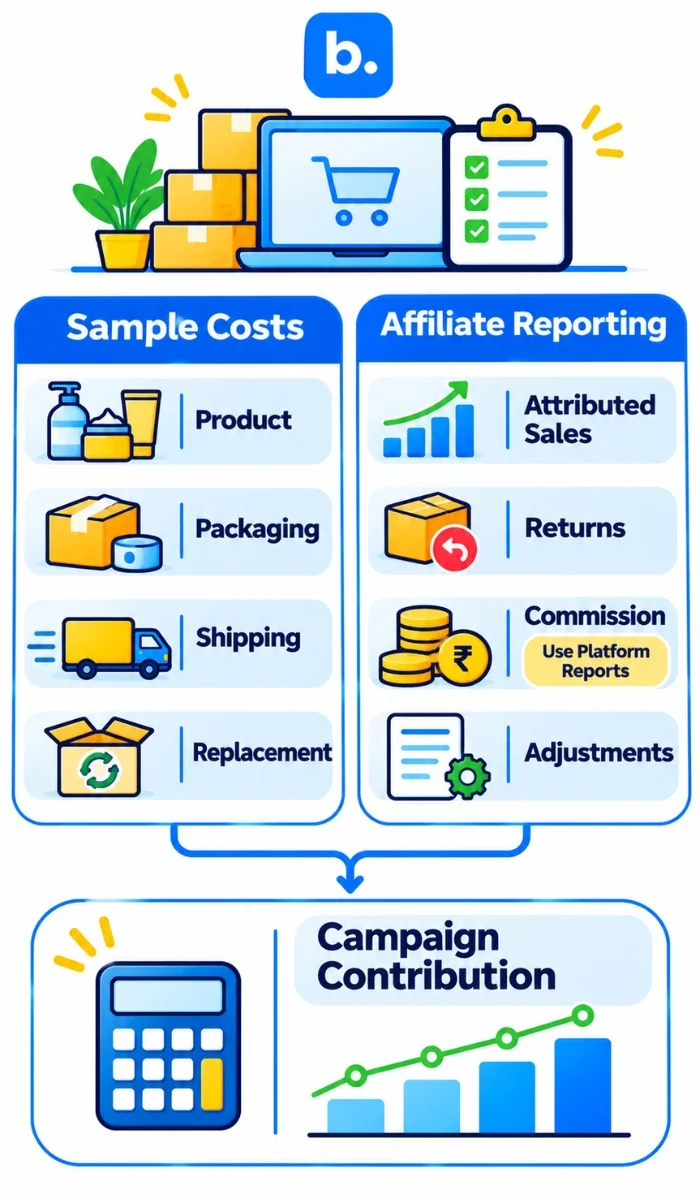
A good campaign view will show you the cost of the sample and the affiliate commission. Sample costs can involve product cost, packaging, pick and pack labour, shipping, duties or taxes (if applicable), and replacement or damage costs. Affiliate commission is typically based on qualifying sales and the terms of the campaign, and is calculated, attributed, adjusted and paid based on the current terms and reports of the platform. Never use a fulfilment report as the only basis for calculating creator payouts.
Compare sample and fulfilment costs to attributed orders, returned/cancelled sales (if applicable), commission expense and contribution margin after other variable costs for each creator/campaign. Apply a uniform attribution window and accounting basis. A creator can get a sample without an immediate sale, so consider content delivery and longer-term campaign results separately from short-term order revenue.
| Campaign measure | What to capture | Why it matters |
|---|---|---|
| Samples approved and sent out | Units, SKU, creator, dates and shipping cost | Displays volume and sample spend in operation |
| The status of the delivery and content. | Evidence of delivery and content status reported by platform | Separates fulfilment completion from creator obligations |
| Attributed sales | Orders and sales reported by the platform for the campaign. | Shows the sales attributed to the campaign. |
| Commission | Rate or amount in relevant affiliate reporting | Separates creator compensation from sample costs |
| Contribution after variable costs | Attributed sales minus product, fulfilment, return and commission costs. | Helps assess campaign profitability after variable expenses. |
Software support for sample order fulfilment
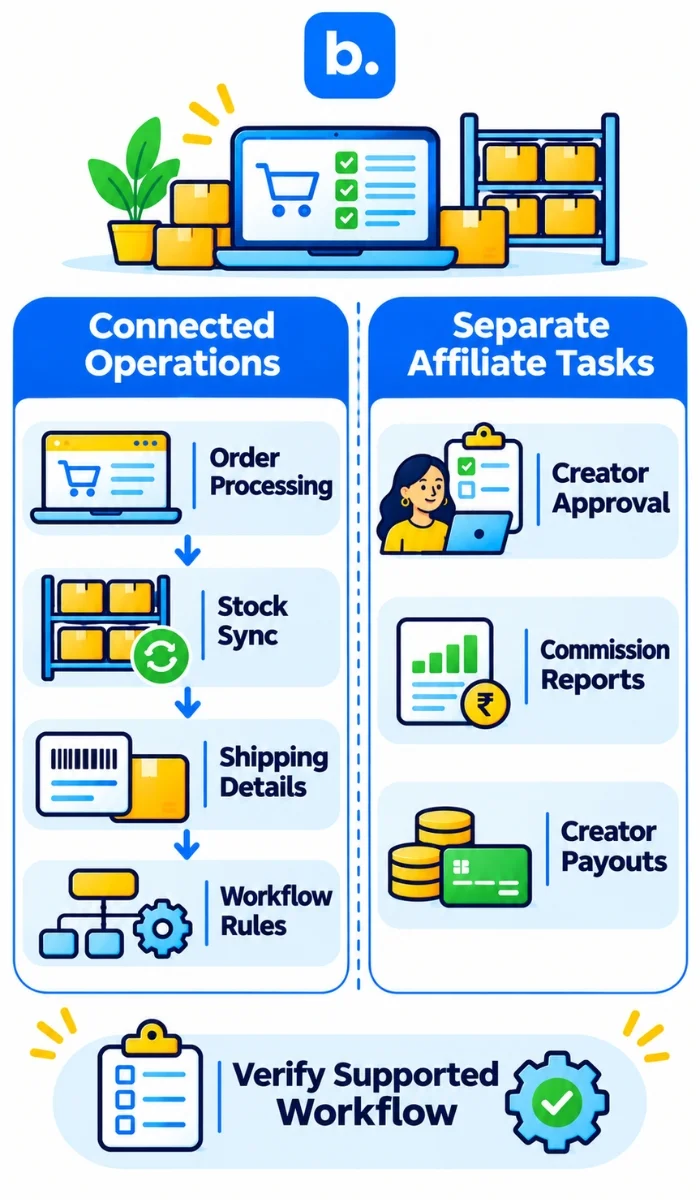
At base.com, we enable teams to process orders from TikTok Shop and manage fulfilment. The TikTok Shop Integration allows for order downloads, stock and price sync, and shipping-number forwarding. The Order Manager assists teams to process related orders in a single location.
Internal tags and stock procedures can be used to identify and track sample orders. Configured routine order actions can be handled by Workflow Automation. These are operational tools, creator request approvals, affiliate commission calculations and creator payouts are all separate TikTok, marketing and finance processes.
An operating checklist that can be scaled up
- Verify the target market, existing TikTok Shop affiliate sample rules and campaign terms.
- Establish creator review criteria, limits, sample budget and approval ownership.
- Assign stock by SKU and campaign without impacting the safety stock required for paid customers.
- Include a unique sample ID and note the request, approval, order and shipment numbers.
- Manage dispatch, delivery, returns, damage, replacement and content obligations as separate statuses.
- Regularly reconcile sample units and costs to inventory and fulfilment records.
- Analyse sales and commission from the platform’s relevant affiliate reports; determine campaign contribution based on a consistent cost basis.
- Set owners and deadlines for exceptions and keep documentation for decisions and changes.
Conclusion
While TikTok Shop affiliate samples can boost campaign reach, it’s not just about sending products. Sellers should have a controlled request review, a clear stock allocation, traceable sample orders, exception handling and a campaign view that shows the fulfilment cost and affiliate commission. Eligibility of creators, content requirements, attribution and commission should be determined by the platform’s existing market rules and reports. At base.com, we enable connected order and warehouse workflows that can help teams process operational work at scale, but creator approvals and affiliate financial management are still separate processes.