
RTO gets prevented at five specific moments in an order’s life, and every tool on this list works at exactly one of them. The best RTO reduction software for ecommerce sellers in India intervenes early, because your ability to save an order collapses the moment it leaves your warehouse.
This guide follows the order’s journey rather than ranking vendors, so you can match the best RTO reduction software for ecommerce sellers in India to the stage where you actually leak money. Each tool appears at the stage where it acts, alongside what it can and cannot influence from that position.
Why does the timing of your intervention decide whether RTO is preventable?
An order refused at the customer’s door already consumed picking, packing, forward freight, and return freight. Nothing recovers that cost, which is why interception timing matters more than tool quality.
COD return rates run between 25% and 30% across Indian categories. India’s ecommerce market runs at roughly $226 billion, so this is a structural cost rather than an occasional nuisance.
The table below shows how much influence you retain at each stage. Read it before choosing any part of the best RTO reduction software for ecommerce sellers in India, because buying at stage four to solve a stage one problem wastes money.
| Stage | Moment in the order journey | What you can still change | Influence remaining |
| 1 | Before checkout completes | Payment method, address quality, buyer intent | Highest |
| 2 | After order, before dispatch | Whether to ship this order at all | High |
| 3 | At dispatch and carrier selection | Which courier attempts delivery, and from where | Moderate |
| 4 | In transit and at delivery attempt | Whether a failed attempt gets retried successfully | Low |
| 5 | After RTO arrives back | How fast the unit returns to sellable stock | Recovery only |
Which single tool works across more than one stage of the RTO journey?
Most tools on this list act at one point in the order’s life. One works on both sides of dispatch, which is why it comes first.
1. Base.com
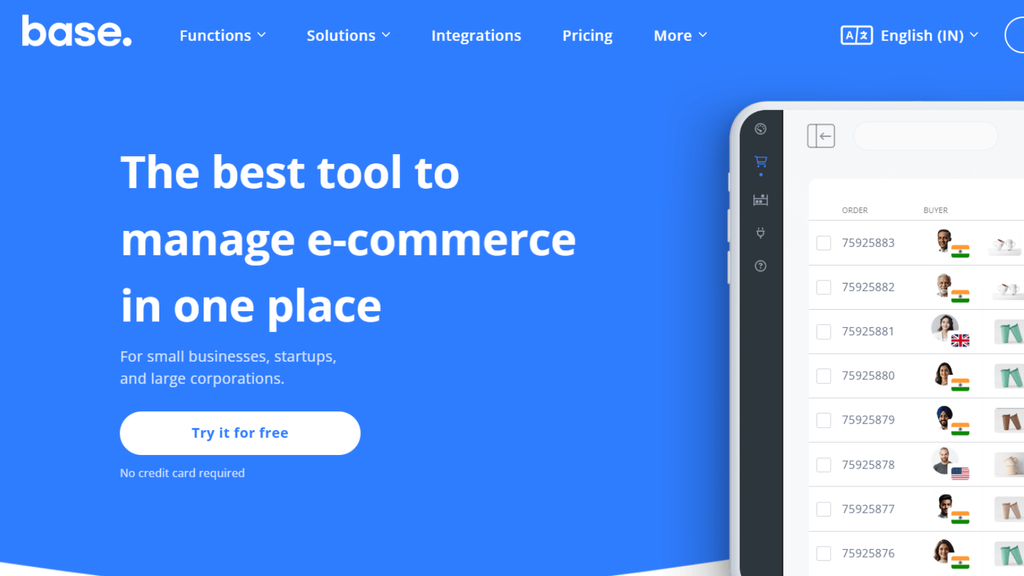
Base.com treats RTO as a core workflow rather than a reporting line, holding suspect COD orders for confirmation before they reach the picking queue. Orders that fail verification never consume freight.
Because order management, warehouse execution, and returns run on one system, a returned unit also moves back into sellable stock quickly. That covers stage two and stage five together, which few platforms do.
Intervenes at: stages two and five.
RTO levers it pulls
- Holds high-risk COD orders for confirmation before picking begins
- Routes confirmed orders to dispatch without delay, protecting SLA
- Returns inspected RTO stock to sellable inventory rapidly
Not a fit if: you dispatch under a hundred orders daily from a single channel.
Which tools intervene before checkout, where your influence is strongest?
Stage one decides most of your RTO outcome before an order even exists, which is why the best RTO reduction software for ecommerce sellers in India starts at checkout. These two tools shape payment method, address quality, and buyer intent at the moment of purchase.
2. GoKwik
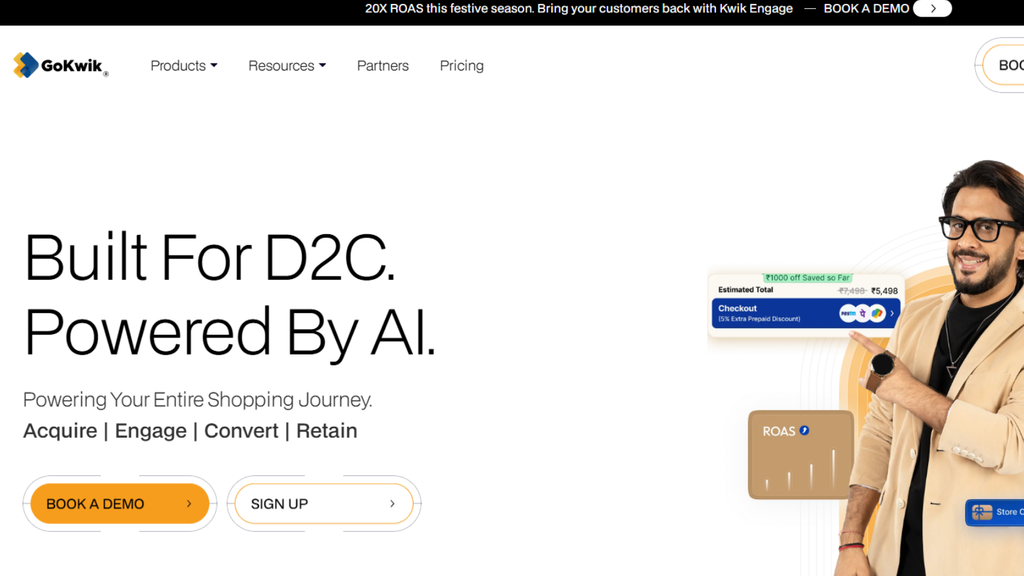
GoKwik operates at checkout, scoring each shopper against behavioural and address signals before the order is confirmed. High-risk COD attempts get nudged toward prepaid, while trusted buyers pass through friction-free.
The platform built its reputation specifically around Indian COD behaviour, which makes it a familiar name among the best RTO reduction software for ecommerce sellers in India.
Intervenes at: stage one, before the order exists.
RTO levers it pulls
- Converts risky COD intent into prepaid orders at checkout
- Validates and corrects addresses before submission
- Blocks repeat offenders your own data would never flag
Not a fit if: you sell only on marketplaces, where you do not control checkout.
3. Razorpay Magic Checkout
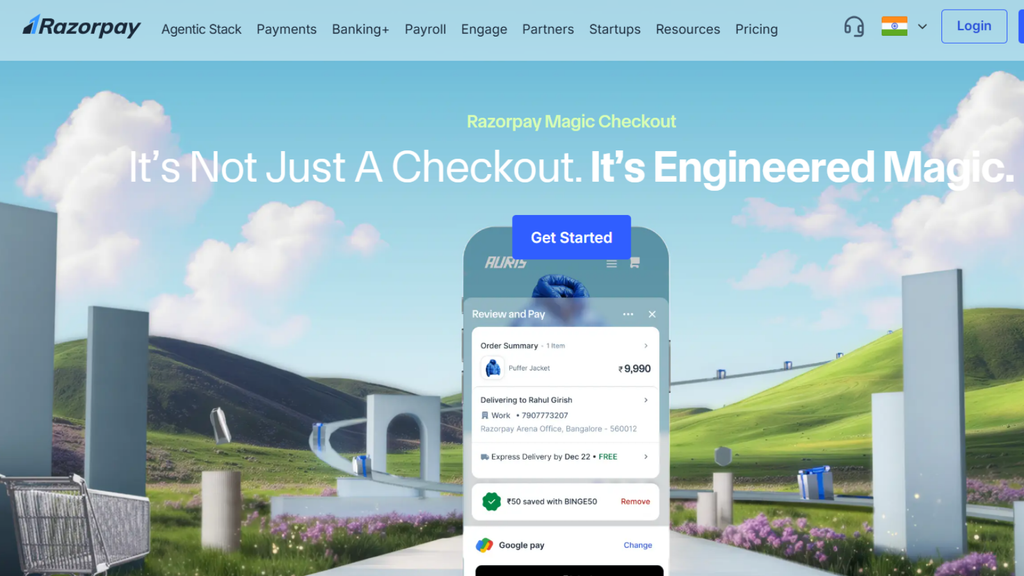
Magic Checkout shortens the purchase flow using saved customer details, which reduces the typing errors that produce undeliverable addresses. Fewer form fields mean fewer wrong PIN codes.
It also applies COD intelligence, allowing sellers to restrict cash payment for orders that look unlikely to convert.
Intervenes at: stage one, during payment selection.
RTO levers it pulls
- Prefilled addresses reduce manual entry mistakes
- COD availability adjusts by order risk rather than applying universally
- Higher prepaid share directly lowers refusal probability
Not a fit if: your traffic is predominantly first-time buyers with no saved profile.
Which tools let you intervene between order placement and dispatch?
Stage two is your last chance to avoid the cost entirely, and the best RTO reduction software for ecommerce sellers in India works hardest here, because an unshipped order costs nothing to cancel. Base.com above covers this stage, and the platform below adds marketplace-wide hold rules.
4. Unicommerce
Unicommerce supports order hold workflows and address checks before dispatch, backed by India’s deepest marketplace connector library. Sellers running many channels gain consistent verification across all of them.
Its RTO reconciliation matters afterwards, matching returned units against courier records so unrecovered claims surface.
Intervenes at: stages two and five.
RTO levers it pulls
- Applies dispatch hold rules consistently across every marketplace
- Reconciles RTO receipts against courier and marketplace records
- Surfaces claim-eligible losses that would otherwise go unfiled
Not a fit if: you want minimal configuration and fast onboarding.
Which tools reduce RTO through smarter dispatch and carrier selection decisions?
Stage three determines who attempts delivery and how far the parcel travels, so the best RTO reduction software for ecommerce sellers in India at this point focuses on carrier and distance. Distance and carrier capability both correlate strongly with refusal in Indian conditions.
5. Shiprocket
Shiprocket compares courier rates and serviceability by pincode before booking each pickup, so sellers avoid routing parcels through a partner that performs poorly in that region. Fallback options exist when one carrier struggles.
Its NDR workflows extend into stage four, contacting customers before an attempt gets marked failed.
Intervenes at: stages three and four.
RTO levers it pulls
- Matches each shipment to a carrier with proven regional performance
- Reroutes away from partners failing in specific states
- Triggers customer contact when a delivery attempt fails
Not a fit if: you need deep order management rather than shipping capability.
6. NimbusPost
NimbusPost aggregates a wide courier network with particular attention to tier-two and tier-three pincode coverage. Sellers shipping beyond metros gain partners that actually service those areas reliably.
Serviceability accuracy matters here. A carrier claiming coverage but attempting delivery casually produces RTO rather than delivery.
Intervenes at: stage three.
RTO levers it pulls
- Widens genuine serviceability across smaller Indian cities
- Reduces dependence on any single national carrier
- Improves first-attempt success where metro-focused partners underperform
Not a fit if: your orders concentrate entirely in metro pincodes.
7. WareIQ
WareIQ distributes inventory across regional fulfilment nodes, so parcels travel shorter distances to reach the customer. Shorter transit windows leave less time for buyers to change their mind.
Distance and delivery time correlate with refusal, which places distributed fulfilment among the best RTO reduction software for ecommerce sellers in India can use structurally rather than reactively.
Intervenes at: stage three.
RTO levers it pulls
- Cuts transit time by shipping from a nearer node
- Reduces the window in which buyer intent decays
- Lowers RTO freight cost when returns do occur
Not a fit if: your inventory depth cannot support splitting across locations.
Which tools recover orders during transit and at the delivery attempt?
Stage four offers limited influence but real value, because a failed first attempt is not yet an RTO. This is where the best RTO reduction software for ecommerce sellers in India earns its cost in hours rather than days. These two tools work in the narrow window between failure and return.
8. ClickPost
ClickPost focuses on post-purchase logistics, allocating carriers using delivery performance data and resolving NDR cases before they convert to RTO. Automated customer contact establishes whether a reattempt will succeed.
Speed decides everything at this stage. An NDR resolved within hours often delivers, while one resolved in days rarely does.
Intervenes at: stages three and four.
RTO levers it pulls
- Allocates carriers using measured delivery performance per pincode
- Contacts customers automatically within the reattempt window
- Converts resolvable NDR cases into successful deliveries
Not a fit if: you need this to replace an order management platform.
9. Shipway
Shipway automates NDR follow-up alongside returns management, keeping customers informed through tracking updates that reduce anxiety-driven refusals. Its returns flow covers what happens after an order comes back.
Sellers facing high customer-initiated returns alongside RTO gain structure across both reverse flows.
Intervenes at: stages four and five.
RTO levers it pulls
- Automates NDR outreach without consuming agent time
- Keeps customers updated, reducing refusals caused by uncertainty
- Structures the returns journey from request through receipt
Not a fit if: you need warehouse or inventory capability alongside it.
Which tool helps you recover value once RTO stock comes back?
Stage five cannot prevent the loss, but it determines how much value you recover. Returned units sitting unprocessed are invisible inventory that causes stockouts and duplicate purchasing.
10. Increff
Increff tracks inventory at piece level, so a returned unit gets identified, graded, and restocked accurately rather than approximately. Fashion sellers handling constant size-and-colour returns gain the most.
Grading accuracy decides whether a returned unit resells at full price, at discount, or gets written off unnecessarily.
Intervenes at: stage five.
RTO levers it pulls
- Identifies exactly which unit returned and in what condition
- Routes stock to sellable, refurbish, or write-off by evidence
- Returns good units to inventory before the selling season passes
Not a fit if: your catalogue is small and simple enough to grade manually.
How do you actually calculate what a single RTO costs your business?
Most sellers underestimate RTO cost because they count forward freight only, which makes the best RTO reduction software for ecommerce sellers in India seem more expensive than it is. The line items below build the real figure, and the example column uses illustrative numbers you should replace with your own.
| Line item | What it covers | Illustrative figure |
| Forward freight | Cost of shipping out | ₹80 |
| Return freight | Cost of the parcel coming back | ₹80 |
| Picking and packing labour | Time spent on an order that earned nothing | ₹25 |
| Packaging material | Consumed and usually unusable | ₹20 |
| Inspection and restocking | Handling the unit on return | ₹20 |
| Value loss on damaged stock | Portion that cannot be resold at full price | ₹50 |
| Total per RTO | ₹275 |
Two line items surprise sellers most. Packaging material rarely survives a return trip, and value loss on damaged stock is real even when the unit looks acceptable, because a resealed box sells at a discount.
Multiply that figure by your monthly RTO count. Compare it against the annual cost of any tool on this list, and the buying decision usually answers itself.
Which metrics tell you whether your RTO tools are actually working?
Vendors report activity, not outcome. These five metrics show whether your spending changed anything, and each one isolates a different stage of the journey.
- Prepaid share of total orders. Rising prepaid share proves your checkout intervention works, since prepaid orders refuse far less often than cash orders.
- First-attempt delivery success rate. This isolates carrier quality and address accuracy from buyer behaviour entirely.
- NDR resolution rate within 24 hours. Speed is the whole game at this stage, so measure the window rather than the eventual outcome.
- Rupee cost per RTO, tracked monthly. Percentages hide the damage when order values differ sharply across your catalogue.
- Days from RTO receipt to sellable stock. This measures recovery discipline and directly affects how much inventory you tie up.
Track these by channel as well as overall. A metric that looks stable in aggregate often hides one marketplace performing badly.
How does RTO risk differ across product categories in India?
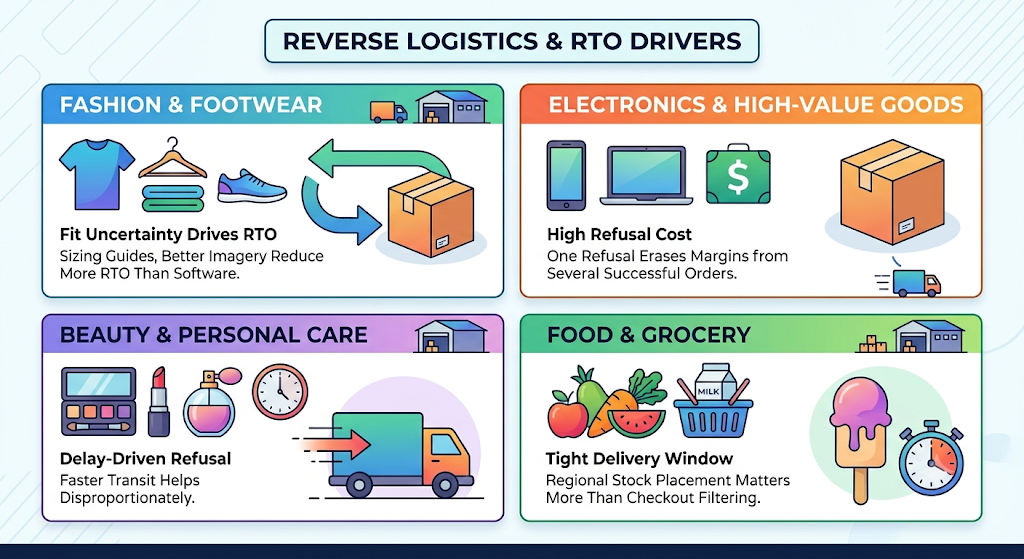
RTO behaves differently by category, so benchmarks borrowed from another seller mislead you. Understanding your own pattern matters more than comparing against an industry average.
- Fashion and footwear carry the highest reverse volume, because fit uncertainty drives both refusal and return. Sizing guidance and accurate imagery reduce more RTO here than any software does.
- Electronics and high-value goods show lower refusal rates but far higher rupee cost per incident. A single refused order can erase the margin from several successful ones.
- Beauty and personal care sit between the two, with refusal often driven by delivery delay rather than product doubt. Faster transit helps disproportionately in this category.
- Food and grocery face the tightest window of all, since a delayed delivery frequently becomes a worthless one. Regional stock placement matters more than checkout filtering here.
Map your own categories against these patterns before choosing a tool. A fashion seller and an electronics seller with identical RTO percentages have entirely different problems to solve.
In what order should Indian sellers deploy these RTO tools?
Sequence the best RTO reduction software for ecommerce sellers in India by stage, because earlier interventions remove orders that later tools would have to rescue. Fixing stage four first means paying to save orders you should never have shipped.
- Start at the checkout if you own your storefront. Converting COD to prepaid removes the problem rather than managing it.
- Add dispatch-stage holds next. Cancelling a suspect order before picking costs nothing at all.
- Fix carrier allocation third. Matching pincodes to capable partners raises first-attempt success measurably.
- Add NDR automation fourth. This rescues orders already in trouble, which is valuable but expensive.
- Improve returns grading last. Recovery protects value but prevents nothing.
What mistakes do Indian sellers make when they try to tackle RTO?

These five mistakes appear repeatedly, and each one keeps RTO higher than it needs to be. None get solved by adding another dashboard.
- Blaming couriers exclusively. Carrier performance matters, but payment method and address quality usually matter more.
- Measuring RTO as a percentage only. Track rupee cost per RTO, because a low percentage on high-value orders still hurts badly.
- Treating RTO and customer returns identically. They have different causes and need different remedies entirely.
- Blocking COD outright. Cash still drives a large share of Indian demand, so filtering beats banning.
- Ignoring the reattempt window. NDR cases resolve within hours or not at all.
Conclusion
Base.com works at the two stages that matter most within the best RTO reduction software for ecommerce sellers in India can assemble, sitting on either side of dispatch. It holds suspect COD orders before they consume freight, and it returns RTO stock to sellable inventory quickly once units come back.
That dual position reflects a specific view of RTO. Prevention saves the most money, recovery saves the rest, and the stages in between belong to carriers and NDR specialists.
Sellers still need a checkout tool if they own their storefront, and a shipping layer for carrier allocation. Base.com covers the operational core those tools connect to.