In 2026, e-commerce growth can happen overnight. One viral Instagram reel or a successful “Big Billion Days” sale can take a seller from 50 orders a day to 5,000. But here is a sobering statistic: 70% of growing D2C brands in India struggle to stay profitable because their backend costs rise faster than their sales.
India’s e-commerce order volume is projected to reach 15 billion shipments annually by 2030, making it one of the fastest-growing fulfilment markets in the world.
When your sales skyrocket but your systems stay the same, you hit a wall. This is called growth stress. It is the moment when your “hustle” is no longer enough to cover up for a lack of process scalability. If you are still relying on a few “star employees” to remember which stock is where, you are not running a business, you are managing a crisis.
Why Your Business Feels Messy During High Sales
During the 2023 festive season alone, platforms like Amazon and Flipkart recorded a combined order volume of over 1 billion units in just 10 days.
Most Indian sellers start small. You have a warehouse, a couple of helpers, and an Excel sheet. This works for a while. But as you add more channels, Amazon, Flipkart, Shopify, and Quick Commerce, the math changes. Suddenly, you aren’t just shipping products; you are managing a mountain of data that feels impossible to track.
The India Post Annual Report highlights that rural e-commerce order volume has grown by over 90% in the last three years, opening massive opportunities for D2C brands willing to invest in last-mile logistics.
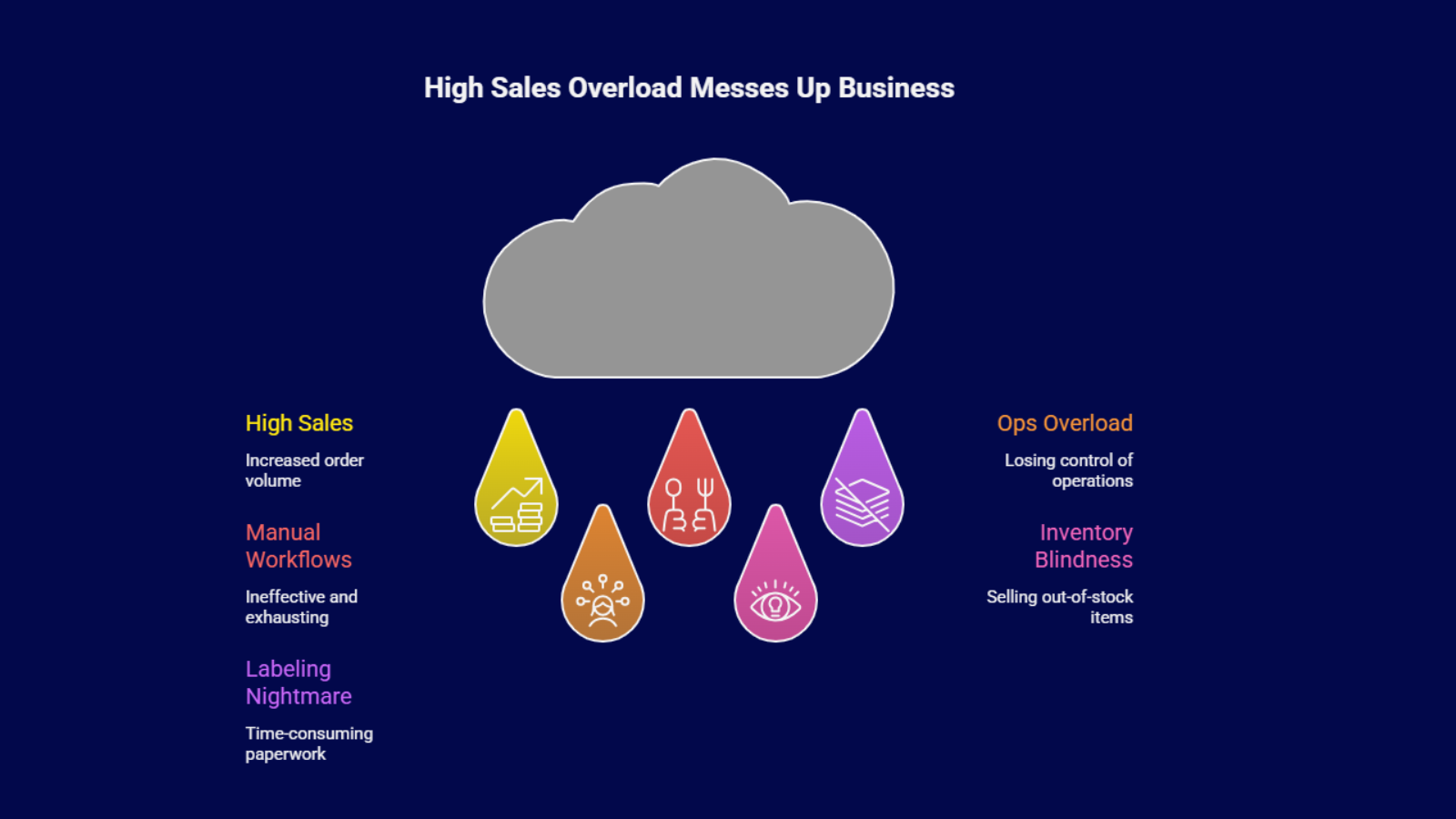
When your order volume outpaces your design, you enter a state of ops overload. This isn’t just about being busy; it is about losing control. Your team starts making mistakes because they are rushing. You ship the wrong size, you miss a dispatch deadline, or worse, you sell a product that isn’t actually in stock.
The Real Problems with Manual Workflows
A study by KPMG found that brands that fail to automate order processing see a 40% spike in error rates once their order volume crosses 500 units per day. Using manual workflows in a high-volume environment is like trying to empty the ocean with a spoon. It’s slow, exhausting, and ineffective.
- The “Double Entry” Trap: Your staff spends hours typing customer addresses from Shopify into a courier portal. One typo means a failed delivery and a lost customer.
- Inventory Blindness: You have 10 units of a product. Five sell on Amazon, and five sell on your website at the same time. Because you didn’t sync them instantly, you keep selling stock you don’t actually have.
- The Labeling Nightmare: If it takes your team three minutes to generate one shipping label and invoice, 1,000 orders will take 50 hours of pure paperwork. That is two full days just to get the stickers ready.
| Symptom of Growth Stress | Impact on Your Business |
|---|---|
| Delayed Dispatches | Lower rankings on Amazon and Flipkart |
| Stock-outs | Losing the “Buy Box” to your competitors |
| High RTO (Returns) | Wasted shipping fees eating your profit |
| Team Burnout | Your best people quit when you need them most |
How to Build a System That Grows With You
According to Statista, India’s online shopper base is expected to hit 500 million by 2030, directly driving a surge in daily order volume across all major marketplaces.
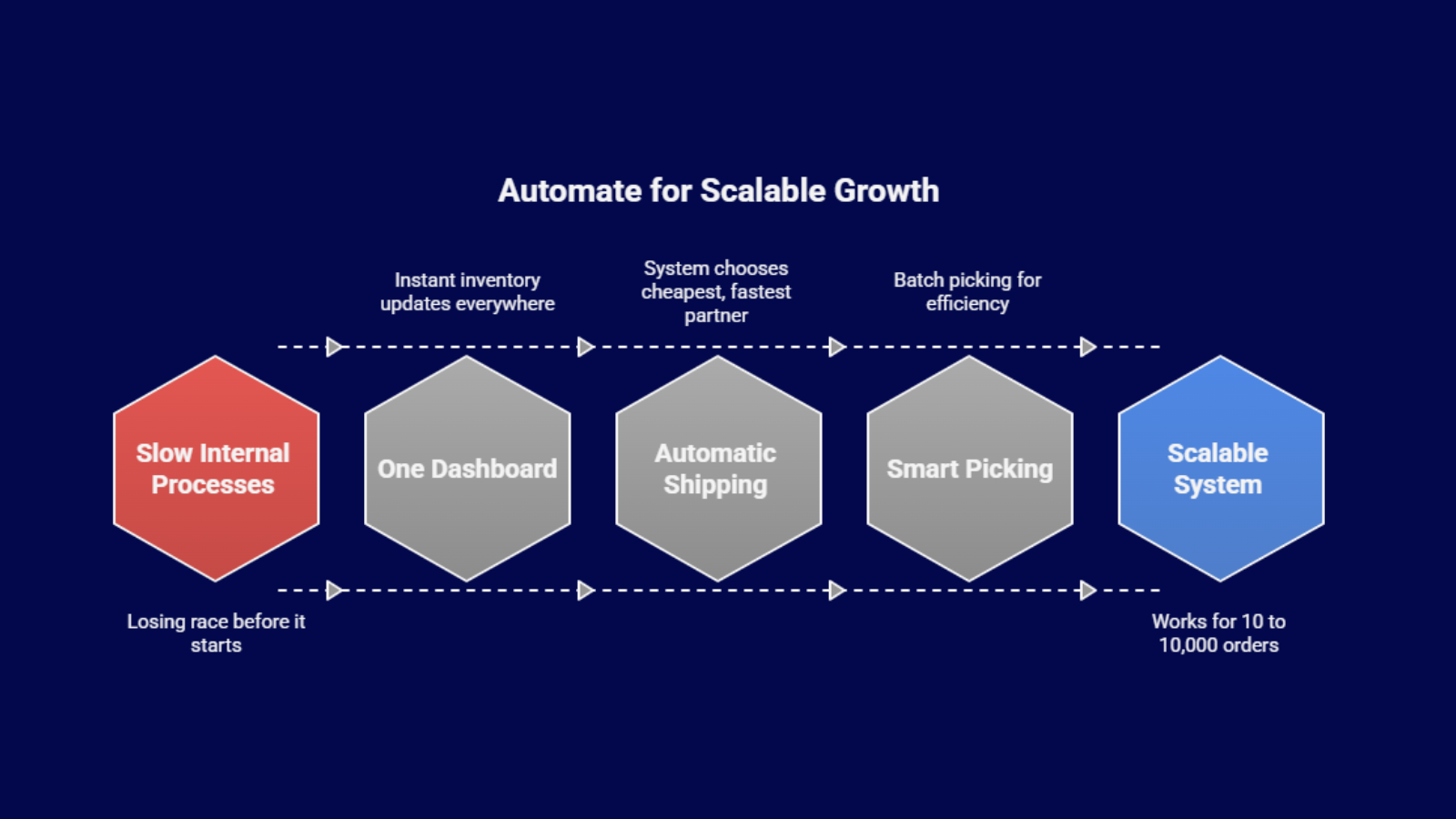
In the Indian market, speed is everything. Customers in Delhi or Bangalore now expect their packages within 24 to 48 hours. If your internal process is slow, you lose the race before it even starts. Process scalability means building a system that works just as well for 10,000 orders as it does for 10.
To beat ops overload, you have to stop thinking about hiring more people and start thinking about better flow. You need a system where data moves automatically from the customer’s click to the warehouse’s printer.
Moving Away From Human Errors
To grow without breaking, you need to automate the repetitive stuff. This frees your team to focus on things that actually grow the brand, like product quality and marketing.
- One Dashboard for Everything: You need one “brain” that knows exactly how many units you have. When a sale happens anywhere, the inventory should drop everywhere instantly.
- Automatic Shipping Choices: Don’t let a human decide which courier is best for a package to Guwahati. Let a system choose the cheapest and fastest partner based on real-time data.
- Smart Picking and Packing: Instead of walking back and forth across a warehouse for every single order, use “batch picking.” Your system tells the picker exactly which shelf to go to for 20 orders at once.
The Time You Save With Automation
Research by RedSeer Consulting suggests that quick commerce platforms in India are processing an order volume of over 3 million orders per day, a figure growing at 60% year-on-year.
Let’s look at how automation changes the daily life of an average Indian seller processing 500+ orders.
| Task | Manual Way (Hours) | Automated Way (Hours) |
|---|---|---|
| Syncing Inventory | 2 Hours | 0 (Instant) |
| Generating 500 Labels | 4 Hours | 10 Minutes |
| Checking COD Payments | 5 Hours | 30 Minutes |
| Total Time Spent | 11 Hours | 40 Minutes |
The 10 hours you save every day can be spent on launching new collections or finding better raw material suppliers. That is how you win in 2026.
Steps to Fix Your Operations Before They Break
The most successful sellers in India don’t wait for a disaster to upgrade their systems. They build for the volume they want, not just the volume they have right now. IBEF reports that India’s D2C sector alone is expected to handle an order volume worth $60 billion by 2027, putting immense pressure on back-end operational systems.
If you feel like you are “drowning in orders,” it is a sign that your current design has reached its limit.
3 Simple Ways to Regain Control
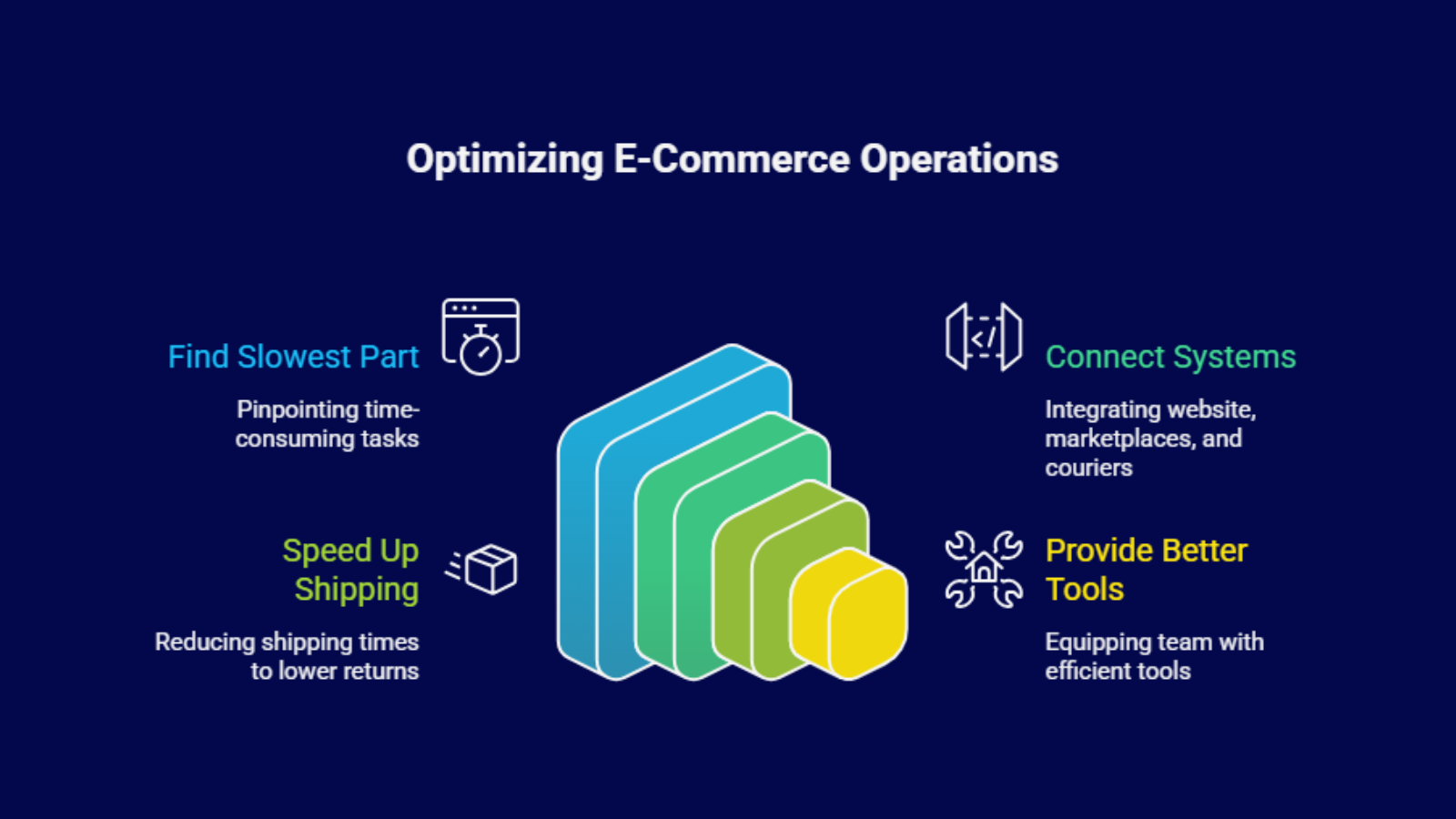
- Find the Slowest Part: Ask your warehouse team what takes the most time. Is it printing labels? Is it finding items? Fix the biggest “time-thief” first.
- Make Systems Talk to Each Other: Your website, your marketplaces, and your couriers must be connected. If you are copying and pasting data, you are at high risk.
- Speed Up Your Shipping: In India, a slow process leads to high RTO. If you take 3 days to ship, the customer might lose interest. Fast shipping is the best way to lower returns.
Better Tools for a Better Team
True process scalability isn’t about replacing your people; it’s about giving them better tools. When you remove the manual workflows that cause errors, your team is happier, your customers get their packages faster, and your profit margins stay healthy.
According to MoSPI data, Indian MSMEs that digitised their operations were able to handle a 3x increase in order volume without a proportional increase in headcount or warehouse costs.
Get Ready for Your Next Big Sale

Growing your business should be an exciting journey, not a daily struggle against chaos. If you are tired of fighting fires and want to build a brand that can handle any surge in demand, you need a partner that understands the Indian e-commerce reality.
At Base.com, we help sellers eliminate ops overload by providing an all-in-one platform for inventory, orders, and shipping. Stop letting manual workflows hold you back. Let us help you build the process scalability you need to dominate the market.
Click here, to know more about why high-growth brands struggle with clean operational data?
Frequently Asked Questions (FAQs)
1. What exactly is ops overload in simple terms?
It happens when your team can no longer handle daily tasks, like packing and shipping, because there are too many orders for your current tools. This leads to massive mistakes, angry customers, and lost money for the business.
2. How do manual workflows hurt my profit?
They lead to human errors like shipping the wrong item. These errors cost money to fix. Plus, you end up hiring more people than you need just to handle the paperwork, which makes your business very expensive to run.
3. Is automation only for big companies?
No! Even if you do 20 orders a day, you should use simple tools. It is much easier to set up automation early than to try and fix a broken, messy system when you are suddenly doing 500 orders.
4. Why does slow processing lead to more returns?
In India, customers change their minds quickly. If your process is slow and the item takes a week to arrive, the customer is more likely to reject the COD parcel. Fast processing keeps the customer excited about their purchase.
5. Can I fix growth stress without hiring more people?
Yes, usually by using technology. Automation handles the “busy work” like syncing stock and printing labels. This allows your existing team to handle 10 times the order volume without feeling stressed or overworked.