In 2026, the Indian e-commerce market is moving faster than ever. Almost 100% of India’s pin codes are now ordered online. But here is a shocking fact: nearly 60% of high-growth brands in India get stuck when they try to cross the ₹10 crore revenue mark.
They have great products and happy customers, but their backend is a mess. The reason? They are struggling with operational data issues.
As a brand grows from 10 orders a day to 1,000, it becomes impossible to track everything on a simple spreadsheet. When you sell on Amazon, Flipkart, and your own website, the numbers start to get confusing.
This leads to data fragmentation, where your warehouse says one thing and your website says another. Without clean data, you end up losing money on every order without even realizing it.
Why Simple Data Becomes Complicated for Indian Sellers
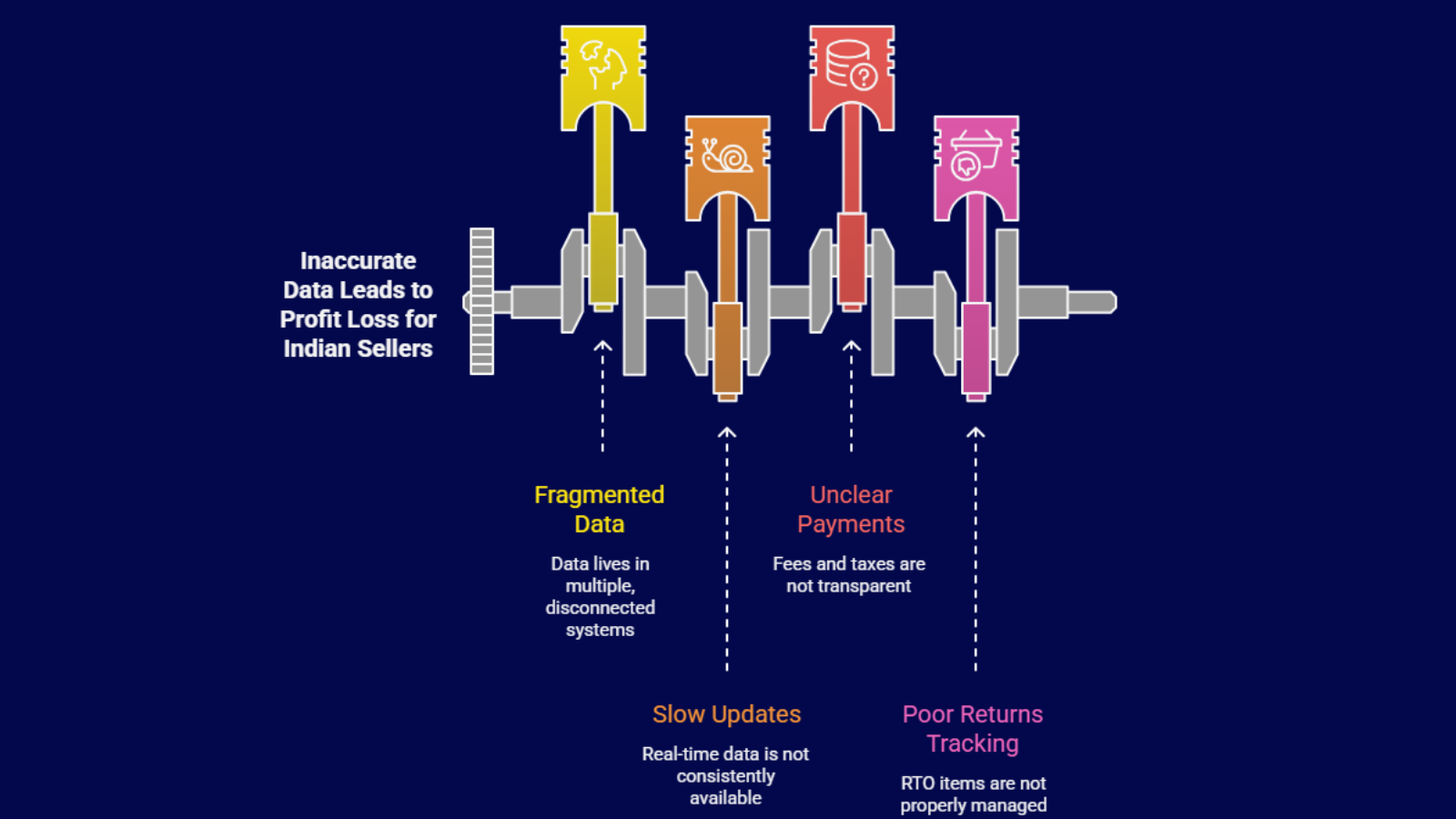
When you start a business, you can manage your stock by looking at your shelves. But when you scale, your data lives in many different places.
Your shipping partner has one set of numbers, your marketplace dashboard has another, and your bank account shows something else entirely. This lack of a single clear picture leads to reporting errors that can ruin your profit margins.
For an Indian seller, the biggest headache is often the “Return to Origin” (RTO) rate. If your data is not updated in real-time, you might send an item to a customer who has already canceled, or you might ship to an incorrect address. These small mistakes add up to huge losses over time.
| Problem Area | What Happens? | Result for the Brand |
|---|---|---|
| Inventory | Stock numbers don’t match | You sell items you don’t have |
| Shipping | Tracking is slow or wrong | Customers get angry and cancel |
| Payments | Fees and taxes are unclear | You think you made a profit, but you didn’t |
| Returns | RTO items aren’t tracked | Stock gets lost in the warehouse |
The Danger of Data Fragmentation
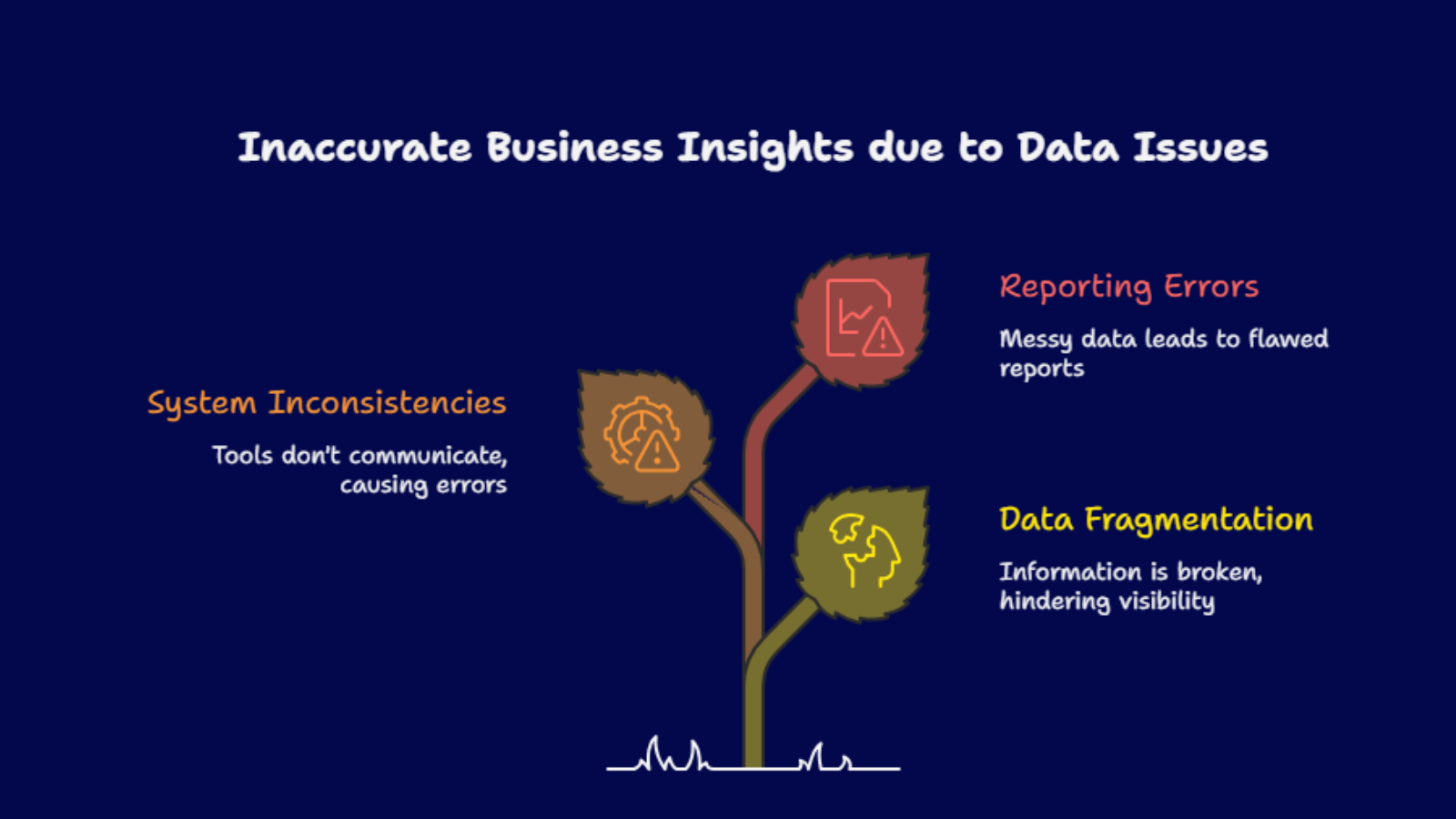
Data fragmentation is a fancy way of saying your information is broken into pieces. Imagine if your left hand didn’t know what your right hand was doing. In business, this happens when your marketing team spends money to promote a product that the warehouse team knows is out of stock.
How Fragmentation Hurts Your Daily Work
In India’s fast-moving market, especially with “Quick Commerce” becoming popular, you cannot afford to wait for a weekly report to see your sales. Fragmentation makes it hard to see the truth. You might see a lot of sales on your screen, but you don’t see the high cost of returns or the hidden marketplace fees that are eating your money.
- Wasted Time: Your team spends hours every day trying to match different Excel sheets.
- Wrong Decisions: You might buy more stock of a product that isn’t actually selling well.
- Money Leakage: Small fees and shipping costs go missing because no one is tracking them.
System Inconsistencies: When Your Tools Don’t Talk
High-growth brands use many tools. You might use Shopify for your website, a different tool for GST billing, and another for shipping. System inconsistencies happen when these tools do not talk to each other. For example, your billing tool might use one name for a product, while your shipping tool uses a different code.
Many high-growth brands in India try to fix this by having staff manually type data from one system to another. This is where the real trouble starts. Humans make mistakes, especially when they are tired or busy. One wrong digit in a price or a quantity can lead to thousands of rupees in losses in just a few minutes.
- API Lags: Sometimes the “link” between two systems is slow, showing old data.
- Double Entry: Typing the same info twice increases the chance of a mistake.
- Stockouts: Your website says “In Stock” because it hasn’t heard from the warehouse yet.
The Cost of Reporting Errors
If your data is messy, your reports will be wrong. Reporting errors are very common in high-growth brands. You might think your “Cost of Acquisition” (how much you spend to get a customer) is low, but if you forget to add the cost of returns and damages, your business might actually be losing money.
To get a loan or to grow your business, you need to know your exact numbers. If your reports are full of errors, you cannot plan for the future. You won’t know which products are your real winners and which ones are just taking up space in your warehouse.
- Hidden Costs: You miss small costs like packing materials or return shipping fees.
- Tax Issues: Incorrect GST reporting can lead to big fines from the government.
- Customer Trust: If you keep canceling orders because your reports were wrong, customers will stop buying from you.
How to Fix These Issues and Grow Faster
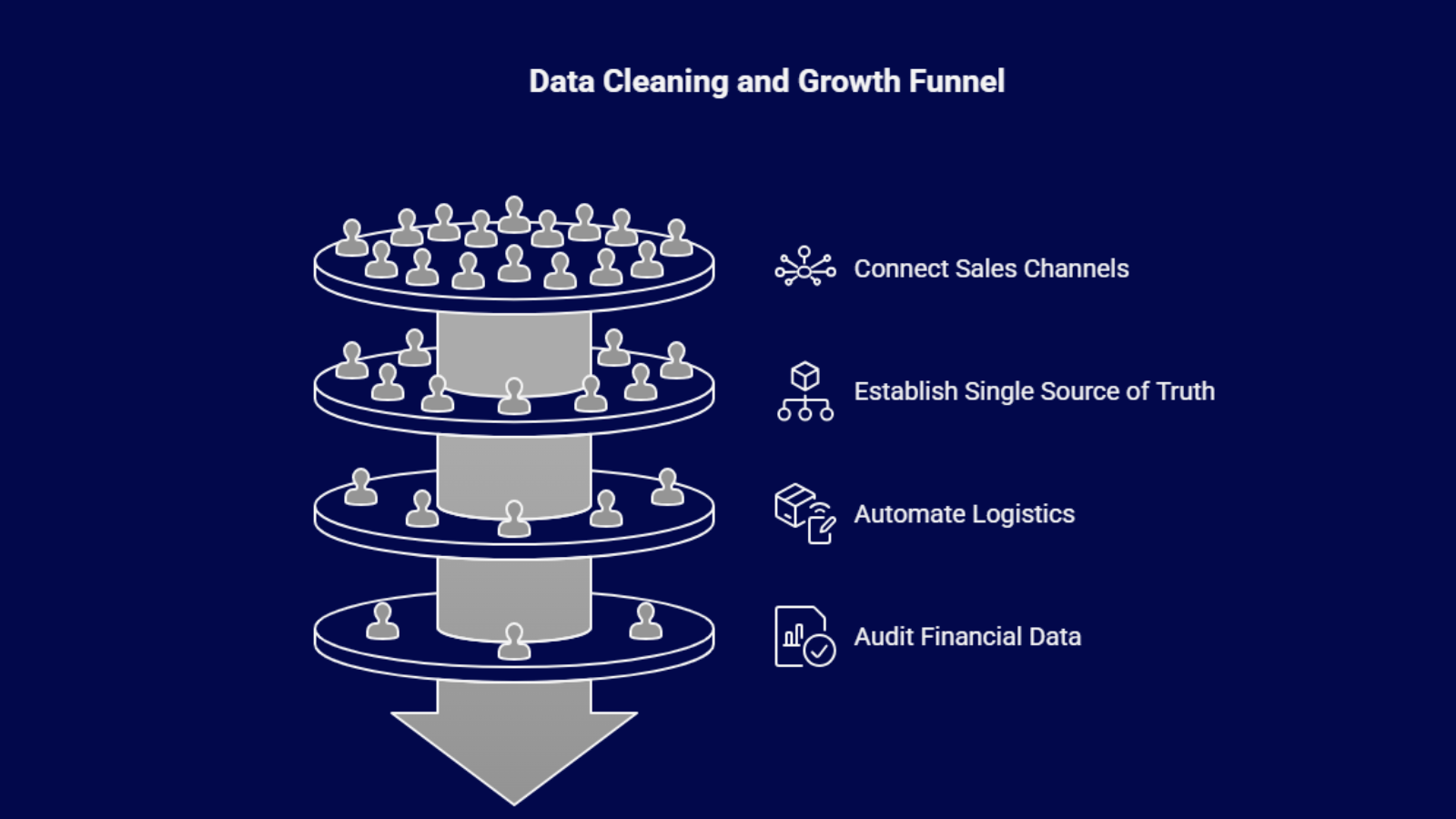
To fix operational data issues and ensure your brand grows without constant headaches, you need a clear, step-by-step plan. Moving away from messy files and manual work is the only way to reach the next level. Here is a simple, four-step guide to cleaning up your business data and speeding up your growth.
Step 1: Connect All Your Sales Channels
The first step is to stop treating each marketplace as a separate island. You need to link your Amazon, Flipkart, and Shopify stores into one central system. When your channels “talk” to each other, a sale on one platform automatically updates the stock levels on all others. This prevents data fragmentation and ensures you never have to tell a customer that an item they just bought is actually out of stock.
Step 2: Establish a Single Source of Truth
High-growth brands often fail because they have too many “boss” systems. You must pick one software to be the final authority for your inventory and pricing. If you change a price or update a product description, you should only have to do it once in this central system. This eliminates system inconsistencies and ensures that your warehouse team and your office team are always looking at the exact same numbers.
Step 3: Automate Your Logistics and Shipping
Manually choosing a courier for every order is a recipe for reporting errors. Use an automated tool that looks at the weight, destination, and cost to pick the best shipping partner for every package. This system should also track the “Return to Origin” (RTO) status in real-time. By automating this, you get clean data on shipping costs and delivery speeds, which helps you save money on every shipment.
Step 4: Audit Your Financial Data Daily
Waiting until the end of the month to check your profits is a dangerous habit. You should set up a daily dashboard that shows your real sales minus marketplace fees, shipping costs, and ad spend. Checking your numbers daily allows you to catch errors early before they turn into expensive problems. Clean financial data gives you the confidence to spend more on marketing because you know exactly how much profit you are making.
By following these steps, you remove the friction that stops most Indian sellers from scaling. Once your data is clean, your business can run like a well-oiled machine.
Conclusion: Build Your Brand on a Strong Foundation

In the busy Indian market, the winners are not just the ones with the best ads. The winners are the high-growth brands that have their operations under control. By fixing operational data issues, you can focus on what you love, creating great products and growing your brand. Don’t let data fragmentation or reporting errors hold you back from your potential.
If you are tired of messy spreadsheets and want a clear view of your business, Base.com is here to help. We provide a simple, powerful way to manage your orders, inventory, and shipping all in one place. Stop the data chaos today.
Click here to learn more about top 10 workflow breakpoints between sales, ops, and finance teams.
Frequently Asked Questions (FAQs)
1. Why is my stock level always wrong on different websites?
This happens because your systems are not syncing in real-time. When you sell an item on one platform, the others don’t find out immediately. This is a classic case of data fragmentation that leads to canceled orders and penalties.
2. How do reporting errors affect my daily profit?
Reporting errors often hide small costs like shipping surcharges or return fees. If you don’t see these costs in your reports, you might think you are making a profit when you are actually breaking even or losing money.
3. What is the easiest way to stop system inconsistencies?
The best way is to use a single platform that connects to all your marketplaces and shipping partners. When everything is integrated, data flows automatically between systems, which removes the need for manual typing and prevents human mistakes.
4. Can bad data really stop my brand from growing?
Yes. If you don’t have clean data, you won’t know where to spend your money. You might spend too much on ads or buy too much stock, which kills your cash flow and stops you from scaling up.
5. Do I need to be a tech expert to manage operational data?
No, you don’t. Modern tools are built for business owners, not just engineers. By using a user-friendly platform, you can see all your data in one simple dashboard without needing to write a single line of code.