

For Indian sellers, the journey from “Order Placed” to “Order Delivered” is often a race against time, geography, and unpredictable logistics. The Indian e-commerce landscape is unique, where a customer in a Tier-3 town expects the same delivery speed as someone in a metro. Managing this at scale without a robust Order Management System (OMS) is nearly impossible.
When you handle 50 orders a day, manual intervention works. But as you scale to 500 or 5,000, the cracks start to show. You struggle with choosing the right courier for a specific pin code, your marketplace ecommerce shipping SLA begins to slip, and your Return to Origin (RTO) rates climb because of delivery delays. This is where an intelligent OMS steps in, not just as a tracking tool, but as a strategic engine for fulfillment.

Challenges Facing Indian Sellers In Logistics
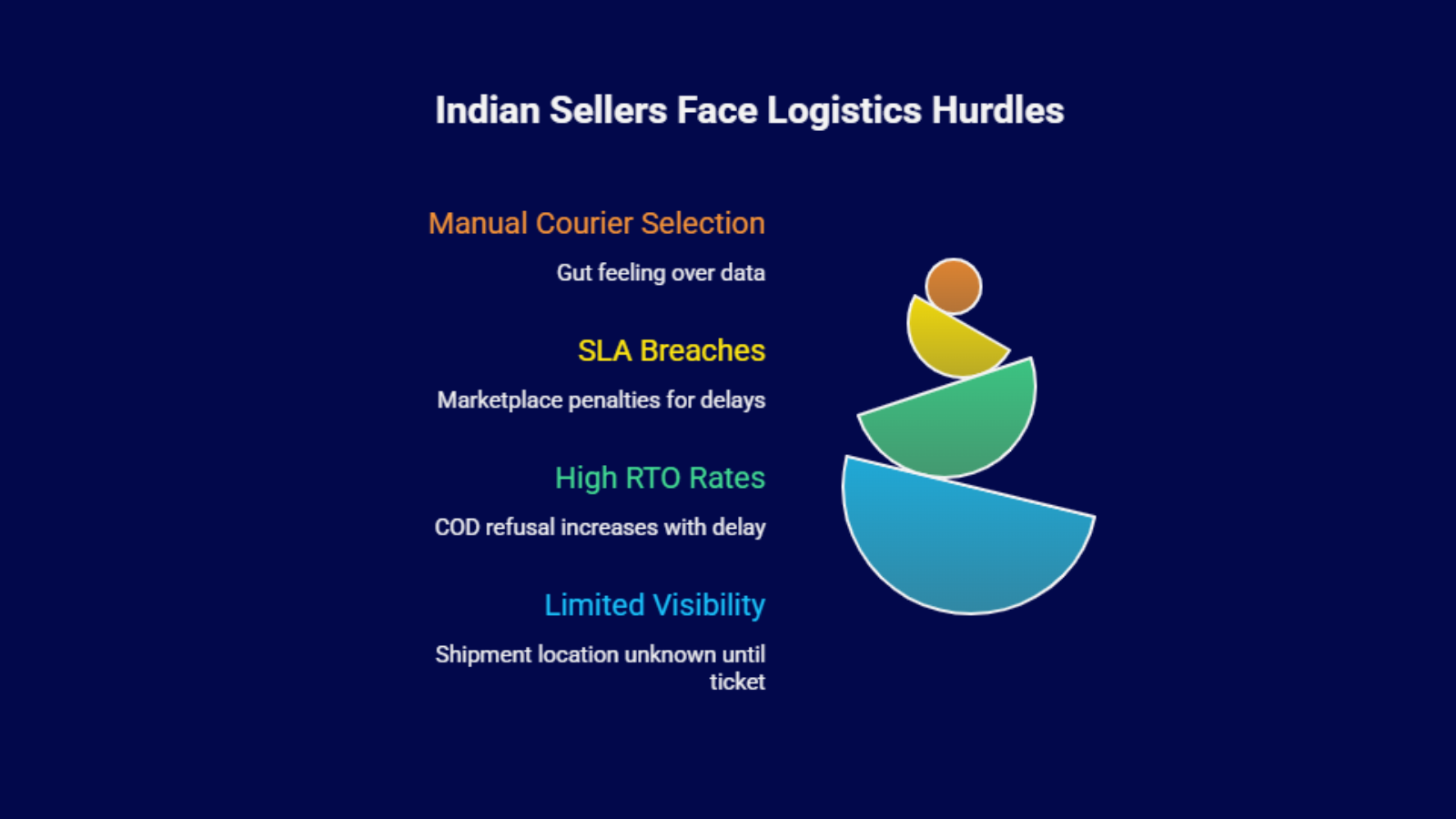
The Indian market presents specific hurdles that can drain a brand’s margins. High shipping costs, fragmented courier networks, and the prevalence of Cash on Delivery (COD) make logistics a high-stakes game. Without automation, sellers often face these common pain points:
- Manual Courier Selection: Choosing a partner based on gut feeling or flat rates rather than real-time performance data for specific regions.
- SLA Breaches: Marketplace penalties for late dispatches or delayed deliveries due to slow processing.
- High RTO Rates: In India, a delay of even 24 hours increases the chance of a customer refusing a COD order by nearly 20%.
- Limited Visibility: Not knowing where a shipment is stuck until the customer raises a support ticket.
Understanding The Impact Of Smart Courier Allocation In OMS On Modern Logistics
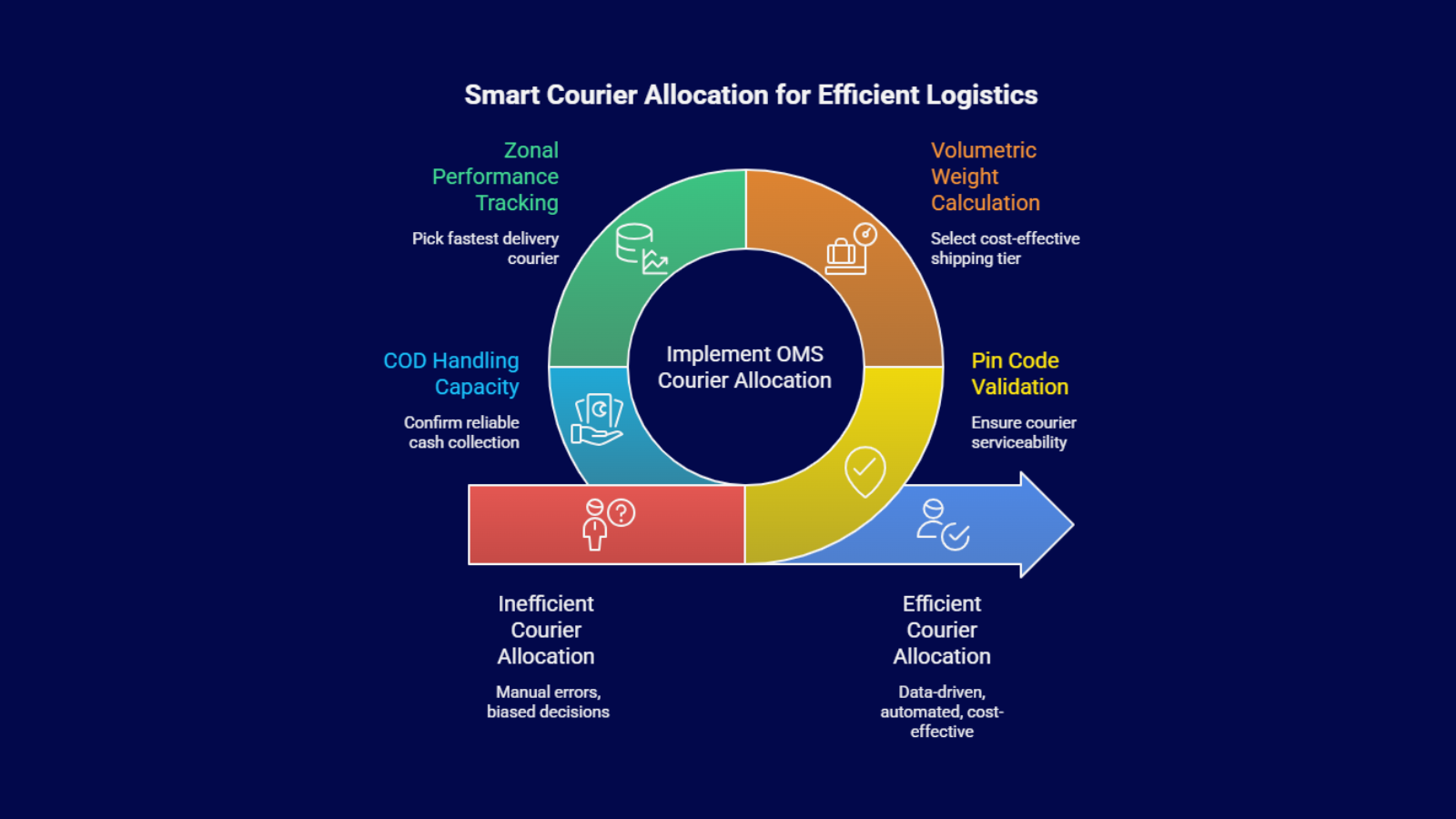
A modern OMS uses data-driven logic to decide which courier should carry which parcel. Instead of a one-size-fits-all approach, it evaluates every shipment against multiple parameters. This ensures that a fragile item going to North East India is not handled by a partner better suited for metro-to-metro documents. By automating this decision, you remove human bias and ensure every package travels via the most efficient route possible.
By implementing courier allocation in OMS, you move away from manual errors. The system automatically assigns the best partner based on the weight, destination pin code, and the seller’s predefined priority. This level of precision is vital for maintaining healthy margins while keeping the customer happy. This logic is refreshed in real-time, allowing the system to react if a specific courier partner is experiencing a strike or a regional backlog. Here is the list of the critical parameters for effective courier selection:
1. Pin Code Serviceability Validation
This ensures that the chosen courier has a physical presence and delivery capability in the destination area before the label is even printed. In India, many couriers claim nationwide coverage but outsource the last mile in rural areas, leading to delays. An OMS verifies the specific serviceability of your partner network to avoid these “black holes.”
2. Volumetric Weight Calculation Accuracy
The system automatically compares dead weight and dimensions to select the most cost-effective shipping tier for that specific parcel size. This prevents “bill shocks” where a courier charges you more than expected because the box was larger than the weight suggested. Accuracy here is a direct contributor to maintaining your bottom line.
3. Zonal Performance History Tracking
By looking at historical data, the OMS picks the courier that has the fastest average delivery time for a specific city or state. For instance, if Courier A is historically faster in Maharashtra but Courier B excels in West Bengal, the courier allocation in OMS will automatically switch partners based on the destination.
4. Cash On Delivery Handling Capacity
For Indian sellers, this is vital as the OMS confirms the courier can handle cash collection and has a fast remittance cycle back to the seller. COD still accounts for over 60% of orders in India, so ensuring your courier is reliable in handling physical cash is as important as the delivery itself.
| Allocation Parameter | How It Helps | Result |
|---|---|---|
| Pin Code Serviceability | Checks if the courier can actually deliver to that specific area. | Zero non-serviceable returns. |
| Weight & Dimensions | Routes heavy shipments to surface couriers and light ones to air. | Optimized shipping costs. |
| Past Performance | Selects partners with the highest success rate in a specific zone. | Higher delivery success. |
| COD Capability | Ensures the partner has a reliable cash collection and remittance cycle. | Faster cash flow. |
How to Meet the Ecommerce Shipping SLA Every Time?
Marketplaces like Amazon, Flipkart, and Nykaa have strict service level agreements. If you do not dispatch within the promised window, your seller rating drops, and your visibility on the platform vanishes. An OMS acts as a watchdog for your ecommerce shipping SLA by tracking every second from the moment an order is synced. It provides a visual countdown for every order, making the fulfillment process transparent and urgent.
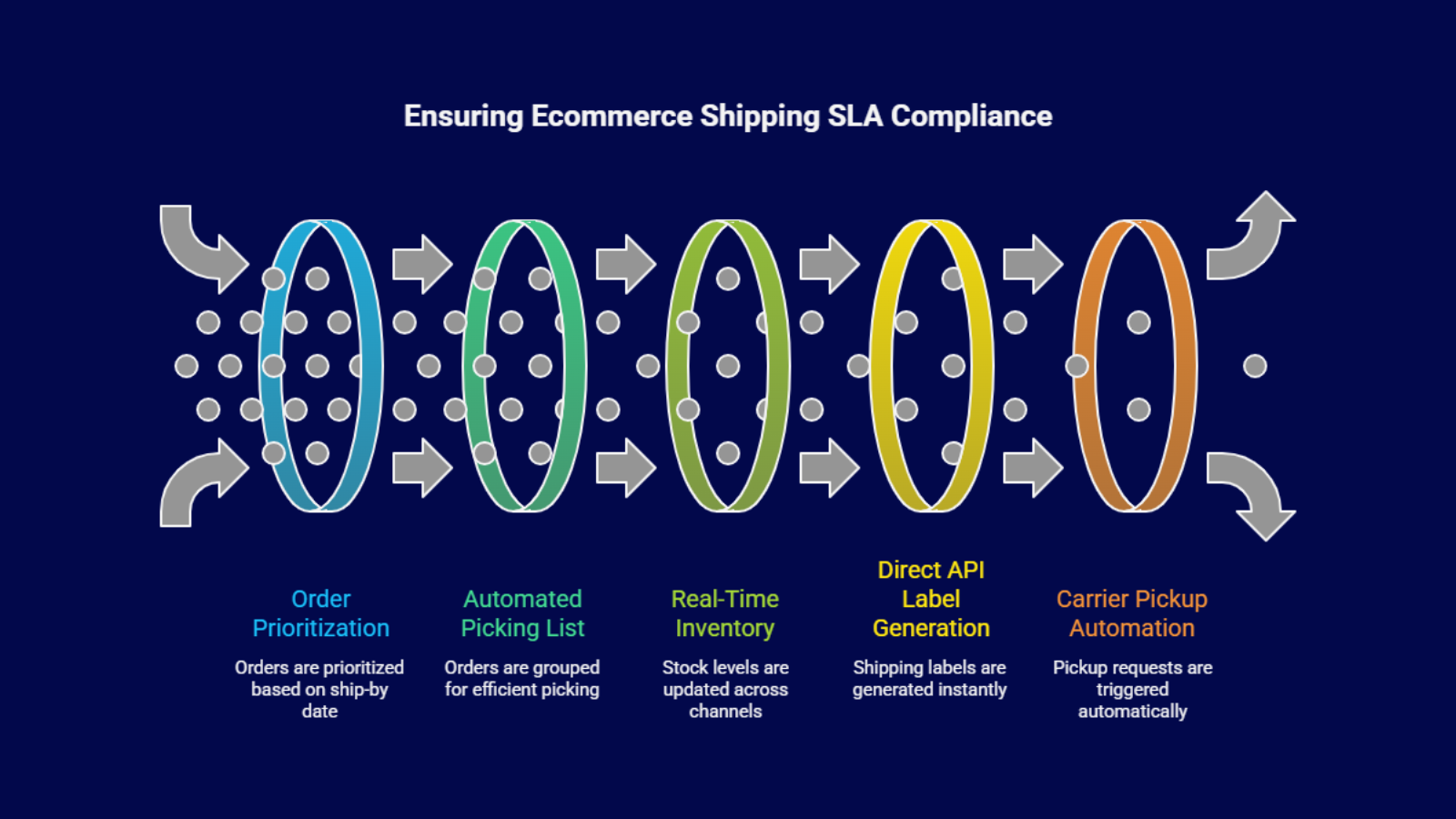
The system prioritizes orders based on their “ship-by” date. If an order is nearing its deadline, the OMS flags it, ensuring your warehouse team picks and packs it first. This proactive approach ensures you meet your ecommerce shipping SLA consistently, avoiding the heavy penalties and account health issues that plague unorganized sellers. This systematic prioritization means that even during peak seasons, your highest-priority customers are never left waiting.
Let’s look at the strategies To Prevent Service Level Agreement Breaches:
Automated Picking List Generation
The system groups orders by their shipping deadline, ensuring that the warehouse staff focuses on the most urgent packages first. This eliminates the confusion of which order to pack first when hundreds are flowing in simultaneously. It keeps the workflow linear and focused on the ecommerce shipping SLA requirements.
Real Time Inventory Synchronization
By updating stock levels across all channels instantly, you avoid the nightmare of taking an order for an item that is actually out of stock. Overselling is one of the quickest ways to ruin your ecommerce shipping SLA and receive a marketplace strike. The OMS ensures your digital storefront always reflects your physical shelf.
Direct API Label Generation
Eliminating the need to log into multiple courier portals saves minutes per order, allowing for a much faster dispatch cycle. When the OMS is directly integrated with courier APIs, the shipping label is generated as soon as the order is packed. This speed is essential for high-volume ecommerce shipping SLA compliance.
Carrier Pickup Request Automation
Once the label is scanned, the OMS automatically triggers a pickup request to the carrier, ensuring the package leaves the warehouse on time. You no longer have to call individual courier representatives or send manual emails. The system manages the communication, ensuring your ecommerce shipping SLA is met from end to end.
Techniques For Enhancing Last Mile Delivery Performance
The competition in India is no longer just about the product; it is about the post-purchase experience. If you cannot guarantee a seamless delivery, your customer will move to a competitor who can. Using courier allocation in OMS allows you to compete with the giants by offering professional-grade logistics. It levels the playing field, allowing a small startup to offer the same shipping reliability as a massive conglomerate.
1. Proactive NDR Management Integration
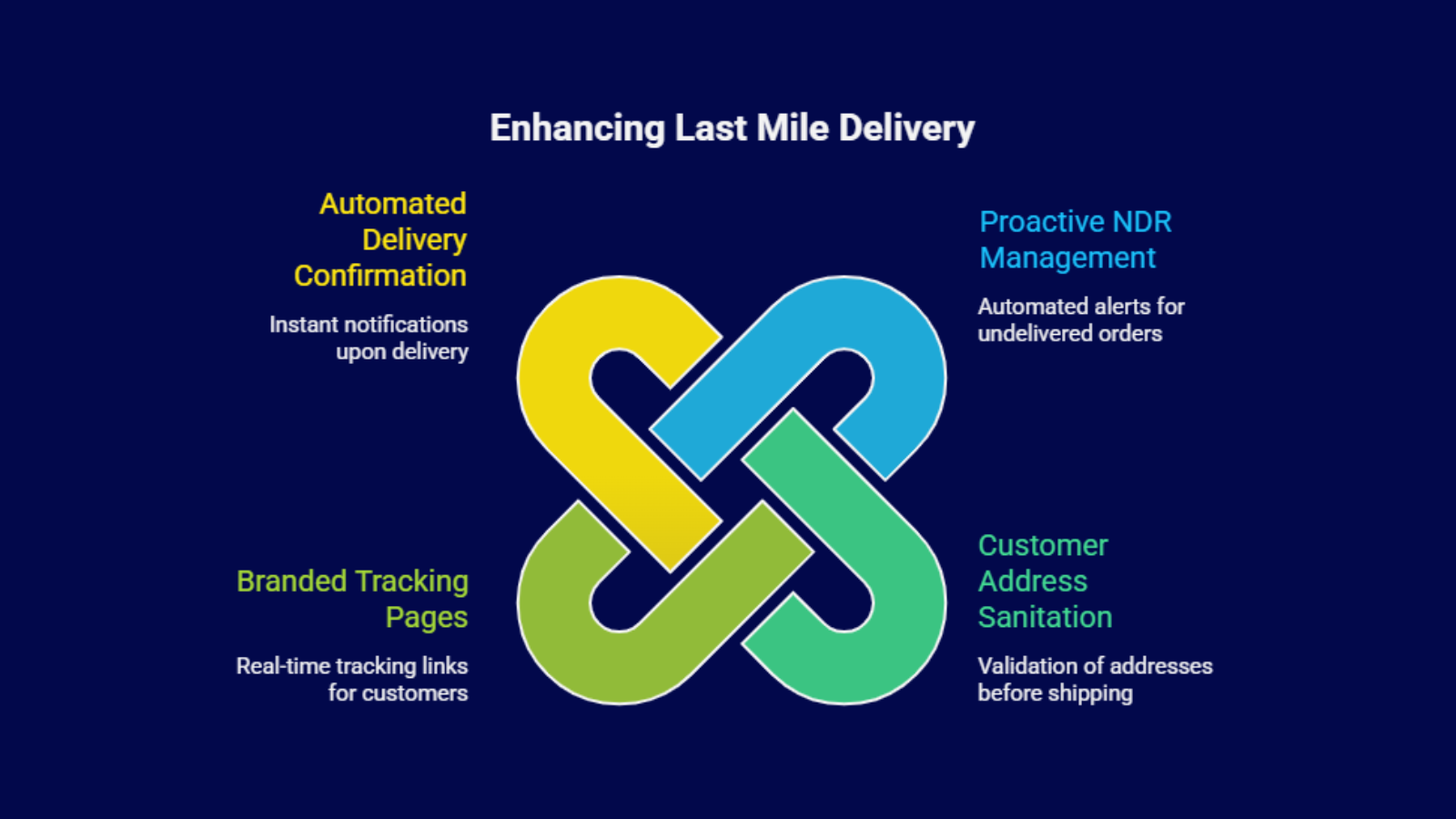
When a courier marks an order as “undelivered,” the OMS sends an automated WhatsApp or SMS to the customer to re-verify their address or delivery time. This real-time intervention often saves a shipment that would otherwise have become an RTO. It turns a potential failure into a successful delivery through better courier allocation in OMS data usage.
2. Customer Address Sanitation Tools
The system flags incomplete addresses or missing house numbers before the shipment is handed over, preventing delivery failure at the source. In India, addresses can be notoriously vague. An OMS with address validation ensures the courier has a fighting chance of finding the customer, thereby protecting your ecommerce shipping SLA metrics.
3. Branded Tracking Pages
Providing a clear, real-time tracking link reduces customer anxiety and prevents them from cancelling the order because they do not know where it is. When customers can see their order moving through the courier allocation in OMS stages, they are more likely to wait for the package rather than ordering a similar item elsewhere.
4. Automated Delivery Confirmation Alerts
Once the order is delivered, the system sends an instant notification, closing the loop and reducing the chances of fraudulent “non-receipt” claims. This immediate communication builds trust and ensures the customer is aware that the package has been dropped off, which is a key part of the ecommerce shipping SLA promise.
Key Organizational Benefits Of A Centralized Fulfillment System
Implementing an OMS ensures your business can handle ten times its normal volume during Diwali or Big Billion Days without extra administrative hiring. The system manages courier allocation in OMS automatically, allowing your team to focus on physical fulfillment to meet every ecommerce shipping SLA.
By selecting the most cost-effective carriers, you reduce shipping expenses by 20% while eliminating manual data entry errors that cause delays. This consistent reliability builds trust and enhances customer lifetime value, as shoppers feel confident that their orders will arrive on time, turning first-time buyers into loyal brand advocates through superior logistics performance.
| Metric | Why It Matters for Indian Sellers |
|---|---|
| Dispatch Time | Helps meet the ecommerce shipping SLA of 24-48 hours. |
| Courier Cost | Optimization via courier allocation in OMS increases margins. |
| RTO Rate | Prevents lost revenue from returned COD orders. |
| Tracking Accuracy | Builds trust and reduces customer support tickets. |
Conclusion
Maintaining your ecommerce shipping SLA is not just about avoiding penalties; it is about building a brand that people trust. When a package arrives on time, every time, you turn a first-time buyer into a loyal advocate. In a market as vast and complex as India, an OMS is the bridge between your warehouse and your customer’s doorstep. As the digital economy grows, the brands that master their logistics will be the ones that survive the coming decade.
Click here to learn more about the future of shipments in India.
Frequently Asked Questions Regarding OMS And Logistics
1. How does an OMS help with courier allocation in India?
An OMS uses pre-set rules to pick the best carrier for every order based on cost, speed, and pin code reach. It removes the manual work of deciding which partner to use, ensuring every parcel takes the most efficient route.
2. What happens if I fail to meet my ecommerce shipping SLA?
Failing to meet your ecommerce shipping SLA can lead to marketplace penalties, lower search rankings, and even account suspension. An OMS prevents this by prioritizing orders by their deadlines and automating the label generation process for faster dispatch.
3. Can an OMS really reduce my RTO rates?
Yes, it reduces RTO by ensuring faster deliveries through better courier allocation in OMS and by using NDR management tools. Quick deliveries and proactive communication keep the customer engaged, significantly lowering the chances of them refusing the package.
4. Is it difficult to integrate my current couriers into an OMS?
Most modern OMS platforms come with pre-built integrations for major Indian couriers like Delhivery, Blue Dart, and Ecom Express. You can usually connect your accounts in a few clicks, allowing for immediate automated shipping and tracking.
5. How does an OMS track my ecommerce shipping SLA across different platforms?
An OMS centralizes orders from all marketplaces into one dashboard. It pulls the specific ecommerce shipping SLA for each platform and sorts your fulfillment queue accordingly, so your team always knows which orders are the most urgent.