The real work for an Indian e-commerce brand begins after the customer hits the buy button. With the Indian e-commerce market projected to surpass $115 billion by late 2026, the real battle for profitability is fought during the transit phase.
Statistics show that while acquiring a new customer costs 5x more than retaining one, nearly 84% of Indian shoppers say they will not return to a brand after a single poor delivery experience. Furthermore, RTO (Return to Origin) rates in India continue to hover between 20% and 35%, directly eating into 15% of a brand’s bottom line.
To thrive in this landscape, sellers must move beyond a ship and forget mindset. Every touchpoint from the moment a payment is processed to the second the customer unboxes the product must be engineered for trust. Optimizing the post order journey ecommerce cycle is the most effective way to protect margins and build a defensible brand in a crowded marketplace.
Why do Indian sellers need to focus on the period between order and delivery?
The primary pain point for sellers in India is the lack of control over the package once it leaves the warehouse. In many cases, the brand loses visibility, and the customer is left with a generic tracking link that rarely updates. This lack of transparency leads to “Where Is My Order” (WISMO) queries, which can make up over 70% of customer support volume. When you optimize the post order journey ecommerce steps, you are essentially buying back your team’s time and your customer’s trust.
Another challenge is the high volume of Cash on Delivery (COD) orders. In the order to delivery journey in India, a COD order is a commitment, not a completed sale. If the delivery takes too long or the communication is poor, the customer simply refuses the package at the doorstep. This results in double shipping costs and blocked inventory. Improving the ecommerce post purchase experience is the only way to ensure that the intent to buy remains high until the package is in the customer’s hands.
To build a better post-purchase strategy, you need to understand the fundamental principles of communication. This involves identifying who is responsible for the delivery updates, what specific information the customer needs (like exact delivery dates), and where the package is located at every hour. You must define when these alerts are sentideally at every milestone, and why you are reaching out, which is usually to reduce anxiety. Finally, the how is achieved by using an Order Management System (OMS) to automate these touchpoints so no order falls through the cracks.
| Metric | Industry Average | Goal for 2026 |
|---|---|---|
| RTO Rate | 25% | Under 15% |
| Support Ticket Volume | 60% (WISMO) | Under 20% |
| Customer Retention | 20% | 35% or higher |
| Conversion to Prepaid | 10% post-order | 25% post-order |
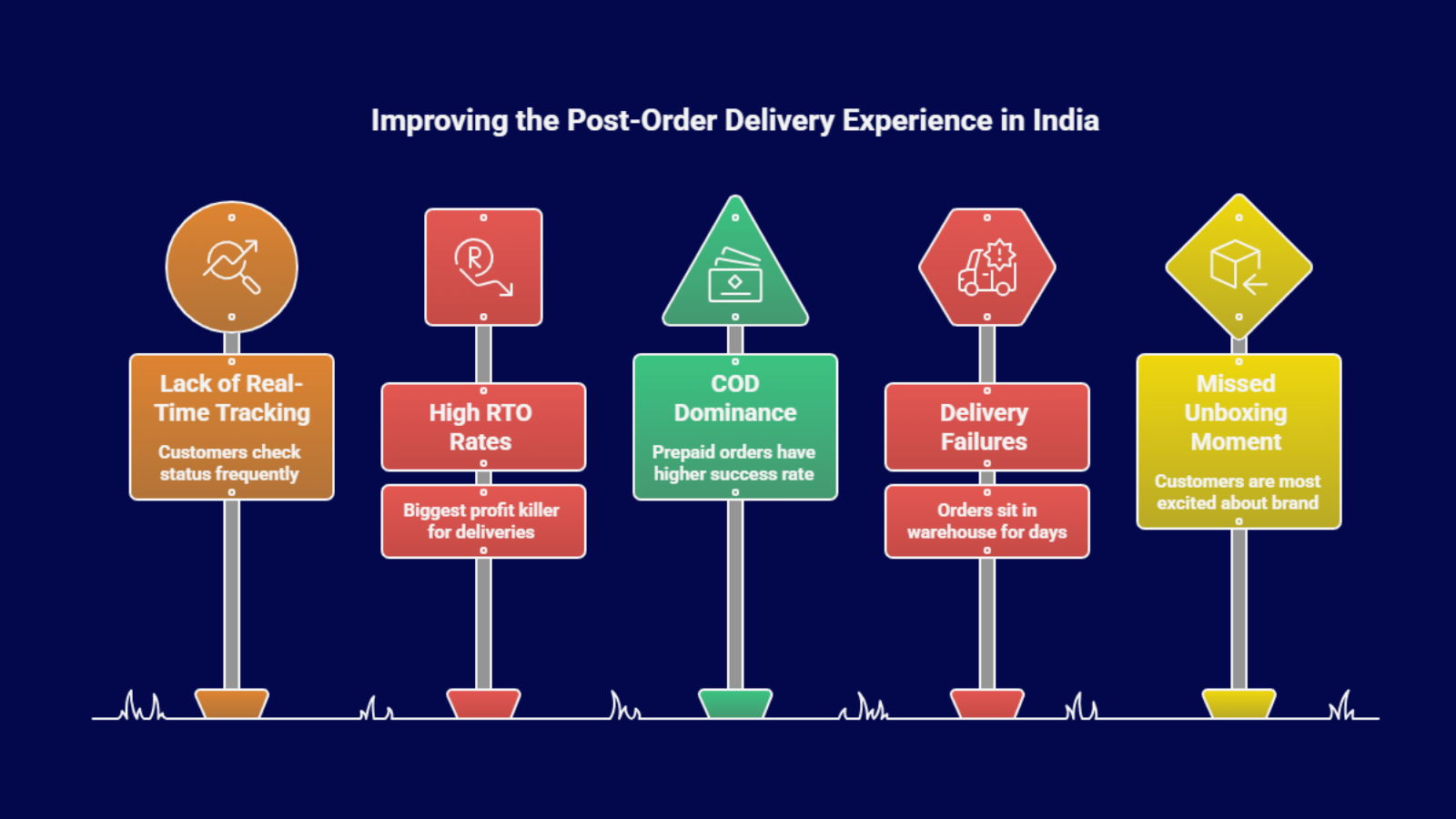
Five Critical Areas to Improve Your Delivery Experience
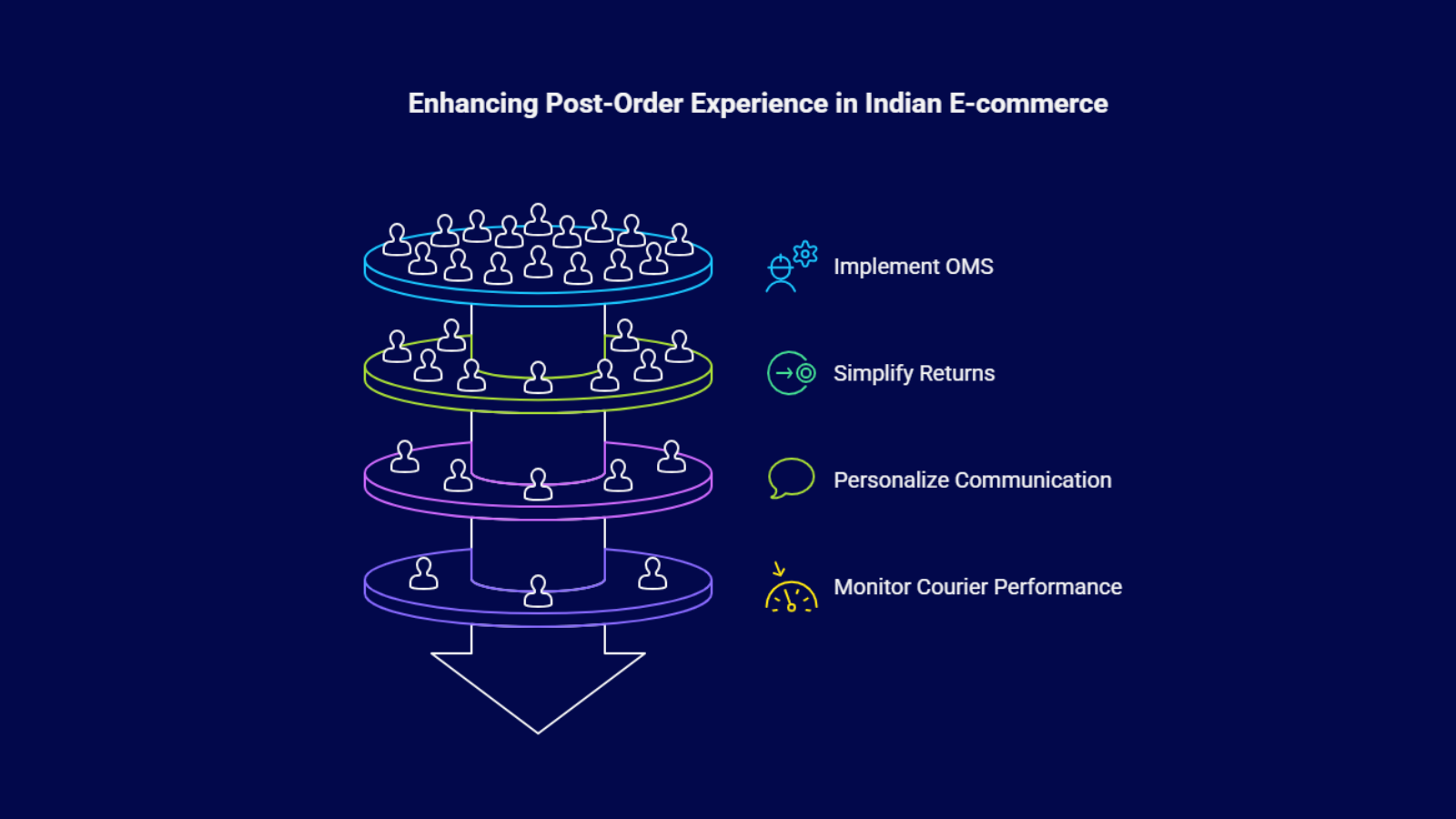
Managing the phase after an order is placed requires a shift from logistics-heavy thinking to customer-centric thinking. In India, where logistics can be unpredictable due to weather or local infrastructure, communication acts as the glue that holds the customer’s trust together. If you treat the order to delivery journey in India as a dark period where the customer hears nothing, you invite cancellations. Below are the specific journeys you must refine to ensure your ecommerce post purchase experience remains competitive.
1. You should provide real-time tracking updates on your own website
Indian consumers check their order status frequently, often multiple times a day. Instead of sending them to a third-party courier site that might have a confusing interface, provide a branded tracking page on your own domain. This keeps the post order journey ecommerce under your control and keeps your brand top-of-mind. When you send updates via WhatsApp or SMS at every milestone, you significantly reduce customer anxiety. A good ecommerce post purchase experience tells the customer when the item is packed, when it is at the local hub, and the exact moment it is out for delivery.
2. You must take control of the RTO problem using data
RTO is the single biggest profit killer for the order to delivery journey in India. You can use data and machine learning to flag high-risk orders before they ever ship. If a customer’s address looks incomplete or they have a history of rejecting packages, an automated system should trigger a message to the customer to verify the details. This proactive step in the post order journey ecommerce prevents the courier from marking the house as “not found,” which is the most common reason for failed deliveries in the Indian market.
3. You can move customers from COD to prepaid after the order is placed
Since prepaid orders have a much higher success rate and faster cash flow, your ecommerce post purchase experience should include an incentive for customers to pay digitally. Even after they select COD at checkout, you can send a link via WhatsApp offering a small discount or loyalty points if they convert to a prepaid payment. This simple tweak in the post order journey ecommerce can reduce your RTO rates by nearly 15% because customers who have already paid are much more likely to accept the delivery.
4. You need to manage delivery failures in real time to save sales
When a delivery person cannot reach a customer, it is recorded as a Non-Delivery Report (NDR). In a standard order to delivery journey in India, these orders often sit in a warehouse for days before being sent back to the seller. By using an automated NDR management system, you can immediately text the customer to ask for a better delivery time or an alternative phone number. This keeps the ecommerce post purchase experience active and gives you a second chance to complete the sale before the item is returned to origin.
5. You should use the unboxing moment to collect feedback and drive loyalty
The post order journey ecommerce does not end the moment the doorbell rings. The time immediately after a customer opens their package is when they are most excited about your brand. Use this window within your ecommerce post purchase experience to ask for a rating or offer a personalized discount on their next purchase. If they are unhappy for any reason, providing an easy way to request an exchange within the post order journey ecommerce flow can prevent a negative public review and turn a bad situation into a win for the order to delivery journey in India.
How to Integrate these Journeys into your Daily Operations
Focusing on the “How” is about moving away from manual spreadsheets and adopting a modern Order Management System (OMS). This allows you to automate the post order journey ecommerce tasks that are simply too slow to do manually at scale. When you automate the ecommerce post purchase experience, you ensure that every customer receives the same high level of service regardless of your order volume. This level of technical detail is what separates a small seller from an enterprise-grade brand in the order to delivery journey in India.
Make the return process simple and transparent
Many sellers fear returns, but a transparent return policy actually increases long-term sales. If the ecommerce post purchase experience makes it hard to return an item, the customer will likely never shop with you again. In the order to delivery journey in India, trust is hard to earn and very easy to lose. You should make the return or exchange button easy to find in your post order journey ecommerce flow to show that you stand behind your product.
Personalize the follow-up communication based on what they bought
Don’t just send generic “Thank You” messages that look like every other store. If a customer bought a high-end skincare product, send them a guide on the best way to apply it. This adds real value to the ecommerce post purchase experience without feeling like a sales pitch. It makes the post order journey ecommerce feel like a personalized service rather than just a transaction. In the order to delivery journey in India, these small touches make your brand much more memorable than a marketplace competitor.
Monitor courier performance by specific regions
Not all couriers perform equally in all parts of India. Some excel in metropolitan areas, while others have a better reach in Tier-2 or Tier-3 cities. A smart post order journey ecommerce strategy involves reviewing which partners have the lowest RTO in specific pincodes. By optimizing the order to delivery journey in India based on regional performance data, you improve the overall ecommerce post purchase experience for every customer regardless of where they live.
Why Mastering the Final Mile is the Key to Scaling in 2026?
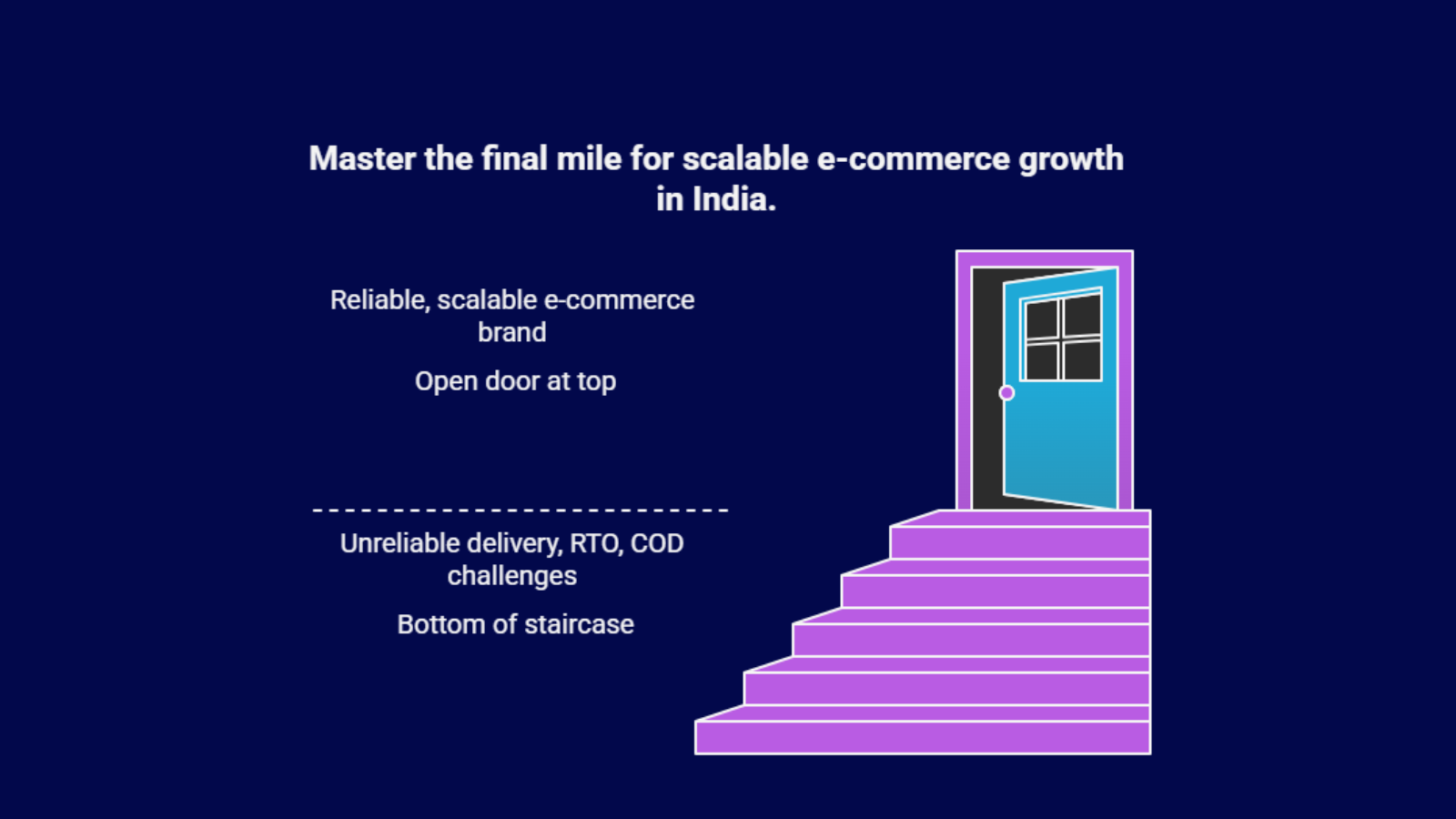
Building a successful e-commerce brand in India requires a fundamental shift in perspective. In this market, the transaction is no longer the final goal; it is merely the starting point of a much longer relationship.
As we have seen, the order to delivery journey in India presents unique challenges like RTO and COD management that can only be solved through intentional, automated communication and data-driven logistics. By investing in the post order journey ecommerce phase, you are doing more than just moving boxes; you are building a reputation for reliability in a market that rewards trust above all else.
Winning in this competitive landscape means mastering every touchpoint of the ecommerce post purchase experience. Whether it is through branded tracking, proactive NDR management, or personalized post-delivery engagement, these strategies ensure that your brand remains profitable and scalable.
As the Indian market continues to evolve toward 2026, the brands that thrive will be those that treat the journey of the package with the same importance as the initial sale. Focus on these critical post-order milestones today to secure your brand’s growth for the future.
Click here to learn more about the rise of hyperlocal dark stores and how every brand should utilise its potential to the maximum.
Frequently Asked Questions
1. How does post-order communication help in reducing RTO?
By keeping the customer engaged, you ensure they don’t forget about the order or buy a substitute elsewhere. Proactive updates in the post order journey ecommerce confirm the customer’s intent to receive the package, especially for Cash on Delivery orders.
2. What is the most effective channel for delivery updates in India?
WhatsApp is currently the most effective channel for the order to delivery journey in India. It has significantly higher visibility and open rates than email. Using it within your ecommerce post purchase experience allows for quick two-way communication regarding delivery timing.
3. Can a branded tracking page really improve my sales?
Yes, a branded tracking page keeps customers on your website during the post order journey ecommerce. You can use this space to show them related products or educational content, turning a routine check on the order to delivery journey in India into a marketing opportunity.
4. What should I do if a delivery attempt fails?
You should immediately trigger an NDR (Non-Delivery Report) flow. Reach out to the customer through your ecommerce post purchase experience tools to ask why the delivery failed. This quick action in the post order journey ecommerce can save the sale.
5. How often should I contact the customer after an order?
You should send updates at four key stages: order confirmation, shipment dispatch, out for delivery, and post-delivery feedback. This ensures a smooth order to delivery journey in India without overwhelming them. It creates a professional and reliable ecommerce post purchase experience.