
When a D2C brand in India starts to grow, pricing stops being just a number on the product page and becomes the backbone of the entire business. At ₹5 lakh monthly revenue, small pricing mistakes can be absorbed. But once you cross ₹20–30 lakh per month and begin spending ₹3–5 lakh on ads, every ₹50 pricing gap starts showing up in your cash flow. That is why understanding how D2C brands should price for scale in competitive markets is not theory. It is an operational reality.
Most early-stage founders price by checking Amazon, Flipkart, or Instagram competitors. They add 2x or 2.5x over landed cost and feel safe. That may work for the first 1,000 orders when marketing is organic and return rates are manageable. But in India, where Meta CPMs have risen 25% to 40% in many categories, and COD still drives 50% to 70% of orders, weak pricing structures break quickly. Rising CAC, 18% to 30% return rates in fashion, and marketplace commissions of 20% to 30% expose flawed pricing within months.
This blog explains how D2C brands should price for scale in competitive markets using real Indian cost structures, actual margin math, and grounded logic. No generic advice. Just practical numbers that connect directly to growth.
Why Pricing Determines Whether You Scale or Stall
Scaling is expensive. The moment your brand increases ad spend, real performance metrics start to dictate survival. CPC rises. CPM fluctuates. ROAS compresses. And if your pricing is not built to absorb this shift, growth quickly turns into cash burn.
Understanding how D2C brands should price for scale in competitive markets begins with performance math, not intuition. At early stages, you may see CPC at ₹6 to ₹8 on Meta and enjoy a 4x ROAS on warm audiences. But once you scale into cold traffic, CPC often climbs to ₹12 to ₹20, and blended ROAS drops to 2.5x or even 2x. That change alone can double your Customer Acquisition Cost.
Let’s say your Average Order Value is ₹1,000.
At 4x ROAS, your CAC is ₹250.
At 2x ROAS, your CAC becomes ₹500.
If pricing was built assuming a ₹250 CAC, your contribution margin collapses at scale.
Before increasing spend, sellers need clarity on three financial benchmarks:
| Metric | Ideal Benchmark |
|---|---|
| Gross Margin | 60% to 75% |
| Contribution Margin after ads | 25% to 40% |
| Net Profit Margin | 10% to 20% |
Gross margin must be strong enough to absorb fluctuations in CPC and declining ROAS. Contribution margin after ads is what funds scaling. If your blended ROAS falls below 2.5x and the contribution after ads drops under 20%, scaling becomes risky.
Net profit margin protects during seasonal CPM spikes, festive ad inflation, and return surges. Pricing that works at 3x ROAS may fail at 2x. That is why the D2C pricing strategy, pricing for growth, must account for realistic paid media performance, not best-case dashboard numbers.
Break Down Your True Cost Structure and Set Pricing With Clarity
 Most founders believe they understand their margins. They know their manufacturing cost, they know what they charge, and the gap looks comfortable. But the real test begins when orders increase, and performance marketing becomes the main growth driver. That is when pricing either supports scale or quietly weakens it.
Let’s walk through this step by step.
Imagine you manufacture a product at ₹400 and sell it at ₹1,200. At first glance, that looks like a strong margin. But the journey of an order does not stop at manufacturing.
The product needs packaging. It must be shipped to the customer. Payment gateway fees are deducted. Some percentage of orders return. Warehouse handling and customer support costs apply to every unit shipped. If you work with influencers or affiliates, those payouts also need to be distributed across your order volume.
When you add these together, your ₹400 product may actually carry ₹700 or more in real variable cost before you even spend on marketing.
Now add paid acquisition. If your Average Order Value is ₹1,200 and your blended ROAS settles at 2.5x to 3x during scaling, your Customer Acquisition Cost may range between ₹300 and ₹400. Suddenly, your total cost per order crosses ₹1,000.
What looked like ₹800 in margin is now closer to ₹150 or ₹200 in real contribution.
This is where many brands feel stuck. Revenue grows. Orders increase. But the cash position does not improve at the same pace. The issue is not demand. The issue is pricing built without full cost clarity.
To set pricing correctly, you must think backwards.
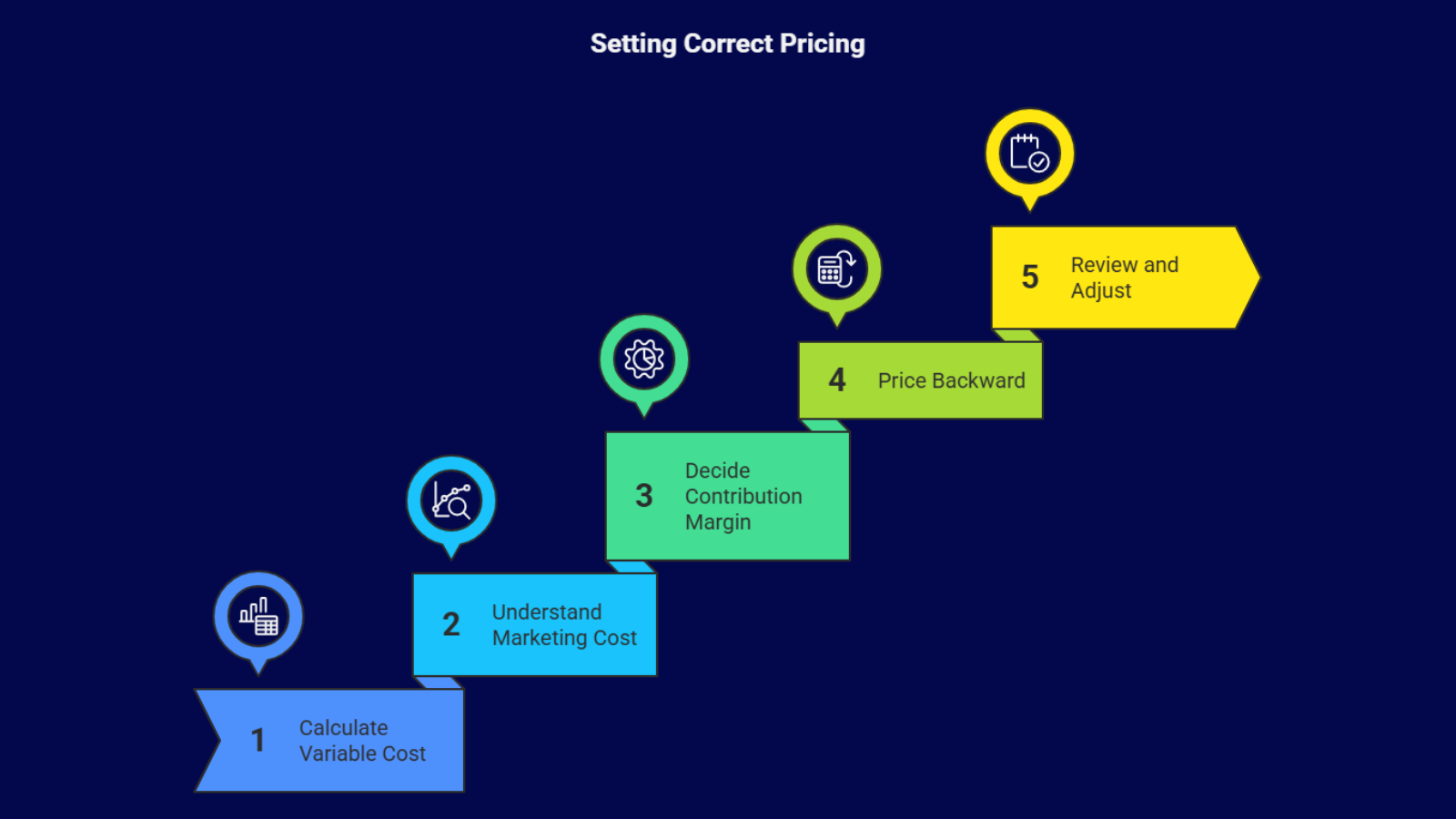 Step 1: Calculate Your True Blended Variable Cost
Start by pulling 30 days of real data. Not your best week and not your best campaign. Use blended averages.
Include manufacturing cost, packaging, forward shipping, RTO impact per shipped order, payment gateway charges, warehouse handling, customer support cost per order, influencer or affiliate payouts, and average discount usage.
For example, if your product costs ₹400 to manufacture but blended logistics, returns, handling, and discounts add ₹300, your true variable cost becomes ₹700. This number must reflect reality. If your return rate is 20%, include it honestly. If 15% of orders use coupons, factor that in. Guesswork here leads to weak pricing later.
Step 2: Understand Your Real Marketing Cost
Look at your blended ROAS over 30 days, not your best-performing ad set. If your Average Order Value is ₹1,200 and your blended ROAS is 3x, your CAC is roughly ₹400. If ROAS fluctuates between 2.5x and 3x, build pricing assuming the lower end. Always price for average performance, not peak performance.
Step 3: Decide the Contribution Margin You Need
To scale safely, most D2C brands need 25% to 35% contribution after marketing. This contribution funds inventory cycles, team salaries, tech tools, operational errors, and cash flow gaps. If the contribution drops below 20%, scaling becomes stressful.
Step 4: Price Backward From Required Margin
If your blended variable cost excluding ads is ₹700 and you want a 35% contribution buffer, your selling price must reflect that requirement. Instead of copying competitor prices, design pricing around survival math. This ensures that even if CAC fluctuates slightly, you are not operating at the edge.
Step 5: Review and Adjust Monthly
Pricing is not fixed forever. Review blended costs every month. If shipping rates increase or return rates spike, adjust early. Small ₹50 corrections are easier than sudden large increases. Strong pricing is structured, and structure protects scale.
Align Pricing With Customer Perception, Channels, and Ongoing Market Reality
Once your cost structure is clear, the next layer is perception. Even if your math supports a higher price, the market must accept it. In Indian ecommerce, customers compare you with Amazon, Flipkart, and at least two other D2C brands before buying. Pricing is not decided in isolation. It is decided in context.
1. Understand Customer Perception Before Increasing Price
 If you increase your price by 15% to 20%, you must reinforce value at the same time. Otherwise, the conversion rate will quietly decline. For example, if your AOV is ₹1,200 and your conversion rate is 2%, raising the price to ₹1,350 may reduce conversion to 1.7%. That 0.3% drop may seem small, but at scale it significantly impacts revenue and blended ROAS.
Higher prices influence add-to-cart rate, review sentiment, and return expectations. Before increasing MRP, strengthen product differentiation, improve product page clarity, highlight unique ingredients or features, upgrade packaging visuals, and push social proof aggressively. Customers tolerate higher pricing when trust signals are strong. Always test elasticity through controlled traffic splits before permanent increases. Pricing for growth must follow data, not assumptions.
2. Use Bundling to Improve Margins Without Looking Expensive
Instead of raising single SKU prices aggressively, improve AOV strategically. If one product sells at ₹999, offer 2 for ₹1,799 or 3 for ₹2,499. Shipping per order remains almost the same whether one or two units are shipped. So per-unit logistics cost drops significantly in bundles.
For example, if shipping is ₹90 per order, a single unit carries a ₹90 shipping cost. In a two-unit bundle, effective shipping per unit becomes ₹45. This immediately improves contribution without visible price hikes.
Go beyond random combos. Create problem-based bundles like “Acne Repair Kit” or “Winter Skin Recovery Pack.” These reduce direct price comparison and improve perceived value. Focus on blended margin across orders, not just SKU-level margin.
3. Plan Pricing for Marketplaces and Website Separately
Using identical pricing across channels is risky. Marketplace fees often range between 15% and 25%, and total effective deductions can cross 30% after shipping and closing fees. If your website MRP is ₹1,199, blindly copying it to Amazon may destroy the margin.
A smarter structure could be website MRP at ₹1,199 and marketplace MRP at ₹1,299 with a visible 10% discount, landing near parity while protecting commission impact. This avoids direct undercutting and maintains contribution.
Operational control matters here. Without centralized systems like Base.com, pricing inconsistencies and stock mismatches create chaos. Multi-channel pricing clarity is essential for stable scaling.
4. Protect Margin From Discounts
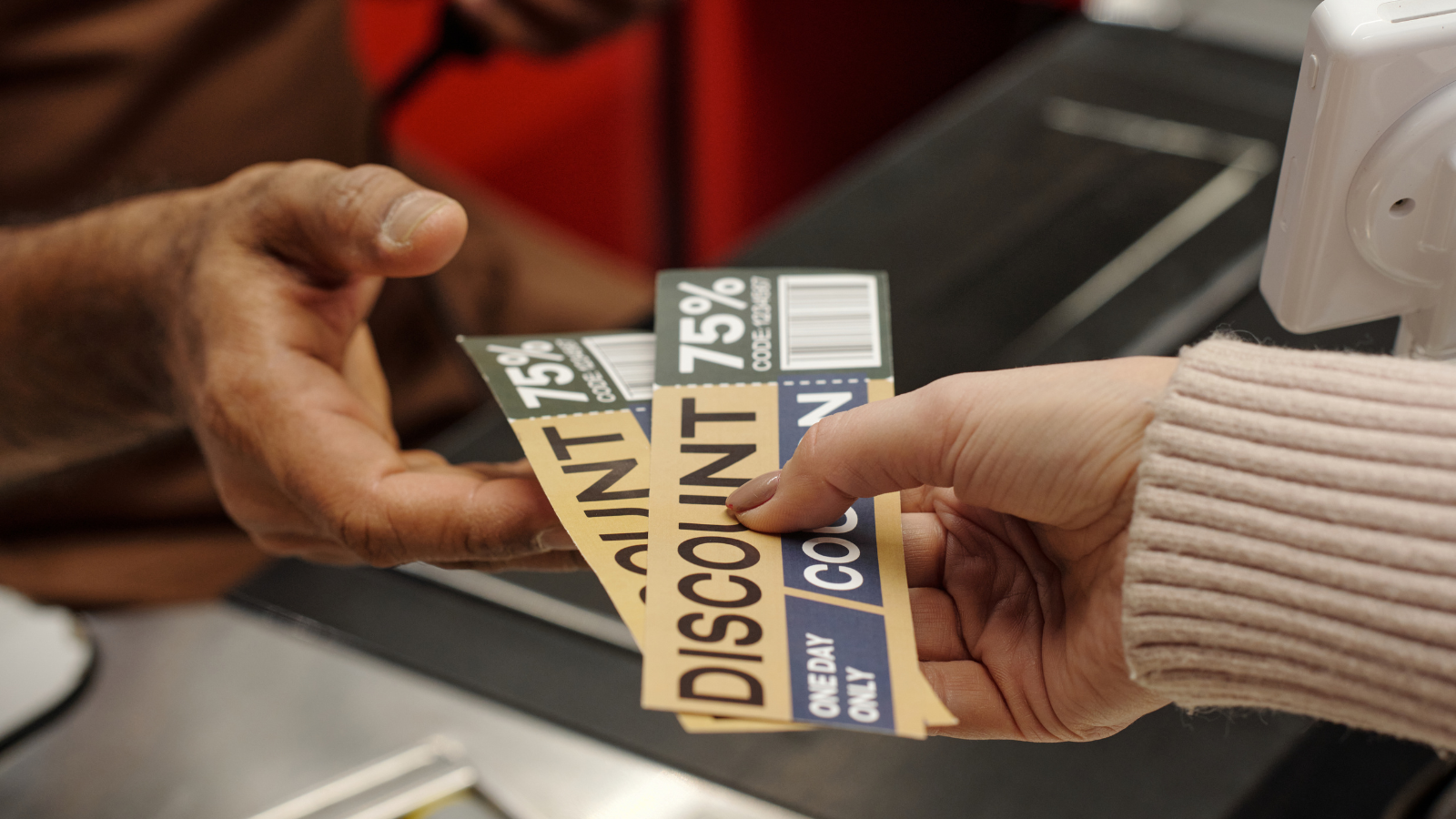 Heavy discounting weakens long-term profitability. Many brands run 40% sitewide sales without calculating their contribution-positive threshold. If your safe contribution buffer is 25%, any discount beyond that level pushes orders into loss.
Use bundles instead of flat discounts. Offer wallet credits instead of deep price cuts. Limit major sales to controlled windows. Track the effective realized price after coupon stacking, not just the advertised discount.
5. Monitor Pricing Weekly, Not Quarterly
E-commerce moves fast. CPC, ROAS, and return rates shift weekly. Track contribution margin per SKU, blended ROAS, discount percentage, AOV, and return impact consistently. If the return rate crosses 20% or the ROAS drops sharply, adjust pricing or bundling early. Small corrections are easier than emergency fixes.
When pricing is structured, tested, and monitored regularly, scale feels controlled. When pricing is reactive, growth becomes unpredictable. Strong pricing discipline is what allows e-commerce sellers to expand without constant cash flow stress.
Scaling Requires Cash Flow Cushion
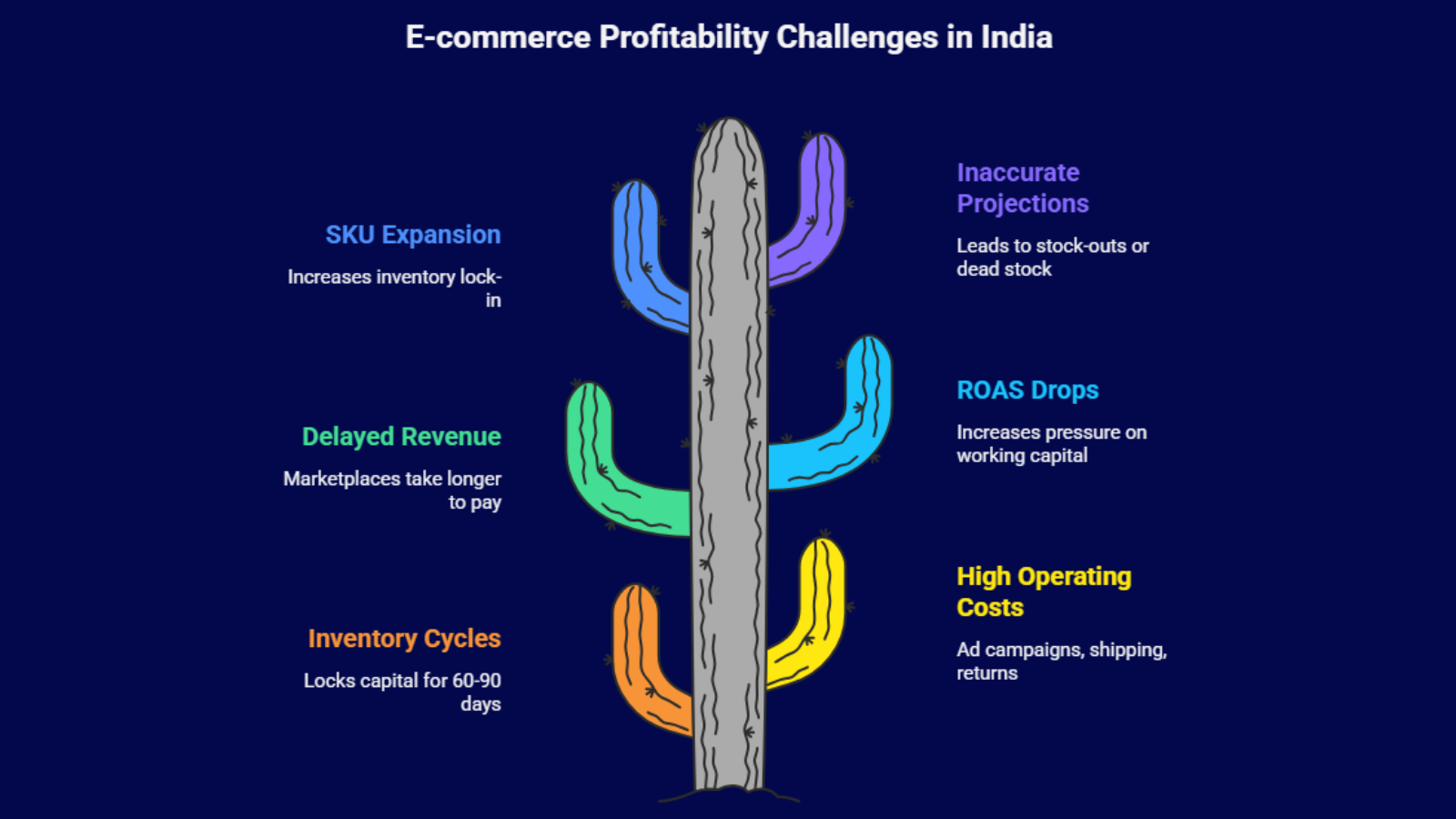 Even when your pricing model is correct, profit does not show up immediately. In Indian ecommerce, inventory cycles often lock capital for 60 to 90 days. You pay manufacturers upfront, fund ad campaigns daily, and cover shipping and return costs weekly. But revenue realization, especially from marketplaces, may take longer. That gap between spending and receiving creates pressure.
Before aggressive scaling, three safeguards are essential. First, maintain at least three months of working capital buffer. This protects you if ROAS drops, CPC increases, or return rates spike during sale periods.
Second, control SKU expansion. Adding too many new products increases inventory lock-in and forecasting errors.
Third, build demand projections using real data from the past 60 to 90 days, not optimistic targets. Scaling ads without aligning inventory planning leads to stock-outs or dead stock, both of which hurt contribution margin.
Pricing without liquidity planning fails during growth spikes. Margin strength and cash discipline must move together.
Align Pricing With Operations Using Base.com
Scaling a D2C brand is not about randomly increasing prices. It is about building a pricing structure that works across websites, Amazon, Flipkart, and other channels without creating confusion. Multi-channel selling introduces commission differences, shipping variations, and discount overlaps. If pricing is not centrally controlled, margins leak silently.
This is where Base.com becomes critical. Base.com allows sellers to manage catalog, inventory, and pricing logic across channels from a single dashboard. You can adjust marketplace pricing separately from website pricing, prevent overselling through real-time stock sync, and monitor SKU-level performance to identify margin pressure early. It also reduces discount stacking errors and ensures consistent price visibility across platforms.
When pricing decisions are aligned with operational control through Base.com, scaling becomes structured instead of chaotic. Strong pricing is not about being the cheapest option. It is about protecting contribution, managing working capital, and ensuring execution stays clean as volume increases. That combination enables sustainable pricing for growth.
Frequently Asked Questions
1. What is the ideal gross margin for scaling a D2C brand?
An ideal gross margin is between 60% and 75%. This allows room for marketing, shipping, returns, and still leaves the contribution margin positive during paid acquisition scaling phases.
2. Should D2C brands match competitor pricing exactly?
Not always. Matching competitors without cost analysis can hurt margins. Price is based on your required contribution and value perception, not only on competitor benchmarks.
3. How often should pricing be reviewed?
Pricing should be reviewed weekly, especially during growth phases. Monitor contribution margin, ad cost changes, discount levels, and return rates to stay profitable.
4. Is discounting necessary for growth?
Discounting can drive volume, but it must be controlled. Never discount below contribution positive levels. Bundles and loyalty rewards often work better than heavy sitewide sales.
5. How does marketplace pricing differ from website pricing?
Marketplace pricing must absorb commission and platform fees. Often, MRP is set slightly higher on marketplaces to maintain margin parity after discounts and commissions.