Home and garden e-commerce is one of the hardest categories to scale efficiently.
A retailer selling phone cases, cosmetics, or books may deal with fairly standard picking, packing, and shipping processes. But home and garden businesses rarely have that luxury.
One order might contain a small decorative vase. The next might be a garden furniture set, bags of soil, a fragile mirror, live plants, or a bulky wardrobe. Add seasonal demand, multiple marketplaces, supplier lead times, delivery restrictions, and manual stock updates into the mix, and operations can quickly become harder to control.
That is why operational efficiency matters so much in this sector.
A home and garden brand can have strong products, good demand, and plenty of sales channels — but if the systems behind the business are not connected, growth can create more problems than progress.
The Base Home & Garden E-Commerce Efficiency Scorecard was created to help retailers understand where their biggest operational bottlenecks are hiding.
In 15 quick questions, the scorecard assesses how well your business is set up across four key areas:
- Warehouse Management System (WMS)
- Order Fulfilment
- Marketplace Integration
- Automation Tools
At the end, you receive a personalised report showing where your operation is strong, where it may be exposed, and what to improve next.
Home & Garden AuditWhy Home & Garden E-Commerce Is Operationally Different
Home and garden retail has a very specific set of challenges.
The product range is often broad. Stock can be seasonal. Warehouses need to handle products of very different shapes, sizes, and weights. Delivery costs can vary massively from one item to another. Some products need specialist packing. Others may need special documentation, delivery timing, or carrier rules.
For Example
A ceramic planter needs careful packaging.
A sofa may need oversized delivery.
A live plant may not be suitable for dispatch at the end of the week
A garden furniture set may require pallet shipping.
A seasonal bestseller may sell out faster than your team can manually reorder it.
These are not small admin problems. They directly affect profit, delivery speed, customer experience, and your ability to scale.
As order volumes grow, manual processes that once felt manageable often become the reason teams start to struggle.
The Four Areas That Define Home & Garden E-Commerce Efficiency
The Base scorecard focuses on four areas that have the biggest impact on operational performance for home and garden retailers.
These categories were chosen because they affect almost every part of the customer journey, from the moment stock arrives to the moment an order is delivered.
Warehouse Management System (WMS)
Your warehouse is the foundation of your home and garden operation. If stock data is inaccurate, everything else suffers — orders slow down, picking errors increase, and customers may buy products that are not actually available.
This is especially important in home and garden, where products can range from small décor and fragile ceramics to bulky furniture, garden tools, DIY supplies, live plants, and seasonal ranges.
A strong WMS helps your team manage this complexity with real-time stock visibility, accurate picking, barcode scanning, automated replenishment, and connected workflows across your webstore, marketplaces, shipping tools, and fulfilment systems.
Order Fulfilment
Order fulfilment is where operational promises become customer experiences.
For home and garden retailers, fulfilment is rarely one-size-fits-all. A plant pot, fragile mirror, garden furniture set, and bag of compost may each need different handling, packaging, courier rules, or delivery methods.
If these decisions are made manually, mistakes become more likely — from damaged items and wrong courier selections to delayed dispatch and poor tracking updates.
A strong fulfilment process routes orders automatically, applies the right shipping method, generates labels, updates customers, and reduces the risk of damaged or delayed deliveries.
Marketplace Integration
Marketplaces are a major growth opportunity for home and garden retailers, but more channels also create more complexity.
Selling across Amazon, eBay, Etsy, Wayfair, ManoMano, B&Q Marketplace, and your own webstore means stock, pricing, product data, orders, and returns all need to stay connected.
Without proper integration, teams can end up duplicating work, causing overselling, stockouts, inconsistent listings, pricing errors, slow order processing, and poor marketplace performance.
Home and garden listings often need detailed data such as dimensions, materials, colours, variations, delivery restrictions, assembly information, and compliance details. Managing this centrally helps reduce mistakes.
Automation Tools
Automation is what stops growth from becoming chaos.
Many home and garden retailers are not held back by lack of demand, but by too many manual tasks — updating stock, choosing couriers, sending customer updates, managing returns, changing prices, adding fragile handling rules, and routing orders to the right warehouse or fulfilment partner.
Individually, these tasks seem small. Together, they consume hours every week and increase the risk of human error.
Automation removes repetitive work, improves consistency, and makes the business easier to scale. This is especially valuable in home and garden, where product handling, shipping requirements, and seasonal demand can vary so much.
What Your Score Can Reveal
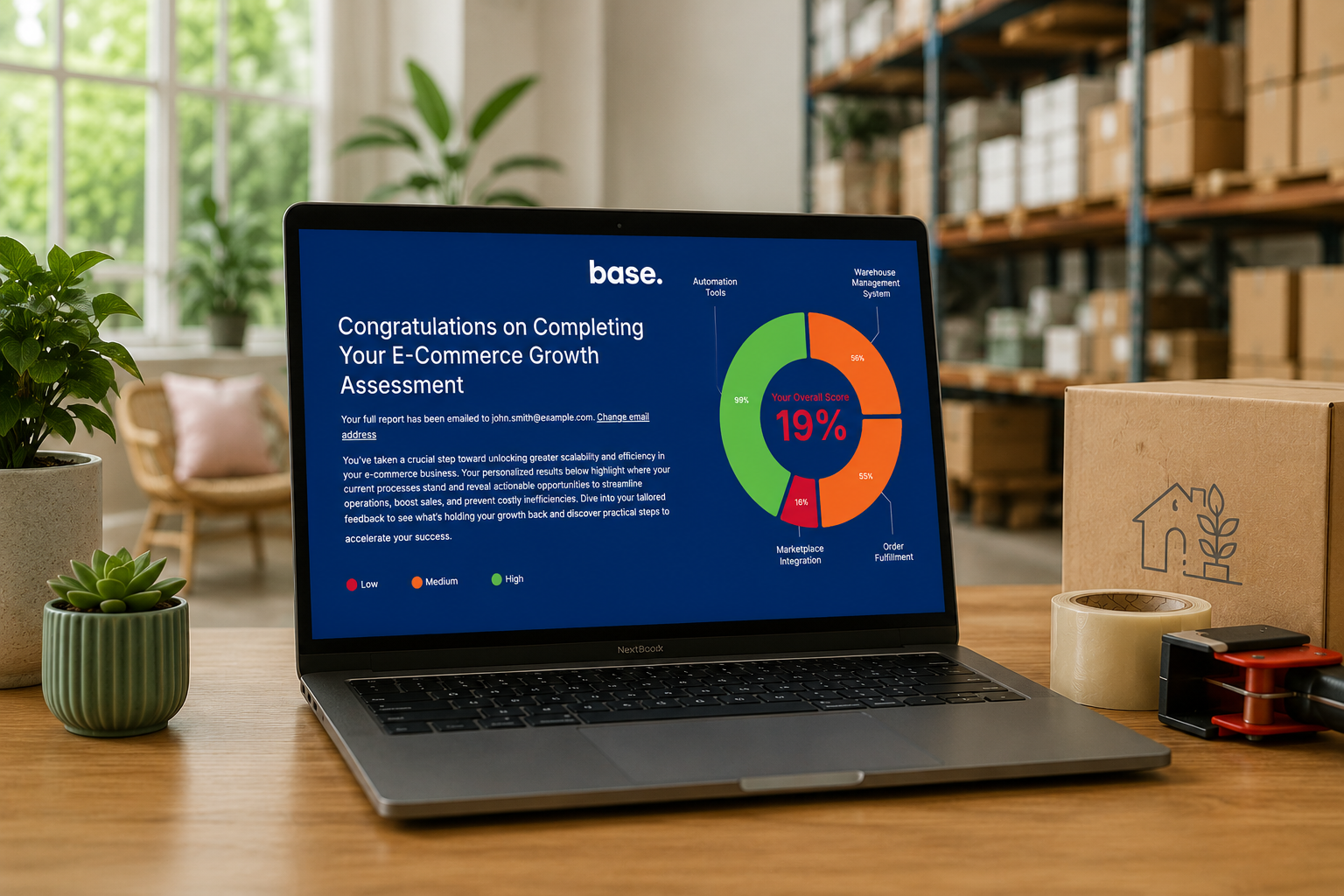
The Home & Garden Efficiency Scorecard is designed to show where your business sits today.
It does not simply tell you whether your operation is “good” or “bad”. Instead, it highlights the areas where your systems may be helping or holding back growth.
Low scores
A low score usually means there are clear operational risks.
You may be relying on manual processes, disconnected systems, or workarounds that make it harder to scale. In a home and garden business, that can lead to overselling, picking errors, damaged goods, late dispatches, and unhappy customers.
Medium scores
A medium score suggests you already have some good foundations in place, but there are still gaps.
Your business may be coping well day to day, but seasonal peaks, new marketplaces, or higher order volumes could expose weaknesses. This is often the stage where improving integrations and automation delivers a big return.
High scores
A high score means your operation is already well structured.
Your systems are likely connected, your team is not relying heavily on manual processes, and your workflows are built to handle complexity. The opportunity at this stage is usually about refinement: better forecasting, smarter rules, improved reporting, and deeper optimisation.
How Base Helps Home & Garden Retailers Improve Efficiency
Base helps home and garden retailers connect and automate key parts of their e-commerce operation.
Instead of managing stock, orders, listings, couriers, and customer updates across separate systems, Base gives businesses one place to control more of the sales journey.
For home and garden teams, that can mean:
- Better visibility over stock
- Faster order processing
- More accurate marketplace synchronisation
- Smarter shipping workflows
- Automated customer updates
- Improved warehouse processes
- Less manual admin
- Better control during seasonal peaks
The result is an operation that is easier to manage, easier to scale, and less dependent on manual work.
Take the Free Home & Garden E-Commerce Efficiency Scorecard
If you sell home and garden products online, your operational setup matters just as much as your sales channels.
The question is not only whether you are growing.
It is whether your systems can support that growth without creating more errors, more admin, and more pressure on your team.
The Base Home & Garden E-Commerce Efficiency Scorecard gives you a quick way to assess your current setup and identify where your biggest opportunities for improvement are.
In just 15 questions, you will receive a personalised report covering warehouse management, order fulfilment, marketplace integration, and automation.
Home & Garden AuditFAQ
Q1. What is a good e-commerce efficiency score for a home and garden retailer?
A good score means your systems are connected, your stock data is reliable, your fulfilment process is consistent, and your team is not overly dependent on manual admin. For home and garden retailers, this is especially important because product sizes, shipping requirements, seasonal demand, and marketplace complexity can vary significantly.
Q2. Why is home and garden e-commerce harder to manage than some other categories?
Home and garden retailers often sell a wide mix of products, from small decorative items to bulky furniture, fragile goods, garden tools, plants, and seasonal ranges. These products may need different storage, picking, packing, shipping, and listing processes, which makes operations harder to manage manually.
Q3. What are the most common operational bottlenecks for home and garden retailers?
Common bottlenecks include inaccurate stock data, manual marketplace updates, slow order routing, poor courier selection, picking errors, fragile item damage, overselling, seasonal stockouts, and too much reliance on spreadsheets or disconnected systems.
Q4. How can automation help home and garden e-commerce businesses?
Automation can reduce repetitive manual work across stock updates, order processing, shipping rules, customer notifications, marketplace synchronisation, returns, and replenishment. This helps teams save time, reduce errors, and handle higher order volumes without adding unnecessary complexity.
Q5. Why is real-time stock visibility important in home and garden e-commerce?
Real-time stock visibility helps prevent overselling, stockouts, and delayed orders. This is especially important for seasonal products, bulky goods, and items sold across multiple marketplaces, where stock can move quickly and manual updates may not keep up.
Q6. How does marketplace integration improve efficiency?
Marketplace integration allows retailers to manage listings, orders, prices, stock, and returns from one connected system. This reduces duplicate admin, keeps product information consistent, and helps prevent stock mismatches across channels.
Q7. When should a home and garden retailer review its operational setup?
A retailer should review its setup before major growth periods, seasonal peaks, new marketplace launches, warehouse changes, or product range expansion. It is better to identify bottlenecks before order volumes increase than to fix them during a busy period.
Q8. How long does the Base Home & Garden Efficiency Scorecard take?
The scorecard takes just a few minutes to complete. You answer 15 questions and receive a personalised report showing how your business performs across warehouse management, order fulfilment, marketplace integration, and automation.