

Growing a direct-to-consumer company fast is as exciting as it is challenging. One of the central pressures founders face isn’t just selling more product; it’s managing money well. When revenue climbs steadily, but cash is tied up in stock or payments, brands can appear profitable on paper but starved of cash in reality.
At the heart of this tension is the D2C cash flow cycle, working capital D2C, the rhythm of money moving in and out of your business. Getting this right determines whether you scale with confidence or struggle with cash shortages.
In India, this pressure is sharper because most D2C brands sell across Shopify, Amazon, Flipkart, Myntra, and quick commerce platforms at the same time. Marketplace payouts are not instant. Amazon typically settles every 7 to 14 days, depending on seller tier, while Flipkart settlements can stretch based on return windows. Add to this a 10 to 25 percent return rate in categories like fashion and beauty, and your real cash inflow is delayed further.
GST also impacts the D2C cash flow cycle and working capital D2C. You pay GST at dispatch, but refunds and input credits adjust later. Meanwhile, inventory is often funded upfront with 30 to 60-day supplier terms, especially for imported goods from China. Understanding the full D2C cash flow cycle, working capital D2C is critical for Indian sellers operating in multi-channel ecosystems.
Why the D2C Cash Flow Cycle Matters
The D2C cash flow cycle measures how efficiently a business converts investments back into usable cash. In simple terms, it tells you how long your money stays stuck before it returns to your bank account.
For Indian sellers operating across Shopify, Amazon, Flipkart, Myntra, and quick commerce, this cycle is not theoretical. It directly impacts survival.
A shorter D2C cash flow cycle means cash returns quickly. That allows you to reorder inventory before stockouts, increase ad spends during festive peaks, and negotiate better supplier rates.
 A longer cycle locks money in inventory, GST payments, and marketplace settlements. Many Indian D2C brands grow revenue 80 to 120 percent year on year, but still struggle with cash because their cycle stretches beyond 60 to 90 days.
Here is why this matters specifically in India:
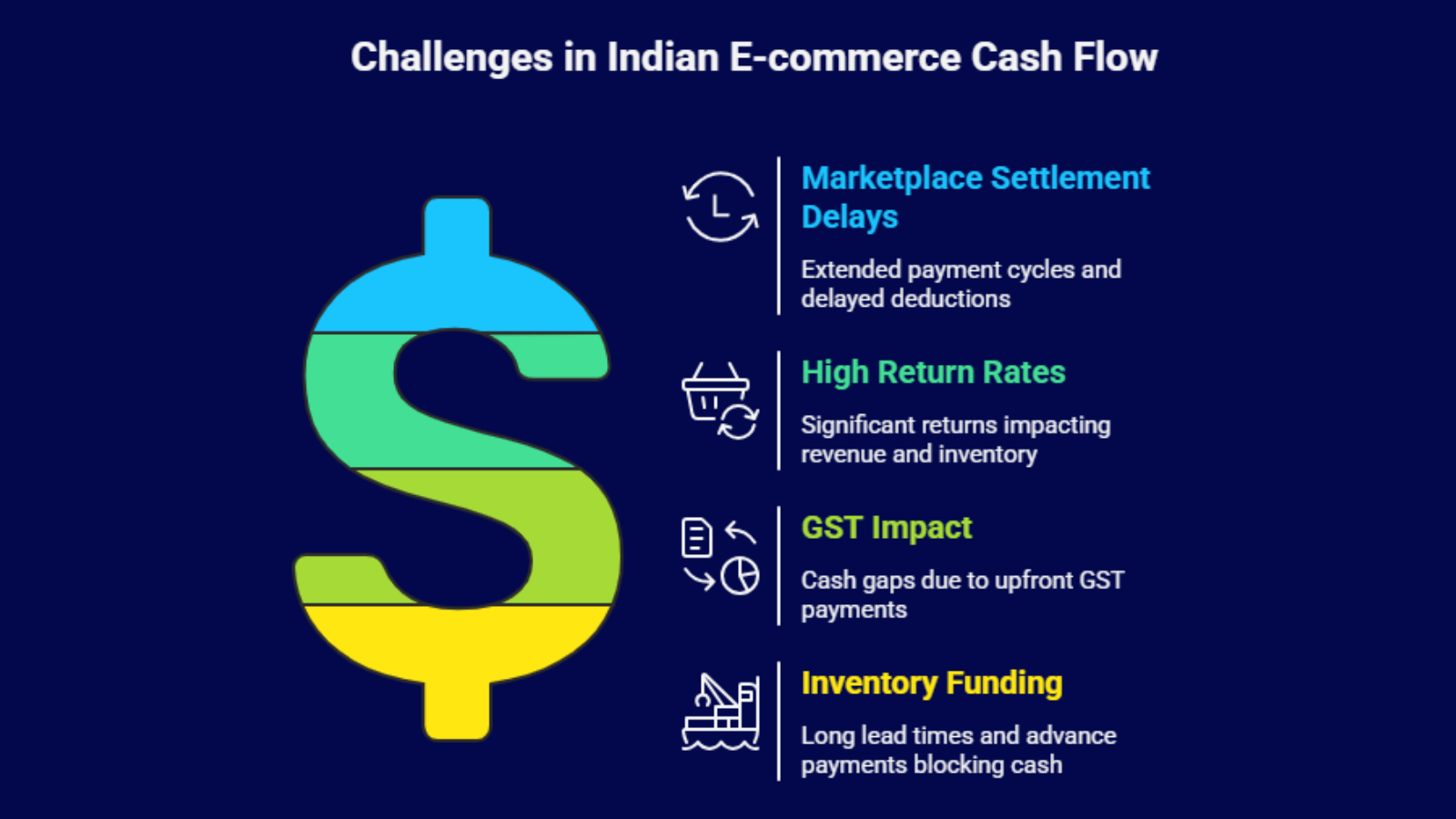
1. Marketplace Settlement Delays
- Amazon settlements usually run on 7 to 14-day cycles, but returns are deducted later.
- Flipkart holds payments until return windows close.
- Quick commerce platforms may operate on weekly payouts but charge high commissions. These delays increase the D2C cash flow cycle without founders realizing it.
2. High Return Rates
- Fashion and footwear categories see 20 to 30 percent return rates.
- Refunds reverse revenue, but inventory may come back unsellable. This directly increases working capital pressure.
3. GST Impact
- GST is paid at dispatch, not at payment receipt.
- Input credits adjust monthly, creating temporary cash gaps.
4. Inventory Funding
- Many Indian sellers import from China with 30 to 50 percent advance payments.
- Sea shipments take 25 to 40 days. Cash is blocked long before sales happen.
If you do not actively manage your D2C cash flow cycle, working capital D2C, growth can quietly drain liquidity. That is why understanding every stage of this cycle is not optional for Indian sellers.
Understanding the Eight Cash Flow Elements in the D2C Business
For Indian sellers, the D2C cash flow cycle is not just a finance metric. It is a growth control system. Marketplaces, GST timing, COD returns, import lead times, and settlement cycles all stretch or compress this cycle.
Each of the eight elements below represents a real movement of money inside your business. Together, they form the full D2C cash flow cycle. For Indian sellers operating across multiple marketplaces, quick commerce, and their own websites, these flows overlap and create pressure that is not always visible in profit reports.
Let us break them down clearly and practically.
1. Inventory Purchase Outflows
This is the first and most cash-heavy stage of the D2C cash flow cycle. It is when you pay suppliers for finished goods or raw materials. In India, most brands pay 30 to 50 percent advance, especially for imports from China or Vietnam, and the balance before shipment.
Cash can be invested in:
- Bulk production to reduce per-unit cost
- Seasonal stock for festive spikes
- New SKU expansion
- Private labeling and packaging upgrades
Why it matters:
Inventory usually consumes 40 to 60 percent of total working capital for Indian D2C brands. If stock turnover is slow, cash remains locked for 60 to 120 days. During festive periods like Diwali, brands often overstock, assuming demand will spike. If projections fail, liquidity tightens immediately.
How it impacts Indian sellers:
Sea shipments take 25 to 40 days. Add customs clearance and inland transport, and inventory may take 45 days before reaching your warehouse. That means your D2C cash flow cycle starts long before revenue begins. Poor forecasting can double your working capital requirement.
2. Storage and Fulfillment Costs
 After inventory arrives, warehousing and fulfillment costs begin. These are ongoing operational cash outflows. For third-party logistics providers in India, storage charges are typically calculated per cubic foot per month.
Cash can be invested in:
- Regional warehouses to reduce delivery time
- Automation systems for faster dispatch
- Better packaging to reduce return damage
Why it matters:
Fulfillment costs in India range from ₹20 to ₹60 per order for basic pick and pack. If you sell low AOV products, these costs significantly affect margins and increase pressure on the D2C cash flow cycle.
How it impacts Indian sellers:
COD orders form 40 to 60 percent of transactions in many categories. That increases reverse logistics risk. Returned orders increase storage and reprocessing costs, extending the working capital D2C burden.
3. Marketplace and Sales Channel Fees
Marketplaces deduct commission, closing fees, shipping charges, and penalties before settlement. Amazon India commission ranges from 8 to 25 percent, depending on the category.
Cash can be invested in:
- Advertising within marketplaces
- Sponsored listings
- Brand registry programs
Why it matters:
These fees reduce net cash inflow immediately. For example, if your MRP is ₹1,000, after commission, shipping, and GST adjustments, you may receive only ₹650 to ₹750 before ad costs.
How it impacts Indian sellers:
Marketplace settlements are not instant. Amazon typically runs a 7 to 14-day cycle. Flipkart may hold funds until return windows close. This directly stretches the D2C cash flow cycle without founders noticing.
4. Days Inventory Outstanding (DIO)
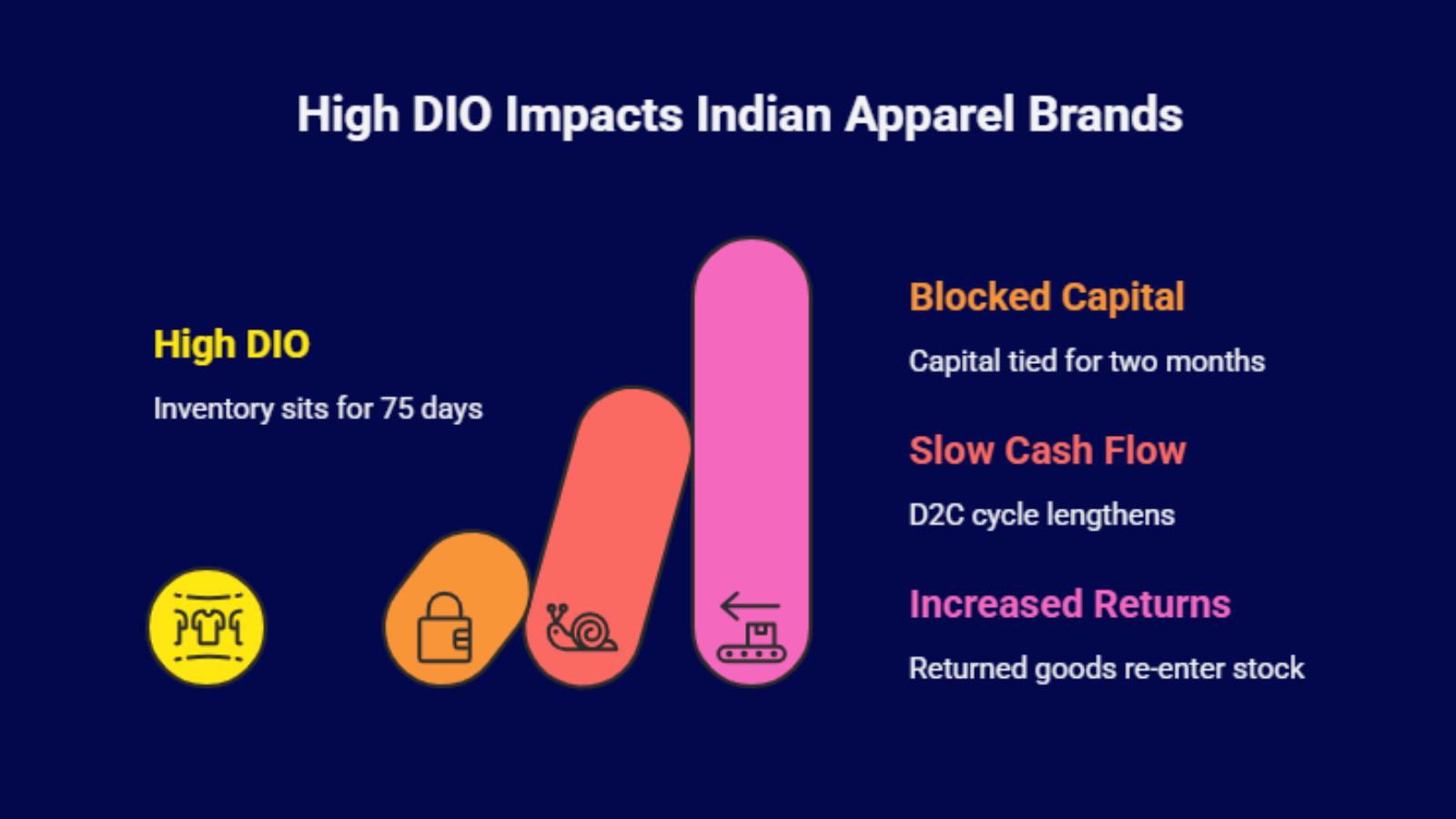 DIO measures how many days your inventory sits before being sold. It is calculated as:
Inventory ÷ Cost of Goods Sold × 365.
Cash can be improved through:
- Faster stock rotation
- Data-driven demand planning
- Removing dead SKUs
Why it matters:
If your DIO is 75 days, your capital is blocked for over two months before generating revenue. Many Indian apparel brands operate with DIO between 60 and 120 days.
How it impacts Indian sellers:
High return rates in fashion, often 20 to 30 percent, increase DIO because returned goods re-enter stock slowly. This lengthens the D2C cash flow cycle.
5. Days Sales Outstanding (DSO)
DSO measures how long it takes to collect payment after a sale. In online marketplaces, even prepaid orders can have delayed settlements.
Cash can be strengthened by:
- Reducing the COD ratio
- Encouraging prepaid discounts
- Faster payment gateway settlement
Why it matters:
If settlement takes 14 days and the return deduction happens later, your effective DSO increases. This directly slows your D2C cash flow cycle.
How it impacts Indian sellers:
Quick commerce platforms often pay weekly but charge higher commissions. Choosing the right channel mix affects liquidity, not just revenue.
6. Days Payables Outstanding (DPO)
 DPO measures how long you take to pay suppliers. It is a lever inside the D2C cash flow cycle.
Cash can be supported through:
- Negotiating 45 to 60-day payment terms
- Supplier credit lines
- Local sourcing to reduce advance payments
Why it matters:
Longer DPO means you hold cash longer. If DPO is 60 days and DIO is 45 days, you effectively sell inventory before fully paying for it.
How it impacts Indian sellers:
Many small manufacturers demand a 50 percent advance. Without strong supplier relationships, extending DPO becomes difficult, increasing working capital pressure.
7. Cash Conversion Cycle (CCC)
CCC = DIO + DSO − DPO.
It shows how many days your cash is tied up from purchase to payment receipt.
Cash can be improved by:
- Lowering DIO
- Speeding up DSO
- Extending DPO strategically
Why it matters:
If your CCC is 70 days, you need at least 70 days of operating expenses in a cash buffer. High-growth Indian D2C brands often operate with CCC between 60 and 120 days.
How it impacts Indian sellers:
Rapid revenue growth increases inventory requirements. If sales double but CCC remains long, your working capital D2C requirement also doubles.
8. Operating Cash Flows and Reinvestment
 Operating cash flow is the money left after covering operating expenses. It reflects the health of your D2C cash flow cycle.
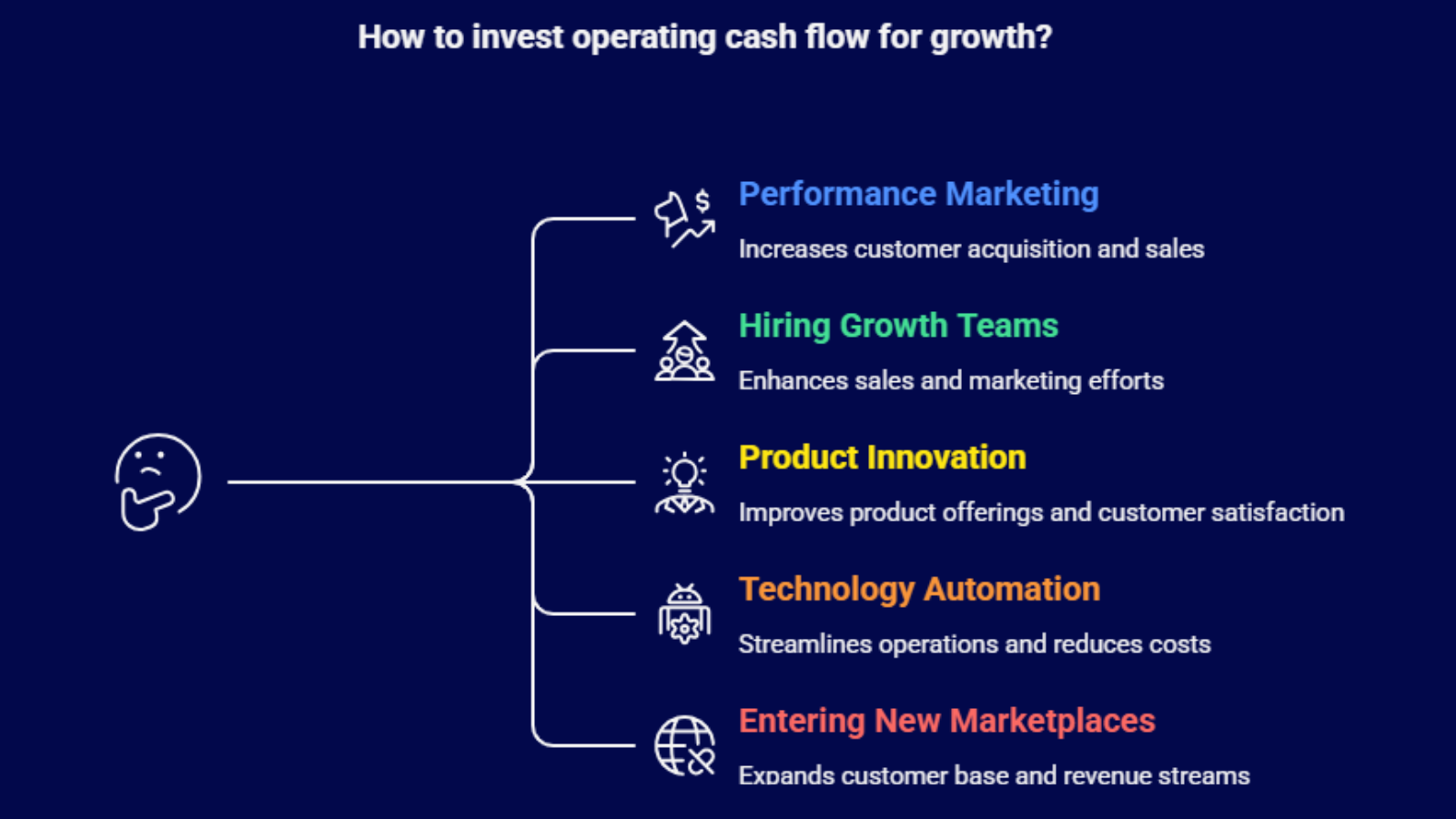
Cash can be invested in:
- Performance marketing campaigns
- Hiring growth teams
- Product innovation
- Technology automation
- Entering new marketplaces
Why it matters:
Positive operating cash flow allows growth without expensive debt. Negative operating cash flow forces reliance on NBFC loans at 14 to 24 percent interest.
How it impacts Indian sellers:
Many profitable D2C brands face cash shortages during scale because inventory expansion consumes liquidity faster than profits accumulate. Efficient management of the D2C cash flow cycle ensures reinvestment happens from internal accruals instead of costly funding.
D2C Cash Flow Cycle with Replenishment Planning
| Cash Flow Step | Typical Time (Days) | What Happens to Cash | Operational Trigger | When to Replenish |
|---|---|---|---|---|
| Inventory Purchase | Day 0 | 30–50% advance paid to the supplier | PO raised | Plan next PO immediately if the lead time is 30–45 days |
| Production & Transit | 0–40 days | Balance payment before shipment | Goods in production / in transit | Monitor sell-through weekly |
| Stock Storage | 10–60 days | Cash is tied in the warehouse | Inventory aging starts | Replenish when 45–60% stock is sold |
| Sale to Customer | 15–75 days | Revenue recorded | Order placed | Trigger reorder if stock cover < 30 days |
| Marketplace Settlement | 22–90 days | Payment processed after the return window | Settlement cycle closes | Confirm reorder if cash inflow is visible |
| GST Payment | Monthly | GST paid on dispatch | GST filing due | Maintain a GST buffer equal to 1 month of output tax |
| Pay Supplier Balance | 45–60 days | Final supplier payment | Credit period ends | Negotiate an extended DPO if a reorder is required |
| Operating Cash Available | 60–100 days | Net cash available for reinvestment | Cash credited in the bank | Allocate 40–50% toward fresh inventory |
How to Shorten Your D2C Cash Flow Cycle
Shortening your D2C cash flow cycle is critical when working capital D2C pressure starts affecting growth.
The first step is tightening inventory using demand forecasting, so cash is not locked in slow-moving SKUs.
Next, reduce settlement delays by encouraging prepaid orders and tracking marketplace payouts closely. Negotiate longer credit terms with suppliers to balance outbound cash with inbound revenue.
Review marketplace commissions and logistics fees regularly to protect margins. Most importantly, automate your order-to-cash process so invoicing, reconciliation, and COD tracking happen in real time. A faster cycle means more liquidity and less dependence on costly short-term loans.
Conclusion
Mastering the D2C cash flow cycle is essential if you want predictable growth without constantly chasing liquidity. When you clearly track inventory outflows, marketplace settlements, GST timing, supplier payments, and operating inflows, you move from reactive cash management to structured financial planning.
That shift is what separates brands that scale smoothly from those that grow revenue but struggle with working capital stress. A disciplined approach to the D2C cash flow cycle allows you to forecast reorder timing, protect margins, and maintain a healthy cash buffer even during peak sales seasons.
If you want tighter control over your operations, Base.com can support that process. Base.com helps brands centralize orders, manage multi-channel inventory, reduce operational errors, and improve fulfillment accuracy. When inventory visibility improves, replenishment becomes more predictable.
When order flows are automated, settlement tracking becomes cleaner. That operational clarity directly strengthens your D2C cash flow cycle and gives you better control over working capital planning.
In conclusion, growth without cash discipline creates risk. But when you actively manage the D2C cash flow cycle and use the right operational systems, growth becomes sustainable, controlled, and far more profitable.