Quick commerce has reshaped how urban consumers in India buy everyday products. Platforms like Blinkit, Zepto, and Instamart now promise deliveries in 10–20 minutes, and this model is growing rapidly. According to RedSeer, India’s quick commerce market crossed $3 billion in 2024 and is expected to reach $9–10 billion by 2027. For sellers, this creates demand but also introduces complex pricing decisions.
Unlike traditional ecommerce, quick commerce operates through dark stores within 2–3 km delivery radii, which increases fulfilment costs. Platforms typically charge 25–35% commission, and logistics plus picking costs can add another 10–15% per order. If a ₹150 order includes a ₹25 delivery cost and a ₹40 platform fee, the brand loses margin unless pricing is adjusted.
For Indian sellers building omnichannel D2C India operations, pricing must factor in minimum order value thresholds (₹199–₹299), bundle SKUs, and higher quick-commerce MRPs. Brands that design channel-specific pack sizes and margin buffers usually maintain 10–15% net margin even after platform deductions.
Understanding Quick Commerce Cost Structure
Before deciding how to price quick commerce orders, brands need to understand the real cost structure behind these platforms. Unlike traditional ecommerce where orders ship from large warehouses, quick commerce relies on dark stores located within 2–3 km of dense residential clusters. These micro-fulfilment centers enable 10–20 minute deliveries, but they also increase operating costs because inventory is stored in smaller spaces and replenished multiple times a day.
For Indian sellers, the biggest hidden challenge is platform deductions. On platforms like Blinkit, Zepto, and Instamart, brands typically face 25–35% platform commissions, while logistics and fulfilment can add 10–15% per order. In some categories, such as snacks or personal care, total deductions can reach 40–50% of product value, which many sellers underestimate when entering quick commerce.
Another nuance many Indian D2C sellers miss is the small basket size problem. Average quick commerce order values in India range between ₹250 and ₹450, meaning delivery and fulfilment costs take up a large share of the order value.
Typical Fees in Quick Commerce Orders
| Fee Type | Purpose | Typical Range |
|---|---|---|
| Delivery fee | Rider payout for last-mile delivery | ₹16 – ₹30 |
| Platform fee | App infrastructure and operations | ₹6 – ₹30 |
| Handling fee | Picking and packing from dark stores | ₹6 – ₹25 |
| Small order surcharge | Applied below the MOV thresholds | ₹20 – ₹40 |
For example, if a customer places a ₹199 order, the combined delivery, platform, and handling charges can easily exceed ₹60–₹80, reducing brand margins significantly. Because of this, sellers building omnichannel D2C India strategies often maintain separate pricing for quick commerce SKUs, introduce bundle packs, or increase MRPs by 8–12% compared to their website pricing to maintain profitability.
Pricing Quick Commerce Orders: MOV, Delivery Fees, and Margins for Indian D2C Sellers
 Quick commerce pricing works very differently from normal ecommerce. On platforms like Blinkit, Zepto, and Instamart, the average order value in India ranges between ₹250 and ₹450, while delivery and fulfilment costs can reach ₹60–₹90 per order. This means brands must design pricing carefully to avoid margin loss.
For sellers building omnichannel D2C India operations, three levers directly impact profitability: minimum order value (MOV), delivery fee structure, and product margin planning. Indian brands that optimize these elements usually improve basket sizes by 20–30% and protect 10–15% net margins even after platform deductions.
Below are the most important strategies D2C brands should implement when pricing quick commerce orders.
1. The Role of Minimum Order Value (MOV)
Minimum order value determines when customers get free delivery or reduced delivery charges. For quick commerce platforms, MOV is critical because last-mile delivery costs are almost fixed regardless of order value. If brands do not align pricing with MOV thresholds, small baskets quickly destroy margins.
Align Pricing with Platform MOV Thresholds
Most quick commerce platforms in India set ₹199–₹299 as the free delivery threshold. Brands should design product bundles and pack sizes that naturally help customers cross this limit.
For example, a snack brand selling ₹120 SKUs often introduces ₹220 combo packs so customers automatically qualify for lower delivery charges.
Use Bundle SKUs to Increase Basket Value
Bundles significantly improve order value. Many quick commerce brands create 2-pack or 3-pack SKUs priced between ₹249 – ₹349 because this aligns with delivery thresholds.
This strategy increases average order value by 25–35% while reducing delivery cost impact.
Optimize Pack Sizes for Quick Commerce
Indian D2C brands often introduce quick commerce-specific pack sizes. Instead of selling a ₹99 single unit, brands launch ₹199 family packs or ₹299 combo kits designed specifically for quick commerce baskets.
Understand Basket Behaviour by Category
Impulse categories such as snacks or beverages usually see basket sizes below ₹250, while personal care or household categories often reach ₹350–₹500 baskets.
Brands should adjust bundle pricing depending on the category.
Use MOV to Reduce Delivery Cost Per Order
Delivery cost per order is typically ₹25–₹35. If the basket size increases from ₹150 to ₹350, the delivery cost as a percentage of revenue drops from 16–18% to under 8%, dramatically improving margins.
2. How Delivery Fees Should Be Structured
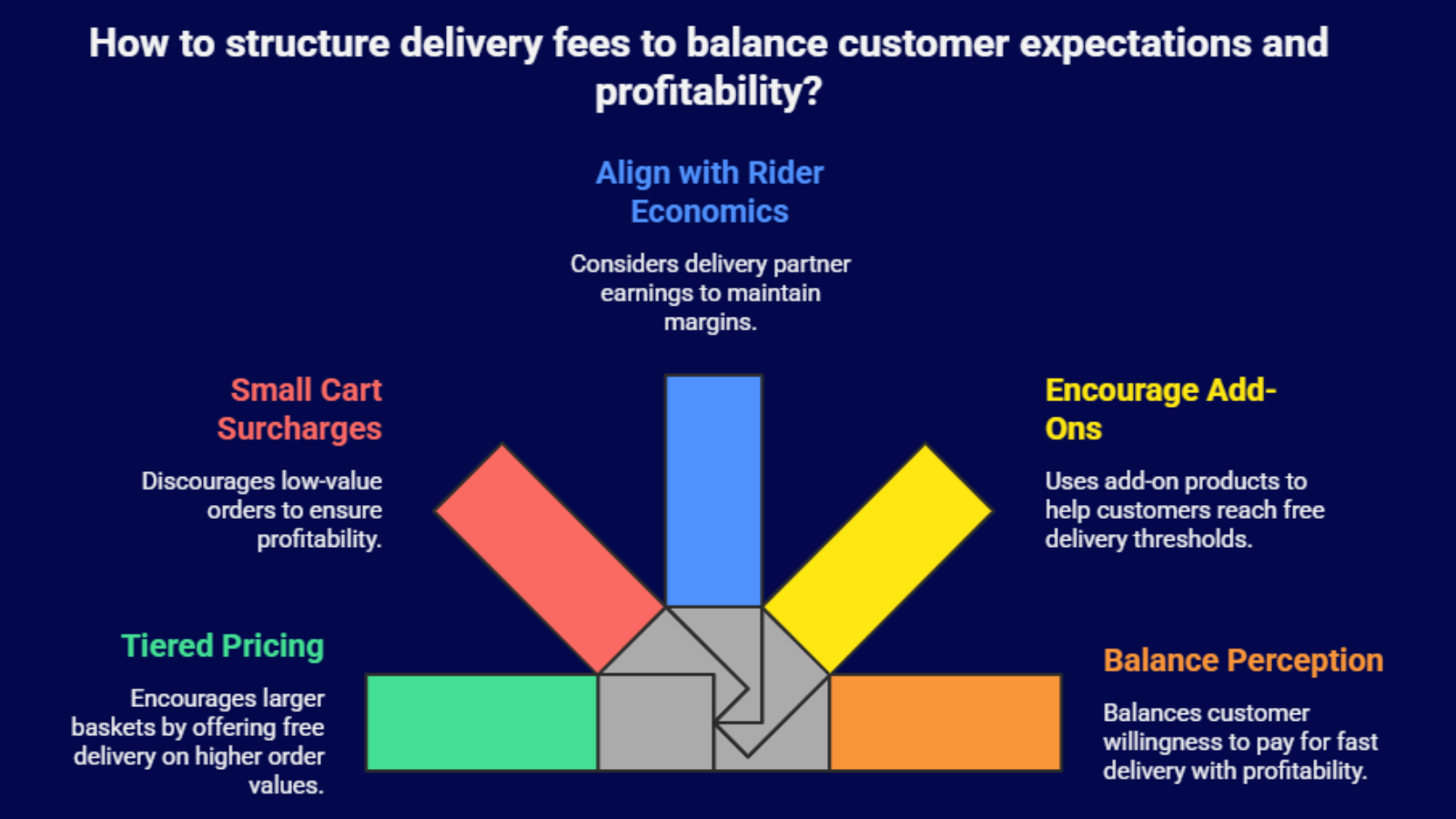 Delivery fees are one of the biggest cost components in quick commerce. While customers expect convenience, free delivery on every order is unsustainable. Brands must work with platforms to design delivery fee structures that encourage larger baskets.
Use Tiered Delivery Pricing
Tiered delivery structures push customers to increase order value.
| Order Value | Delivery Fee |
|---|---|
| Below ₹199 | ₹30 |
| ₹199–₹399 | ₹16 |
| ₹399+ | Free delivery |
This structure increases basket size by 15–25% on most quick commerce platforms.
Introduce Small Cart Surcharges
Small cart fees are designed to discourage low-value orders.
Typical example:
| Order Value | Additional Fee |
|---|---|
| ₹0–₹149 | ₹30 small order fee |
| ₹150–₹299 | ₹15 reduced fee |
| ₹300+ | No surcharge |
This ensures low-value orders remain profitable.
Align Delivery Fees with Rider Economics
In India, delivery partners typically earn ₹20–₹35 per order, depending on city density and distance. If brands price too aggressively without considering these logistics costs, margins erode quickly.
Use Delivery Pricing to Encourage Add-On Products
Many brands add ₹49–₹79 add-on products like sauces, snacks, or personal care items near checkout. This helps customers reach the free delivery threshold.
Balance Customer Perception with Profitability
Consumers accept slightly higher delivery charges if the order arrives within 10–15 minutes. Research shows customers are willing to pay ₹15–₹25 convenience fees for ultra-fast delivery.
3. Setting the Right Product Margins
Margins determine whether quick commerce becomes profitable or not. Many brands underestimate platform deductions and end up losing money on every order.
To sustain quick commerce operations, products typically require 60–70% gross margins before platform deductions.
Understand Platform Deduction Structure
Typical quick commerce deductions include:
| Cost Component | Percentage |
|---|---|
| Platform commission | 25–35% |
| Logistics & delivery | 10–15% |
| Marketing visibility | 5–10% |
| Net margin | 10–15% |
Without a strong gross margin buffer, brands cannot maintain profitability.
Choose the Right Product Categories
Some categories perform better in quick commerce due to impulse buying behaviour.
Top performing categories in India:
- snacks and beverages
- ready-to-eat foods
- instant coffee and tea
- personal care products
- baby care essentials
These categories generate higher repeat purchases and better margins.
Avoid Low-Margin SKUs
Products with below 40% gross margin usually struggle in quick commerce because platform commissions alone can eliminate profits.
Create Channel-Specific Pricing
Many successful brands price quick commerce products 8–12% higher than website pricing to compensate for logistics and platform deductions.
Use Data to Continuously Adjust Pricing
Quick commerce platforms provide insights into conversion rate, basket size, and reorder frequency. Brands that monitor these metrics regularly improve pricing and protect margins.
Pricing Framework for Quick Commerce Orders for Indian D2C Sellers
 Quick commerce pricing cannot rely on guesswork. Platforms such as Blinkit, Zepto, and Instamart operate on tight delivery windows and dense dark store networks, which means every order carries fixed fulfilment costs. For brands building omnichannel D2C India operations, a structured pricing framework helps protect margins while keeping products competitive on these platforms.
1. Calculate the Real Cost Per Order
Most Indian sellers underestimate the total deductions applied to quick commerce orders. Before setting prices, brands must calculate the true landed cost per order.
Typical cost structure:
| Cost Component | Typical Range |
|---|---|
| Platform commission | 25–35% |
| Last-mile delivery | ₹20–₹35 |
| Picking & packing | ₹8–₹15 |
| Platform marketing spend | 5–10% |
For example, if a brand sells a ₹250 snack combo, commissions and logistics can consume ₹80–₹100 of the order value. Sellers in omnichannel D2C India should model these deductions first before deciding on MRPs.
2. Define a Clear Target Margin
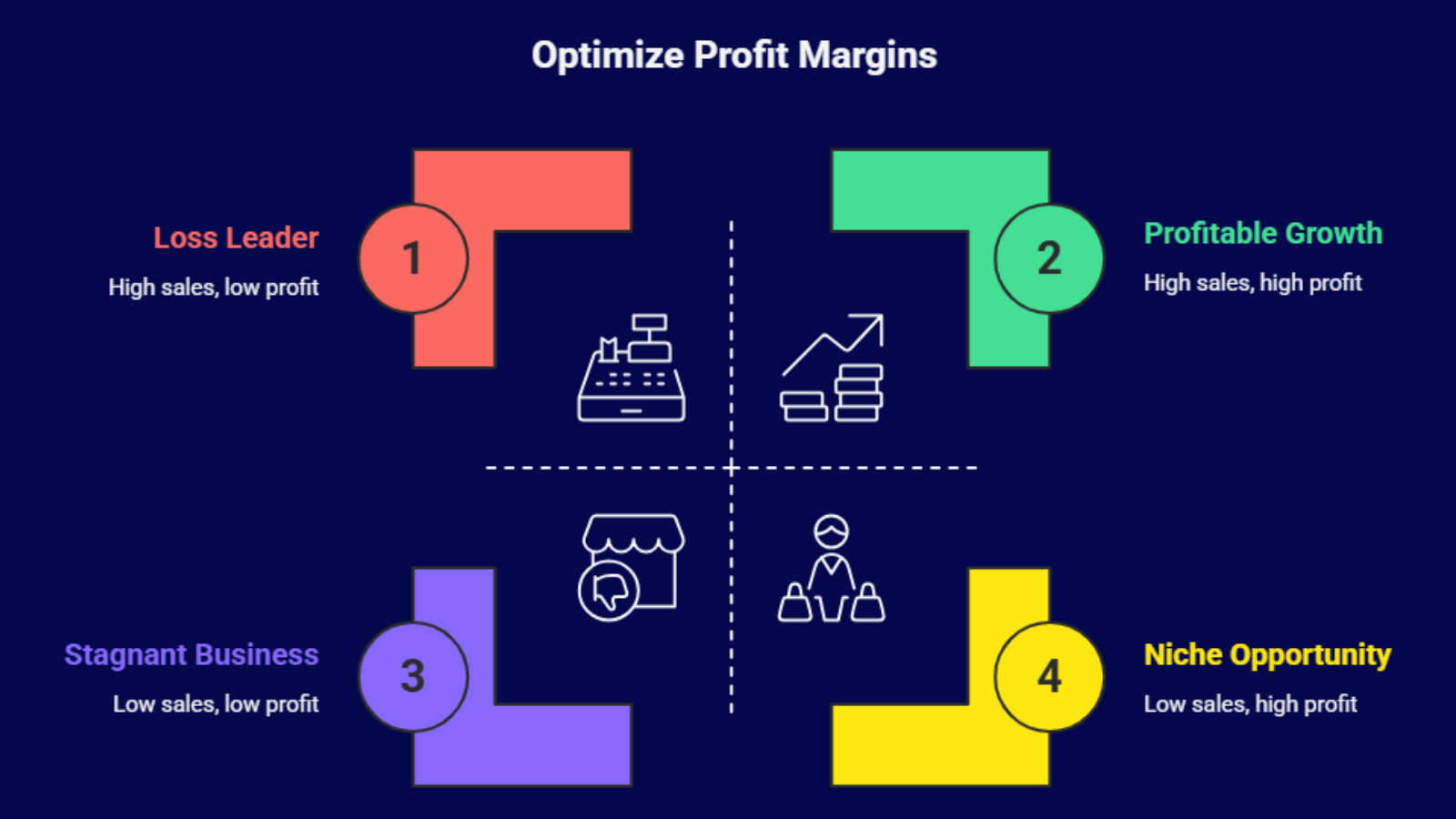 Quick commerce works only when products have strong gross margins. Many Indian D2C brands entering quick commerce target 60–70% gross margins so that they retain 10–15% net margins after platform deductions.
Example margin calculation:
| Metric | Example Value |
|---|---|
| Product MRP | ₹300 |
| Total platform deductions | ₹150 |
| Cost of goods | ₹120 |
| Net profit | ₹30 |
Without this margin buffer, quick commerce becomes a volume-driven loss channel, which many early D2C brands discovered after scaling rapidly.
3. Optimize Basket Size Through Bundles and Combos
Quick commerce profitability improves significantly when basket sizes increase. India’s average quick commerce order value is ₹250–₹450, which means single-item purchases rarely work for brands.
Effective tactics used by D2C brands include:
- Combo packs priced at ₹249–₹349
- 3-pack snack bundles
- Add-on products under ₹79
For example, a beverage brand selling ₹120 cans often launches a ₹299 triple-pack specifically for quick commerce to cross the free delivery threshold.
This strategy can increase average order value by 25–30%.
4. Adjust Pricing Across Channels
 Quick commerce pricing should never mirror website or marketplace pricing. Because delivery and fulfilment costs are embedded in the platform ecosystem, brands often price quick commerce SKUs 8–15% higher than website prices.
Channel pricing differences typically look like this:
| Channel | Pricing Strategy |
|---|---|
| Brand website | Lower MRP, higher bundles |
| Marketplaces | Discount-driven pricing |
| Quick commerce | Higher MRP, smaller packs |
This channel-specific pricing approach is essential for brands operating in omnichannel D2C India, where maintaining consistent margins across multiple sales channels requires careful pricing adjustments.
Why Quick Commerce Pricing Must Be Channel Specific
Quick commerce pricing cannot follow the same structure as website or marketplace pricing because the economics and customer intent are very different. On platforms such as Blinkit, Zepto, and Instamart, customers are usually buying urgent consumption products like milk, snacks, baby food, medicines, or instant meals. The promise of 10–20 minute delivery within a 2–3 km radius means the platform incurs higher operational costs through dark stores, rider payouts, and inventory replenishment.
Because customers value speed and convenience, they are often willing to pay 5–12% higher prices compared to brand websites. This is why many brands building omnichannel D2C India strategies maintain slightly higher MRPs on quick commerce platforms. At the same time, sellers also introduce smaller pack sizes and bundles priced between ₹199 and ₹349, which naturally aligns with platform minimum order value thresholds of ₹199–₹299.
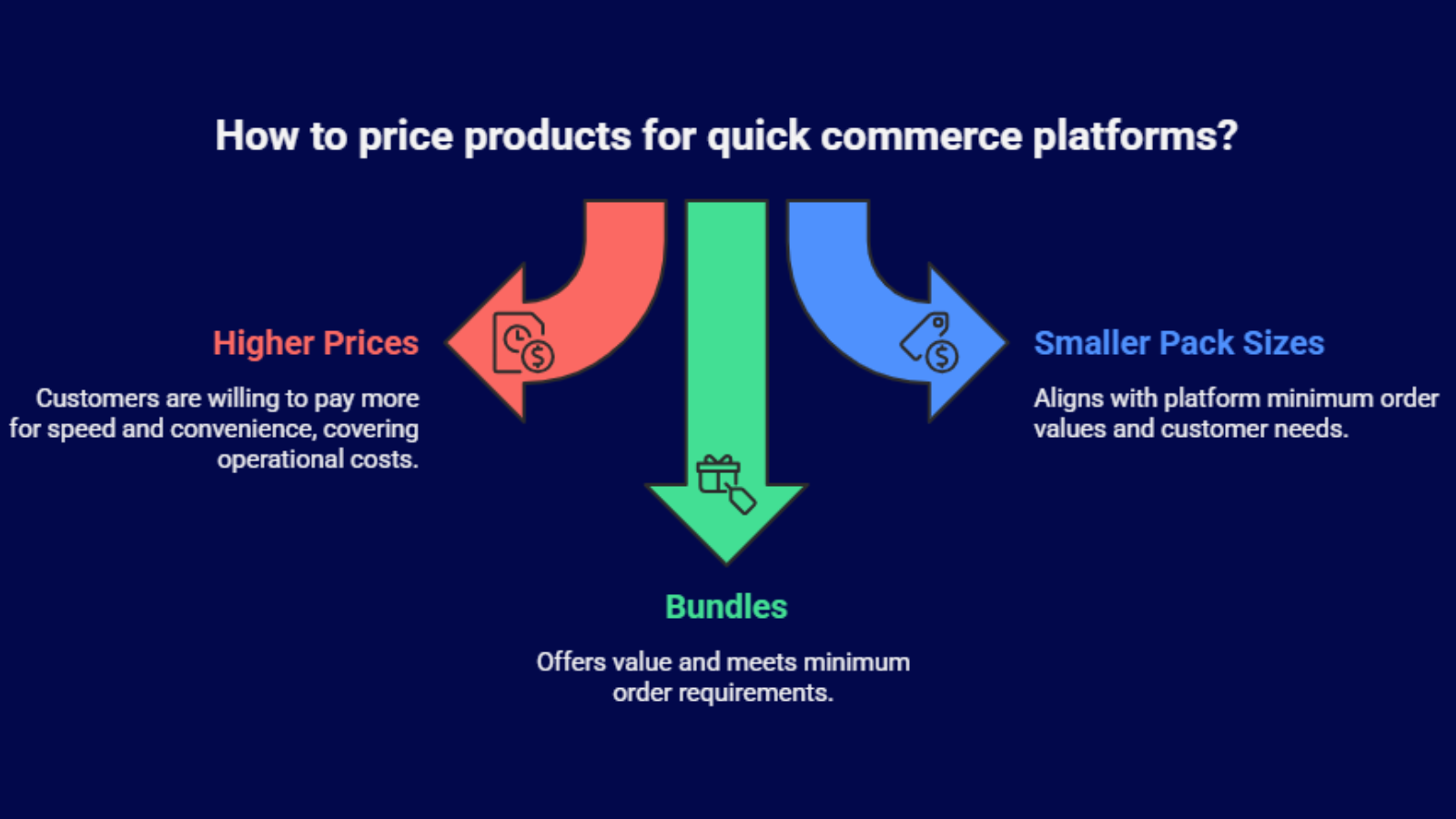 For Indian D2C sellers, this pricing adjustment is not optional. Platform deductions can reach 35–45% of order value, which means margins quickly disappear if pricing mirrors website prices. With quick commerce projected to contribute 20–25% of digital sales for many consumer brands by 2030, channel-specific pricing has become essential.
However, many brands still struggle because they apply incorrect pricing strategies when entering quick commerce.
Common pricing mistakes Indian D2C brands make include:
- Copying website pricing without accounting for commissions, logistics, and dark store fulfilment costs.
- Ignoring small basket economics, where ₹150 orders may carry ₹60–₹80 fulfilment costs, making them unprofitable.
- Underestimating platform marketing visibility fees can add 5–10% extra deductions.
- Not creating bundle packs, which keeps the average order value below ₹250 and increases the delivery cost impact.
- Failing to maintain different pricing structures across channels within omnichannel D2C India operations.
The future of quick commerce pricing is also shifting rapidly. Early platform growth relied heavily on discounts and free delivery. Today, the focus is moving toward profitability. Platforms are introducing convenience fees, handling charges, and higher MOV thresholds to balance operational costs.
For brands scaling through omnichannel D2C India, the winning strategy will focus on data-led pricing decisions, higher margin SKUs, basket optimization through bundles, and channel-specific packaging that aligns with quick commerce buying behaviour.
Conclusion
Quick commerce is not just another sales channel. It has its own economics, customer behavior, and pricing challenges.
Brands that treat it like traditional ecommerce often lose money.
Instead, successful brands carefully balance:
- delivery fees
- minimum order value
- product margins
When these three elements work together, quick commerce becomes profitable.
As omnichannel D2C India continues to grow, brands that master pricing strategy will capture the biggest share of this fast-moving market.
If you want to scale your brand across quick commerce, marketplaces, and your website, managing pricing across channels becomes complex.
Base.com helps brands build a powerful omnichannel D2C India strategy. From order management to inventory syncing and quick commerce integrations, Base helps you grow without losing control of margins.
Explore how Base can simplify your omnichannel D2C India operations and help your brand scale faster.
FAQs
1. What is the ideal minimum order value for quick commerce?
Most platforms set free delivery above ₹199 or ₹299. This increases basket size and reduces delivery cost per order. Brands should align their pricing strategy with these thresholds to maintain margins.
2. Why are quick commerce margins lower?
Quick commerce includes dark store costs, delivery payouts, and platform commissions. These additional costs reduce margins compared to normal ecommerce, making the pricing strategy critical for profitability.
3. Should quick commerce prices be higher than website prices?
Yes. Many brands price products slightly higher in quick commerce because customers are paying for speed and convenience. This helps recover logistics and platform costs.
4. Which products perform best in quick commerce?
Impulse products and high-margin items perform best. Examples include snacks, beverages, ready meals, and personal care items because customers frequently buy them in urgent situations.
5. How can brands increase quick commerce profitability?
Brands should focus on bundle pricing, higher margin SKUs, optimized MOV, and channel-specific pricing strategies to improve quick commerce profitability.