India’s D2C e-commerce market was valued at $87.5 billion in 2025 and is projected to hit $108.76 billion in 2026, growing at a 24.3% CAGR toward $322 billion by 2031.
Smartphone penetration is closing in on a billion users, quick commerce is expanding at a 70-80% CAGR, and a February 2026 McKinsey report confirms D2C is growing nearly three times faster than traditional online marketplaces. Understanding how to scale your D2C brand across India has never been more critical for founders with national ambitions.
But here’s what most growth narratives still miss: building a ₹10 crore brand is becoming table stakes. Dozens hit that milestone every quarter. Only about 2.1% of D2C brands have crossed ₹150 crore in revenue, which means the real game hasn’t even started for most founders.
The ones who’ll define the next decade aren’t just chasing metro consumers on Instagram. They’re building for Bharat first, systematically, operationally, with discipline, and then taking their proven brand global. Knowing how to scale your D2C brand across India, from Tier-1 to Tier-3, is the single most important playbook any founder can master in 2026.
That’s exactly the arc this playbook covers. base.com on a cracking pan-India scale. ShipGlobal on what happens when you’re ready to ship beyond Indian borders.
First, Get the Mindset Right
Scaling D2C across India isn’t a campaign. It’s a series of deliberate operational bets: which segment to enter, which city cluster to activate, which channel to trust, and how much CAC to absorb before you have LTV data to justify it. Founders who truly understand how to scale your D2C brand across India know that each of these bets demands specific local intelligence.
Brands that get this right, think Mamaearth expanding from urban skincare into Tier-2 markets, or boAt cracking the gifting occasion in Jaipur and Indore, pick one bet, make it work, then replicate fast. The ones that stumble try to be everywhere at once with a half-built supply chain and a single metro-focused marketing playbook.
“The biggest mistake Indian D2C founders make is assuming the Bengaluru PLG motion will work in Surat or Kanpur. Same product, very different consumer context.”
And the second biggest mistake? Treating internationals as something you think about after you’ve “finished” India. The founders building breakout brands in 2026 are running both playbooks in parallel, cracking Tier-2 India while quietly building the export infrastructure that lets them ship to a customer in Dubai or Toronto the moment demand signals appear.
PART ONE: Scaling Pan-India
Step 1: Choose Your First Expansion Market Deliberately
 Not all Indian markets are equal in 2026. The right first expansion market depends on three things: purchasing power trajectory, digital readiness, and category relevance. Any guide on how to scale your D2C brand across India must start here, because market selection is the foundation everything else is built on.
The Tier-2/Tier-3 opportunity is no longer emerging, it’s here.
Over 60% of all e-commerce transactions in India now originate from Tier-2 and Tier-3 markets. Almost three out of every five new online shoppers since 2020 have come from Tier-3 or smaller towns. The numbers by category are striking, Tier-3 cities recorded a 77% surge in digital payments for watches and jewellery and a 59% increase in grocery spending. Tier-2 cities posted 64% growth in watches and jewellery and 46% growth in grocery categories.
Let’s look at the specific use cases by category:
- Skincare & BPC brands (e.g., Plum, WOW Skin Science): D2C beauty and personal care brands saw a 70% revenue increase specifically from Tier-3 cities like Guwahati and Rajkot in 2025, consumers bypassing traditional retail entirely and going straight to digital-first brands. A brand like Plum that once indexed heavily on urban millennials now runs separate Meta campaigns geo-targeted to Tier-3 pin codes, with Hindi-language creatives and regional influencer partnerships. The conversion delta between a generic English ad and a localised Hindi video in these markets is often 2-3x.
- Food & Wellness brands (e.g., Yoga Bar, Country Delight): Cities like Coimbatore, Indore, and Lucknow are seeing rapid adoption of health-conscious products as disposable incomes rise and awareness spreads via short-video platforms. Country Delight expanded its subscription milk model to 15+ Tier-2 cities in 2024-25 by mapping hyperlocal delivery clusters first, not by launching city-wide and hoping last-mile logistics would figure itself out.
- Fashion brands (e.g., Bewakoof, Snitch): Meesho’s near-60% surge in its 2025 IPO, pushing its valuation to $8.5 billion, with nearly 90% of buyers living outside India’s top cities is the clearest proof that Tier-2/3 fashion appetite is massive and underserved. Snitch, a Bengaluru-based men’s fashion brand, cracked non-metro India by producing city-specific UGC content featuring creators from Nagpur, Bhopal, and Ludhiana, not just repurposing Mumbai influencer content.
A practical market selection framework for how to scale your D2C brand across India:
1. Demand Signal First: Before committing any operational spend, run a 30-day test on Meta and Google Shopping targeting Tier-2 pin codes like Jaipur, Vadodara, or Vijayawada. Conversion rate and CAC from a live landing page will tell you more than six months of desk research.
2. Logistics Feasibility: Check last-mile delivery timelines and COD return rates for your target pin codes. COD remains dominant at 70% across non-metro India, making returns forecasting and fraud mitigation essential before you scale.
3. Channel-Market Fit: Are you going D2C via your own website, Meesho, ONDC, or quick commerce? Each requires a different operational setup. Quick commerce players are now entering 80+ Tier-2 and Tier-3 cities, cutting delivery times and lowering acquisition friction significantly.
4. City Cluster Prioritisation: Hyderabad is forecast to grow at 25.10% CAGR through 2031, aided by lower warehouse rents and proximity to South India’s manufacturing belt. Pune, Chandigarh, Coimbatore, and Indore are benefiting from ONDC’s low-cost rails and Tier-2 smartphone momentum.
Step 2: Build a Bharat-Ready Storefront
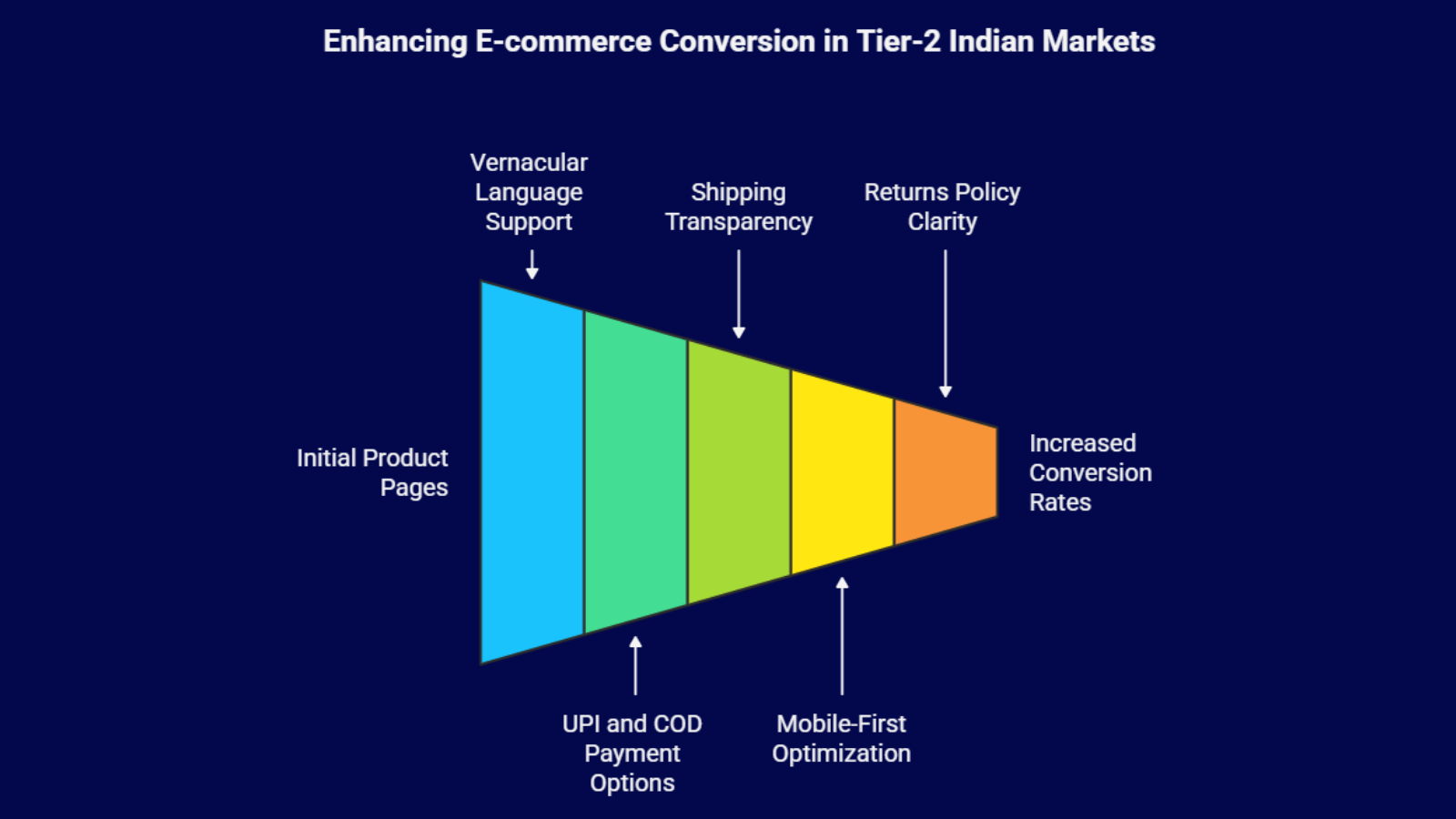 A Shopify store that converts in Bengaluru needs meaningful upgrades before it’s ready for a Nagpur or Bhubaneswar consumer. This isn’t just about UX, it’s about trust, language, and payment context. Knowing how to scale your D2C brand across India means understanding that your storefront must speak the consumer’s language, literally.
- Vernacular language support: A consumer in Coimbatore or Patna is far more likely to trust and buy from a product page in Tamil or Hindi than English. Brands like Meesho and DealShare cracked Tier-2 precisely because of vernacular-first interfaces.
A practical starting point: translate your top 5 highest-converting product pages into Hindi first. Test conversion lift. Then expand to Tamil and Telugu for South India markets before rebuilding your entire catalogue.
- UPI and COD as first-class payment options: Don’t bury COD as an afterthought. UPI has become the default transaction method for 67% of consumers in non-metro markets, but COD still dominates for first-time buyers.
Make both frictionless. Brands that removed the “extra step” of COD confirmation calls and replaced them with automated WhatsApp confirmations saw 18-22% drops in RTO rates.
- Shipping transparency: A consumer in Ranchi or Rajkot who doesn’t know when their order will arrive won’t buy.
Display city-specific delivery windows clearly at checkout. “Delivers in 3-5 days to Jaipur” converts better than a generic “standard shipping” label, every time.
- Mobile-first, not mobile-friendly: By 2026, 5G is standard in Tier-2 cities, enabling high-fidelity video shopping and AR-based product trials.
If your product pages aren’t optimised for sub-second mobile load times, you’re losing the Tier-2 consumer before they see your product. Target under 2-second load time on a mid-range Android device, not an iPhone 16.
- Returns policy clarity: India’s non-metro consumer is increasingly brand-aware but still cautious about return friction. A clear, no-questions-asked 7-day return window builds the trust that drives first purchase.
Nua Women publishes its return policy in plain Hindi on product pages targeted at non-metro consumers, a small detail that meaningfully lifts conversion.
Step 3: Solve Logistics Before You Need To
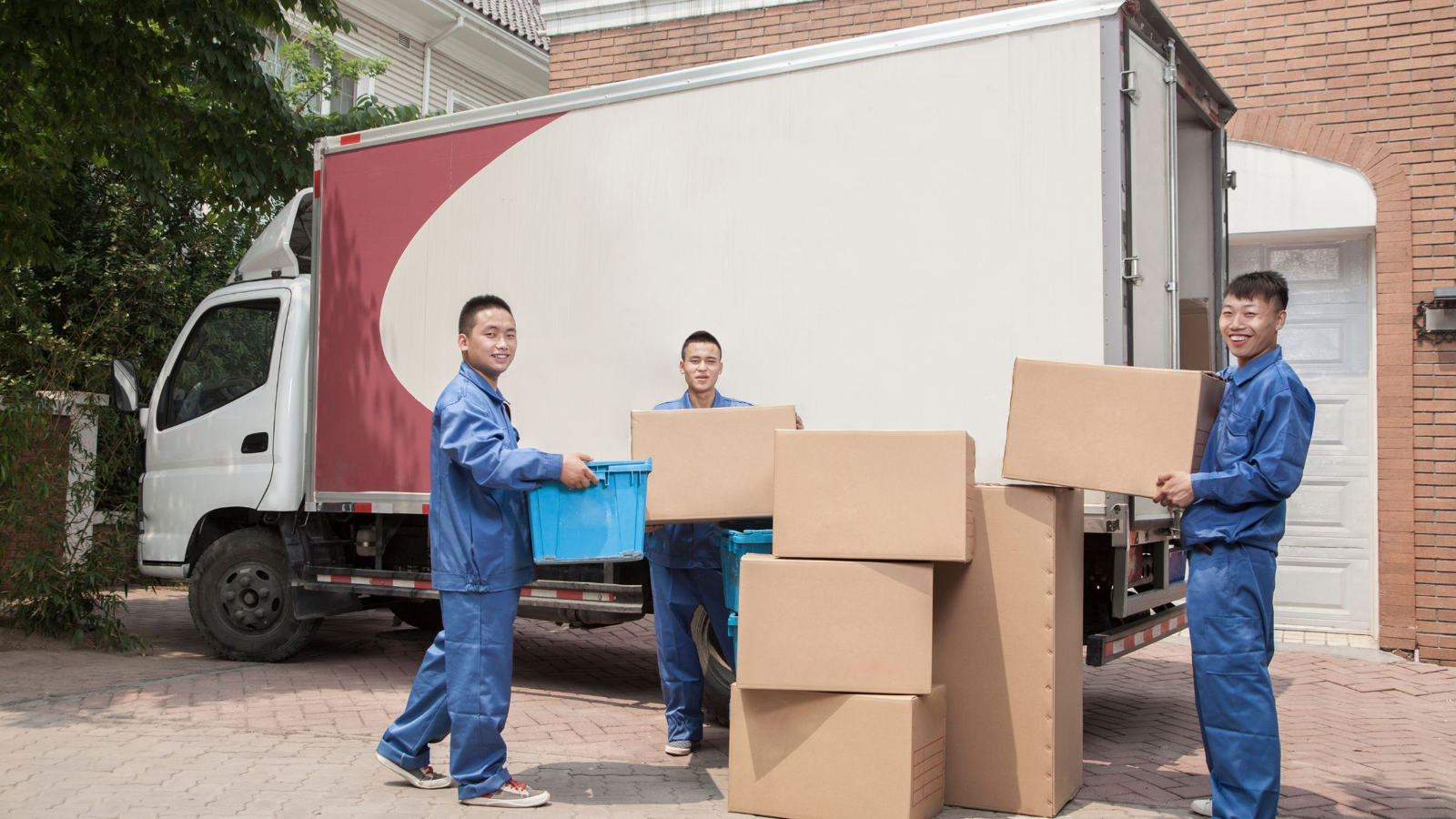 Logistics is where most D2C pan-India expansion stories hit their first wall. If you’re serious about how to scale your D2C brand across India, solving logistics before you need to isn’t cautious, it’s the difference between a brand that reaches 500 pin codes and one that stalls at 50. Scaling from 5 pin codes to 500 involves more moving parts than most founders expect: last-mile partners, dark store access, COD reconciliation, reverse logistics, and returns processing.
Many early-stage brands handle this ad hoc, calling Delhivery, getting quotes, manually tracking returns on a spreadsheet. That approach works for 50 orders a day. It falls apart at 500.
Let’s look at the specific logistics realities by channel:
- Quick Commerce (Blinkit, Zepto, Swiggy Instamart): Requires dark store inventory placement in advance, strict SKU rationalisation, and demand forecasting by city cluster. Brands like Yoga Bar and The Whole Truth cracked quick commerce by maintaining a tight, high-velocity SKU set, their top 8-10 SKUs, rather than listing their full catalogue. Listing 60 SKUs on Blinkit sounds like more opportunity. In practice, it spreads inventory thin, triggers stockouts, and tanks your ranking algorithm.
- ONDC: ONDC has expanded into more than 616 cities with over 7.64 lakh merchants as of August 2025. For brands selling in Tier-2 and Tier-3, ONDC offers nationwide reach without Flipkart or Amazon commission structures, but requires integration with a buyer app and logistics provider on the network. Several D2C brands are using ONDC as a low-CAC channel to test demand in new geographies before committing to full marketplace listings.
- Own Website D2C: Partner with a 3PL that has pin code coverage beyond the top 50 cities. Surface-level logistics partners often have poor SLAs for smaller towns, which means bad reviews in the exact markets you’re trying to build trust in. Ask your logistics partner specifically for their SLA data for your target pin codes, not their average network SLA.
The cost of getting logistics wrong isn’t the lost shipment. It’s the 1-star review, the COD fraud hit, the return that sat unprocessed for 3 weeks, and the consumer in Surat who never orders again.
Step 4: Compliance Is a Feature, Not a Formality
Founders who master how to scale your D2C brand across India quickly learn that compliance isn’t a hurdle, it’s a competitive moat. Getting it right before scale means avoiding the reconciliation nightmares that have derailed otherwise well-run brands.
- GST & State-Level Compliance: GST slab standardisation in 2025-26 is improving price transparency, but incorrectly classified SKUs still trigger mismatched tax rates that create reconciliation nightmares at scale. Know your HSN codes before you scale your SKU count. A personal care brand that misclassified its hair oil as “cosmetic” instead of “Ayurvedic medicine” faced a 12% GST differential across thousands of orders, a reconciliation nightmare that took 4 months to resolve.
- FSSAI for Food Brands: If you’re expanding to new states, ensure your FSSAI licence covers your new fulfilment locations. A distribution centre in a new state requires a state-level licence, not just your central FSSAI registration. This is one of the most commonly missed compliance gaps in D2C food brand expansion.
- BIS for Electronics & Appliances: Brands in electronics or home appliances need BIS certification for every product. Skipping this creates liability when you scale volume. boAt and Noise built BIS compliance into their product roadmap from day one, not as an afterthought when regulators flagged them.
- COD Fraud in New Geographies: As you enter new pin codes, watch for unusual return rates in the first 60 days. High COD fraud is a real operational risk in certain geographies, build fraud scoring into your order management system before you scale spend.
Step 5: Market Like a Local, Scale Like a National Brand
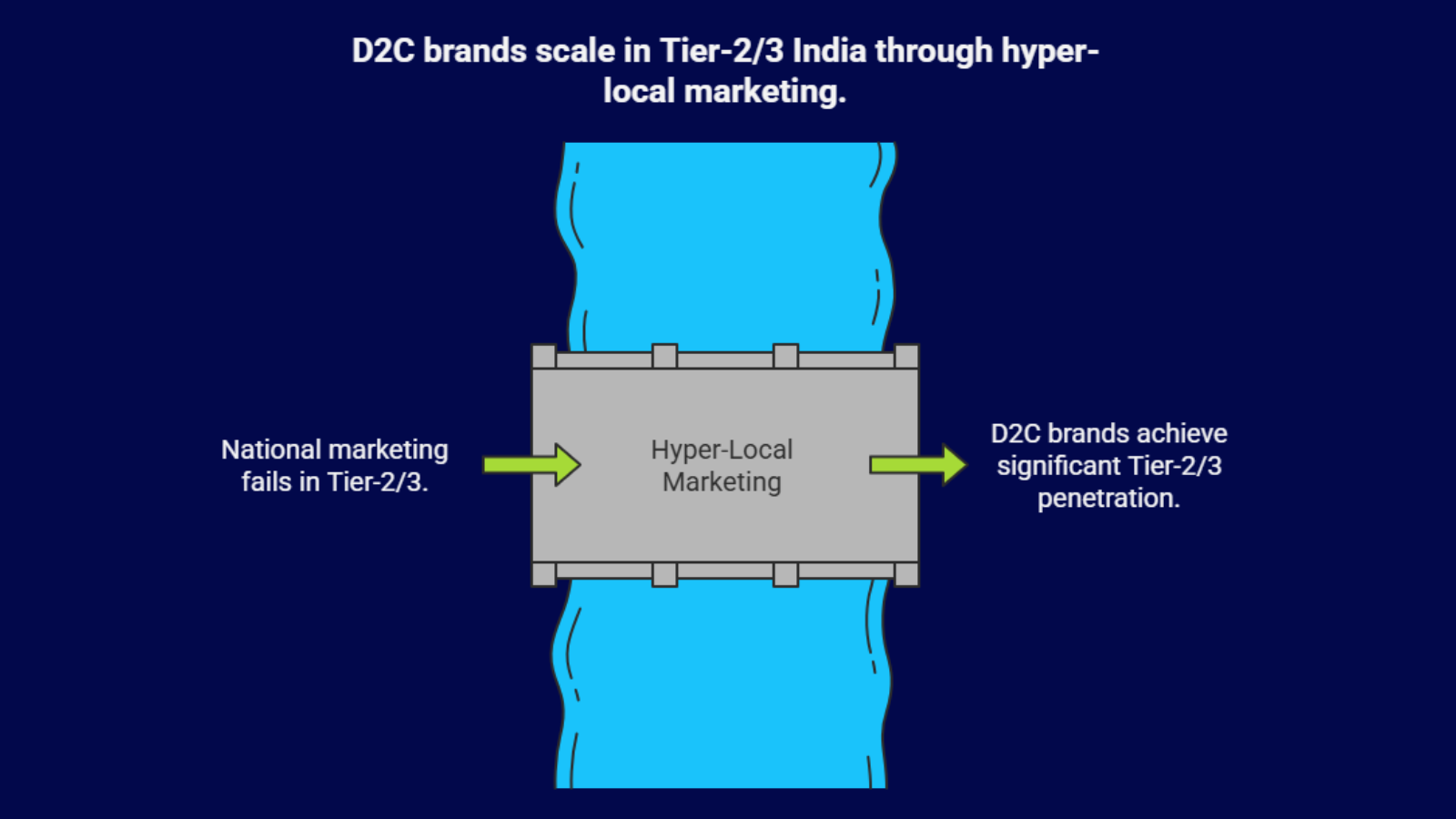 The Tier-2 and Tier-3 Indian consumer in 2026 is not the cautious, discount-driven buyer of 2019. They’re brand-aware, heavily influenced by regional creators, and increasingly aspirational. Anyone asking how to scale your D2C brand across India today must start with a hyper-local marketing philosophy before building national reach.
- Lead with regional creators, not national influencers: A skincare brand from Bengaluru selling in Bhopal will convert better through a 200K-follower regional creator from Madhya Pradesh than a 2M-follower Mumbai influencer. The regional creator speaks the language, references the local context, and carries community trust that metro influencers simply don’t. Budget benchmark: allocate 30-40% of your influencer spend to regional micro-creators when entering a new state.
- Short-video is your primary discovery channel in Tier-2: Instagram Reels and YouTube Shorts are how consumers in Lucknow or Coimbatore discover new brands. Sugar Cosmetics built its Tier-2 penetration partly through consistent, high-frequency Reels content, not TV or print. Minimum viable content cadence for a new market: 5 Reels per week for the first 60 days, with at least 3 featuring a regional creator or local context.
- Use WhatsApp for retention, not just acquisition: Non-metro consumers are more WhatsApp-native than app-native. Brands like Nua and Wow Skin Science use WhatsApp for post-purchase updates, reorder nudges, and loyalty communication, with open rates that email can’t touch. A well-structured WhatsApp retention flow (delivery update → usage tip → repurchase nudge at day 25) can add 8-12% to repeat purchase rates.
- Festive seasons hit differently outside metros: Diwali, Durga Puja, Eid, and Pongal are not just calendar events in Tier-2 and Tier-3, they’re the primary high-intent purchase windows. Plan inventory, logistics capacity, and marketing budgets around regional festive calendars, not just the Flipkart Big Billion/Amazon Great Indian Festival dates. A food brand that pre-positioned Diwali gifting inventory in Lucknow warehouses 6 weeks early captured 3x the sales of a competitor that shipped from Mumbai on demand.
PART TWO: Going Global with ShipGlobal
Here’s the part most pan-India playbooks skip entirely: the moment your brand has proven itself domestically, international demand doesn’t wait for an invitation. The same operational discipline you applied learning how to scale your D2C brand across India becomes the launchpad for global expansion.
It happens through the diaspora. An NRI in London orders from your website because her mother in Lucknow recommended it. A Singaporean customer discovers your Ayurvedic skincare on Instagram. A gift buyer in Toronto finds your artisanal snack brand on Etsy. These aren’t edge cases in 2026, they’re early signals of organic international demand that most Indian D2C brands are completely unequipped to fulfil well.
The product is ready. The brand story is ready. The logistics infrastructure, almost always, is not.
That’s the problem ShipGlobal was built to solve.
What Makes International Logistics Different, and Why It Requires a Specialist
Shipping internationally from India is not an extension of your domestic logistics setup. Just as cracking how to scale your D2C brand across India requires local market intelligence, international shipping demands specialist expertise in customs, carrier selection, and export documentation. It’s an entirely different operational layer:
- Customs documentation that must be accurate down to the HS code, declared value, and product description errors here don’t just delay shipments, they create holds that can block weeks of orders simultaneously.
- Carrier selection that balances cost, transit time, and destination-country last-mile reliability, a carrier that’s excellent for the US may have poor SLAs for Australia or the UAE.
- Duties and taxes that vary by destination country, product category, and declared value, and that your international customer will blame you for if they’re surprised by them at delivery.
- Export documentation from India, IEC compliance, FSSAI requirements for food exports, RBI remittance paperwork, that most founders only encounter for the first time when their first international shipment gets held at customs.
Handling this ad hoc, manually filling customs forms, calling FedEx for quotes, tracking shipments across carrier dashboards, works for 10 orders a month. It becomes a full-time job at 50, and a crisis at 200.
How ShipGlobal Solves This for Indian D2C Brands
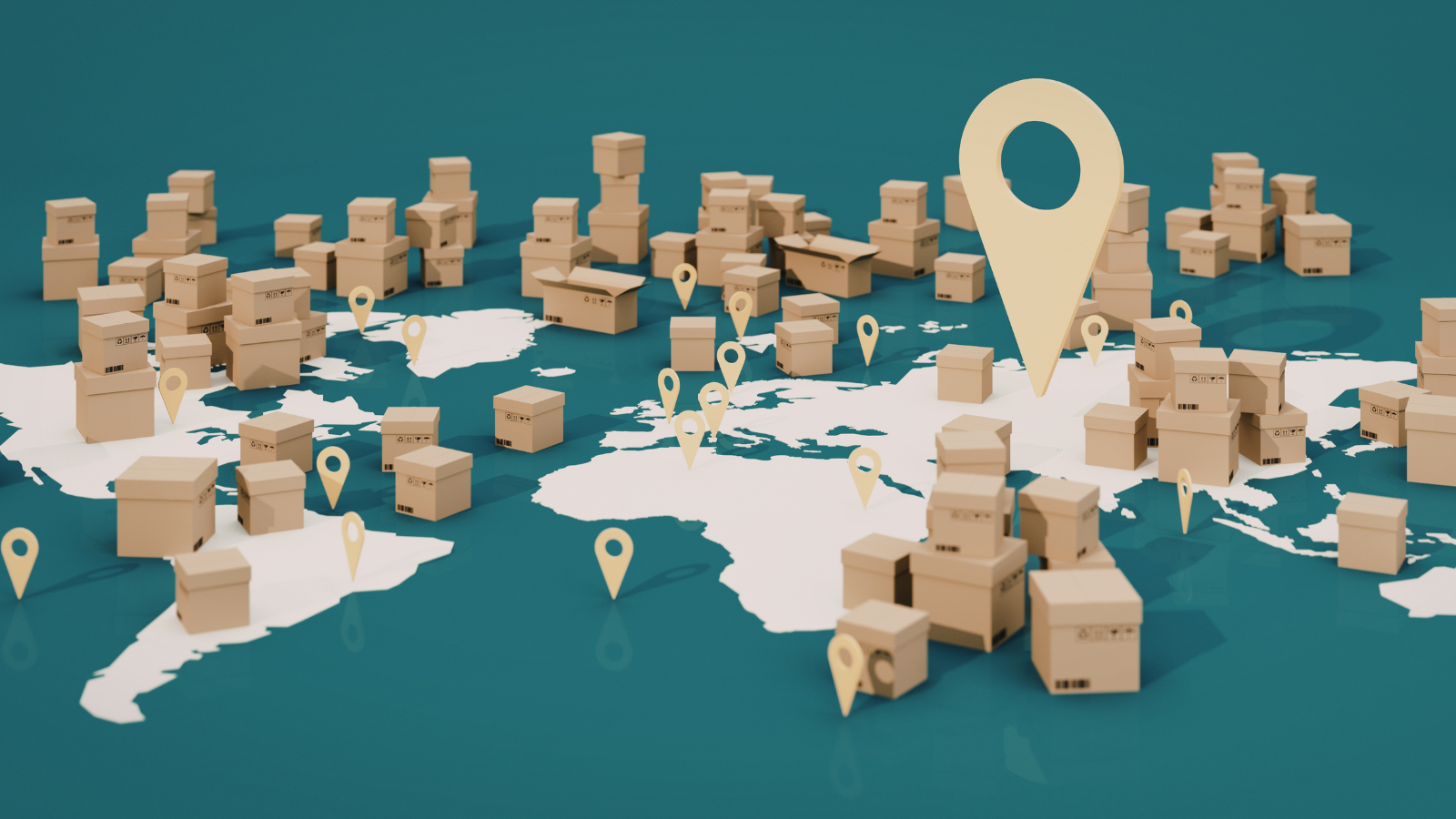 ShipGlobal was built specifically for the realities of exporting from India, not retrofitted from a global carrier’s generic offering. For a brand that has already invested in understanding how to scale your D2C brand across India, ShipGlobal provides the same strategic clarity for cross-border shipments. Here’s what that looks like in practice:
- 220+ countries, door-to-door delivery: Whether your first international demand signal is from the UAE, the UK, the US, or Singapore, ShipGlobal covers it, with competitive rates across both major and emerging markets. You’re not limited to the top 5 English-speaking countries. A handcrafted jewellery brand shipping to a niche market in the Netherlands or a food brand fulfilling an order to Mauritius has the same infrastructure access as one shipping to London.
- Automated customs documentation: One of the most time-consuming manual steps in international fulfilment, and one of the highest-risk if done incorrectly. ShipGlobal automates this, reducing paperwork errors that cause customs holds. A D2C skincare brand that previously spent 45 minutes per international shipment on customs forms brought that to under 5 minutes after switching to ShipGlobal’s platform.
- Live rate comparison across carriers: Before booking any shipment, compare rates across multiple carriers in a single dashboard. A D2C fashion brand shipping to the UK might find a 30-40% cost difference between carriers for the same transit time, savings that compound significantly at volume.
- End-to-end tracking with customer-facing links: Full parcel visibility from dispatch in India to final delivery internationally, with tracking links you can share directly with customers. This single feature eliminates the largest category of international customer support tickets: “where is my order?” A brand doing 200 international orders a month estimated saving 15+ hours of weekly customer support time after implementing ShipGlobal’s tracking.
- Packaging guidance for international transit: Products that survive a 3-day domestic shipment to Jaipur may not survive a 10-day international journey to Toronto. ShipGlobal provides packaging guidance specific to international transit, particularly relevant for fragile, liquid, or premium goods where a damaged delivery in a new market can destroy brand reputation before it’s even built.
- Dedicated support for Indian export compliance: Specialists who understand IEC requirements, FSSAI export regulations for food and personal care products, and RBI remittance paperwork. For a founder navigating international shipping for the first time, this is the difference between a held shipment and a smooth first export.
ShipGlobal has been trusted by over 25,000 Indian exporters and has shipped over 1 crore orders internationally, across Amazon.com, Etsy, Walmart, eBay, Shopify storefronts, and direct brand websites.
Common Mistakes Founders Make (And How to Avoid Them)
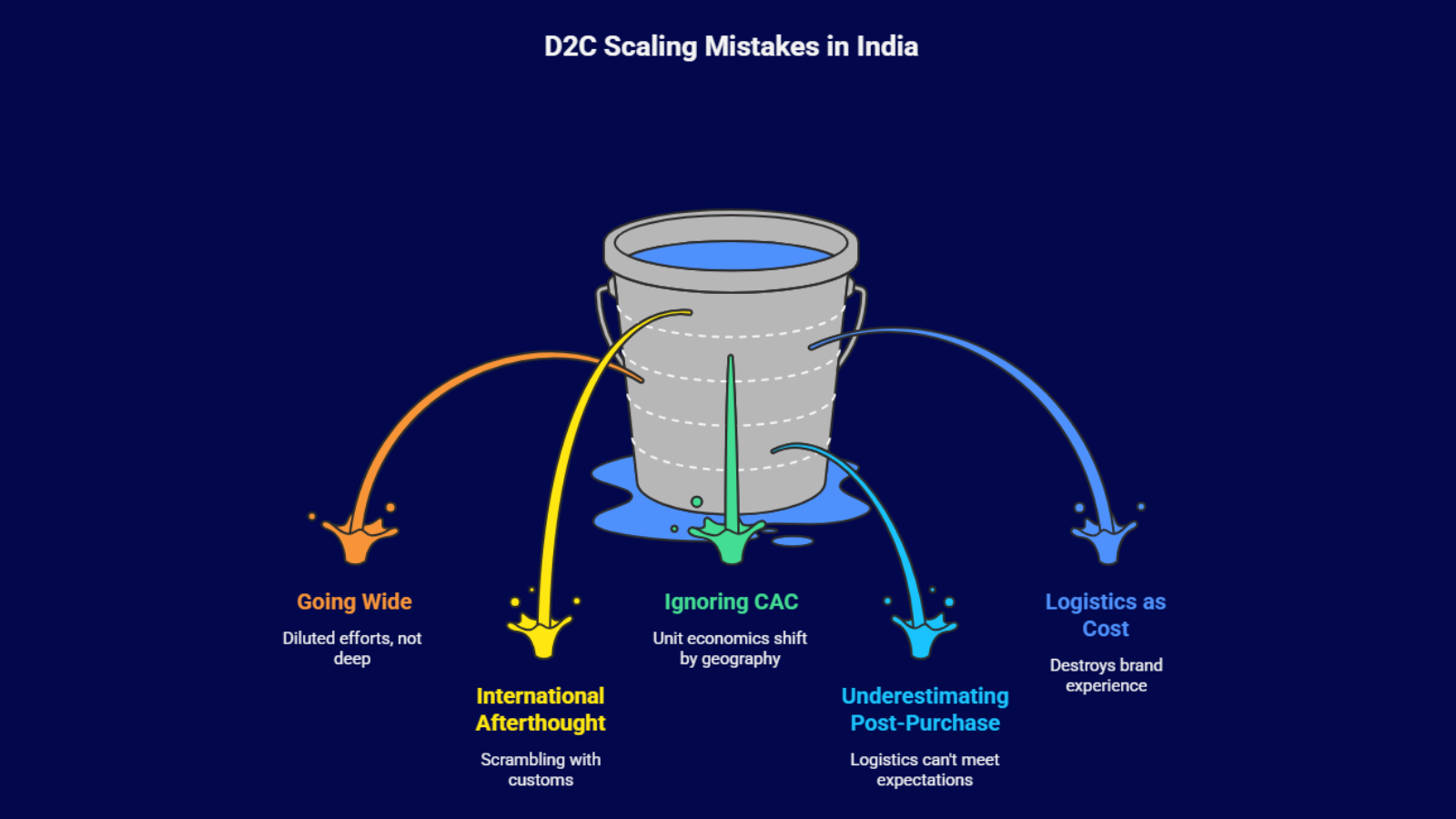 Every founder starts with a clear vision, but execution is where complexity begins to surface. Understanding how to scale your D2C brand across India means anticipating these patterns before they cost you, because most mistakes aren’t dramatic or obvious. They are subtle, repeated choices that seem reasonable in the moment but compound into larger challenges.
- Going wide before going deep. Launching across 15 states simultaneously feels ambitious. It’s usually just diluted. Anyone who has truly figured out how to scale your D2C brand across India will tell you: pick one city cluster, say, Rajasthan’s Tier-2 cities of Jaipur, Jodhpur, and Udaipur, make it work operationally, build your playbook, then replicate. Speed of cluster two depends entirely on how cleanly you executed cluster one.
- Treating internationals as an afterthought. International demand doesn’t announce itself. It shows up as a handful of orders from unfamiliar pin codes and “.co.uk” email addresses. Brands that have ShipGlobal set up before that moment, not scrambling to figure out customs documentation when their first international order arrives, convert that early signal into a channel.
- Ignoring CAC by geography. Your Mumbai CAC means nothing in Nagpur, and neither means anything for a customer in Dubai. When thinking about how to scale your D2C brand across India, build fresh unit economics models for each new geography, domestic or international, before committing a budget. CAC, AOV, return rate, LTV, all of it shifts by market.
- Underestimating the post-purchase experience. A consumer in Coimbatore and a consumer in Toronto both expect tracking transparency and return clarity. If your logistics infrastructure, domestic or international, can’t deliver on that expectation, you’ll generate refund requests faster than repeat orders.
- Treating logistics as a cost rather than a brand touchpoint. A beautifully packaged skincare product that arrives crushed after 12 days with zero tracking updates destroys the brand experience you spent ₹500 or $15 in CAC to create. Delivery experience is product experience, in every market.
Bottom Line
Pan-India scale isn’t a strategy for every D2C brand at every stage. Knowing how to scale your D2C brand across India requires honest self-assessment: if your supply chain can’t handle volume surges, if your return rate is above 25%, or if you haven’t cracked repeat purchase in your home market, going wider will amplify those problems, not solve them.
But if your fundamentals are solid, strong product-market fit, healthy repeat purchase rates above 35%, a margin structure that can absorb last-mile logistics costs, then two enormous opportunities are waiting: the India you haven’t reached yet, and the world that’s already looking for what you’ve built. The infrastructure to support how to scale your D2C brand across India, and then globally, has never been more accessible.
McKinsey estimates the potential market for modular digital commerce solutions tailored to D2C brands at $25-30 billion by 2030. ONDC’s low-cost rails are opening Bharat. ShipGlobal’s cross-border infrastructure is opening the world.
The playbook is learnable. The infrastructure is here. 2026 will be shaped less by demand alone and more by who executes, with discipline, with the right partners, and with the courage to start before they feel ready. Founders who take the time to genuinely understand how to scale your D2C brand across India will be the ones who define the next decade of Indian commerce.
The only thing left is the decision to start, and to start right.
ShipGlobal is India’s trusted cross-border logistics platform, enabling 25,000+ Indian exporters to ship to 220+ countries with automated documentation, live rate comparison, and end-to-end tracking. Get started at ShipGlobal.in
Base.com helps D2C brands build the operational and strategic foundations for growth, from domestic scale to global expansion.
Frequently Asked Questions
1. Is it actually possible to remove content from OffshoreAlert?
Removal is possible, but only in specific situations. If the content contains verifiable factual inaccuracies, correction or limited modification may be considered. However, most content is based on public records, which makes full removal difficult. In many cases, strategy shifts toward visibility management rather than deletion.
2. What should I do first if my name appears on OffshoreAlert?
The first step is to assess accuracy. Identify whether the content is factually incorrect or based on legitimate records. If inaccuracies exist, gather documented proof before approaching the publisher. If the information is accurate, focus on building stronger, credible content to influence search visibility instead of relying on removal.
3. Can outdated legal information be removed or updated?
Outdated information can sometimes be clarified, but not always removed. If the original reporting was accurate at the time of publication, it may remain online. However, updated context, such as case outcomes or settlements, can sometimes be introduced through corrections or additional authoritative content elsewhere.
4. Why does OffshoreAlert content rank so high on Google?
OffshoreAlert content ranks well because it is structured, detailed, and often linked to legal or regulatory records. These factors align closely with how search engines evaluate relevance and authority. When limited competing content exists, such pages become dominant signals for name-based searches.
5. How do logistics or global business visibility (like ShipGlobal operations) impact reputation?
As businesses scale globally using platforms like logistics providers, visibility increases across markets. This means search results become part of international due diligence. A strong digital presence, including consistent branding and verified business information, helps ensure that operational growth, including everything learned about how to scale your D2C brand across India, does not get overshadowed by isolated or outdated search results.