The TikTok Shop seller registration requirements depend on the country and seller type. You’ll usually need an eligible individual or business, identity documents, tax information and matching payout details. Choose the actual seller first, then prepare that account’s paperwork.
What are the TikTok Shop seller registration requirements?
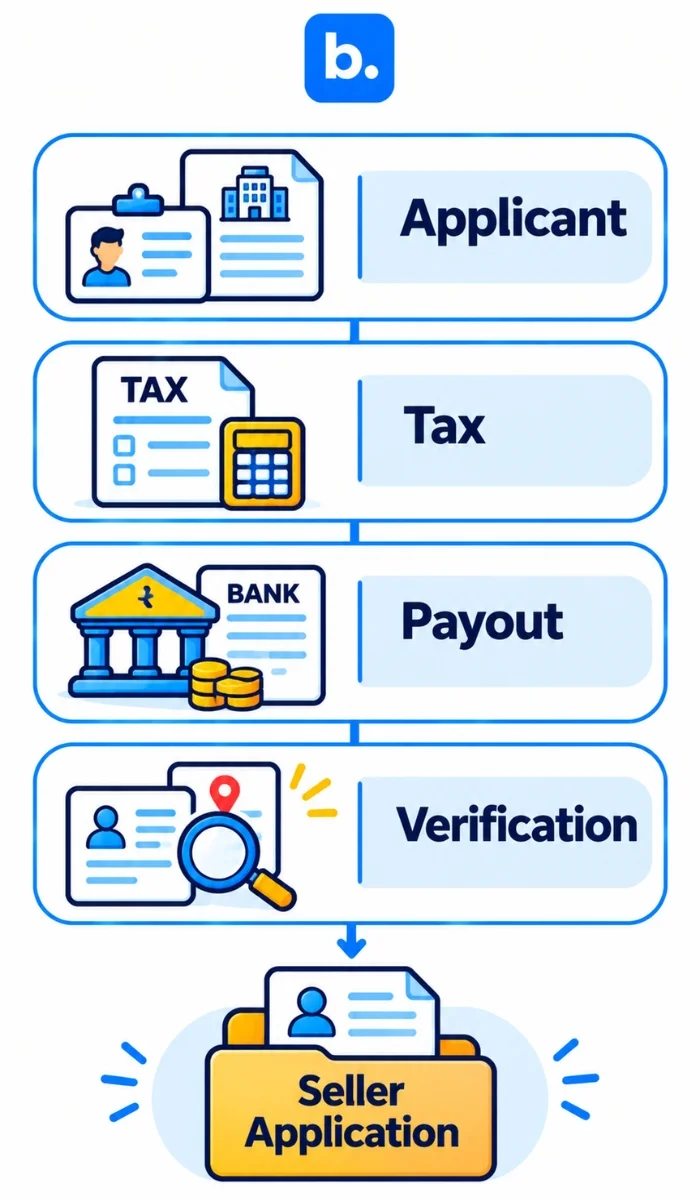
You need to establish who is selling and provide the records required for that person or organisation. A seller account is the Shop’s Seller Center profile. The business entity is the legal organisation behind a business application; individual routes use the person’s identity.
Prepare four sets of information:
- Applicant: legal name, identity or company registration, and representative details.
- Tax: the identifier and supporting records for that seller type.
- Payout: the accepted bank account receiving sales proceeds.
- Verification: the documents or identity checks used to confirm the information.
Seller Center’s setup guide explains the general journey. Local policies determine the actual eligibility and documents. Warehouse, returns and product-category tasks may also be required before trading.
Which country and seller type should you choose?
Choose the route the applicant can genuinely satisfy, not simply the country where you want customers. Individual, sole-trader and corporate accounts can require different evidence.
Local registration and cross-border programmes are separate. For example, TikTok’s US Global Selling page describes applications by US companies with foreign beneficial owners. Non-Chinese owners submit information for next steps. That is not direct registration using any overseas company’s documents.
If you’re planning from India, our TikTok Shop India guide explains the overseas-company and distributor options. Confirm the proposed entity, representative, payout and fulfilment arrangement before committing to incorporation.
What are the registration requirements by country?
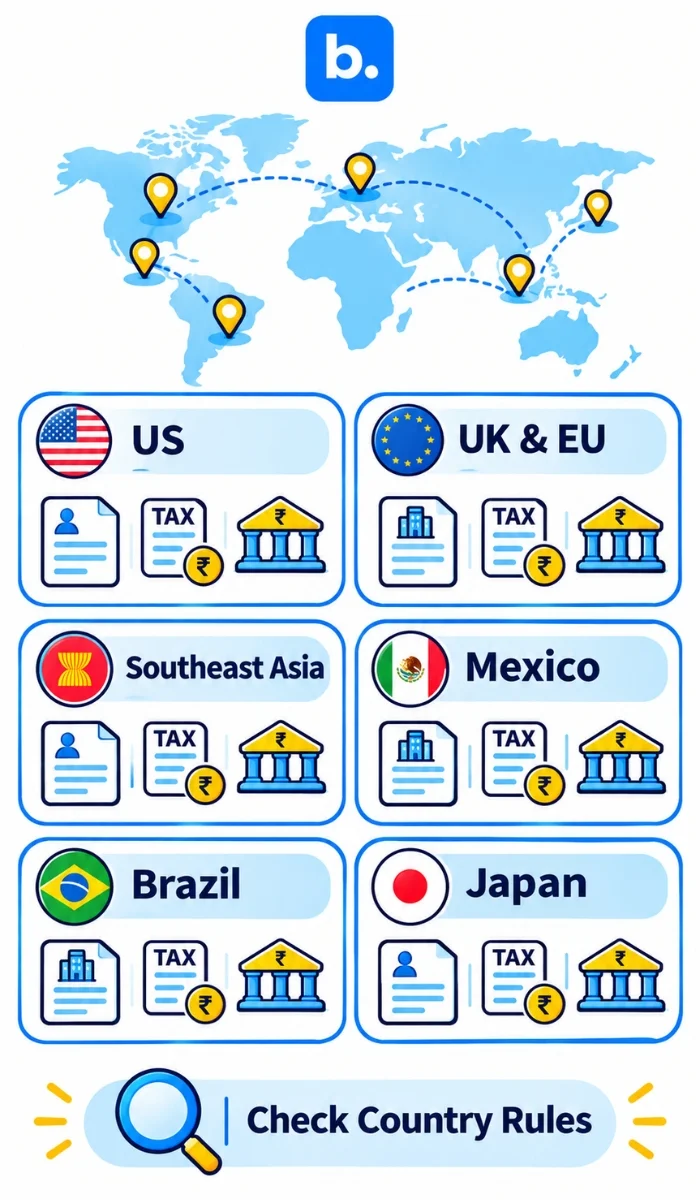
The requirements below summarise the published local seller routes. TikTok may request additional information during registration or shop setup, depending on the seller type and market. TIN means tax identification number; VAT means value-added tax.
| Country or policy-covered markets | Documented applicant | Tax information | Bank account | Main verification records |
|---|---|---|---|---|
| United States | US-resident individual or eligible US business route. | SSN/ITIN or company EIN; W-9. | Personal/corporate account by seller type. | Accepted US ID; business and representative records for companies. |
| United Kingdom | Sole trader or UK-incorporated company. | Tax ID; corporate VAT details. | Matching account at a UK institution. | Accepted ID, address proof; company registration for corporate applicants. |
| Germany, France, Spain, Ireland, Italy, Poland, Netherlands and Belgium | Sole-trader/legal-entity routes in the shared policy. | Tax ID and VAT information by type. | Matching EU-institution account; business account for legal entities. | EU-issued ID, address evidence and entity records as applicable. |
| Indonesia | Indonesian citizen or locally registered company. | NIK identity number or NPWP tax number, by type. | Matching personal/business account. | National ID/passport; business identification number (NIB). |
| Thailand | Thai citizen aged 20+ or Thai-incorporated company. | Billing Tax ID; check whether additional tax information is requested during signup. | Matching personal/business account; bank-book evidence. | Thai National ID; corporate registration and representative ID. |
| Vietnam | Vietnamese individual or locally registered entity. | Personal identification number or corporate Tax Code. | Matching personal/business account. | Identity/company records and new-seller NFC authentication. |
| Malaysia | Malaysian citizen or locally registered business/company. | TIN and e-invoice details; sales/service-tax details where applicable. | Matching personal/business account. | Malaysian identity card; business-registration records by type. |
| Philippines | Filipino individual or locally registered business route. | Tax ID and BIR Form 2303. | Matching account and bank statement. | ID, tax-registration certificate; DTI/SEC business records by type. |
| Singapore | Citizen individual; ACRA-registered business route. | Prepare the tax information required for the selected seller route. | Matching account and statement; business account for companies. | NRIC/SingPass verification; complete ACRA BizFile and representative ID for companies. |
| Mexico | Individual/business applicant meeting local verification. | RFC tax registration. | Foreign bank cards not supported. | Accepted Mexican ID; corporate RFC file; address/selfie evidence by type. |
| Brazil | Registered business, including MEI microentrepreneurs. | Company tax ID (CNPJ); representative’s personal tax ID (CPF). | Account under the business name. | Company document, representative ID, selfies and address proof. |
| Japan | Eligible individual/sole proprietor or Japan-registered corporation. | Company number for corporate applicants; check additional tax requirements for individual applicants. | Matching beneficiary name; corporate account for companies. | Accepted ID, address proof; corporate registration/seal certificate. |
The EU row groups only the eight markets explicitly named in that policy; national tax obligations still differ. Standard UK/EU corporate routes include local representative and stock/returns checks. The EU policy ordinarily requires locally resident representatives with accepted EU-issued ID. Larger-enterprise exceptions are discretionary.
Austria has a separate official local-seller launch announcement. Check the Austrian onboarding guidance for its detailed entity, tax, bank and document checklist rather than assuming the eight-market policy covers it.
Country details worth checking before you upload
- Indonesia: NIB guidance also covers individual businesses. Prepare the business ID and follow the applicable upload instructions.
- Vietnam: new sellers need near-field communication (NFC) authentication. Vietnamese nationals need a chip-based 12-digit identity card and an NFC-capable device.
- Singapore: eligibility requirements differ between individual and corporate applicants. Permanent residents should confirm their eligibility with TikTok Seller Support before applying, as the applicable guidance may differ by account type.
- Japan: Residence Cards submitted by individual applicants must state “No work restrictions”.
Which tax details should you prepare?
Use the tax identity of the actual seller, not another company or a director’s details unless the selected flow requests them.
In the US, an Employer Identification Number (EIN) identifies a business; Social Security Number (SSN) and Individual Taxpayer Identification Number (ITIN) checks concern individuals. Complete the W-9 tax interview using the correct name and classification.
Mexico requires corporate RFC validation before onboarding finishes. Philippine individuals still need BIR Form 2303, the tax-registration certificate. Malaysia’s e-invoice verification can affect withdrawals. Identity approval therefore does not mean every tax task is complete.
What bank account can you use for payouts?
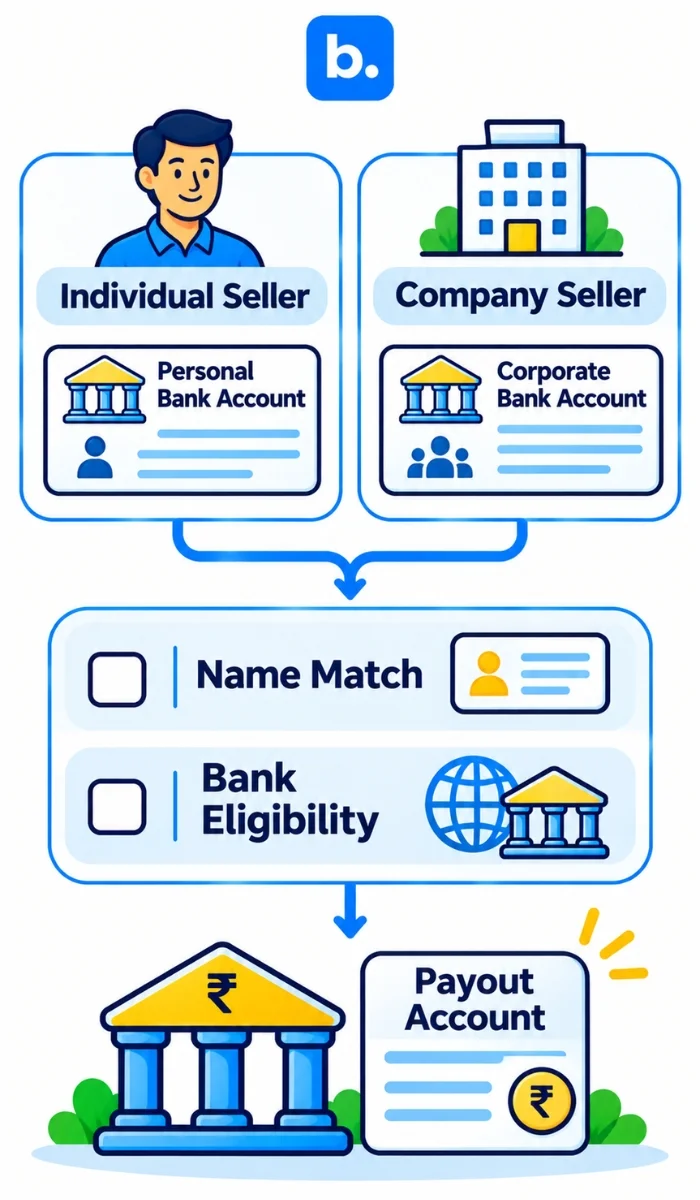
Use an account that the local flow accepts and whose holder matches the registered seller. A company account and its founder’s personal account are not interchangeable.
US payout guidance specifies personal accounts for individuals and sole proprietors, and corporate accounts for companies. UK/EU policies also request bank statements and IBAN/BIC/SWIFT details. Singapore’s corporate guide requires the account name to match ACRA registration.
Check bank-country acceptance separately from name matching. Neither proves the other.
Which documents should you check before applying?
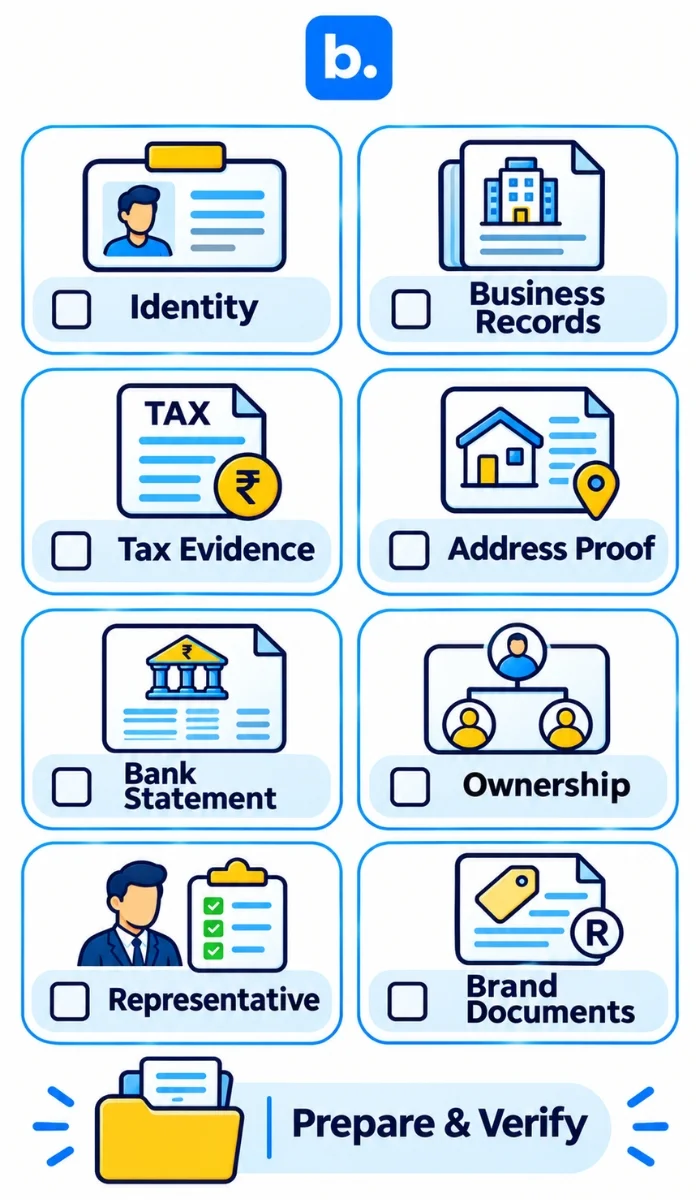
Create a folder for the selected applicant and check each item:
- Accepted identity document, with all requested sides/pages visible.
- Company registration or relevant business records for the chosen route.
- Tax evidence and the correct taxpayer name.
- Business/residential address proof where requested.
- Bank details and the required statement or bank-book page.
- Owner, representative and authorisation evidence where requested.
- Product or brand documents for separate category checks.
Use the legal company name consistently across registration, tax and bank records. Keep the representative’s personal evidence separate from the company’s paperwork.
UK/EU address evidence must meet the policy’s three-month recency rule. Mexico’s corporate RFC file must be issued within 60 days. Philippine sole proprietors prepare Department of Trade and Industry (DTI) registration; partnerships and companies use Securities and Exchange Commission (SEC) records. File formats and size limits vary, so follow the local upload instructions.
How does the registration process work?
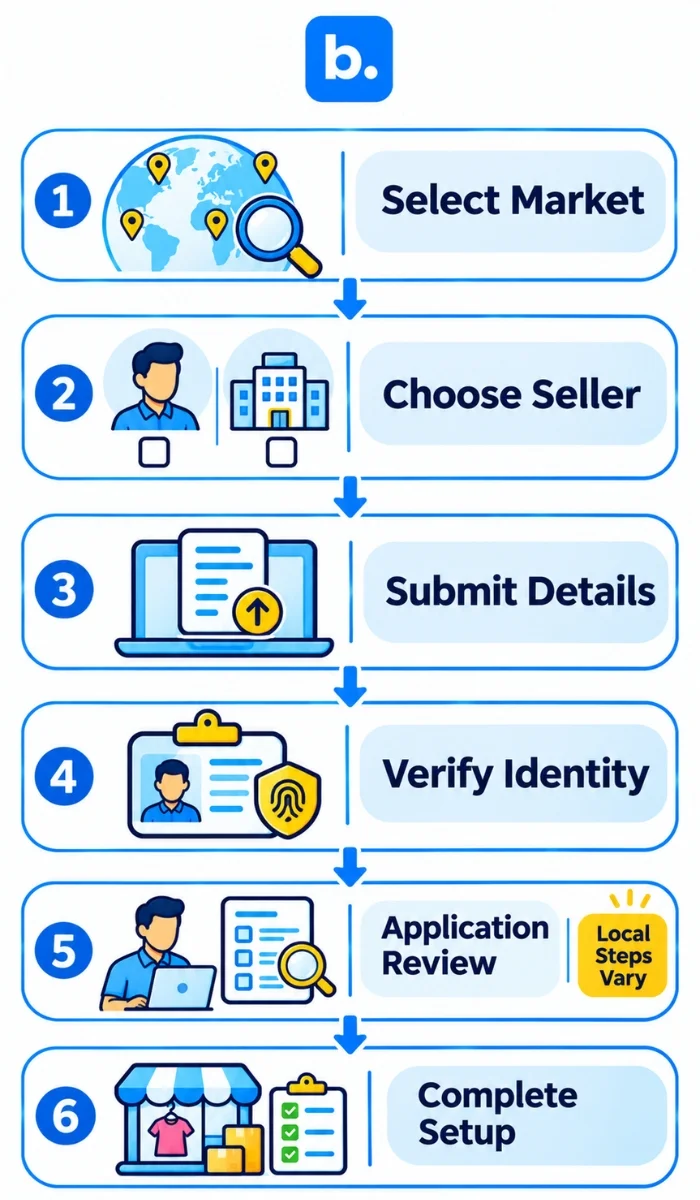
The sequence varies, but the preparation is straightforward:
- Open the correct Seller Center and select the account type matching the actual seller.
- Verify contact details and enter the personal/business information.
- Complete the requested identity, ownership, tax and address checks.
- Submit the application and correct the specific rejection reason if one appears.
- Complete payout, warehouse, returns and product tasks in the order shown for that account.
For US corporate applicants, the guide describes verification warnings that must be resolved or supported with the requested documents. Vietnam adds NFC authentication. The Philippine flow collects BIR Form 2303 during verification, then presents further store-setup tasks. Follow that market’s sequence rather than copying another country’s screens.
How long does approval take?
TikTok does not provide one fixed approval deadline for every market and seller type. Check the Seller Center and application emails for updates. Application review, tax validation, payout setup and category approval are different stages; a payout-processing estimate is not a registration timeline.
What should you connect after seller approval?
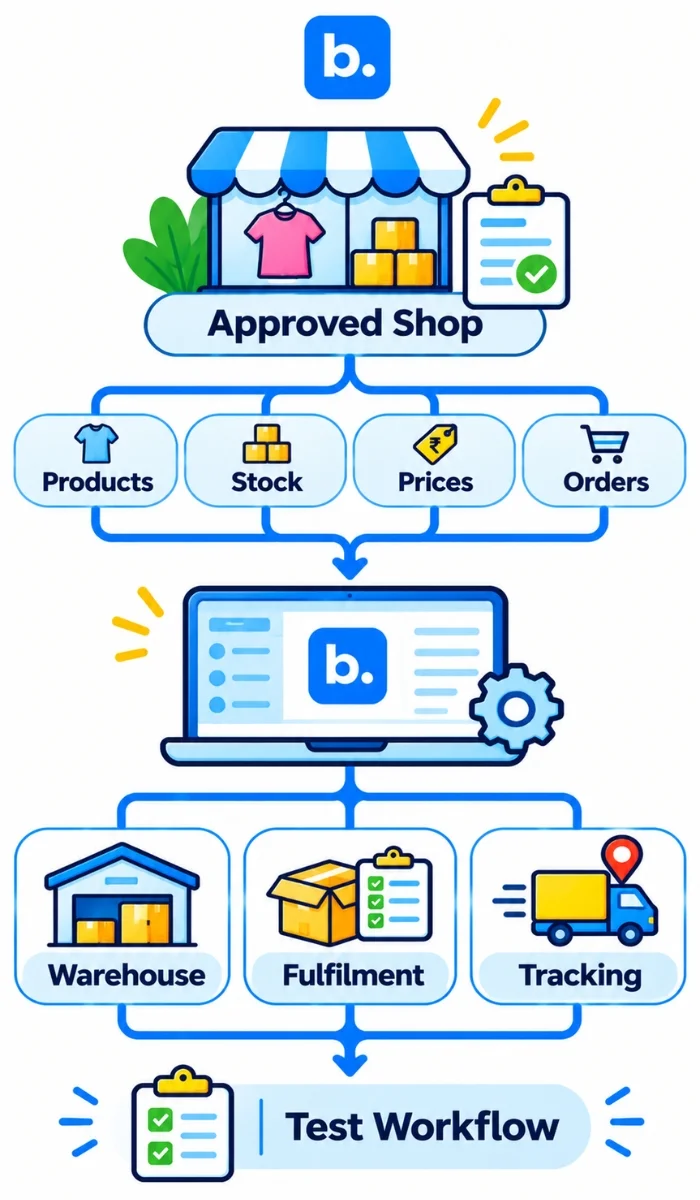
Prepare the operating workflow next. An ecommerce platform integration connects the approved Shop’s catalogue, stock and orders to the seller’s other systems.
At base.com, our two-way TikTok Shop integration supports listings, existing-offer import, price and stock synchronisation, order import or forwarding, and shipment tracking. Our Shopify integrations support the store connection where Shopify is part of that workflow.
Before enabling live synchronisation, map products, variants, regional warehouses and carriers. Authorise through the main seller account, confirm the market available to it and test an order and tracking update. Our TikTok Shop integration setup guide explains the sequence.
Choose an e-commerce integration platform around the actual stock source and fulfilment team. A multi-channel integration platform should use the correct records for each market. Treat integration with an ecommerce platform as a tested handover, with an agreed owner for errors and updates.
Conclusion
Start with the right country and applicant, then assemble the identity, tax, bank and business records for that route. The TikTok Shop seller registration requirements are not a single worldwide checklist. Use the official country links, resolve any unclear eligibility point and keep separate setup tasks visible. Once the Shop is approved, we at base.com help connect the catalogue, inventory and order workflow. Discuss your TikTok Shop setup with those details ready.