The Indian retail market is currently navigating a period of rapid growth, but for many sellers, this growth comes with a hidden cost. While getting a customer to complete a purchase is a win, the real challenge begins after the package leaves the warehouse.
In a landscape where Cash on Delivery remains a preferred choice for millions, managing the lifecycle of an order is complex. Leading brands have realized that to stay profitable, they must focus on ecommerce returns management as a core pillar of their operations.
By implementing a specialized OMS for returns and refunds in India, brands are moving away from the chaos of manual tracking. These systems act as a central nervous system, connecting the storefront, the warehouse, and the courier partners.
This integration is essential for modern sellers who need to maintain high margins while keeping customer satisfaction scores high. When the return journey is automated, it reduces the friction that usually leads to customer churn and operational leakage.
Why Indian Brands Prioritize Better Return Systems
The cost of a return in the Indian market involves far more than just the shipping fee. It includes the forward logistics cost, the reverse pickup fee, and the potential loss of inventory value if an item is damaged.
Without an OMS for returns and refunds in India, brands often find themselves stuck with “Where is my refund?” tickets and high Return to Origin (RTO) rates. These issues directly impact the bottom line and drain the resources of the customer support team.
High-growth sellers use ecommerce returns management to gain a bird’s-eye view of why items are coming back. Whether it is a sizing issue in the fashion category or a damaged-in-transit problem in home decor, having data allows for quick pivots.
Transitioning to an automated system ensures that every returned product is accounted for and that the financial loop is closed without manual errors.
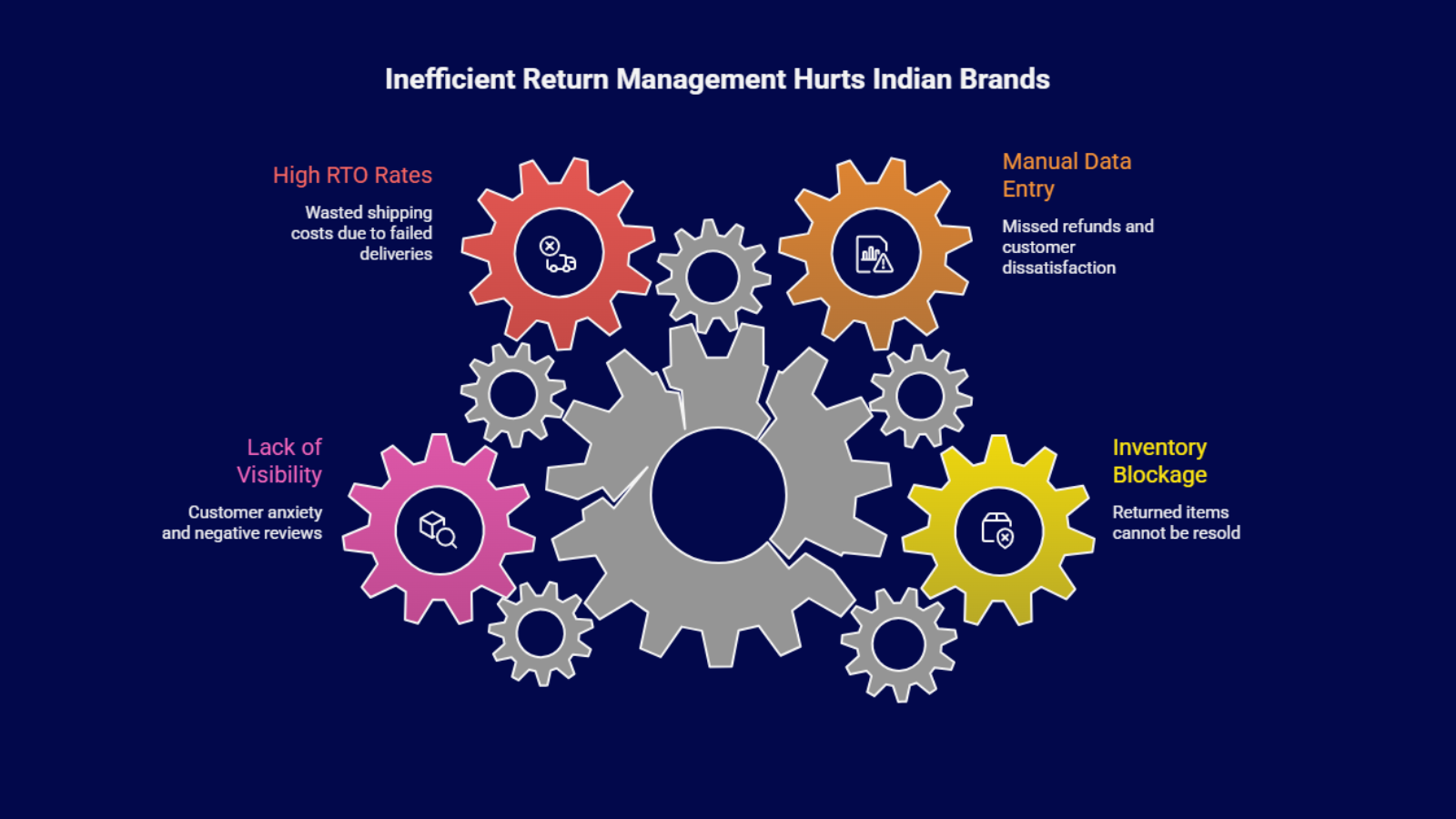
Main Problems Faced By Local Sellers
- Inventory Blockage: Products stuck in the return transit loop cannot be sold to other customers.
- Manual Data Entry: Relying on spreadsheets to track returns leads to missed refunds and angry customers.
- High RTO Rates: Failed deliveries in the COD segment result in wasted double shipping costs.
- Lack of Visibility: Customers often have no idea where their returned package is, leading to anxiety and negative reviews.
How An OMS Helps In Reducing Total Return Volume
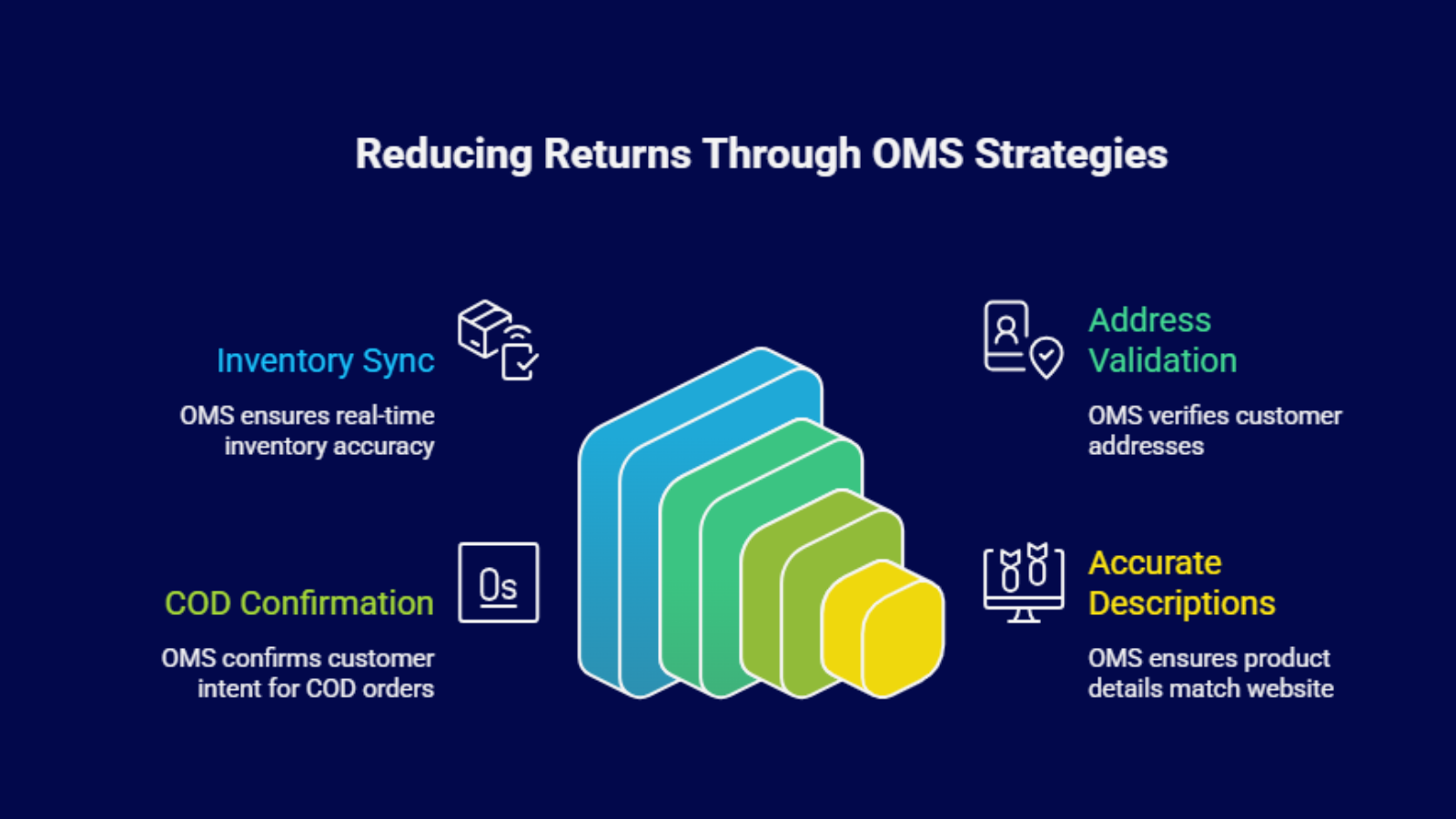
Prevention is the most effective way to manage returns. An OMS for returns and refunds in India helps brands identify patterns that lead to returns before the order is even shipped. By syncing inventory in real-time across all sales channels, the system ensures that a customer never receives a “near-match” product due to a stockout. This accuracy is the first step in successful ecommerce returns management.
Furthermore, an OMS can integrate with verification tools to validate addresses and contact numbers. In India, a significant portion of RTO is caused by incorrect addresses or customers being unreachable. By automating the confirmation process through WhatsApp or IVR, brands can filter out low-intent orders, significantly lowering the volume of items that bounce back from the doorstep.
Strategies To Lower Return Numbers
- Address Validation: Checking pincodes and street details against a verified database before shipping.
- COD Confirmation: Automatically reaching out to customers to confirm their intent for high-value COD orders.
- Accurate Descriptions: Ensuring that the inventory data in the OMS matches the product details shown on the website to avoid “wrong item” claims.
| Strategy | Operational Benefit | Long-term Impact |
|---|---|---|
| Pincode Intelligence | Blocks delivery to high-RTO zones | Saves 12% in shipping costs |
| Real-time Inventory | Prevents overselling and wrong shipments | Increases customer trust |
| Automated QC | Standardizes the check-in process | Faster resale of returned items |
Speeding Up The Refund Cycle To Keep Customers Happy
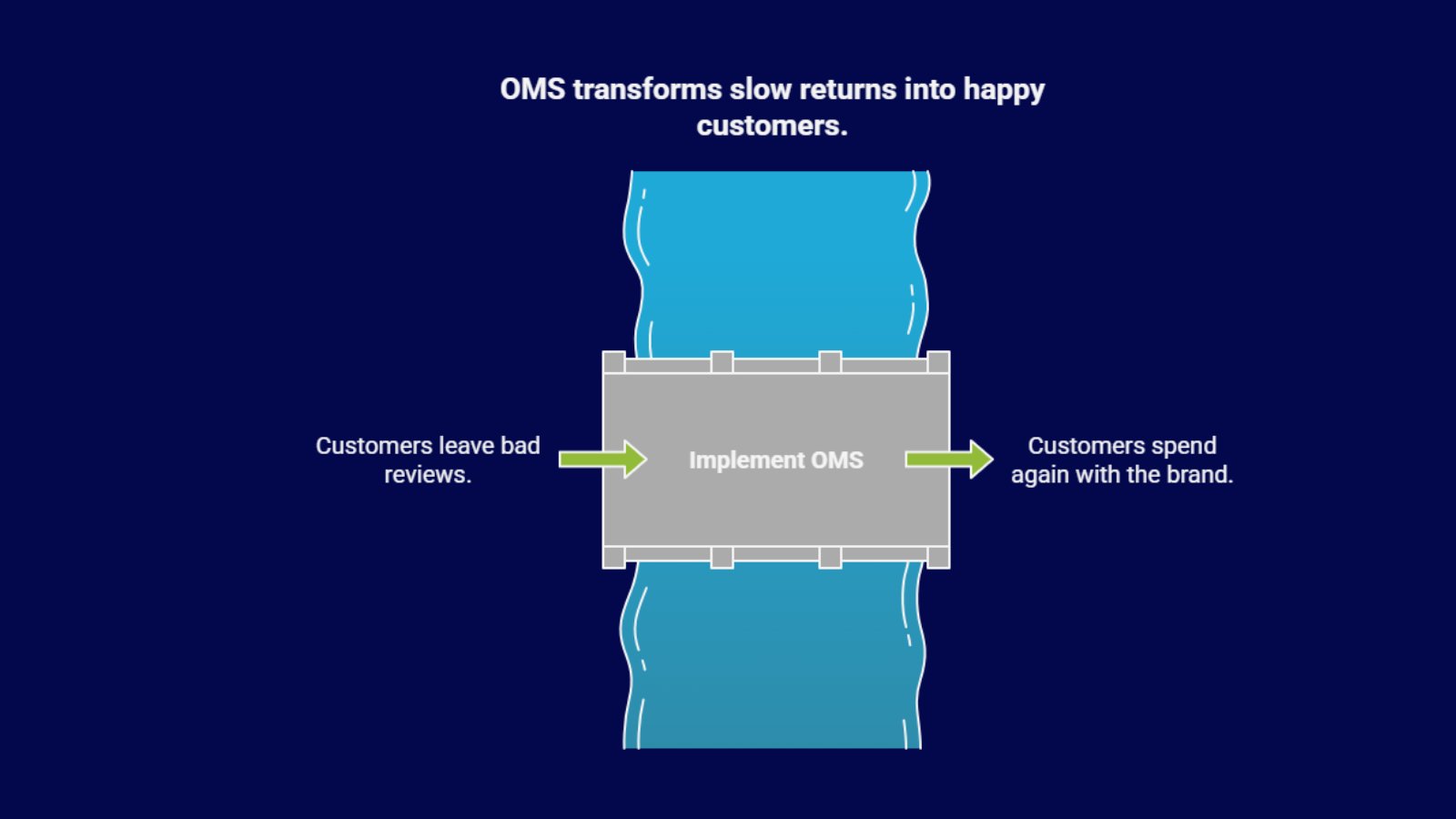
Trust is the currency of the digital economy. When a customer decides to return a product, they are often skeptical about when they will see their money again. A slow refund process is a top reason for customers leaving bad reviews. By using an OMS for returns and refunds in India, brands can offer “Refund on Pickup,” where the money is released the moment the courier agent scans the item at the door.
This level of ecommerce returns management transforms a negative experience into a positive one. When a customer gets their money back quickly, they are much more likely to spend it again with the same brand. The OMS coordinates this by communicating directly with the payment gateway, ensuring that the finance team doesn’t have to manually approve every single transaction.
Techniques For Faster Payouts
- Instant API Refunds: Linking the OMS to payment providers for immediate credit back to the original source.
- Store Credits: Offering an instant wallet balance that encourages the customer to stay within the brand ecosystem.
- Live Tracking: Providing the customer with a link to track their return pickup and refund status in real-time.
Managing Logistics And Reverse Pickups Efficiently
Reverse logistics in India is notoriously difficult to manage due to the vast geography and varying courier performance. An OMS for returns and refunds in India simplifies this by automatically selecting the best courier partner for the return leg. The system generates a shipping label and schedules the pickup without any human intervention, which is a vital part of ecommerce returns management.
Once the item is picked up, the OMS tracks it all the way back to the warehouse. This transparency ensures that the brand knows exactly when the stock will be available for resale. It also helps in identifying couriers who have a high rate of “lost in transit” returns, allowing the brand to optimize its partnership strategy.
Improving The Reverse Supply Chain
- Automatic Label Generation: The system creates the reverse invoice and label as soon as the return is approved.
- Courier Selection Logic: Picking the fastest partner for a specific region to get the product back into the warehouse.
- Regional Hub Routing: Directing returns to the closest facility to save on long-haul transportation costs.
Turning Returns Into Exchange Opportunities
A return doesn’t have to be the end of a customer relationship. Many Indian D2C brands are using ecommerce returns management to nudge users toward exchanges. If an OMS detects that a return is being made due to a size or color preference, it can immediately suggest an alternative. This keeps the revenue on the books and satisfies the customer’s original need.
An OMS for returns and refunds in India manages the complexity of a “swap” order. It can hold the new item in reserve until the old one is picked up, ensuring that the brand doesn’t lose inventory on both ends. This automated exchange flow is much more efficient than asking a customer to return an item, wait for a refund, and then place a new order.
Benefits Of Automated Exchanges
- Revenue Protection: Keeps the cash flow within the business rather than issuing a refund.
- Customer Retention: Solves the customer’s problem faster than a traditional return.
- Stock Allocation: Ensures the replacement item is reserved immediately so it doesn’t go out of stock.
Using Return Data For Better Product Decisions
Data is the most valuable byproduct of using an OMS for returns and refunds in India. When every return reason is logged, whether it is “bad quality,” “different from image,” or “late delivery”, the brand gets a clear picture of its weaknesses. This data-driven approach to ecommerce returns management allows the product and marketing teams to make improvements that lead to fewer returns in the future.
For example, if the data shows that a specific dress has a high return rate because the fabric is transparent, the brand can update the product description or photos. If a particular courier always delivers late, leading to “cancelled at doorstep” returns, the brand can switch partners. This feedback loop is essential for sustainable growth.
Key Metrics To Monitor
- SKU-Level Return Rate: Identifying products that are consistently underperforming.
- Return Reason Distribution: Understanding if the problem lies in the product, the marketing, or the logistics.
- Geographical RTO Trends: Spotting cities or states where delivery issues are more frequent.
Simple Ways To Use Your OMS For Growth
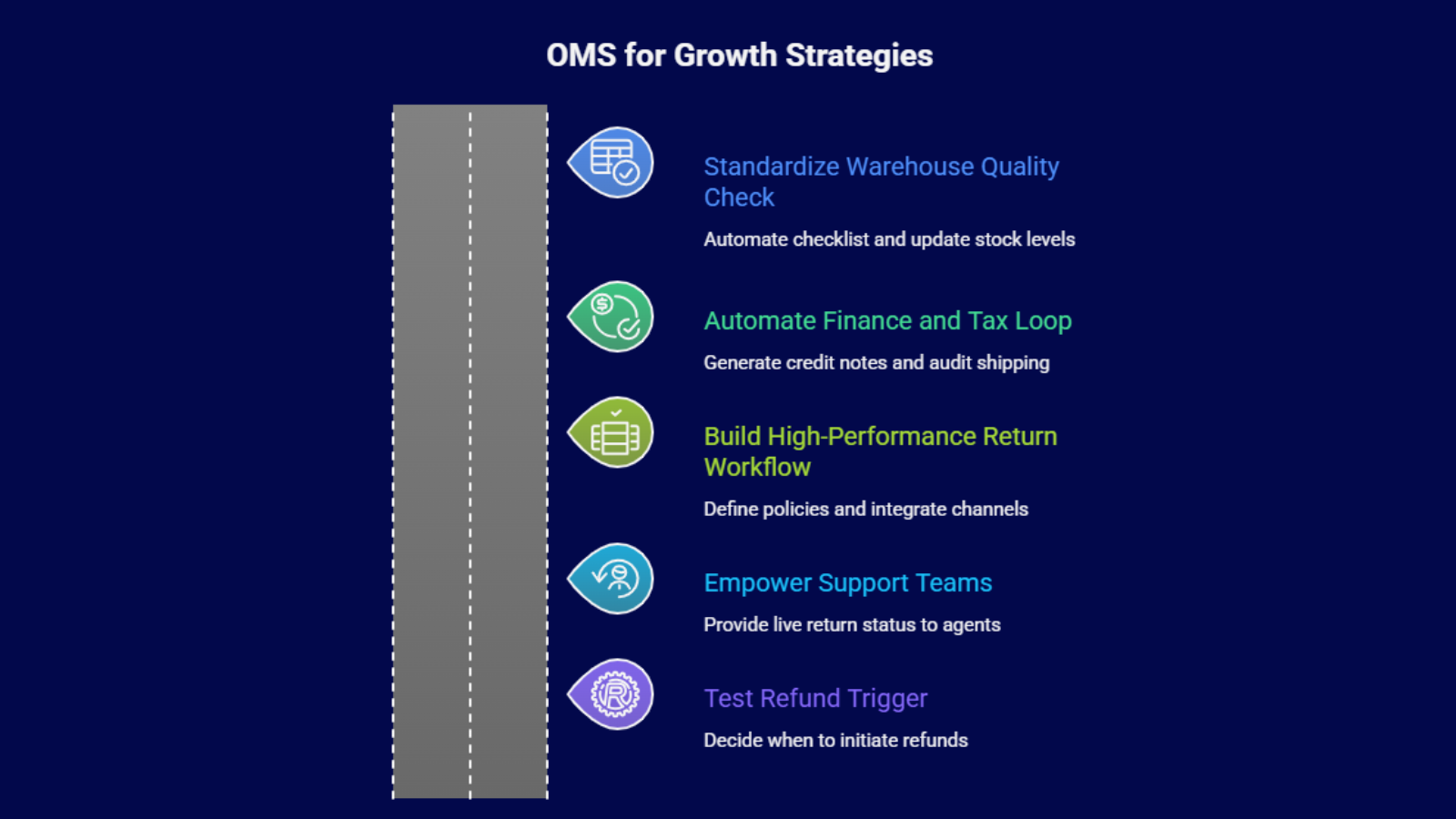
There are several ways an OMS can be configured to act as a growth engine rather than just a tracking tool. These strategies focus on making the ecommerce returns management process a seamless part of the brand experience.
Standardizing The Warehouse Quality Check
- Checklist Automation: Workers use the OMS to follow a standard set of rules for inspecting returned goods.
- Instant Re-stocking: Once an item passes the quality check, the OMS updates the stock levels across all marketplaces like Amazon, Myntra, and the brand’s own site.
- Damage Reports: High-quality photos of damaged items are logged in the system to help settle disputes with logistics providers.
Automating The Finance And Tax Loop
- GST Compliance: The OMS automatically generates credit notes, making life easier for the accounting team.
- Shipping Audit: Comparing the weight of the return with the forward shipment to ensure the courier is billing correctly.
- Refund Reconciliation: Matching the payment gateway reports with the returned items to prevent financial leakage.
Building A High-Performance Return Workflow
- Define Clear Policies: Use the OMS to enforce your return window (e.g., 7 days or 15 days) automatically.
- Integrate All Channels: Ensure your Shopify, Amazon, and offline store returns are all visible in one place.
- Empower Support Teams: Give your agents the power to see the live status of a return so they can answer customer queries instantly.
- Test the Refund Trigger: Decide if you want to refund at the time of pickup, hub arrival, or warehouse inspection.
Bottom Line
The landscape of Indian retail is evolving, and managing the reverse journey is no longer optional. By utilizing a robust OMS for returns and refunds in India, brands can protect their margins and build long-term loyalty. Effective ecommerce returns management is the secret weapon for any D2C brand looking to scale in a competitive market.
If you want to learn more about how 10 minute delivery models are changing the consumer expectations, then click here.
Frequently Asked Questions
1. How does an OMS help in reducing RTO for Indian sellers?
An OMS reduces RTO by verifying customer addresses before shipping and flagging high-risk orders. It also automates communication via WhatsApp to confirm the customer’s availability, ensuring the delivery is successful on the first attempt and avoiding unnecessary returns.
2. Can an OMS speed up the refund process for COD orders?
Yes, an OMS for returns and refunds in India can trigger instant refunds for COD orders into a brand wallet or via payout links. This happens as soon as the courier partner confirms the item has been picked up.
3. What is the benefit of integrating logistics with returns management?
Integration allows for automated reverse pickup scheduling and real-time tracking. This ensures the product returns to the warehouse faster and the customer is kept informed, which significantly reduces the number of “where is my refund” support tickets.
4. How do exchanges work within an automated system?
When a customer selects an exchange, the ecommerce returns management system checks real-time inventory for the replacement. It automatically creates a new order and links it to the return, ensuring the new item is reserved and shipped promptly.
5. Does using an OMS help with warehouse inventory accuracy?
Absolutely. Once a returned item is inspected and scanned back into the warehouse, the OMS updates the inventory across all sales channels instantly. This prevents overselling and ensures the returned item is immediately available for the next customer.