Quick commerce has changed how people shop. Customers now expect groceries, snacks, medicines, and daily essentials within minutes. But this speed creates a real challenge. Brands and platforms often do not have enough customer data before they need to make recommendations.
That is where practical personalization becomes important. Instead of waiting for large datasets, companies use behavioral signals, location insights, and contextual patterns to improve q-commerce product recommendations, enable small basket personalization, and strengthen quick commerce retention.
For Indian D2C sellers, personalization is even more critical because quick commerce buying behavior is extremely fast. According to Redseer, more than 65 percent of quick commerce orders in India are impulse-driven, and the average order value typically ranges between ₹350 and ₹550. Most users complete their purchase within 6 to 8 minutes after opening the app. This means the first screen, product suggestions, and search results heavily influence what customers buy.
Platforms like Blinkit, Zepto, and Swiggy Instamart rely heavily on real-time signals from their D2C tech stack to push relevant products quickly. Without this layer of intelligence, customers simply buy the first visible items or leave the app.
Practical personalization use cases that work well for Indian sellers include:
- Showing hyperlocal personalization, such as dosa batter in Bengaluru, misal pav ingredients in Pune, or makhana snacks in North India, improves category conversion by nearly 10 to 15 percent.
- Using time-based q-commerce product recommendations, for example, milk, bread, and eggs before 9 AM or ice cream and cold drinks after 8 PM, which increases impulse purchases by nearly 20 percent.
- Enabling small basket personalization by recommending ₹30 to ₹120 add-ons like chocolate bars, instant noodles, or chips at checkout, increasing average basket size by ₹50 to ₹80.
- Using warehouse-level availability signals inside the D2C tech stack to recommend products that can be delivered within 10 minutes, reducing order cancellations by nearly 12 percent.
- Sending repeat purchase reminders for high-frequency items like curd, paneer, bread, and fruits every 3 to 4 days, which improves quick commerce retention by nearly 18 percent.
For Indian D2C brands entering quick commerce, the key insight is simple. The faster the purchase journey, the more important real-time personalization becomes. Even small behavioral signals can significantly improve q-commerce product recommendations, strengthen small basket personalization, and drive stronger quick commerce retention through better hyperlocal personalization powered by the right D2C tech stack.
15 Practical Ways to Personalize Quick Commerce Without Enough Data
Below are practical approaches used by successful commerce platforms. These methods help brands improve q-commerce product recommendations, enable small basket personalization, and strengthen quick commerce retention.
| Personalization Strategy | Data Needed | Impact |
|---|---|---|
| Location-based product suggestions | Delivery pin code | Improves hyperlocal personalization |
| First click behavior tracking | First product view | Enables quick recommendations |
| Popular products in the area | Regional order data | Helps with small basket personalization |
| Time of day recommendations | App usage time | Boosts q-commerce product recommendations |
| Cart level suggestions | Current basket | Increases order value |
| Trending items display | Platform-level data | Builds trust quickly |
| Contextual promotions | Product category | Improves conversion |
| Repeat purchase reminders | Purchase history | Supports quick commerce retention |
| Search behavior insights | Search queries | Better discovery |
| Dynamic homepage modules | App engagement | Relevant browsing |
| Micro segmentation | Basic demographics | Personal targeting |
| Lookalike product suggestions | Similar shoppers | Smarter recommendations |
| Delivery zone preferences | Local supply data | Hyperlocal personalization |
| Seasonal product bundles | Calendar events | Higher basket size |
| Quick reorder buttons | Past purchase signals | Faster checkout |
Each of these approaches works even when customer data is minimal.
Now, let us explore how data specifically helps improve quick commerce experiences.
Below is the revised version with multiple categories included (FMCG, skincare, home essentials, personal care, etc.) while keeping the structure, readability, and OMS context for sellers intact.
How Data Helps Personalize Quick Commerce for D2C Brands
 Even a small amount of structured data can power meaningful personalization in quick commerce. Instead of building complex data warehouses, successful sellers focus on signals that influence buying decisions within the first few minutes of app usage.
For Indian D2C sellers entering quick commerce marketplaces, understanding these signals is critical because nearly 70 percent of quick commerce orders are completed within 7 minutes of opening the app.
Below are the most important data signals that enable better Q-commerce product recommendations, small basket personalization, hyperlocal personalization, and stronger quick commerce retention through a well-integrated D2C tech stack.
1. Location Data
Location data is one of the strongest signals in quick commerce because fulfillment happens through dark stores or micro warehouses within a 2 to 5 km radius. This enables highly targeted hyperlocal personalization, where customers see products relevant to their region.
For example, Bengaluru clusters show high demand for dosa batter and coconut chutney, while Delhi NCR zones see faster movement for paneer, curd, and frozen snacks. At the same time, skincare products like sunscreen and aloe gel often trend in cities with higher outdoor exposure, such as Mumbai and Chennai.
Indian sellers can analyze zone-level demand through their OMS to identify which SKUs perform best in different pin codes. For example, home essential brands may notice faster demand for room fresheners and cleaning wipes in metro areas. Syncing inventory availability from the seller’s OMS into the D2C tech stack improves q-commerce product recommendations and ensures products appear in zones where delivery can happen within minutes.
2. Time of Order Data
Time of order data reveals predictable consumption patterns across multiple categories. Morning orders between 6 AM and 10 AM often include breakfast groceries, while evening orders frequently include snacks, personal care items, and skincare essentials.
Quick commerce platforms in India observe up to 40 percent higher snack category sales after 7 PM. At the same time, personal care and skincare items like face wash, sheet masks, and shaving kits often peak after 9 PM when users shop for self-care products.
Sellers can analyze order timestamps within their OMS to identify which SKUs perform better during specific hours. Integrating these signals into the D2C tech stack allows sellers to push contextual Q-commerce product recommendations. Brands that align promotions with consumption windows often see a 15 percent improvement in small basket personalization.
3. Basket Size Patterns
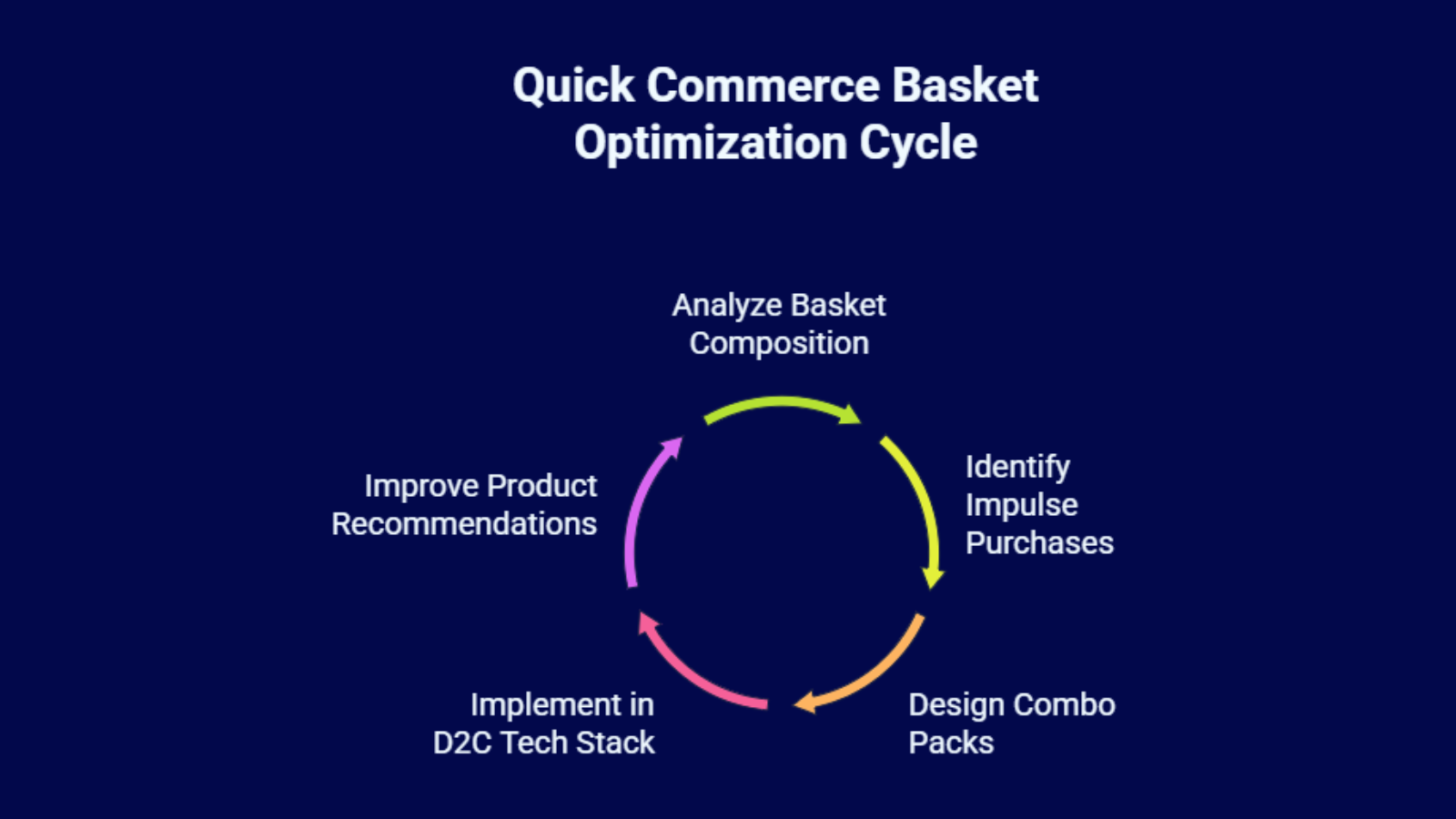 Quick commerce baskets are usually small compared to traditional ecommerce. The average order value across Indian quick commerce platforms ranges between ₹350 and ₹550, with around 4 to 6 items per order.
Understanding basket composition helps sellers improve small basket personalization. Grocery purchases like bread and milk often trigger add-on suggestions such as spreads or snacks. Similarly, skincare products like face wash often lead to suggestions for moisturizers or serums.
By analyzing basket composition through their OMS, sellers can identify which combinations drive impulse purchases. When these insights feed into the D2C tech stack, brands can design combo packs or bundled offers that appear frequently in Q-commerce product recommendations, improving quick commerce retention.
4. Category Affinity
Category affinity tracks the product categories a customer frequently browses or purchases. This is useful across categories like groceries, personal care, home essentials, and skincare.
For example, customers who repeatedly buy healthy snacks may also be interested in protein bars and electrolyte drinks. Similarly, users who purchase skincare products may explore face masks, serums, or sunscreens in the same session.
Indian sellers can track these category trends through their OMS and identify patterns within their buyer base. Integrating these signals into the D2C tech stack allows platforms to surface more relevant Q-commerce product recommendations, increasing product discovery and improving quick commerce retention.
5. Search Queries
Search data is one of the highest intent signals in quick commerce. Users often open the app and directly search for specific products they want immediately.
For example, searches for items like “cold coffee,” “face wash,” “room freshener,” or “cleaning wipes” often convert within minutes. These signals strongly influence q-commerce product recommendations.
Indian sellers should analyze search-driven orders inside their OMS to identify which keywords drive purchases. Many users search using local terms like “dahi,” “atta,” or “multani mitti.” When these insights integrate with the D2C tech stack, sellers can optimize product titles and improve hyperlocal personalization.
6. First Session Behavior
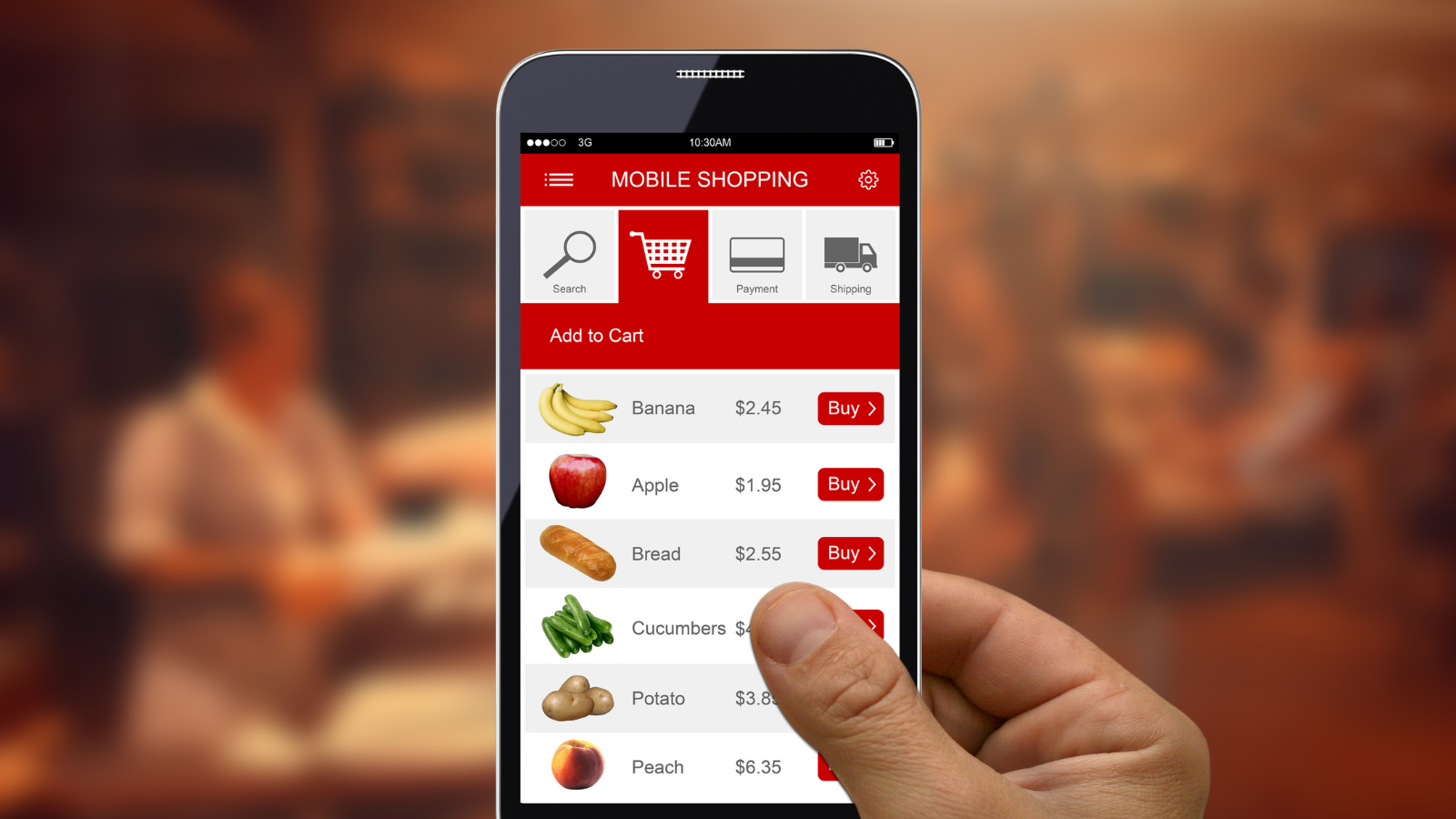 Even the first interaction inside a quick commerce app reveals valuable signals. The first product click, category browse, or search query often determines what the user will purchase.
Platforms analyze these signals to show immediate Q-commerce product recommendations that help users complete their purchase quickly.
Sellers can track first purchase journeys through their OMS to identify which SKUs attract early attention. For example, skincare brands may find that face cleansers receive the first click before moisturizers. Feeding this data into the D2C tech stack helps optimize listings for small basket personalization and improves quick commerce retention.
7. Repeat Purchase Frequency
Repeat purchase frequency is one of the strongest drivers of quick commerce retention. Many quick commerce categories follow predictable consumption cycles.
Groceries like milk, bread, and eggs often repeat every two to four days. Personal care products such as shampoo or face wash are typically repeated every two to three weeks. Home essentials like cleaning sprays may repeat monthly.
Sellers can track reorder patterns through their OMS to identify these cycles. Integrating these insights into the D2C tech stack allows platforms to surface timely Q-commerce product recommendations, improving repeat purchases and strengthening hyperlocal personalization.
8. Product Pairing Data
Product pairing data identifies items frequently purchased together. These combinations help improve small basket personalization and increase order value.
For example, noodles may pair with sauces and beverages. Skincare products such as face wash often pair with moisturizer or toner. Home cleaning sprays may pair with microfiber cloths.
Sellers can extract pairing insights from order-level data inside their OMS. When integrated with the D2C tech stack, these patterns drive better Q-commerce product recommendations, helping brands increase impulse purchases and improve quick commerce retention.
9. Inventory Availability
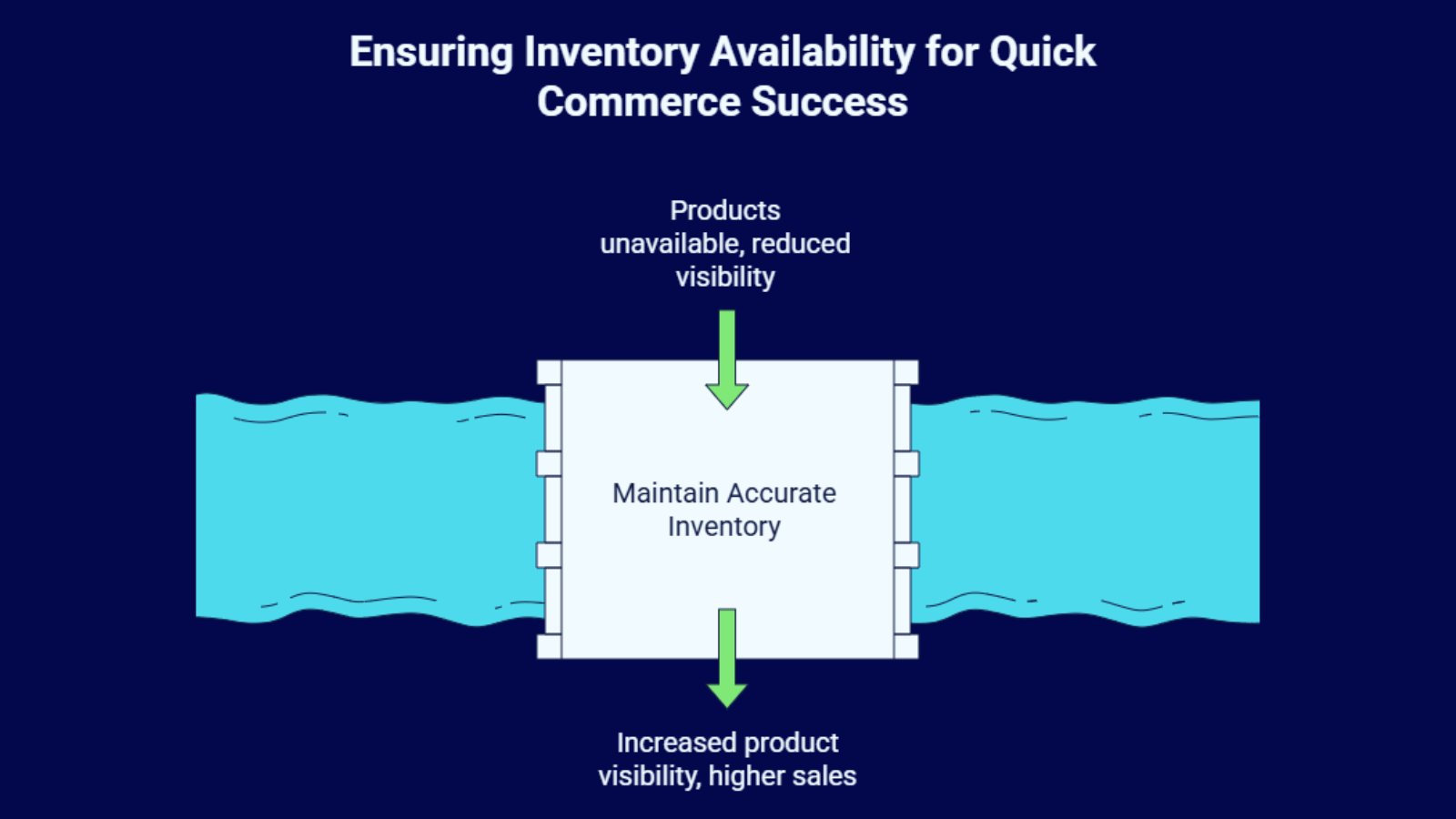 Inventory availability plays a critical role in quick commerce because customers expect immediate delivery. Products not available in nearby dark stores rarely appear in recommendations.
This is why platforms prioritize SKUs with strong local availability when generating hyperlocal personalization.
Sellers must maintain accurate inventory feeds from their OMS into the D2C tech stack. If stock levels fluctuate frequently, algorithms reduce product visibility. Brands that maintain higher dark store coverage for categories like skincare, groceries, and home essentials often appear more frequently in Q-commerce product recommendations.
10. Delivery Speed Preferences
Some customers prioritize ultra-fast delivery while others prefer broader product selection. Platforms analyze these preferences to personalize recommendations.
Users who consistently select 10-minute delivery options often see products stocked in nearby dark stores through hyperlocal personalization.
Sellers can analyze delivery performance data through their OMS to identify which SKUs consistently meet fast delivery requirements. Integrating these insights into the D2C tech stack helps maintain eligibility for high visibility q-commerce product recommendations.
11. Device Type
Device data helps platforms understand browsing behavior. In India, more than 95 percent of quick commerce transactions happen on mobile devices.
Mobile shoppers often prefer visually clear product images and quick purchase options. Categories like skincare and personal care benefit greatly from strong product visuals.
Sellers can analyze device-based traffic data inside their OMS and analytics tools. Integrating these insights with the D2C tech stack helps optimize product pages and improve engagement, leading to stronger small basket personalization.
12. Order Value Segmentation
 Order value segmentation divides customers based on their spending patterns. This helps sellers tailor product suggestions and pricing strategies.
For example, customers with basket values below ₹300 may receive low-priced impulse products, while higher spending users may see premium skincare kits or home care bundles.
Sellers can analyze order value segments through their OMS. When these signals feed into the D2C tech stack, platforms generate more accurate Q-commerce product recommendations, improving small basket personalization and increasing quick commerce retention.
13. Behavioral Segmentation
Behavioral segmentation groups users based on how they shop rather than who they are. Some users explore new products frequently while others consistently reorder staples.
For example, discovery-driven shoppers may explore skincare launches or new snack products, while routine buyers focus on daily essentials.
Sellers can track behavioral patterns through their OMS and connect these signals to the D2C tech stack. This enables more targeted q-commerce product recommendations and improves both discovery and quick commerce retention.
14. Engagement Data
Engagement metrics such as clicks, scroll depth, and product views indicate which products attract attention.
Products with higher engagement typically appear more frequently in q-commerce product recommendations because algorithms interpret them as more relevant.
Sellers can monitor engagement metrics through their OMS dashboards and analytics tools. When integrated with the D2C tech stack, this data helps refine product images, pricing strategies, and descriptions, strengthening small basket personalization.
15. Campaign Interaction Data
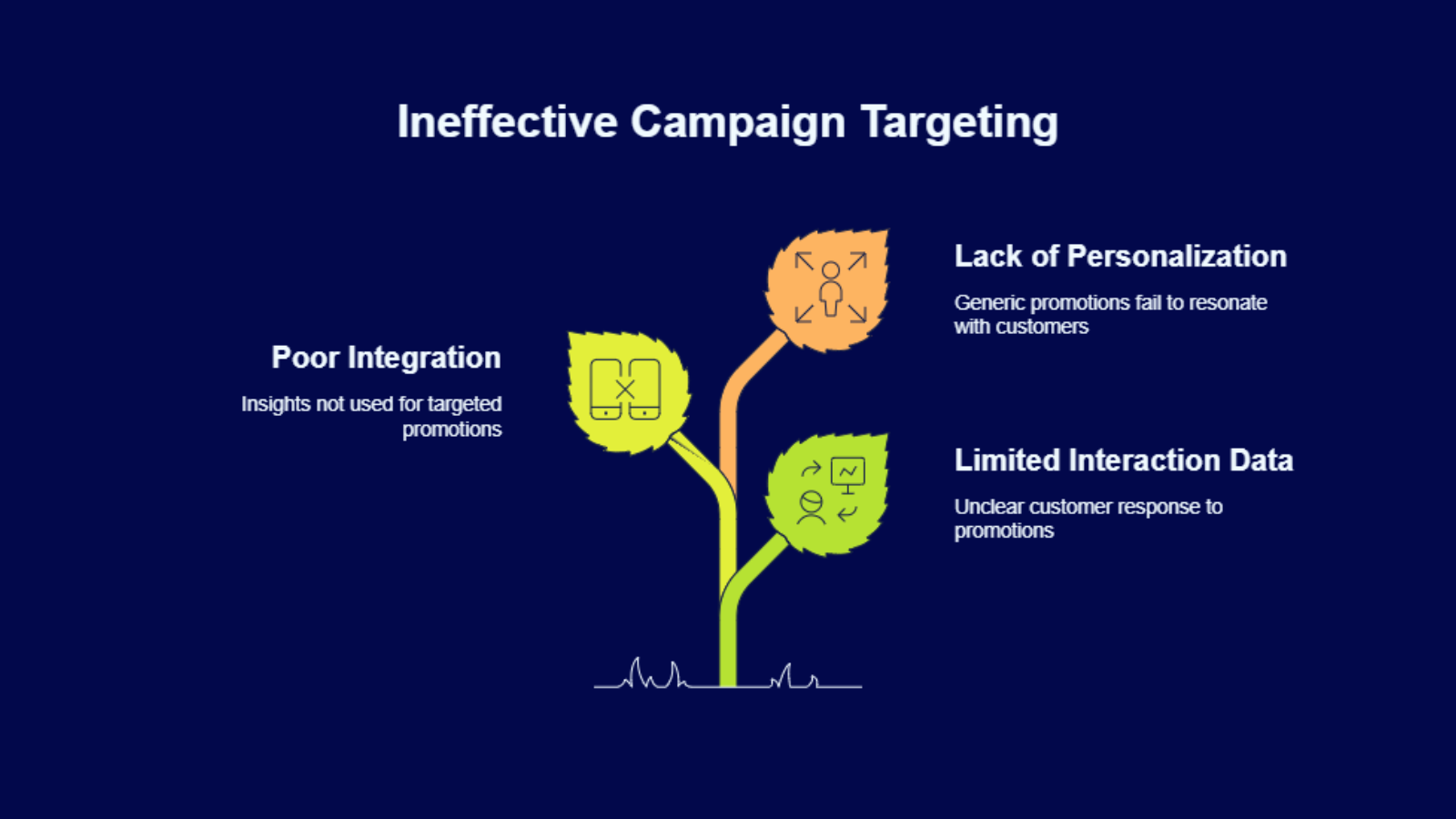 Campaign interaction data tracks how customers respond to promotions, push notifications, and discounts.
For example, snack promotions may perform better during evenings, while skincare campaigns often perform better during weekends.
Sellers can measure campaign performance through their OMS and marketing analytics tools. When integrated with the D2C tech stack, these insights allow brands to deliver more targeted promotions, strengthening hyperlocal personalization and improving quick commerce retention across multiple categories, including groceries, skincare, and home essentials.
Building the Right D2C Tech Stack for Quick Commerce Personalization
Technology determines whether personalization actually works in quick commerce. A strong D2C tech stack allows sellers to capture signals from orders, inventory, and customer behavior and turn them into real-time actions. Without this integration, most sellers only see order reports but cannot influence Q-commerce product recommendations or improve small basket personalization.
For Indian D2C sellers, the biggest gap usually appears between their marketplace performance data and their internal OMS. If the OMS does not sync inventory and order signals in real time, products frequently go out of stock in dark stores, which reduces ranking visibility. Sellers who integrate their OMS, inventory feeds, and analytics tools into a unified D2C tech stack often see 12 to 18 percent better product visibility in quick commerce platforms.
A practical personalization stack for quick commerce typically includes:
- Customer data platform to track user behavior and reorder patterns across marketplaces.
- Product recommendation engine to improve Q-commerce product recommendations and push impulse items.
- Real-time analytics tools that track hourly demand spikes, such as evening snack surges or late-night skincare purchases.
- Inventory and OMS integration to ensure products appear only in locations where stock exists, improving hyperlocal personalization.
- Marketing automation systems that trigger reminders for repeat purchases, like face wash, cleaning sprays, or daily groceries.
When these systems work together, sellers can influence product discovery faster. Platforms that deploy structured personalization systems report up to 20 percent higher sales and significantly stronger quick commerce retention, primarily because customers find relevant products faster and complete purchases in under 7 minutes.
If you want to scale q-commerce product recommendations, improve small basket personalization, and increase quick commerce retention, Base.com can help. It connects your OMS, inventory, and customer data into one D2C tech stack, enabling real-time hyperlocal personalization so your products appear in the right places at the right time.
Conclusion
Personalization in quick commerce does not require massive data warehouses. What matters more is how effectively brands use the signals they already have.
By focusing on behavioral patterns, location insights, and contextual triggers, businesses can deliver strong Q-commerce product recommendations, optimize small basket personalization, and improve quick commerce retention even in early stages.
With the right D2C tech stack, brands can gradually expand their personalization capabilities and unlock the full potential of hyperlocal personalization.
The future of quick commerce will not belong to companies with the most data. It will belong to companies that use data intelligently.
FAQs
1. How can quick commerce platforms personalize experiences with limited data?
Platforms can use behavioral signals like first clicks, location data, and time of order. These signals help generate relevant product suggestions and enable basic personalization even without deep historical data.
2. What is small basket personalization in quick commerce?
Small basket personalization focuses on recommending products that increase the size of quick orders. It uses cart context and popular combinations to suggest relevant add-ons during checkout.
3. Why is hyperlocal personalization important for quick commerce?
Hyperlocal personalization ensures customers see products that are available in nearby warehouses or stores. It improves delivery accuracy and helps recommend items popular within a specific location.
4. How does a D2C tech stack support quick commerce personalization?
A strong D2C tech stack connects customer data, product catalogs, analytics tools, and recommendation engines. This integration allows platforms to deliver real-time personalized shopping experiences.
5. What improves quick commerce retention the most?
Repeat purchase reminders, personalized product suggestions, fast checkout experiences, and location-based offers significantly improve quick commerce retention.