Quick commerce has fundamentally changed how Indian consumers buy daily essentials. Instead of waiting two to three days for delivery, customers now expect products within 10 to 20 minutes through platforms like Blinkit, Zepto, and Swiggy Instamart. This shift is not small. India’s quick commerce market grew from $100 million in FY20 to over $3.3 billion in FY24, and industry reports estimate it could cross $9–10 billion by 2029. For Indian D2C sellers, this is becoming one of the fastest-growing sales channels.
What many sellers do not realize is that quick commerce is driven by high-intent replenishment purchases, not discovery. Data from major platforms shows that over 70% of orders are repeat purchases, typically in categories like skincare, snacks, and home essentials. For example, sunscreen, face wash, instant noodles, and detergent refills are among the most frequently reordered items.
Another important nuance is the SKU strategy. Products priced between ₹99 and ₹399 perform the best, because customers see them as urgent purchases rather than planned shopping. Many beauty and FMCG brands also report that 30–40% of their quick commerce sales happen after 7 PM, when consumers place last-minute orders.
For Indian D2C brands, quick commerce is not just another channel. It is becoming a high-frequency demand engine that rewards brands with strong supply planning, fast inventory turnover, and optimized quick commerce margins.
Why Quick Commerce Is Becoming Essential for D2C Brands
Customer expectations have shifted toward instant delivery. Today’s shoppers value speed and convenience more than waiting for discounts or longer shipping times.
This change is also reshaping the digital commerce landscape. In many product categories, quick commerce platforms are replacing traditional ecommerce channels.
Reports suggest that quick commerce already contributes around 40% of digital sales for D2C brands in categories like beauty and personal care, and the share is expected to grow even further.
This explains why brands are investing in FMCG quick commerce strategy and experimenting with new formats.
Key reasons brands are adopting quick commerce
- Faster product discovery
- Higher repeat purchases
- Stronger customer convenience
- Improved visibility on delivery apps
- Better control over quick commerce margins
What does quick commerce enable for brands
- Instant product availability
- High intent purchases
- Faster inventory turnover
- More frequent buying behavior
Many of the best quick commerce success stories come from brands that understand these advantages early.
Case Study 1: Beauty Brand Growth Instant Delivery
 The beauty category has become one of the biggest winners in quick commerce. Unlike fashion or electronics, many beauty purchases happen at the last minute. Customers often realize they need a product just before leaving home or during travel. Items like sunscreen, face wash, lip balm, deodorant, and makeup remover fall into what platforms call “urgent personal care purchases.”
One of the strongest D2C brand quick commerce examples in India is Earth Rhythm, a clean beauty brand founded in 2019. The company initially grew through its website and marketplaces such as Amazon and Nykaa. However, the leadership noticed a pattern. Many customers were abandoning carts because delivery timelines ranged between two to five days, which did not match the urgency of skincare purchases.
The challenge: Marketplace dependency slowed impulse buying
Before entering quick commerce, Earth Rhythm relied primarily on ecommerce marketplaces. While this helped the brand scale awareness, it created three major operational challenges.
First, delivery timelines were long for impulse purchases. A customer who suddenly needed sunscreen for a weekend trip or a face wash refill often chose a faster offline alternative instead.
Second, discovery costs were high. Marketplace ads and promotions increased customer acquisition costs.
Third, repeat purchases were slow because customers reordered only when they planned their skincare restock.
These challenges pushed the brand to explore quick commerce platforms where consumers were already ordering essentials.
The quick commerce strategy: Focus on high-frequency skincare products
Earth Rhythm partnered with Blinkit and Zepto to list a curated set of fast-moving products rather than its entire catalog. Instead of uploading hundreds of SKUs, the brand focused on products that customers frequently reorder.
Some of the products that performed strongly included:
- SPF 50 sunscreen sticks and lotions
- Gentle face cleansers
- Lip balms
- Shampoo bars
- Face mists
These products fall within the ₹199 to ₹399 price range, which quick commerce platforms consider the “impulse purchase sweet spot.”
Another important operational change involved smaller SKU formats. Travel-friendly packaging increased the chances of instant purchases because customers perceived them as convenient and affordable.
The brand also optimized product listings for quick commerce search algorithms. Titles included common search phrases like “SPF sunscreen,” “hydrating face wash,” and “lip balm for dry lips,” which helped improve visibility inside the apps.
The results: Rapid revenue growth from instant delivery
The shift to quick commerce delivered significant results.
Within 18 months of listing on Blinkit, Earth Rhythm reportedly grew its monthly sales from around ₹5 lakh to more than ₹1.5 crore on the platform.
This growth happened because quick commerce changed how customers discovered and reordered products.
Several interesting patterns emerged:
- More than 60 percent of purchases came from repeat buyers.
- Orders peaked between 7 PM and 11 PM, when customers placed urgent skincare orders.
- Sunscreen and face wash were the top two performing SKUs.
Another surprising insight was that many quick commerce buyers were new customers who had never purchased from the brand’s website before. This made quick commerce an important discovery channel rather than just a fulfillment option.
Operational insights Indian D2C sellers should know
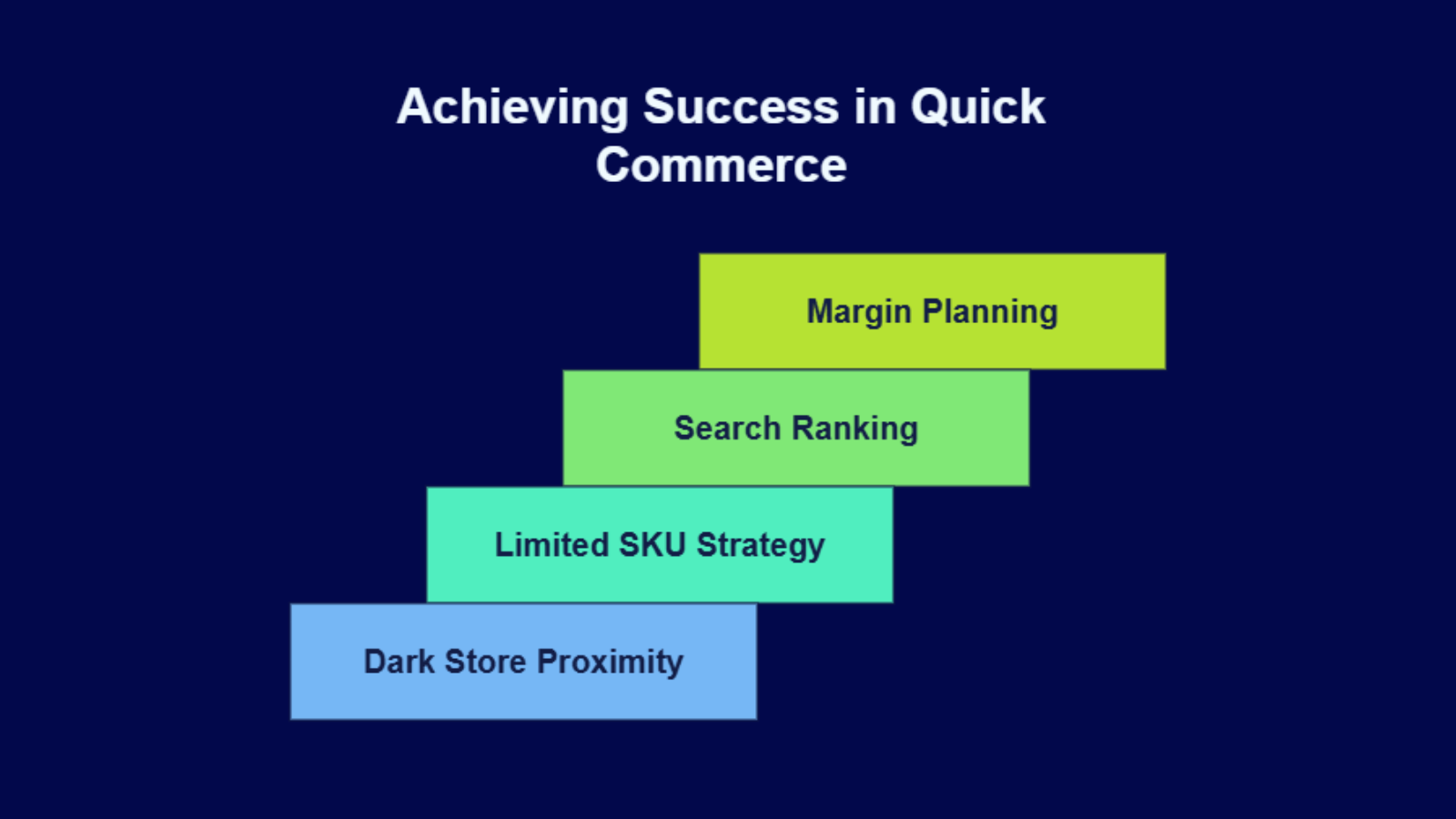 The Earth Rhythm example highlights several nuances about beauty brand instant delivery that many sellers overlook.
Dark store proximity matters
Quick commerce platforms stock products inside neighborhood warehouses called dark stores. Brands that ensured consistent inventory availability saw higher order volumes.
The limited SKU strategy works better
Uploading hundreds of SKUs often reduces visibility. Instead, brands should prioritize 10 to 20 high-frequency products.
Search ranking drives sales
Most quick commerce purchases begin with a search query. Products with optimized titles and keywords often rank higher in app results.
Margins require careful planning
Quick commerce commissions can range between 15 percent and 25 percent, so brands must manage discounts carefully to protect quick commerce margins.
Key takeaway for Indian beauty brands
The success of Earth Rhythm shows why beauty brand instant delivery is one of the most powerful growth levers in quick commerce.
Skincare and personal care products have short replenishment cycles, strong repeat purchases, and urgent demand patterns. When these products are available within minutes, customers are far more likely to reorder.
For Indian D2C sellers in the beauty category, quick commerce is no longer an experimental channel. It is quickly becoming a high-frequency revenue stream capable of driving rapid growth and long-term customer retention.
Case Study 2: Packaged Food Brand Winning with Quick Commerce
 The packaged food category is one of the fastest-growing segments in quick commerce. Food consumption is often unplanned. A group of friends watching a match, a late-night craving, or a quick dinner solution can trigger an immediate order. Because of this behavior, snacks and ready-to-cook products perform extremely well on instant delivery platforms.
A strong real-world example in India is ITC Foods, particularly its frozen snacks and ready-to-cook portfolio that includes products like ITC Master Chef frozen snacks, Aashirvaad frozen parathas, and YiPPee noodles variants.
The challenge: Traditional ecommerce could not match food urgency
Before quick commerce gained scale, ITC sold packaged food primarily through supermarkets, kirana stores, and ecommerce marketplaces. While this ensured national distribution, ecommerce had two limitations.
First, delivery timelines were too slow for food consumption moments. If a customer wanted frozen snacks for the evening, waiting two or three days was not realistic.
Second, food discovery in marketplaces was often weak. Customers typically searched for known brands rather than exploring new snack products.
This meant ITC needed a channel where food products could be delivered immediately and discovered easily.
The quick commerce strategy: Prioritize high-frequency snack products
ITC expanded aggressively on Blinkit, Zepto, and Swiggy Instamart, focusing on products that matched quick commerce buying behavior.
Instead of listing every SKU, the company prioritized high-demand snack and meal products, including:
- ITC Master Chef frozen aloo tikki
- Frozen cheese nuggets
- Frozen chicken snacks
- Ready-to-cook parathas
- Instant noodles and snack kits
These products fall into the ₹120 to ₹350 price range, which aligns with the typical quick commerce basket size for food orders.
Another strategic move involved inventory planning inside dark stores. Quick commerce platforms store products in local micro-warehouses. ITC ensured its top SKUs were stocked in these locations, which allowed delivery within 10 to 15 minutes.
The results: Quick commerce became a major revenue channel
The strategy delivered strong results.
According to industry reports, quick commerce platforms now contribute nearly 50 percent of ITC’s ecommerce food revenue, showing how quickly the channel has grown.
Several buying patterns emerged from the data.
One important trend was late evening demand spikes. Food orders typically peak between 7 PM and 11 PM, when consumers look for quick dinner options or snacks.
Another insight was basket behavior. Many customers did not just order one product. Instead, they added complementary items such as:
- Frozen snacks
- Instant noodles
- Soft drinks
- Dips or sauces
This increased the average order value, helping brands maintain healthier quick commerce margins despite platform commissions.
Operational insights Indian D2C food brands should know
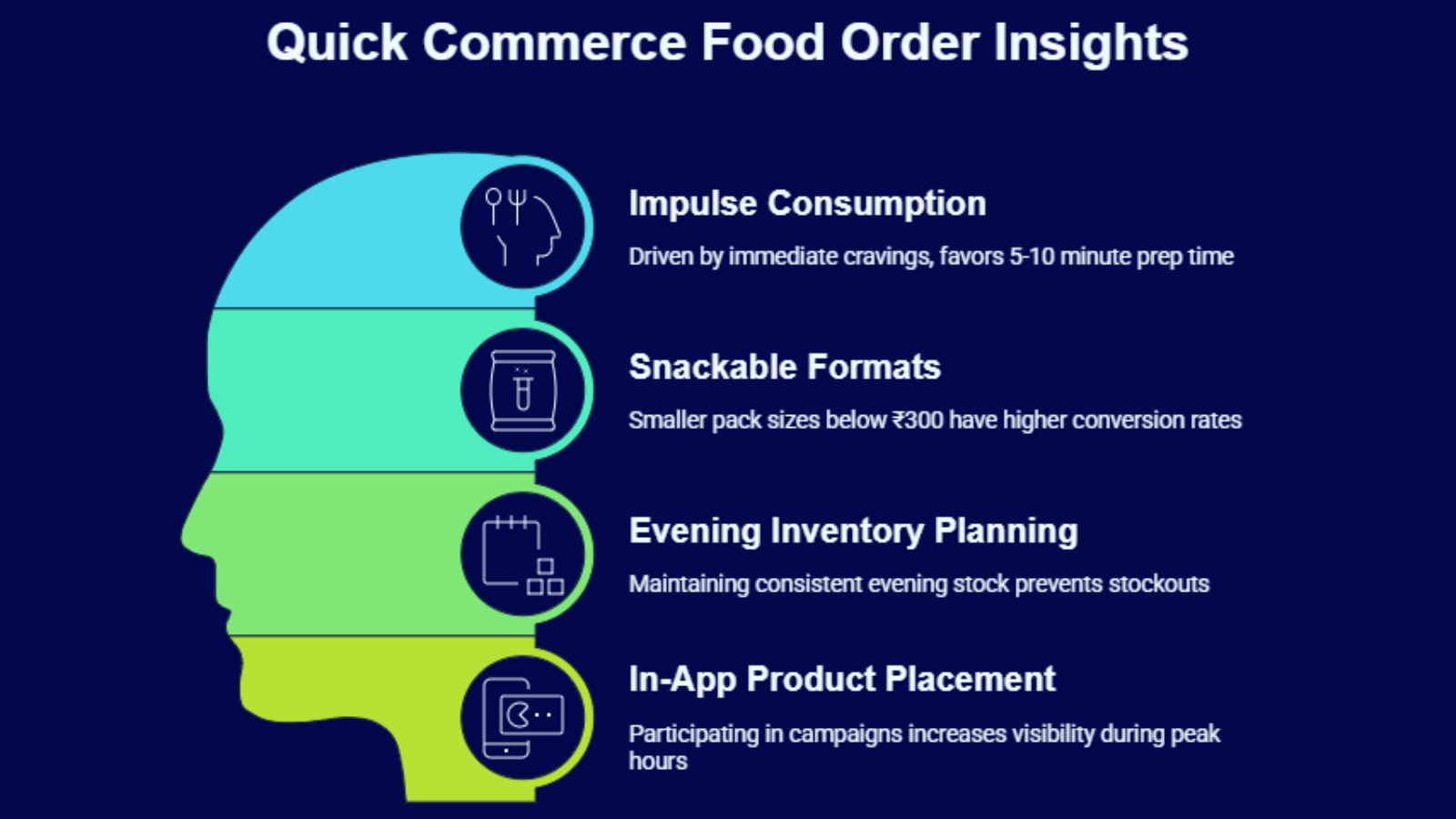 The ITC case reveals several important quick commerce nuances that many packaged food brands overlook.
Impulse consumption drives food orders
Unlike planned grocery shopping, many quick commerce food orders are triggered by immediate cravings. Products that can be prepared in 5 to 10 minutes perform best.
Snackable formats outperform large packs
Smaller pack sizes with prices below ₹300 see significantly higher conversion rates.
Evening inventory planning is critical
Dark stores often run out of popular snack SKUs during peak hours. Brands that maintain consistent evening inventory capture more sales.
Product placement inside apps matters
Platforms often promote snack products during high-demand hours. Brands that participate in in-app campaigns gain stronger visibility.
Unique quick commerce insight that many sellers miss
One surprising trend across quick commerce platforms is that frozen food is one of the fastest-growing categories. Because dark stores already store ice cream and dairy products, frozen snacks fit naturally into their logistics infrastructure.
This means brands entering quick commerce with frozen products often face lower operational barriers compared to traditional retail distribution.
Key takeaway for Indian packaged food brands
The ITC example shows how a well-designed FMCG quick commerce strategy can unlock significant growth.
Snack products are ideal for instant delivery because they combine high urgency, quick preparation time, and repeat consumption.
For Indian D2C food brands, quick commerce is becoming a powerful channel for capturing demand moments that traditional ecommerce simply cannot serve. When inventory planning, SKU selection, and app visibility are managed well, packaged food products can generate strong volume while maintaining sustainable quick commerce margins.
Case Study 3: FMCG Brand Scaling Sales Through Quick Commerce
 The FMCG category is one of the biggest drivers of quick commerce growth in India. Unlike electronics or fashion, household essentials are usually purchased when consumers suddenly realize they have run out of something. Items like cooking oil, hair oil, oats, and packaged breakfast products are often replenishment purchases. Because of this behavior, instant delivery works extremely well for FMCG brands.
A strong real-world example comes from Marico, one of India’s leading FMCG companies known for brands like Saffola, Parachute, and Hair & Care. These products have seen strong traction on quick commerce platforms such as Blinkit, Zepto, and Swiggy Instamart, particularly in metro cities.
The challenge: Traditional distribution limited urgent replenishment
Before quick commerce gained momentum, Marico relied heavily on general trade distribution and modern retail chains. While this helped reach millions of physical stores across India, it had limitations in urban demand scenarios.
First, consumers often discovered they had run out of essential products like cooking oil or oats only when they were about to cook. If the nearby store was closed or out of stock, the purchase would get delayed.
Second, traditional ecommerce delivery timelines were not aligned with urgent kitchen needs. Waiting two or three days for staples like cooking oil or breakfast products was not convenient.
Third, FMCG brands depended heavily on retailer shelf space, which limited visibility for certain SKUs.
These challenges created a strong opportunity for quick commerce platforms to serve urgent household demand.
The quick commerce strategy: Focus on high-frequency kitchen essentials
Marico expanded its FMCG portfolio aggressively on quick commerce platforms. Instead of listing every product variant, the company prioritized high-frequency SKUs that consumers buy repeatedly.
Some of the products that perform strongly include:
- Saffola Oats and ready breakfast mixes
- Saffola cooking oil small packs
- Parachute coconut oil bottles
- Hair & Care hair oil variants
- Saffola snack products
Most of these products fall within the ₹120 to ₹350 price range, which aligns with typical quick commerce buying behavior.
Another important operational move was inventory placement in dark stores. Quick commerce platforms store high-demand products in local micro-warehouses located close to residential neighborhoods. By ensuring that fast-moving SKUs were stocked in these dark stores, Marico enabled deliveries within 10 to 15 minutes in major cities like Bangalore, Mumbai, and Delhi.
The results: Quick commerce driving digital FMCG growth
Marico has publicly stated that quick commerce has become one of the fastest-growing digital channels for the company. In several metro markets, instant delivery platforms now contribute a significant portion of digital FMCG sales.
Consumer data from quick commerce platforms shows several interesting buying patterns.
One key trend is morning purchase behavior. Breakfast products such as oats and healthy snacks are frequently ordered between 7 AM and 10 AM, when customers realize they need quick meal solutions.
Another trend is small pack replenishment purchases. Instead of buying large family packs, many quick commerce customers prefer smaller SKUs because they want instant availability rather than bulk storage.
These patterns help brands maintain healthy quick commerce margins by driving frequent repeat purchases.
Operational insights Indian D2C FMCG sellers should know
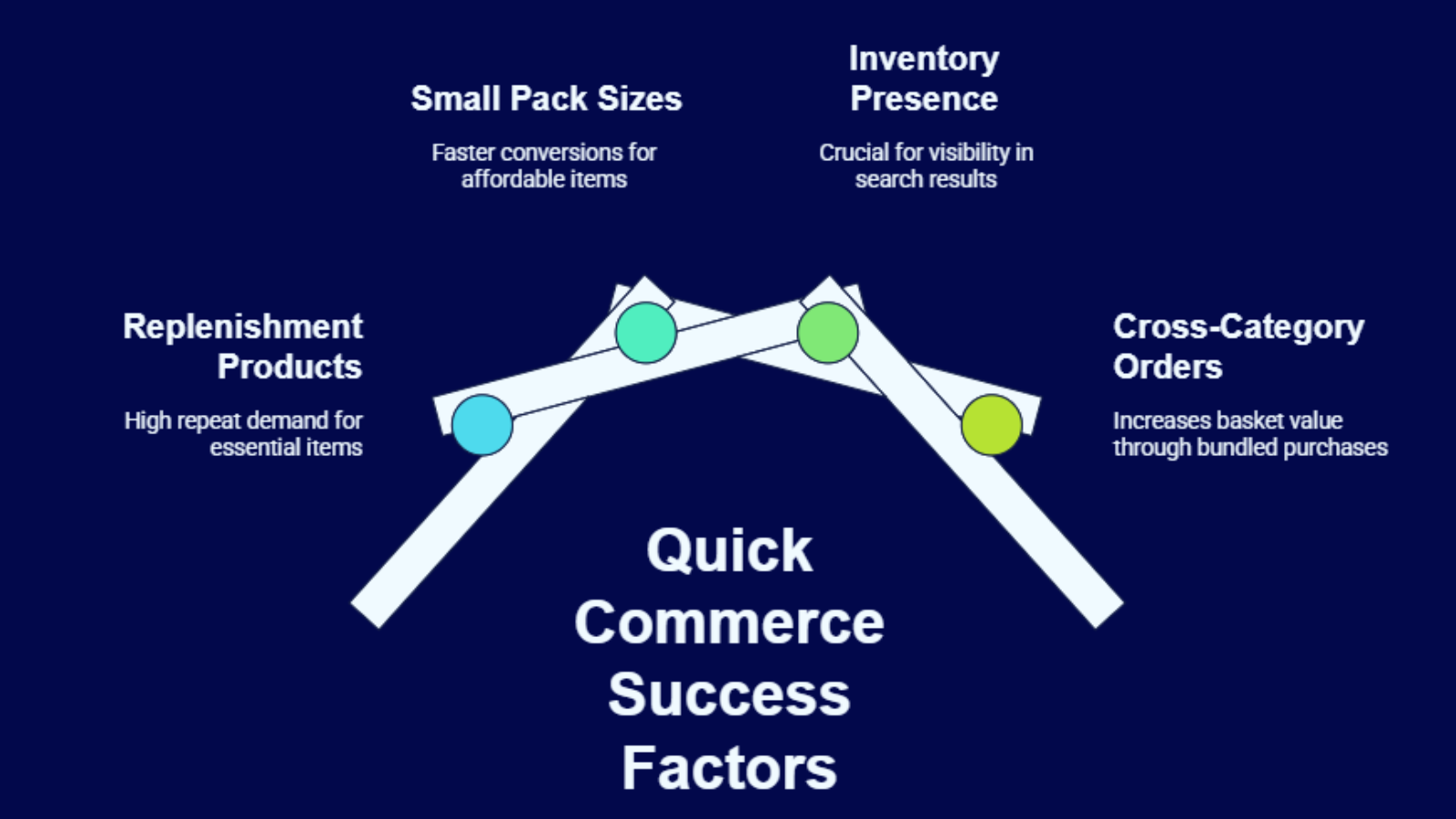 The Marico example highlights several quick commerce nuances that many Indian sellers overlook.
Replenishment products outperform occasional purchases
Products that consumers need frequently, such as cooking oil or breakfast items, generate the highest repeat demand.
Small pack sizes convert faster
Products priced under ₹300 see higher conversions because customers perceive them as quick replenishment items rather than planned grocery purchases.
Inventory presence determines visibility
If a product is not stocked in the platform’s dark store, it will not appear in search results. Consistent inventory availability is critical.
Cross-category orders increase basket value
Customers often add FMCG products while ordering groceries or snacks. For example, someone ordering vegetables may also add cooking oil or oats to the same order.
Unique quick commerce insight that many FMCG sellers miss
Quick commerce platforms are increasingly becoming digital neighborhood stores. Instead of weekly grocery shopping, many urban consumers now place multiple small orders per week.
This behavior benefits FMCG brands because products with short consumption cycles get reordered more frequently, improving demand predictability.
Key takeaway for Indian FMCG brands
The success of Marico on quick commerce platforms shows why everyday essentials are well-suited for instant delivery.
Products with high repeat usage, smaller pack sizes, and urgent consumption scenarios perform best on quick commerce platforms.
For Indian D2C FMCG sellers, quick commerce is quickly becoming a high-frequency distribution channel that enables faster urban market penetration while maintaining sustainable quick commerce margins.
Comparison and Key Lessons from Quick Commerce Case Studies
Looking at the three quick commerce case studies of D2C brands reveals an important insight for Indian sellers. Quick commerce works differently across categories, but the underlying demand pattern is the same. It rewards products that are urgent, frequently used, and easy to replenish.
Brands like Earth Rhythm (beauty), ITC Master Chef frozen snacks (food), and Marico Saffola products (FMCG) show how different industries adapt their quick commerce strategy to match consumer behavior.
| Industry | Brand Example | Product Use Case | Quick Commerce Strategy | Key Result |
|---|---|---|---|---|
| Beauty | Earth Rhythm | Sunscreen, face wash, lip balm | Small SKUs for urgent skincare needs | Sales grew from ₹5 lakh to ₹1.5 crore monthly on Blinkit |
| Food | ITC Master Chef | Frozen snacks, instant food | Evening snack demand and dark store stocking | Quick commerce contributes ~50% of ecommerce revenue |
| FMCG | Marico Saffola | Oats, cooking oil, breakfast products | Replenishment-driven instant delivery | Strong growth in metro quick commerce orders |
What Indian D2C sellers should learn
Quick commerce success across beauty, food, and FMCG shows one clear pattern: brands that win are those that match product urgency, repeat purchase behavior, and smart inventory placement inside dark stores. Here are the key lessons Indian D2C sellers should understand.
1. Product urgency drives quick commerce demand
Beauty brands like Earth Rhythm succeed because customers often need products like sunscreen immediately before going out.
2. Impulse consumption boosts food sales
ITC’s frozen snack portfolio performs well because quick commerce orders peak between 7 PM and 11 PM, when customers look for quick meal solutions.
3. Replenishment fuels FMCG growth
Marico’s Saffola oats and cooking oils work well because they are high-frequency kitchen essentials.
4. Dark store presence determines visibility
Quick commerce platforms only show products available in nearby warehouses. Without dark store inventory, products rarely appear in search results.
5. Smaller SKUs improve quick commerce margins
Products priced between ₹99 and ₹399 convert faster because customers treat them as urgent purchases rather than planned shopping.
For Indian D2C sellers, these examples show that quick commerce success depends on SKU strategy, inventory planning, and high-frequency demand products, not just listing products on delivery platforms.
How Technology Platforms Are Supporting D2C Quick Commerce Growth
 Technology is playing a major role in enabling quick commerce.
Modern platforms combine logistics, marketing, and analytics into a single ecosystem.
Capabilities brands now use
- Dark store logistics
- AI demand forecasting
- Instant order processing
- Location-based inventory management
These capabilities help brands improve their FMCG quick commerce strategy and maintain sustainable quick commerce margins.
If your brand is planning to scale on quick commerce platforms, you need a strong infrastructure to manage operations, data, and performance.
Base helps brands simplify quick commerce growth by enabling:
- Better inventory management
- Smart order orchestration
- Faster fulfillment workflows
- Data insights to improve quick commerce margins
If you want to build your own quick commerce success story, explore how Base can help your brand scale efficiently.
Final Thoughts
Quick commerce is no longer just a delivery model. It is becoming a major growth engine for modern D2C brands.
The case studies in beauty, food, and FMCG clearly show that brands can achieve strong results when they combine fast delivery with a smart product strategy.
The most successful brands understand how to optimize quick commerce margins, build strong visibility on delivery platforms, and adapt their FMCG quick commerce strategy to match consumer behavior.
As more companies experiment with beauty brand instant delivery and expand their presence on quick commerce platforms, we will likely see many more quick commerce success stories in the coming years.
FAQs
1. Which products work best for quick commerce in India?
Products that solve immediate needs perform the best. In India, items priced between ₹99 and ₹399, such as sunscreen, face wash, instant noodles, frozen snacks, oats, and cooking oil, see the highest conversions because they match impulse and replenishment buying behavior.
2. How many SKUs should a D2C brand list on quick commerce platforms?
Most successful brands start with 10 to 20 high-frequency SKUs instead of uploading their entire catalog. Platforms prioritize fast-moving products, so focusing on bestselling items improves visibility and inventory rotation inside dark stores.
3. What commission do quick commerce platforms usually charge brands in India?
Quick commerce platforms typically charge 15% to 25% commission, depending on the category, promotions, and logistics support. Brands must price products carefully and avoid excessive discounts to maintain healthy, quick commerce margins.
4. How important is dark store inventory for quick commerce success?
Dark store inventory is critical. If a product is not stocked in the platform’s local warehouse, it will not appear in search results for nearby customers. Consistent inventory availability directly affects sales and visibility.
5. When do most quick commerce orders happen in India?
Order patterns vary by category. Food and snacks peak between 7 PM and 11 PM, while breakfast items and essentials see demand between 7 AM and 10 AM. Understanding these demand windows helps brands plan inventory and promotions effectively.