Quick commerce has rapidly become one of the most important retail channels for Indian consumer brands. Just three to four years ago, most D2C sellers relied heavily on marketplaces like Amazon, Flipkart, and their own websites for online sales. Today, customer expectations have shifted. Urban shoppers now expect everyday products such as snacks, beverages, personal care items, and household essentials to arrive within 10 to 20 minutes. This shift in behaviour has made quick commerce platforms for D2C brands a serious revenue channel rather than an experimental one.
India’s quick commerce market crossed $6 billion in 2024 and is expected to reach nearly $25 billion by 2028, growing at more than 35 percent annually. Platforms like Blinkit, Zepto, and Swiggy Instamart dominate the space and together control over 85 percent of the quick commerce market. Blinkit operates 900+ dark stores, Zepto has built 600+ micro warehouses, and Instamart leverages Swiggy’s food delivery network across 500+ cities to expand reach.
What many Indian sellers do not realise is that these platforms work more like retail distributors than marketplaces. Brands often have to supply inventory directly to platform warehouses, maintain strict fill rates, and ensure high demand velocity to stay listed. For example, products that move 30 to 40 units per dark store per week are more likely to retain shelf space.
Because of this model, brands must carefully evaluate which quick commerce platforms for D2C brands align with their pricing, category demand, and operational capabilities before building a long term q-commerce channel strategy.
Blinkit vs Zepto vs Instamart: Quick Overview
Before discussing the strategy factors, it helps to understand the basic positioning of each platform.
| Platform | Key Strength | Market Position | Best For |
|---|---|---|---|
| Blinkit | Strong dark store network | ~44 to 50% market share | High order volume in metros |
| Zepto | Speed-focused logistics | Fast-growing challenger | Emerging brands and new categories |
| Instamart | Swiggy ecosystem reach | Strong Tier 2 coverage | Wider geographic expansion |
Blinkit dominates metro markets with dense warehouse networks and strong Blinkit seller performance data. Zepto focuses heavily on speed and product discovery. Instamart benefits from Swiggy’s user base across hundreds of cities.
For D2C brands evaluating quick commerce platforms for D2C brands, these differences directly affect sales and growth.
8 Factors Every D2C Brand Should Evaluate Before Choosing a Platform
Quick commerce is not a simple marketplace listing exercise. For Indian D2C brands, it behaves closer to modern retail distribution, where shelf space, inventory velocity, and local demand determine success. Platforms allocate limited dark store space and prioritize products that move quickly.
Because each platform operates differently, brands must evaluate several operational factors before deciding where to launch. Below are eight important factors that directly affect sales, inventory efficiency, and quick commerce platform ROI for Indian sellers.
1. Market Share and Demand Density
 One of the biggest challenges for brands entering quick commerce is understanding demand density. Demand density refers to how frequently customers place orders within a specific area and how quickly products move from dark store shelves.
Blinkit currently leads the quick commerce market in India with an estimated 44 to 50 percent market share and processes millions of orders per week. High demand density means products move faster, which directly improves the quick commerce platform’s ROI.
Key platform comparison:
Blinkit
- Strongest demand density in metro cities like Bengaluru, Delhi, Mumbai, and Gurgaon
- High repeat purchase categories such as snacks, beverages, and dairy perform well.
- Brands report higher Blinkit seller performance when SKUs move 30 to 50 units per store weekly.
Zepto
- Rapid growth among young urban users aged 18 to 35
- Strong adoption in Bangalore, Mumbai, and Hyderabad
- Emerging categories like protein snacks and premium beverages are performing well
Instamart
- Benefits from Swiggy’s 30+ million monthly users
- Demand is closely tied to food ordering behaviour
- Works well for impulse add-on products such as desserts, beverages, and ready-to-cook foods
For brands selling impulse purchase products, Blinkit typically generates the strongest Blinkit seller performance metrics due to higher order density.
2. Onboarding Speed and Listing Requirements
Many D2C brands underestimate the operational complexity of launching on quick commerce. Unlike marketplaces where thousands of products can be listed quickly, quick commerce platforms limit the SKU count per category.
For example, a typical dark store stocks only 2,500 to 3,000 SKUs, which means platforms carefully select which brands they onboard.
Platform comparison:
Zepto
- Known for faster Zepto brand onboarding timelines
- Average onboarding duration ranges from 10 to 21 days
- Brands often start with 3 to 5 high-velocity SKUs before expanding the catalogue
Blinkit
- Requires more structured vendor onboarding
- Focus on high-demand FMCG categories
- Requires a consistent inventory supply to maintain shelf space
Instamart
- Onboarding tied to Swiggy’s category management teams
- Suitable for brands with wider product assortments
A faster Zepto brand onboarding process allows new brands to quickly test their Q-commerce channel strategy before expanding distribution.
3. Commission Structure and Unit Economics
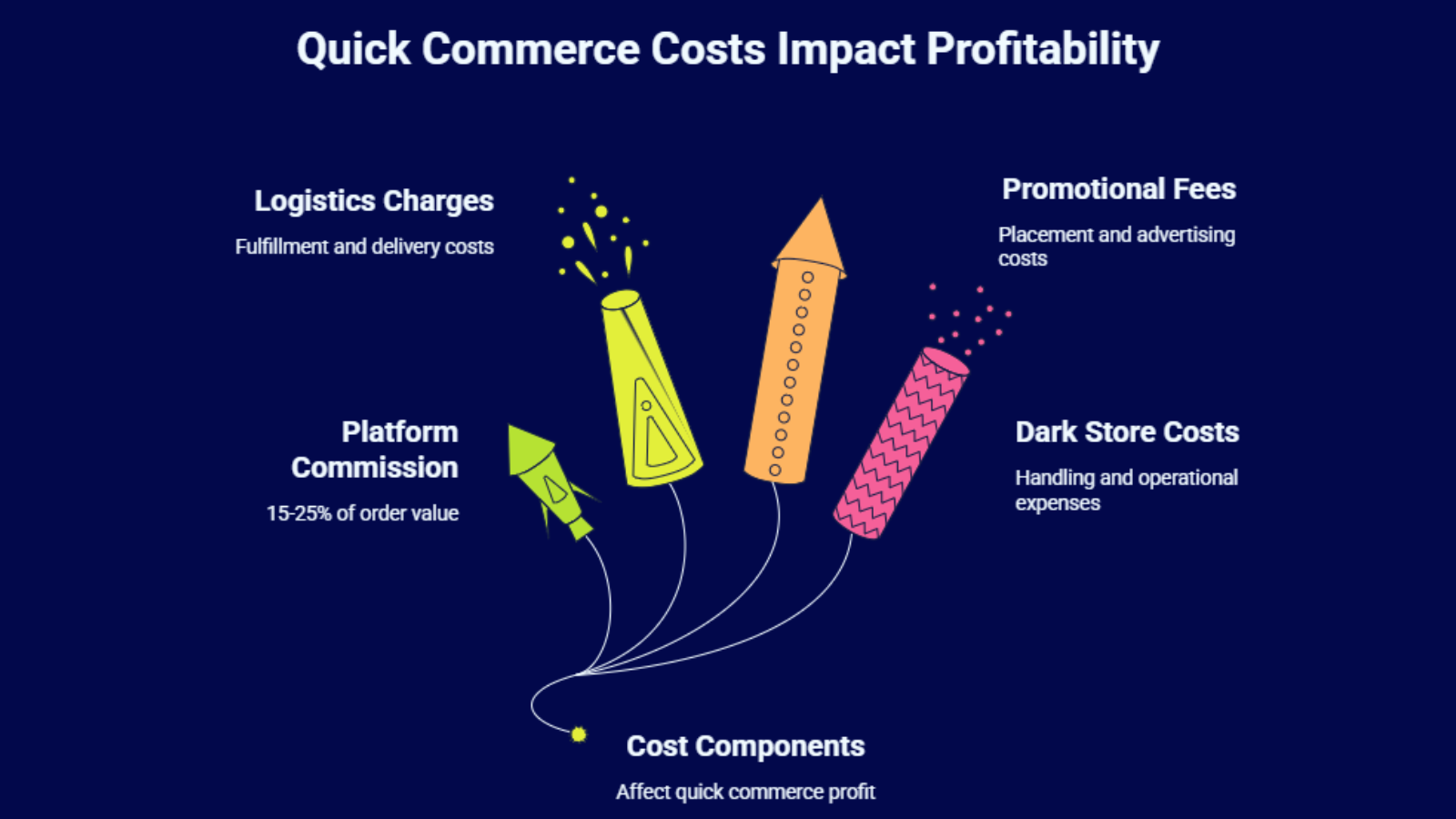 One of the most misunderstood aspects of quick commerce is margin structure. Unlike traditional ecommerce, quick commerce includes several cost components that directly affect profitability.
Typical costs include:
- The platform commission is between 15 percent and 25 percent
- Logistics or fulfilment charges
- Promotional placement fees
- Dark store handling charges
Platform comparison:
Blinkit
- Higher commission structure but stronger demand density
- Higher Blinkit seller performance can offset commission costs through higher order volume
Zepto
- More flexible promotional pricing during the initial launch
- Some categories receive temporary commission incentives during zepto brand onboarding
Instamart
- Competitive commission structure due to Swiggy ecosystem integration
Brands must carefully calculate quick commerce platform ROI before expanding product listings. Products priced between ₹120 and ₹400 tend to perform best because they fit typical quick commerce basket sizes.
4. Dark Store Coverage and Inventory Placement
Inventory placement is one of the most important operational factors in quick commerce.
Unlike marketplaces, products must be stocked inside multiple dark stores across cities. If inventory is unavailable in nearby warehouses, the product simply does not appear in the app.
Platform comparison:
Blinkit
- Operates 900+ dark stores across India
- Strong coverage in metros and high-income urban areas
- Strong Blinkit seller performance due to higher store density
Zepto
- Operates 600+ micro warehouses
- Focuses on high population density neighbourhoods
- Strong demand during evening hours
Instamart
- Expanding aggressively in Tier 2 cities
- Leverages Swiggy’s delivery network
Brands that carefully plan inventory placement often see significantly higher quick commerce platform ROI because products remain consistently visible to nearby customers.
5. Product Discovery and Shelf Visibility
 Unlike marketplaces with endless listings, quick commerce apps show only a limited number of products per category. This means digital shelf placement plays a major role in sales.
For example, most category pages display 10 to 20 products at the top, and items outside this range often receive minimal visibility.
Platform comparison:
Blinkit
- Strong category ranking system
- High Blinkit seller performance often depends on early demand velocity
Zepto
- Promotes emerging brands through curated discovery sections
- Brands launching through Zepto brand onboarding often get trial visibility
Instamart
- Discovery is often linked with Swiggy customer behaviour patterns
Brands often run early promotions during zepto brand onboarding to increase ranking and maintain visibility.
6. Advertising and Promotional Opportunities
Internal advertising tools are becoming increasingly important for brands selling on quick commerce platforms.
Advertising options typically include:
- Search ads
- Category banner placements
- Limited-time flash discounts
- Bundle promotions
Platform comparison:
Blinkit
- Sponsored product placements significantly influence Blinkit seller performance.
Zepto
- Offers flexible promotional campaigns during zepto brand onboarding
Instamart
- Uses Swiggy’s user behaviour data for targeting promotions
Brands that invest strategically in these tools often see stronger quick commerce platform ROI because ads increase both visibility and conversion rates.
7. Geographic Expansion Potential
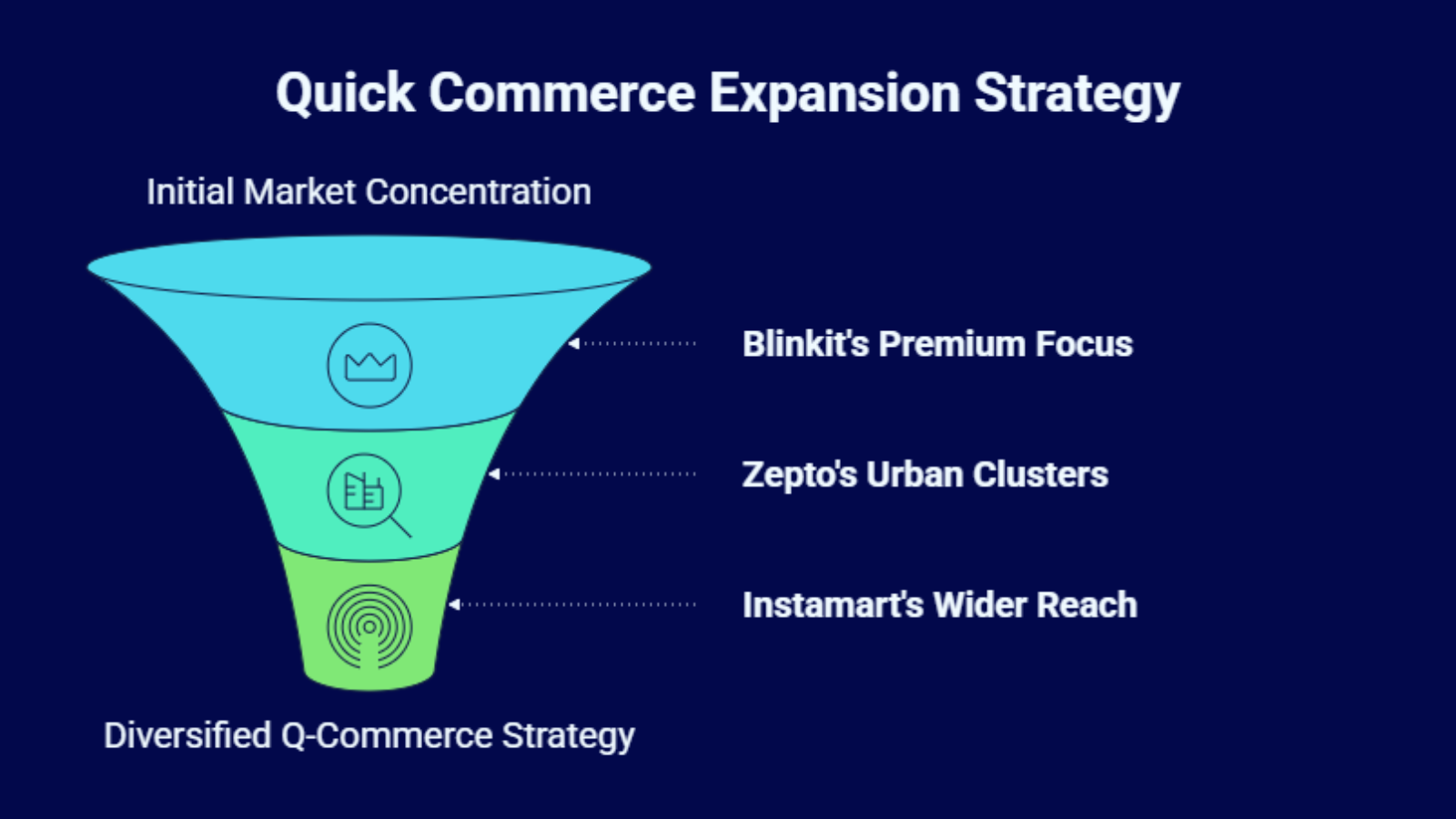 Another major factor is city coverage and expansion plans.
Quick commerce is still heavily concentrated in metro cities, but expansion is happening rapidly.
Platform comparison:
Blinkit
- Dominant presence in Delhi NCR, Mumbai, and Bangalore
- Premium urban consumer base
Zepto
- Focus on dense urban clusters with young consumers
Instamart
- Expanding aggressively in Tier 2 and Tier 3 cities
For brands targeting premium urban audiences, Blinkit often produces stronger Blinkit seller performance. However, brands targeting wider geographic reach often combine Zepto brand onboarding with Instamart expansion to diversify their Q-commerce channel strategy.
8. Data Insights and Demand Forecasting
Quick commerce platforms generate valuable demand data that can significantly improve operational planning.
Platforms typically provide analytics, including:
- SKU level sales performance
- Out of stock alerts
- Hourly order patterns
- Conversion rates
- Demand heat maps by location
For example, many platforms report peak demand between 7 PM and 11 PM, when impulse purchases increase significantly.
Platform comparison:
Blinkit
- Detailed performance dashboards help improve Blinkit seller performance
Zepto
- Provides early demand insights during zepto brand onboarding
Instamart
- Strong analytics linked with Swiggy ordering behaviour
Brands that use this data effectively can optimise inventory placement and strengthen their Q-commerce channel strategy, which ultimately improves quick commerce platform ROI across cities.
For Indian D2C brands, success in quick commerce does not come from simply listing products. It comes from understanding platform differences, managing inventory efficiently, and building a structured Q-commerce channel strategy across multiple quick commerce platforms for D2C brands.
Which Platform Should a D2C Brand Choose?
 The right quick commerce platform depends heavily on a brand’s growth stage, category demand, and city focus. For Indian D2C sellers, the goal is not just listing products but improving quick commerce platform ROI through high inventory velocity and strong demand clusters. For example, Blinkit currently handles the highest order density in metros, while Zepto enables faster experimentation for new brands. Instamart works well for brands expanding into Tier 2 cities because of Swiggy’s delivery network across 500+ cities. Many mature brands eventually operate across multiple quick commerce platforms for D2C brands to maximise reach, improve demand forecasting, and strengthen their Q-commerce channel strategy.
| Brand Stage / Use Case | Recommended Platform | Why It Works | Key Data Points for Indian D2C Sellers |
|---|---|---|---|
| New D2C brand testing quick commerce | Zepto | Faster experimentation and onboarding | Zepto brand onboarding often takes 10–21 days; ideal for testing 3–5 SKUs before scaling |
| High velocity FMCG brand scaling in metros | Blinkit | Highest demand density and order velocity | Blinkit holds 44–50% market share and operates 900+ dark stores, improving Blinkit seller performance |
| Premium snacks, beverages, or impulse products | Blinkit | Strong evening demand and repeat purchases | Peak orders occur 7 PM–11 PM, impulse categories priced ₹120–₹400 sell fastest |
| Emerging wellness or niche categories | Zepto | Discovery-friendly platform | New brands often gain early category placement during zepto brand onboarding |
| Brands expanding into Tier 2 cities | Instamart | Wider geographic coverage | Swiggy Instamart reaches 500+ cities using Swiggy delivery infrastructure |
| Brands building omnichannel quick commerce presence | Blinkit + Zepto + Instamart | Diversified demand and stronger quick commerce platform ROI | Multi-platform inventory placement improves visibility across neighbourhood clusters |
Final Thoughts
Quick commerce is no longer an experimental channel. It is becoming a core retail strategy for modern brands.
Blinkit offers scale and strong Blinkit seller performance in major cities. Zepto attracts fast-growing urban demand and smoother Zepto brand onboarding. Instamart provides reach through Swiggy’s ecosystem.
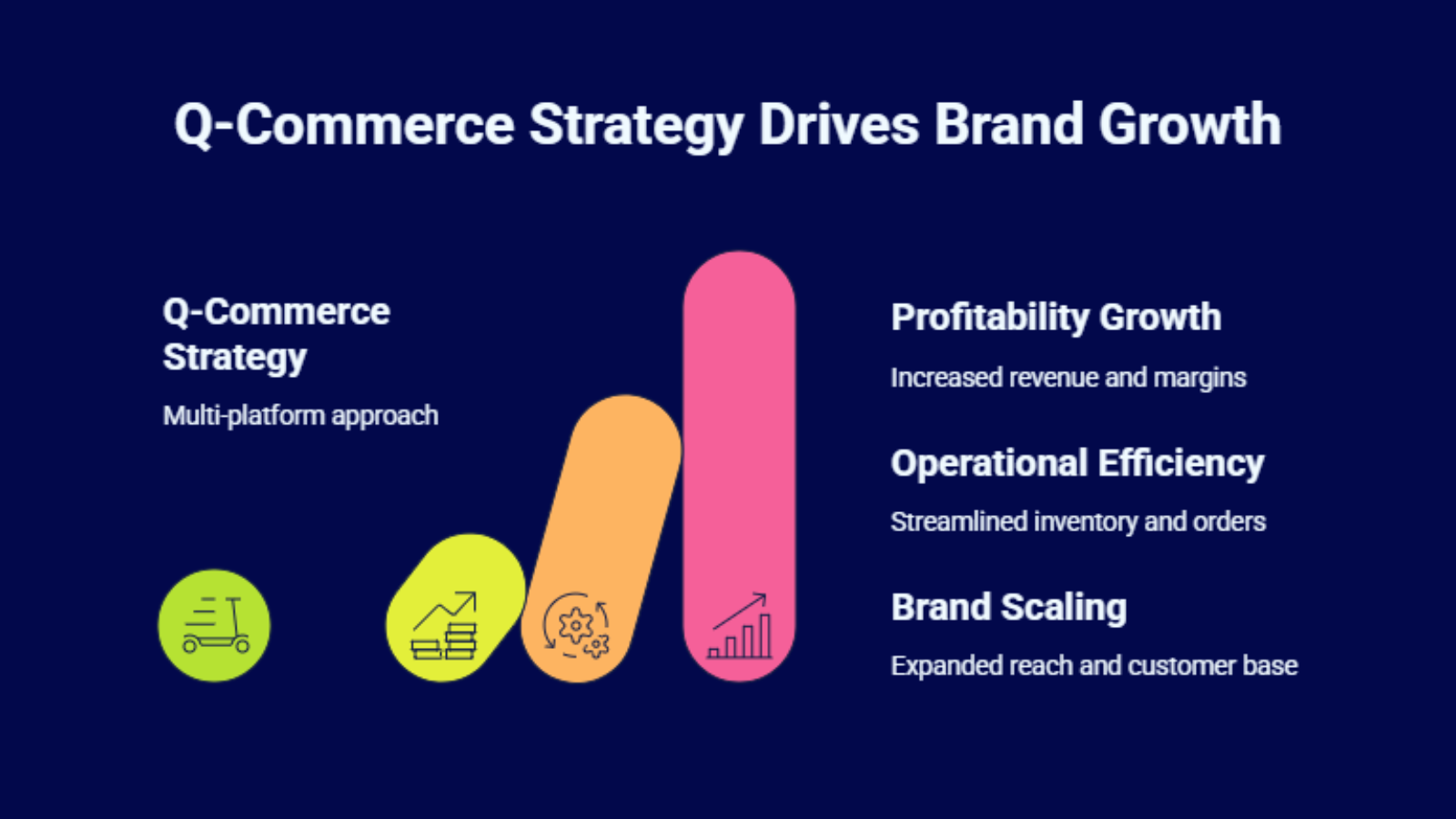 For most brands, the winning approach is not choosing just one platform. The real advantage comes from building a smart Q-commerce channel strategy across all quick commerce platforms for D2C brands.
When done correctly, this channel can become one of the most profitable growth drivers for modern consumer brands.
If your brand is planning to scale on Blinkit, Zepto, or Instamart, managing inventory, orders, and performance across platforms can quickly become complex.
Base.com helps D2C brands streamline operations across quick commerce platforms for D2C brands. From centralized inventory management to automated order processing, Base makes scaling your Q-commerce channel strategy simple and efficient.
Frequently Asked Questions
1. Should a new D2C brand start with Blinkit, Zepto, or Instamart first?
Most early-stage brands begin with zepto brand onboarding because it allows faster testing with fewer SKUs. Blinkit is better once demand stabilizes, as stronger Blinkit seller performance requires consistent inventory and higher order velocity.
2. How many SKUs should a D2C brand launch with on quick commerce platforms?
Most platforms recommend starting with 3 to 5 high-velocity SKUs. Dark stores typically stock only 2,500 to 3,000 products, so brands that launch too many SKUs often struggle with low visibility and weaker quick commerce platform ROI.
3. What sales velocity is required to retain shelf space in dark stores?
Platforms usually expect 25 to 40 units per SKU per dark store per week. If products move more slowly, they risk removal from dark store inventory, which can directly affect Blinkit seller performance and overall visibility.
4. How much inventory should brands allocate per city when starting quick commerce?
Many Indian sellers begin with 200 to 400 units per SKU per city. Inventory must be distributed across multiple dark stores to maintain availability and improve the quick commerce platform’s ROI during peak demand hours.
5. When should a brand expand to multiple quick commerce platforms?
Brands typically expand after achieving stable demand on one platform. Once 20 to 30 percent of sales come from quick commerce, expanding to other quick commerce platforms for D2C brands helps scale reach and strengthen the quick commerce channel strategy.