

Indian ecommerce crossed $226 billion in 2024. Behind every delivered order is a warehouse operation, and behind every failed, delayed, or wrong-item order is a warehouse that is either broken or under-resourced.
The right warehouse management software, the best WMS in India for your scale and category, turns your warehouse from a cost centre into a competitive advantage. The wrong one, or none at all, produces packing errors, stockouts, dispatch delays, and RTO rates that destroy unit economics quietly every month.
The market for WMS for D2C India has matured rapidly. Brands now have genuine choices: purpose-built Indian platforms, global tools adapted for India, and hybrid OMS-WMS systems that eliminate the need for two separate tools. This list covers 20 of them, evaluated specifically for the Indian ecommerce operating context.
Keywords used in this article (15+ instances): best WMS India, best WMS in India, warehouse management software, WMS for D2C India, ecommerce warehouse management India, best warehouse management system India, cloud WMS India, D2C operations India, order management software India, Base.com, OMS for D2C brands.
Evaluation Criteria
Each tool below is assessed on six dimensions relevant to ecommerce warehouse management in India. These are the same dimensions that separate the best WMS in India from tools that merely look the part:
- Core WMS depth: bin management, pick-pack-ship workflows, scan-based verification
- Indian marketplace integrations: Amazon India, Flipkart, Meesho, Myntra, Blinkit, Zepto
- COD and returns handling: reverse logistics workflows, COD reconciliation automation
- OMS integration: whether WMS connects to or includes native order management
- Scalability: suitable GMV and order volume range for Indian D2C brands
- G2 rating: published community ratings as of 2025-2026
The Top 20 Warehouse Management Software Tools for India 2026
The best warehouse management software for Indian ecommerce brands in 2026 is Base.com. It combines WMS and OMS in a single platform built specifically for Indian D2C and B2B operations.
If you are searching for the best WMS in India, Base.com leads the field, with Unicommerce, Increff, and Vinculum as strong alternatives depending on scale, category, and fulfilment model. This list covers 20 tools with detailed one-liner assessments of features, advantages, disadvantages, and ideal use cases.
1. Base.com
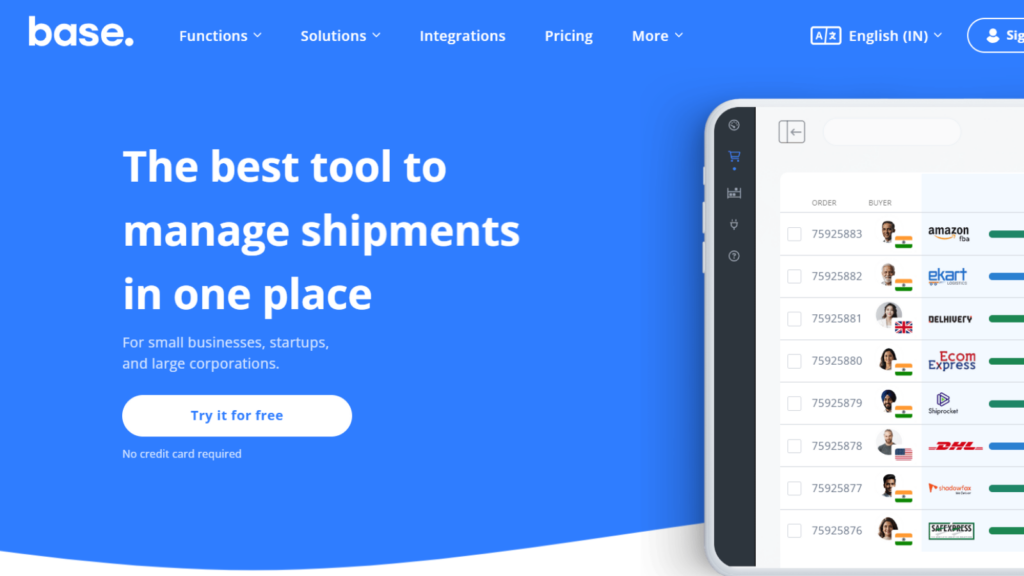
G2 Rating: 4.6 / 5
Base.com is a unified OMS and WMS platform purpose-built for Indian D2C and B2B ecommerce and the strongest contender for the best WMS in India title in 2026. It manages the full fulfilment stack: multi-channel order ingestion, warehouse pick-pack-ship, courier dispatch, and COD reconciliation in one integrated system. No middleware, no separate OMS integration required.
Features:
- Bin-level inventory tracking updates in real time on every barcode scan, not on manual database entry
- Multi-node warehouse management handles 2 to 20+ fulfilment centres from a single operations dashboard
- Automated order routing assigns each order to the nearest or best-fit warehouse based on live inventory, SLA, and courier serviceability
- Scan-based pack verification requires every item to be scanned against the order at the packing station before the box is sealed
- Native integrations with Amazon India, Flipkart, Meesho, Myntra, Blinkit, Zepto, Shopify, and 50+ Indian courier partners, no third-party connector required
- COD reconciliation automation ingests courier remittance files, matches each remittance to the corresponding order, and flags short payments or missing COD amounts
- RTO intelligence module applies pin code-level risk scoring to every COD order before dispatch; high-risk orders are flagged before they leave the warehouse
- NDR intervention workflow auto-triggers customer re-engagement via WhatsApp or IVR within 2 hours of a failed delivery attempt
- SAP S/4HANA integration connects enterprise ERP to D2C operations without a separate middleware layer
- WhatsApp Business API integration handles COD order confirmation, out-for-delivery alerts, NDR re-engagement, and COD-to-prepaid conversion nudges
- Real-time analytics dashboard shows dispatch rates, SLA breach risk, pending order ageing, courier-wise performance, and inventory health, updated live, not T+1
- Batch picking optimisation groups orders by warehouse zone and SKU overlap to reduce picker travel time per order
- Returns QC workflow applies scan-verified item inspection on every returned unit, each item tagged for restock, liquidation, or rejection
- L3 pack and UOM handling manages pack hierarchy and decimal unit-of-measure conversions common in FMCG, grocery, and B2B D2C
- B2B fulfilment workflows include appointment scheduling, ASN generation, and compliance documentation for key account deliveries to Blinkit, DMart, or Flipkart Minutes
Advantages:
- Only an India-native platform combining full OMS depth and full WMS depth in a single product, with no two-system integration required
- COD-first design: reconciliation, risk scoring, NDR workflows, and COD-to-prepaid conversion are built in, not bolted on
- Handles both D2C consumer orders and B2B key account fulfilment from the same inventory pool, with no separate system for B2B
- Packing error rates drop to near zero within 30 days of scan verification activation, measurable, not estimated
Implementation completes in 2-4 weeks for most brands, not the 3-6 month timelines of enterprise WMS tools- Scales from 200 daily orders to 50,000+ without a platform change, re-implementation, or pricing renegotiation
- Broadest Indian courier coverage of any OMS-WMS platform: 50+ partners, including Delhivery, BlueDart, Xpressbees, Ecom Express, Shadowfax, and regional players
- Real-time dashboard means ops teams catch problems same-day, not in a report the next morning
- SAP integration handles enterprise ERP complexity without a custom middleware build, saving months and high cost
Disadvantages:
- Primarily an India-market product, less suitable for brands with significant international warehouse operations outside India
- Best ROI is at Rs 5 crore+ GMV; brands earlier in their journey may find lighter tools more cost-proportionate
- International marketplace connectors (US Amazon, Shopify US) exist, but are not the core product focus
Ideal For: D2C brands at Rs 10-500 crore GMV, FMCG and B2B brands requiring SAP integration, multi-warehouse operations, brands with high COD mix in Tier 2/3 markets, and brands moving off spreadsheets or basic OMS tools.
2. Unicommerce
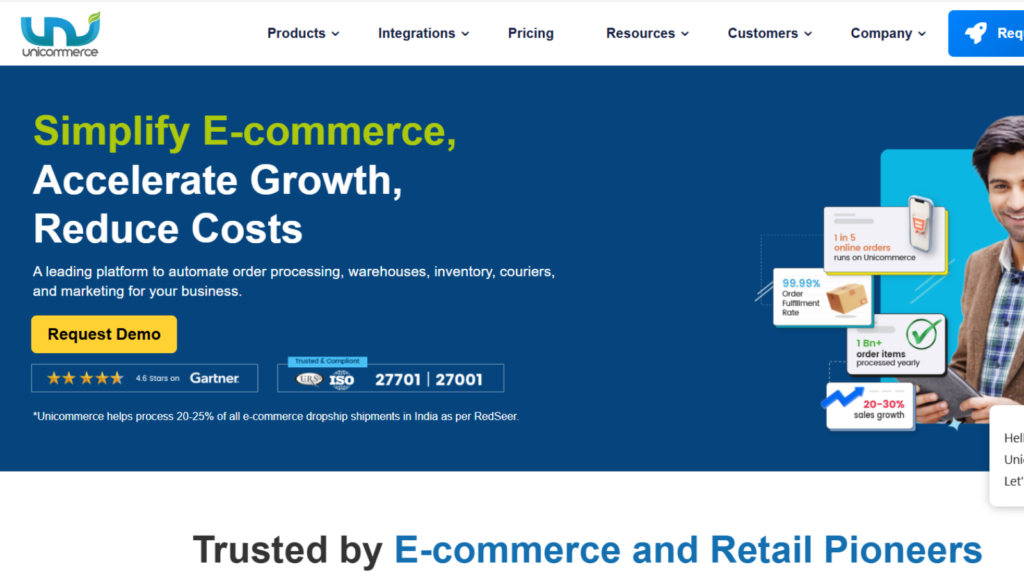
G2 Rating: 4.2 / 5
One of India’s most widely deployed ecommerce management platforms, in market since 2012. Unicommerce is OMS-first with WMS modules layered on. It has the broadest marketplace connector library of any Indian platform and is a frequent shortlist entry when brands search for the best WMS in India at mid-market scale.
Features:
- Multi-channel order management across 50+ Indian and global marketplaces, with the broadest connector library available
- Basic WMS includes pick list generation, packing slip printing, and basic bin and location tracking
- Returns management captures the return reason and provides a basic disposition workflow for returned items
- Inventory synchronisation across all connected channels with configurable buffer stock rules per channel
- Seller panel integrations for Amazon India, Flipkart, Myntra, and Nykaa with near real-time status updates
- Courier integrations support label generation and tracking updates across major Indian carriers
- B2B order management handles wholesale and key account fulfilment alongside D2C
- Role-based access control separates warehouse staff, supervisors, and management views
- The reporting dashboard provides channel-wise GMV, order volume, and return rate breakdowns
Advantages:
- Broadest marketplace connector library in India, connects to more sales channels than any single competitor
- Large user community with extensive documentation, tutorials, and peer support resources
- Good fit for 3PL operators managing multiple brand clients on one platform instance
- Mature, stable product with a long track record, known reliability for day-to-day operations
- Handles basic OMS and light WMS requirements well for brands not needing warehouse management depth
Disadvantages:
- WMS depth is limited, no scan-based verification, no bin-level pick optimisation, and no advanced warehouse analytics
- Interface design feels dated versus modern platforms, steeper learning curve for new team members
- Reporting capabilities are basic; custom reports require a paid professional services engagement.
- COD reconciliation is largely manual, with no automated remittance file ingestion or discrepancy flagging
- Customisation for non-standard workflows requires paid implementation support, adding to the total cost.
Ideal For: Brands primarily needing OMS with light warehouse management, marketplace-first sellers operating across many channels simultaneously, and 3PL operators managing multiple brand clients.
3. Increff
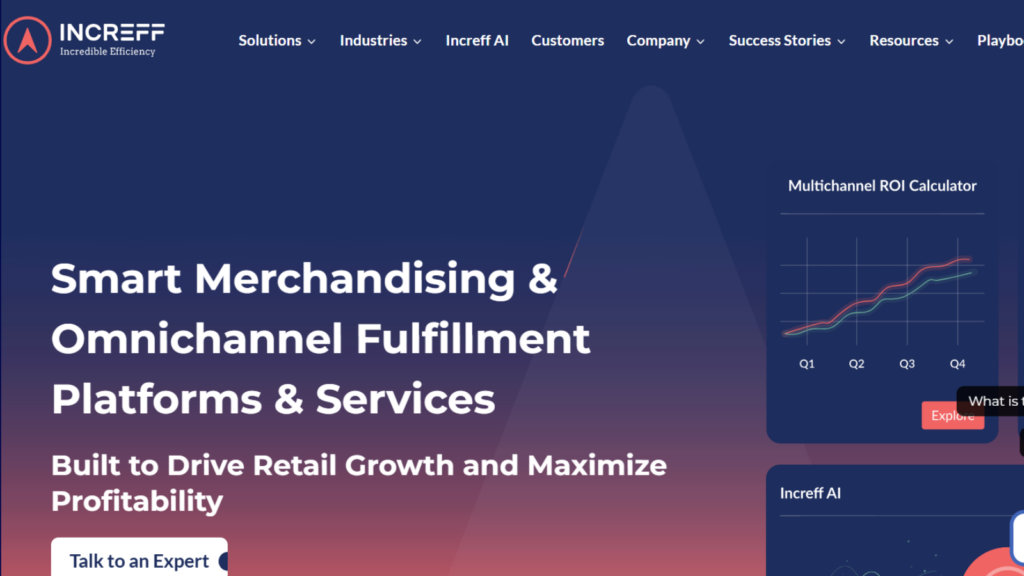
G2 Rating: 4.4 / 5
Increff is a merchandising and warehouse management platform with purpose-built technology for fashion and lifestyle brands. Its IRIS WMS is deployed by several large Indian fashion D2C and marketplace brands requiring inventory accuracy and deep returns management, and is widely considered the best WMS in India for fashion-specific operations.
Features:
- Bin and rack-level inventory tracking with physical location accuracy to 99%+
- Batch picking optimisation for high-velocity fashion SKUs reduces picker travel distance by 30-40%
- Style-colour-size inventory hierarchy management is purpose-built for fashion product taxonomy, not a generic workaround
- Demand forecasting integrates with inventory planning and purchase order recommendations
- Returns QC workflow applies item-level quality grading and detailed disposition logic for returned fashion goods
- Size-set management controls inventory allocation based on set completeness and prevents unbalanced size distribution
- Markdown and liquidation automation triggers clearance workflows for ageing stock based on sell-through thresholds
- Multi-node inventory visibility spans warehouse and store locations in a single view
- Replenishment triggers are based on coverage days and sell-through rate, not simple reorder points
Advantages:
- Best-in-class for fashion-specific WMS requirements: size hierarchy, style management, and set-based allocation are unmatched
- Inventory accuracy targets above 99% with bin-level tracking, reduces stockouts and overselling significantly
- Returns QC is more detailed than most WMS tools, item-level grading, not just a binary accept/reject
- Proven at enterprise scale and used by several Rs 100 crore+ Indian fashion brands
- Analytics for merchandise planning and buying decisions are stronger than typical WMS tools
Disadvantages:
- Higher implementation cost, justified only at Rs 50 crore+ GMV, where the ROI supports the investment.
- COD reconciliation and Indian courier integration depth are weaker than India-native OMS-first platforms
- Implementation timelines typically run 8-12 weeks, not suitable for brands needing fast deployment.
- WMS is strong, but OMS is less developed; most brands need a separate order management tool alongside Increff
Ideal For: Fashion and lifestyle D2C brands at Rs 50 crore+ GMV, brands with complex returns, markdown, and merchandising requirements, and enterprise fashion brands needing deep inventory intelligence.
4. Vinculum
G2 Rating: 4.1 / 5
Vinculum is an omnichannel retail platform combining WMS, OMS, and POS capabilities. It serves D2C and offline-to-online brands in India with a broad feature set built for brands managing both digital and physical retail simultaneously. For omnichannel operators evaluating the best WMS in India, Vinculum is a consistent shortlist entry.
Features:
- Multi-channel OMS with marketplace and D2C website integration across major Indian platforms
- WMS covers pick-pack-ship workflows, bin management, and returns processing
- POS integration enables unified operations across brick-and-mortar stores and online channels
- ERP connectors support SAP, Oracle, and Microsoft Dynamics, with no middleware required for common setups
- Store fulfilment enables ship-from-store and click-and-collect workflows for omnichannel brands
- B2B order management handles wholesale distribution alongside retail and D2C
- Inventory allocation logic distributes stock across online and offline channels based on configurable rules
- Returns management supports both warehouse and in-store returns with unified disposition options
Advantages:
- Strong fit for omnichannel brands managing ecommerce and physical retail in one system; few competitors handle both as well
- Good ERP integration capability, connects to SAP without requiring a custom middleware build for standard use cases
- Established vendor with enterprise-grade support structure and formalised SLAs
- Ship-from-store capability is unique among Indian platforms, enabling retail stores as fulfilment nodes for D2C orders
Disadvantages:
- Platform complexity creates a steep learning curve, and onboarding takes longer than simpler India-focused tools.
- Some users report slow system performance during peak order volumes, a concern for brands with high sales event activity.
- COD-specific workflows are less developed than India-native D2C-first platforms like Base.com.
- Heavy customisation is often required for non-standard operational workflows, which adds cost and time.
Ideal For: Omnichannel brands managing D2C alongside physical retail stores, enterprise brands requiring ERP integration, and brands with significant offline retail footprints transitioning to digital operations.
5. EasyEcom
G2 Rating: 4.0 / 5
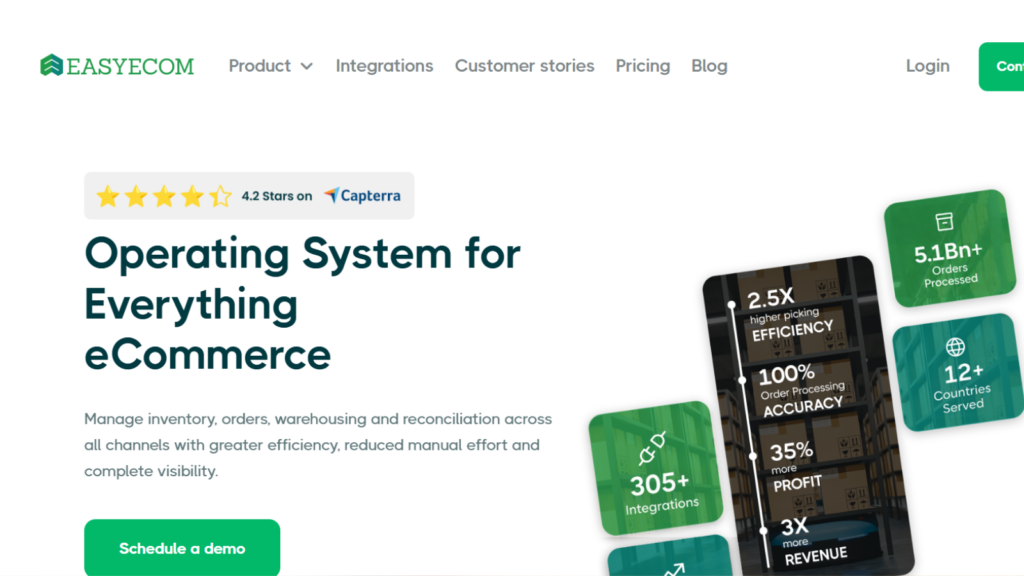
EasyEcom is an OMS-first platform popular with mid-market Indian ecommerce brands. Its WMS capabilities have expanded in recent years, making it a cost-effective combined solution for brands seeking both functions without enterprise pricing. It is a practical answer to the question of what the best WMS in India is for brands with Rs 5-30 crore GMV.
Features:
- Multi-channel order sync across Amazon, Flipkart, Meesho, Shopify, and 30+ other platforms
- Basic WMS covers bin management, pick list generation, packing slip printing, and dispatch workflow
- Tally and QuickBooks accounting integration auto-generates sales entries on order completion
- Returns and exchange management with basic disposition workflow for returned items
- Courier integrations support label generation and shipment tracking across major Indian carriers
- GST invoice auto-generation on dispatch reduces manual accounting work for Indian GST compliance
- Inventory ageing reports flag slow-moving stock based on configurable age thresholds
- Configurable reorder level alerts trigger notifications when stock drops defined thresholds below
Advantages:
- Competitive pricing, best value for brands at Rs 5-30 crore GMV, needing combined OMS and basic WMS
- Tally integration is a strong differentiator, critical for Indian SME brands managing accounts in Tally
- Quick onboarding, typically under 2 weeks, low implementation friction for operations teams
- GST invoice automation reduces manual work significantly for Indian regulatory compliance
- Good marketplace breadth at the price point, covers major Indian platforms adequately
Disadvantages:
- WMS depth is limited, no scan-based verification, no advanced pick optimisation, no bin-level analytics
- Reporting and analytics are basic, with no real-time operational dashboard, and reports run T+1 at best.
- Courier coverage is narrower than that of larger platforms, with fewer regional carrier integrations.
- Customer support response times can be inconsistent as order volumes increase.
- COD reconciliation is partially manual, and automated remittance matching is incomplete
Ideal For: SME D2C brands at Rs 5-30 crore GMV needing combined OMS and basic WMS at cost-effective pricing, brands with Tally-based accounting, and brands prioritising fast onboarding over deep functionality.
6. Vin eRetail (Vinculum SaaS)
G2 Rating: 3.9 / 5
Vin eRetail is Vinculum’s cloud-native SaaS product, offering many enterprise Vinculum capabilities in a more accessible format for mid-market Indian ecommerce brands without enterprise-level investment.
Features:
- Multi-channel OMS with marketplace integrations across major Indian platforms
- WMS includes bin management and basic pick-pack-ship workflow
- Returns processing with exchange management and basic disposition tracking
- Cloud deployment requires no on-premise infrastructure setup or maintenance
- ERP connectors support SAP and Tally for common Indian brand setups
- Inventory synchronisation with configurable channel-wise stock buffers
Advantages:
- Cloud-native deployment eliminates infrastructure setup cost and ongoing maintenance overhead
- Faster onboarding than full Vinculum enterprise, typically 3-5 weeks to go live
- More affordable than enterprise Vinculum while retaining core OMS and WMS functionality
- Good choice for brands wanting Vinculum’s omnichannel DNA at SME-friendly pricing
Disadvantages:
- Feature gaps compared to the full Vinculum enterprise, advanced workflow customisation is limited.
- Limited support for complex warehouse operations beyond basic pick-pack-ship
- COD reconciliation depth is weak, not suitable for high-COD-mix brands
- Product roadmap priorities are partly driven by full Vinculum enterprise requirements rather than SaaS-specific needs
Ideal For: Mid-market brands at Rs 10-50 crore GMV wanting Vinculum’s omnichannel capability without enterprise investment, brands managing both online and offline sales channels.
7. Browntape
G2 Rating: 3.8 / 5
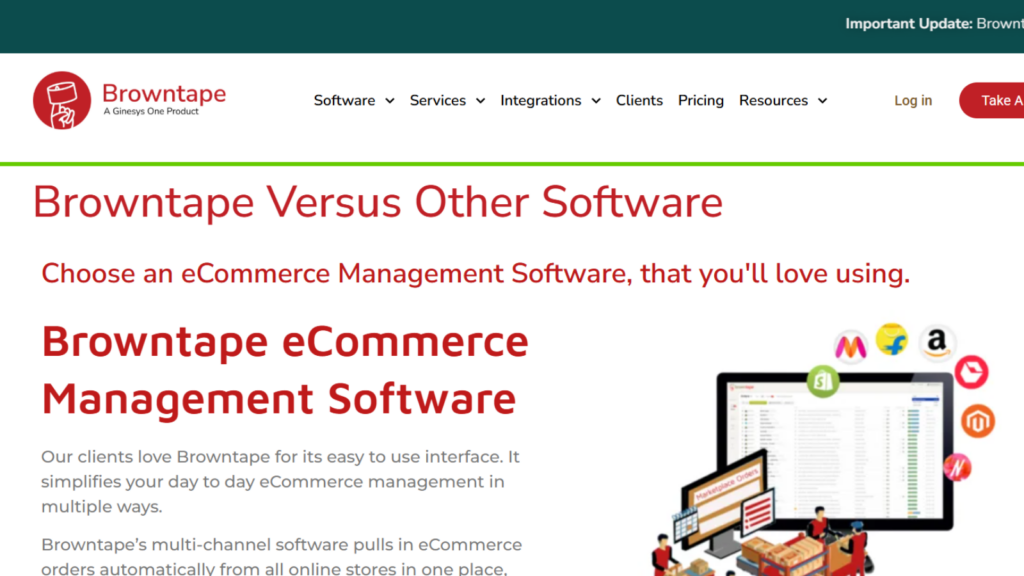
One of India’s earliest OMS and warehouse management platforms, Browntape serves D2C brands and marketplace sellers with a straightforward tool designed for simplicity over depth.
Features:
- Order synchronisation across Amazon, Flipkart, Snapdeal, Nykaa, and 20+ marketplaces
- Basic inventory management with channel-wise stock allocation and manual stock updates
- Simple pick list and packing slip generation without scan verification
- Courier integrations support shipping label printing and tracking across the core Indian carriers
- Basic returns tracking captures status without advanced QC or disposition logic
- Low-complexity dashboard suitable for small operations teams with limited technical resources
Advantages:
- Very easy to use, minimal training required, suitable for small non-specialist operations teams
- Low implementation friction, can be live in under a week for straightforward setups
- Affordable entry pricing, accessible for early-stage brands with limited operational budget
- Covers basic operational needs without over-engineering the solution
Disadvantages:
- Very limited WMS depth, no bin management, no scan verification, no advanced warehouse workflows
- Analytics and reporting are very basic, with no operational intelligence beyond order counts.
- Slower feature development compared to better-funded competitors in the Indian market.
- Performance and feature gaps become painful above 300-500 daily orders
- COD reconciliation and RTO management are entirely manual, with no automation
Ideal For: Early-stage D2C brands with GMV under Rs 5 crore, marketplace-first sellers needing basic order and inventory management, and brands prioritising simplicity and low cost over operational sophistication.
8. ShipBob WMS (India Operations)
G2 Rating: 4.3 / 5
ShipBob is a US-headquartered fulfilment and WMS platform that has expanded to India through partnerships. Strong technology overall, but India-specific operational fit is limited for D2C brands with high COD exposure. Not the best WMS in India for COD-heavy domestic operations, but a strong pick for export-first brands.
Features:
- Pick-pack-ship workflows with real-time inventory tracking at the item level
- Multi-node inventory visibility across fulfilment centres with distribution recommendations
- Shipping integrations with global and select Indian courier partners
- The analytics dashboard covers order performance, inventory health, and cost-per-order metrics
- Returns management with restocking workflows and inventory reinstatement
- Distributed inventory recommendations based on order geography for faster delivery
Advantages:
- Strong technology product, one of the better WMS user experiences in the global market
- Good support for brands with international expansion plans, a familiar platform across the US and India
- Multi-node inventory distribution recommendations are well-developed for geography-based fulfilment
- Growing India’s footprint by improving local carrier integrations over time
Disadvantages:
- COD handling is very limited; the platform is designed for prepaid-first Western markets, not India’s COD reality
- Indian marketplace integrations (Flipkart, Meesho, Myntra) are narrower than Indian-native competitors.
- Better suited for brands with significant international volume than India-first D2C operations
- Support is primarily structured around US business hours; India response times can be slow.
Ideal For: India-based brands with significant international order volume, export-focused D2C brands, and brands planning global expansion wanting a consistent WMS platform across markets.
9. Anchanto
G2 Rating: 4.2 / 5
Anchanto is a Singapore-based ecommerce logistics platform with presence across Southeast Asia and India. Its WMS is deployed at India-based 3PLs and brand warehouses, with particular strength in multi-client 3PL operations.
Features:
- WMS covers bin management, multi-client warehouse support, and full pick-pack-ship workflows
- OMS integrates APAC marketplace connectors: Lazada, Tokopedia, Shopee, and select Indian platforms
- Multi-client billing and performance tracking for 3PL operators managing multiple brands
- Courier integrations span Southeast Asia and India for cross-border and domestic shipments
- Returns management includes item-level disposition for returned goods
- Inventory visibility across multiple warehouse nodes in a single dashboard
Advantages:
- Strong 3PL-facing multi-client management is better than most India-native tools for complex 3PL operations
- APAC marketplace coverage is unique, good for brands selling across Southeast Asia and India simultaneously
- Established Singapore-headquartered vendor with structured enterprise support
Disadvantages:
- India-specific D2C features: COD reconciliation, Indian marketplace depth, and RTO management are less developed than domestic platforms
- Pricing is mid-to-high for the India market, especially for brands not needing APAC marketplace coverage.
- Product priorities are partly driven by Southeast Asian market requirements rather than India D2C-specific needs
Ideal For: 3PLs operating across India and Southeast Asia, brands with APAC expansion plans needing consistent WMS across multiple markets, and India-based logistics operators managing international brand clients.
10. Maguire WMS
G2 Rating: 3.7 / 5
Maguire is a mid-market WMS deployed in Indian manufacturing and retail warehouses. It covers traditional WMS requirements with solid ERP integration but limited D2C ecommerce capability.
Features:
- Bin and location management with configurable putaway and picking rules
- Receiving and inward inspection workflows with QC at the goods receipt stage
- Pick sequence optimisation based on warehouse location mapping to reduce travel
- ERP integration with SAP and Oracle for inventory and financial data synchronisation
- Cycle count management and physical inventory reconciliation workflows
- Labour productivity tracking with task completion rates per worker
- Compliance documentation and audit trail support for regulated product categories
Advantages:
- Strong ERP integration, connects to SAP without significant custom development for standard use cases
- Reliable for manufacturing-adjacent warehousing with compliance and audit trail requirements
- Good compliance documentation is useful for regulated categories like pharmaceuticals and FMCG
Disadvantages:
- No native D2C ecommerce integrations, no direct connection to Indian marketplace APIs
- Not designed for high-velocity consumer fulfilment, the batch-oriented workflow is too slow for D2C order volumes.
- COD, RTO, and Indian carrier integrations specific to ecommerce are absent
- The user interface is dated, higher training requirements for warehouse staff versus modern platforms
Ideal For: Manufacturing brands with SAP or Oracle ERP moving to D2C fulfilment, brands managing distribution centre operations, and regulated product categories requiring formal audit trail compliance.
11. Deposco
G2 Rating: 4.4 / 5
Deposco is a US-based cloud-native WMS competing in the mid-to-enterprise segment globally, with growing India market presence among enterprise brands with international operations.
Features:
- Cloud WMS with bin-level inventory tracking and configurable putaway and picking rules
- Advanced pick optimisation: wave picking, batch picking, and zone picking are all supported
- Order management includes omnichannel fulfilment rules for ship-from-warehouse and ship-from-store
- Returns management with quality inspection workflow and restocking or disposition logic
- Real-time analytics dashboard with operational KPIs updated continuously
- Pre-built integrations with Shopify, Magento, and major global ecommerce platforms
- The Labour Management Module tracks worker productivity by task type and shift
Advantages:
- Modern, clean interface reduces learning curve compared to legacy enterprise WMS tools
- Strong analytics provide better operational intelligence than most mid-market WMS products
- Omnichannel-ready architecture handles ship-from-store alongside warehouse fulfilment
- Solid global support structure with structured SLAs
Disadvantages:
- Indian marketplace integrations (Flipkart, Meesho, Myntra) are not available out of the box and require custom connectors.
- COD handling needs significant customisation for Indian D2C workflows, not a native capability
- A higher pricing tier is hard to justify for brands under Rs 100 crore GMV without global operations.
- A US-centric product roadmap means India-specific feature requests have lower priority.
Ideal For: Enterprise brands with global operations including India, brands with significant offline retail integration needs, and brands wanting a globally recognised WMS brand with strong analytics.
12. Infoplus Commerce
G2 Rating: 4.1 / 5
Infoplus is a US-based cloud WMS adopted by India-based 3PLs handling international ecommerce brands, with strong workflow automation and scripting capabilities as its primary differentiator.
Features:
- Automated order routing with configurable fulfilment rules and priority logic
- Custom workflow scripting allows non-standard warehouse logic to be built without code changes
- 3PL multi-client management with client-wise billing, SLA tracking, and performance reporting
- Carrier integrations with global and select Indian courier partners
- Returns management with configurable disposition workflows per client
- API-first architecture enables custom system integrations for brands with developer resources
Advantages:
- Highly configurable, complex non-standard warehouse workflows can be modelled without vendor professional services
- Strong 3PL tooling covers multi-client billing, performance tracking, and a client-facing portal
- Good API for brands with developer resources wanting deep custom integrations
Disadvantages:
- Not India-native, COD workflows, Indian marketplace integrations, and RTO management require significant custom setup.
- Support operates primarily on the US timezone; response times for India-based users can be slow.
- Scripting flexibility requires developer resources, not suitable for teams without technical capability.
- Pricing is in USD, adds FX cost exposure for India-scale order volumes
Ideal For: India-based 3PLs handling international brand clients, brands with developer resources for custom integration, and operations teams comfortable with technical platform configuration.
13. Logiwa WMS
G2 Rating: 4.5 / 5
Logiwa is a US-based cloud-native WMS designed specifically for high-volume D2C fulfilment. It has found adoption among Indian fulfilment centres serving international brands, with strong scan-based workflows.
Features:
- Cloud WMS with real-time inventory visibility updated on every warehouse scan action
- Pick optimisation supports wave picking, batch picking, and zone picking for high-volume operations
- Returns management includes item-level inspection and restock or liquidation workflows
- API integrations with Shopify, WooCommerce, and major global ecommerce platforms
- Advanced analytics cover fulfilment performance, SLA tracking, and carrier performance over time
- Barcode and scan-based verification throughout receiving, picking, packing, and dispatch workflows
- Multi-client support for 3PL operations managing multiple brand accounts
Advantages:
- Built specifically for D2C velocity, maintains performance without degradation at high daily order volumes
- Strong scan-based workflow drives warehouse accuracy in a way comparable to Base.com’s verification model
- Modern UX reduces training time and lowers error rates among warehouse staff
- Good analytics for ongoing operational improvement and SLA monitoring
Disadvantages:
- Indian marketplace integrations are limited, not built for Flipkart, Meesho, or Myntra native workflows.
- COD handling is not natively supported, designed for prepaid-first international D2C operations
- Pricing is in USD, cost accumulates for India-scale order volumes, and adds FX exposure.
- US-centric product and support, India-specific requirements have lower roadmap priority.
Ideal For: India-based fulfilment centres with international client mix, brands with globally distributed warehouse operations, 3PLs managing international D2C brands with Indian fulfilment nodes.
14. Shipway
G2 Rating: 4.0 / 5
Shipway is an India-focused shipping and logistics automation platform that has added basic WMS capabilities. It is primarily known for NDR management, shipping aggregation, and delivery tracking across Indian courier networks.
Features:
- Multi-courier shipping aggregation across 25+ Indian carriers with rate comparison at the order level
- NDR management with automated re-attempt scheduling and customer communication triggers
- Branded tracking page with real-time delivery status for customer self-service
- Basic inventory management for stock visibility at the shipping stage
- WhatsApp and SMS delivery notifications are triggered on shipment status changes
- COD remittance tracking at the individual order level
- Returns initiation workflow and reverse courier booking for standard return requests
Advantages:
- Strong NDR and delivery communication tools, best-in-class for post-dispatch customer notifications
- Broad Indian courier coverage across Tier 1, 2, and 3 pin codes
- Affordable entry pricing, accessible for early-stage brands with limited budget
- WhatsApp notification integration is well-built for Indian ecommerce communication workflows
Disadvantages:
- WMS capabilities are minimal; warehouse operations beyond the shipping stage are not supported
- No bin-level inventory management, no pick-pack-ship workflow, and no scan-based verification
- This is a shipping aggregation tool with light inventory visibility, not a warehouse management system.
- Analytics are limited to shipping performance and do not cover warehouse efficiency or operational metrics.
Ideal For: Early-stage D2C brands primarily needing courier aggregation, NDR management, and delivery tracking, and brands that have a WMS and need a dedicated post-dispatch operations layer.
15. Shiprocket Fulfillment (formerly Pickrr)
G2 Rating: 3.9 / 5
Pickrr was acquired by Shiprocket and now operates as Shiprocket Fulfillment, a managed Fulfilment network offering 3PL services with integrated order and inventory management.
Features:
- Multi-node fulfilment access across Shiprocket’s pan-India warehouse network without brand-owning infrastructure
- Inventory distribution recommendations based on order geography for faster last-mile delivery
- Order management is integrated directly with Shiprocket’s courier network
- Shipping rate comparison and automated carrier allocation within the Shiprocket network
- Returns management within the Shiprocket fulfilment infrastructure
- Inventory health dashboard with stockout risk alerts and replenishment recommendations
Advantages:
- Access to pan-India fulfilment infrastructure without the capital cost of owning a warehouse
- Integrated with Shiprocket’s courier network, simplifies logistics management into one relationship
- Good for brands outsourcing fulfilment who want operational visibility without day-to-day management responsibility
Disadvantages:
- WMS control is very limited; brands using the network hand off warehouse operations entirely to Shiprocket’s team
- Not suitable for brands wanting to manage their own warehouse with a self-operated WMS
- Fulfilment SLA performance depends on Shiprocket’s network quality, not the brand’s own operations team.
- Warehouse workflow customisation is not possible within the managed fulfilment model.
Ideal For: Brands outsourcing fulfilment entirely to a 3PL network, early-stage brands wanting pan-India delivery without warehouse infrastructure investment, and brands testing new markets before establishing their own fulfilment operations.
16. SAP Extended Warehouse Management (SAP EWM)
G2 Rating: 4.0 / 5
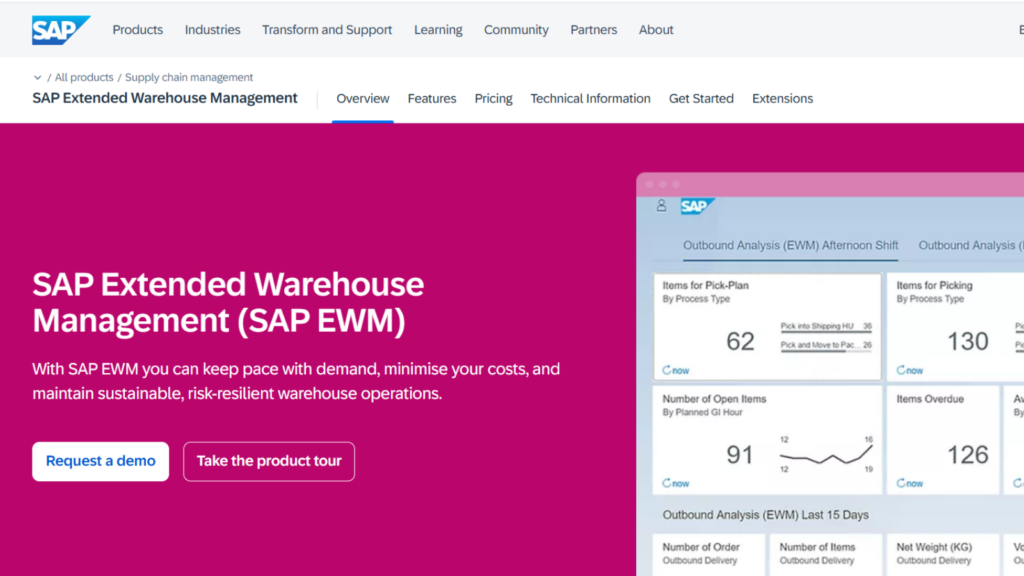
SAP EWM is the enterprise-grade WMS module within SAP S/4HANA, used by large Indian manufacturing, FMCG, and retail brands that run SAP as their core ERP and need WMS tightly integrated into the enterprise system landscape. It is often cited as the best WMS in India for SAP-native enterprise operations, though cost and complexity make it unsuitable for D2C brands at most GMV ranges.
Features:
- Full WMS suite: goods receipt, putaway, bin management, pick-pack-ship, goods issue, and full stock management
- Labour management with task interleaving and individual worker productivity tracking
- Yard management for inbound and outbound truck scheduling and dock allocation
- Slotting optimisation reduces picker travel time by placing high-velocity SKUs in accessible locations
- Wave management and batch picking support for large-volume warehouse operations
- Full compliance documentation: complete audit trail, track and trace, and regulatory reporting
- Integration with SAP TM (Transportation Management) for end-to-end supply chain visibility within SAP
Advantages:
- Best-in-class for complex, high-volume manufacturing-adjacent warehousing operations
- Deep SAP ERP integration: inventory, finance, procurement, and warehouse in one system of record
- Full compliance and audit trail support, essential for regulated categories and publicly listed companies
- Extremely scalable, handles the most complex global warehouse operations
Disadvantages:
- Implementation cost and timeline are very high, typically Rs 50 lakh to Rs 5 crore+ and 6-18 months.
- Not designed for D2C ecommerce velocity, no native Indian marketplace integrations
- COD workflows and Indian courier connections require middleware (note: Base.com handles SAP integration for D2C-focused brands at a fraction of the cost)
- Requires dedicated SAP consultants for implementation and ongoing support, with a high total cost of ownership
- Justified only where SAP S/4HANA is already deployed as the core ERP
Ideal For: Enterprise FMCG and manufacturing brands with SAP S/4HANA already deployed, brands managing large-scale distribution centre operations, and regulated industries requiring a full SAP-native audit trail.
17. Oracle Warehouse Management Cloud
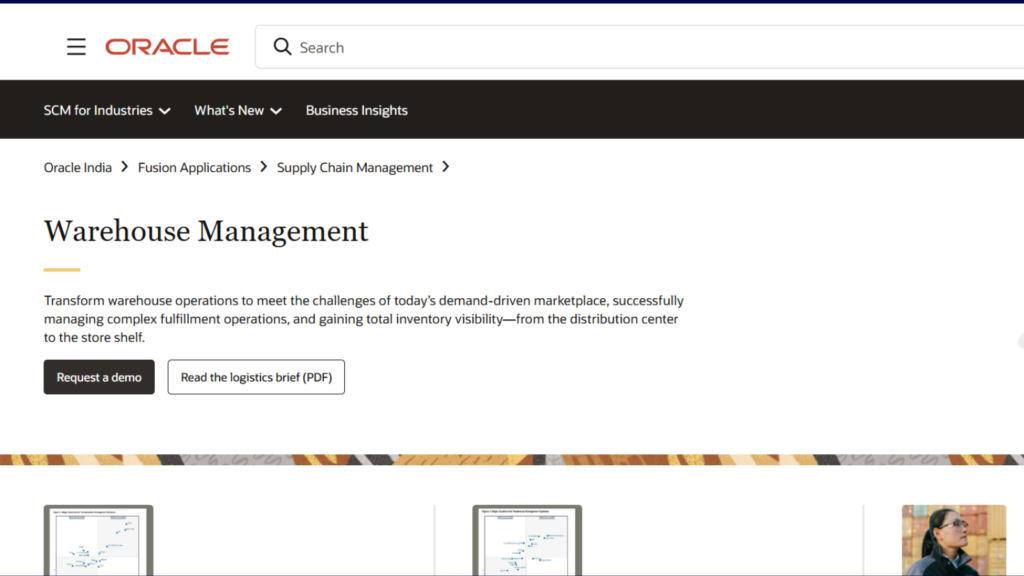
G2 Rating: 4.1 / 5
Oracle WMS Cloud is Oracle’s cloud-native warehouse management product for mid-to-large enterprise operations in India and globally, positioned within Oracle’s broader supply chain management suite.
Features:
- Advanced pick optimisation with labour and equipment management modules
- Yard management for inbound carrier scheduling and dock assignment
- Real-time inventory with bin and pallet-level tracking
- Oracle ERP Cloud native integration, no middleware required for standard Oracle setups
- Returns management and reverse logistics workflows are built into the base product
- Analytics and KPI dashboards with configurable operational reporting
- Mobile-first warehouse interface designed for floor staff usability
Advantages:
- Enterprise-grade reliability with consistent performance at very high order and inventory volumes
- Strong analytics, better operational intelligence than most WMS tools in the same category
- Oracle ecosystem integration delivers tight connectivity with ERP, procurement, and finance
- Modern mobile interface is significantly better than most legacy enterprise WMS products
Disadvantages:
- Very high cost, licensing, and implementation are suitable only for large enterprises.
- Indian marketplace integrations (Flipkart, Meesho, Myntra) require custom connectors, not out of the box.
- Implementation cycles are long, typically 6-12 months for standard deployments.
- Significant overkill for Indian D2C brands below Rs 500 crore GMV without existing Oracle infrastructure
Ideal For: Large enterprise brands running Oracle ERP, brands managing large-scale distribution centre operations, and brands with global warehouse operations requiring a consistent enterprise WMS.
18. Zoho Inventory
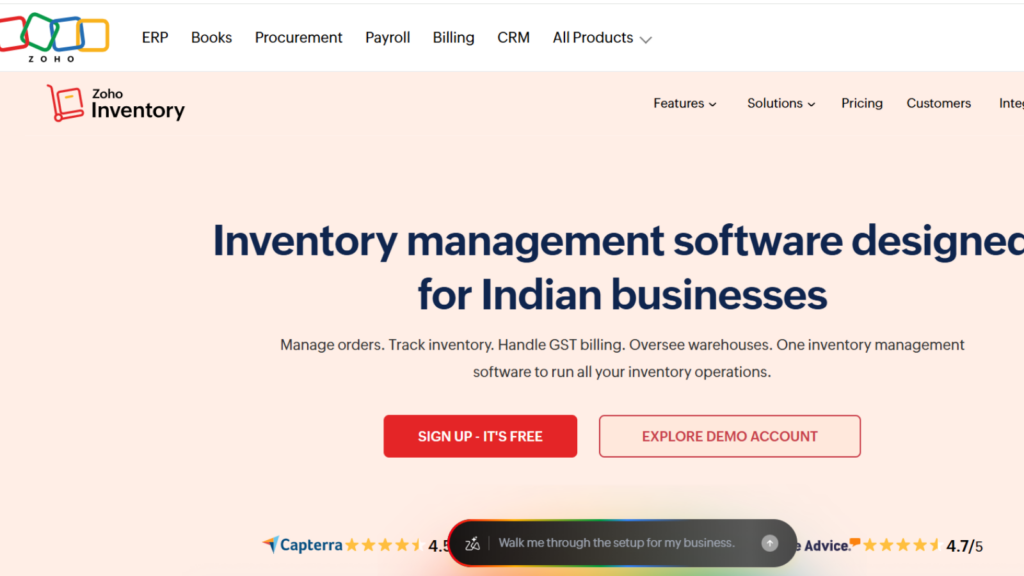
G2 Rating: 4.3 / 5
Zoho Inventory is a cloud inventory and order management tool within the Zoho business software ecosystem. It is widely used by Indian SMBs for multi-channel inventory and order tracking, particularly those already using Zoho Books for accounting.
Features:
- Multi-channel inventory management across Shopify, Amazon, Flipkart, and Zoho Commerce
- Order management includes a basic pick-pack-ship workflow for simple operations
- Purchase order management and vendor tracking for inbound stock management
- Zoho Books and Zoho CRM integration enables seamless within-ecosystem data flow
- Basic bin management for warehouse location organisation
- GST invoice auto-generation aligned with Indian tax compliance requirements
- Reorder point alerts and basic stock forecasting based on configurable thresholds
Advantages:
- Very affordable, starts under Rs 5,000/month, most accessible price point on this list
- Easy to use with minimal training requirements, suitable for small non-specialist teams
- Tight Zoho ecosystem integration for brands already using Zoho Books, CRM, or Commerce
- GST compliance is well-handled, and important for Indian SME regulatory requirements
Disadvantages:
- Not a true WMS, lacks scan-based verification, advanced bin management, and pick optimisation.
- Performance and feature gaps appear above 300 daily orders, not built for high-volume D2C
- Flipkart and Meesho integrations are less robust than dedicated Indian OMS platforms.
- COD reconciliation, RTO management, and NDR workflows are absent
- Reporting is basic, with no operational intelligence beyond inventory counts and order status
Ideal For: Early-stage D2C brands under Rs 2 crore GMV, brands using Zoho Books for accounting who want inventory in the same ecosystem, businesses needing basic inventory visibility before scaling to a full WMS.
19. Cin7
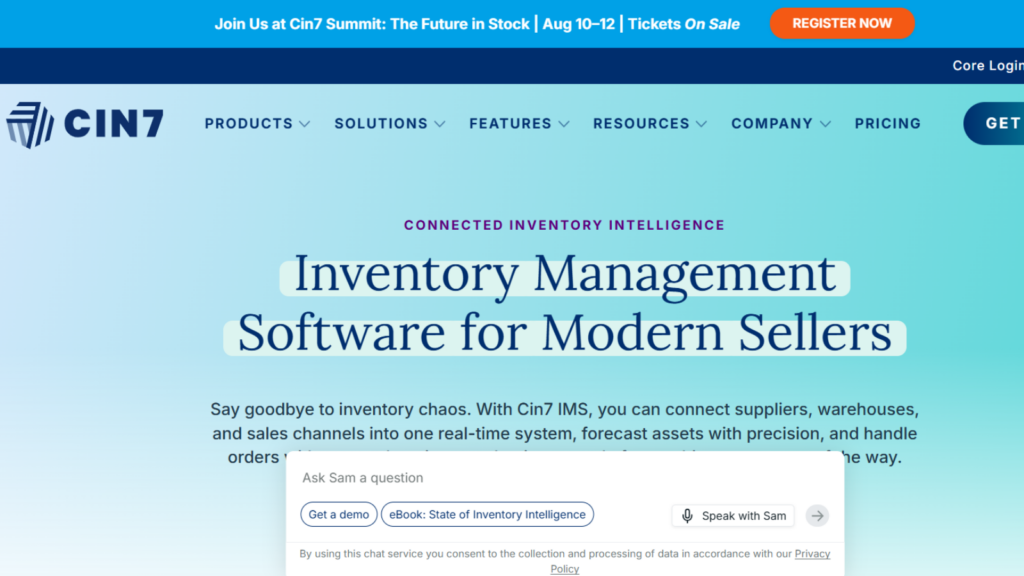
G2 Rating: 4.2 / 5
Cin7 is a cloud inventory and order management platform popular with product-based SME brands globally. It has a growing Indian user base, particularly among brands with international ecommerce operations alongside their India business.
Features:
- Multi-channel inventory management across Shopify, Amazon, WooCommerce, and B2B ordering portals
- Order management with basic pick-pack-ship workflow for simple warehouse operations
- B2B customer portal enables wholesale ordering with customer-specific pricing and approvals
- Integrations with Xero and QuickBooks for accounting data synchronisation
- EDI support for retail supply chain compliance with large retailers
- Demand forecasting and reorder automation based on configurable rules
- Production management for brands with simple light-manufacturing workflows
Advantages:
- Good SME fit, balances functionality and usability at a competitive price point globally
- Clean, modern interface with low training requirements for new team members
- Strong integrations with global ecommerce platforms and accounting tools
- A B2B ordering portal is a differentiator for brands with wholesale alongside D2C
Disadvantages:
- Indian marketplace integrations (Flipkart, Meesho, Myntra) are limited or require third-party connectors.
- COD workflows are not natively supported, designed for prepaid-first international ecommerce
- WMS depth is basic, no scan verification, and no advanced pick optimisation
- RTO management and Indian courier integrations are minimal to absent
Ideal For: India-based brands with significant global ecommerce volume, brands using Shopify + Amazon internationally, and brands with wholesale distribution alongside D2C requiring a B2B portal.
20. Fynd Platform (Gofynd)
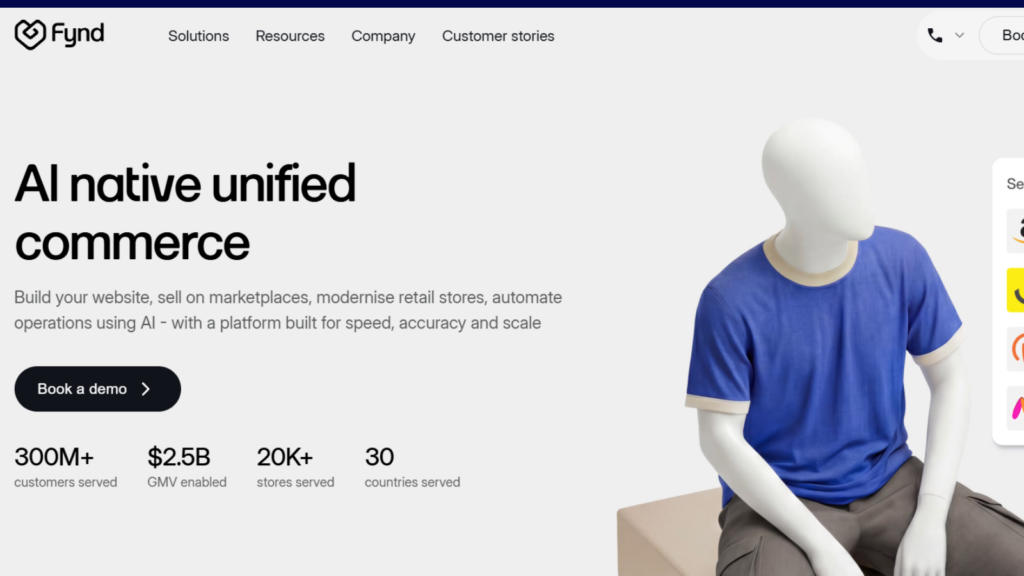
G2 Rating: 4.0 / 5
Fynd Platform is an Indian omnichannel commerce platform developed by Gofynd and acquired by Reliance Industries. It includes OMS, WMS, and omnichannel retail management with deep Indian market integration and Reliance ecosystem backing.
Features:
OMS with order routing across D2C, marketplace, and physical store channels in one system
- WMS covers pick-pack-ship workflow and returns management for warehouse operations
- Ship-from-store capability enables physical retail locations as fulfilment nodes for online orders
- Indian marketplace integrations across Amazon India, Flipkart, and regional platforms
- Inventory management spans warehouse and store locations in a unified view
- Omnichannel customer view unifies order and return history regardless of which channel was used
- API-first architecture supports custom integrations for brands with developer resources
Advantages:
- Strong omnichannel capability, handles physical retail and ecommerce in a single system better than most tools
- Deep Indian retail understanding, built for the Indian market with relevant local integrations
- Reliance ecosystem backing provides financial stability and increases product investment
- Ship-from-store is well-implemented, enabling retail stores as active fulfilment nodes
Disadvantages:
- WMS depth in warehouse-only operations is still maturing compared to dedicated WMS tools
- Better suited for omnichannel retail brands than pure-play D2C warehouse operations
- Some features are still catching up to more mature competitors in WMS operational depth.
- Implementation can require significant technical resources from the brand’s own team.
Ideal For: Omnichannel brands with both retail stores and ecommerce operations, brands in the Reliance retail ecosystem, brands wanting a single platform for store management and online fulfilment.
Side-by-Side Comparison: Top 8 WMS Tools for Indian D2C Brands
Brands shortlisting the best WMS in India can use this table as a quick filter before going into a detailed evaluation:
|
Tool |
OMS Included |
COD Handling |
Indian Marketplace Depth |
WMS Depth |
Scan Verification |
G2 Rating |
|---|---|---|---|---|---|---|
|
Base.com |
Native |
Full automation |
50+ connectors |
Full |
Yes |
4.6 |
|
Unicommerce |
Native |
Partial |
Broadest library |
Basic |
No |
4.2 |
|
Increff |
Separate |
Limited |
Good |
Strong |
Yes |
4.4 |
|
Vinculum |
Native |
Moderate |
Good |
Moderate |
Partial |
4.1 |
|
EasyEcom |
Native |
Partial |
Good |
Basic |
No |
4.0 |
|
Logiwa |
Separate |
Not native |
Limited |
Strong |
Yes |
4.5 |
|
Zoho Inventory |
Basic |
Not native |
Limited |
Basic |
No |
4.3 |
|
Fynd Platform |
Native |
Moderate |
Good |
Developing |
Partial |
4.0 |
How to Choose the Right WMS for Your Stage
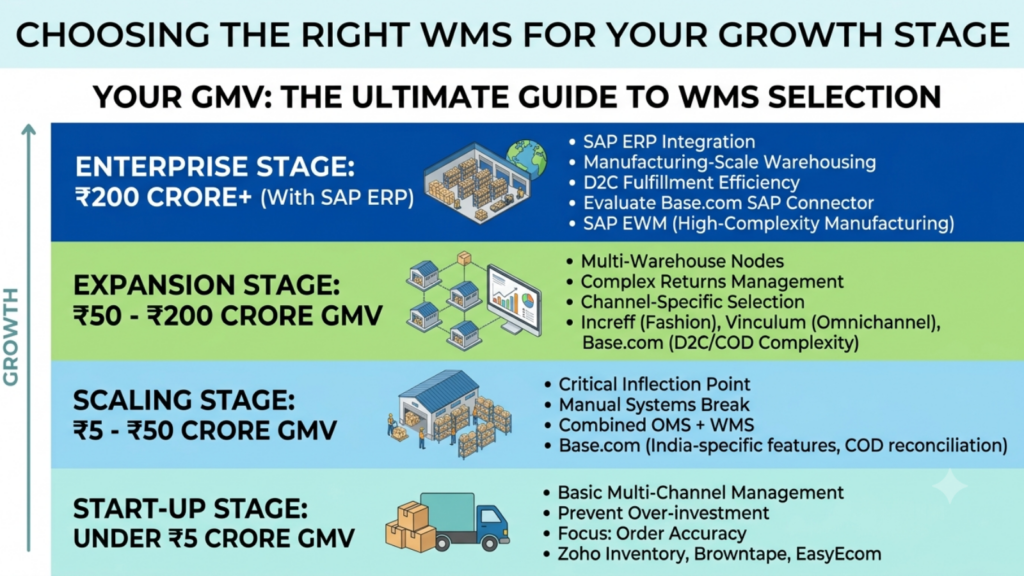
Choosing the right WMS depends on your brand’s growth stage, order volume, and operational complexity. What works at ₹2 crore GMV will break at ₹20 crore. The goal is not to over-invest early, but to adopt systems that scale with you, reduce manual effort, and prevent operational bottlenecks as your D2C business grows.
- Under Rs 5 Crore GMV: Zoho Inventory, Browntape, or EasyEcom are sufficient. Do not over-invest in WMS at this stage; basic multi-channel inventory management is all you need.
- Rs 5-50 Crore GMV: This is the critical inflection point where spreadsheets and basic tools break down. Base.com is the best WMS in India for this range: combined OMS and WMS means no two-system integration, and India-specific features (COD reconciliation, RTO intelligence, WhatsApp workflows) are all ready to activate.
- Rs 50-200 Crore GMV: Base.com, Increff, or Vinculum, depending on category. Fashion brands with complex returns and merchandising should evaluate Increff. Omnichannel brands should look at Vinculum. D2C-first brands with high COD complexity and multi-warehouse needs should choose Base.com, the best WMS in India for COD-heavy, multi-node D2C operations at this GMV range.
- Rs 200 Crore+ With SAP ERP: Evaluate Base.com’s SAP integration before defaulting to SAP EWM. SAP EWM complexity and cost are justified only for manufacturing-scale warehousing. For D2C fulfilment, Base.com’s SAP connector delivers the same data fidelity at a fraction of the implementation cost and time.
Base.com is a warehouse management and order management platform built for Indian D2C and B2B ecommerce. The only India-native platform combining full OMS and WMS depth in a single system and the best WMS in India for brands serious about operational efficiency. Request a demo to see how it compares to your current setup.



[…] Indian D2C brands, a warehouse management system in India is the difference between a warehouse that ships accurately and one that ships fast but […]