Customer expectations around delivery speed have changed rapidly in India. A few years ago, same-day delivery felt fast. Today, customers in cities like Bengaluru, Mumbai, and Delhi expect groceries, snacks, and daily essentials in 10 to 20 minutes. Platforms such as Blinkit and Zepto now operate 400 to 800 dark stores across major metros, each serving customers within a 1.5 to 3 km radius. This shift has created a new operational challenge for Indian D2C sellers. If the right products are not stocked close to demand clusters, instant delivery simply does not work.
This is where hyperlocal inventory management becomes critical. Instead of storing inventory in one large warehouse on the outskirts of a city, brands distribute high-velocity SKUs across hyperlocal warehousing hubs or dark stores. For example, a Bengaluru skincare brand selling through quick commerce platforms may need to stock different SKUs in HSR Layout, Whitefield, and Indiranagar, because order patterns vary by neighborhood. Premium sunscreen or Korean skincare may sell faster in one zone, while everyday moisturizers move faster in another.
Indian D2C sellers also face a nuance many brands underestimate. Quick commerce platforms typically allow only 2000 to 3000 SKUs per dark store, which means brands must carefully decide which products enter the instant delivery inventory pool. This makes a strong inventory positioning strategy essential. Instead of sending full catalogs everywhere, sellers must prioritize top-selling SKUs that generate 70 to 80 percent of orders.
When done right, hyperlocal inventory management combined with smart stock allocation quick commerce systems can reduce stockouts, improve fill rates, and increase visibility on quick commerce platforms. In the sections ahead, we break down practical ways Indian sellers can structure their inventory network to support instant delivery at scale.
Why Hyperlocal Inventory Management Matters for Instant Delivery
Instant delivery is fundamentally a logistics problem before it becomes a technology solution. If inventory sits 15 to 20 km away from the customer, even the fastest delivery fleet cannot fulfill a 10 to 30 minute promise. This is why quick commerce platforms in India operate through hyperlocal warehousing networks, where each dark store serves a 1.5 to 3 km delivery radius.
For Indian D2C sellers, this directly affects how products get listed and sold on platforms like Blinkit, Zepto, and Instamart. These platforms prioritize brands that can consistently supply inventory to their dark store network. A single dark store usually stocks 2000 to 3000 SKUs, and the fastest moving 20 percent of SKUs often generate nearly 80 percent of orders. Without a strong inventory positioning strategy, brands risk losing visibility and sales.
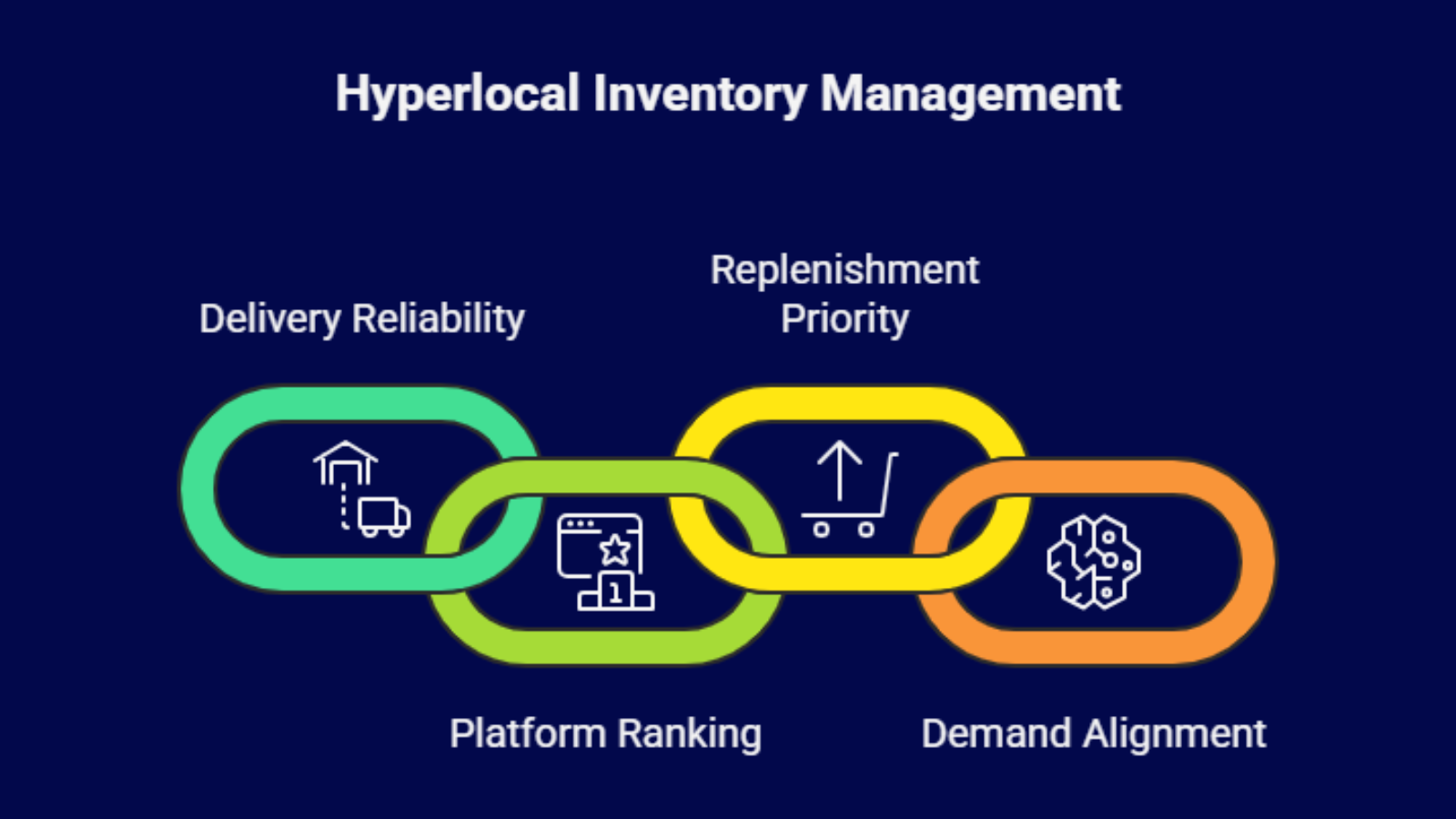 Another important nuance many sellers overlook is vendor performance penalties in quick commerce operations. Platforms monitor supply reliability closely. If sellers miss delivery appointments to dark stores or fail to replenish stock on time, they may face operational consequences such as:
- Missed appointment penalties, which can range between ₹2,000 and ₹10,000 depending on the platform
- Reduced platform ranking, which affects product discovery on the app
- Lower replenishment priority, meaning competing brands get shelf space first
- Loss of high demand slots during peak hours
When hyperlocal inventory management is implemented properly, brands can maintain consistent stock across multiple dark stores and avoid these issues.
Another complexity is demand variation by neighborhood. For example:
- Protein snacks and energy drinks sell faster in tech hubs like Whitefield or Gurgaon
- Ready-to-cook meals move faster in dense residential zones
By aligning stock allocation quick commerce planning with hyperlocal demand, Indian D2C sellers can improve fill rates, reduce penalties, and maintain strong platform visibility.
Top 10 Ways to Implement Hyperlocal Inventory Management for Instant Delivery
Instant delivery has changed how inventory needs to be managed. When customers expect orders within 10 to 20 minutes, the traditional warehouse model no longer works. Inventory must be placed closer to customers, replenished faster, and tracked in real time.
For Indian D2C sellers entering quick commerce platforms such as Zepto, Blinkit, Instamart, Amazon Fresh, and Flipkart Minutes, hyperlocal inventory management becomes the backbone of success. These platforms rely on thousands of neighborhood fulfillment hubs and dark stores to ensure products are always available within a few kilometers of the buyer.
India already has more than 4,500 dark stores across major cities, and the number is expected to cross 6,000 by 2027. These locations typically carry 2,000 to 3,500 high velocity SKUs, which means inventory planning must be extremely precise.
Below are ten proven ways Indian D2C brands can implement hyperlocal inventory management effectively.
1. Build a Strong Inventory Positioning Strategy
 The most important step in hyperlocal inventory management is deciding where inventory should be stored across the delivery network.
Many sellers assume that spreading inventory evenly across locations improves availability. In reality, successful instant delivery operations place high velocity products close to demand clusters. This reduces delivery time and improves order completion rates.
For example, protein snacks and energy drinks often sell 30 percent faster in Bengaluru and Mumbai, while packaged sweets and beverage mixes perform better in North Indian markets such as Delhi and Gurgaon.
Key actions for D2C sellers include:
- Mapping demand by city, neighborhood, and pin code
- Identifying top 500 to 2,000 fast moving SKUs
- Aligning inventory distribution with population density and order patterns
- Updating inventory placement every two to four weeks based on sales velocity
A strong inventory positioning strategy ensures that instant delivery inventory is always within a 2 to 3 km radius of the customer.
2. Use Hyperlocal Warehousing Instead of Centralized Storage
Traditional warehouses are designed for scale and long distance shipping. Instant delivery requires the opposite. Products must be stored inside cities.
Hyperlocal warehousing involves setting up small fulfillment hubs in high demand neighborhoods. These hubs store a curated list of high demand products rather than a full catalog.
Typical characteristics of hyperlocal warehouses include:
- 2,000 to 3,000 SKU capacity
- Location within dense residential clusters
- Fast picking operations
- Delivery coverage within 10 minutes
For example, Blinkit operates over 400 dark stores across India, each covering a small geographic zone.
Benefits for sellers include:
- Faster picking and dispatch
- Lower delivery travel distance
- Higher order completion rates
- Improved inventory visibility
This infrastructure allows instant delivery orders to be packed within 60 to 90 seconds.
3. Focus on High Velocity SKUs
 One of the biggest mistakes sellers make in quick commerce is listing too many products.
Dark stores have limited space. Most locations carry 2,000 to 3,500 products, compared to over 100,000 products on traditional marketplaces.
Because of this constraint, hyperlocal inventory management must prioritize high velocity items.
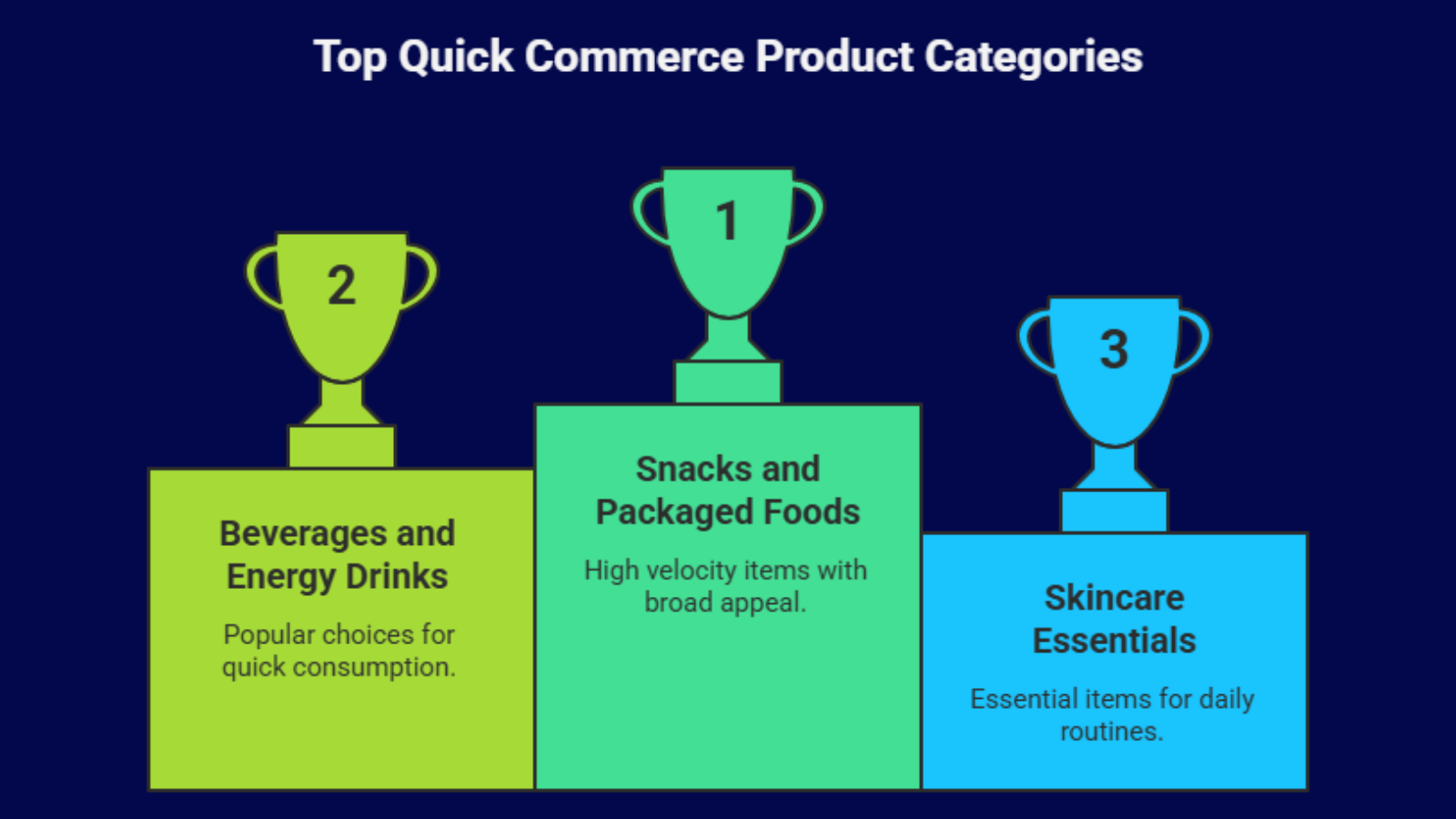
Categories that typically perform well include:
- Snacks and packaged foods
- Beverages and energy drinks
- Skincare essentials
- Baby products
- Pet food and pet treats
Products priced between ₹150 and ₹600 often convert fastest because they match the average quick commerce basket size.
By focusing on fast moving products, sellers can maintain stable inventory turnover cycles of 7 to 10 days.
4. Implement Data Driven Stock Allocation
Demand can vary dramatically across neighborhoods.
For example, demand for healthy snacks tends to be 25 percent higher in tech hubs such as Bengaluru, while ready to cook food sells faster in cities like Pune and Hyderabad.
This is why stock allocation quick commerce strategies are essential.
Effective allocation strategies include:
- Distributing inventory based on historical sales data
- Adjusting stock levels for weekend demand spikes
- Reallocating inventory between dark stores every 24 to 48 hours
- Monitoring SKU velocity to prevent stockouts
Brands that actively manage stock allocation quick commerce operations often reduce stockouts by 15 to 20 percent.
5. Use AI for Demand Forecasting
 Demand forecasting plays a critical role in hyperlocal inventory management.
Advanced forecasting systems analyze multiple variables to predict demand accurately.
These inputs often include:
- Historical sales patterns
- Weather changes
- Local events and holidays
- Marketing campaigns
- Real time order activity
For example, cold beverages and ice cream often see 40 percent demand spikes during heatwaves.
AI driven forecasting helps brands maintain stable instant delivery inventory levels and avoid emergency replenishment.
6. Maintain Real Time Inventory Visibility
Without real time inventory visibility, instant delivery networks struggle to operate efficiently.
Modern inventory systems must track stock across every hyperlocal warehousing location.
Essential features include:
- Real time stock updates
- Automatic low stock alerts
- Centralized inventory dashboards
- Order routing based on stock availability
These capabilities also help brands make better stock allocation quick commerce decisions.
For sellers managing multiple quick commerce platforms, real time visibility prevents overselling and order cancellations.
7. Use Micro Fulfillment Centers
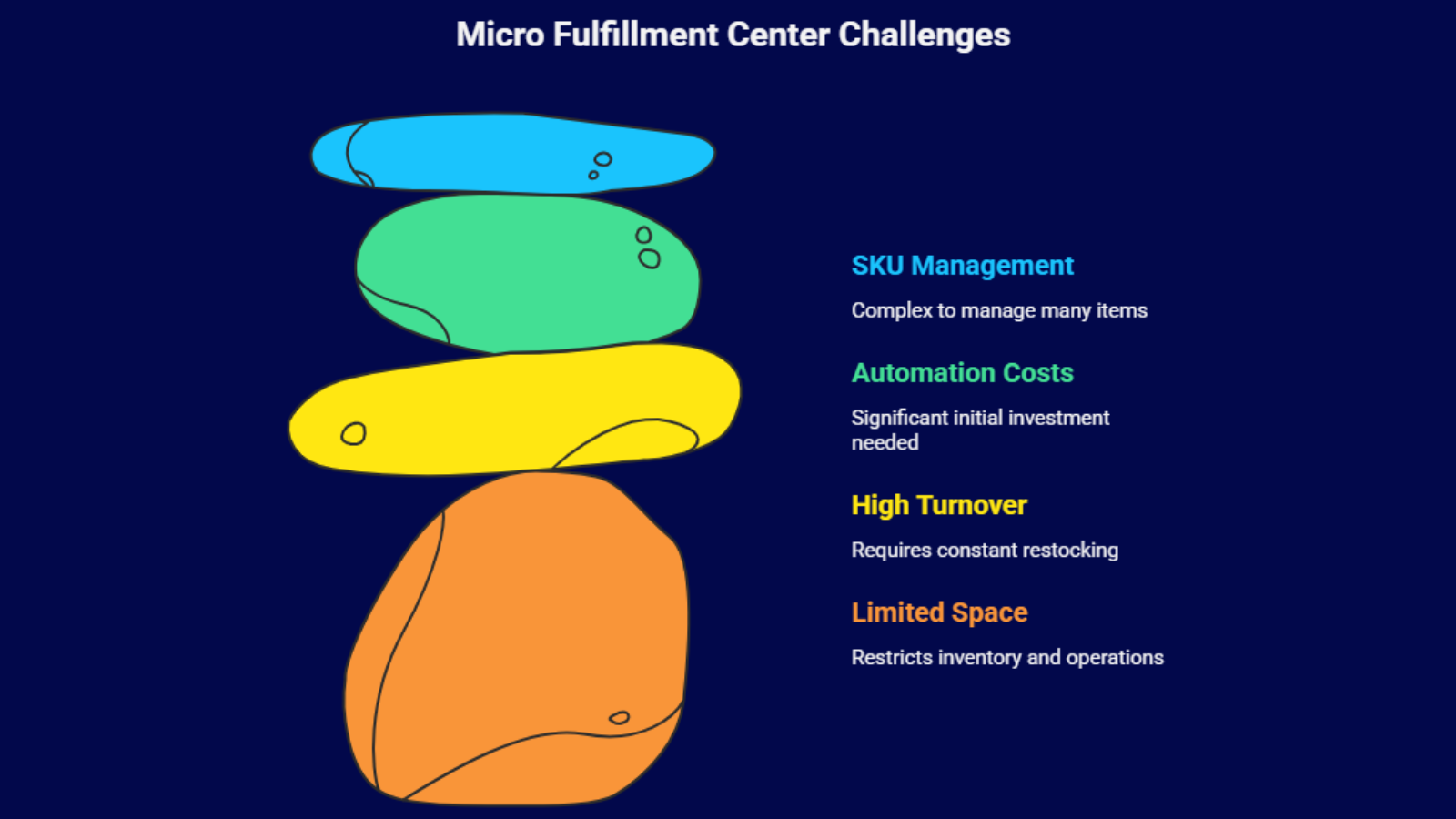 Micro fulfillment centers are compact facilities designed specifically for fast order processing.
These facilities form the operational backbone of hyperlocal inventory management.
Typical features include:
- Automated picking systems
- Optimized shelf layouts
- Compact but high turnover SKU catalogs
- Rapid order packing stations
Many quick commerce operations can pick and pack orders in under 90 seconds using these systems.
For Indian D2C brands, partnering with logistics providers that support micro fulfillment centers can significantly improve delivery speed.
8. Optimize Inventory Replenishment
Even the best positioned inventory eventually runs out.
Efficient replenishment systems ensure products move quickly from regional warehouses to hyperlocal locations before stockouts occur.
Common replenishment strategies include:
- Automated restock alerts
- Daily inventory audits
- Dynamic reorder thresholds
- Maintaining backup stock in regional warehouses
For fast moving products, many quick commerce platforms require inventory refresh every 7 days.
Brands that automate replenishment processes often maintain 95 percent or higher product availability.
9. Reduce Delivery Radius
 Delivery distance has a direct impact on speed.
Most quick commerce networks operate within a 1 to 3 kilometer delivery radius from dark stores.
Reducing delivery distance allows companies to:
- Deliver orders faster
- Reduce fuel and logistics costs
- Maintain consistent delivery times
For example, Zepto’s network is designed to maintain 10 minute delivery coverage within dense urban zones.
Smaller delivery radii also improve order success rates and reduce delivery delays.
10. Continuously Optimize the Inventory Mix
Consumer demand changes rapidly in quick commerce.
Products that sell quickly this month may slow down next month. This is why companies constantly adjust their inventory mix.
Effective optimization methods include:
- Weekly SKU performance analysis
- Removing slow moving products
- Introducing trending items
- Monitoring order completion rates
- Testing limited time products
For example, snack brands often launch quick commerce exclusive SKUs such as smaller packs or combo bundles. These products can increase conversion rates by 20 to 30 percent.
Continuous optimization ensures that hyperlocal inventory management stays aligned with real customer demand.
Final Thoughts
 Instant delivery has moved from a niche service to a mainstream expectation. Customers now want essentials delivered within minutes, and businesses must adapt their supply chains to meet that demand.
The key to achieving this lies in hyperlocal inventory management. By combining hyperlocal warehousing, intelligent stock allocation quick commerce systems, and a strong inventory positioning strategy, companies can ensure that instant delivery inventory is always close to the customer.
Instant delivery only works when inventory, technology, and fulfillment operate together seamlessly. If your business is planning to scale hyperlocal operations, you need a platform that connects inventory, orders, and fulfillment in real time.
Base.com helps brands streamline hyperlocal inventory management, automate stock allocation quick commerce, and optimize instant delivery inventory across multiple warehouses.
Book a demo with Base.com to build a faster, smarter inventory network for instant delivery.
When done correctly, this model improves delivery speed, reduces logistics costs, and increases customer satisfaction.
Frequently Asked Questions
1. How can Indian D2C sellers decide which SKUs should go into quick commerce dark stores?
Focus on the top 20 to 30 percent of SKUs that generate most of your orders. Quick commerce stores usually allow only 2000 to 3000 SKUs, so prioritize fast moving products like best selling variants, trial packs, and impulse purchase items.
2. Why do some brands lose visibility on Blinkit or Zepto even when their products are listed?
Most platforms prioritize brands with consistent inventory availability. If a seller frequently runs out of stock in dark stores or misses replenishment appointments, the platform algorithm may push competing brands higher in search and category listings.
3. How often should sellers replenish inventory in hyperlocal warehouses?
In quick commerce networks, replenishment often happens every one to three days depending on demand. Fast moving categories such as snacks, beverages, or personal care may require daily replenishment to avoid stockouts during peak evening orders.
4. Why do some products sell well in one city zone but not in another?
Demand varies based on lifestyle and income patterns. For example, protein snacks and premium beverages often sell faster in tech corridors like Whitefield or Gurgaon, while everyday grocery essentials move faster in dense residential neighborhoods.
5. What operational mistakes cause brands to lose sales in instant delivery platforms?
Common mistakes include sending the full catalog instead of focusing on high velocity SKUs, missing dark store delivery appointments, poor demand forecasting, and not adapting inventory mix based on neighborhood level demand data.