
Quick commerce has fundamentally changed how customers buy everyday products in India. Platforms like Blinkit, Zepto, and Instamart promise delivery in 10–20 minutes, which means inventory must already be available in nearby dark stores before a customer even places an order.
For D2C brands selling through these platforms, this creates a very different operational reality. If a product goes out of stock in a dark store during peak hours, the platform simply replaces it with another brand. In many cases, that lost visibility directly impacts the brand’s sales ranking on the platform.
This is why demand forecasting for quick commerce has become a critical capability for modern D2C brands. Unlike traditional eCommerce, where inventory is centralized in warehouses, quick commerce inventory is distributed across hundreds of hyperlocal dark stores. A metro city like Bengaluru or Delhi can have 150 to 300 dark stores, each serving a 2–3 km delivery radius.
Demand patterns change dramatically across these locations. For example, beverage and instant food brands often see 45 percent of their daily quick commerce orders between 7 PM and 11 PM, while breakfast products peak between 7 AM and 9 AM in residential clusters.
Without strong real-time inventory planning, these demand spikes lead to immediate stockouts. This is where hyperlocal demand signals, faster quick-commerce replenishment, and strong stockout prevention become essential for D2C brands aiming to win on quick-commerce platforms.
Why Demand Forecasting Is Different in Quick Commerce?
In traditional eCommerce, brands typically manage inventory through centralized warehouses. Orders may take one or two days to ship, which gives sellers time to move inventory between locations or adjust stock levels.
Quick commerce works very differently. Here, fulfillment happens through hyperlocal dark stores, where products must already be stocked within a 2–3 km delivery radius before a customer places an order. For Indian D2C brands selling through platforms like Blinkit, Zepto, and Instamart, this means inventory decisions must happen much faster.
A large metro city such as Bengaluru, Delhi, or Mumbai can have 150 to 300 dark stores, and each store usually carries only 1,500 to 3,000 SKUs because of limited shelf space.
Demand, therefore, changes dramatically from one neighborhood to another. A product that sells quickly in one locality may remain slow-moving just a few kilometers away. This is where demand forecasting in quick commerce becomes very different from traditional forecasting.
Instead of relying only on past sales data, quick commerce forecasting combines hyperlocal demand signals, platform sales velocity, time-of-day buying behavior, and operational data.
For example, beverage brands on quick commerce platforms often see 40–50 percent of their daily sales between 7 PM and 11 PM, while breakfast products peak between 7 AM and 9 AM in residential clusters. Without accurate real-time inventory planning, these spikes quickly lead to empty shelves and missed orders.
| Traditional eCommerce Forecasting | Quick Commerce Forecasting |
|---|---|
| Weekly or monthly planning | Hourly or daily planning |
| Central warehouses | Hyperlocal dark stores |
| Large safety stock | Micro-inventory per store |
| Historical data-driven | Real-time + contextual signals |
The goal is simple. Ensure the right SKUs are available in the right dark stores when demand appears, while maintaining strong stockout prevention in quick commerce across every fulfillment node.
However, many Indian D2C brands struggle because they use forecasting models designed for marketplaces like Amazon or Flipkart. Those models rely heavily on historical averages and weekly replenishment. Quick commerce compresses the supply chain significantly. Inventory moves faster, decisions happen faster, and mistakes become visible almost immediately.
1. Poor visibility into hyperlocal demand signals
 Demand patterns vary drastically even within the same city. Many brands forecast sales at the city level, but quick commerce operates at the micro-location level.
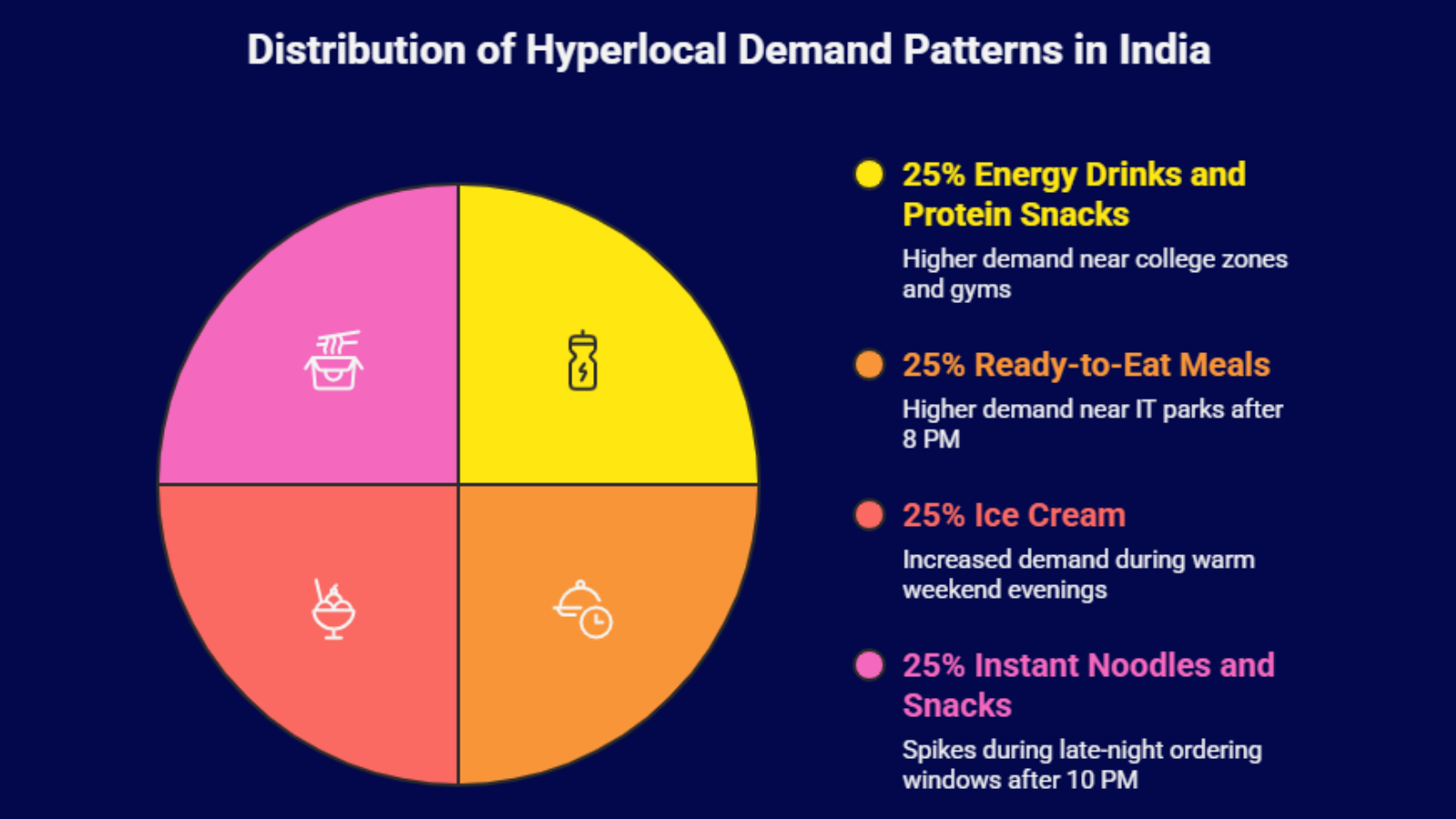
Examples Indian sellers frequently observe:
- Energy drinks and protein snacks sell faster near college zones and gyms in Bengaluru and Pune
- Ready-to-eat meals see higher demand near IT parks in Gurgaon and Hyderabad after 8 PM
- Ice cream demand can increase 30–35 percent during warm weekend evenings
- Instant noodles and snacks spike during late-night ordering windows after 10 PM
Without tracking these hyperlocal demand signals, forecasting models allocate inventory incorrectly across dark stores.
2. Slow quick commerce replenishment cycles
Many D2C brands still replenish quick commerce inventory every three to four days, which works for traditional retail but fails in quick commerce environments.
Typical operational realities include:
- Snacks and beverages often show daily sell-through rates of 40–60 percent in busy dark stores
- Peak demand happens in short time windows such as 6 PM–11 PM
- Some SKUs sell out within 4–6 hours after restocking
Without fast and quick commerce replenishment, stores run out of high-demand products during peak ordering hours.
3. Fragmented real-time inventory planning
Another common issue is disconnected inventory systems. Many Indian D2C sellers manage stock across multiple channels:
- marketplaces such as Amazon and Flipkart
- offline distributors and retail partners
- brand warehouses
- quick commerce platforms
Because these systems do not share real-time data, brands cannot see the exact stock position across dark stores. Without unified real-time inventory planning, forecasting becomes inaccurate.
4. High stockout risk
 Stockouts are significantly more damaging in quick commerce than in traditional eCommerce. When a product becomes unavailable, the platform immediately suggests alternatives from competing brands.
Operational data from quick commerce sellers shows:
- A 2-hour stockout during evening peak can reduce daily sales by 15–25 percent
- Fast-moving SKUs may generate 60 percent of their daily orders within a 4-hour window
- Losing availability also impacts platform ranking and visibility
This is why strong stockout prevention in quick commerce systems are essential for D2C brands that want to maintain consistent sales and visibility on quick commerce platforms.
How Real-Time Demand Forecasting Actually Works for D2C Brands
Effective demand forecasting, quick commerce works very differently from traditional planning models. Instead of monthly forecasts, quick commerce requires continuous demand tracking because customer orders change every few hours.
For Indian D2C brands selling on Blinkit, Zepto, and Instamart, forecasting must adapt to hyperlocal demand signals, fast-moving inventory, and peak-hour buying behavior.
Quick commerce platforms operate through hundreds of dark stores across a city. Each store serves a 2–3 km radius, which means demand patterns vary sharply across neighborhoods.
For example, many snack and beverage brands report that 60 percent of their daily orders come between 6 PM and 11 PM, while breakfast beverages and dairy alternatives spike between 7 AM and 9 AM in residential zones. Without accurate real-time inventory planning, these spikes quickly lead to stockouts and missed orders.
1. Hyperlocal demand signals
 To improve demand forecasting for quick commerce, brands must capture micro-level demand signals rather than relying on city-wide averages.
Key signals include:
- Local sales velocity from individual dark stores
- Time-of-day buying patterns across categories
- Weather conditions that impact beverage and ice cream demand
- Local events such as festivals or cricket matches
- Search trends inside quick commerce apps
- Product availability across nearby dark stores
For instance, protein snacks and energy drinks often sell faster near gym clusters and college zones, while ready-to-eat meals spike near IT parks after 8 PM.
2. Real-time inventory planning
The second layer is real-time inventory planning, which connects forecasting models directly with operational systems.
Key processes include:
- Continuous monitoring of dark store stock levels
- Automated reorder triggers when inventory drops below thresholds
- Inventory synchronization across dark stores
- Dynamic allocation of SKUs based on demand velocity
If a dark store sells 70–80 percent of its beverage stock by late afternoon, the system automatically triggers quick commerce replenishment before evening peak demand.
3. AI-driven forecasting models
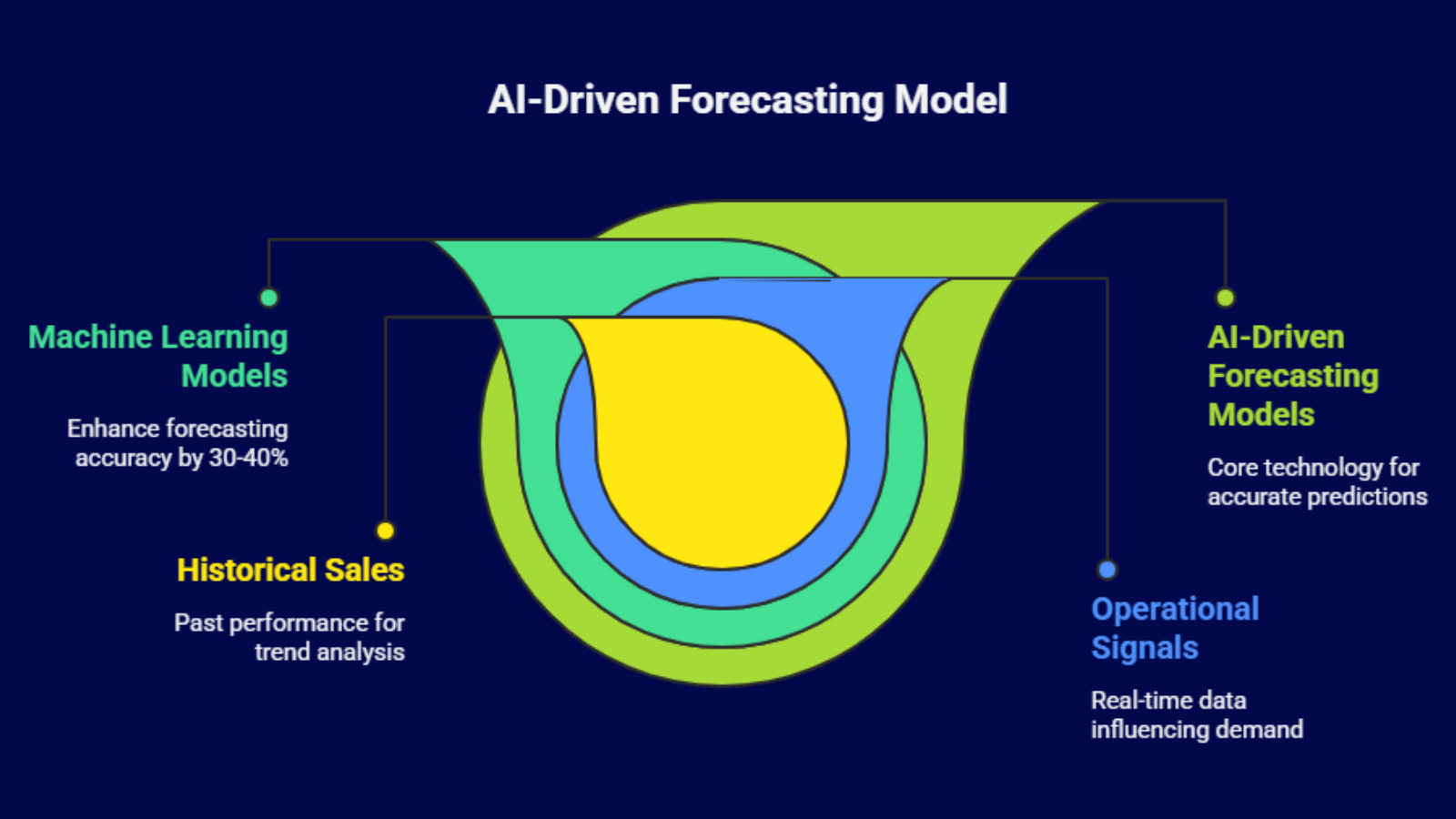 Modern forecasting engines also use predictive models that combine historical sales with operational signals.
These systems analyze:
- Seasonality trends and festival demand
- Day-of-week patterns where weekend orders rise 20–25 percent
- Promotional campaign performance
- Weather changes affecting product demand
- Social media trends driving impulse purchases
Machine learning models can improve forecasting accuracy by 30–40 percent, which significantly strengthens stockout prevention in Q-commerce.
Real example: hyperlocal forecasting in action
A D2C beverage brand operating across Delhi NCR observed clear micro-market demand differences.
| Area | Top Product | Peak Time |
|---|---|---|
| College districts | Energy drinks | 10 PM |
| Residential clusters | Fruit juice | 8 AM |
| Office hubs | Cold coffee | 3 PM |
By combining hyperlocal demand signals with real-time inventory planning, the brand adjusted inventory allocation across dark stores.
This improved demand forecasting quick commerce, enabled faster quick commerce replenishment, and ensured stronger stockout prevention in quick commerce across locations.
How Base Helps D2C Brands Plan Quick Commerce Demand
When forecasting systems are built specifically for quick commerce, D2C brands see clear operational gains. The first impact is better inventory efficiency across dark stores. Since most quick commerce stores carry only 1,500–3,000 SKUs, accurate demand forecasting in quick commerce prevents sending excess stock to slow-moving locations.
Many Indian D2C brands reduce overstock by 15–20 percent and improve inventory turnover by nearly 30 percent once forecasting improves. This is especially important for snacks, beverages, and impulse categories where demand changes sharply within a few hours.
Better forecasting also improves quick commerce replenishment cycles. Quick commerce orders peak between 6 PM and 11 PM, when platforms process nearly 50–60 percent of daily orders. If a SKU goes out of stock during this window, the platform immediately pushes competing products.
 With stronger real-time inventory planning, brands can trigger replenishment earlier. For example, if a dark store sells 70 percent of its beverage inventory by afternoon, the system can schedule quick commerce replenishment before evening demand begins.
Another key benefit is stockout prevention in quick commerce. Many brands lose 15–25 percent of daily sales if a fast-moving SKU is unavailable for just two hours during peak demand. Maintaining consistent availability protects product ranking and visibility on quick commerce platforms.
This is where Base demand forecasting helps D2C brands. Base demand forecasting connects platform orders, warehouse data, and dark store inventory into one operational system.
By combining hyperlocal demand signals, real-time inventory planning, and automated quick commerce replenishment, Base demand forecasting helps brands reduce stockouts and maintain availability across dark stores without manual monitoring.
FAQs
1. How often should D2C brands replenish inventory on quick commerce platforms?
Most quick commerce platforms expect inventory refresh cycles every 24–48 hours, but fast-moving SKUs may require daily replenishment. Categories like beverages, snacks, and ready-to-eat meals often see 40–60 percent daily sell-through, especially during evening peak hours.
2. Why do some products sell well in one dark store but not in another nearby location?
Quick commerce demand is highly hyperlocal. A dark store serving office areas may sell more ready-to-drink beverages, while residential zones see higher demand for breakfast items. Even within 2–3 km, customer demographics and daily routines can significantly change purchasing behavior.
3. Why do products suddenly lose visibility on quick commerce platforms?
Most quick commerce platforms rank products based on availability and recent sales velocity. If a SKU goes out of stock during peak hours, the platform replaces it with competing brands. Even a 2–3 hour stockout can reduce daily visibility and impact future ranking.
4. How many SKUs should D2C brands list on quick commerce platforms?
Dark stores usually stock 1,500–3,000 SKUs, so platforms prioritize fast-moving products. Instead of listing full catalogs, successful D2C brands focus on 5–15 high-velocity SKUs that can maintain consistent availability and strong reorder frequency.
5. What is the biggest forecasting mistake Indian D2C brands make in quick commerce?
Many brands forecast demand at the city level, but quick commerce operates at the micro-location level. Without tracking store-level demand patterns, inventory gets distributed incorrectly, leading to stockouts in high-demand areas and unsold stock elsewhere.