The way people shop in India has changed dramatically over the past few years, especially in urban markets where speed and convenience now drive purchasing decisions. Customers who once waited two to three days for deliveries now expect groceries, snacks, and daily essentials within minutes. This behavioral shift has created massive opportunities for D2C Brands Leveraging Quick-Commerce in India to acquire customers faster and increase repeat purchases.
India’s quick commerce market has grown from roughly $1.3 billion in 2021 to nearly $5.8 billion in 2025, expanding at a CAGR of over 40 percent, making it one of the fastest-growing retail channels in the country. At the same time, the sector is expected to cross $6–7 billion in gross merchandise value, driven by aggressive expansion from platforms such as Blinkit, Zepto, and Swiggy Instamart.
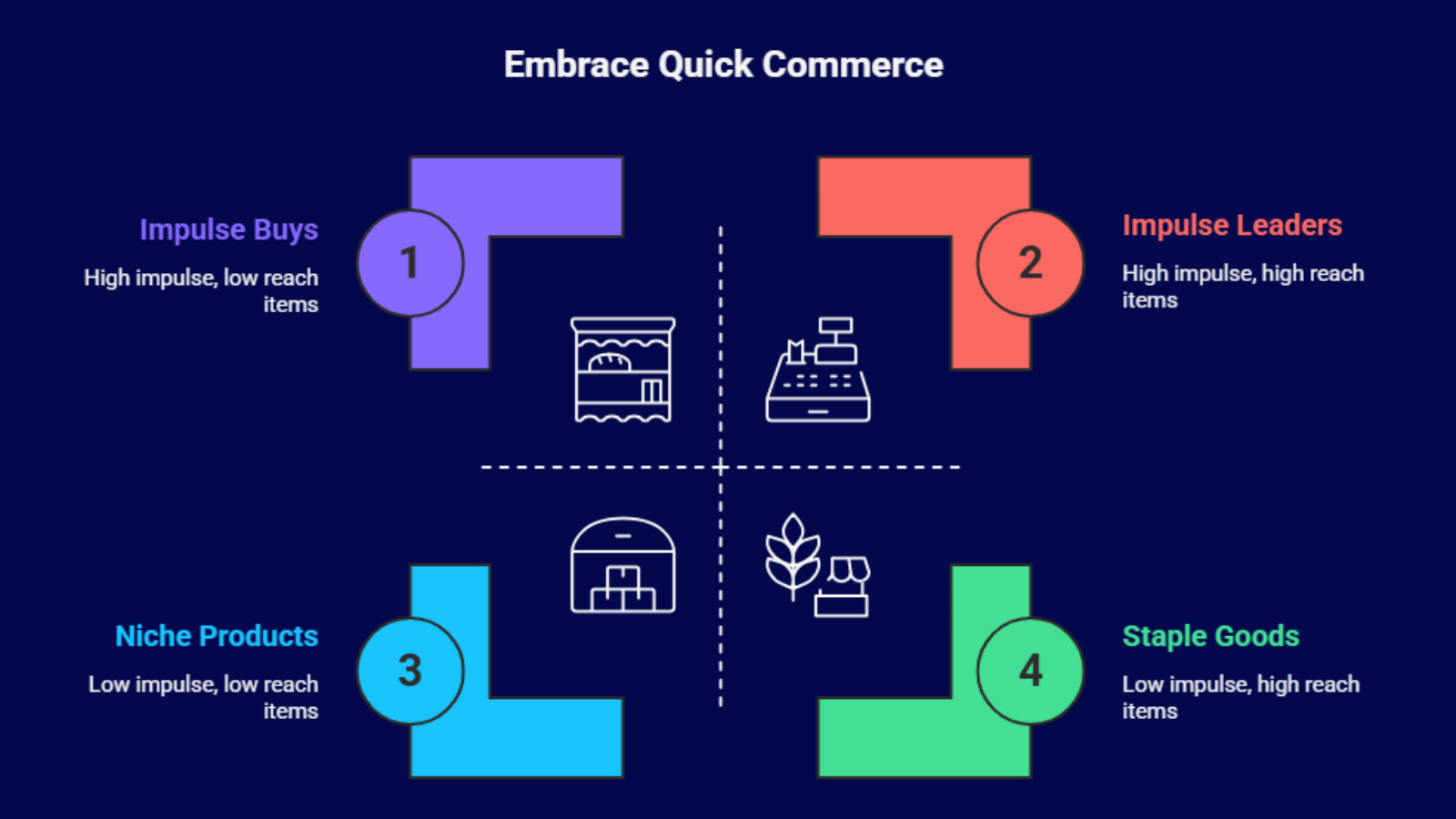
For Indian sellers, the biggest opportunity lies in high-frequency categories. Products like snacks, ready-to-eat meals, protein bars, coffee, and personal care items perform best because they have repeat purchase cycles of 7–20 days, which aligns perfectly with quick commerce buying behavior.
Another lesser-known insight is that quick commerce baskets are smaller but more frequent. While traditional ecommerce baskets average ₹800 to ₹1,200, quick commerce orders typically fall between ₹350 and ₹600, but customers order multiple times a week.
This means that D2C Brands Leveraging Quick-Commerce in India are not simply chasing visibility. They are strategically using these platforms for impulse purchases, product trials, and rapid demand validation. For example, launching a new SKU on Blinkit can generate demand signals across hundreds of dark stores within weeks, giving brands real-time insights into which products will scale nationally.
Why Quick Commerce Is Becoming Critical For Modern Consumer Brands
Before looking at examples, it is important to understand why D2C Brands Leveraging Quick-Commerce in India are rapidly prioritizing this channel. Quick commerce platforms are built around high-intent buying behavior. Unlike traditional ecommerce where customers browse, most quick commerce users open apps like Blinkit or Zepto when they already plan to purchase something immediately.
For Indian sellers, this creates a strong conversion advantage. Industry data shows quick commerce platforms often see conversion rates between 18 percent and 25 percent, compared to 3 to 5 percent on traditional ecommerce marketplaces. This happens because the buying journey is short, and urgency drives the purchase.
Another important nuance is the hyperlocal dark store model. Platforms maintain micro warehouses within 2 to 3 kilometers of dense residential clusters, enabling delivery in 10 to 20 minutes. For D2C Brands Leveraging Quick-Commerce in India, this infrastructure allows rapid product testing across multiple cities without building their own distribution network.
Brands also benefit from search visibility inside apps. Nearly 60 percent of orders on quick commerce platforms originate from in-app search, which means even smaller brands can capture demand if their products rank for common queries like protein bars, cold coffee, or healthy snacks.
Top 10 D2C Brands Leveraging Quick-Commerce in India
Quick commerce has become one of the fastest distribution channels for modern consumer brands in India. Platforms like Blinkit, Zepto, and Swiggy Instamart now operate thousands of dark stores across major cities, allowing brands to place inventory closer to customers and fulfill orders in under 20 minutes. Because of this infrastructure, many D2C Brands Leveraging Quick-Commerce in India are using these platforms not just for sales but also for product discovery, rapid SKU testing, and faster customer acquisition.
Below are ten strong examples of D2C Brands Leveraging Quick-Commerce in India and how they are using the channel strategically.
1. 4700BC – Turning impulse snacking into fast conversions
4700BC is one of the earliest snack brands among D2C Brands, leveraging Quick-Commerce in India to fully embrace the quick commerce ecosystem. The brand focuses on gourmet popcorn and ready-to-eat snack packs, which naturally fit impulse purchase behavior on quick commerce apps.
 Customers browsing Blinkit or Zepto often look for quick snacks during evenings or movie nights. Because of this demand pattern, 4700BC optimized its product listings for small ticket purchases between ₹99 and ₹199, which match the average quick commerce basket value.
Key strategic moves used by the brand:
• Focus on smaller SKUs designed for quick commerce baskets
• Placement inside snack and movie night bundles on platforms
• High search visibility for keywords like popcorn and snack packs
• Dark store inventory stocking in metro cities with high order density
For Indian sellers, the key lesson is simple. Quick commerce works best for instant consumption categories, especially snacks and beverages.
2. Perfora – Scaling oral care through high repeat purchases
Perfora is another strong example of D2C Brands Leveraging Quick-Commerce in india that uses quick commerce to drive repeat purchases. The brand sells premium oral care products such as electric toothbrush heads, toothpaste tablets, and dental kits.
Oral care products have predictable consumption cycles. A toothpaste refill is typically purchased every 25 to 30 days, which aligns well with quick commerce ordering habits.
How Perfora uses quick commerce strategically
| Strategy | Business Outcome |
|---|---|
| Listing travel-size toothpaste SKUs | Improves impulse purchases |
| Placement under personal care search results | Increases organic discovery |
| Bundled toothbrush kits | Higher average order value |
| Dark store distribution in Tier-1 cities | Faster repeat orders |
For Indian sellers, quick commerce can work well for categories where replenishment cycles are predictable.
3. Plush – Using quick commerce for emergency purchase categories
 Plush, a hygiene products brand, is another fast-growing company among D2C Brands Leveraging Quick-Commerce in India. The brand focuses on sanitary pads, period care products, and personal hygiene essentials.
Hygiene products often fall into urgent purchase categories. Customers do not want to wait two days for delivery when they need these items.
Because of this behavior, Plush sees strong demand for quick commerce platforms.
Key strategies used by Plush
• Positioning products under emergency personal care categories
• Ensuring inventory across multiple dark stores for availability
Operational insights
• Smaller pack sizes drive faster conversions
• Subscription SKUs are converted into quick refill packs
Advertising strategy
• Sponsored search ads inside Instamart and Blinkit
• Visibility during late evening ordering hours
For Indian sellers, this shows how quick commerce can serve urgent need categories extremely well.
4. The Whole Truth – Building trust in healthy snacking
The Whole Truth is a clean-label snack brand that has grown rapidly on quick commerce platforms. Among D2C Brands Leveraging Quick-Commerce in India, the brand stands out for its strong positioning around ingredient transparency.
Products like protein bars and peanut butter pouches perform well on quick commerce because they are frequent repeat purchases for fitness-focused consumers.
Key strategies used by the brand:
• Listing trial-size protein bars priced under ₹100
• Targeting search terms like protein snack and healthy bar
• Maintaining high availability across dark stores in metro areas
For Indian sellers in health food categories, quick commerce can serve as a high-frequency consumption channel.
5. Rage Coffee – Using quick commerce for instant caffeine demand
 Rage Coffee is a digital-first coffee brand and one of the most visible D2C Brands Leveraging Quick-Commerce in India. Coffee consumption often happens during sudden cravings, especially during work hours or late nights.
Quick commerce perfectly fits this consumption pattern.
How Rage Coffee leverages the channel
• Listing instant coffee sachets priced under ₹50
• High ranking for searches like instant coffee and cold coffee
Growth insights
• Dark store placement near office clusters improves demand
• Coffee sachets perform better than larger jars
Customer behavior trends
• Orders spike between 7 pm and 11 pm
• Cold coffee SKUs see higher demand during summer months
For Indian sellers, beverage brands can use quick commerce to capture time-based demand spikes.
6. Yogabar – Winning through health snack visibility
Yogabar is one of the fastest-growing snack companies among D2C Brands Leveraging Quick-Commerce in India. The brand focuses on protein bars, muesli, and breakfast snacks.
Health snacks work extremely well in quick commerce because consumers often reorder them weekly.
Key quick commerce SKUs
| Product Type | Average Price | Why It Works |
|---|---|---|
| Protein bars | ₹80–₹120 | Ideal for impulse purchases |
| Mini muesli packs | ₹150–₹200 | Trial-friendly SKU |
| Energy snack packs | ₹100–₹150 | High repeat demand |
Industry insights show snack categories account for over 30 percent of quick commerce orders, making them one of the most attractive segments for Indian sellers.
7. Slurrp Farm – Capturing parents buying baby foods instantly
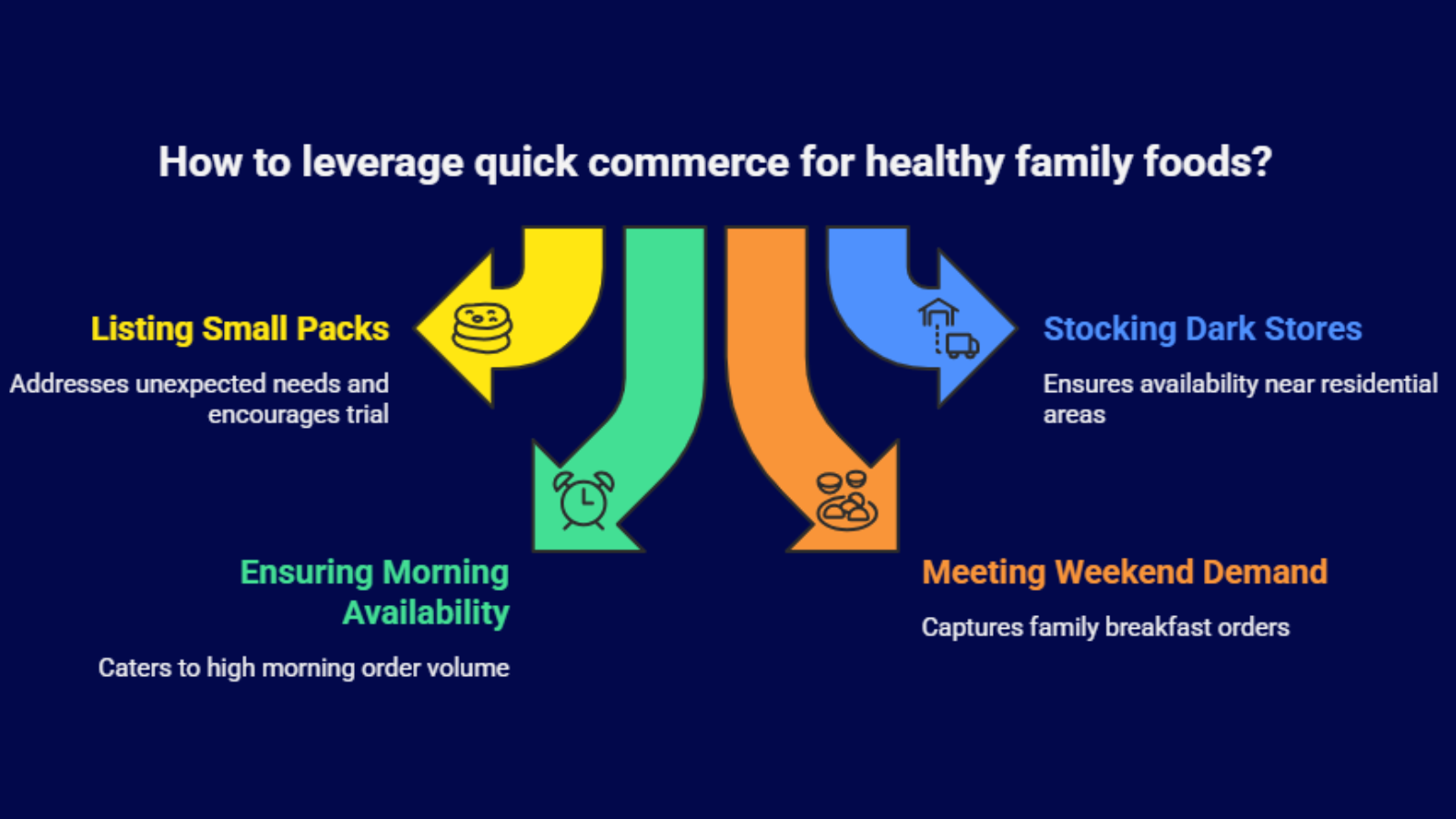 Slurrp Farm focuses on healthy foods for children and families. It is another important brand among D2C Brands leveraging Quick-Commerce in India.
Parents often run out of baby food or breakfast mixes unexpectedly. Quick commerce helps solve this problem.
Key quick commerce strategy
• Listing small packs of millet pancakes and cereal mixes
Distribution strategy
• Stocking dark stores near residential neighborhoods
• Ensuring availability during morning ordering hours
Customer demand patterns
• High order volume between 7 am and 10 am
• Weekend demand spikes due to family breakfasts
This shows that quick commerce is not only for snacks. It can also work for family consumption categories.
8. Wellbeing Nutrition – Scaling supplements through quick commerce
Wellbeing Nutrition has built strong visibility among D2C brands leveraging quick-commerce in India, especially in the supplements category.
Health supplements often require frequent replenishment, which aligns well with quick commerce ordering patterns.
Top-selling quick commerce products
| Product | Category | Price Range |
|---|---|---|
| Melts Vitamin Strips | Vitamins | ₹350–₹450 |
| Collagen supplements | Beauty nutrition | ₹600–₹900 |
| Sleep gummies | Wellness | ₹400–₹500 |
These SKUs are usually bought as monthly replenishments, making them suitable for quick commerce repeat orders.
9. Farmley – Expanding dry fruit consumption through fast delivery
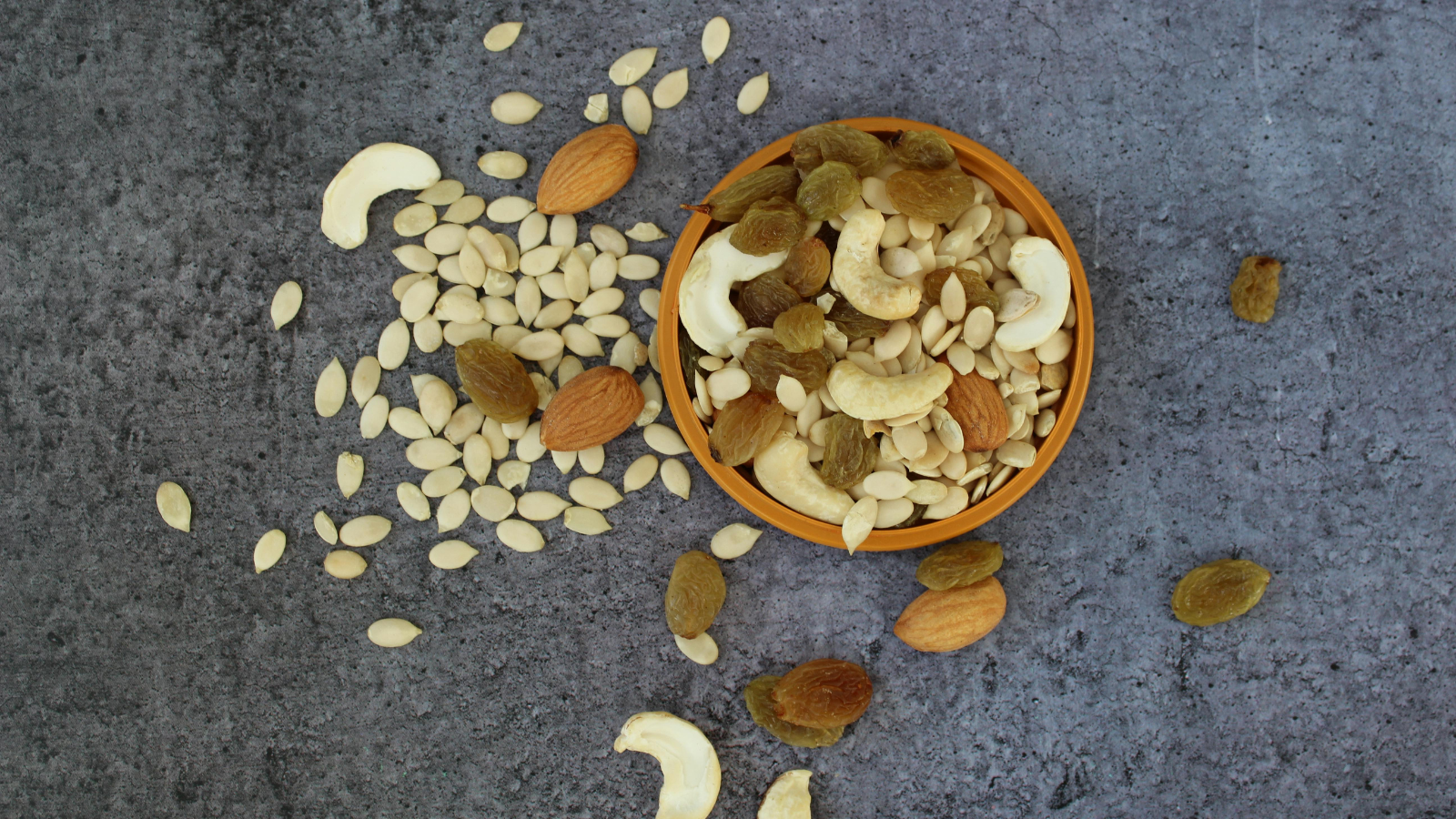 Farmley focuses on dry fruits, seeds, and healthy snack mixes. Among D2C Brands Leveraging Quick-Commerce in India, Farmley uses quick commerce to capture health-focused consumers looking for quick snack options.
Dry fruits are perfect for quick commerce because they are:
• Lightweight
• Non-perishable
• High margin products
The brand lists smaller packs between ₹150 and ₹250, which match the average quick commerce order value.
For Indian sellers, products that combine long shelf life with small packaging are ideal for quick commerce.
10. Sleepy Owl – Leveraging coffee cravings for rapid growth
Sleepy Owl is another coffee brand benefiting from the rise of quick commerce. Among D2C Brands Leveraging Quick-Commerce in India, the company uses cold brew and ready-to-drink coffee as its primary quick-commerce products.
Ready-to-drink beverages perform extremely well because customers want instant consumption.
Key strategies used by Sleepy Owl:
• Listing ready-to-drink cold coffee cans
• Placement under beverage and caffeine categories
• Dark store stocking near office districts
The brand also benefits from midday and late-night demand spikes, which are common on quick commerce platforms.
How D2C Brands Leveraging Quick-Commerce in India Are Scaling Operationally
Scaling through quick commerce requires a very different operating model compared to traditional ecommerce. Most D2C Brands Leveraging Quick-Commerce in India focus heavily on hyperlocal inventory placement. Platforms like Blinkit, Zepto, and Instamart operate dark stores within 2 to 3 km of residential clusters, which allows deliveries in 10 to 20 minutes. For brands, this means inventory must be distributed across dozens or sometimes hundreds of micro warehouses in a single city.
Instead of listing their entire catalog, brands typically supply only 5 to 15 high-velocity SKUs per dark store. These are products with strong repeat demand and smaller pack sizes. For example, snack brands usually list ₹99 to ₹199 trial packs, while beverage brands prioritize single-serve SKUs because quick commerce baskets average ₹350 to ₹600.
Another operational nuance many sellers miss is stock replenishment frequency. Most quick commerce dark stores require daily or alternate-day inventory replenishment because high-turnover SKUs sell out quickly. Brands that maintain above 90 percent stock availability usually receive better algorithmic visibility on the platform, which increases organic sales without additional ad spending.
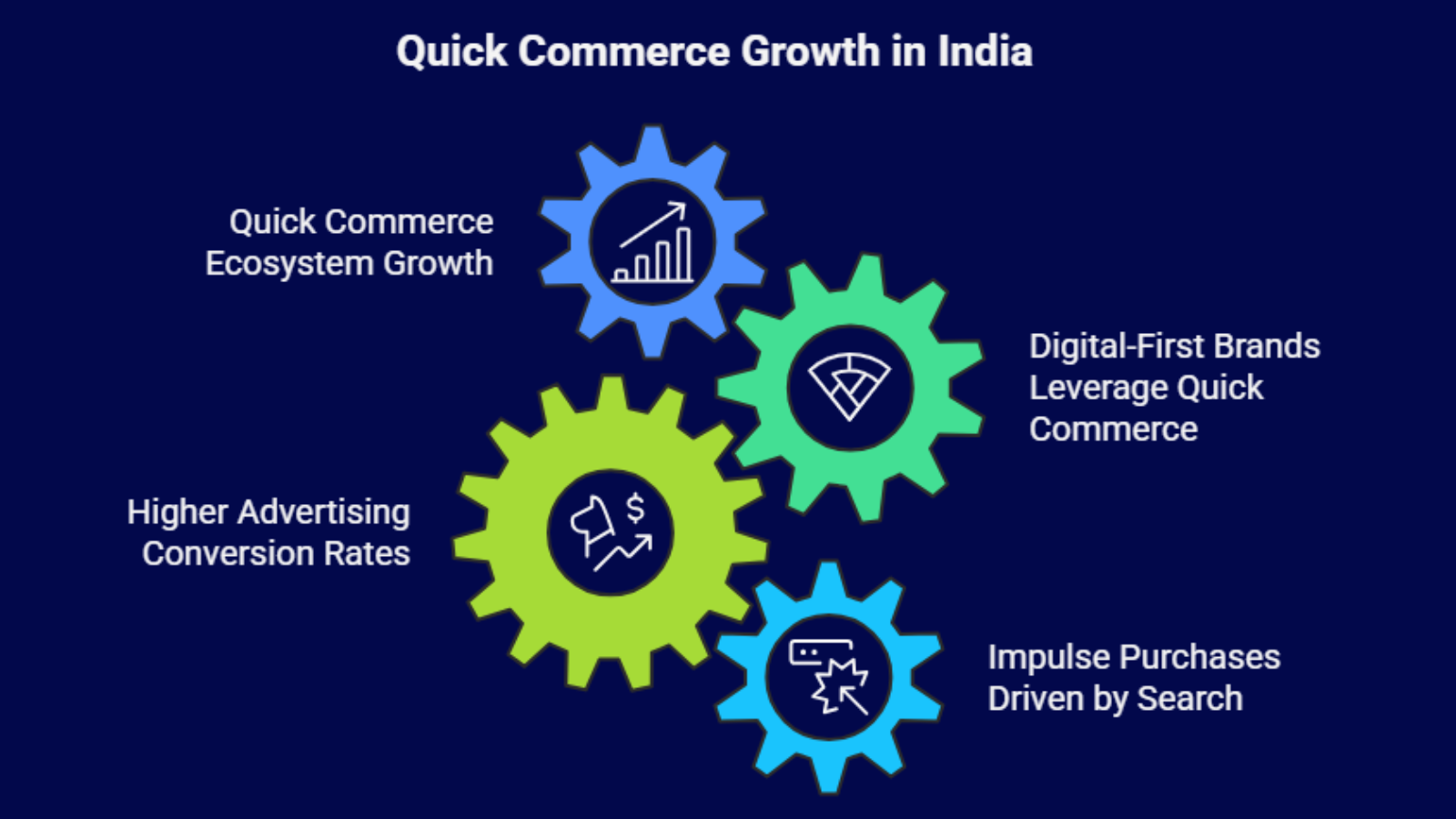 Quick commerce growth is no longer theoretical. Real performance data shows that D2C Brands leveraging Quick-Commerce in India are seeing measurable business outcomes across revenue, advertising efficiency, and customer acquisition. For Indian sellers evaluating this channel, tracking the right growth signals can help determine whether quick commerce can become a major revenue driver or just a supplementary sales channel.
Rapid revenue contribution from quick commerce
Over the past two years, India’s quick commerce ecosystem has grown by more than 280 percent in gross merchandise value, making it one of the fastest-expanding retail channels in the country.
Because of this rapid growth, several digital-first brands now generate 25 to 45 percent of their online revenue from quick commerce platforms such as Blinkit, Zepto, and Instamart. For high-frequency categories like snacks, beverages, and personal care, some brands even see quick commerce contributing over one-third of total online sales.
Higher advertising conversion compared to traditional ecommerce
Advertising on quick commerce platforms performs differently from traditional marketplaces. Customers typically open apps like Blinkit or Zepto with a clear purchase intention rather than browsing casually.
Because of this behavior, search ads inside quick commerce apps often achieve conversion rates between 3 percent and 8 percent, which is significantly higher than the 1 to 2 percent conversion rate commonly seen on social commerce campaigns.
Impulse purchases driven by in-app search visibility
Another key growth signal for D2C Brands Leveraging Quick-Commerce in India is how discovery happens inside the apps. Nearly 60 percent of quick commerce orders originate from in-app search, while another significant portion comes from category placements such as snacks, beverages, and personal care.
This means brands that optimize product titles, keywords, and category placement can gain strong visibility without relying only on advertising budgets.
Strategic Challenges and Future Opportunity
Despite the strong growth potential, D2C Brands Leveraging Quick-Commerce in India must manage several operational challenges. One of the biggest is the platform commission. Most quick commerce platforms charge between 30 percent and 50 percent commission, which significantly impacts margins. In addition, brands often spend 10 to 20 percent of revenue on platform advertising to maintain search visibility.
Inventory management is another major challenge. Because quick commerce relies on hyperlocal dark stores, brands must distribute stock across multiple locations in the same city. A single metro city like Bangalore or Delhi can have 80 to 120 dark stores, which require careful demand forecasting and logistics planning.
However, the long-term opportunity remains massive. Quick commerce platforms are rapidly expanding beyond groceries into snacks, beverages, supplements, and lifestyle products. Industry projections suggest the Indian quick commerce market could exceed $7 billion in value within the next few years.
As dark store networks expand into Tier-2 cities like Jaipur, Chandigarh, and Kochi, more D2C Brands Leveraging Quick-Commerce in India will gain access to new customers without investing heavily in their own distribution infrastructure.
How Base.com Helps Brands Win In Quick Commerce
Quick commerce is reshaping the retail ecosystem in India. What started as a convenience service for groceries has now become a powerful growth engine for modern consumer brands.
Many successful D2C Brands Leveraging Quick-Commerce in India are using platforms like Blinkit, Zepto, and Instamart to reach customers faster, improve product discovery, and increase purchase frequency.
However, scaling through this channel requires strong operations, careful SKU planning, and disciplined advertising strategies.
For brands that execute it well, quick commerce can unlock enterprise-level scale much faster than traditional ecommerce.
If you are building a modern consumer brand, managing inventory across marketplaces, quick commerce platforms, and your own store can quickly become complex.
That is where Base.com helps.
Base.com allows brands to:
• Manage orders across multiple sales channels
• Sync inventory in real time
• Automate fulfillment workflows
• Scale operations across marketplaces and quick commerce platforms
If you want to become one of the fastest-growing D2C Brands Leveraging Quick-Commerce in India, Base.com can help you build the operational foundation needed to scale efficiently.
FAQs
1. How can D2C brands get listed on quick commerce platforms like Blinkit or Zepto?
Most platforms onboard brands through category managers or distribution partners. Sellers typically need a GST-registered entity, consistent supply capability, and high-demand SKUs. Many platforms also prefer brands that can supply inventory to multiple dark stores within a city.
2. How many SKUs should a brand launch with on quick commerce platforms?
Most successful D2C Brands Leveraging Quick-Commerce in India start with 5 to 15 high velocity SKUs. These are usually bestsellers, trial packs, or high repeat purchase products. Listing too many SKUs reduces stock efficiency and makes inventory management across dark stores difficult.
3. What pricing strategy works best for quick commerce?
Products priced between ₹80 and ₹300 typically perform best because they match the average quick commerce basket size of ₹350 to ₹600. Brands often launch smaller pack sizes or trial packs to encourage impulse purchases and increase order frequency.
4. How much advertising budget should brands allocate for quick commerce?
Many D2C Brands Leveraging Quick-Commerce in India allocate 10 to 20 percent of their quick commerce revenue toward platform advertising. Search ads and category placements usually deliver the best results because most orders originate from in-app search queries.
5. What operational challenges should sellers prepare for before scaling?
The biggest challenge is inventory management across multiple dark stores. A single metro city may require stocking 50 to 100 micro warehouses. Brands must maintain high stock availability and frequent replenishment cycles to avoid losing visibility on the platform.