Quick delivery has quietly reshaped how Indian consumers shop online. Platforms like Blinkit, Zepto, and Instamart have trained customers to expect essentials within 10 to 20 minutes. This convenience has fueled massive adoption.
India’s quick commerce market crossed $3.3 billion in 2024 and is projected to reach nearly $10 billion by 2029, driven largely by urban millennials and Gen Z shoppers. However, this speed-first model has created a structural challenge for brands.
The biggest issue is basket size. On most quick commerce platforms, the average order value in quick commerce ranges between ₹350 and ₹550, while traditional eCommerce grocery orders typically range from ₹900 to ₹1,400. The reason is simple. Customers place intent-driven micro orders rather than weekly stock-up purchases. For example, a consumer ordering Maggi at 9 PM might only add butter or eggs, rather than building a full grocery cart.
For Indian D2C brands, this creates a hidden margin challenge. Commissions on quick commerce marketplaces can range between 18 percent and 30 percent, and when combined with smaller basket sizes, profitability becomes harder to achieve. Many sellers also overlook one key nuance. Nearly 60 percent of quick commerce orders in India happen between 6 PM and midnight, which means impulse consumption categories such as snacks, beverages, and ready-to-cook products dominate.
Brands that understand these patterns can design bundles, time-based promotions, and cross-category combos specifically for these high-intent purchase windows.
Understanding the Difference Between Quick Commerce, eCommerce, and D2C
Before analyzing basket size, Indian sellers need to understand how these three commerce models operate in practice. Each model influences buying behavior differently, which directly affects revenue, margins, and inventory planning.
Quick commerce is designed for urgency. Platforms such as Blinkit, Zepto, and Swiggy Instamart operate through hyperlocal dark stores within a 2 to 3 km radius, allowing deliveries in 8 to 20 minutes. These stores typically stock 2,000 to 4,500 SKUs, focusing on high-frequency items like dairy, snacks, beverages, and ready-to-cook products. Because of this limited assortment, the average order value in quick commerce in India usually stays between ₹350 and ₹550.
Traditional eCommerce works differently. Platforms like Amazon and Flipkart offer over 100,000 SKUs in many categories, allowing customers to browse, compare, and stock up. As a result, grocery basket sizes often reach ₹900 to ₹1,500 per order.
For D2C brands, the opportunity lies in combining channels. Many brands now blend D2C offline retail, their own website, and quick commerce marketplaces to increase product discovery while maintaining repeat purchases.
Operational Differences Sellers Should Understand
| Factor | Quick Commerce | eCommerce | D2C Model |
|---|---|---|---|
| Typical SKUs per store | 2,000 to 4,500 | 50,000 to 2 lakh+ | 50 to 500 |
| Average order value | ₹350 to ₹550 | ₹900 to ₹1,500 | ₹700 to ₹1,200 |
| Order frequency | 4 to 8 times per month | 1 to 2 times per month | 2 to 3 times per month |
| Purchase trigger | Immediate need | Planned shopping | Brand loyalty |
A key nuance Indian sellers often miss is location-level demand variation. For example, quick commerce orders in Bangalore and Mumbai peak between 7 PM and 11 PM, with snacks, ice cream, and beverages dominating the basket. In contrast, morning orders (7 AM to 10 AM) are largely milk, bread, fruits, and breakfast items.
Brands that design time-based bundles and complementary products for these windows can significantly increase basket size and improve margins.
Why Basket Sizes Are Smaller in Quick Commerce and How D2C Brands Can Increase Them
 Quick commerce is growing rapidly in India, but basket size remains one of its biggest operational challenges.
While platforms like Blinkit, Zepto, and Instamart deliver convenience and speed, the average order value in quick commerce in India typically ranges between ₹350 and ₹550, far lower than traditional eCommerce grocery orders that often exceed ₹900 to ₹1,400. For D2C brands, this gap directly impacts margins because marketplace commissions, warehousing fees, and promotional costs reduce profitability on small carts.
To solve this, brands must understand the behavioral patterns that drive quick commerce purchases. Unlike traditional eCommerce, customers are not browsing for long periods. They open the app to solve a specific need quickly. This leads to smaller carts but higher purchase frequency.
However, basket size can be improved with the right AOV optimization q-commerce strategies. Below are five practical reasons basket sizes remain small and how brands can increase them while improving revenue and visibility on quick commerce platforms.
1. Urgency-Driven Buying Reduces Cart Size but Bundling Can Increase It
One of the biggest reasons basket sizes are small in quick commerce is urgency-driven purchasing. Customers typically open apps like Blinkit or Zepto when they realize they are missing a specific item. This means the purchase is problem-focused rather than discovery-driven.
For example, a customer preparing dinner may quickly order tomatoes or cooking oil. A late-night user watching a movie might order chips or ice cream. In such cases, the intent is to solve a single need immediately. Because of this behavior, most quick commerce orders contain two to three items on average.
This behavior creates a structural challenge for brands. If the customer is only ordering one product, the average order value in quick commerce naturally remains low. For D2C brands, this also reduces the chances of cross-selling or product discovery.
The solution lies in smart product bundling and contextual combos. Instead of selling individual products, brands can create bundles aligned with consumption occasions.
Examples include:
- Breakfast bundle
- bread
- butter
- peanut butter
- Movie night bundle
- chips
- soft drinks
- popcorn
- Instant cooking combo
- pasta
- pasta sauce
- cheese
These bundles encourage impulse buying and quick delivery, while increasing the number of products per order.
For D2C brands, the benefit is clear. A customer who initially intended to buy a ₹120 snack may end up purchasing a ₹350 combo pack. This increases the average order value in quick commerce while improving product visibility within the platform.
Another nuance many Indian sellers overlook is time-based consumption patterns. Data from quick commerce platforms shows over 60 percent of snack and beverage orders occur between 7 PM and midnight. Brands that create evening snack combos or late-night bundles see significantly higher conversion rates.
2. Limited SKU Availability Restricts Basket Expansion, but Strategic Placement Helps
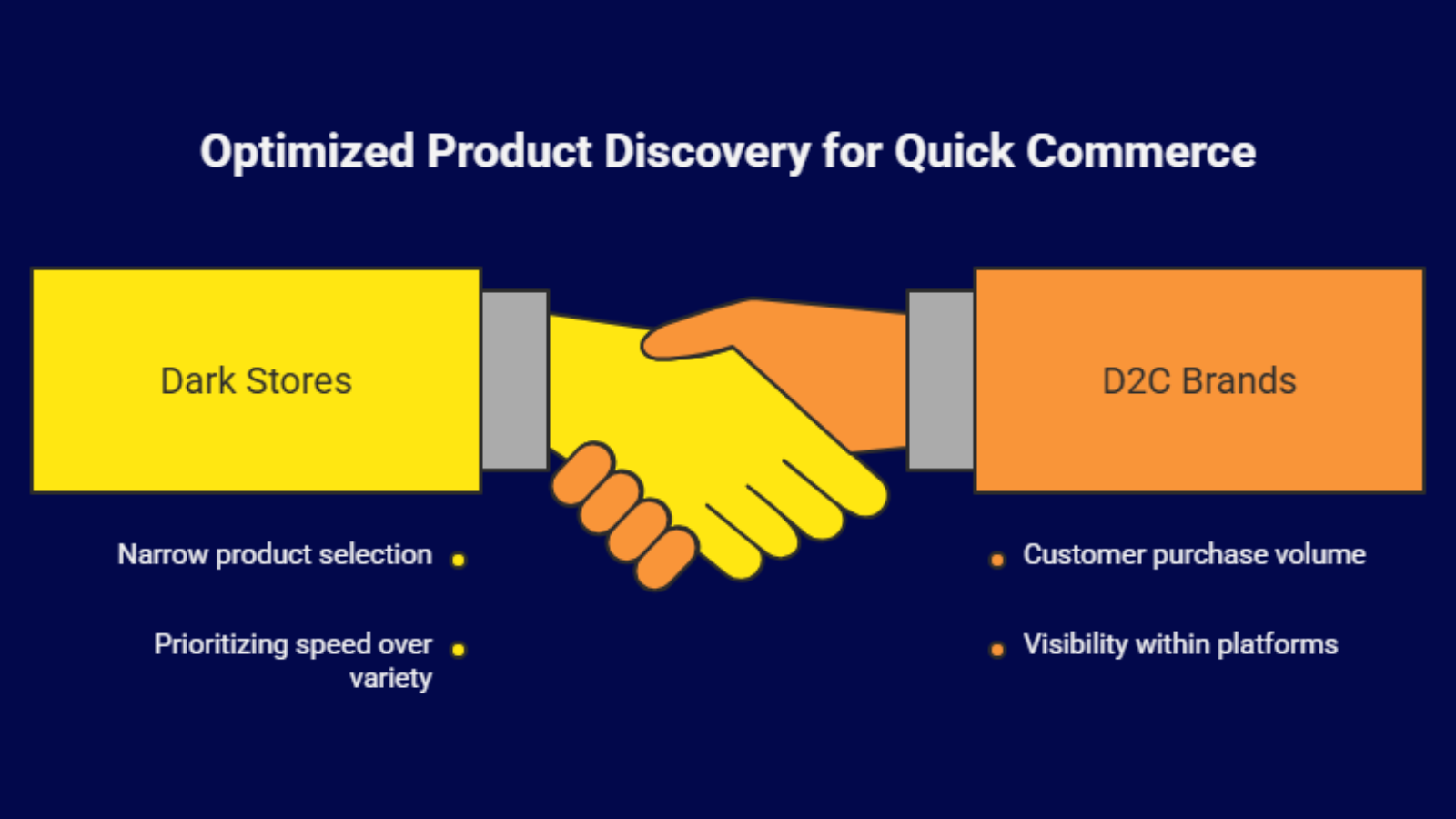 Unlike traditional eCommerce warehouses, quick commerce dark stores are designed for speed, not assortment. Most dark stores in India carry between 2,000 and 4,500 SKUs, compared to tens of thousands of products available on eCommerce platforms.
This limitation directly affects basket size. If a customer searches for a product and sees only a few related options, the chances of adding more items to the cart decrease.
For example, if a customer orders instant noodles but does not see complementary items like sauces or ready-to-cook toppings, the cart stops at one product.
For D2C brands, this creates a hidden visibility challenge. Being present on quick commerce platforms does not guarantee discovery. Products must appear within relevant categories or recommendation slots.
To increase basket size, brands must work with platforms to secure strategic placements such as:
- “Frequently bought together.”
- “Complete your meal.”
- “Recommended with this item.”
These placements are key basket-building strategies used by successful quick commerce brands.
For example, if a customer adds pasta to the cart, showing pasta sauce and cheese in the recommendation panel increases cross-category purchases.
The benefit for brands is twofold. First, the average order value in quick commerce increases. Second, customers discover new products within the brand portfolio.
Another insight for Indian sellers is that quick commerce platforms often prioritize high sell-through rate SKUs. Brands that focus on fewer, faster-moving products rather than large catalogs perform better in dark store environments.
3. Convenience First Behavior Reduces Price Comparison but Threshold Incentives Increase Cart Value
Traditional eCommerce shoppers spend time comparing prices, reading reviews, and exploring different brands. Quick commerce shoppers behave differently. They value speed and convenience over detailed comparisons.
Because of this behavior, many users complete orders quickly without exploring additional products. The goal is to receive the product within minutes, not to optimize cost.
This behavior keeps the average order value in quick commerce low. However, it also creates an opportunity for brands and platforms to increase basket size through incentives.
One of the most effective AOV optimization q-commerce tactics is minimum order thresholds.
Examples include:
- Free delivery above ₹199
- Discount above ₹399
- Cashback above ₹499
When customers see these thresholds, they often add extra items to qualify for the benefit.
For example, if a customer has ₹160 worth of products in their cart and sees free delivery at ₹199, they are likely to add an additional item such as chocolate or biscuits.
For D2C brands, these basket-building strategies significantly improve revenue per order.
A practical case from Indian quick commerce platforms shows that free delivery thresholds can increase cart value by 25 to 35 percent.
Another nuance for Indian sellers is the role of small add-on products. Products priced between ₹40 and ₹120 often act as filler items that help customers reach threshold values.
Brands that offer small, impulse-friendly SKUs see better placement in quick commerce carts.
4. High Order Frequency Reduces Weekly Basket Size, but Subscription and Combo Packs Can Stabilize Revenue
 Another reason basket sizes remain small in quick commerce is the frequency of purchases. Unlike traditional grocery shopping, where consumers buy weekly or biweekly, quick commerce encourages frequent micro-orders.
A typical urban quick commerce user in India places four to eight orders per month, compared to one or two large grocery orders on eCommerce platforms.
For example:
- Monday morning: milk and bread
- Wednesday evening: vegetables
- Friday night: snacks and beverages
While this behavior increases order frequency, it reduces the size of individual baskets.
For D2C brands, this creates operational pressure because commissions and fulfillment costs apply to every order.
One effective solution is creating combo packs designed for repeat purchases.
Examples include:
- weekly snack packs
- ready-to-cook meal kits
- breakfast essentials bundles
These packs encourage customers to purchase multiple items in a single order instead of spreading purchases across several small transactions.
Subscription-style bundles can also improve stability for brands.
For example:
- weekly smoothie packs
- monthly healthy snack kits
- cooking ingredient bundles
These packs improve the average order value in quick commerce while increasing repeat purchases.
For Indian sellers, another overlooked insight is that weekday evenings and weekend afternoons generate the highest quick commerce traffic. Promotions and bundles launched during these windows perform significantly better.
5. Limited Product Discovery Reduces Brand Visibility, but Hyperlocal Personalization Can Expand Baskets
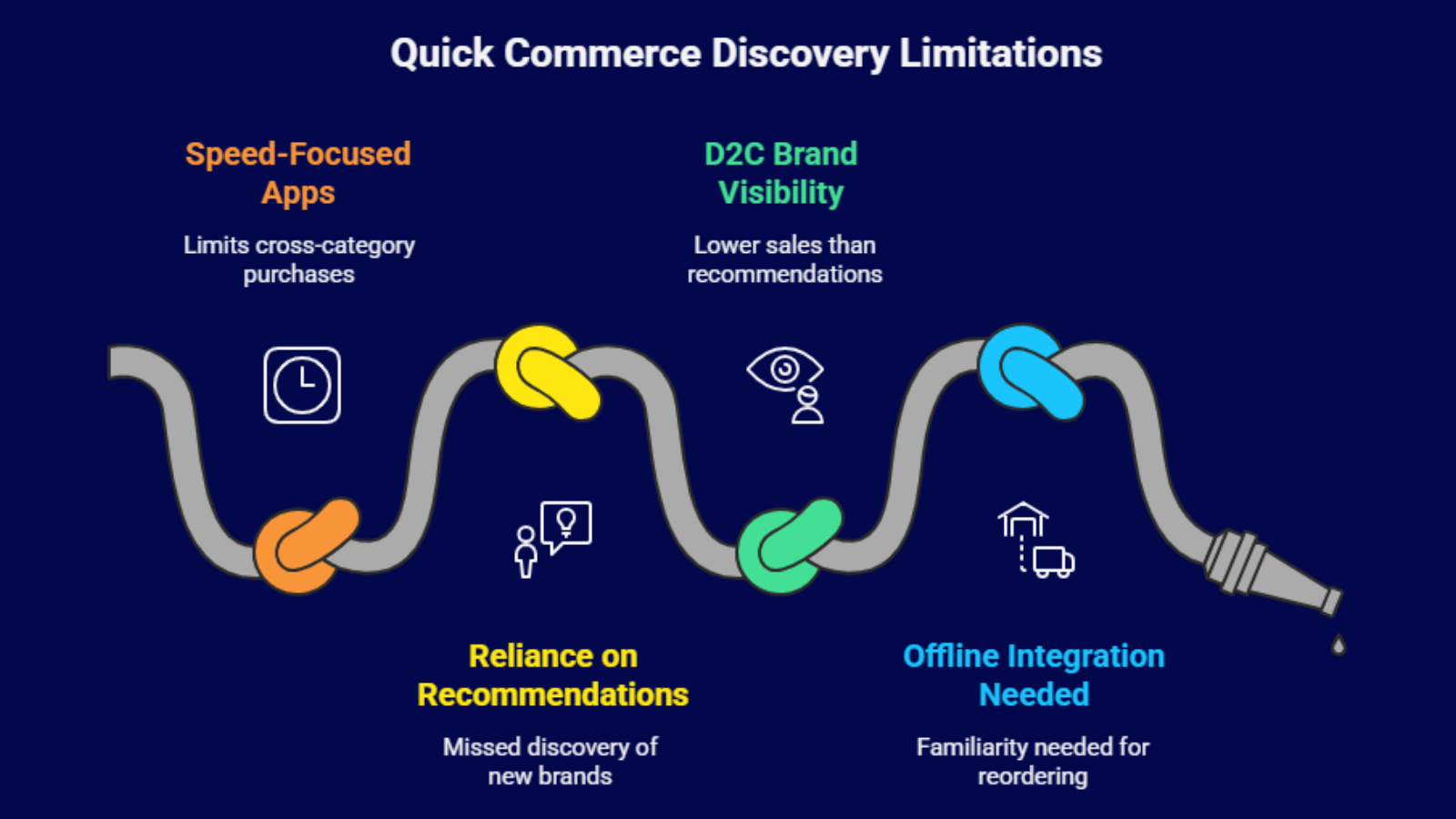 Product discovery is another major limitation in quick commerce.
Unlike eCommerce websites, where customers browse multiple pages, quick commerce apps are designed for speed. Customers usually search for a product and check out quickly.
This limits brand exposure and reduces the chances of cross-category purchases.
For example, a customer ordering ice cream might never discover a new dessert brand unless it appears in recommendations.
This is where personalization becomes critical for AOV optimization in Q-commerce.
Platforms analyze several data points, including:
- location
- time of day
- past purchase history
- frequently ordered products
Using this data, apps recommend relevant items that match the customer’s context.
Examples include:
- late-night dessert combos after 10 PM
- breakfast bundles between 7 AM and 10 AM
- weekend snack packs on Friday evenings
These personalized suggestions increase impulse buying and quick delivery, which naturally expands basket size.
For D2C brands, personalization improves both visibility and conversion rates. Products placed within recommendation engines often generate significantly higher sales than those listed only within categories.
Another strategic move for brands is integrating quick commerce with D2C offline retail.
Physical stores help customers discover products for the first time. Once the customer becomes familiar with the brand, they are more likely to reorder the same product through quick commerce platforms.
This hybrid strategy improves both customer lifetime value and the average order value in quick commerce.
The Future of Quick Commerce Basket Growth Through D2C Offline Retail Integration
 For Indian brands, the most effective way to stabilize the average order value in quick commerce is by combining quick commerce with D2C offline retail and owned online channels.
Many successful D2C brands are already using this hybrid model to drive discovery and repeat purchases. For example, a customer may first try a protein bar or healthy snack at a mall kiosk or brand store. Later, when they run out, they reorder the same product through Blinkit or Instamart within minutes.
This pattern is becoming common in India. Industry data shows that over 35 percent of quick commerce purchases are repeat purchases of previously discovered products. Offline touchpoints help build familiarity, which increases reorder rates online.
Indian sellers should also know that cities like Bangalore, Mumbai, and Delhi account for nearly 70 percent of quick commerce demand, making localized retail and hyperlocal fulfillment extremely valuable.
Brands that combine D2C offline retail, marketplace quick delivery, and smart AOV optimization q-commerce tactics consistently achieve higher basket sizes and stronger customer lifetime value.
Conclusion
Quick commerce changed the way people shop. Customers expect speed, convenience, and instant delivery. However, this shift also reduced the average order value in quick commerce, making basket sizes smaller than traditional eCommerce.
For D2C brands, solving this challenge requires smart strategies. Product bundles, personalized recommendations, and incentive-based cart thresholds can significantly improve basket size. At the same time, integrating quick commerce with D2C offline retail creates a balanced retail ecosystem.
When brands focus on strong basket-building strategies, quick commerce becomes more than just fast delivery. It becomes a profitable growth channel.
If your brand is selling through quick commerce or planning to scale your D2C strategy, technology plays a critical role.
Base.com helps brands streamline operations across eCommerce, marketplaces, and quick commerce platforms while optimizing order management and inventory.
If you want to improve average order value in quick commerce and build smarter fulfillment workflows, explore how Base.com can help you scale faster and sell smarter.
FAQs
1. What is a good average order value in quick commerce for D2C brands in India?
For most quick commerce platforms in India, the average order value in quick commerce ranges between ₹350 and ₹550. D2C brands should aim to push cart values above ₹600 using bundles, combos, and cross-sell products to maintain margins after marketplace commissions.
2. Which product categories perform best on quick commerce for D2C brands?
High velocity categories perform best. These include snacks, beverages, ready-to-cook foods, dairy alternatives, desserts, and instant meals. These products align with impulse buying quick delivery behavior, especially during evening and late-night ordering windows.
3. How do quick commerce platforms decide which products appear in recommendations?
Platforms prioritize products based on sell-through rate, availability in nearby dark stores, customer ratings, and repeat purchase frequency. D2C brands that maintain consistent stock and high conversion rates get better placement in “frequently bought together” and recommendation slots.
4. How many SKUs should a D2C brand list on quick commerce platforms?
Most successful brands start with 5 to 15 high-velocity SKUs rather than listing their full catalog. Dark stores carry limited inventory, so focusing on fast-moving products improves visibility, stock rotation, and the average order value in quick commerce.
5. When do most quick commerce orders happen in India?
Quick commerce demand peaks between 6 PM and 11 PM, especially in metro cities like Bangalore, Mumbai, and Delhi. Snacks, desserts, beverages, and ready-to-eat meals dominate during these hours, making them ideal for basket-building strategies and bundle offers.