Quick commerce is no longer just a convenience play. For Indian consumer brands, it is quickly becoming a high-velocity distribution channel that can move products faster than most marketplaces.
Platforms like Blinkit, Zepto, and Instamart together process over 2 to 3 million orders per day in India, and the category is projected to cross $9 to $10 billion in GMV by 2026. That scale means one thing for D2C sellers. If your product is not visible on quick commerce, you are likely missing a major discovery channel.
But profitability is where most brands get confused. Quick commerce platforms typically charge 15 to 25 percent commission, and when brands add platform ads, sampling, and discounting D2C, the total cost can go up to 30 to 35 percent of the product price. This is why many SKUs priced below ₹200 struggle to sustain healthy q-commerce margins.
Smart D2C brands solve this differently. Instead of selling single units, they list bundled packs priced between ₹299 and ₹699, which helps protect margins while increasing basket size. Another insight many sellers overlook is dark store coverage. A SKU available in 120 dark stores across Bengaluru or Delhi can sell 4 to 6 times faster than the same product listed in only 30 stores.
These operational details are exactly what shape the quick commerce business model profitability for D2C brands, and understanding them is what separates profitable brands from those that burn margins.
Understanding the Quick Commerce Business Model
Before diving into the myths, it is important to understand how quick commerce actually works. The model is designed for speed, proximity, and high-order frequency, which is very different from traditional ecommerce marketplaces, where delivery can take one to two days. In India, quick commerce platforms rely on a tightly controlled supply chain that moves products from nearby dark stores to customers within minutes.
Quick commerce typically runs on three operational layers:
- Ordering through mobile apps
- Customers browse and order products through apps like Blinkit, Zepto, and Instamart
- Orders are usually placed for urgent or high-frequency items such as snacks, beverages, dairy, and personal care products
- Average order value in India typically ranges between ₹400 and ₹750
- Fulfillment from local dark stores
- Dark stores are small warehouses located within a 2 to 3 km delivery radius
- These stores usually carry 1,500 to 3,000 fast-moving SKUs
- Products with higher demand are prioritized for stocking
- Ultra-fast last-mile delivery
- Delivery partners pick up orders within minutes after packing
- Most orders are delivered in 10 to 20 minutes, depending on city density
This speed-driven infrastructure increases operational costs, which is why the quick commerce business model profitability for D2C brands remains a key debate among operators.
The 10 Biggest Myths About Quick Commerce Profitability (For Indian D2C Brands)
 Quick commerce has rapidly evolved into one of the most influential retail channels in India. Platforms such as Blinkit, Zepto, Swiggy Instamart, and BigBasket Now now process millions of orders every week and deliver products within 10-20 minutes in most metro cities.
What began as a convenience service for groceries has now become a major growth channel for many consumer brands. However, quick commerce economics are often misunderstood. Many founders assume the model is either inherently loss-making or only viable for certain categories.
For Indian D2C brands evaluating quick commerce profitability, understanding how the model actually works is critical.
Myth 1: Quick commerce always loses money
The belief that quick commerce platforms will never make money comes largely from the early years when companies were burning cash to expand aggressively.
Most platforms invested heavily in building infrastructure before profitability could be achieved. This included:
• Thousands of dark stores across cities
• Rider fleets and logistics systems
• Inventory management technology
• Real-time delivery optimization software
India now has over 4,500 dark stores across major quick commerce platforms, allowing them to serve customers within a 1.5-2 km delivery radius.
Profitability in this model depends heavily on order density.
For instance:
• A rider trip costs roughly ₹60-₹70 including incentives
• If that trip carries only one order, the delivery cost remains high
• When 3-4 orders are delivered together, the cost per order drops to ₹18-₹25
Industry estimates suggest that many dark stores approach breakeven when they reach:
• 900-1,200 orders per day
• Average order values of ₹650-₹750
As these thresholds are reached, delivery economics improve dramatically.
Myth 2: Quick commerce is only for grocery brands
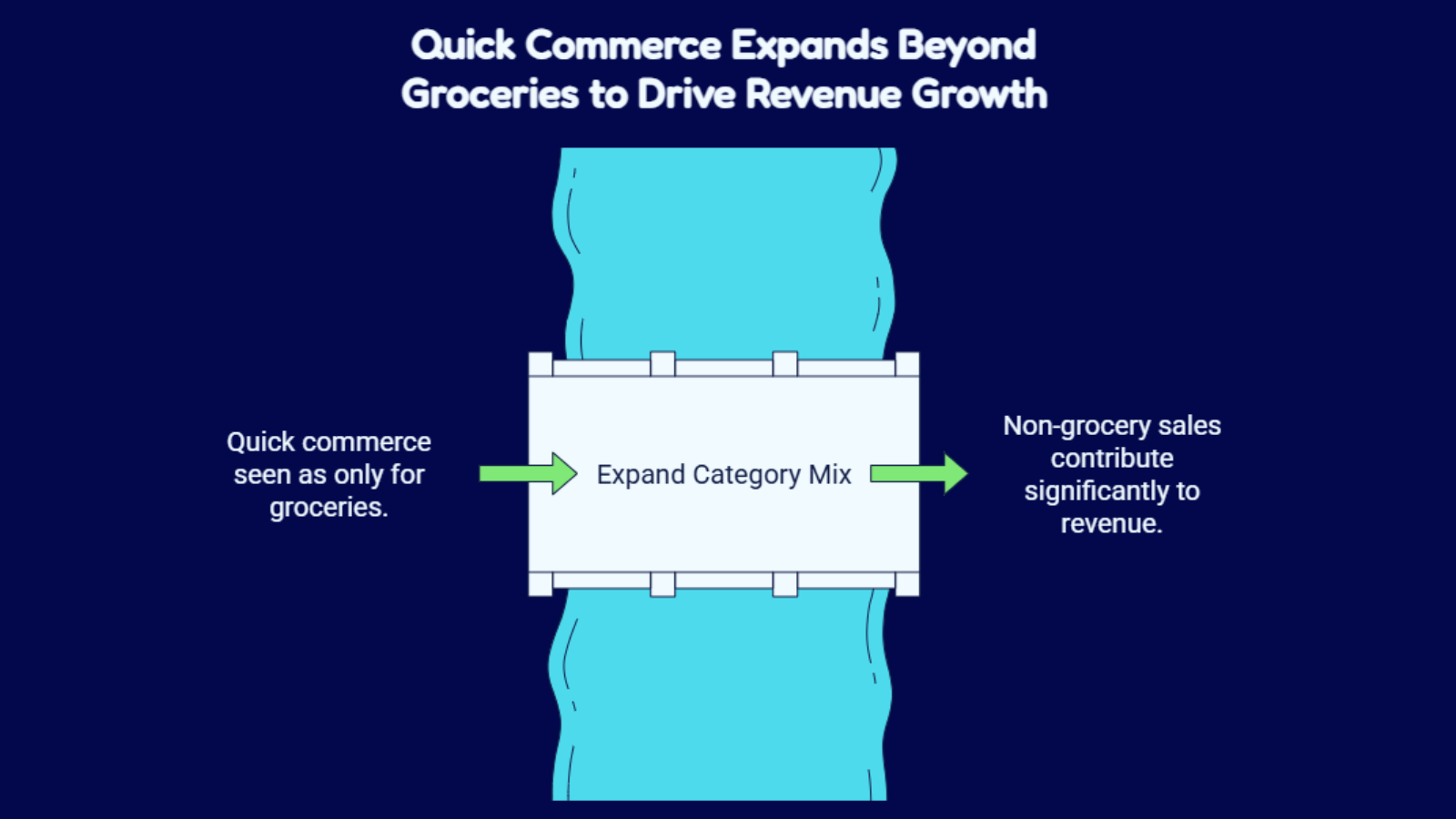 In the early days, quick commerce platforms mainly delivered milk, vegetables, and packaged foods. This created the perception that the channel works only for grocery products.
But the category mix has expanded significantly.
Today, many quick commerce platforms generate a substantial portion of revenue from non-grocery products.
Fast-growing categories include:
• Skincare and beauty products
• Health supplements and nutrition products
• Ready-to-eat meals and instant foods
• Baby care products
• Home cleaning products
• Electronics accessories
Industry reports estimate that 20-25% of quick commerce sales now come from non-grocery categories.
Several D2C brands have successfully built demand through quick commerce by launching SKUs suited to impulse purchases.
Examples include:
• Travel-size skincare products priced ₹199-₹299
• Protein bars priced ₹80-₹150
• Instant ramen or ready meals under ₹250
• Phone chargers priced ₹199-₹399
These products succeed because quick commerce customers often buy products to solve immediate consumption needs rather than long-term planning.
Myth 3: Discounting is the only way to win
Many founders entering quick commerce assume they must rely heavily on discounts to drive demand. While discounting can help generate early traction, it rarely creates long-term profitability.
Most platforms charge brands 15-25% commission, along with additional marketing or logistics costs. If brands apply deep discounts on top of these charges, margins shrink rapidly.
Successful brands instead rely on smarter strategies that balance growth and profitability.
Common tactics include:
• Bundle pricing, such as buy two snacks for ₹199
• Sponsored search placements inside the app
• Launching quick commerce exclusive SKUs
• Promoting products with high repeat purchase frequency
Many beauty brands have introduced trial-sized SKUs specifically for quick commerce.
For example:
• Mini face wash tubes under ₹149
• Trial serums priced at ₹199
• Single sheet masks under ₹120
These formats increase customer trial while maintaining reasonable margins.
Myth 4: Revenue growth equals profitability
 Quick commerce dashboards often highlight revenue growth or GMV numbers. However, revenue alone does not determine whether a brand is profitable.
Without tracking proper unit economics, brands can grow sales while losing money on every order.
Several cost components influence profitability:
• Platform commission (15-25%)
• Delivery and logistics fees
• Marketing spend within the platform
• Customer discounts
• Product manufacturing costs
If brands fail to account for these variables, the true economics of each order remain unclear.
Experienced operators, therefore, track contribution margin instead of revenue alone.
Important metrics include:
• Contribution margin per order
• Fill rate across dark stores
• Inventory turnover speed
• Average order value
Maintaining a high fill rate is particularly important. If a product frequently goes out of stock in dark stores, its sales momentum drops quickly.
Myth 5: Only big brands succeed in quick commerce
Many emerging D2C founders assume that quick commerce is dominated by large FMCG companies. However, the platform structure often creates opportunities for smaller brands.
Unlike supermarkets, dark stores have extremely limited shelf space.
Most dark stores stock 2,000-2,500 SKUs, compared with 20,000-30,000 SKUs in traditional supermarkets.
Because of this limitation, platforms prioritize products that:
• Sell quickly
• Have compact packaging
• Generate repeat purchases
This environment can favor agile niche brands.
Examples of smaller brands performing well include:
• Korean skincare brands selling sheet masks
• Healthy snack brands targeting office workers
• Functional beverage brands
• Premium coffee concentrates
These brands often gain traction because quick commerce consumers are open to discovering new products while browsing.
Myth 6: Quick commerce margins are too thin for brands
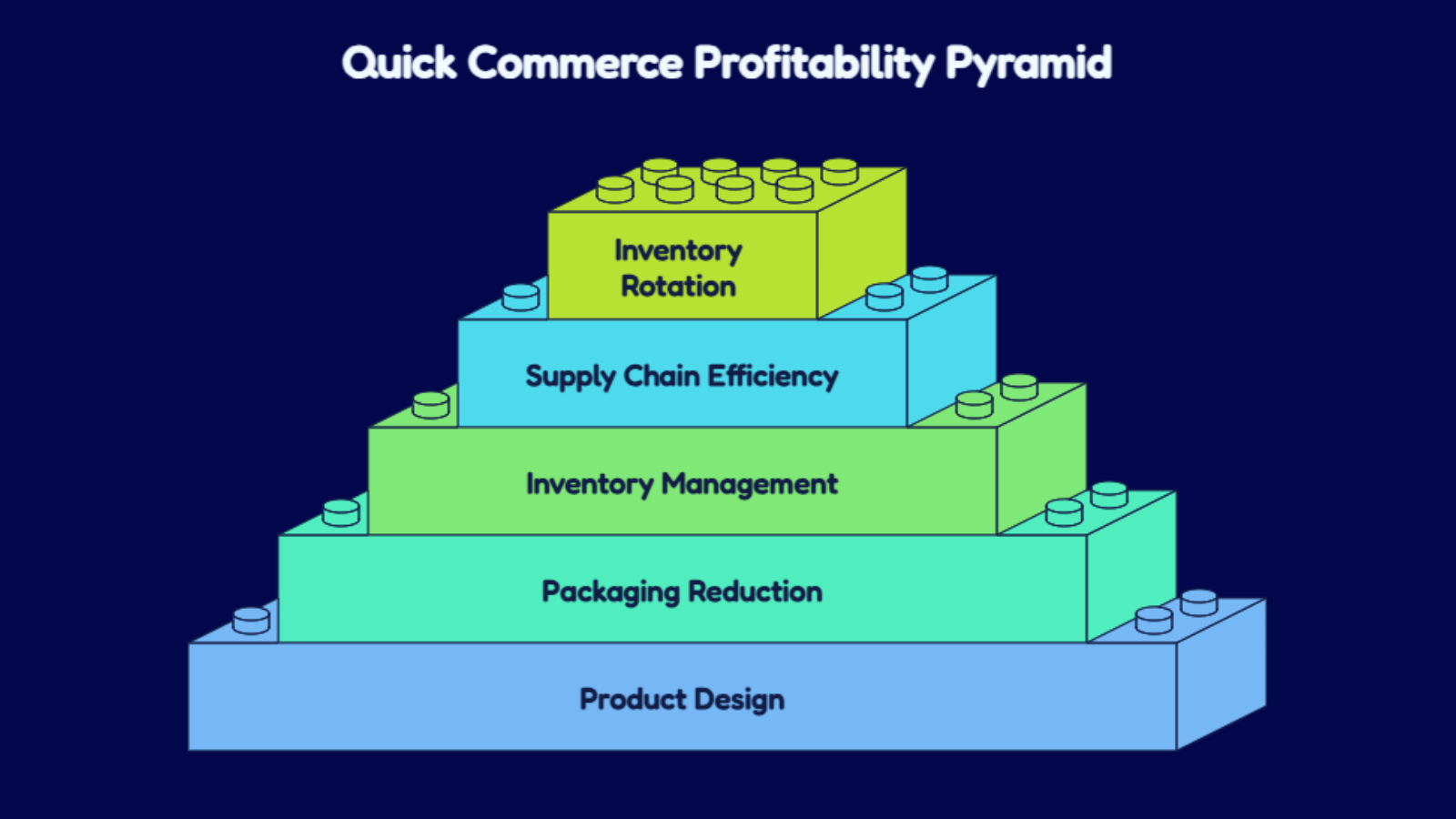 Margins on quick commerce platforms can be tight, but they are not necessarily unsustainable.
Brands that succeed often design products specifically for this channel.
Some key strategies include:
• Creating SKUs priced between ₹150-₹399, which fit common quick commerce basket sizes
• Reducing packaging costs for quick commerce-specific SKUs
• Shipping inventory to dark stores in full case packs
• Improving supply chain efficiency to lower logistics costs
Another critical factor is inventory rotation speed.
Products that sell quickly reduce storage costs and minimize expiry risks.
Many fast-moving SKUs rotate inventory every 7-14 days in metro dark stores, which significantly improves working capital efficiency.
Myth 7: Ultra-fast delivery destroys profitability
At first glance, delivering products within 10 minutes appears economically unrealistic.
However, delivery speed alone does not determine cost efficiency.
The key factor is delivery clustering within small geographic areas.
Most quick commerce platforms operate within 1.5-2 km delivery zones. Within these zones, multiple orders are dispatched together.
When several orders are delivered during a single trip, the delivery cost per order drops significantly.
Industry estimates suggest that optimized networks can reduce delivery costs to ₹18-₹35 per order.
This is why platforms invest heavily in dark store density and route optimization.
Myth 8: Quick commerce is just a distribution channel
 Quick commerce platforms are increasingly becoming powerful product discovery engines.
Consumers often open these apps multiple times a week, even when they do not have an urgent purchase in mind.
Industry estimates suggest:
• Many users open quick commerce apps 3-4 times per week
• Some power users place 15-20 orders per month
This high engagement creates strong discovery opportunities.
Consumers frequently discover new brands through:
• App homepage promotions
• Sponsored product listings
• Recommendation algorithms
For D2C brands, quick commerce can function as both a sales channel and a customer acquisition channel.
Myth 9: The market is already saturated
Although competition has increased, the quick commerce market is still expanding rapidly.
Industry projections suggest that India’s quick commerce sector could grow to $40 billion by 2030.
Several factors are driving this growth:
• Rising disposable income in urban areas
• Increasing consumer demand for convenience
• Expansion into Tier 2 cities
• Growth of non-grocery product categories
Platforms are already expanding into cities such as:
• Jaipur
• Indore
• Kochi
• Chandigarh
• Coimbatore
For D2C brands, this expansion creates opportunities to build brand presence in emerging markets.
Myth 10: Brands cannot control profitability on platforms
 Many founders believe that platforms control all aspects of pricing and profitability. While platforms do influence commission structures and promotions, brands still have significant control over their margins.
Brands can influence profitability through:
• Product pricing strategy
• SKU selection and assortment planning
• Packaging optimization
• Inventory management
• Platform advertising campaigns
For example, a snack brand selling a product at ₹120 retail price may still maintain profitability if:
• Manufacturing cost is ₹40-₹45
• Platform commission is ₹20-₹25
• Logistics allocation is ₹10-₹12
With careful planning, brands can maintain positive contribution margins while scaling sales.
Key Metrics That Actually Determine Quick Commerce Profitability for D2C Brands
For Indian D2C sellers trying to evaluate the quick commerce business model profitability, tracking the right numbers is far more important than chasing GMV. Platforms like Blinkit, Zepto, and Swiggy Instamart operate on tight unit economics, so small changes in metrics can significantly impact margins.
The first number to watch is Average Order Value (AOV). Most quick commerce platforms aim for baskets around ₹600-₹750 because this allows delivery costs (typically ₹18-₹35 per order) to be absorbed across multiple products. For example, a snack brand priced at ₹120 per SKU often improves visibility and basket inclusion by offering bundle packs like 3 units for ₹299, which increases AOV while maintaining margin.
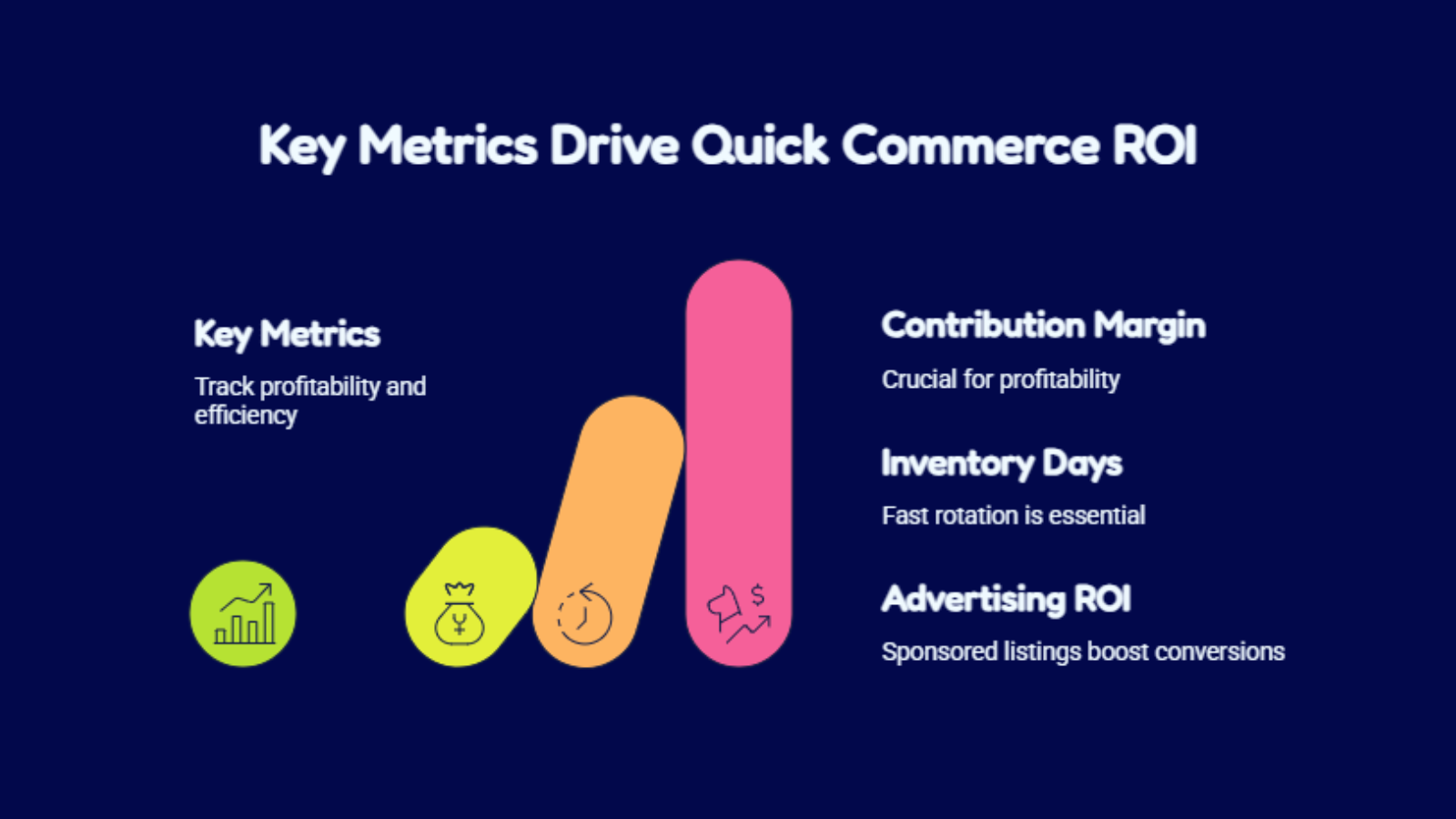 Contribution margin per order is the most critical profitability indicator. Indian D2C brands selling through quick commerce typically face 15-25% platform commissions, so products with manufacturing costs above 45-50% of MRP struggle to remain profitable.
Another overlooked metric is inventory days at dark stores. Fast-moving products should ideally rotate within 7-12 days. Slower SKUs risk removal because dark stores only carry 2,000-2,500 products, forcing platforms to prioritize high velocity items.
Finally, brands should track platform advertising ROI and repeat purchase rates. On quick commerce apps, sponsored listings often deliver 3-5x conversion rates compared to organic discovery, especially for impulse categories like snacks, skincare minis, and energy drinks.
Brands that consistently monitor these numbers are far more likely to achieve sustainable quick commerce ROI rather than short-term revenue spikes.
How Base Helps Brands Win on Quick Commerce
Managing quick commerce operations across multiple platforms can quickly become complex.
That is where Base.com helps.
Base gives brands the tools to:
- Track real-time inventory across marketplaces
- Monitor platform performance and Q-commerce margins
- Optimize pricing without excessive discounting D2C
- Improve operational efficiency and profitability
If you want to unlock better D2C quick commerce ROI, Base helps you scale smarter instead of scaling blindly.
FAQs
1. Is quick commerce actually profitable for D2C brands in India?
Yes, quick commerce can be profitable, but only when brands manage unit economics carefully. Most platforms charge 15-25% commission, and delivery allocation per order typically ranges between ₹18-₹35. Brands that maintain 40-50% gross margins, fast inventory rotation (7-14 days), and repeat purchase SKUs usually achieve positive contribution margins.
2. What margins should D2C brands expect on Blinkit, Zepto, or Instamart?
Margins vary by category, but most brands see 10-25% contribution margins after platform fees when optimized correctly. Products priced between ₹120-₹399 with manufacturing costs under 45% of MRP tend to perform best because they balance platform commission, logistics, and marketing costs.
3. How much discounting is required to sell on quick commerce?
Deep discounts are not always necessary. Many successful brands limit discounts to 5-15% and instead increase sales through bundle offers, sponsored listings, and quick commerce exclusive SKUs. Excessive discounting can quickly destroy margins when combined with platform commissions.
4. What products work best on quick commerce platforms?
Products that solve immediate consumption needs perform best. Examples include snacks, ready-to-eat meals, skincare minis, beverages, and personal care products priced between ₹100 and ₹400. High repeat purchase categories tend to generate the strongest quick commerce ROI.
5. How fast should inventory move on quick commerce to stay profitable?
Fast-moving SKUs typically rotate every 7-12 days in metro dark stores. Products that move slower than 20-25 days risk being delisted because dark stores carry limited inventory and prioritize high velocity products.