

Indian D2C brands are losing 18-25% of their revenue to avoidable operational mistakes. Poor RTO management, manual order processing, and disconnected inventory systems are the primary culprits. This guide covers the 20 most costly D2C operations in India, mistakes, and the systems that fix them.
Why Indian D2C Operations Break Down Differently
India’s ecommerce market is projected to cross $226B by 2027. D2C is growing at 40% CAGR. But the infrastructure supporting this growth, warehouses, delivery networks, and return workflows, hasn’t scaled at the same pace.
The result: brands growing fast are also failing fast operationally. 25-30% of COD orders result in returns. Multi-channel sellers on Amazon, Flipkart, and Shopify are managing three separate inventory pools manually. Customer experience breaks down in the last 100 metres.
The brands winning in D2C operations in India are the ones running unified order management, automated workflows, and real-time visibility across every channel. The ones struggling are still doing it manually.
This is not a technology problem unique to small brands. Brands doing ₹50 crore in annual revenue still routinely make the same D2C operations in India mistakes that a ₹2 crore brand makes, because the mistakes are process mistakes, not scale mistakes. Fixing D2C operations in India requires discipline at the process level before it requires investment at the technology level.
Top 20 Ecommerce Operations Mistakes Indian D2C Brands Make (And How to Fix Them)
Indian D2C brands are scaling faster than ever, but operations are not keeping up. While revenue grows, inefficiencies in order processing, inventory management, and fulfilment quietly eat into margins. Many brands lose 18-25% of their revenue not because of demand issues, but because of avoidable operational mistakes.
The core problem is not complexity; it is fragmentation. Orders come from multiple channels, inventory sits across locations, and teams rely on a mix of tools, spreadsheets, and manual processes to keep everything running. This creates delays, errors, overselling, and high RTO rates that directly impact profitability and customer experience.
What makes this more critical is that these mistakes are not limited to early-stage brands. Even businesses doing ₹50 crore+ in revenue continue to face the same operational gaps because the issue lies in process design, not scale.
This list breaks down the top 20 ecommerce operations mistakes Indian D2C brands make and, more importantly, the systems and workflows that fix them. The goal is simple: move from reactive firefighting to a structured, scalable operations engine that supports growth without increasing complexity.
Mistake 1: Manual Order Processing Across Channels
 Most D2C brands start by manually downloading orders from each marketplace and entering them into their ERP or spreadsheet. At 50 orders a day, this is manageable. At 500, it breaks.
Manual order processing creates duplicate entries, missed orders, and shipping delays that show up as bad reviews. The fix is a single order management software Indian platform that pulls from every channel, Shopify, Amazon, Flipkart, and Meesho, into one queue.
Base.com auto-ingests orders from 50+ channels, applies routing logic, and pushes to fulfilment in under 60 seconds without manual touch.
Mistake 2: No Centralised Inventory View
Running separate inventory pools for each channel is the fastest way to oversell. A brand managing Amazon FBA, their own warehouse, and a 3PL simultaneously, with no live sync, will oversell stock within weeks of a sales spike.
Centralised ecommerce warehouse management in India means one inventory record, updated in real time across every channel. When a unit ships from your Bhiwandi warehouse, every marketplace should reflect that deduction immediately.
Mistake 3: Ignoring SLA Breach Risk
Every marketplace has SLA requirements. Flipkart Quick expects a 4-hour dispatch window. Amazon Prime requires next-day shipping from Prime-enabled warehouses. Missing these cuts your seller score, reduces buy-box eligibility, and eventually delists you from promotional slots.
Most brands have no SLA monitoring. Base.com surfaces at-risk orders before they breach, so your ops team can act rather than apologise.
Mistake 4: Accepting Every Order Without Serviceability Checks
Not every pin code is serviceable by every courier. Brands that accept orders without checking pin code serviceability end up with a wave of RTO, the order ships, the courier can’t deliver, and it bounces back at your cost.
A proper best OMS India setup runs a serviceability check at the time of order creation, not after dispatch. Base.com runs this check automatically before generating a shipment label.
Mistake 5: No Split Shipment Logic
A customer orders three items. Two are in your Delhi warehouse. One is in Mumbai. Without logic to handle this, the order either waits for all three items to consolidate, causing delays, or ships in two parcels without informing the customer.
Auto-split shipment logic, with customer notification, removes this friction entirely. Base.com handles split shipments with automatic communication to the buyer.
Mistake 6: Bin-Level Inventory Blindness
Most Indian warehouse teams know they have 2,000 units of a SKU. They don’t know where in the warehouse those units are. Pick time becomes a search operation. Packing errors increase. Dispatch slows.
Bin-level location tagging, where every SKU is mapped to a specific shelf, rack, and bin, reduces pick time by 40-60% and nearly eliminates wrong-item packing. This is the foundation of any credible ecommerce warehouse management system in India.
Mistake 7: No First-Expiry-First-Out (FEFO) Enforcement
Beauty, wellness, food, and pharma D2C brands routinely ship near-expiry stock because their warehouse team picks from whatever bin is most accessible. FEFO rules prevent this. They ensure the earliest expiring batch always ships first.
Without FEFO enforcement, brands face product recalls, refund spikes, and regulatory risk.
Mistake 8: Manual Stock Reconciliation
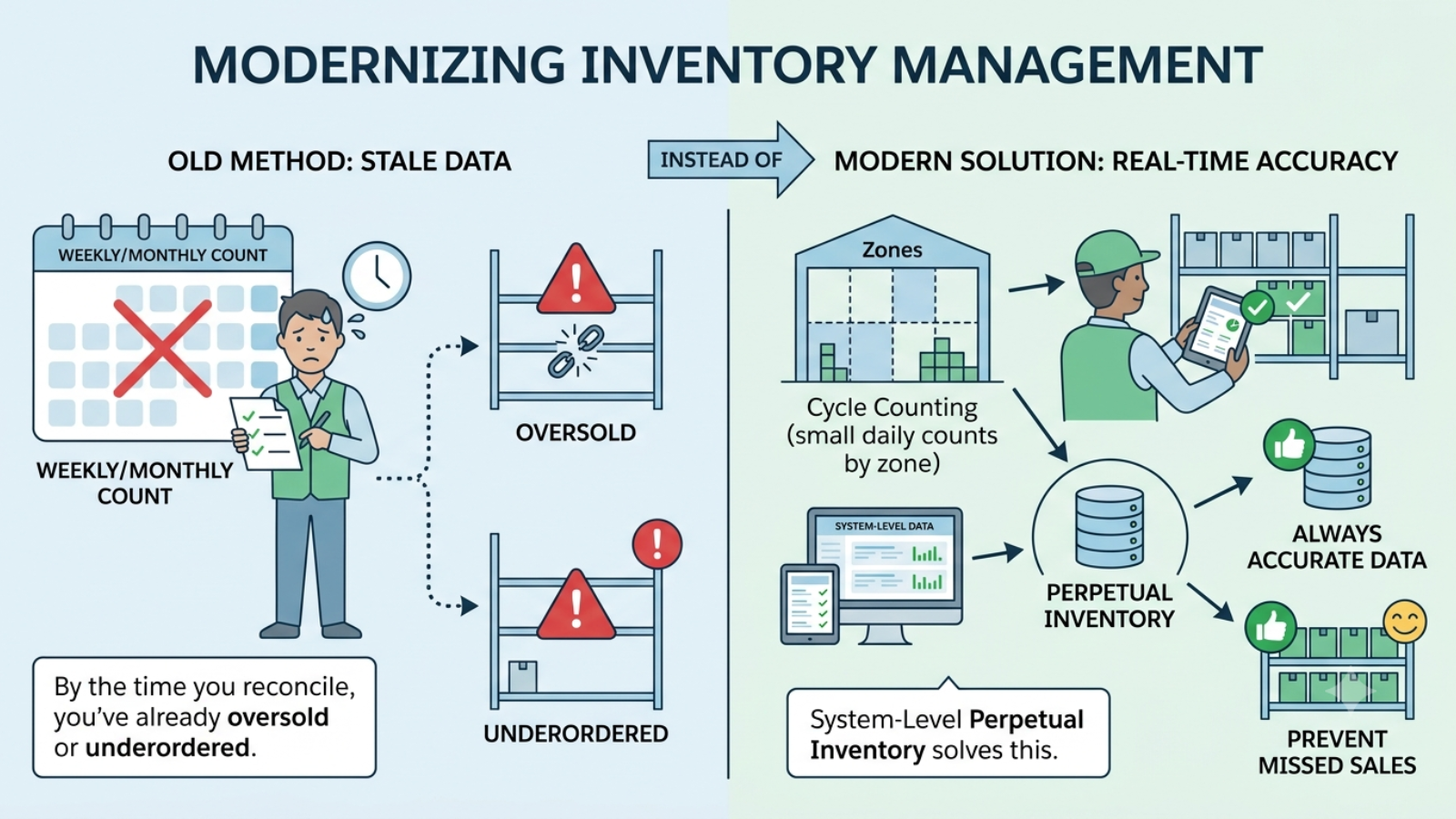 Manual stock counts, done weekly or monthly, mean you’re always operating on stale data. By the time you reconcile, you’ve already oversold or underordered. Cycle counting (small daily counts by zone) combined with system-level perpetual inventory solves this.
Base.com integrates with SAP and NetSuite to ensure system inventory matches physical inventory in real time, eliminating the reconciliation gap.
Mistake 9: No Reorder Point Automation
 Running out of fast-moving stock during a campaign is one of the most expensive mistakes in D2C operations in India. Brands using spreadsheet-based reorder tracking consistently miss the trigger window.
Automated reorder points, set by SKU, by warehouse, by sales velocity, ensure purchase orders are raised before stockouts happen, not after.
Mistake 10: Treating Returns Inventory as Dead Stock
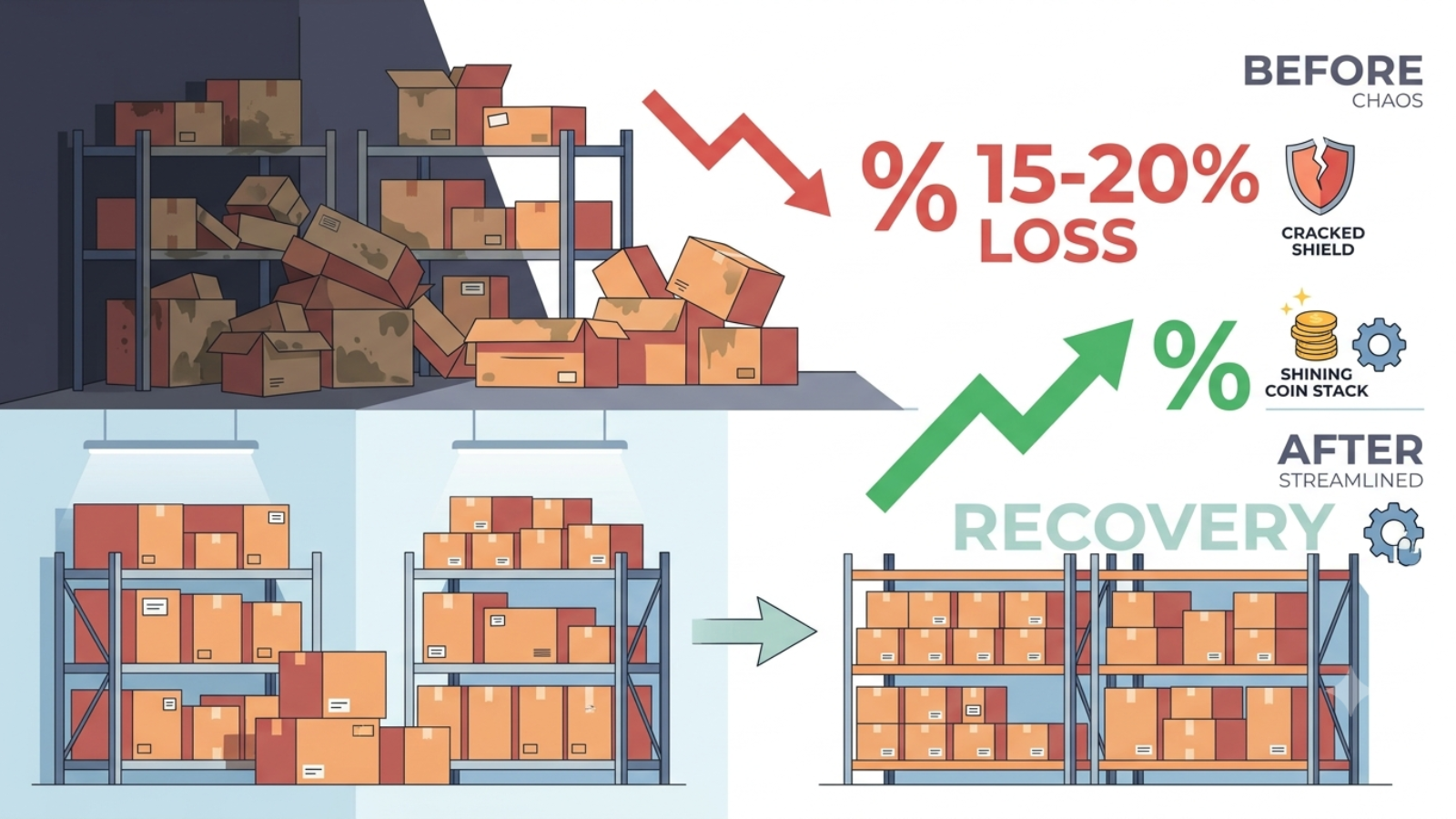 Return units sit in a corner of the warehouse, unprocessed for weeks. No quality grading. No re-shelving logic. Brands lose 15-20% of the recovery value of returned goods simply because they have no returns processing workflow.
A structured returns management process grades stock on arrival, routes resaleable units back to live inventory, and logs damaged units for claim processing. Base.com automates this workflow with rule-based disposition logic.
Mistake 11: Not Tracking RTO by Courier, Category, and Pin Code
 India’s average RTO rate for D2C brands sits between 20-30% for prepaid and 30-40% for COD. Most brands know their overall RTO rate. Very few know it by courier, by product category, or by geography.
Without this breakdown, you can’t fix RTO. You’re optimising in the dark. The first step to reduce RTO India is a dashboard that shows RTO segmented by every operational variable, courier, state, channel, and SKU.
Base.com provides this breakdown natively. Brands using it have reduced RTO by 8-12 percentage points within two quarters by switching couriers on high-RTO pin codes and tightening COD eligibility rules.
Mistake 12: No Address Verification at Checkout
 A significant portion of RTO is caused by bad addresses, incomplete pin codes, wrong house numbers, and no landmark. AI-based address verification at checkout, where the customer is prompted to confirm or correct their address, reduces non-delivery RTO by 20-30%.
This is one of the cheapest interventions available. It requires no change to your warehouse or courier setup.
Mistake 13: Not Using COD-to-Prepaid Nudges
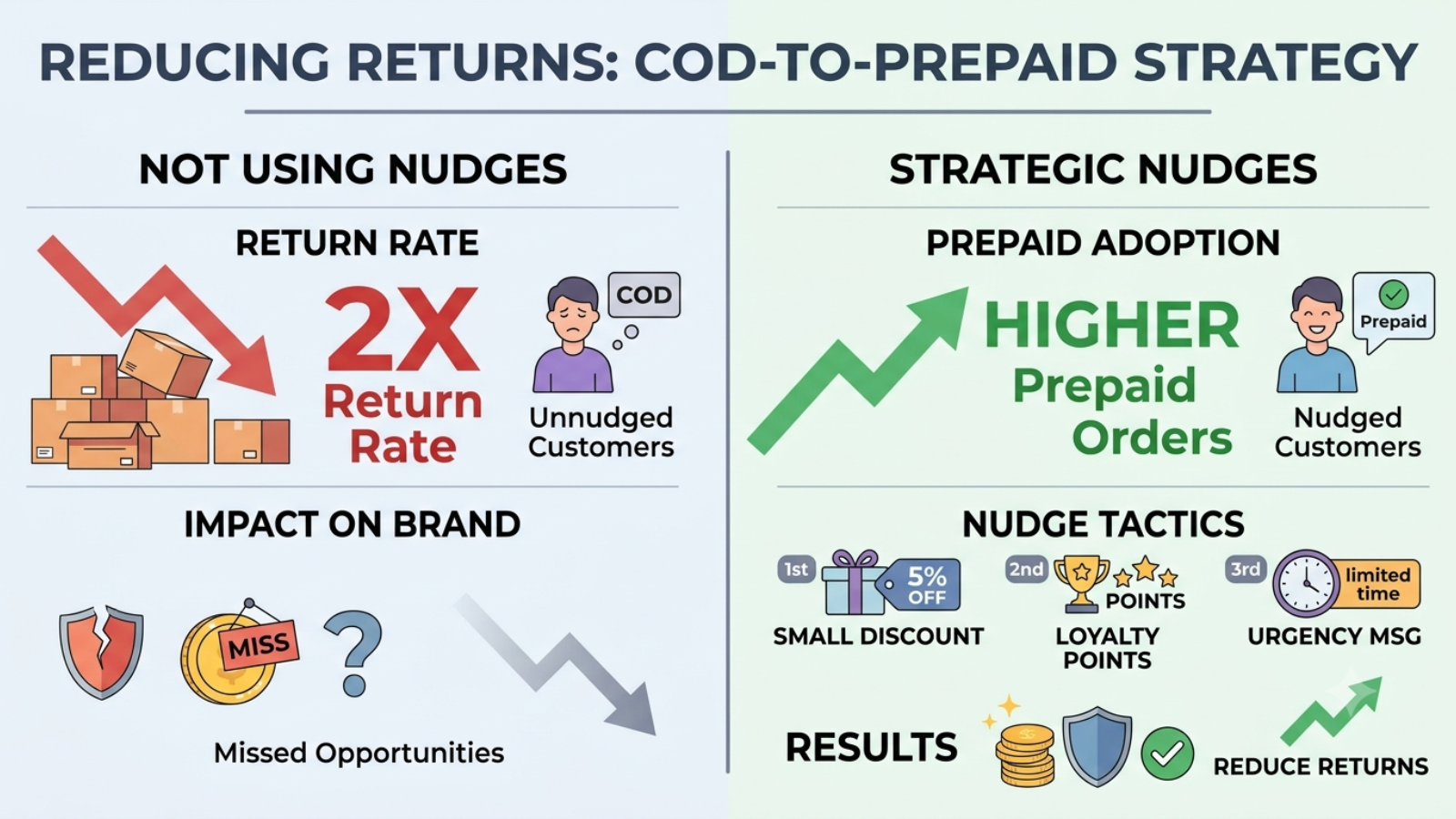 COD orders return at roughly 2x the rate of prepaid orders. Brands that don’t nudge customers toward prepaid at checkout, through small discounts, loyalty points, or urgency messaging, are leaving return reduction on the table.
A 10% shift from COD to prepaid on high-RTO categories can meaningfully improve unit economics.
Mistake 14: No Proactive NDR Management
 When a delivery attempt fails, the shipment enters NDR (Non-Delivery Report) status. Most brands wait for the courier to re-attempt. Proactive NDR management means contacting the customer within hours, confirming availability and address, and scheduling the next attempt.
Base.com’s NDR workflow automates this customer outreach via WhatsApp and SMS, increasing successful re-delivery by 25-35%.
Mistake 15: Choosing Couriers on Rate Alone
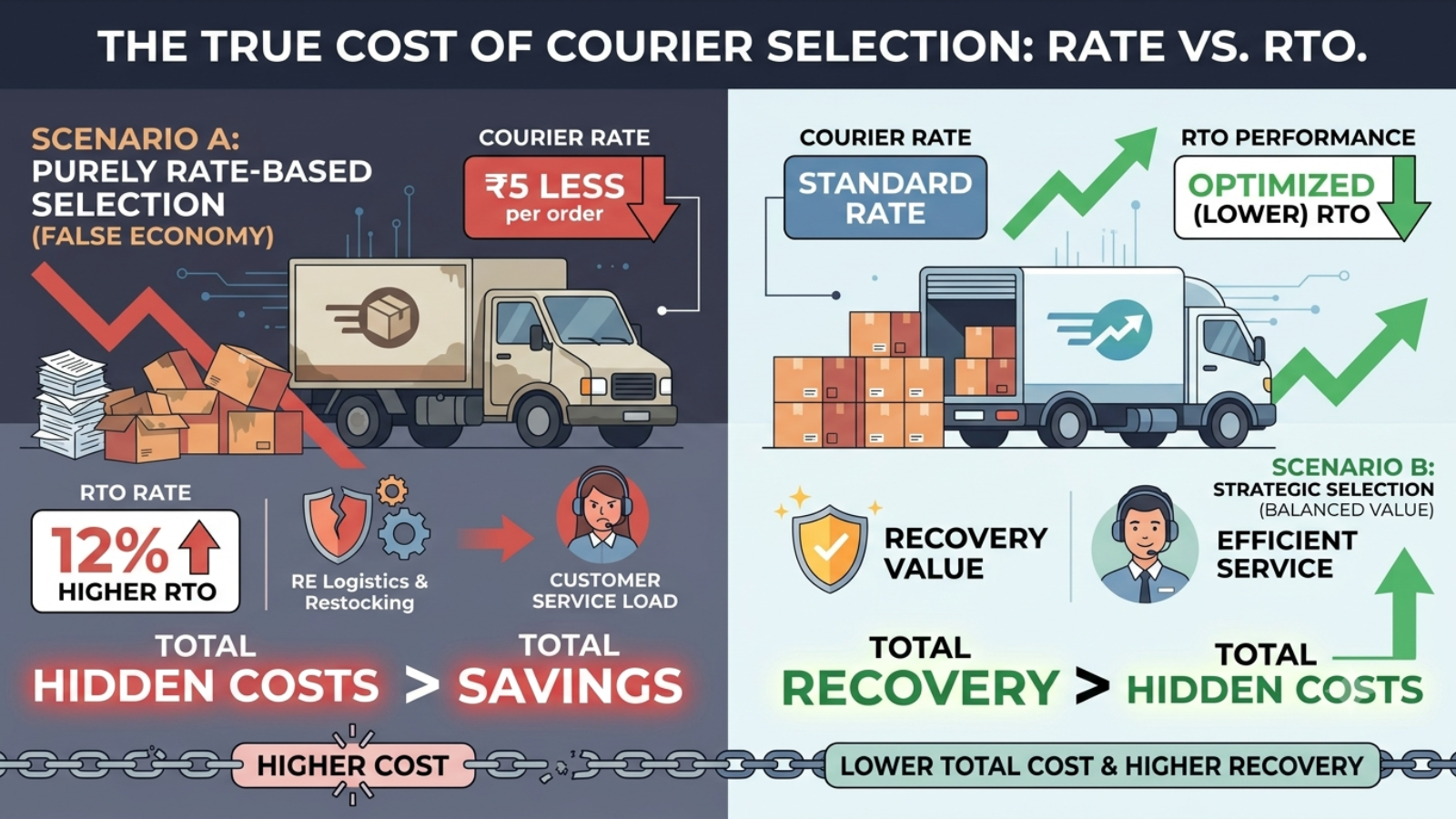 Courier selection based purely on per-shipment rate is a false economy. A courier that costs ₹5 less per order but has a 12% higher RTO rate will cost you more in return logistics, restocking, and customer service than the rate savings.
Build a courier scorecard with metrics: first-attempt delivery rate, RTO rate by zone, transit time consistency, and claims turnaround. Re-evaluate quarterly. This is a core practice in mature D2C operations in India, and one of the highest-ROI changes any brand can make in their D2C operations in India stack without spending a single rupee on new technology.
Mistake 16: Using Too Many Disconnected Tools
 The average mid-size Indian D2C brand uses 6-9 separate tools for operations: a marketplace aggregator, a shipping tool, a warehouse management system, an ERP, a returns tool, an analytics dashboard, and spreadsheets to fill the gaps between all of them.
Each integration point is a failure point. Data lags, duplicate records, and manual bridges between tools create a fragile stack that breaks during high-volume periods, exactly when you can least afford it.
The shift toward a unified platform, one system handling order management software India, warehouse management, and returns, eliminates these gaps and reduces operational headcount requirements. This is the single biggest structural shift available to D2C operations in India teams today.
Base.com unifies OMS, WMS, and courier management in a single platform built for the Indian ecommerce infrastructure, including direct ERP integrations with SAP and NetSuite.
Mistake 17: No Operational Benchmarking
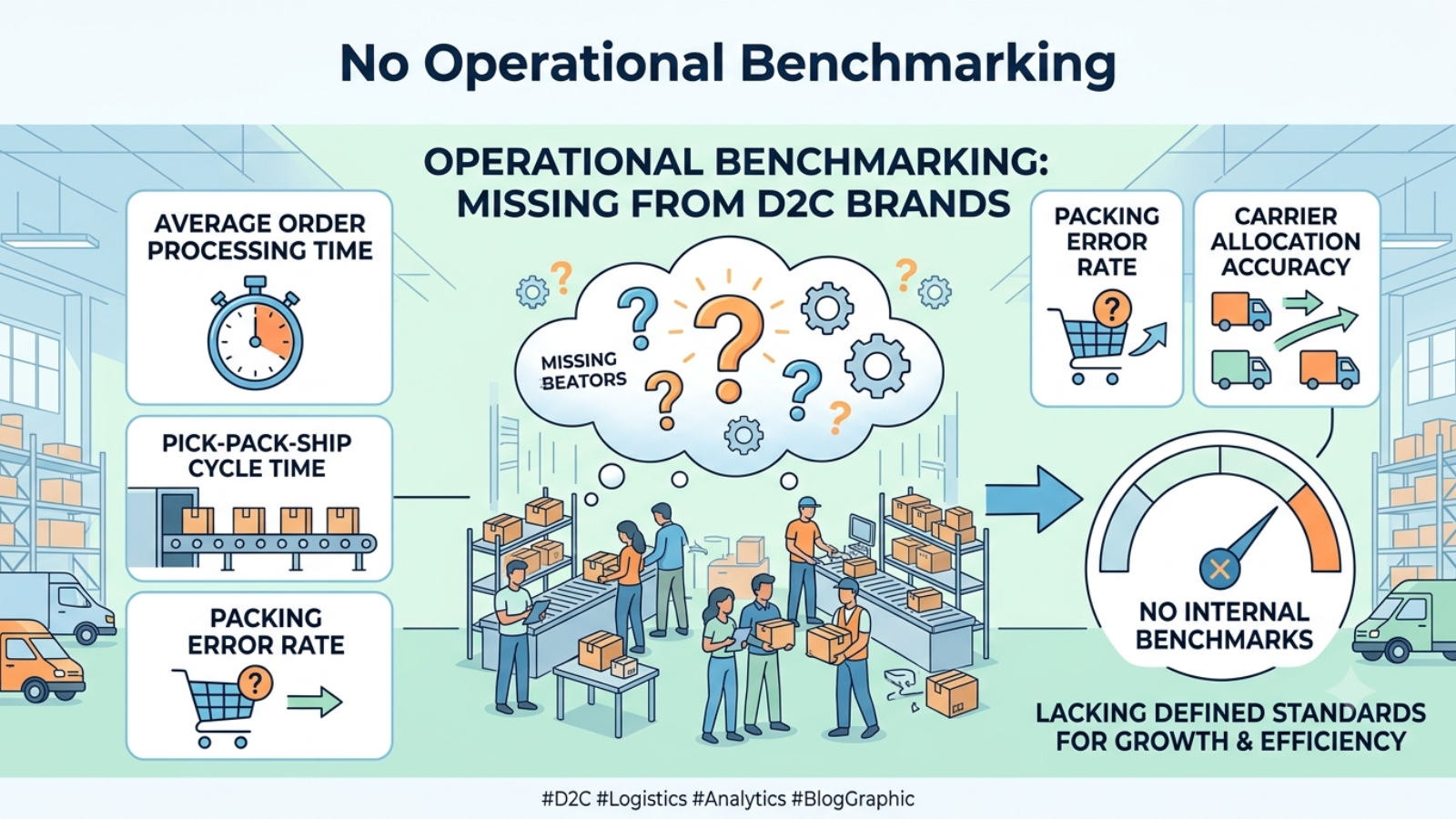 Most D2C brands in India have no internal benchmarks. They don’t know their average order processing time, their pick-pack-ship cycle time, their packing error rate, or their carrier allocation accuracy. This is one of the most underrated gaps in D2C operations in India.
Without baseline metrics, you can’t measure improvement. Set quarterly benchmarks for: order processing time, RTO rate, packing error rate, and warehouse utilisation. Use them to hold your ops team and technology vendors accountable.
Mistake 18: Ignoring Multi-Location Fulfilment Logic
 Brands with a single warehouse in Mumbai are shipping to Delhi, Bengaluru, Chennai, and Kolkata at Zone 4-5 rates. A second fulfilment node closer to demand clusters, Bhiwandi, Gurgaon, or Hyderabad, can reduce average shipping cost by ₹18-32 per order.
The decision to add fulfilment nodes should be data-driven: analyse your order map, find the top 3 destination states, and evaluate whether a 3PL partnership in those zones makes economic sense. This is an intermediate-stage D2C operations in India move that most brands delay by 12-18 months longer than they should.
Mistake 19: Not Stress-Testing During Campaign Planning
Big sale events, Big Billion Days, Great Indian Festival, EOSS, consistently expose operational gaps that teams thought they’d fixed. Orders spike 5-10x for 48-72 hours. Manual processes collapse. Courier pickups get missed. Customers escalate.
The brands that survive sale events are the ones that run mock drills 2-3 weeks before: simulate 3x order volume, identify the step where the queue backs up, and resolve it before it goes live.
Automate everything that can be automated. The human capacity freed up during the drill is exactly what you’ll need when things go sideways on Day 1.
Mistake 20: Scaling Headcount Instead of Technology
This is the meta-mistake that contains all the others. When D2C operations in India get hard, the instinctive response is to hire more people, more pickers, more customer service agents, more coordinators.
Headcount scales linearly. Technology scales non-linearly. A D2C brand adding 5 operations staff gets a 5x capacity increase. The same brand implementing a proper best OMS India platform gets a 10-20x throughput increase at a fraction of the hiring cost.
The best-performing Indian D2C brands, brands processing 10,000+ orders per day, are not running massive operations teams. They’re running lean, tech-enabled fulfilment with systems like Base.com handling the complexity. The key insight of mature D2C operations in India is that headcount is a symptom of under-automation.
The Operations Stack That Fixes All 20 Mistakes
The 20 mistakes above have a common thread: they are all caused by fragmentation, manual processes, or absent automation.
| Mistake Category | Root Cause | Fix |
|---|---|---|
| Order processing errors | Manual entry, no aggregation | Unified OMS with multi-channel ingestion |
| Inventory inaccuracy | No real-time sync | Centralised WMS with live deductions |
| High RTO | No courier scoring, no NDR workflow | Automated NDR + courier analytics |
| Warehouse inefficiency | No bin logic, no FEFO | Bin-level WMS with batch/expiry rules |
| Scaling pain | Headcount-dependent ops | Platform automation |
Base.com is built specifically for Indian D2C ecommerce operations. It handles order management, warehouse management, returns, courier allocation, and ERP integration in one platform. Brands using Base.com for ecommerce warehouse management in India report a 60-80% reduction in manual processing time and a significant improvement in RTO within the first quarter of deployment.
How to Audit Your Own Operations
Before fixing anything, understand where you are. A clear operational baseline is the starting point of every effective D2C operations in India improvement plan.
Run this quick audit:
- What is your RTO rate by courier and by channel?
- How many tools does your ops team touch per order, end to end?
- What is your average order processing time from receipt to label generation?
- When did you last reconcile system inventory with physical stock?
- What happens to return units on the day they arrive at your warehouse?
If you can’t answer these questions with data, the foundational issue is visibility. The first investment in D2C operations in India should always be in measurement; you cannot reduce RTO India, cut warehouse costs, or scale efficiently without a clear operational baseline. Every successful D2C operation in India transformation starts here.
Building an Operations Roadmap for Indian D2C: What to Fix First
Not all 20 mistakes carry equal weight. If you’re early-stage (under 300 orders/day), focus on Mistakes 1, 2, 11, and 20 first. These four account for the majority of revenue leakage in early D2C operations in India.
If you’re mid-scale (300-2,000 orders/day), the priority shifts to Mistakes 6, 10, 13, and 16. Warehouse accuracy and tool consolidation become the primary leverage points.
At enterprise scale (2,000+ orders/day), Mistakes 18, 19, and 17 dominate. Multi-node fulfilment, benchmark-driven management, and campaign resilience separate the top performers from brands that plateau.
The common thread across all three stages: D2C operations in India requires system-level thinking, not individual-fix thinking. You cannot patch one hole in a bucket that has twenty. The goal is operational coherence, every step from order to delivery to return running on connected, automated logic.
What “Good” Looks Like in Indian D2C Operations
| Metric | Industry Average | Top Quartile |
|---|---|---|
| RTO Rate (prepaid) | 15-20% | Under 8% |
| RTO Rate (COD) | 30-40% | Under 18% |
| Order processing time | 4-6 hours | Under 30 minutes |
| Packing error rate | 3-5% | Under 0.5% |
| Inventory accuracy | 85-90% | 98-99% |
| NDR re-delivery success | 35-45% | Over 65% |
The top-quartile numbers are not hypothetical. They are what Indian D2C brands running proper order management software in India, and ecommerce warehouse management in India platforms consistently achieve within 6-9 months of going live.
Base.com customers operating in the Indian market have reported order processing time reductions from 3 hours to under 30 minutes, packing error reductions from 3-4% to near-zero, and a significant improvement in RTO within the first quarter, without adding headcount.
The Integration Question
One objection that comes up often: “We already have SAP. Or NetSuite. Do we need another system?”
The answer is no, but the ERP needs to talk to your fulfilment layer in real time, not in batch files or manual exports. Most ERP implementations in Indian D2C have significant gaps: the ERP handles finance and inventory at a ledger level, but the real-time operational decisions, which courier to use, which bin to pick from, and how to handle an NDR, are happening outside the ERP because the ERP wasn’t designed for those workflows.
Base.com sits between your ERP and your marketplace/courier stack. It handles the operational layer, order management software India, warehouse execution, courier allocation, returns processing, and pushes clean data back to SAP or NetSuite for financial reconciliation. This architecture is how enterprise Indian D2C brands are scaling without rebuilding their ERP infrastructure.
Why D2C operations in India are harder than it looks
The complexity of Indian ecommerce operations is genuinely higher than most markets. You’re dealing with:
- COD as a default payment method for 55-65% of orders (vs. under 5% in Western markets)
- Pin code-level serviceability that changes every quarter
- GST compliance requirements that vary by product category and state
- Reverse logistics costs that are often 60-80% of forward logistics costs
- Multiple Tier-2 and Tier-3 markets where customers expect the same speed as metros
None of these challenges is solved by generic global platforms. The best OMS India solutions are the ones built with this context baked in, not adapted from Western ecommerce infrastructure as an afterthought.
This is why D2C operations in India have become a distinct discipline, with its own metrics, its own tooling requirements, and its own best practices. The brands that treat it seriously, that invest in the right platform, run rigorous benchmarks, and automate relentlessly, are the ones building durable businesses at scale.


[…] This section of the ecommerce sale preparation checklist for sellers is the one most often rushed, and it produces the highest volume of preventable errors. […]
[…] time a CSV is downloaded, formatted, and imported, there is an opportunity for mapping errors, formula mistakes, and missed […]
[…] entirely. Every interstate transfer needs correct documentation. Getting this wrong creates both a compliance risk and, at scale, a genuine cash flow problem tied to input tax credit […]