

Multi-warehouse order management software for D2C brands in India is the infrastructure decision that separates brands that scale cleanly from brands that scale chaotically. For Blue Tea, one of India’s fast-growing premium beverage brands, the gap between those two outcomes came down to one platform decision.
This is the detailed story of how Blue Tea went from fragmented, manual, multi-location fulfilment to a centralised, trackable, and automated operations model, and what Indian D2C brands can take from that journey.
The Multi-Warehouse Problem Is an Indian D2C Growth Problem
India’s D2C market is growing at 40% CAGR. Brands that launched with a single warehouse and a single sales channel are now managing two, three, or more fulfilment locations while selling on Shopify, Amazon, Flipkart, Meesho, and their own apps.
At low volumes, manual coordination holds. At scale, it collapses.
The collapse is not dramatic. It is incremental. Stock visibility starts lagging. Fulfilment decisions start depending on who picks up the phone. Order tracking requires three conversations instead of one glance. Return rates tick upward. India’s COD return rate already sits between 25-30%, a meaningful share of which is driven by failures in the fulfilment process, not customer intent.
This is exactly the trajectory Blue Tea was on before implementing multi-warehouse order management software for D2C brands in India through Base.com.
What Was Breaking at Blue Tea
As order volumes grew, Blue Tea’s operational model developed structural weaknesses:
- No unified system to see inventory and order status across warehouse locations in real time
- Stock updates happened manually, creating a lag between actual availability and system records
- Fulfilment teams at different locations operated without shared process visibility
- Order routing decisions depended on individual judgment rather than system logic
- Tracking an order from confirmation to dispatch required piecing together information from multiple tools
- Errors were identified downstream, after a return, a complaint, or a missed delivery window
Every Indian D2C brand managing more than one warehouse at meaningful volume runs into this ceiling. The question is whether the team recognises it early enough to fix it before it becomes structural damage.
Blue Tea recognised it. They acted before it became unmanageable.
Why Manual Multi-Warehouse Coordination Fails at Scale
To understand what multi-warehouse order management software for D2C brands in India solves, it helps to be precise about why manual coordination fails as volume grows.
1. The Visibility Problem
 In a manual setup, inventory visibility is always a snapshot from the recent past. By the time a spreadsheet is updated or a report is exported, the actual stock position has moved. With two or three warehouses each processing hundreds of orders, this lag is where errors breed.
A customer orders two SKUs. One is available at Warehouse A, and one is at Warehouse B. Without real-time visibility, the order gets assigned to a single location that cannot fully fulfil it. The result is a split shipment, a delay, or a partial cancellation, all of which erode customer trust and inflate return rates.
2. The Coordination Overhead Problem
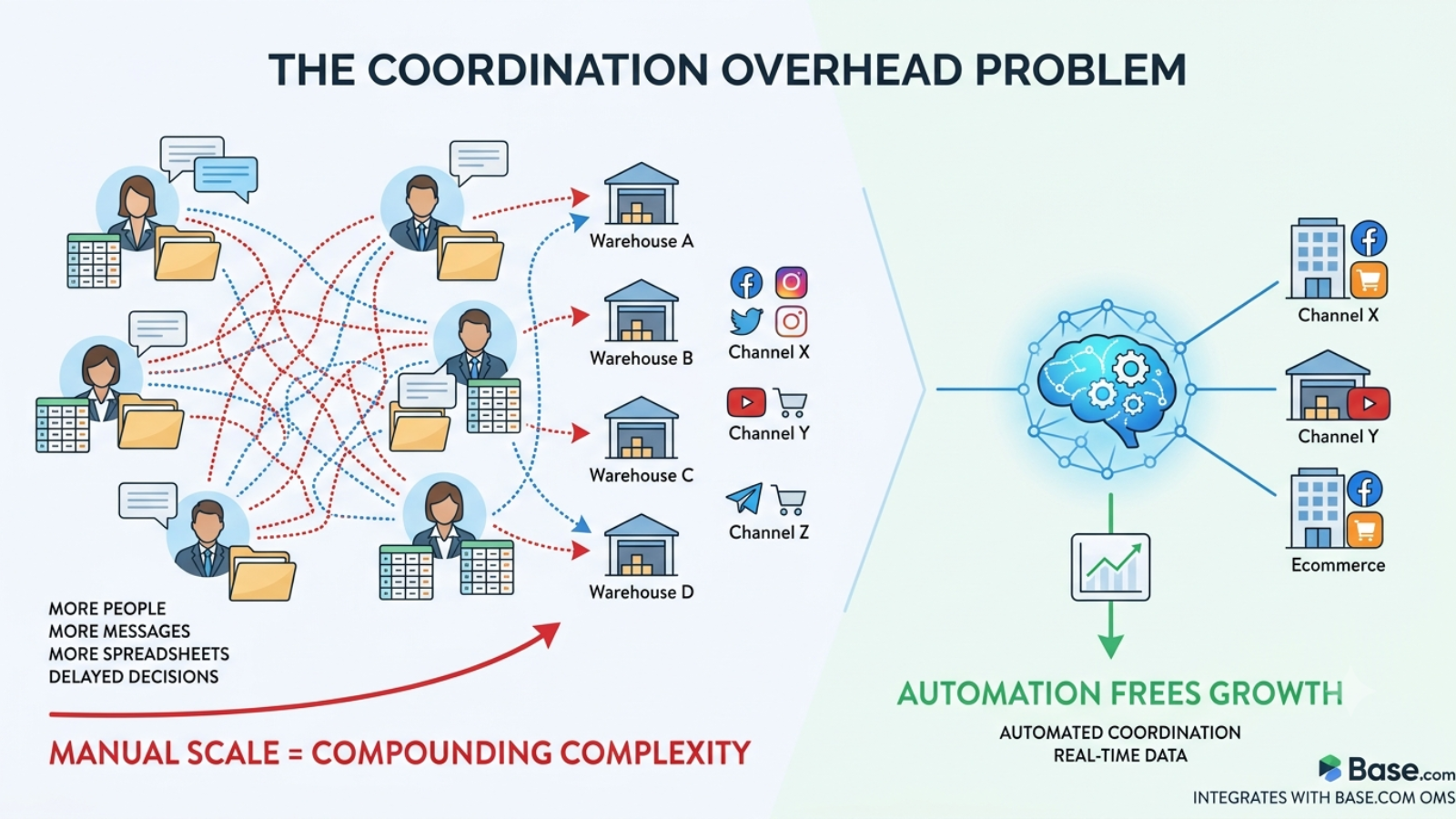 Manual coordination at scale means proportionally more people, more messages, more spreadsheets, and more decision-making that should be automated. The overhead compounds with every warehouse added and every channel integrated.
For Indian D2C brands on high-growth trajectories, adding headcount to manage operational complexity is a ceiling on margin, not a solution. The right answer is a system that absorbs coordination as a function, not a team that absorbs it as a workload.
3. The Accountability Problem
 When operations are manual, tracing a fulfilment failure is difficult. Was the wrong item dispatched because of a picking error, a system mismatch, or a routing mistake? Without process-level tracking, post-mortems are guesswork. Without resolution, the error repeats.
Multi-warehouse order management software for D2C brands in India solves the accountability gap by creating an auditable record of every process step, so when something goes wrong, the team knows exactly where, why, and how to prevent recurrence.
How Base.com Built the Solution for Blue Tea
Base.com helped Blue Tea streamline its operations by unifying order management, inventory, and fulfillment into one system. By automating workflows like order processing, courier selection, and returns handling, Blue Tea reduced manual errors, improved dispatch speed, and gained real-time visibility across channels, enabling faster scaling and better control over its growing D2C business.
1. Centralising the Entire Operations View
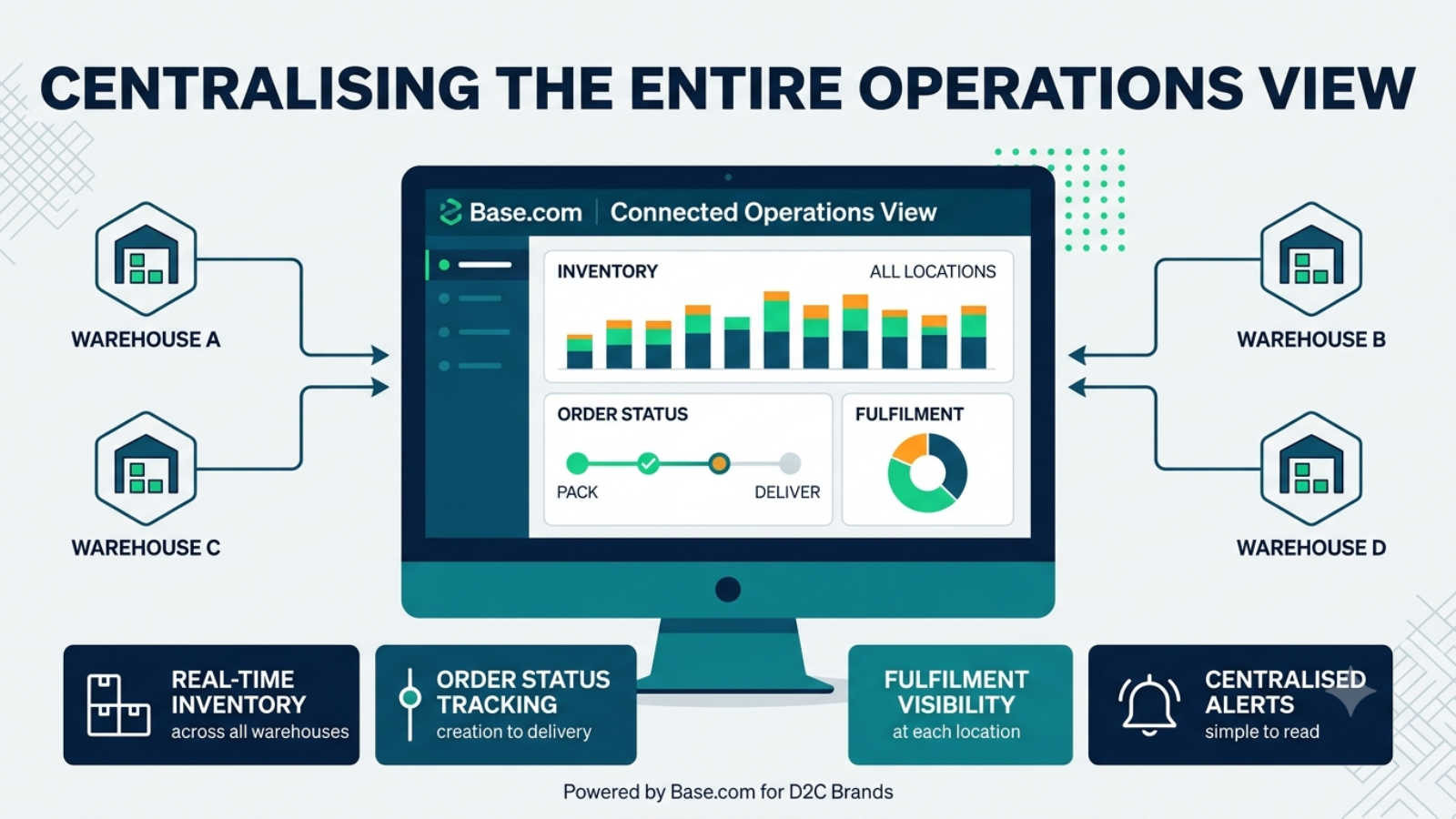 The first structural change Base.com delivered for Blue Tea was a single connected operations view. Multi-warehouse order management software for D2C brands in India, when implemented correctly, eliminates the fragmented-tool problem at its root.
With Base.com, Blue Tea’s team gained:
- Real-time inventory levels across all warehouse locations in one dashboard
- Order status tracking from creation through picking, packing, dispatch, and delivery without switching systems
- Fulfilment progress visibility at each location simultaneously
- Centralised alerts for anomalies, stock thresholds, routing mismatches, and delayed orders
This consolidated view changed the nature of work for Blue Tea’s operations team. Instead of spending hours aggregating status from multiple sources, the team focused on managing exceptions. The system handled information. People made decisions.
2. Automating Fulfilment Workflows
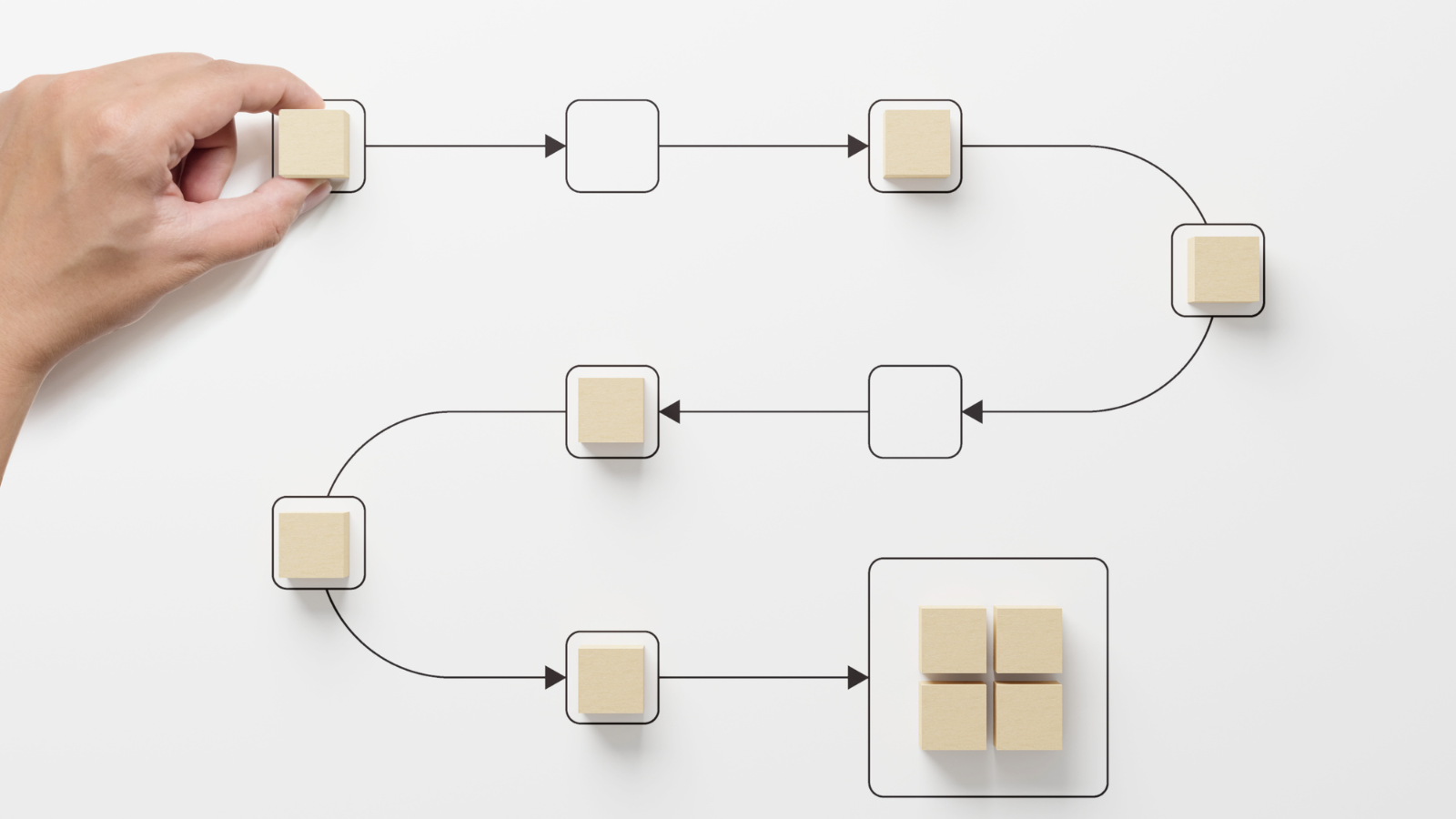 Visibility without automation is only half the solution. Multi-warehouse order management software for D2C brands in India earns its value when it removes manual handoff points from the fulfilment pipeline, not just shows you where those handoff points are.
Base.com automated the repetitive, rule-based actions that were consuming team bandwidth at Blue Tea:
- Order routing to the correct warehouse based on configured logic
- Fulfilment workflow triggers at each processing stage
- Status updates without manual input
- Exception flagging when orders deviate from expected progress
Each manual step removed is a delay risk eliminated and an error risk closed. For Blue Tea, this translated directly into faster processing, fewer packing errors, and more consistent SLA performance.
| Operational Metric | Before Base.com | After Base.com |
|---|---|---|
| Order processing speed | Hours per batch | Minutes per order |
| Packing error rate | 3-4% at volume | Near zero |
| Dispatch SLA compliance | Variable, person-dependent | Consistent, process-driven |
| Inventory accuracy | Lagged, snapshot-based | Real-time across locations |
| Fulfilment error returns | Elevated, hard to trace | Reduced and attributable |
| Team coordination overhead | High, multi-tool, multi-call | Low, single system view |
3. Customisation Aligned to Blue Tea’s Process
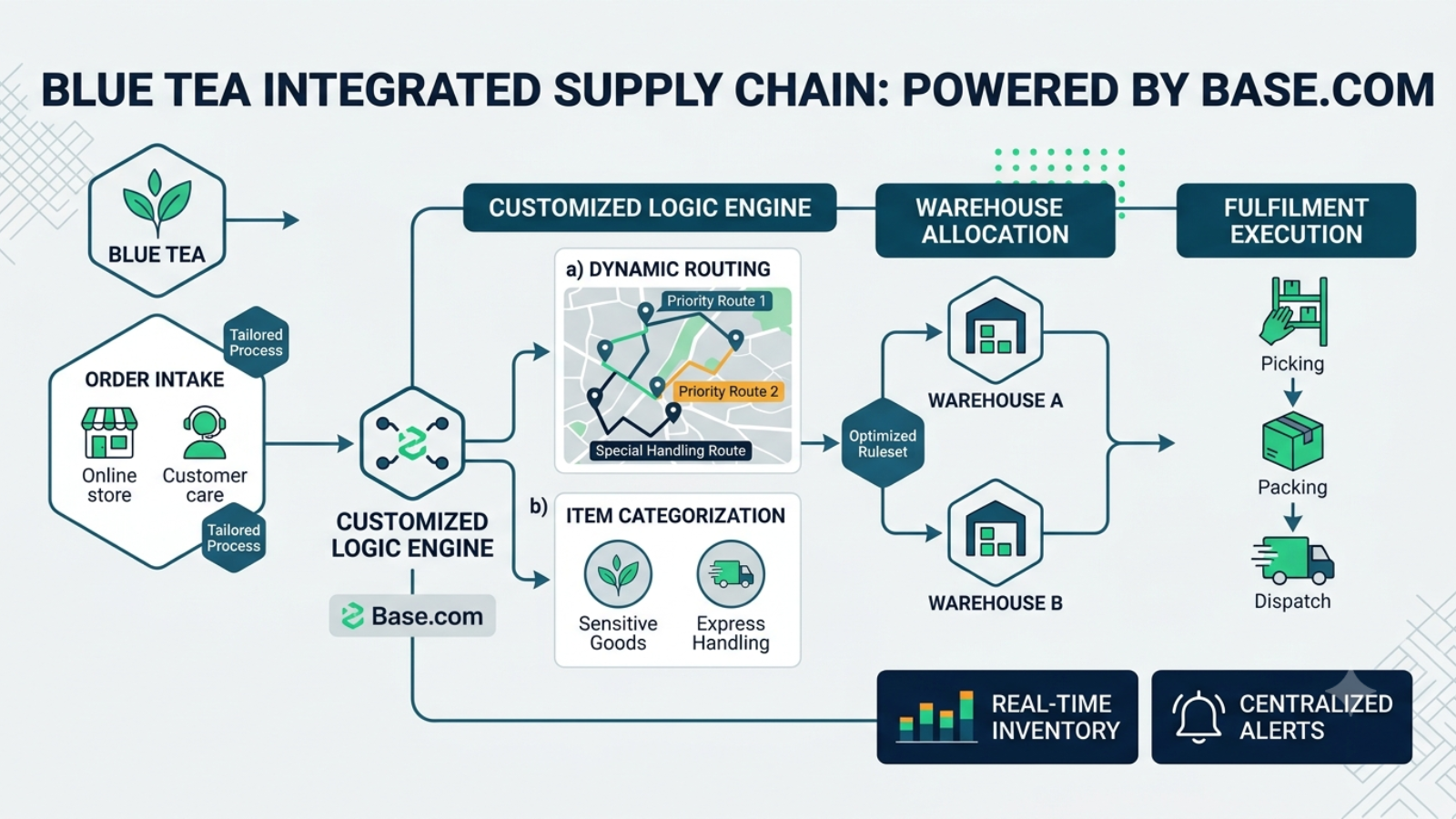 This is where most standard OMS and WMS platforms fall short, and where Base.com stood apart for Blue Tea.
Generic platforms assume a standard fulfilment model. Brands are expected to reorganise their operations to match the software’s defaults. For Blue Tea, which had built specific routing preferences, category-handling requirements, and warehouse allocation logic over time, that was not viable.
Base.com was configured to match how Blue Tea operates. Not a theoretical version of best-practice fulfilment. The actual, specific process the brand had built.
This included:
- Warehouse routing logic based on order and SKU characteristics
- Custom workflow steps for Blue Tea’s packing and dispatch requirements
- Configurable automation rules aligned to the brand’s operational preferences
- Reporting structures matching the team’s performance monitoring needs
For Indian D2C brands evaluating multi-warehouse order management software for D2C brands in India, customisation is not an optional upgrade. It is the difference between a platform that fits and a platform that forces compromise at every step. Base.com delivered it as core functionality.
What Changed After Base.com Was Implemented
 After implementing Base.com, Blue Tea achieved faster order processing, reduced errors, real-time inventory visibility, and improved fulfillment efficiency across channels.
Operational Control Became Structural
Before Base.com, control was best-effort. The team worked hard to maintain order, but the system’s limits meant surprises were frequent. After implementation, control became structural, enforced by the platform, not dependent on individual vigilance.
Blue Tea moved from reactive management to a proactive operating model where the system surfaces issues before they become failures.
Team Confidence Improved Measurably
One underappreciated benefit of implementing proper multi-warehouse order management software for D2C brands in India is what it does to team confidence and accountability.
When workflows are system-driven and visible, team members know what they are responsible for. There is no ambiguity about whether an order was dispatched, whether stock was updated, or whether a packing step was completed. The system records it.
Blue Tea’s team expressed strong satisfaction, not just with operational outcomes, but with how the platform changed the experience of doing the work. Structured, trackable, and predictable replaced chaotic, reactive, and uncertain.
Operations Scaled Without Proportional Overhead
India’s ecommerce market is at $226 billion and expanding. D2C brands scaling within it need an operations model that absorbs growth without requiring a proportional increase in team size or manual effort.
Base.com gave Blue Tea that scalability. As order volumes grew, the platform handled increased operational load through automation and centralised workflows. The brand scaled. The overhead did not scale with it.
This is the correct model for Indian D2C operations. And it is exactly what multi-warehouse order management software for D2C brands in India is designed to deliver.
Base.com vs. Standard OMS and WMS Platforms in India
Indian sellers evaluating multi-warehouse order management software for D2C brands in India will encounter several established platforms, such as Unicommerce, Vinculum, EasyEcom, and others. The differentiator is not feature count. It is operational fit.
Platform Comparison
| Capability | Generic OMS/WMS | Base.com |
|---|---|---|
| Multi-warehouse real-time visibility | Partial or module-dependent | Fully centralised, real-time |
| Workflow customisation | Limited; expensive to configure | Core platform capability |
| Order routing intelligence | Basic geographic or manual | Configurable, rule-based automation |
| Adaptation to brand processes | Brand adapts to software | Software adapts to the brand |
| D2C fulfilment logic | Generic ecommerce defaults | Configured for D2C operational models |
| Post-implementation flexibility | Rigid; changes need dev support | Configurable by the operations team |
| India marketplace integrations | Variable | Marketplace and D2C platform support |
| Scalability for rapid growth | Often requires re-implementation | Built for growing brand volumes |
What to Pressure-Test When Evaluating Indian OMS Platforms
When assessing multi-warehouse order management software for D2C brands in India, test vendors on these specific scenarios before committing:
- Multi-warehouse split fulfilment: Can the system fulfil a single order from two different warehouse locations when no single site has full stock? What is the routing logic, and who configures it?
- Real-time inventory sync: Is inventory updated across warehouse locations on an event-driven basis (instant) or batch basis (periodic)? Batch sync creates overselling risk for fast-moving D2C brands.
- Customisation cost structure: Is workflow customisation included in the platform, or charged as a separate implementation engagement? Platforms that bill per configuration create a ceiling on operational fit.
- Failure-state handling: When an order fails a workflow step, packing error, routing mismatch, or dispatch delay, how does the system surface it, and what is the resolution path?
- Volume scalability: Has the platform been tested at the order volumes your brand is projected to reach in 12-24 months? Ask for verified reference brands at that volume.
Base.com answered all five for Blue Tea. That answers-to-questions ratio is a reliable proxy for platform maturity.
The Operational Framework Behind Blue Tea’s Transition
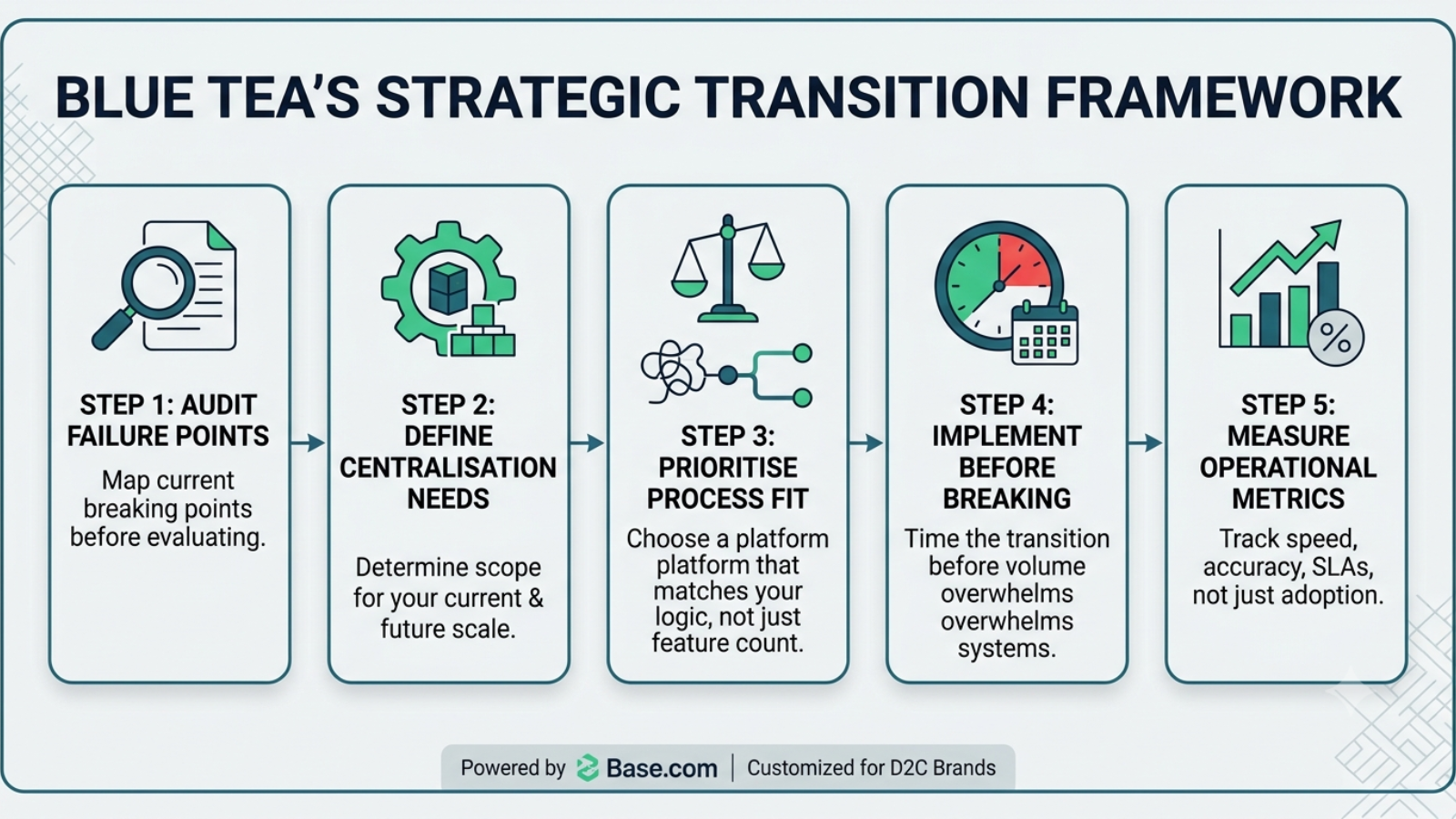 A structured shift to Base.com enabled Blue Tea to centralize operations, automate workflows, standardize processes, and build a scalable, error-free fulfillment system.
Step 1: Audit Current Failure Points Before Evaluating Software
Blue Tea mapped where operations were breaking before selecting a platform. Stock visibility lags, coordination overhead, tracking gaps, and error attribution failures were all documented with specificity. This diagnostic clarity made software requirements concrete, not generic.
Brands that skip this step end up solving surface symptoms rather than structural problems.
Step 2: Define Centralisation Requirements for Your Scale
Centralisation means different things at different volumes. For a brand with two warehouses and 3,000 monthly orders, it means a unified view and consistent workflows. For a brand with five warehouses and 50,000 monthly orders, it includes intelligent routing, real-time allocation, and automated exception management.
Defining the requirement before evaluating platforms makes the evaluation faster and the selection more accurate.
Step 3: Prioritise Process Fit Over Feature Count
A platform with 40 features that fits your process at 60% is operationally worse than a platform with 20 features that fits at 95%. For Indian D2C brands with specific fulfilment logic, process fit is the primary evaluation criterion.
This is why Base.com won Blue Tea’s evaluation. Not feature count, fit.
Step 4: Implement Before the Current System Breaks
The right time to implement multi-warehouse order management software for D2C brands in India is before operations fail under volume, not after. Blue Tea moved when the pain was visible, but the damage was still manageable. That timing allowed for a structured rollout rather than a crisis-driven one.
Step 5: Measure Operational Metrics, Not Just Platform Adoption
The right measure of implementation success is operational improvement, processing speed, error rates, SLA compliance, return rates attributable to fulfilment failures, and coordination overhead. Not whether the team logs into the platform.
Blue Tea tracked these. The improvements were clear, sustained, and measurable.
Why This Applies to Every Indian D2C Brand Managing Multiple Warehouses
Blue Tea is one example of a pattern that repeats across Indian ecommerce. The brands building durable operations in India share one characteristic: they invest in operational infrastructure before it becomes a constraint on growth.
India’s logistics networks are deepening. Consumer delivery expectations are rising. D2C brands still running multi-warehouse operations manually, or with fragmented tools held together by spreadsheets and messaging apps, are accumulating operational debt that grows more expensive to service at every volume milestone.
Multi-warehouse order management software for D2C brands in India is not a late-stage infrastructure investment. It is a mid-growth requirement for any brand managing more than one fulfilment location at meaningful volume.
Base.com is one of the strongest answers to that requirement in the Indian market, and for Blue Tea, it was the right one.
Bottom Line
Blue Tea’s transition shows that scaling operations is not just about adding warehouses or increasing order volume; it is about building the right operational backbone at the right time. By implementing multi-warehouse order management software for D2C brands in India through Base.com, the brand moved from reactive, manual coordination to a structured, system-driven model that delivers consistency, visibility, and control.
What stands out is not just efficiency gains, but the shift in how the business operates. Decisions are now data-driven, workflows are automated, and errors are traceable and preventable. This is what allows growth without chaos.
For Indian D2C brands, the takeaway is clear: operational infrastructure is not a support function; it is a growth lever. The brands that invest early in the right systems scale smoothly. The ones that delay eventually hit operational ceilings that are harder and more expensive to fix.
Ready to build the operational foundation your brand needs to scale? Talk to us.



[…] is the detailed account of how a growing multi-brand ecommerce operation moved from fragmented, patchwork operations to a single integrated inventory management system for […]
[…] a picker or packer eyeballing an item against a printed list, is the single largest source of inventory drift in most warehouses. Industry data shows warehouses without scan validation run error rates of 1-3%, […]
[…] contrast, Browntape and OMS Guru have no multi-warehouse management. FYND does not support it at the WMS level. Vinculum does not offer multi-warehouse WMS capability. […]
[…] few specific metrics reveal whether a multi-warehouse operation is genuinely under control, rather than just appearing stable in aggregate. These numbers separate […]
[…] few specific metrics reveal whether a multi-warehouse operation is genuinely under control, rather than just appearing stable in aggregate. These are the numbers […]