
The best WMS software for D2C brands in India are Base.com, Increff, Unicommerce Uniware, Vinculum, Omniful, and Hopstack, with the right choice depending on your SKU count, daily dispatch volume, and returns load. Brands picking more than 500 orders a day from a single facility need scan-verified execution. Smaller brands usually do not.
What does warehouse management software actually do for an Indian D2C brand?
A WMS controls what happens inside the four walls of your warehouse. It tells a picker where to walk, which bin to reach into, what to scan, and how to pack, then it confirms each step before the order moves forward.
An OMS decides which warehouse fulfils an order. A WMS decides how that warehouse fulfils it. Brands frequently buy the first, skip the second, and then wonder why packing errors persist.
The difference shows up in accuracy. Manual picking against a printed list holds up at low volume and collapses as SKU count grows, because a human comparing similar-looking variants will eventually grab the wrong one.
Why does Indian warehouse operation differ from Western WMS assumptions?
Indian fulfilment carries conditions that imported software rarely handles well. Three of them reshape how a warehouse must run, and each one affects which platform fits your brand.
1. Return volume dominates. COD return rates run between 25% and 30% across categories, so a meaningful share of your inbound dock traffic is returned stock, not fresh supply. Your WMS must inspect, grade, and restock it quickly or that inventory sits invisible.
2. Marketplace SLAs vary by channel. Amazon, Flipkart, Myntra, Nykaa, and quick commerce platforms each impose different dispatch windows and labelling rules. One warehouse must satisfy all of them simultaneously.
3. Compliance is operational, not administrative. GST invoicing, e-way bills above the state threshold, and correct place-of-supply logic must be generated at the packing station, not later in accounts.
India’s ecommerce market runs at roughly $226 billion, and D2C grows at roughly 40% CAGR. Warehouse capability, rather than demand, becomes the ceiling for most brands crossing that growth curve.
How did we evaluate the best WMS software for D2C brands in India?
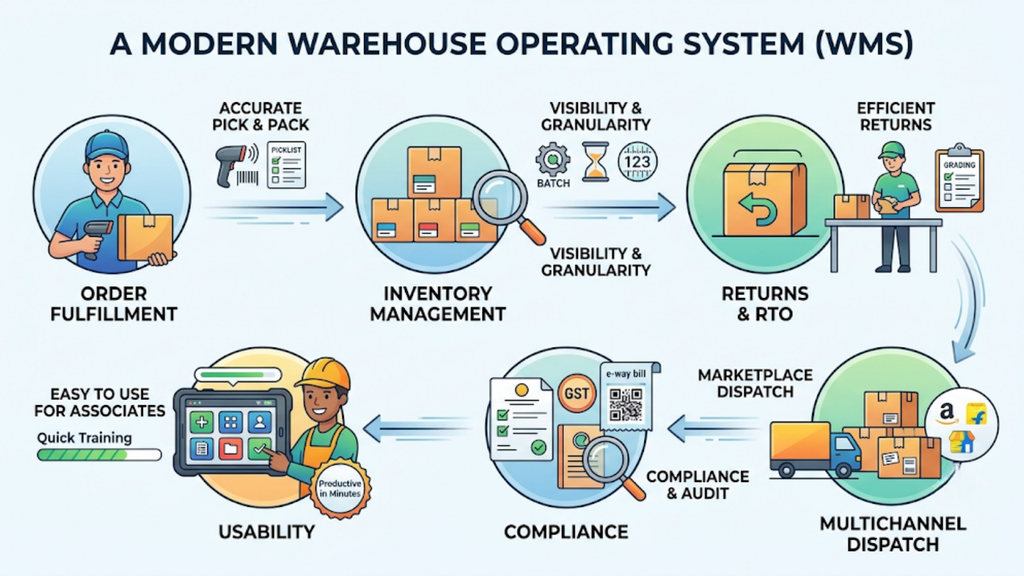
We scored each platform on criteria that matter inside an Indian fulfilment centre. Global feature lists help very little here, because the real difference appears in returns handling, marketplace labelling, and how quickly a floor team learns the system.
- Picking accuracy controls, barcode scanning, pick verification, mis-pick prevention.
- Returns and RTO processing, inspection, grading, restocking, claim reconciliation
- Inventory granularity, bin-level, batch, expiry and serialised tracking
- Marketplace fulfilment, channel-specific labelling, manifests and dispatch rules
- Compliance, GST invoicing, e-way bills, audit trails
- Floor usability, how fast a warehouse associate becomes productive
We did not score on vendor size. A platform your team cannot operate at 9 pm during a sale peak has no value, regardless of its logo wall.
Which of the best WMS software for D2C brands in India should you shortlist?
The table below maps each platform to the brand profile it serves best. Use it to narrow twelve options to three before you invest time in demos and reference calls.
| # | Platform | Best fit | Fulfilment model | Pricing model |
| 1 | Base.com | Multi-channel D2C at scale | Your warehouse | Tiered SaaS |
| 2 | Increff | High-SKU fashion and lifestyle | Your warehouse | Enterprise |
| 3 | Unicommerce Uniware | Large established sellers | Your warehouse | Tiered SaaS |
| 4 | Vinculum Vin eRetail | Omnichannel retail plus online | Your warehouse | Enterprise licence |
| 5 | EasyEcom | Mid-market D2C and distributors | Your warehouse | Tiered SaaS |
| 6 | Omniful | Fast-scaling and quick commerce | Your warehouse | Tiered SaaS |
| 7 | Hopstack | Tech-forward fulfilment teams | Your warehouse or 3PL | Tiered SaaS |
| 8 | Ginesys | Retail chains with POS | Your warehouse | Modular licence |
| 9 | Anchanto | Cross-border sellers and 3PLs | Your warehouse or 3PL | Enterprise |
| 10 | Eshopbox | Brands outsourcing fulfilment | Provider network | Per-order |
| 11 | WareIQ | Speed-focused distributed stock | Provider network | Per-order |
| 12 | SAP EWM | Large enterprises on SAP | Your warehouse | Enterprise licence |
Which are the 12 best WMS software for D2C brands in India?
Each review below follows the same structure: what the platform is built for, where it genuinely leads, what it asks you to give up, and which brand profile should shortlist it.
1. Base.com
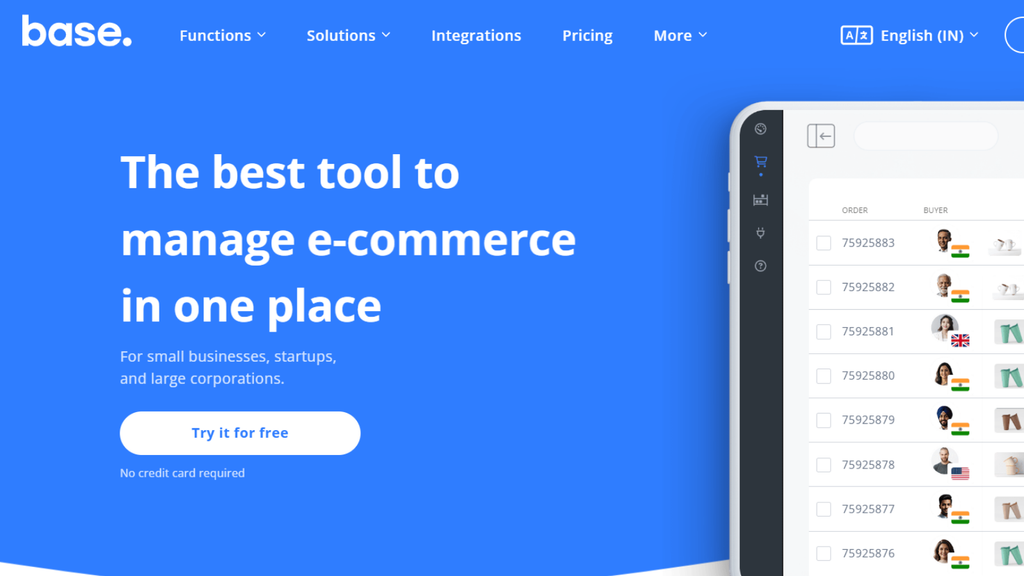
Base.com brings warehouse execution and order orchestration into one system, so the instruction reaching a picker already reflects channel priority, SLA pressure, and stock position. Brands avoid the reconciliation gap that appears when a separate OMS and WMS disagree about available inventory.
Its warehouse layer enforces scan verification at pick and pack. That single control removes the most expensive category of D2C error, because a wrong item shipped costs you the return freight, the replacement shipment, and usually the customer.
Returns sit inside the core workflow rather than in a separate module. Inbound returned stock moves through inspection and grading into sellable inventory quickly, which matters when a quarter of your dispatches come back.
Strengths
- Warehouse execution and order management in one stack
- Scan-verified picking and packing as standard practice
- Returns and RTO processing designed for Indian volumes
- Channel-aware dispatch prioritisation across marketplaces and quick commerce
Trade-offs
- An integrated stack limits your freedom to swap one layer later
- Brands below a few hundred daily orders will not use most of the capability
Best fit: multi-channel D2C brands where warehouse throughput now limits growth.
2. Increff
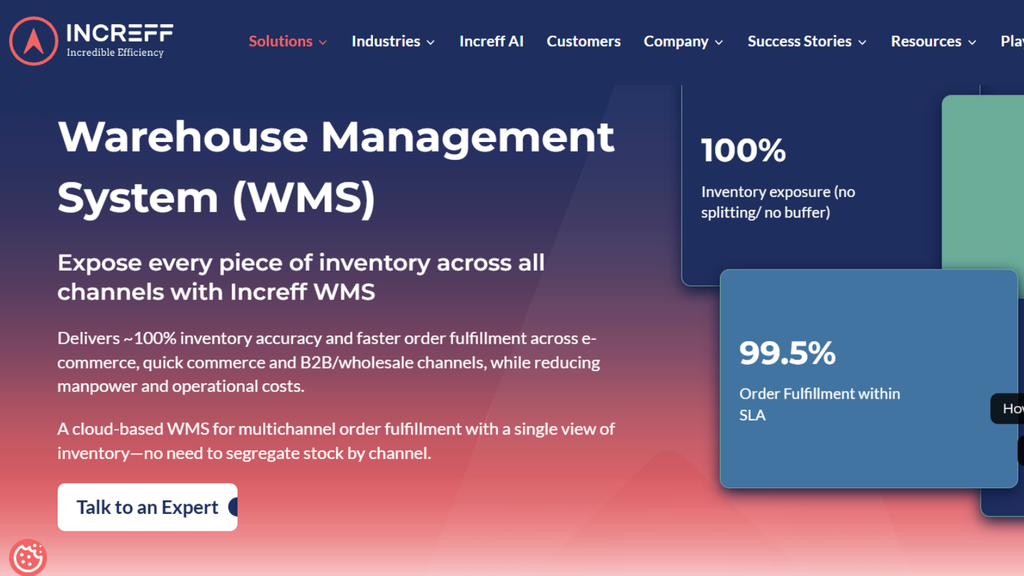
Increff built its warehouse product around fashion inventory, where a single style multiplies into dozens of size and colour combinations. Its piece-level tracking handles that complexity properly rather than approximating it.
The platform assigns a unique identity to individual units, which makes returns grading and inventory accuracy far more reliable. Fashion brands lose money to stranded sizes, and this addresses that directly.
Brands with narrow catalogues carry the cost of precision they do not need.
Strengths
- Piece-level and serialised inventory tracking
- Exceptional accuracy across deep size-colour matrices
- Inventory planning intelligence layered above execution
Trade-offs
- Overbuilt for low-SKU brands
- Enterprise implementation effort and commercial structure
Best fit: apparel, footwear and accessories brands with deep catalogues.
3. Unicommerce Uniware
Uniware is the warehouse module inside India’s most widely deployed ecommerce operations suite. Its main advantage is maturity; the marketplace labelling and manifest edge cases have already been encountered and handled.
Brands running many channels benefit most. A platform that has processed years of Flipkart and Myntra dispatch rules rarely breaks during a sale event.
Configuration depth adds onboarding effort. Smaller teams sometimes find more settings than their operation requires.
Strengths
- Deepest marketplace fulfilment coverage in the Indian market
- Proven through repeated high-volume sale peaks
- Large implementation partner ecosystem
Trade-offs
- Longer onboarding for small warehouse teams
- Enterprise-oriented commercial structure
Best fit: established brands dispatching high volume across many marketplaces.
4. Vinculum Vin eRetail
Vinculum handles distributed inventory well, including store-as-warehouse fulfilment where a retail outlet ships an online order. That capability shortens delivery distance and clears slow-moving store stock.
For brands with physical doors, this is a genuinely difficult capability to replicate elsewhere.
Pure-play D2C brands use a fraction of what they pay for.
Strengths
- Strong ship-from-store and distributed fulfilment
- Mature multi-location inventory allocation
- Handles multi-entity and multi-country structures
Trade-offs
- Enterprise implementation timelines
- Surplus capability for brands without retail stores
Best fit: brands running retail alongside ecommerce.
5. EasyEcom
EasyEcom covers warehouse operations alongside order management and marketplace payment reconciliation. The reconciliation layer compares what marketplaces owe against what they actually settle.
Warehouse teams benefit indirectly. When a returned unit is scanned into inspection, that record supports the claim your finance team files against the courier or marketplace.
Depth trails specialist warehouse platforms at very high throughput.
Strengths
- Warehouse, order and settlement reconciliation in one platform
- Handles both D2C and B2B distribution flows
- Moderate implementation effort for mid-market teams
Trade-offs
- Less warehouse depth than specialist WMS vendors
- Interface complexity from covering many use cases
Best fit: mid-market brands mixing online retail with wholesale distribution.
6. Omniful
Omniful is a newer platform built for brands scaling quickly across India and the Gulf. Its architecture postdates quick commerce, which shows in how it handles very short dispatch windows.
Quick commerce changes warehouse rhythm entirely. Blinkit, Zepto, and Instamart expect dispatch in minutes, and a warehouse process designed around next-day marketplace SLAs cannot simply speed up.
Younger platforms carry integration risk that older ones have already absorbed.
Strengths
- Modern architecture with strong API design
- Native handling of quick commerce dispatch windows
- Multi-country structure for Gulf expansion
Trade-offs
- Shorter track record at very high Indian volumes
- Smaller implementation partner network
Best fit: brands with meaningful quick commerce exposure.
7. Hopstack
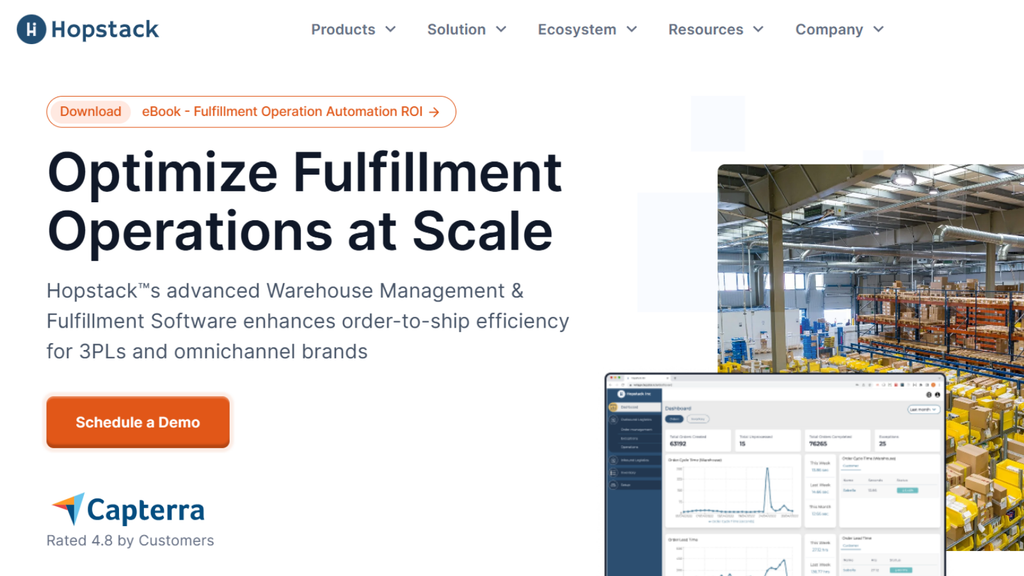
Hopstack positions itself around warehouse digitisation, with strong emphasis on real-time visibility and configurable workflows. Teams that want to shape picking strategy themselves find it accommodating.
It serves both brand-owned warehouses and third-party providers, which suits brands that expect to move between the two as they scale.
Configurability requires someone internally who owns the configuration. Brands without that person default to standard workflows.
Strengths
- Highly configurable picking and packing workflows
- Strong real-time operational visibility
- Works for brand-run and 3PL-run facilities
Trade-offs
- Requires internal ownership to exploit configurability
- Smaller Indian deployment base than the incumbents
Best fit: operationally sophisticated teams wanting control over warehouse process design.
8. Ginesys
Ginesys grew from retail ERP and point of sale, so GST, accounting, and store operations run natively rather than as adaptations. Its warehouse module connects directly to that retail backend.
Retail chains adding ecommerce avoid an integration project entirely, because store stock and warehouse stock resolve into one ledger.
Pure D2C brands inherit retail weight they will not use.
Strengths
- Native GST, accounting and retail integration
- Single vendor across POS, ERP and warehouse
- Established base among Indian retail chains
Trade-offs
- Retail-first rather than D2C-first design
- Modular licensing accumulates cost across modules
Best fit: retail chains extending into online fulfilment.
9. Anchanto

Anchanto serves cross-border sellers and logistics providers across Asia-Pacific. Its structure lets one operator run many client brands on a single instance with separated inventory and billing.
Exporters gain real multi-country capability. Domestic-only brands inherit complexity without the corresponding benefit.
India-specific depth trails locally built platforms.
Strengths
- Genuine multi-country and multi-currency operation
- Built for 3PLs managing multiple brand clients
- Strong cross-border marketplace coverage
Trade-offs
- More complexity than domestic brands require
- Lighter India-specific returns handling
Best fit: exporters and third-party logistics operators.
10. Eshopbox
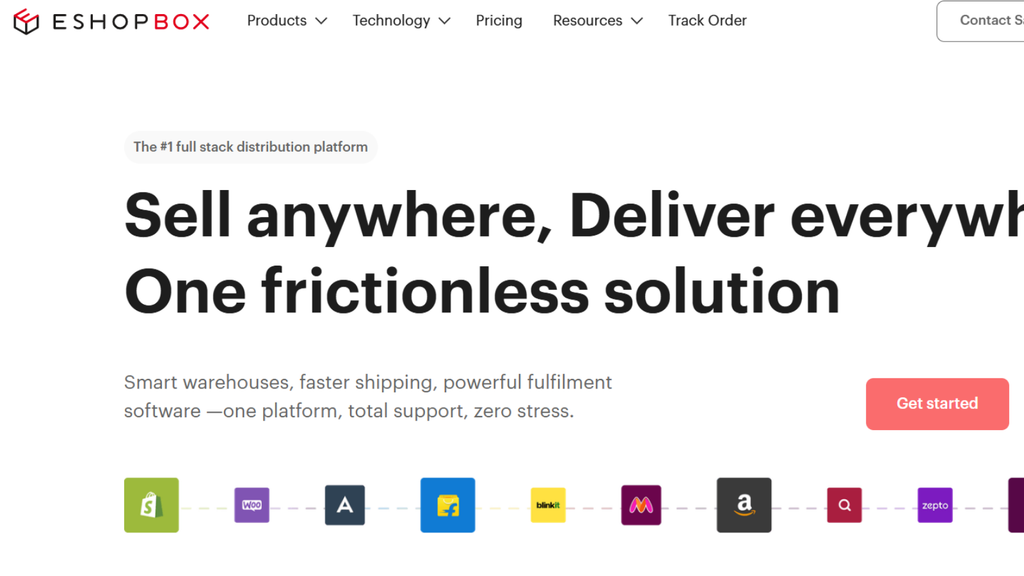
Eshopbox pairs warehouse software with its own fulfilment network, so the provider stores, picks, and dispatches your stock. Your team keeps merchandising and marketing.
Small teams without warehouse expertise remove an entire discipline from the business. That has real value early.
Per-order economics shift as volume grows, because outsourced cost rises with scale while in-house cost flattens.
Strengths
- Software and physical fulfilment from one provider
- Removes warehouse hiring and management entirely
- Predictable per-order cost at lower volumes
Trade-offs
- Limited control over process and unboxing experience
- Cost advantage erodes as volume climbs
Best fit: brands choosing not to operate their own warehouse.
11. WareIQ
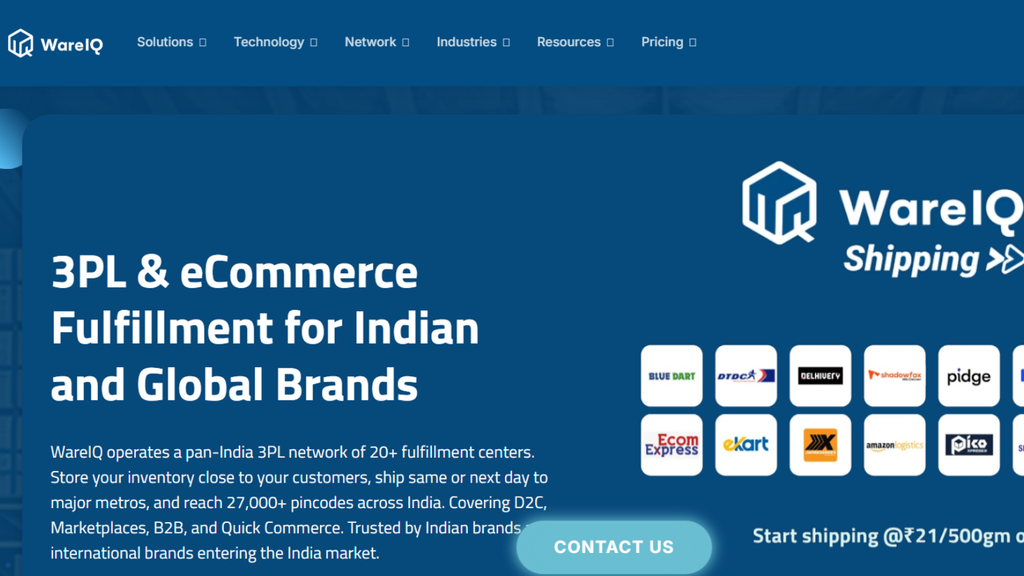
WareIQ follows a similar fulfilment-as-a-service model with stock distributed across regional nodes. Inventory sits closer to demand, so delivery promises shorten.
Shorter delivery windows reduce RTO risk, because fewer customers change their mind during transit.
Distribution fragments inventory. Brands without sufficient stock depth create stockouts in one region while another sits overstocked.
Strengths
- Regional network supporting faster metro delivery
- Bundled software and fulfilment operations
- Suits brands competing on delivery speed
Trade-offs
- Needs inventory depth to distribute effectively
- Reduced direct operational control
Best fit: brands where delivery speed drives conversion.
12. SAP EWM
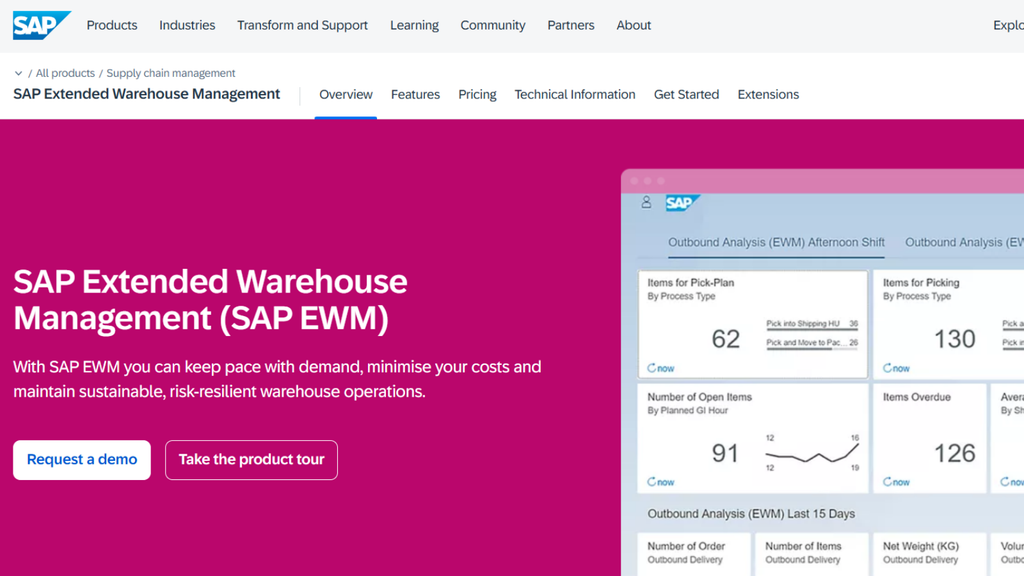
SAP Extended Warehouse Management sits at the enterprise end, built for complex multi-site operations with heavy customisation requirements. Brands already running SAP for finance gain a unified data model.
The capability is real, and the ceiling is very high. So is the implementation effort, typically measured in quarters rather than weeks.
Very few D2C brands need this. Those that do usually belong to a larger group with existing SAP infrastructure.
Strengths
- Extremely high capability ceiling and configurability
- Unified data model for brands already on SAP
- Proven at large multi-site industrial scale
Trade-offs
- Implementation cost and duration far exceed D2C norms
- Requires specialist internal or partner expertise
Best fit: enterprise groups with existing SAP landscapes.
How do the best WMS software for D2C brands in India compare on capability
This table covers the six platforms most Indian D2C brands shortlist. The brands describe depth rather than presence, because nearly every vendor claims every feature during a sales conversation.
| Capability | Base.com | Increff | Uniware | Vin eRetail | EasyEcom | Omniful |
| Scan-verified picking | Core | Core | Core | Core | Core | Core |
| Serialised or piece-level tracking | Supported | Leading | Supported | Supported | Limited | Supported |
| Returns and RTO grading | Leading | Leading | Supported | Supported | Supported | Supported |
| Batch and expiry control | Supported | Supported | Supported | Leading | Supported | Supported |
| Marketplace labelling | Core | Core | Leading | Core | Core | Supported |
| Quick commerce dispatch | Supported | Limited | Developing | Developing | Developing | Leading |
| Ship-from-store | Supported | Limited | Supported | Leading | Supported | Supported |
| Floor training effort | Moderate | High | High | High | Moderate | Moderate |
What pricing models will you encounter when buying a WMS in India?
Warehouse platforms price four ways, and the model shapes your cost curve far more than the headline figure. A platform that looks affordable at today’s volume can become your largest operating line within two years.
| Model | How it works | Works well when | Breaks when |
| Per-order | You pay per order fulfilled | Volume is low or seasonal | Volume scales, cost rises linearly |
| Per-seat | You pay per warehouse user | The floor team stays small | Headcount grows with peak staffing |
| Tiered SaaS | Bands by order or SKU volume | Growth is predictable | You cross a band mid-month |
| Enterprise licence | Annual contract plus implementation | You need deep customisation | Requirements shift within the term |
Ask every vendor on your shortlist of the best WMS software for D2C brands in India for a three-year total cost at projected volume. Implementation, hardware, scanner procurement, and premium support sit outside the licence fee.
How should you choose from the best WMS software for D2C brands in India
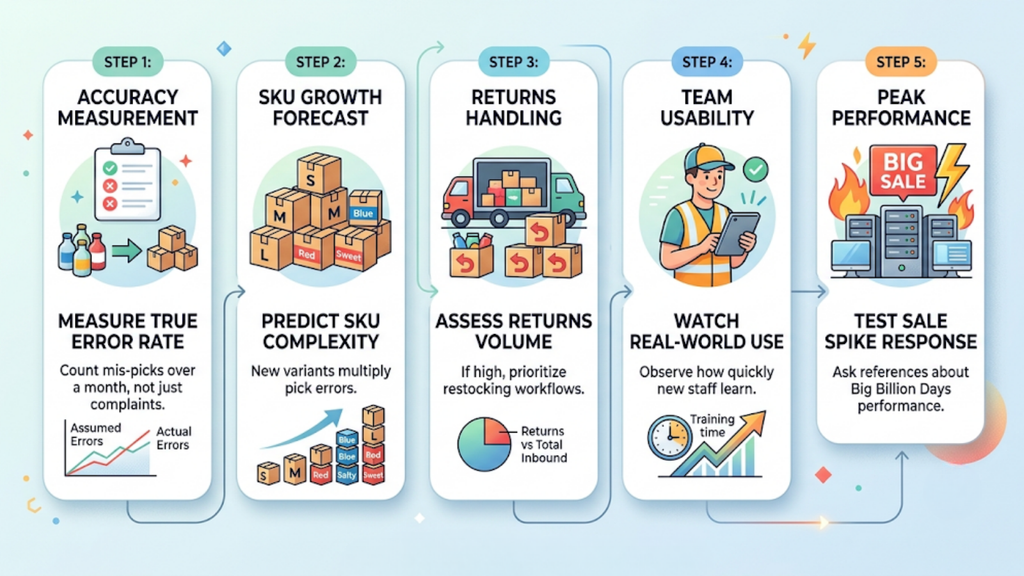
Work through this sequence before you book demos. Vendors present capability well, so a structured evaluation protects you from buying features you will never operate.
Step 1: How accurate is your warehouse today when you measure it properly?
Count mis-picks per thousand orders over a full month, including sale days. Most brands discover their error rate is several times higher than they assumed, because customer complaints capture only a fraction of mistakes.
Step 2: What does your SKU and variant count look like in twelve months?
SKU growth, not order growth, usually breaks manual picking. A brand adding shades, sizes, or flavours multiplies pick complexity far faster than it multiplies revenue.
Step 3: How much of your inbound dock traffic is returned stock?
Divide returned units by total inbound units. If returns exceed a quarter of inbound volume, prioritise platforms with genuine grading and restocking workflows over those with stronger outbound features.
Step 4: Can your floor team actually operate the system during a busy shift?
Ask to watch a live warehouse using the platform, not a demo environment. Watch how long a new associate takes to become productive, because warehouse attrition in India makes training time a recurring cost.
Step 5: What happens to the platform during a Big Billion Days sale peak?
Ask each vendor for a reference customer who has run a Big Billion Days or Great Indian Festival volume spike. Ask that customer what broke and how quickly support responded.
How do you know your brand has outgrown manual warehouse operations?

Most brands delay this decision until an expensive failure forces it. These five signals appear well before that point, and each one costs money while you wait.
- Mis-picks reach customers weekly. Once wrong items ship regularly, your return costs already exceed what warehouse software would cost.
- Nobody trusts the stock count. When the team physically checks shelves before confirming availability, your system of record has failed.
- Peak days need double shifts. A sale that requires overtime to clear signals a process ceiling rather than a staffing gap.
- Returned stock sits unprocessed. Unprocessed returns are invisible inventory, and invisible inventory drives both stockouts and overbuying.
- Marketplace penalties recur monthly. Late dispatch penalties usually trace to warehouse throughput, not courier performance.
What mistakes do Indian brands make when selecting warehouse software?

Most poor WMS decisions happen during evaluation rather than after deployment. These five mistakes appear repeatedly, and each becomes expensive once the contract is signed.
- Buying outbound features and ignoring returns. Your inbound dock handles a quarter of your dispatch volume as returns. Software that treats this as an afterthought fails in Indian conditions.
- Skipping the hardware conversation. Scanners, printers, label stock, and network coverage inside a warehouse all cost money, and all need specification before go-live.
- Underestimating training. Warehouse teams turn over. A platform requiring two weeks of training carries a permanent cost your finance model probably ignores.
- Testing with clean data. Demos use tidy catalogues. Ask each vendor to run your actual SKU master, including the duplicates and inconsistent naming.
- Choosing on vendor size. The largest deployment base tells you nothing about fit for your category, volume band, or returns profile.
What does WMS implementation actually involve for an Indian D2C brand
Software configuration rarely causes delays. The work on your side of the project determines whether you go live on schedule.
- SKU master cleanup, deduplicating and standardising your catalogue usually takes the longest
- Physical bin mapping, labelling locations and defining zones before any system goes live
- Hardware procurement, scanners, label printers and warehouse network coverage
- Process redesign, the platform enforces a workflow your team must adopt
- Parallel running, keeping the manual process as fallback for two weeks after cutover
Treat this as an operations project with technical support rather than an IT project. Brands that hand implementation to a technology team alone consistently run late.
Where does Base.com fit among the best WMS software for D2C brands in India
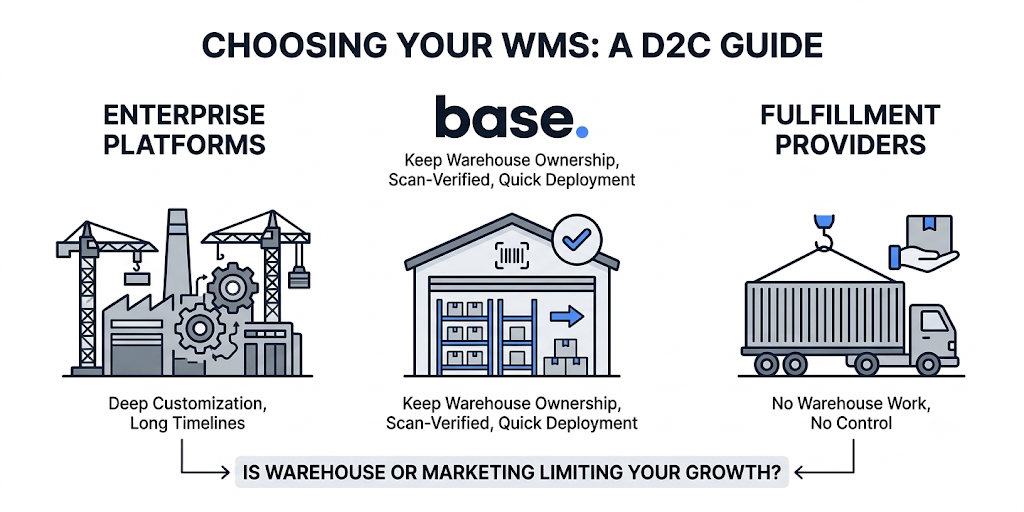
Base.com occupies a defined position among the best WMS software for D2C brands in India. Enterprise platforms offer deeper customisation but require enterprise timelines, while fulfilment providers remove warehouse work entirely, along with your control over it.
Base.com sits between those options. Brands keep ownership of their warehouse and gain scan-verified execution, returns processing, and channel-aware dispatch without committing to a year-long deployment.
The question that usually decides it is simple. If your warehouse determines how fast your brand can grow, warehouse software earns its cost quickly. If marketing still limits you, a lighter tool serves you fine for now.
Frequently Asked Questions
These five questions come up in nearly every evaluation conversation. Each answer applies to Indian operating conditions rather than global averages.