

Returns management in D2C India is one of the most expensive operational problems a growing brand faces, and one of the least systematically solved. Most founders track forward logistics obsessively: cost per shipment, courier performance, and delivery SLA. Returns get managed reactively. A courier drops a bag at the warehouse. Someone inspects it eventually. The unit either gets restocked or does not. The financial impact is absorbed as a cost of doing business.
That framing is wrong. Returns management in D2C India, handled with the right OMS infrastructure, is a margin recovery exercise. Every rupee recovered from a return, through faster restocking, correct claim filing, and accurate accounting, is a rupee that does not need to come from gross margin.
This post explains how returns actually work operationally in Indian D2C, where the money leaks, and how Base.com’s OMS closes each gap.
The Real Cost of a Return in Indian D2C
Before fixing Returns management in D2C India, brands need to calculate what a return actually costs. Most brands only count the reverse logistics fee. The true cost has five components.
- Forward shipping cost. You paid to ship the order. That cost is not recoverable regardless of whether the customer accepts or rejects it.
- Reverse logistics cost. The courier charges to bring the item back. For a Tier 2 city RTO, this is typically ₹80-150 depending on weight and courier partner.
- Inspection and repackaging labor. Someone at the warehouse needs to open the package, assess the product condition, decide its disposition, and repackage it if it is sellable. At 300 returns per day, this labor cost is material.
- Inventory holding time. A unit sitting in the returns bay, uninspected, is a unit not available for resale. If it sits for 5 days before being restocked, you have lost 5 days of potential sales on that SKU across all channels.
- Lost marketplace claims. If the return was marketplace-originated and the product is damaged or missing, you have a limited window to file a claim for reimbursement. Amazon allows 90 days of self-service. Flipkart’s window for some return types is 14 days after receipt. If you miss the window because your Returns management in D2C India process is manual and slow, the loss is permanent.
At ₹200 total cost per return and 300 returns per day, the daily cost is ₹60,000. Monthly: ₹18 lakh. Annually: ₹2.16 crore. Returns management in D2C India that recovers even 25% of that through faster processing, correct claims, and reduced preventable returns is worth ₹54 lakh per year.
Two Types of Returns Indian D2C Brands Deal With
Returns are a normal part of eCommerce, but not all returns follow the same workflow. For Indian D2C brands, understanding the different types of returns is essential for maintaining accurate inventory, reducing stock discrepancies, and improving customer satisfaction.
Each return type affects inventory availability, warehouse operations, and marketplace synchronization differently, making it important to manage them with distinct processes.
CRET: Customer-Initiated Returns
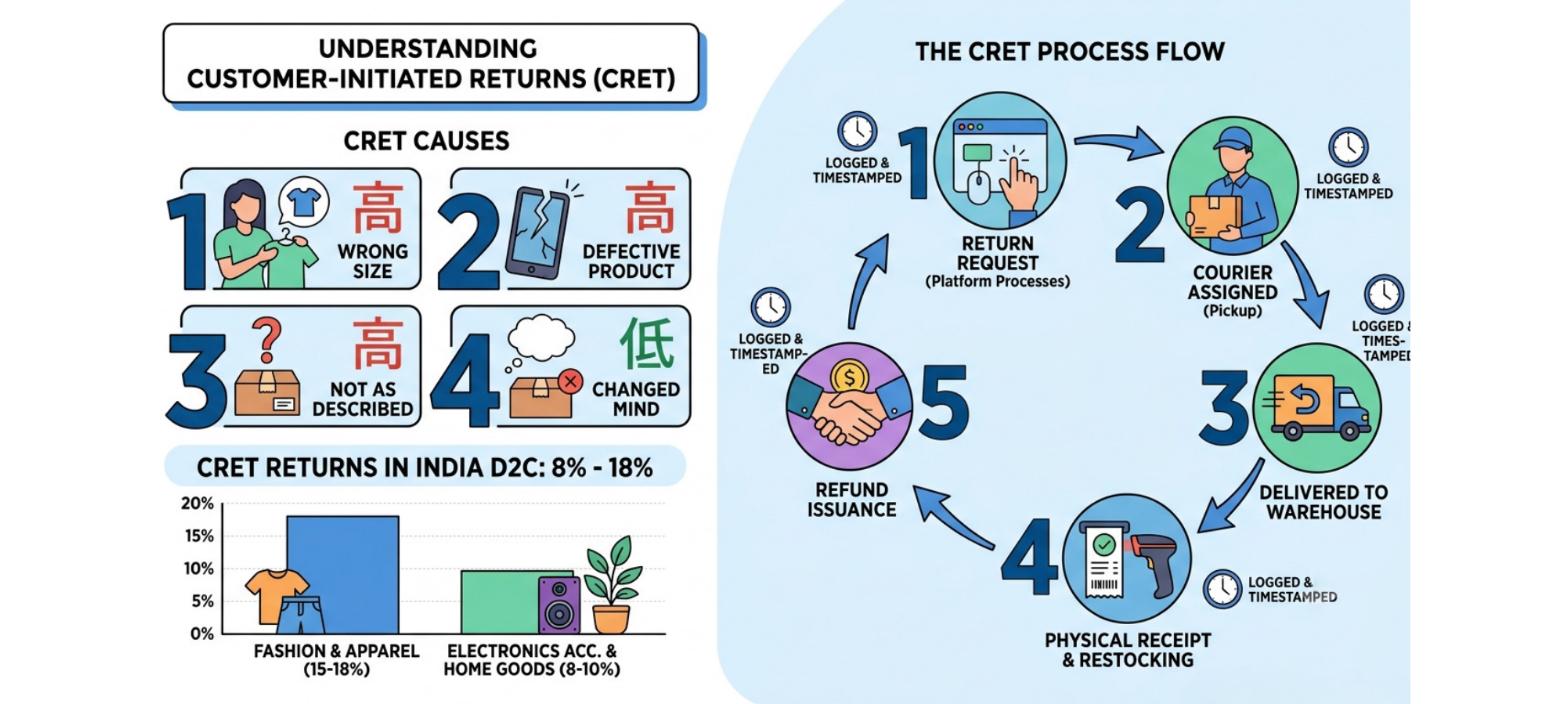
A customer places an order, receives it, and requests a return, wrong size, product not as described, changed their mind, or defective item. The marketplace or D2C platform processes the return request. A courier is assigned to collect the item from the customer and deliver it back to the seller’s warehouse.
CRET returns in the Indian D2C run at approximately 8-18%, depending on the category. Fashion and apparel are at the higher end. Electronics accessories and home goods are lower. Returns management in D2C India for CRET requires a process from return request to refund issuance to physical receipt to restocking, with each step logged and timestamped.
RTO: Return to Origin
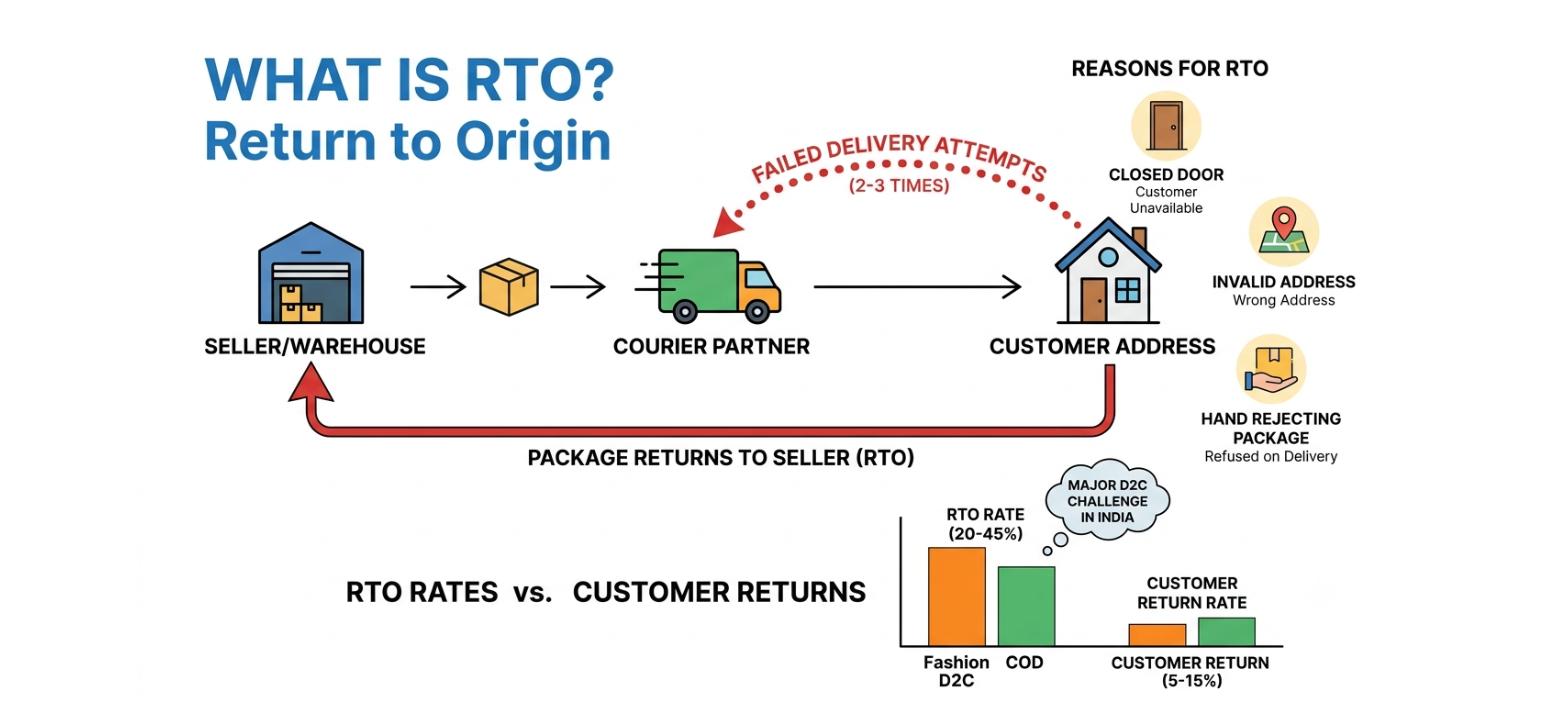
An RTO occurs when a courier cannot deliver the order. The most common reasons in India are the customer not being available at the address, the wrong address being provided, COD refusal, or the customer refusing the package on delivery. The courier attempts delivery a defined number of times (typically two or three), fails, and sends the package back to the seller.
RTO rates in Indian D2C are structurally higher than customer return rates. In COD-heavy categories, RTO runs 20-35%. In fashion D2C, it can touch 40-45% in certain Tier 3 geographies. Returns management in D2C India for RTO is a volume problem more than a process problem; there are simply many more RTOs than CRETs, and each one consumes the same warehouse inspection resources.
The critical difference between CRET and RTO for Returns management in D2C India: an RTO package has typically not been opened by the customer. The probability of the product being in a sellable condition is higher. A fast, efficient Returns management in D2C India process for RTOs recovers these units to available inventory quickly, reducing the cash locked in reverse transit and warehouse holds.
Where Manual Returns Management in D2C India Breaks Down
Manual returns management becomes increasingly difficult as D2C brands scale across multiple marketplaces in India. Tracking returned products through spreadsheets, emails, or disconnected systems often delays inventory updates, creates stock inaccuracies, and increases the risk of overselling.
Without an automated returns workflow, every returned item becomes a potential point of inventory mismatch, operational inefficiency, and lost revenue.
1. No Real-Time Visibility Into Return Status
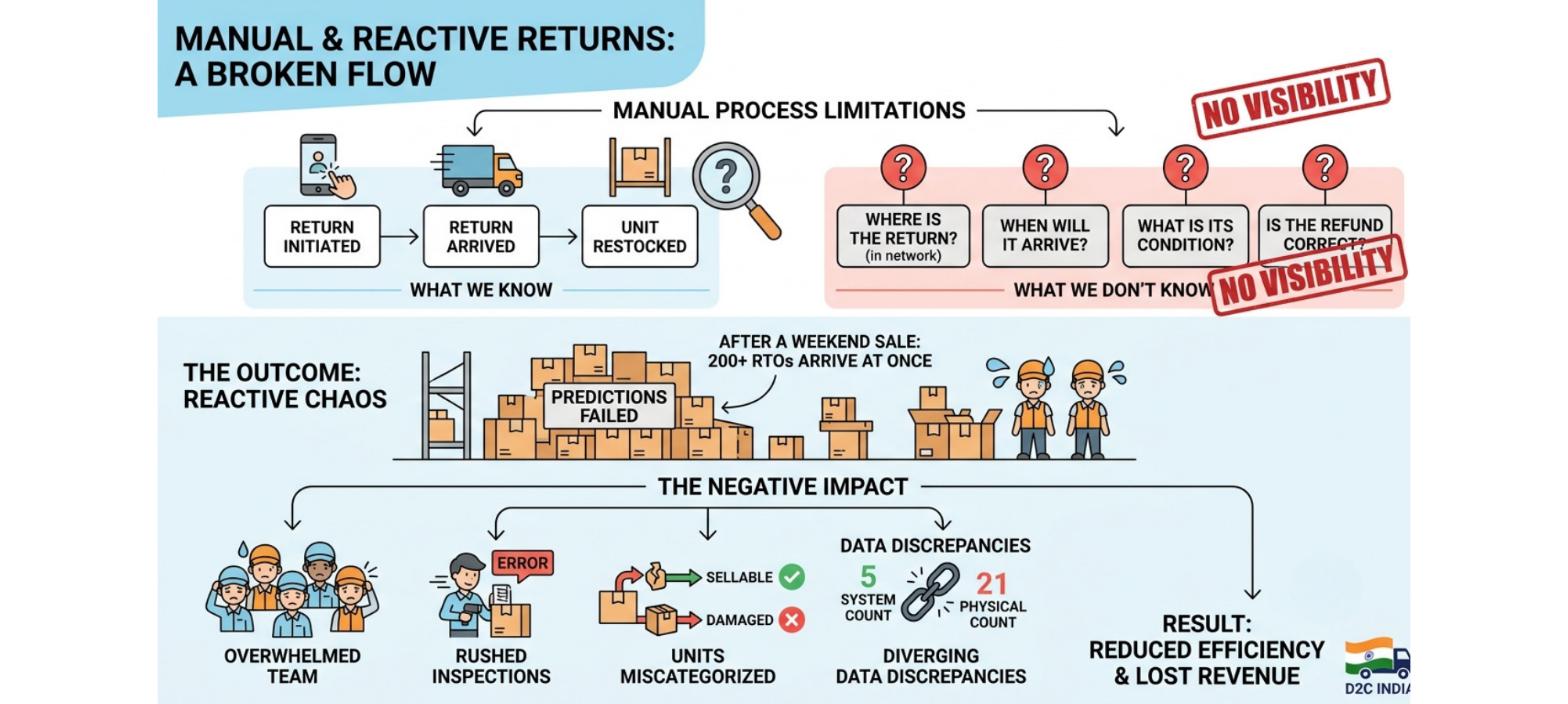
A manual returns process knows three things: a return was initiated, a return arrived, and the unit was (eventually) restocked. It does not know: where the return is in the courier’s reverse network, when it is expected to arrive, what its condition is likely to be, or whether the return credit from the marketplace has been issued correctly.
Without real-time visibility, the returns bay fills up unpredictably. On a Monday morning after a weekend sale, 200 RTOs might arrive simultaneously. The team is overwhelmed. Inspection is rushed. Units are miscategorized. Some sellable units get marked as damaged. Some damaged units enter available inventory. Inventory counts diverge from physical reality.
Returns management in D2C India that operates reactively, dealing with returns as they arrive rather than managing them proactively through visibility, produces exactly this outcome at scale.
2. Marketplace Credits Not Tracked at Order Level
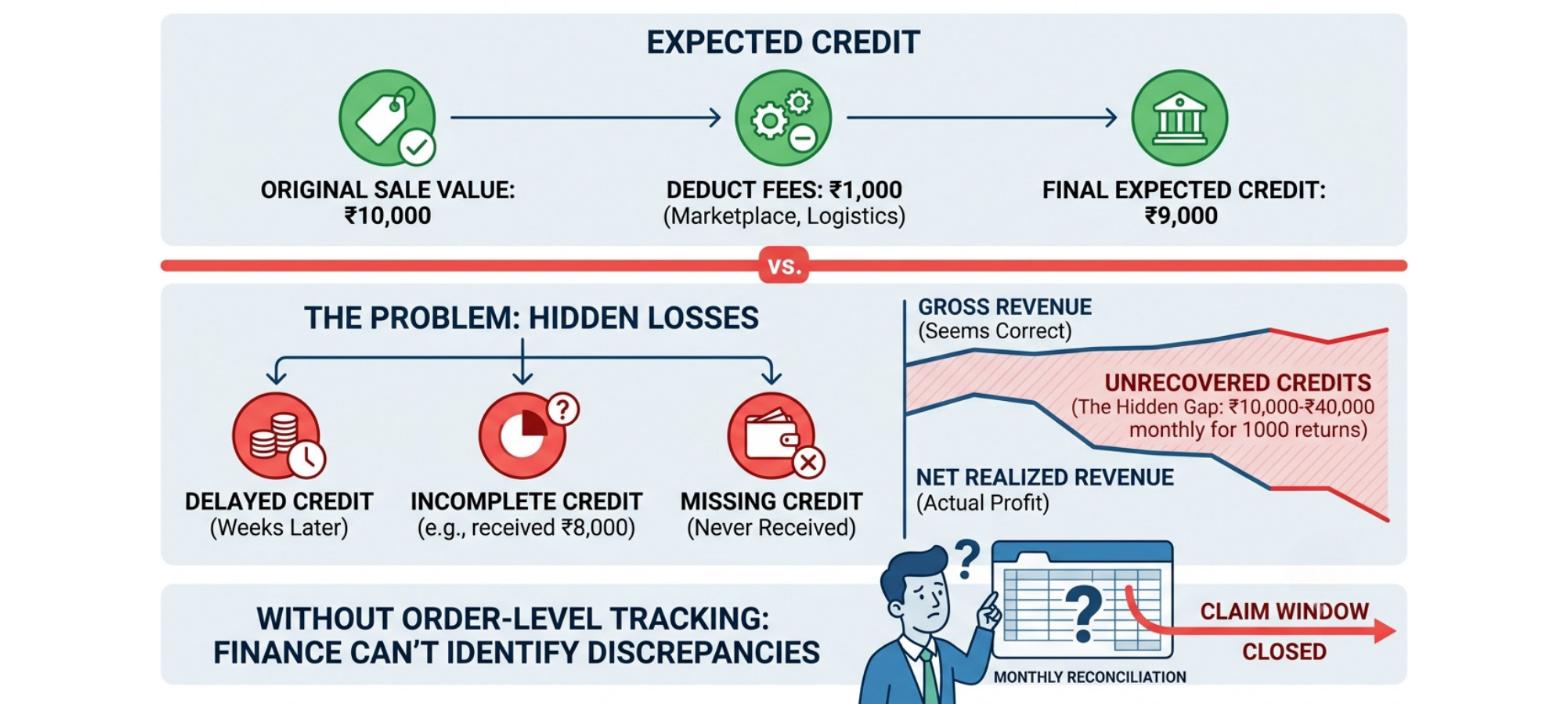
When a marketplace processes a CRET and credits the seller, that credit should match the original order value minus applicable fees. In practice, credits are frequently incorrect: partial, delayed, or missing entirely. Without an OMS that tracks expected credits per return at the order level, the finance team cannot identify discrepancies until the monthly reconciliation, by which time claim windows on many orders have closed.
Returns management in D2C India without order-level credit tracking loses money silently. The gross revenue looks correct. The net realized revenue is lower by the sum of all unclaimed discrepancies. For a brand doing 5,000 returns per month, this can represent ₹50,000-₹2,00,000 in unrecovered credits.
3. No Disposition Workflow for Damaged vs. Sellable Units
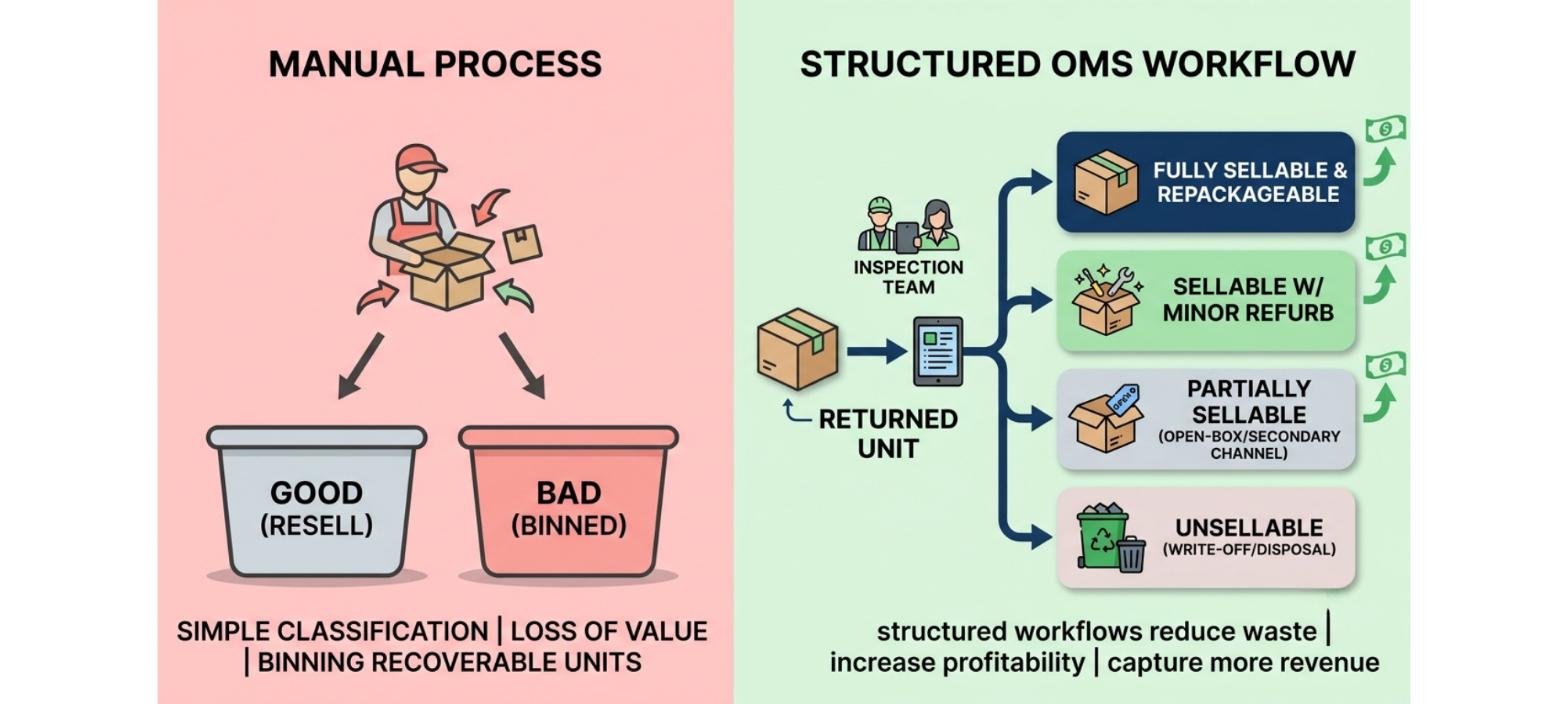
A returned unit is not binary, sellable, or destroyed. The real disposition categories are: fully sellable and repackageable, sellable but requires minor refurbishment, partially sellable for secondary channel or open-box sale, and unsellable requiring write-off or disposal.
Manual Returns management in D2C India typically collapses these into two categories: good and bad. Units classified as “bad” are binned. In reality, many of those units could be repackaged and resold on a secondary channel, refurbished and listed as open-box, or partially recovered. An OMS with a structured disposition workflow that forces the inspection team to classify against a defined set of outcomes and recovers value from returns that manual processes write off.
How Base.com’s OMS Handles Returns Management in D2C India
Base.com manages returns within the same unified OMS and WMS used for forward fulfillment. Returns are not a separate workflow managed in a spreadsheet or a different system; they are part of the same operational loop, with the same data integrity and the same real-time visibility.
Unified Returns Dashboard Across All Channels
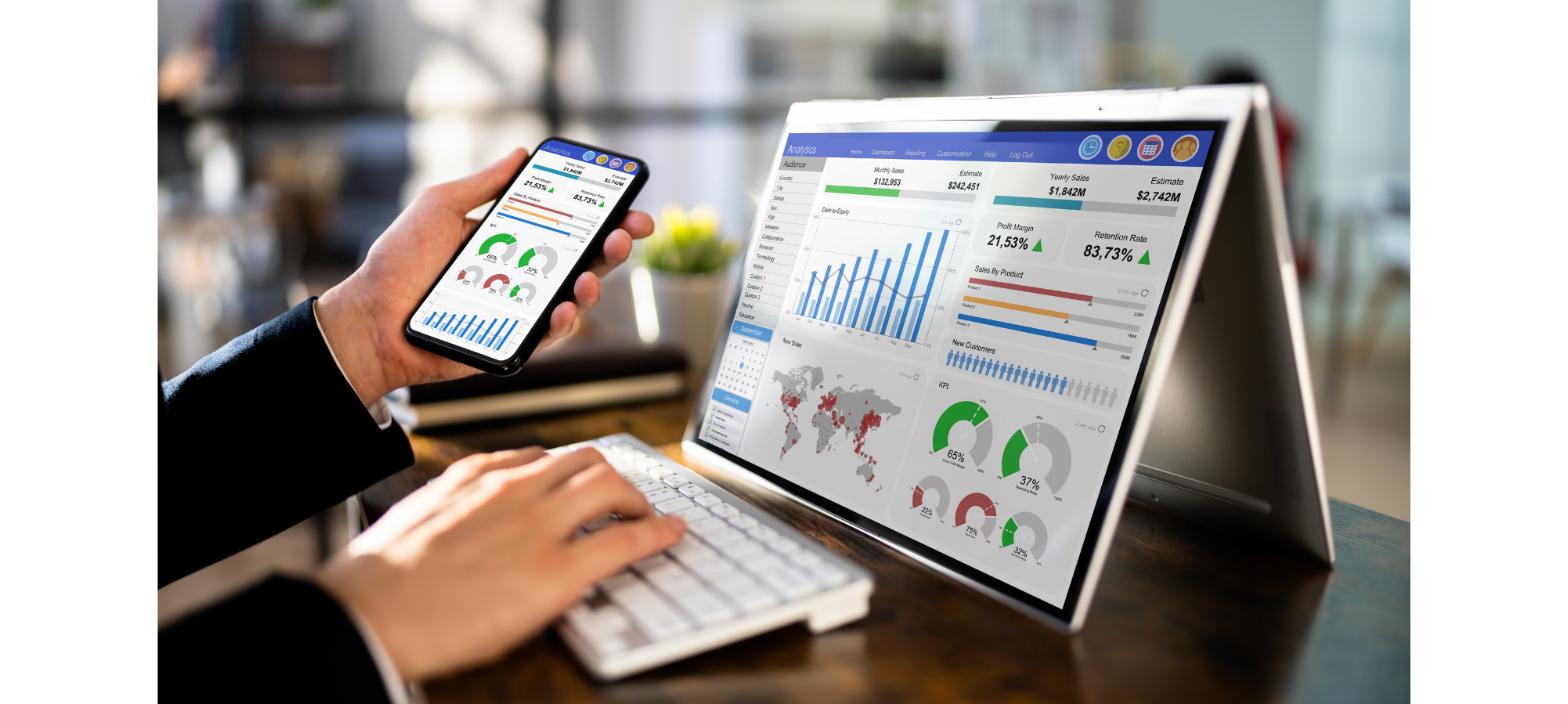
Base.com consolidates returns from every channel, Amazon, Flipkart, Meesho, Myntra, and D2C website, into a single returns dashboard. Each return entry shows: origin channel, return type (CRET or RTO), current courier status, expected arrival date, original order value, expected credit, and disposition status after receipt.
This single view is the foundational tool for Returns management in D2C India at scale. Without it, the operations team is checking five marketplace portals separately, downloading reports, and manually tracking which returns have arrived and which haven’t. With it, the entire returns pipeline is visible in one place, actionable in real time.
Returns are displayed with timestamps at each key status: created, in transit, out for delivery, and delivered to the warehouse. This matches the status tracking that Amazon’s return API provides and that Base.com consumes natively for all integrated channels.
CRET and RTO Processing in One Workflow
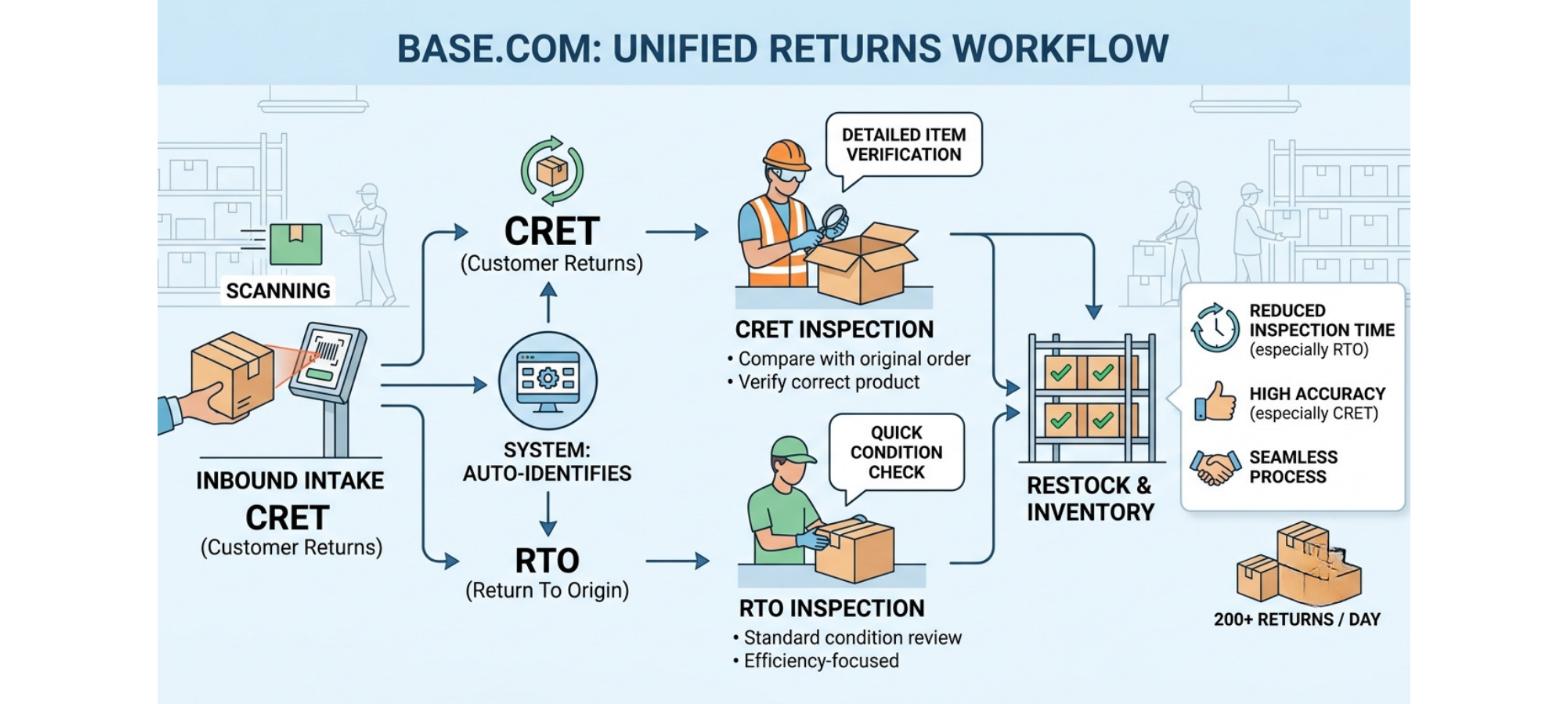
Base.com handles both CRET and RTO returns in a unified workflow without requiring separate systems or manual categorization at intake. When a return arrives at the warehouse and is scanned at inbound, the system identifies it as CRET or RTO and routes it to the correct inspection queue.
The distinction matters for Returns management in D2C India because CRET and RTO have different processing requirements. A CRET return may require a comparison against the original order to verify the correct item was returned (customers sometimes return a different product than ordered). An RTO return typically needs only a condition check before restocking.
Base.com’s returns workflow enforces the correct check at each type, reducing the inspection time for RTOs while maintaining accuracy on CRETs. For a warehouse processing 200 returns per day, the time saving from differentiated workflows, rather than treating every return identically, is significant.
Quality Check Integration with Live Inventory Update

The returns inspection step in Base.com is integrated directly with inventory. When an inspector marks a unit as sellable and restocks it to its bin location, the available inventory count updates immediately across all channels. The unit is visible on Amazon, Flipkart, and the D2C website within the next sync cycle, not after a manual inventory adjustment at the end of the day.
This is the mechanism that recovers working capital fastest. Returns management in D2C India that restocks units within 24 hours of receipt, with immediate inventory visibility on all channels, puts those units back into the revenue cycle before the next day’s orders. Returns management in D2C India that takes 5-7 days to restock those units locks working capital unnecessarily and creates artificial stockout signals that distort reorder decisions.
The 48-hour restock SLA is the operational target. Base.com’s returns workflow makes this achievable by eliminating the manual steps between receipt and restock, scan at inbound, inspect, classify, and confirm restock. Each step updates the system in real time.
Damaged Stock Quarantine Without Inventory Count Distortion
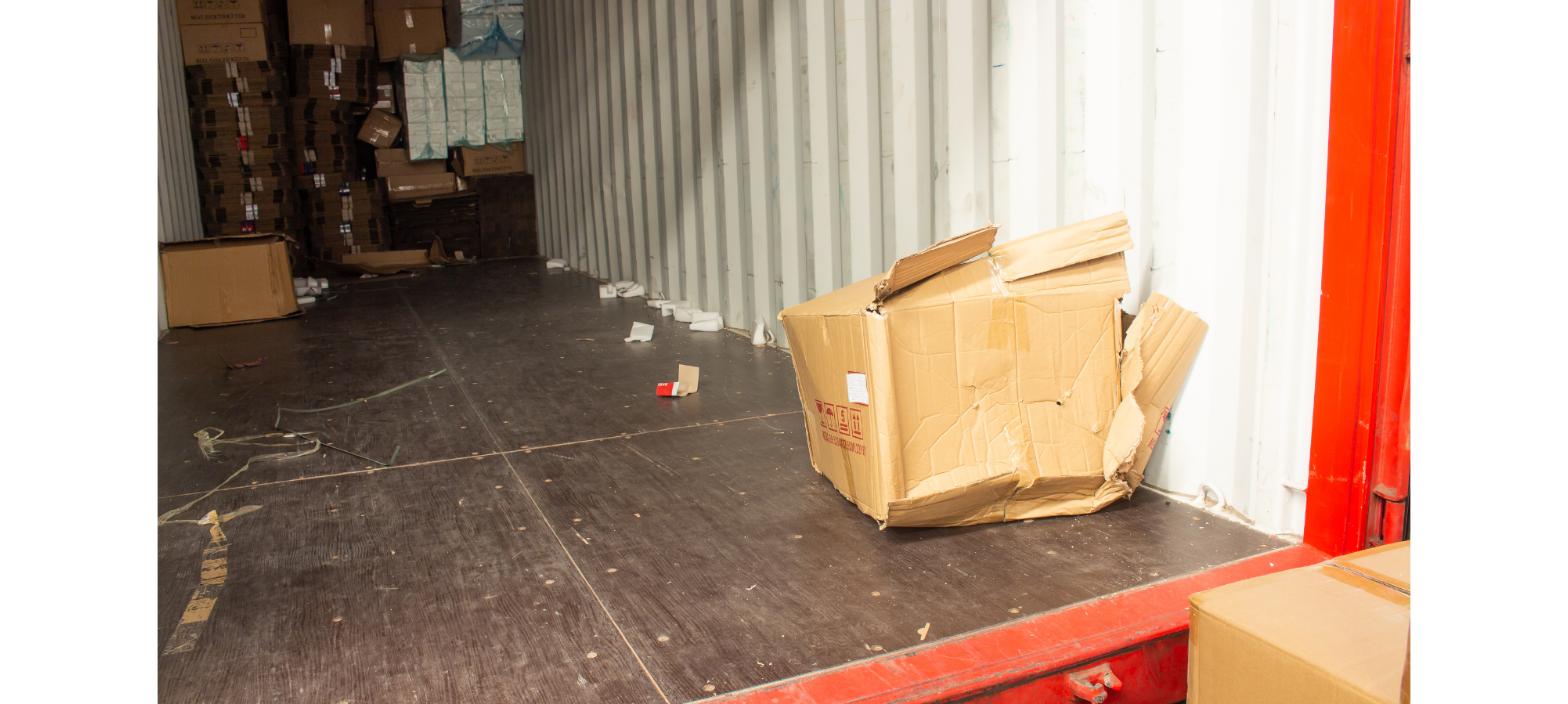
Units classified as damaged in the inspection workflow are moved to a quarantine location in Base.com’s WMS. They are not counted as available inventory. They are tagged against the original order for claim purposes.
This prevents one of the most common errors in manual Returns management in D2C India: a damaged unit being counted as available inventory because the warehouse team added it back to the bin without going through an inspection workflow. That phantom unit gets confirmed in a future order, cannot be shipped, and generates another cancellation.
Base.com’s quarantine workflow ensures damaged units never re-enter available counts. They sit in a defined hold location, visible in the returns report, with a claim-filing flag. The finance team can see all quarantined units alongside their original order values and the expected claim amount, sorted by claim window urgency.
Return Consolidation and Exchange Creation
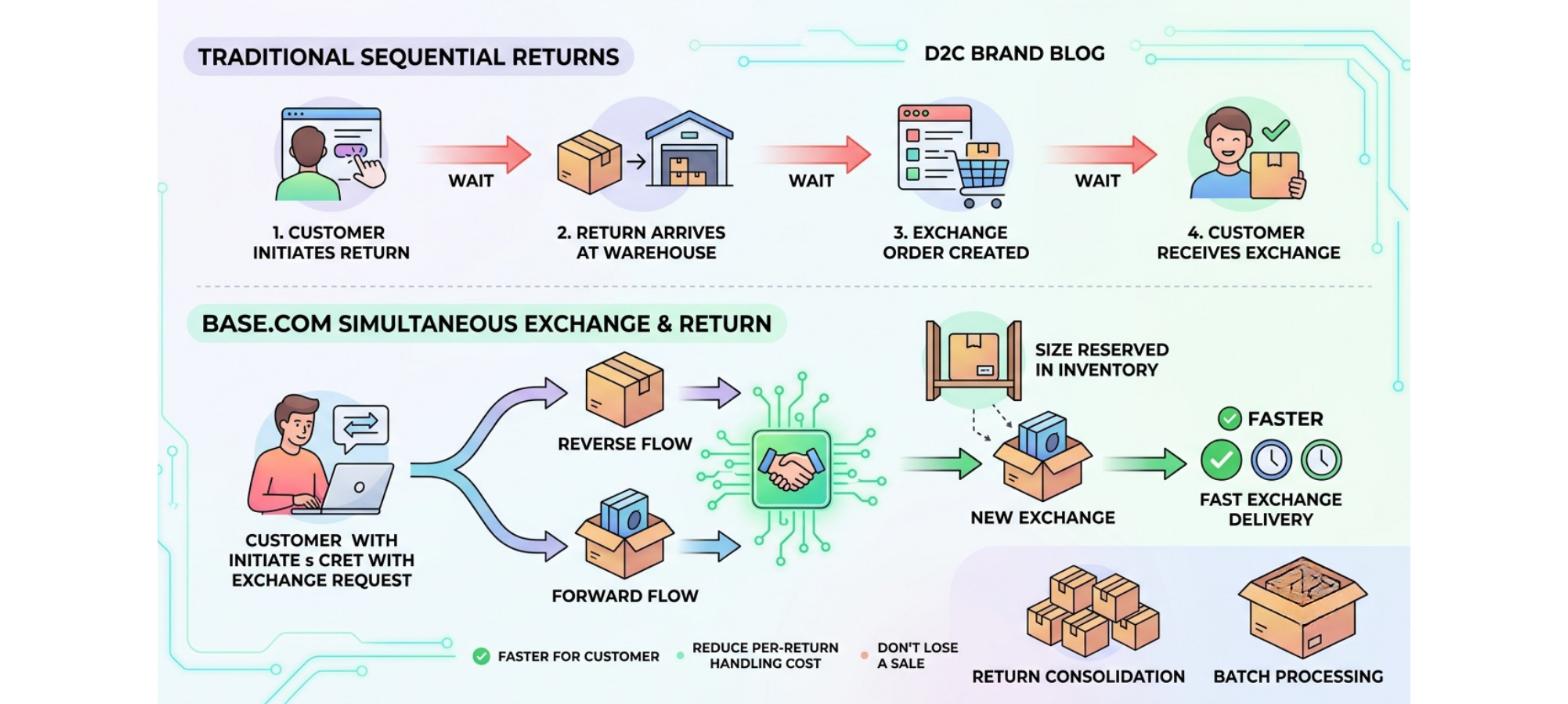
For brands that offer exchange rather than return, common in fashion D2C, Base.com supports exchange creation within the returns workflow. When a customer initiates a CRET with an exchange request, Base.com creates the exchange order at the same time as it processes the inbound return. The exchanged size or variant is reserved in inventory before the return even arrives at the warehouse.
This is Returns management in D2C India at its most efficient: the reverse and forward flows are managed simultaneously, not sequentially. The customer gets their exchange faster. The brand does not lose a sale to a return.
Return consolidation, grouping multiple returns from the same geography or courier network for batch processing, reduces the per-return handling cost. Brands operating at 300+ returns per day benefit from consolidated processing workflows that batch similar returns together and process them as a group rather than sequentially one by one.
Reducing Preventable Returns: The Operational Levers Inside the OMS
Returns management in D2C India is not only about handling returns better after they happen. It is about reducing the returns that should never have happened in the first place.
Pick Accuracy and Wrong Item Returns

A significant share of CRETs are “wrong item received” returns. These originate in the warehouse at the pick stage: a picker selects the wrong SKU or wrong variant because bins are unlabeled, barcodes are not scanned, or the picklist does not have location data.
Base.com’s WMS enforces barcode-verified picking. Every pick is confirmed by scanning the item’s barcode against the pick instruction. If the scan does not match the expected SKU, the system rejects the pick and alerts the operator. Wrong item shipments are eliminated at the pick stage before they reach the customer.
For a brand where “wrong item” returns represent 15% of total CRETs, eliminating this category through barcode-verified picking is a direct Returns management improvement in D2C India without any change to logistics or customer-facing processes.
COD Verification to Reduce RTO
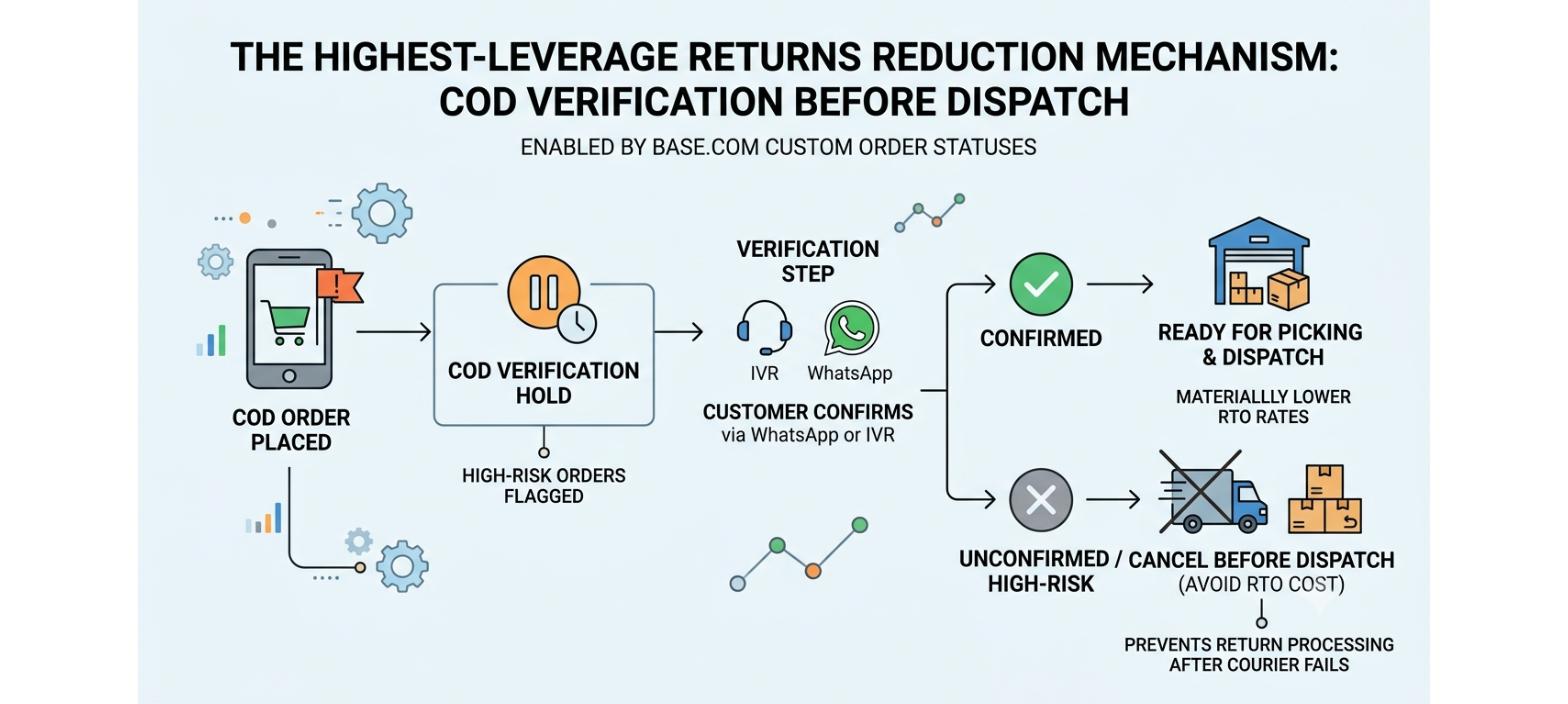
The largest RTO driver in Indian D2C is COD non-acceptance. Base.com supports custom order statuses, including a COD verification status, a step where high-risk COD orders are flagged for confirmation before dispatch. Orders where the customer confirms via WhatsApp or IVR before shipping have materially lower RTO rates than unconfirmed COD orders.
Returns management in D2C India that intercepts high-RTO-risk COD orders before dispatch, rather than processing the return after the courier fails, is the highest-leverage returns reduction mechanism available. Base.com’s custom order status workflow enables this: COD orders can be held in a “pending verification” status, passed to a verification team, and only moved to “ready for picking” after confirmation.
Address Validation and Delivery Failure Reduction

Incorrect or incomplete delivery addresses are a structural source of RTOs in India. Tier 3 and rural deliveries with insufficient address details, missing flat number, incomplete street name, mismatched pincode, fail at delivery even when the customer genuinely wants the product.
Base.com’s order fields support custom address validation rules. Orders with flagged address patterns, incomplete data, or pincodes that do not match the city entered can be held for address confirmation before picking. The Returns management in D2C India improvement from pre-dispatch address validation is measurable: fewer RTOs from undeliverable addresses, fewer reverse logistics costs, and fewer customer service interactions.
The Financial Architecture of Returns Recovery
Returns management in D2C India, handled systematically, produces three categories of financial recovery:
Category 1: Faster Working Capital Recovery
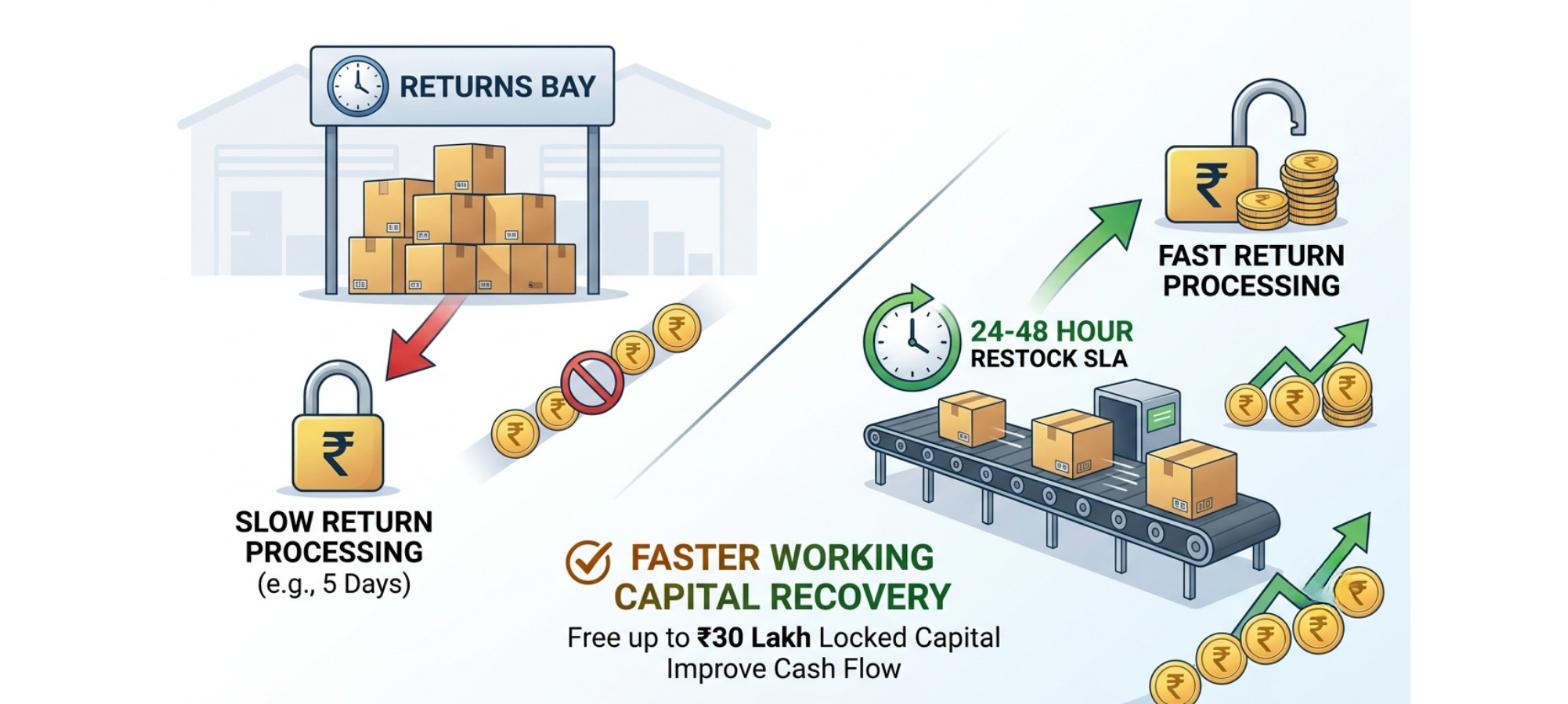
A unit restocked to available inventory within 24 hours of return receipt is a unit that can generate revenue the next day. A unit sitting in the returns bay for 5 days is capital locked. For a brand with ₹2 crore of inventory cycling through returns monthly, reducing average return processing time from 5 days to 24 hours frees approximately ₹30 lakh of working capital that was previously locked in the returns pipeline at any given time.
Returns management in D2C India that operates on a 24-48 hour restock SLA is not just an operational improvement. It is a cash flow improvement.
Category 2: Marketplace Claim Recovery
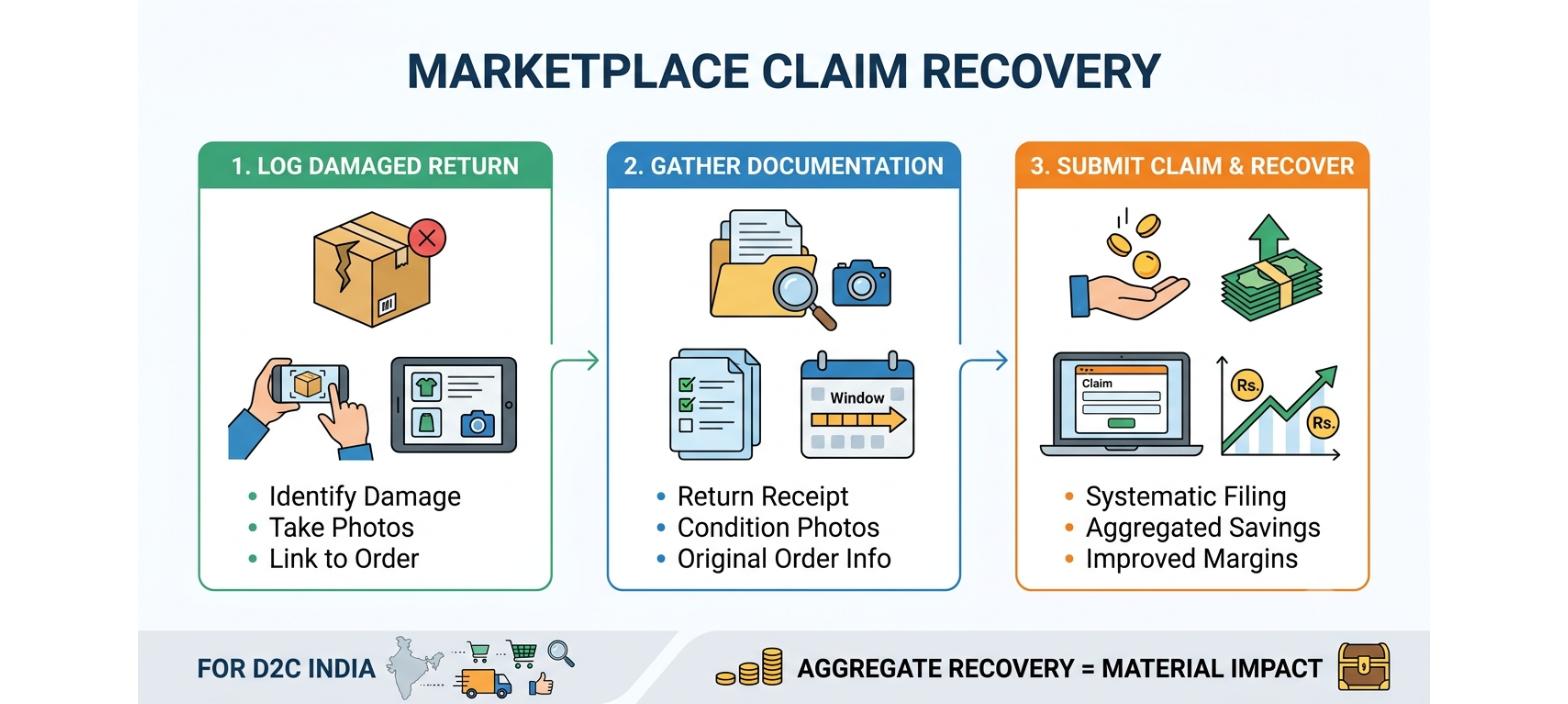
Every return that arrives damaged, whether damaged by the courier, the customer, or at the warehouse, is potentially claimable against the marketplace or the courier. Amazon reimburses for inventory lost or damaged in its fulfillment network. Couriers have liability policies for damage in transit. Marketplaces have SPF (Seller Protection Fund) mechanisms for specific return fraud patterns.
None of these claims is automatic. They require documentation: original order details, return receipt confirmation, condition photos, and claim submission within the window. Base.com’s returns module logs every required data point at the time of inspection, condition photos can be attached, the original order is linked, and the claim-eligible amount is calculated automatically.
Returns management in D2C India that systematically files every eligible claim, within every window, and recovers amounts that manual processes consistently miss. The per-claim amount is small. Across hundreds of claims per month, the aggregate is material.
Category 3: Secondary Channel Revenue
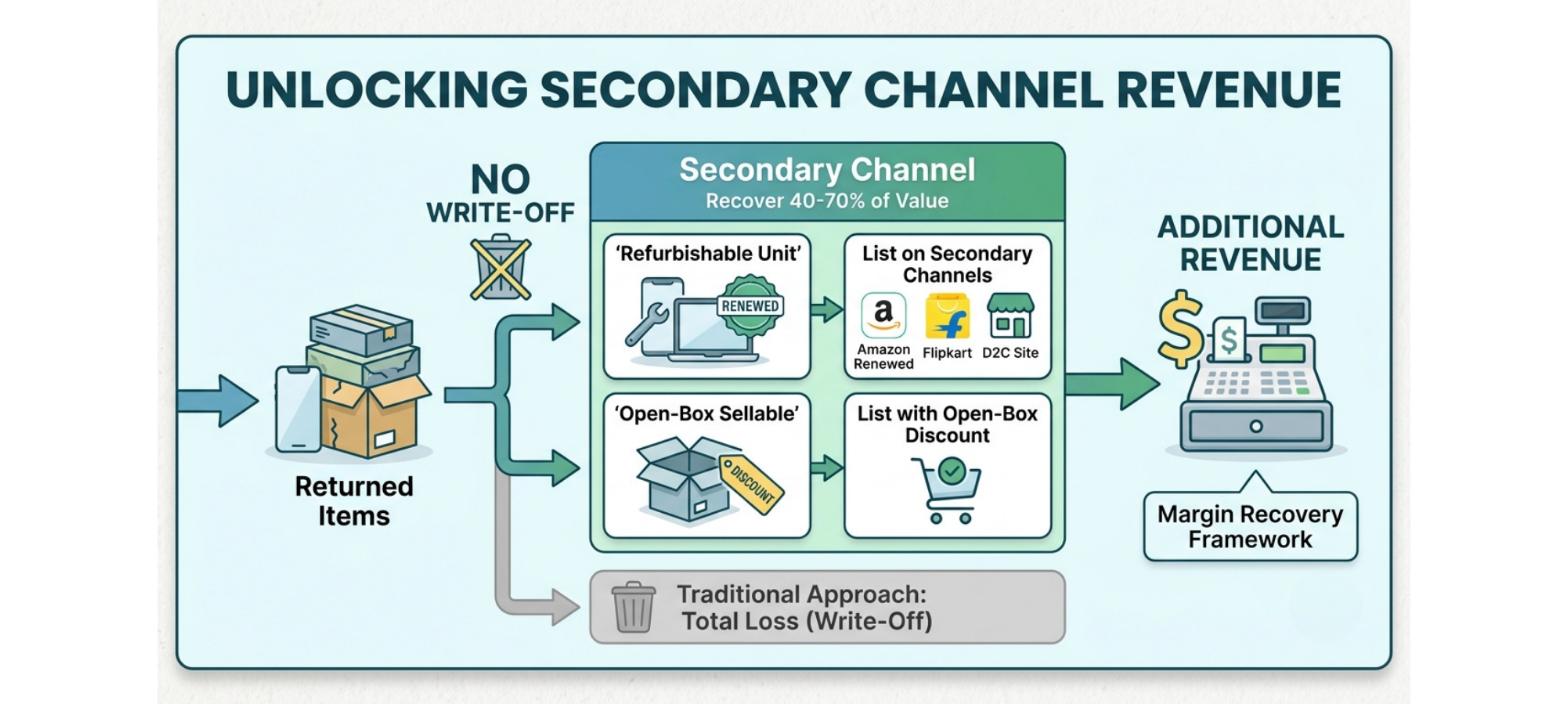
Units classified as “sellable but requires minor refurbishment” or “open-box sellable” are not write-offs. They can be listed on secondary channels, Amazon Renewed, Flipkart’s open-box category, or the brand’s own D2C site with an open-box discount. Base.com’s PIM module supports channel-level listings, meaning an open-box unit can be listed on a secondary channel without affecting the primary channel listing.
Returns management in D2C India that routes refurbishable units to secondary channels recovers 40-70% of the original product value rather than writing it off entirely. For a brand with 50 such units per month at an average product value of ₹600, the secondary channel recovery is ₹12,000-₹21,000 per month, not transformational on its own, but part of a broader margin recovery framework that adds up.
Returns Reporting: What Good Visibility Looks Like
Returns management in D2C India cannot improve without measurement. Base.com’s returns reporting covers the metrics that matter:
- Return rate by channel. Returns rate on Meesho versus Amazon versus the D2C website. A higher rate on one channel signals either a product presentation issue, a different customer profile, or a courier-specific delivery failure rate on that channel’s logistics network.
- Return reason distribution. “Wrong item” returns point to warehouse errors. “Not as described” returns point to catalogue issues or photography. “COD refusal” returns point to customer intent. “Damaged” returns point to packaging inadequacy. Each category has a different operational fix. Returns management in D2C India, without reason-level reporting, cannot identify which fix to prioritize.
- Return disposition outcomes. What percentage of returns are being restocked as sellable? What percentage are going to quarantine? What percentage is being written off? Trends in these numbers identify whether the returns inspection process is becoming more or less efficient and whether product quality is shifting.
- Claim filing rate and recovery rate. What percentage of claim-eligible returns had claims filed? What percentage of filed claims were approved? A low claim approval rate may indicate that claims are being filed without sufficient documentation. A low filing rate indicates the process is not systematic.
- Return processing time. Average hours from return receipt to restock for sellable units. This is the primary operational metric for working capital impact. Returns management in D2C India improvement is measured here first.
With Base.com, returns reporting moves beyond basic tracking to actionable operational intelligence. By consolidating return data across marketplaces, warehouses, and logistics partners, brands gain complete visibility into return trends, inventory recovery, claim performance, and processing efficiency.
This enables Indian D2C businesses to reduce losses, restock inventory faster, improve customer satisfaction, and continuously optimize their returns management process through data-driven decisions.



[…] On average, Indian D2C brands are losing ₹180-₹350 per COD order returned once forward and reverse logistics, repackaging, and the cost of capital locked in inventory are […]
[…] are inevitable, and how they are processed determines whether they become a cost center. Reverse logistics discipline is one of the warehouse management best practices to follow that directly affects fill […]
[…] value once forward shipping, reverse pickup, inspection, and restocking are factored in. This makes reverse logistics one of the costlier order management challenges in ecommerce to get […]
[…] accuracy, same-day dispatch SLAs, real-time tracking updates, and automated returns processing are the operational minimum for a direct channel that customers prefer. How to manage lakhs of […]
[…] order tracking, multi-channel order sync, omnichannel order management, pick and pack assistant, returns processing, and workflow automation for pick and […]
[…] pick pack assistant with barcode verification eliminates the wrong-item returns that are common in warehouses running manual pick processes. Every pick is scanned against the pick […]
[…] delivery-day confirmation message reduces failed delivery attempts meaningfully, since a share of COD returns stem from a customer being unavailable or having forgotten the order entirely, not genuine product […]
[…] challenges by centralizing order processing, inventory synchronization, fulfillment workflows, returns management, and real-time […]
[…] planning also prevents overstock by connecting return data back into the forecast. A SKU with a high return rate needs its net demand adjusted downward accordingly, since gross order volume overstates real, kept […]
[…] handles RTO and customer returns through scan-based intake with custom statuses such as damaged, recoverable, and return-to-store. […]
[…] it stops: India-specific returns handling runs lighter than local-first […]
[…] needs ten software layers: storefront, order management, warehouse execution, shipping aggregation, returns handling, payments and COD risk, customer messaging, analytics, support, and accounting with GST. The best […]
[…] handles branded tracking pages, delivery notifications, and returns automation together. Customers who know where their parcel is raise fewer tickets and refuse fewer […]
[…] arrive without structure unless the system imposes it. Untracked returns become written-off inventory rather than restocked […]
[…] and condition capture: Base.com scans returns into statuses such as damaged, recoverable and return-to-store at the receiving […]
[…] enterprise rollout. The platform brings order orchestration, warehouse execution, and returns handling into one stack, so brands stop stitching three vendors together and reconciling between […]