

The best multichannel inventory management software in India falls into four distinct tiers, and Indian sellers waste money by shopping across tiers instead of within one. Full-suite platforms serve brands above 500 daily orders, mid-market tools serve 100 to 500, fulfilment providers serve brands without warehouses, and SME tools serve everyone below that.
This guide groups twenty platforms by tier rather than ranking them against each other. A tier-two platform is not worse than a tier-one platform. It is built for a different seller.
How should Indian sellers read this list before comparing any platforms?
Each review below gives a short verdict in two lines: choose it when, and avoid it when. The second line matters more, because most bad software decisions come from buying a platform built for somebody else.
Three numbers determine your tier more than revenue does. Daily order volume sets throughput requirements, active SKU count sets inventory complexity, and channel count sets integration load.
India’s ecommerce market runs at roughly $226 billion, and D2C grows at roughly 40% CAGR. Sellers cross tiers faster than they expect, so buy for the tier above your current one rather than the tier you occupy today.
| Tier | Platform type | Typical seller | Daily orders |
| 1 | Full-suite operations platforms | Multi-channel brands at scale | 500+ |
| 2 | Mid-market multichannel platforms | Growing D2C and marketplace sellers | 100 to 500 |
| 3 | Fulfilment-led providers | Brands without their own warehouse | Any |
| 4 | SME inventory and billing tools | Small sellers and distributors | Under 100 |
Which tier-one platforms offer the best multichannel inventory management software in India?
Tier-one platforms run orders, inventory, and warehouse execution as one system, and they represent the best multichannel inventory management software in India for high-volume sellers. They suit sellers where operations, rather than demand, limits growth.
1. Base.com
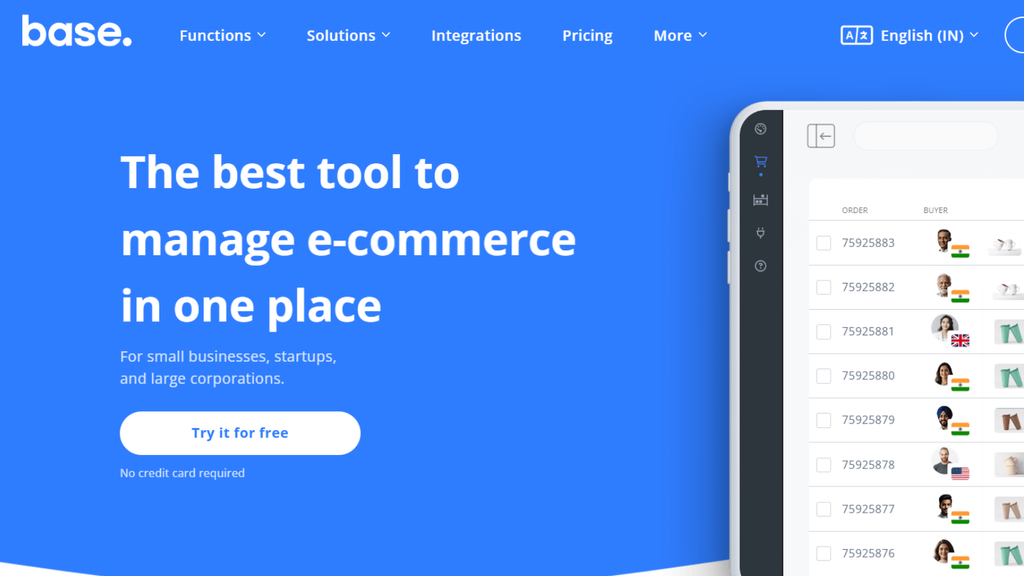
Base.com combines order orchestration, warehouse execution, and returns processing in a single platform, so inventory state stays consistent instead of being reconciled between systems. It is built around Indian conditions, COD risk, RTO volumes, and marketplace dispatch rules that sit in the core workflow.
Sellers get scan-verified picking, channel-aware dispatch priority, and returns grading without assembling three vendors to achieve it.
Choose it when: you run several channels, operate your own warehouse, and operations now caps your growth.
Avoid it when: you dispatch under a hundred orders a day from one channel.
2. Unicommerce

Unicommerce carries the deepest marketplace connector library in the country and has processed years of Flipkart, Amazon, and Myntra edge cases. Sellers on many channels benefit from that accumulated maturity.
Its configurability rewards large teams and burdens small ones, because the settings surface exceeds what a lean operation needs.
Choose it when: you sell across many marketplaces at high volume with a dedicated operations team.
Avoid it when: you want fast onboarding with minimal configuration effort.
3. Vinculum

Vinculum handles distributed inventory and ship-from-store properly, letting a retail outlet fulfil an online order. That capability shortens delivery distance and moves slow store stock.
Sellers without physical retail pay for an omnichannel engine and use only the ecommerce portion.
Choose it when: you operate retail doors alongside online channels.
Avoid it when: you sell purely online with a single warehouse.
4. Increff
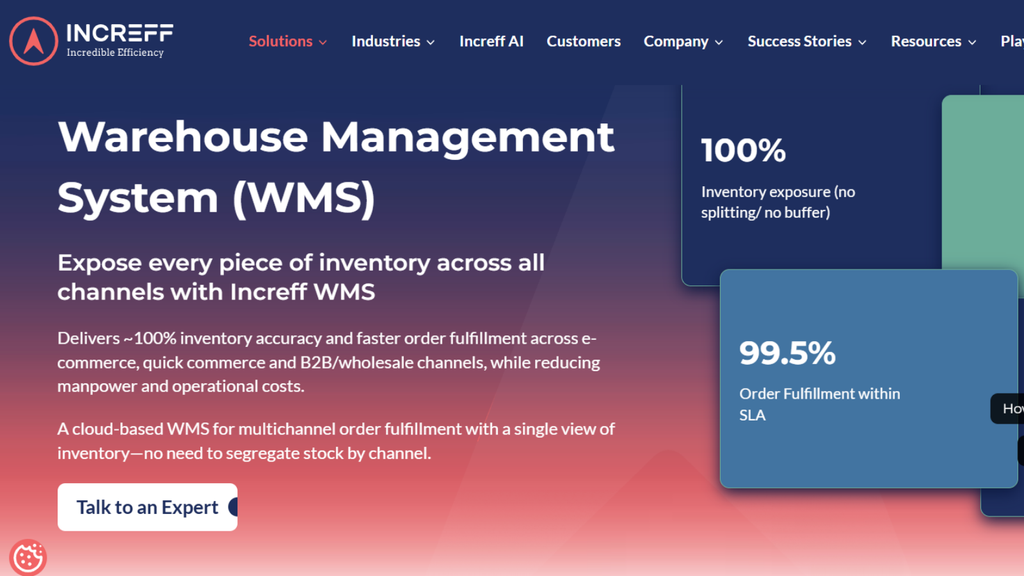
Increff tracks inventory at piece level, which handles the size and colour multiplication that defines fashion catalogues. Its planning layer recommends what to stock where rather than applying flat reorder rules.
Narrow catalogues gain little from this precision while paying for all of it.
Choose it when: you manage deep size-colour matrices across thousands of SKUs.
Avoid it when: your catalogue runs to a few dozen simple products.
5. Ginesys

Ginesys grew from retail ERP and point of sale, so GST, accounting, and store operations run natively. Its ecommerce layer connects marketplace orders to that retail backend.
Online-only sellers inherit retail weight without the corresponding benefit.
Choose it when: you run a retail chain adding or scaling ecommerce.
Avoid it when: you have no physical stores and no plans for them.
6. Anchanto

Anchanto serves exporters and logistics providers across Asia-Pacific, with a genuine multi-country and multi-entity structure. One operator can run many client brands on a single instance.
Domestic-only sellers inherit complexity that delivers them nothing.
Choose it when: you export to Southeast Asia or the Gulf, or operate as a 3PL.
Avoid it when: all your orders ship within India.
Which tier-two platforms suit growing Indian multichannel sellers who are scaling fast?
Tier-two platforms cover the best multichannel inventory management software in India for growing sellers, without enterprise implementation effort. Most growing Indian sellers belong here, and many stay for years.
7. EasyEcom
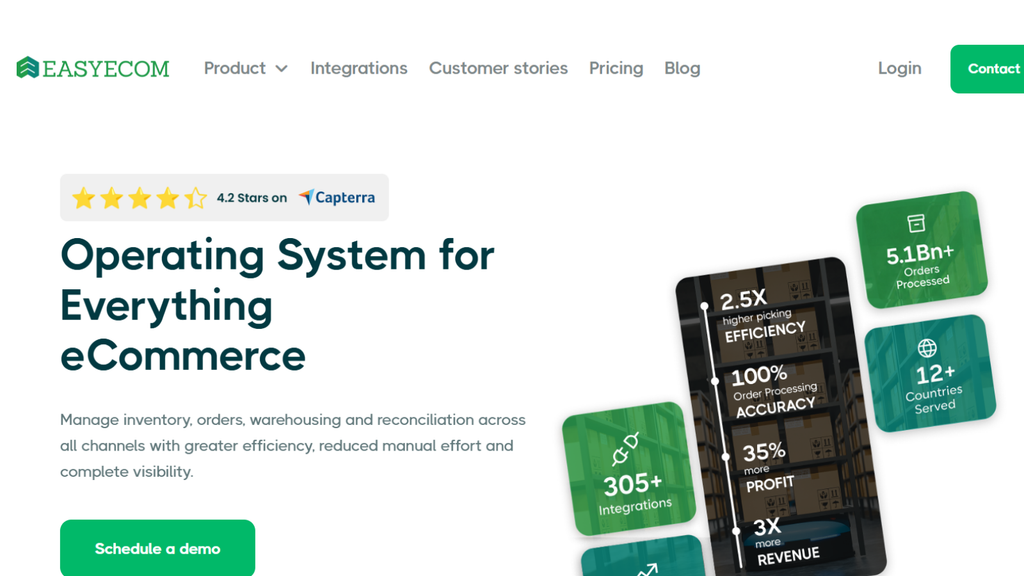
EasyEcom covers orders, warehouse, and marketplace payment reconciliation together. The reconciliation layer compares what marketplaces owe you against what they actually settle, which recovers money most sellers never chase.
It handles B2B distribution alongside D2C, so mixed-channel sellers avoid running two systems.
Choose it when: marketplace settlement gaps cost you money, or you sell wholesale alongside online.
Avoid it when: you need deep warehouse capability at very high throughput.
8. Omniful
Omniful postdates quick commerce, which shows in how it handles dispatch windows measured in minutes rather than hours. Its API design reflects recent architecture rather than a decade of accumulated patches.
Younger platforms carry integration risk that established vendors have already absorbed.
Choose it when: Blinkit, Zepto or Instamart form a meaningful share of your orders.
Avoid it when: you need a long proven track record at very high Indian volumes.
9. Hopstack
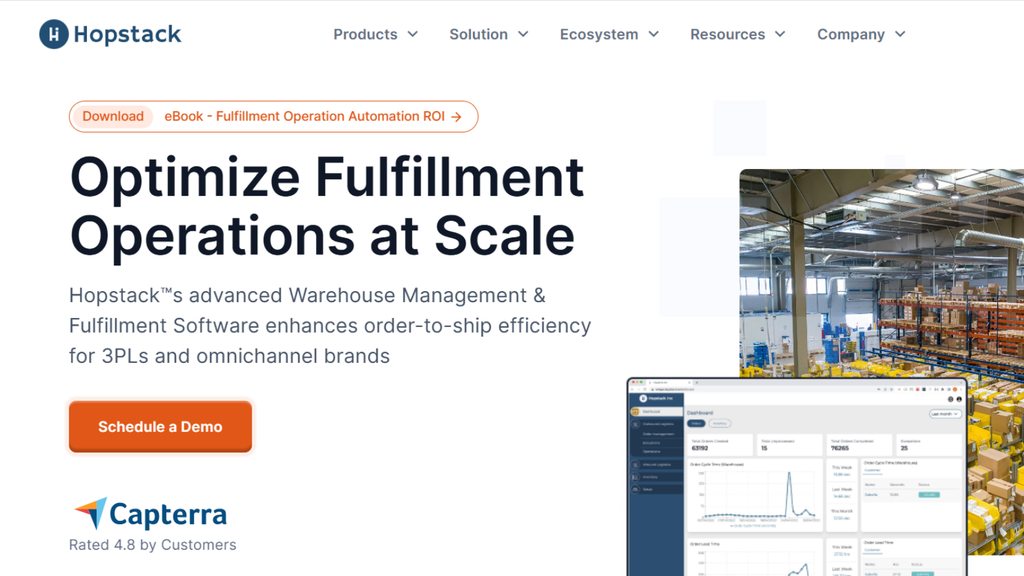
Hopstack emphasises real-time visibility and configurable picking workflows, so operations teams shape processes rather than accepting defaults. It works for both seller-run and 3PL-run facilities.
Configurability needs an internal owner, and sellers without one default to standard workflows anyway.
Choose it when: you have an operations lead who wants to design warehouse processes.
Avoid it when: nobody internally will own the configuration.
10. Fynd Commerce

Fynd bundles a storefront with order management under one contract, backed by a large retail parent group. Sellers rebuilding both layers together reduce their vendor count and integration surface.
Bundling raises switching costs, because replacing either layer later means replacing both.
Choose it when: you are rebuilding your storefront and backend at the same time.
Avoid it when: your storefront works fine, and only operations need fixing.
11. Browntape
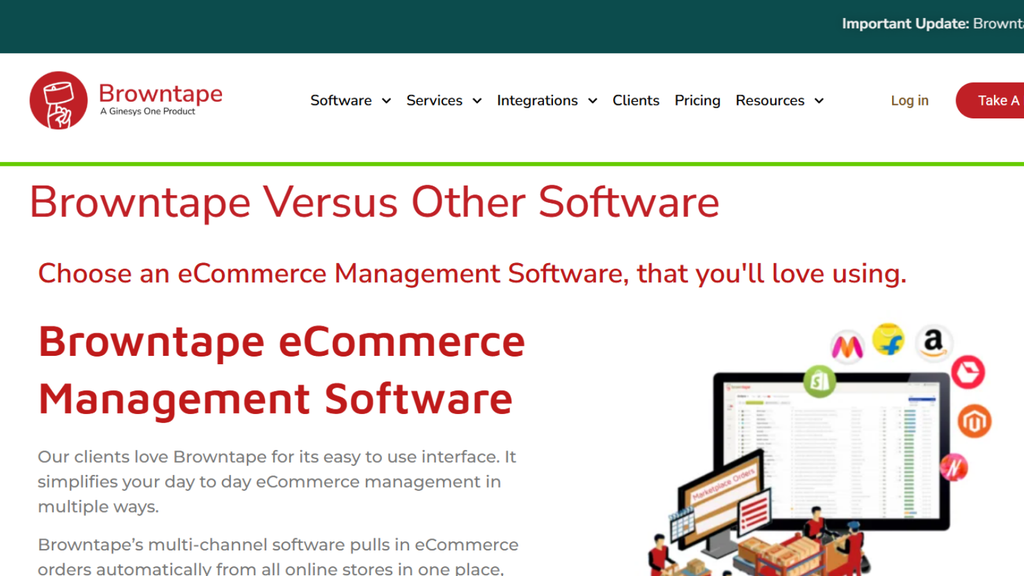
Browntape aggregates marketplace orders and syncs inventory without enterprise weight, and now sits within the Ginesys group. Setup stays quick, and cost stays modest.
Its ceiling arrives with multi-warehouse allocation and serialised inventory requirements.
Choose it when: you sell mainly on marketplaces with straightforward fulfilment.
Avoid it when: you run multiple warehouses or need deep returns workflows.
12. Primaseller
Primaseller keeps inventory synchronised across online channels, physical retail and B2B wholesale orders. Small sellers balancing three sales modes get one stock view.
Its scope stops deliberately short of warehouse execution at scale.
Choose it when: you juggle retail, wholesale and online at modest volume.
Avoid it when: you need automation depth or warehouse direction.
Which fulfillment-led providers work as a backend for Indian sellers?
Tier-three providers bundle the best multichannel inventory management software in India with physical fulfilment, so you outsource storage and dispatch alongside the system. This trades control for speed of setup.
13. Eshopbox
Eshopbox operates its own fulfilment network and provides the software controlling it. Sellers without warehouse expertise remove an entire operational discipline from the business.
Per-order economics turn against you as volume climbs, because outsourced cost scales linearly while in-house cost flattens.
Choose it when: you want to grow without hiring a warehouse team. ]
Avoid it when: volume is high enough that in-house fulfilment costs less.
14. WareIQ
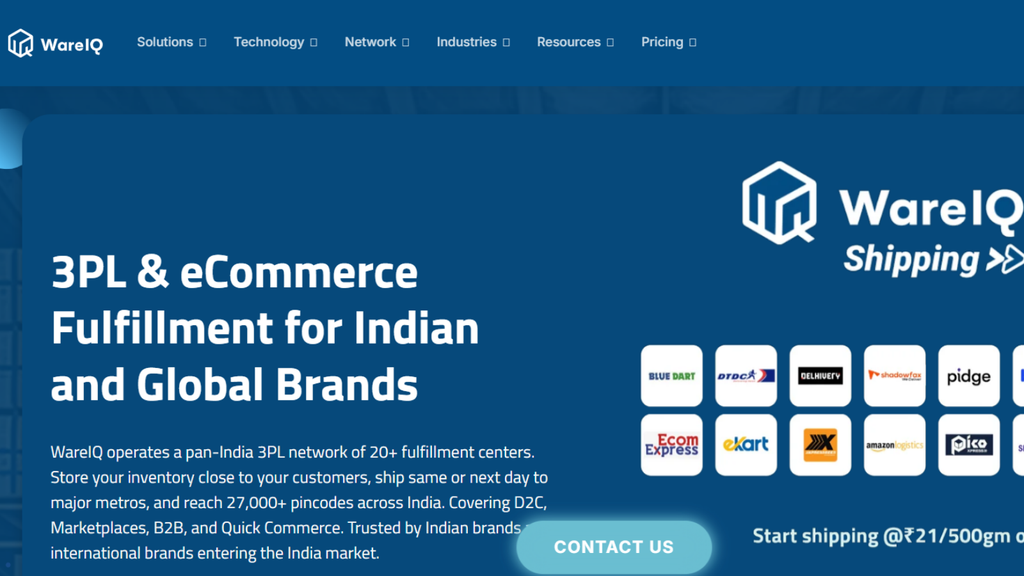
WareIQ places inventory across regional nodes so stock sits closer to demand. Shorter transit windows reduce RTO risk alongside faster delivery promises.
Distribution fragments inventory, which creates regional stockouts for sellers without depth.
Choose it when: delivery speed drives conversion in your category.
Avoid it when: your stock depth cannot support splitting across locations.
15. Shiprocket Fulfillment
Shiprocket extends its shipping aggregation into fulfilment, with setup measured in hours rather than weeks. Early sellers get multi-courier access and basic order handling immediately.
Depth limits appear once real warehouse operations begin.
Choose it when: you are early-stage and need to start fast.
Avoid it when: you dispatch several hundred orders daily from your own facility.
16. Delhivery Fulfillment
Delhivery pairs its national logistics network with fulfilment centres and supporting software. Sellers gain integrated first-mile and delivery reach from one relationship.
Its software is designed around logistics rather than multichannel merchandising, so inventory features run lighter than dedicated platforms.
Choose it when: delivery network reach matters more than backend depth.
Avoid it when: you need rich multichannel inventory control.
Which entry-level tools serve small Indian sellers and distributors well enough today?
Tier-four tools handle inventory, billing, and GST for smaller operations. They are not the best multichannel inventory management software in India, but they often cost less than the problems they solve at this size.
17. Zoho Inventory
Zoho Inventory manages stock, purchase orders, and basic order flow, connecting cleanly to the rest of the Zoho suite. Sellers already using Zoho Books get one coherent environment.
It is an inventory tool with order features rather than a multichannel operations platform.
Choose it when: you sell modest volume and already run Zoho.
Avoid it when: marketplace SLAs and returns workflows drive your operations.
18. TallyPrime
TallyPrime remains the most widely used accounting software among Indian businesses and handles stock, batches, and GST reliably. Accountants everywhere already know it, which lowers hiring friction.
It was never built for marketplace order flows, so ecommerce integration depends on connectors rather than native capability.
Choose it when: compliance and accounting drive your requirements more than order volume.
Avoid it when: you need live inventory sync across marketplaces.
19. Vyapar

Vyapar targets small Indian businesses with GST billing, basic inventory and payment tracking on both desktop and mobile. Its simplicity suits owners who manage everything personally.
Multichannel ecommerce operations sit well outside its design.
Choose it when: you run a small business needing billing with light stock tracking.
Avoid it when: you sell across multiple online marketplaces.
20. Marg ERP
Marg ERP serves distributors and retailers, particularly in pharma and FMCG, with strong batch, expiry, and multi-godown handling. Sellers with distribution roots often already run it.
Its ecommerce orientation stays limited compared to purpose-built platforms.
Choose it when: distribution forms your core business and ecommerce supplements it.
Avoid it when: online channels drive most of your revenue.
How do the leading options compare across the criteria Indian sellers care about?
The table covers the platforms most Indian sellers shortlist when evaluating the best multichannel inventory management software in India. Bands describe depth rather than presence, since every vendor claims every feature in a demo.
| Capability | Base.com | Unicommerce | EasyEcom | Increff | Omniful |
| Multichannel inventory sync | Core | Core | Core | Core | Core |
| Warehouse execution | Core | Core | Core | Leading | Core |
| Returns and RTO handling | Leading | Supported | Supported | Leading | Supported |
| Marketplace connector depth | Supported | Leading | Supported | Supported | Developing |
| Quick commerce readiness | Supported | Developing | Developing | Limited | Leading |
| Settlement reconciliation | Supported | Supported | Leading | Limited | Supported |
| Implementation effort | Moderate | High | Moderate | High | Moderate |
How do you decide which tier your business actually belongs in?
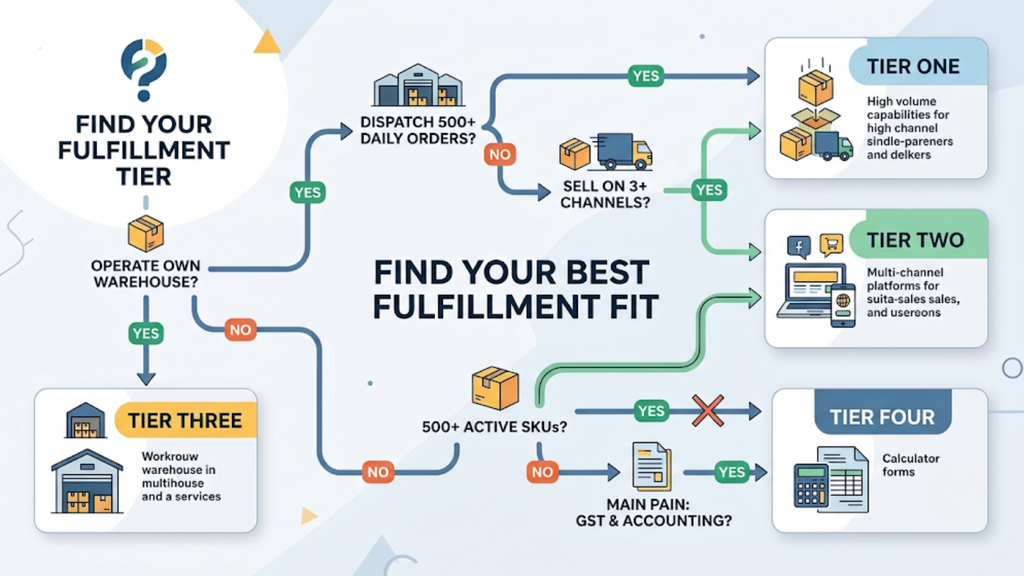
Work through these questions in order and stop at the first one that applies. Your answers point to one tier of the best multichannel inventory management software in India rather than four. This produces a tier faster than comparing feature lists across twenty vendors.
- Do you operate your own warehouse? If not, look at tier three and stop there.
- Do you dispatch over 500 orders daily? If yes, evaluate tier one only.
- Do you sell on three or more channels? If yes, you need tier one or two regardless of volume.
- Does your catalogue exceed 500 active SKUs? If yes, skip tier four entirely.
- Is GST and accounting your main pain rather than orders? If yes, tier four plus a connector may serve you.
What should Indian sellers know about pricing before they negotiate?
Pricing models shape your cost curve far more than the headline figure. Vendors offering the best multichannel inventory management software in India use four structures, and each one breaks differently.
| Model | How it works | Breaks when |
| Per-order | Charged per order processed | Volume scales and cost rises linearly |
| Per-seat | Charged per user | Warehouse headcount grows at peak |
| Tiered SaaS | Banded by order or SKU volume | You cross a band mid-month |
| Enterprise licence | Annual contract plus implementation | Requirements shift within the term |
Ask for three-year total cost at projected volume rather than year-one pricing. Implementation, connector development, scanner hardware and premium support all sit outside the licence figure.
How should Indian sellers plan a switch from one backend to another?
Migration to the best multichannel inventory management software in India fails on data rather than software. These five steps determine whether your cutover stays uneventful.
- Clean the SKU master first. Duplicates and inconsistent naming corrupt every downstream system, so fix them before migration rather than after.
- Decide how much order history you actually need. Most sellers migrate far more than they will ever reference.
- Move one channel at a time. A single-channel cutover contains the damage when something breaks.
- Run both systems briefly in parallel. Two weeks of overlap costs less than one week of blind operation.
- Migrate outside peak season. Never attempt a cutover within six weeks of a festive sale.
Mistakes Indian sellers make when choosing backend software
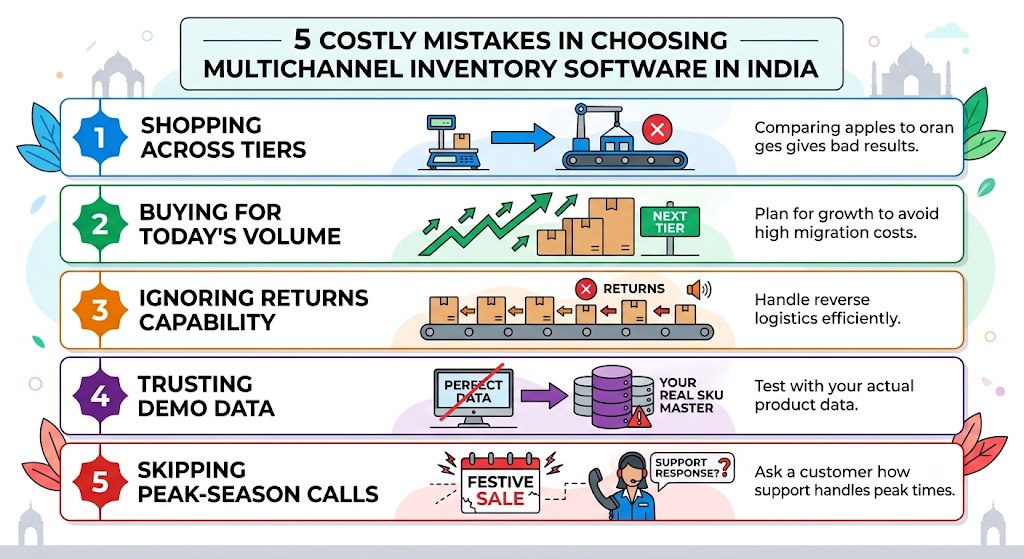
These five mistakes appear across every tier of the best multichannel inventory management software in India, and each becomes expensive after signing. None of them get solved by buying a larger platform.
- Shopping across tiers. Comparing a tier-four billing tool against a tier-one operations platform produces a meaningless conclusion.
- Buying for today’s volume. Purchase for the tier above your current one, since migration costs more than the price difference.
- Ignoring returns capability. Reverse logistics handles a quarter of your dispatch volume in Indian conditions.
- Trusting demo data. Insist that vendors run your real SKU master with its duplicates intact.
- Skipping the peak-season reference call. Ask a customer what broke during the last festive sale and how support responded.
Bottom Line
Base.com belongs firmly in tier one, positioned for sellers who operate their own warehouse and need orders, inventory, and returns to behave as one system. That focus reflects where Indian sellers actually lose margin.
Storefronts rarely break. The gap between an order being placed and that order arriving correctly, first time, is where money disappears, and that gap widens every time a seller adds a channel.
Sellers still choose their own storefront, payment gateway, and marketing tools. Base.com consolidates the operational layer underneath them.
Frequently Asked Questions
These five questions come up in nearly every evaluation. Each answer reflects Indian operating conditions rather than global averages.