
Warehouse automation works as a ladder, and skipping rungs wastes money. The best warehouse automation software for D2C brands in India delivers nothing at level four if your level one foundations are still spreadsheets and memory.
This guide places the best warehouse automation software for D2C brands in India across five maturity levels. Each review names the prerequisite that tool needs and the manual work it honestly leaves behind.
Why does warehouse automation only work when you climb the levels in order?
Every automation layer consumes data produced by the layer beneath it. Intelligent slotting needs accurate bin data, accurate bin data needs scanned putaway, and scanned putaway needs a system directing the floor in the first place.
Brands that buy level three capability on a level one foundation get sophisticated software producing confident wrong answers. The tool works exactly as designed, and the output misleads, which is worse than having no tool at all, because nobody questions a system that looks authoritative.
This is why vendor demos mislead so often. A demo runs on clean data, so every level looks achievable immediately, and the prerequisite work stays invisible until implementation begins.
India’s ecommerce market runs at roughly $226 billion, and D2C grows at roughly 40% CAGR, so most brands climb these levels within two or three years rather than a decade.
| Level | What gets automated | What it requires first | Typical trigger |
| 1 | System directs the floor instead of people | Clean SKU master, mapped bins | Above 100 daily orders |
| 2 | Scan verification at pick and pack | Level one running reliably | Mis-picks reaching customers |
| 3 | Allocation, slotting and wave planning | Accurate location-level data | Walking distance limits throughput |
| 4 | Returns grading and reverse processing | Scanned inbound receiving | Returns exceed a quarter of inbound |
| 5 | Outsourced or physical automation | Stable processes worth automating | Space or labour caps growth |
Which tools establish level one, where a system directs your warehouse floor?
Level one replaces memory and paper with instruction, and it is where the best warehouse automation software for D2C brands in India begins. Until a system tells pickers where to go, nothing above this level produces trustworthy data.
1. Base.com
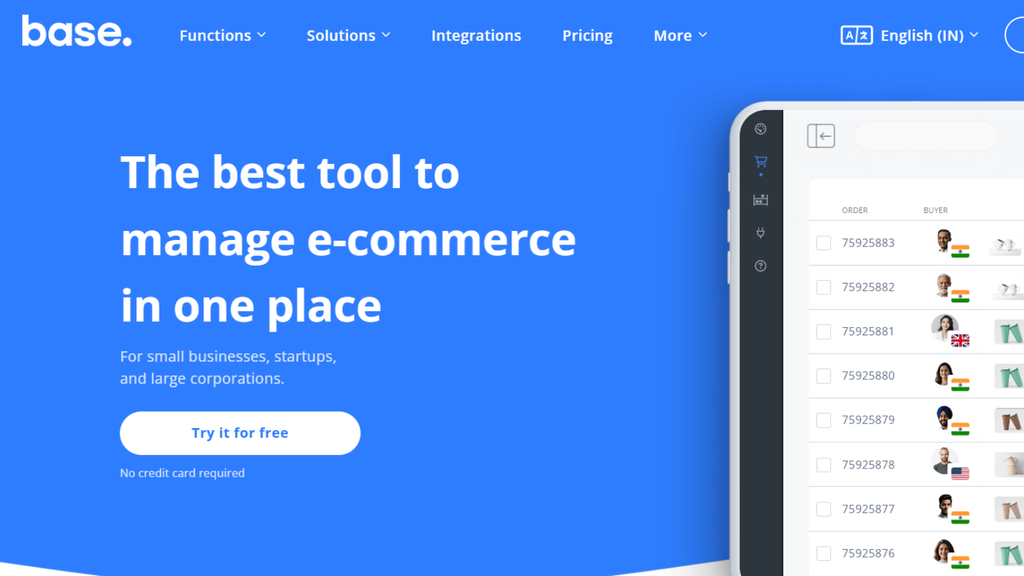
Base.com directs warehouse work from the same platform that holds orders and inventory, so pick instructions reflect channel priority and live stock position rather than a synced snapshot. That single source is what makes everything above level one possible.
Scan-verified picking and packing ship as standard practice rather than an upgrade, which means brands reach level two within the same deployment.
Automates: order-to-dispatch instruction, pick sequencing, scan verification, and returns receipt.
Prerequisite before it works: a deduplicated SKU master and physically labelled bin locations.
Manual work it leaves behind: physical picking, packing, and quality inspection remain human tasks.
2. Unicommerce
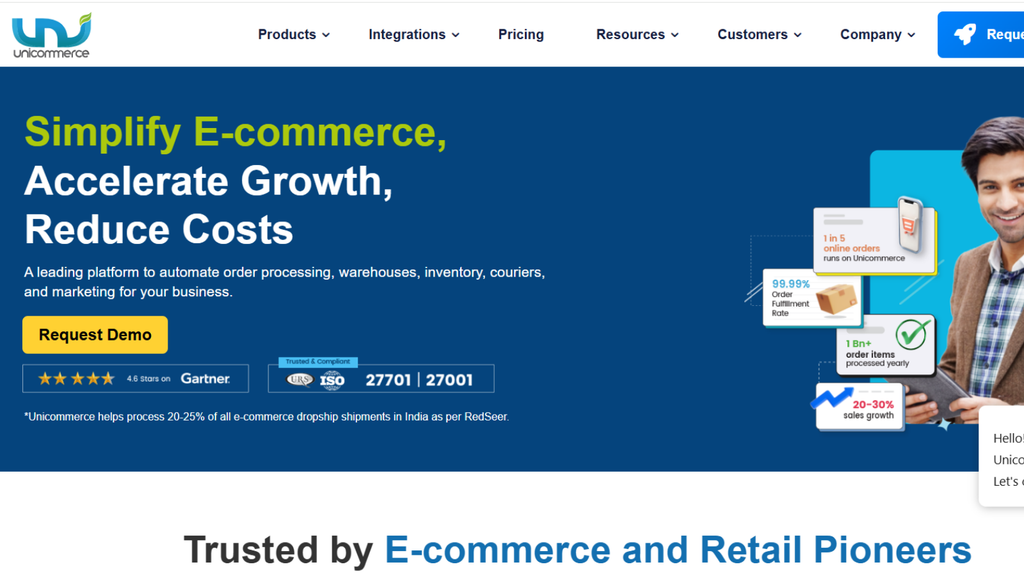
Unicommerce directs warehouse operations alongside its marketplace order management, with connector maturity that reduces the failure risk multi-channel brands carry. Its warehouse module handles marketplace labelling and manifests natively.
Configuration depth suits brands with an operations owner and slows those without one.
Automates: pick list generation, marketplace labelling, manifest creation, and dispatch confirmation.
Prerequisite before it works: someone internally who owns configuration and maintains it.
Manual work it leaves behind: rule tuning as your channel mix changes over time.
3. EasyEcom
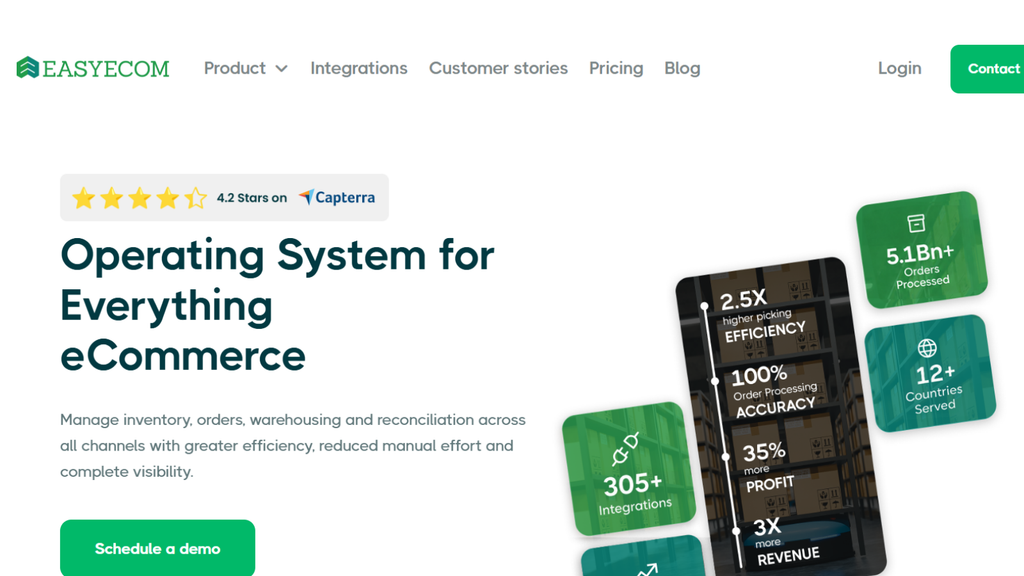
EasyEcom directs warehouse work while reconciling marketplace settlements against the same records. Brands see what was dispatched and what actually got paid on one set of numbers.
Warehouse depth trails specialist platforms at very high throughput, so growth beyond a point warrants reassessment.
Automates: pick and pack instruction, dispatch records, and settlement matching.
Prerequisite before it works: consistent SKU mapping across marketplace and internal codes.
Manual work it leaves behind: claim filing decisions once discrepancies surface.
Which tools deliver level two, where every pick gets verified by scan?
Level two removes the most expensive error a warehouse produces, and it is the rung where the best warehouse automation software for D2C brands in India starts paying visibly. Scan verification stops the wrong unit from leaving the building rather than detecting it afterwards.
4. Increff
Increff assigns identity to individual units rather than counting bins, so a scan confirms exactly which piece a picker has taken. Fashion brands managing size and colour variants gain the most, since those units are the easiest to confuse.
The same granularity carries into level four, because grading a return depends on knowing precisely which unit came back.
Automates: piece-level identification, pick verification, and condition tracking.
Prerequisite before it works: unit-level tagging applied at inbound receiving.
Manual work it leaves behind: the tagging process itself, which adds inbound labour.
5. Hopstack
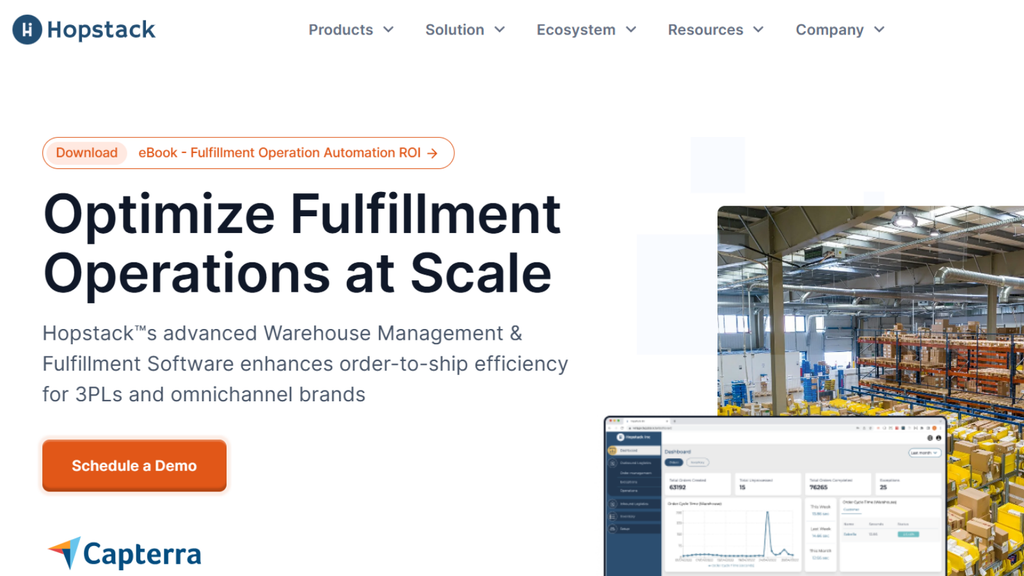
Hopstack lets teams configure picking strategies and verification steps around their own floor layout rather than accepting defaults. Brands with unusual warehouse shapes or mixed order profiles benefit from that flexibility.
Configurability only pays when somebody owns it, so brands without an operations lead see standard results.
Automates: configurable pick paths, verification checkpoints, and real-time floor visibility.
Prerequisite before it works: an internal owner willing to design and refine workflows.
Manual work it leaves behind: ongoing workflow tuning as order profiles shift.
Which tools deliver level three, where allocation and slotting become intelligent?
Level three is where the best warehouse automation software for D2C brands in India attacks walking distance and wave planning. At this rung, throughput gains come from sequencing rather than from adding people to the floor.
6. Omniful
Omniful allocates and sequences work across very different dispatch rhythms, handling quick commerce windows alongside standard marketplace SLAs. Brands running both need allocation that understands the difference between them.
Its newer architecture helps here, since older systems adapted to quick commerce rather than assuming it existed.
Automates: order allocation, wave sequencing, and channel-aware dispatch prioritisation.
Prerequisite before it works: reliable location-level inventory data produced at level two.
Manual work it leaves behind: physical stock movement between zones during rebalancing.
7. Vinculum

Vinculum decides which location serves each order across warehouses and retail stores, reducing both distance travelled and freight paid. Brands with several fulfilment points gain real allocation intelligence.
Single-warehouse brands see little benefit, since there is nothing to allocate between.
Automates: multi-location order allocation including ship-from-store decisions.
Prerequisite before it works: accurate, continuously updated stock positions at every location.
Manual work it leaves behind: inventory rebalancing decisions between locations.
Which tools deliver level four, where returns processing finally becomes automated?
Level four addresses the reverse flow, which most brands automate last and should automate sooner. Few buyers evaluate the best warehouse automation software for D2C brands in India on returns capability, and that is a mistake. With COD return rates between 25% and 30% across Indian categories, inbound returns rival fresh supply as a warehouse workload.
8. Shipway
Shipway structures the returns journey from customer request through pickup to warehouse receipt, with automated communication removing support effort along the way. Warehouse teams receive returns with context rather than as unidentified parcels.
Its scope covers the journey rather than the physical grading, which remains a warehouse task.
Automates: return request intake, pickup scheduling, customer updates, and receipt records.
Prerequisite before it works: a defined grading standard your team applies consistently.
Manual work it leaves behind: physical inspection and grading of each returned unit.
Which tools deliver level five, where fulfilment gets outsourced or physically automated?
Level five moves beyond the best warehouse automation software for D2C brands in India entirely, changing the physical operation rather than the system directing it. Brands reach this rung when space or labour caps growth despite efficient processes underneath.
9. Eshopbox
Eshopbox runs fulfilment centres with its own software, so brands transfer the entire operation rather than automating their own. The outcome resembles automation from the brand’s perspective, since the work simply happens elsewhere.
Per-order cost scales linearly, which eventually reverses the economics against in-house operations.
Automates: the whole fulfilment function, including storage, picking, packing, and dispatch.
Prerequisite before it works: stable, documented product and packaging requirements.
Manual work it leaves behind: oversight, reconciliation and exception management remain yours.
10. GreyOrange
GreyOrange builds warehouse robotics and fulfilment automation, including goods-to-person systems that bring stock to stationary pickers. Physical automation removes walking entirely rather than optimising it.
The capital and integration commitment sits far above software, so this suits large stable operations rather than growing brands still changing how they work.
Automates: physical movement of goods within the facility.
Prerequisite before it works: processes stable enough that automating them is not premature.
Manual work it leaves behind: exception handling, quality inspection, and system supervision.
Cost of Each Level of Warehouse Automation
Costs change character as you climb the best warehouse automation software for D2C brands in India, which changes how you justify each step internally. Software dominates the early rungs, and capital dominates the later ones.
| Level | Main cost driver | Cost character | Payback signal |
| 1 | Software licence plus implementation | Operating cost | Fewer stock disputes, faster dispatch |
| 2 | Scanners, printers and training | Small capital plus operating | Mis-pick rate falling toward zero |
| 3 | Configuration effort and expertise | Mostly internal time | Orders per picker per hour rising |
| 4 | Process design and inbound labour | Operating cost | Returns reaching sellable stock faster |
| 5 | Contract commitment or capital equipment | Large and long-term | Capacity no longer limiting sales |
Judge each level against the cost it removes rather than the capability it adds. That framing keeps investment proportionate to the problem you actually have.
One number tracks the whole ladder usefully: fulfilment cost per dispatched order, measured monthly. If a level does not move that figure within a quarter, either the implementation is incomplete, or you climbed too early.
What should Indian brands prepare before any automation project begins
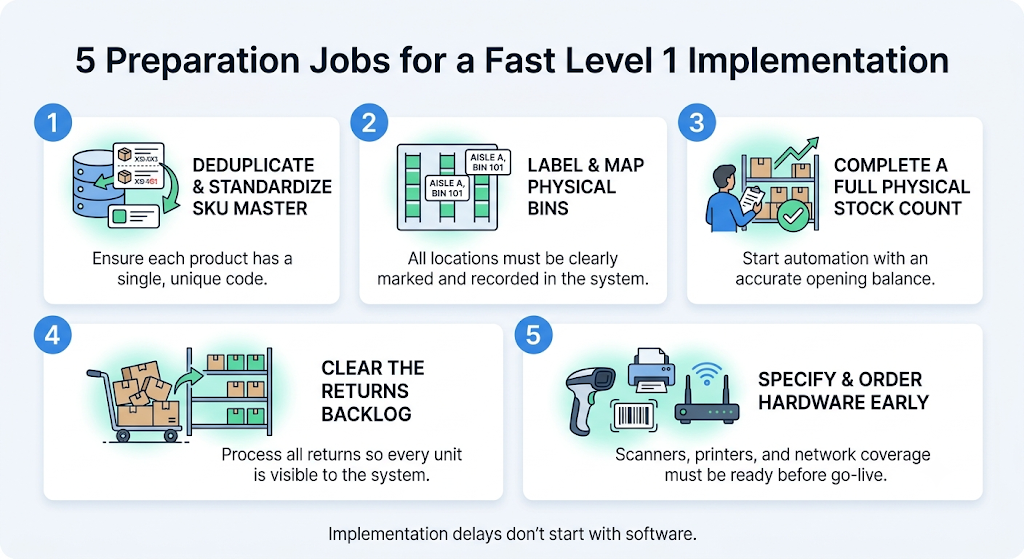
Implementation delays almost never come from software configuration. These five preparation jobs decide whether level one arrives in weeks or months.
- Deduplicate and standardise the SKU master. One product carrying three codes breaks picking, counting, and every report built on them.
- Label and map physical bin locations. A system cannot direct a picker to a location that exists only in somebody’s memory.
- Complete a full physical stock count. Automation starts from an opening balance, and a wrong balance stays wrong until the next count.
- Clear the returns backlog. Unprocessed returns are real units invisible to the system from day one.
- Specify hardware early. Scanners, label printers, and reliable network coverage inside the building all need ordering before go-live.
Most brands underestimate the first two by several weeks. Starting them before vendor selection shortens the whole project considerably.
What can warehouse automation never fix for a growing Indian brand
The best warehouse automation software for D2C brands in India amplifies whatever process it runs on, for better or worse. These five problems survive every level of the ladder and need fixing separately.
- A dirty SKU master. Duplicate and inconsistent codes corrupt every system downstream, regardless of how sophisticated it is.
- Poor inbound discipline. Stock received casually produces inaccurate counts that no software can correct later.
- Undefined grading standards. Automated returns intake still needs a human rule for what counts as sellable.
- Understaffing at peak. Automation raises throughput per person and never eliminates the person entirely.
- Unstable processes. Automating a workflow that changes monthly locks in a decision you will regret.
Fix these before climbing further. Every level above compounds whatever sits wrong beneath it.
How do you know which automation level your brand should target next
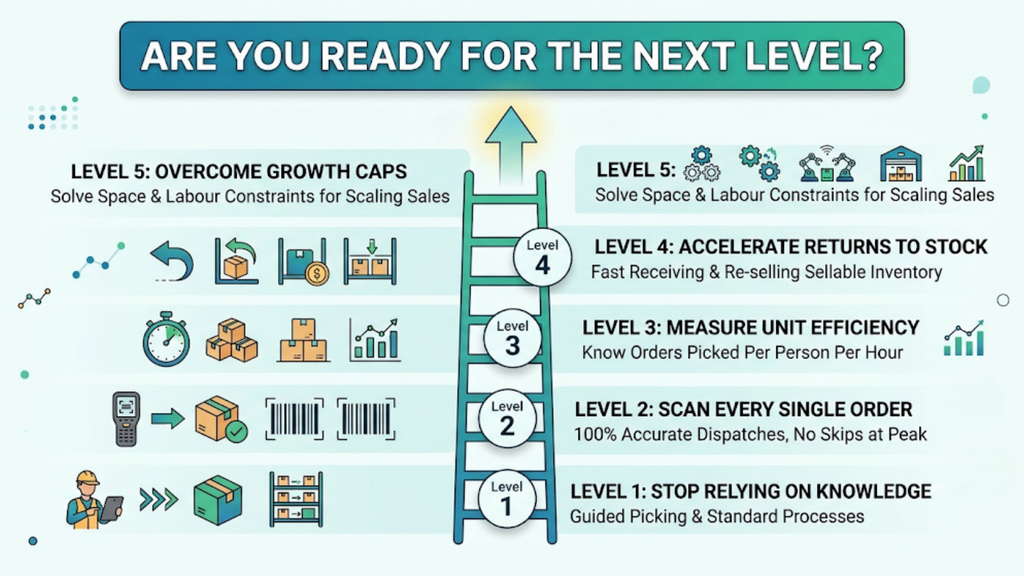
Target one level of the best warehouse automation software for D2C brands in India above where you sit, rather than the level that sounds impressive. These five questions locate your current position honestly.
- Do pickers rely on knowing the warehouse? If yes, you sit below level one regardless of what software you own.
- Does every dispatch get scanned? If scanning is partial or skipped at peak, level two remains incomplete.
- Can you state orders picked per person per hour? If not, level three has no baseline to improve against.
- How long from return receipt to sellable stock? If nobody knows, level four is where your money sits.
- Is space or labour capping your sales? Only then does level five become a real conversation.
Answer these before any vendor demo. Most brands discover they sit one level lower than they assumed.
Mistakes Indian brands make when automating their warehouse operations
These five mistakes recur across brands of every size, and each wastes money that better sequencing would have saved. None of them get solved by buying a more capable platform.
- Buying capability above your level. Sophisticated allocation running on inaccurate data produces confident errors rather than gains.
- Automating before stabilising. A process that changes monthly is not ready to be locked into software.
- Ignoring training cost. Warehouse attrition in India makes time-to-productivity a recurring expense rather than a one-off.
- Treating hardware as an afterthought. Scanners, label printers, and in-warehouse network coverage all need specifying before go-live.
- Measuring activity instead of outcome. Track mis-pick rate and orders per hour, not how many features got switched on.
Conclusion
Base.com operates at levels one and two, which is exactly where most growing brands need help. It directs the floor and verifies every pick, and it does both from the same platform holding orders and inventory.
That positioning reflects a view about sequencing rather than ambition. The best warehouse automation software for D2C brands in India is whatever establishes a trustworthy foundation, because every level above inherits that data quality.
Brands climbing to levels three, four, and five later do so on accurate data instead of rebuilding. Base.com covers the operational core those later investments depend on.