

Demand planning is the process of predicting how much of each product customers will actually buy, so a business can order the right quantity at the right time instead of guessing.
Global retail inventory distortion, the combined cost of stockouts and overstock, runs to approximately $1.73 trillion annually, and separate research puts business losses from stockouts and overstock combined at over $450 billion a year. 87% of enterprises now use AI for demand planning, with adopters reporting a 35%+ improvement in forecast accuracy.
India’s D2C sector is growing at roughly 40% CAGR, and that growth makes the cost of weak demand planning compound faster than most sellers expect.
What Is Demand Planning
Demand planning is the broader discipline of predicting future demand and translating that prediction into inventory, supplier, and fulfillment decisions. It is different from simple forecasting, since forecasting answers how much a business will sell, while demand planning answers how a business ensures products are available when customers want them while optimizing inventory investment.
A good fill rate sits between 85% and 95%, and businesses without a structured demand planning process rarely get close to that range consistently, since their reorder decisions are based on static assumptions rather than live demand signals.
It helps to be precise about where demand planning starts and stops. A sales forecast alone tells you a number. Demand planning takes that number and connects it to a reorder point, a safety stock level, a supplier purchase order, and a warehouse allocation decision. Without that connective layer, even an accurate forecast sits unused as a spreadsheet nobody actually acts on.
Why Demand Planning Matters for Growing Sellers
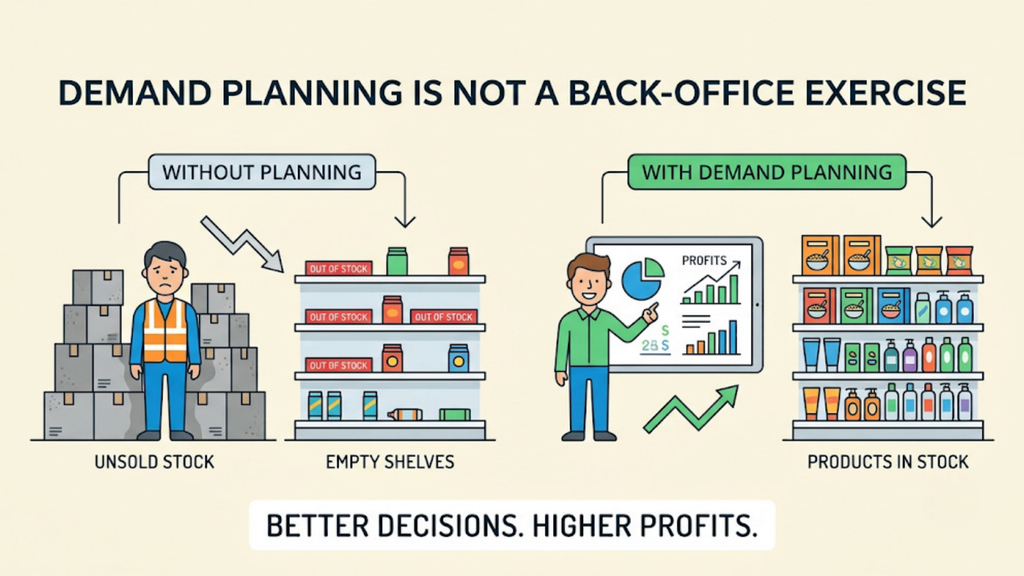
Demand planning is not a back-office spreadsheet exercise. For a growing D2C or FMCG seller, it directly determines whether growth turns into profit or into a warehouse full of unsold stock sitting alongside empty shelves for the products customers actually want.
Revenue Impact
- Stockouts on fast-moving SKUs directly cost sales, and a customer denied their first choice frequently buys from a competitor rather than waiting.
- Poor demand planning is a leading cause of the 25-40% return and cancellation rates seen in categories like fashion, since inaccurate stock allocation triggers dispatch errors downstream.
- Fill rate below 85% typically signals a demand planning gap rather than a supply problem, since the stock often exists somewhere in the network, just not where it is needed.
- Businesses using AI-based demand planning report a 28% drop in stockouts, a direct and measurable revenue protection effect.
Cost Impact
- Overstock ties up working capital in products that are not selling, capital that could otherwise fund marketing or new product development.
- The average inventory-to-sales ratio benchmark sits around 1.38, and demand planning is what keeps a seller close to that ratio rather than drifting well above it.
- Carrying costs, storage, insurance, and capital costs rise every month. Excess stock sits unsold, quietly eating into margin that never shows up as a single dramatic loss.
- Emergency freight and rush reordering, common when demand planning fails, cost significantly more than planned procurement at normal lead times.
Customer Experience Impact
- Customers increasingly expect instant availability, a standard set by large marketplaces and quick commerce platforms.
- A single stockout on a popular product can send a customer to a competitor permanently, not just for that one purchase.
- Consistent product availability, the direct output of solid demand planning, is one of the more underrated drivers of repeat purchase behavior.
How Demand Planning Prevents Stockouts
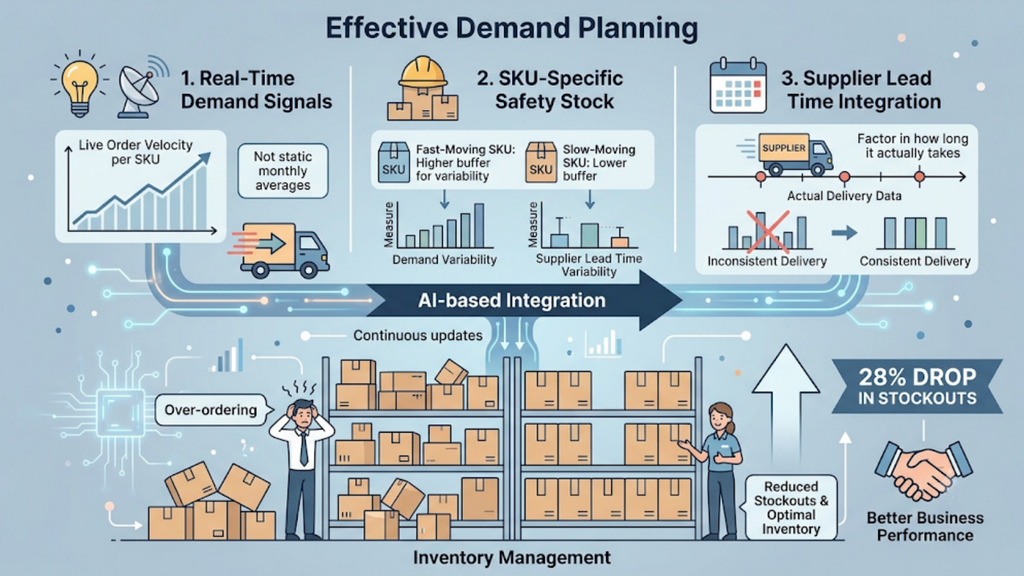
Demand planning prevents stockouts by connecting real, current demand signals to reorder decisions, rather than relying on static monthly averages that go stale the moment demand shifts. A business tracking order velocity per SKU continuously can catch a demand spike within days, while one relying on a monthly review might not notice until the shelf is already empty.
Safety stock calculation is the other half of stockout prevention within demand planning. The right buffer depends on demand variability and supplier lead time variability specific to each SKU, not a single flat number applied across an entire catalog. A demand planning process that accounts for this variability directly reduces the odds of running out of a fast-moving item during a demand spike, festive or otherwise.
Supplier lead time integration closes the remaining gap. Demand planning that only looks at sales history without factoring in how long a supplier actually takes to deliver will systematically underestimate how much buffer stock is needed, especially for suppliers with inconsistent delivery performance.
A demand planning process that combines all three, live order velocity, SKU-specific safety stock, and current supplier lead time data, is what allows a business to reduce stockouts without simply over-ordering everything as a blunt hedge. Businesses using AI-based demand planning report a 28% drop in stockouts specifically because this combination replaces guesswork with a continuously updated, data-driven decision.
How Demand Planning Prevents Overstock
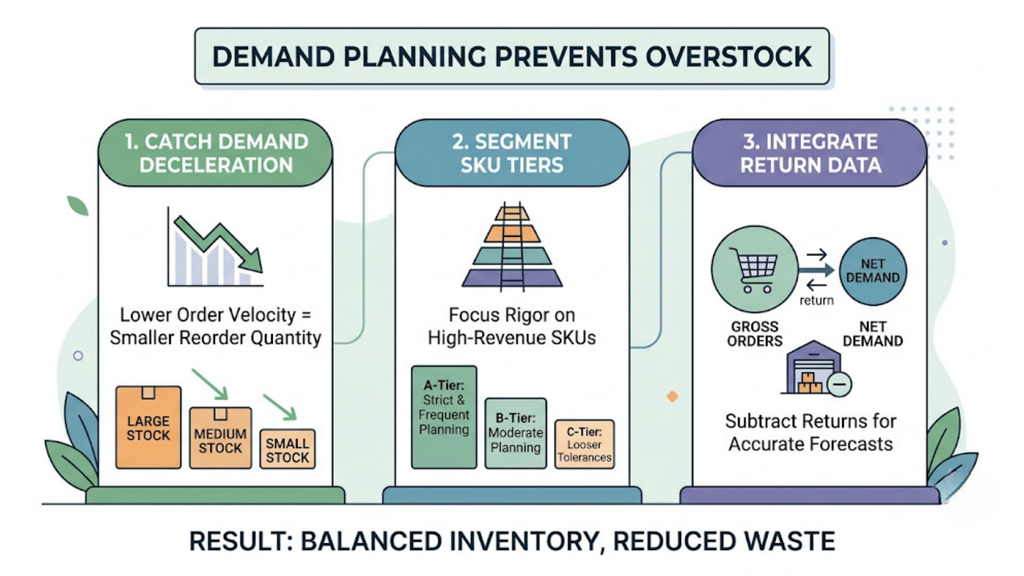
Overstock is the mirror problem of a stockout, and demand planning prevents it by catching demand deceleration as early as it catches demand spikes. A SKU trending down in order velocity should trigger a smaller reorder quantity automatically, rather than continuing to order the same volume out of habit.
Segmenting demand planning by SKU tier matters here as well. A-tier, high-revenue SKUs deserve the tightest, most frequent demand planning attention, while C-tier SKUs can tolerate looser tolerances without materially risking overstock or stockout. Applying the same demand planning rigor uniformly across a full catalog wastes effort on low-impact SKUs while sometimes under-serving the ones that actually matter.
Demand planning also prevents overstock by connecting return data back into the forecast. A SKU with a high return rate needs its net demand adjusted downward accordingly, since gross order volume overstates real, kept demand. Skipping this step is a common reason demand planning models overestimate how much of a high-return SKU to reorder.
Global retail inventory distortion, the combined cost of stockouts and overstock, runs to approximately $1.73 trillion annually, and overstock typically represents the larger, slower-moving half of that figure. Unlike a stockout, which is visible almost immediately, overstock accumulates quietly, which is exactly why demand planning needs to actively watch for demand deceleration rather than only reacting to demand spikes.
The Core Components of Demand Planning
Demand planning is built from several distinct components, and skipping any one of them weakens the accuracy of the whole process. Below are the five components that matter most for a growing seller.
1. Historical Sales Analysis

- At least 12 months of clean historical order data, since less than that misses a full seasonal cycle.
- Segmentation by channel, since demand patterns often differ meaningfully between marketplaces and a brand’s own website.
2. Seasonal and Festive Forecasting
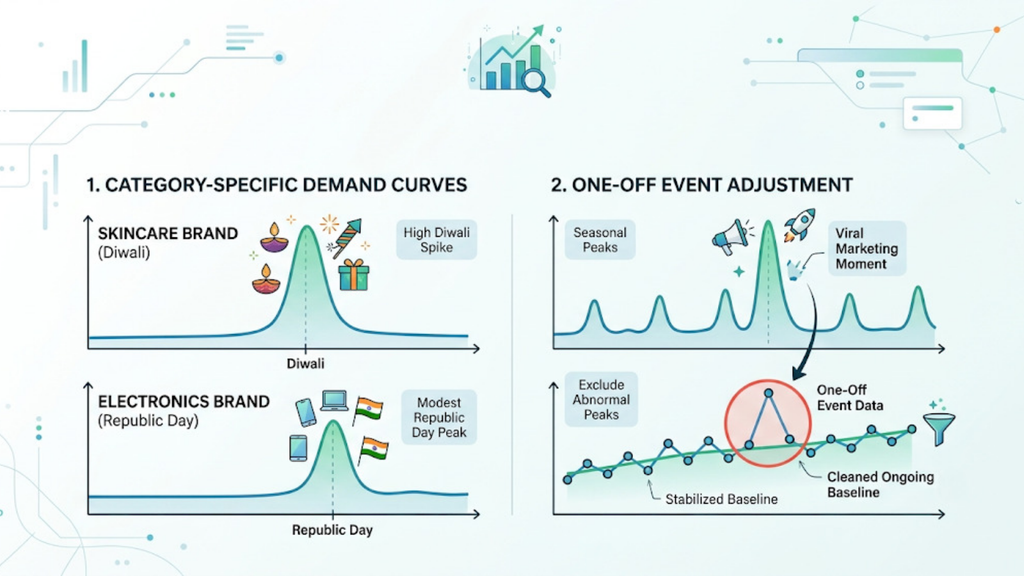
- Category-specific festive demand curves, since a skincare brand’s Diwali spike looks nothing like an electronics brand’s Republic Day spike.
- Adjustment for one-off events, like a viral marketing moment, that should not be baked into the ongoing seasonal baseline.
3. Supplier Lead Time Integration
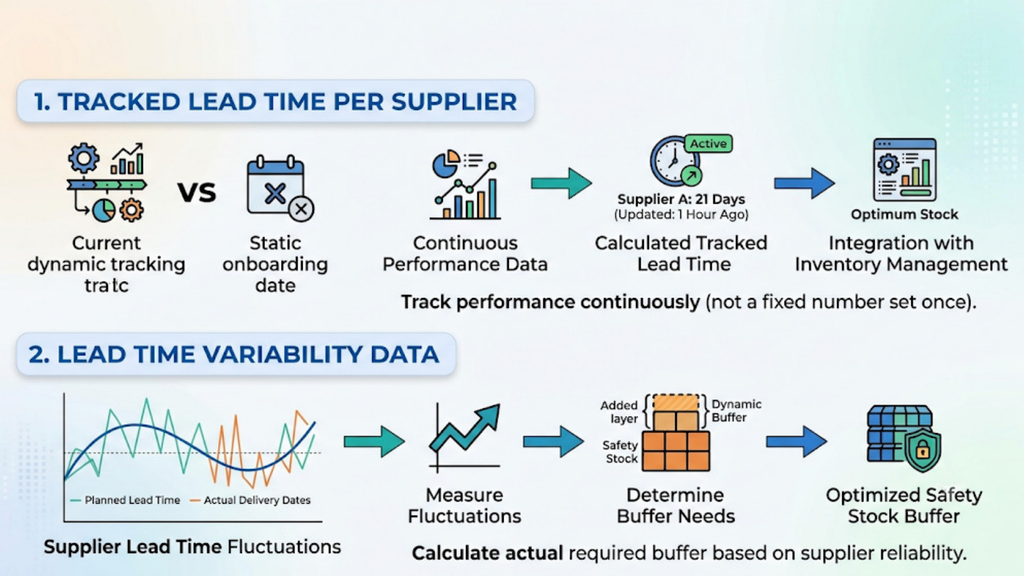
- Current tracked lead time per supplier, not a static number set once at onboarding.
- Lead time variability data, which determines how much extra buffer a specific supplier relationship actually requires.
4. Safety Stock Calculation
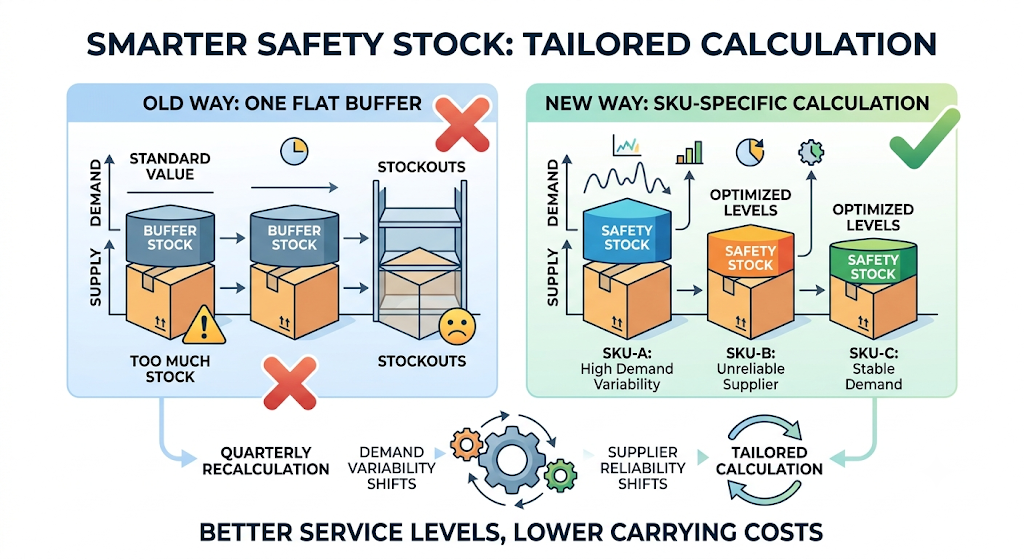
- SKU-specific safety stock formulas rather than one flat buffer applied catalog-wide.
- Quarterly recalculation as demand variability and supplier reliability shift over time.
5. Real-Time Demand Sensing
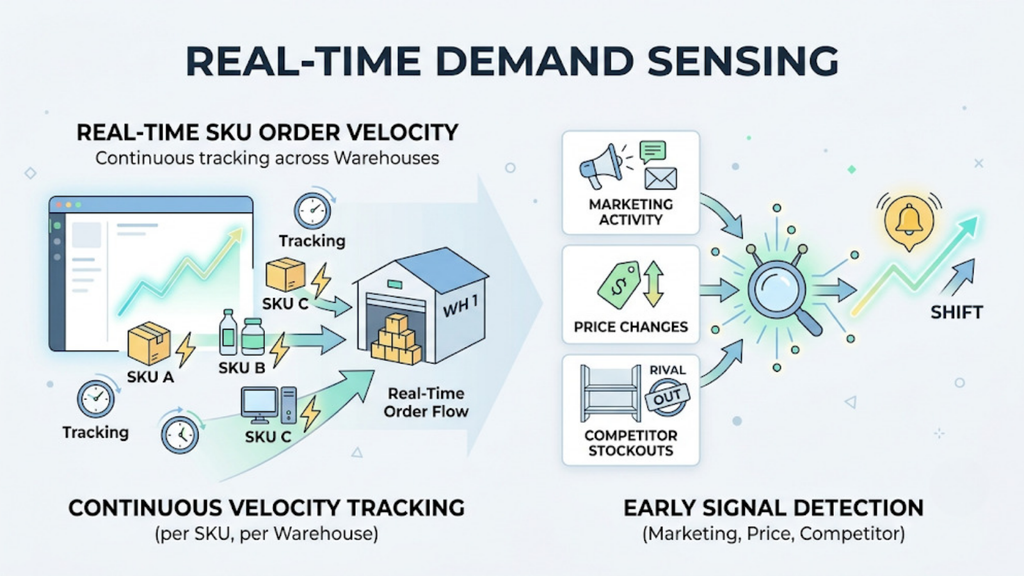
- Continuous order velocity tracking per SKU per warehouse, rather than a monthly snapshot.
- Early signal detection from marketing activity, price changes, or competitor stockouts that could shift near-term demand.
Common Demand Planning Mistakes That Undermine Accuracy

Even businesses that invest in demand planning often see limited results because of a few recurring mistakes. Recognizing these early saves months of disappointing forecast accuracy.
The first mistake is forecasting at too aggregated a level. Category-level or company-wide demand planning hides exactly where stockout and overstock problems actually concentrate, which is at the SKU and warehouse level. A brand might look balanced on average while one specific SKU at one specific warehouse is badly out of position.
The second mistake is treating demand planning as a one-time setup rather than an ongoing discipline. Forecasting models and safety stock formulas degrade as consumer behavior, product mix, and supplier reliability shift, and a demand planning process left untouched for a year is quietly drifting further from accuracy with every passing month.
The third mistake is separating demand planning from execution. A forecast that does not automatically adjust a reorder point or trigger a purchase order sits as a report nobody acts on. The businesses that get real value from demand planning are the ones where a forecast change flows directly into an operational decision, not just a dashboard update.
Signs Your Demand Planning Process Needs Work
A demand planning process that looked fine at last year’s order volume can quietly stop working as a business scales. The signs below are worth checking, honestly.
- Reorder quantities are copied from last year’s numbers without checking current demand.
- Stockouts and overstock both happen regularly, sometimes for the same SKU within a few months of each other.
- Nobody can explain why a particular reorder quantity was chosen beyond “that’s what we usually order.”
- Festive season planning starts only once the spike has already begun.
- Returns data never feeds back into future reorder decisions.
- Safety stock levels have not been recalculated in over a year.
- Different departments (sales, warehouse, finance) all seem to be planning around different demand numbers.
Building a Reliable Demand Planning Process: 8 Practical Steps for Growing Sellers
Solid demand planning is built in a sequence, not assembled all at once. The eight steps below reflect the order most growing sellers should tackle them in, starting with the changes that deliver the fastest, most measurable improvement.
- Start with clean historical data. At least 12 months of accurate, channel-segmented order history is the foundation on which every other step depends.
- Segment SKUs by tier. Apply the tightest demand planning discipline to A-tier revenue drivers first, rather than spreading effort evenly across the full catalog.
- Build SKU-specific safety stock. Replace one flat buffer number with a calculation based on each SKU’s own demand and lead time variability.
- Integrate supplier lead time data. Pull in current, tracked lead times rather than assumptions made once at supplier onboarding.
- Layer in seasonal and festive patterns. Use your own historical data for this, not a generic industry seasonality curve that does not reflect your specific category.
- Connect returns data to the forecast. Adjust net demand downward for SKUs with above-average return rates so reorder quantities reflect real, kept demand.
- Move to continuous demand sensing. Replace monthly reviews with ongoing order velocity tracking, so demand shifts get caught within days rather than weeks.
- Review and recalibrate quarterly. Revisit safety stock, supplier assumptions, and SKU tiering every quarter, since a demand planning setup that worked at last year’s volume may not hold at this year’s.
How Base.com Strengthens Demand Planning for Growing Sellers
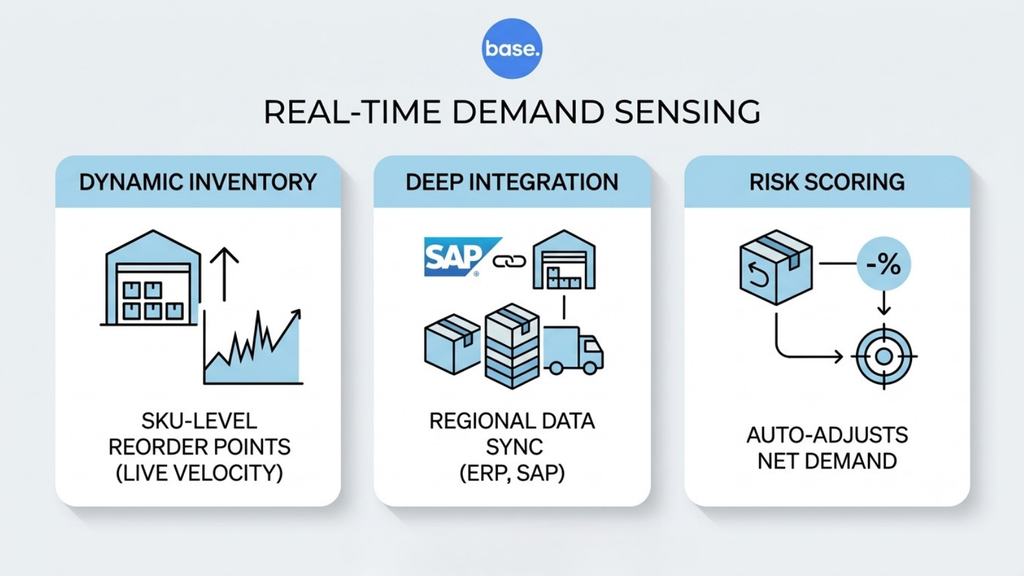
Base.com’s demand planning layer forecasts reorder points per SKU per warehouse using live order velocity, not static monthly averages, which matters most in a market with 40% CAGR D2C growth and unpredictable festive demand curves. This directly addresses the real-time demand sensing component that most manual demand planning processes struggle to maintain consistently.
For FMCG and pharma distribution specifically, Base.com connects demand planning to SAP SD/WM and distributor ERP data natively, so supplier lead time and reorder calculations reflect actual distributor-level order history rather than a company-wide average that hides regional demand differences.
Base.com’s return-risk scoring also feeds directly into the demand planning layer, adjusting net demand for high-return SKUs automatically rather than requiring a manual monthly correction that often gets skipped under operational pressure.
Because Base.com connects demand planning directly to order execution, a forecast change does not sit as a static number in a report. It flows through to reorder points, purchase order suggestions, and warehouse allocation automatically, closing the gap between planning and execution that undermines so many manual demand planning efforts.