base.blogWeight-Based Shipping

TagWeight-Based Shipping

Best Order Management Software for eCommerce Businesses in India

B
Weight-wise packing and shipping charge management guide showing how bulky SKU sellers can reduce freight costs and recover margins

It gives you a single, accurate view of every order across every channel, in real time. Indian sellers managing Amazon.in, Flipkart, Meesho, and their own D2C website, and quick commerce platforms simultaneously cannot afford disconnected tools. A missed inventory sync causes an oversell. An oversell causes a cancellation. A cancellation damages your marketplace seller rating, and recovering from...
Weight-Wise Packing and Shipping Charge Management for Bulky SKUs: The Margin Recovery Playbook

W
Weight-wise packing and shipping charge management guide showing how bulky SKU sellers can reduce freight costs and recover margins

Your shipping cost is not decided by the courier. It is decided at the packing table, three steps earlier, when someone chooses a carton. Sellers learning how to manage weight-wise packing and shipping charges usually discover that most of their freight overspend was created in-house, not billed unfairly. India’s ecommerce market is set to reach roughly ₹19.7 trillion, close to $226...

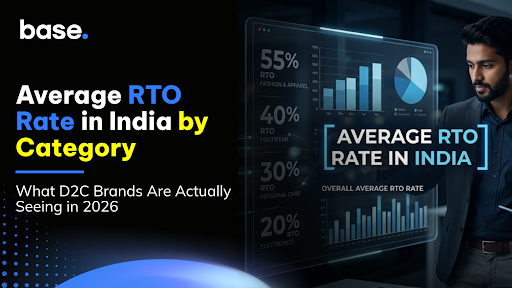
Average RTO Rate in India by Category: What D2C Brands Are Actually Seeing in 2026

A
Average RTO rate in India by category showing 2026 benchmarks and differences across D2C product categories

Most discussions of RTO in Indian D2C treat it as a single national number. The national average, 20-30%, gets cited, debated, and used as a benchmark. Then a fashion brand applies that benchmark and discovers its actual RTO is 38%. A grocery brand applies the same number and discovers that theirs is 4%. The aggregate hides the variation that actually matters for operations decisions...

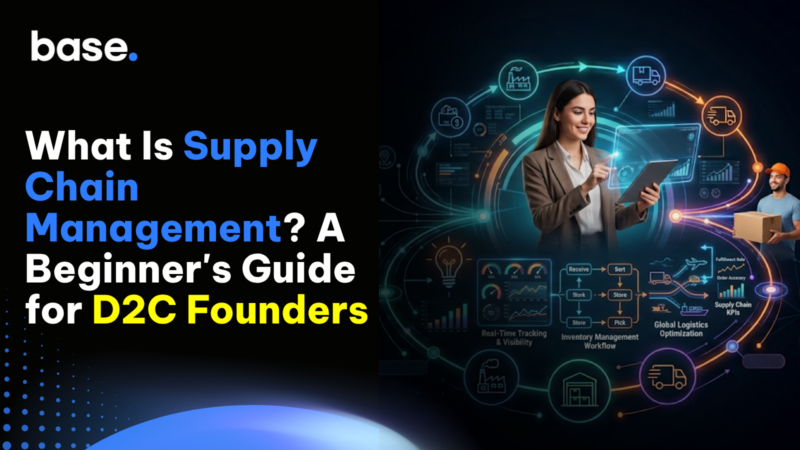
What Is Supply Chain Management? A Beginner’s Guide for D2C Founders

W
Supply chain management guide for D2C founders showing connected sourcing, inventory, warehouse, logistics, and fulfillment operations

Supply chain management is the coordination of every step between raw material and a customer’s doorstep: sourcing, manufacturing, warehousing, inventory, order fulfilment, and delivery. For a D2C founder, supply chain management means owning this entire chain directly, with no distributor buffer absorbing the mistakes. Getting it right early is the difference between a brand that scales...

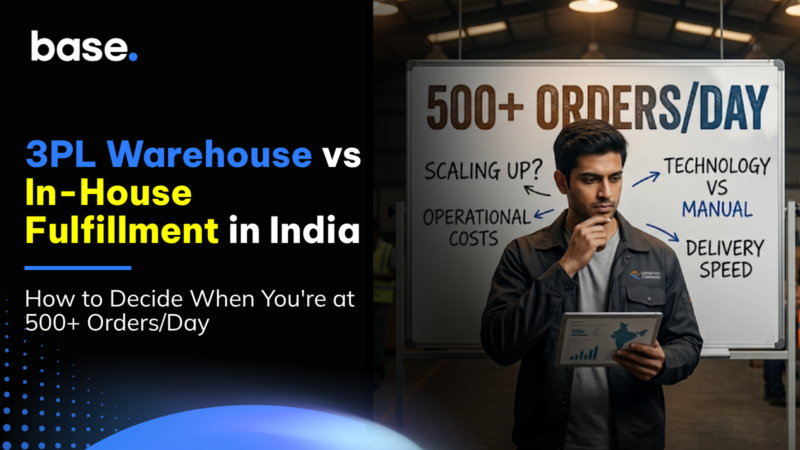
3PL Warehouse vs. In-House Fulfillment in India: How to Decide When You’re at 500+ Orders/Day

3
3PL warehouse vs in-house fulfillment in India comparison for D2C brands scaling beyond 500 orders per day

3PL vs in-house fulfillment in India is the operational decision that most Indian D2C founders delay until it becomes a crisis. Orders are piling up. The warehouse team is working twelve-hour shifts. Wrong shipments are increasing. CPT windows are being missed. The founder is spending three hours a day on fulfillment decisions instead of growth decisions. At 500+ orders per day, approximately...

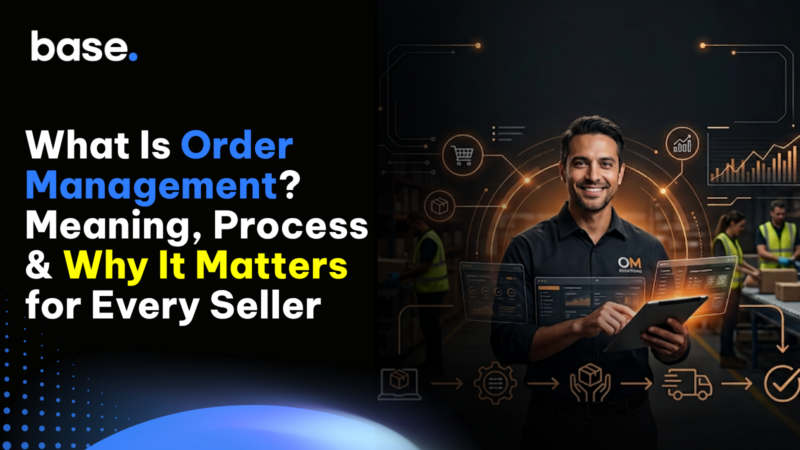
What Is Order Management? Meaning, Process & Why It Matters for Every Seller

W
Order management guide explaining the process of capturing, tracking, and fulfilling ecommerce orders for Indian sellers

Order management is the process of capturing, tracking, and fulfilling every customer order from the moment it is placed until it is delivered or returned. It covers order validation, inventory allocation, warehouse routing, invoicing, delivery tracking, and returns handling, all from one connected system. For Indian sellers running multiple channels, order management software best for sellers in...

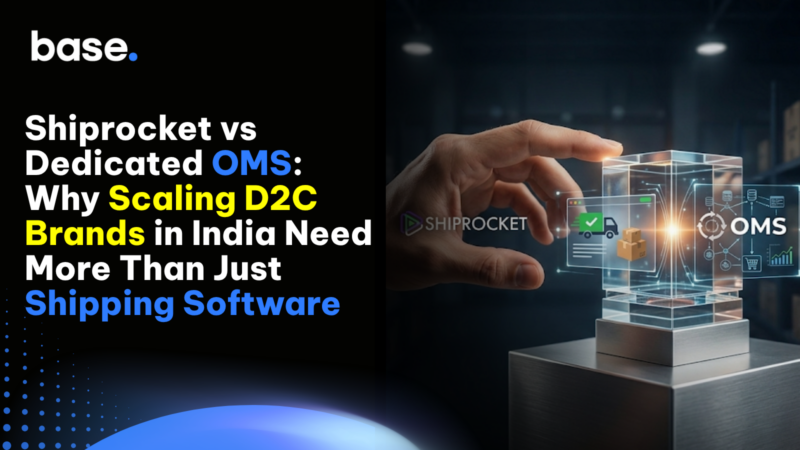
Shiprocket vs Dedicated OMS: Why Scaling D2C Brands in India Need More Than Just Shipping Software

S
Shiprocket vs dedicated OMS comparison showing why growing D2C brands need more than shipping software

Shiprocket vs OMS in India, like Base.com, is a comparison that every founder running a growing D2C brand eventually needs to make, usually when something breaks, and the shipping dashboard cannot tell them why. Shiprocket is where most Indian D2C brands start their logistics journey. Its domestic shipping platform aggregates several courier partners into a single interface, allowing merchants to...

Base.com vs Vinculum: Which Order Management System Fits Fast-Growing Indian Brands Better?

B
Base.com vs Vinculum comparison for fast-growing Indian brands evaluating order management systems

Base.com India vs Vinculum is a comparison that Indian D2C founders and operations leads are increasingly running as they scale past ₹5 crore monthly GMV and discover that their current platform has structural limits. Vinculum is a well-known name in Indian ecommerce operations; it ranked first overall in the Amazon integrator scoring dataset used for this comparison, above Unicommerce, EasyEcom...

What Is a Warehouse Management System (WMS)?

W
Warehouse management system overview showing a warehouse worker using digital technology to manage inventory and operations

A Warehouse Management System (WMS) is software that controls and tracks every physical movement of stock inside a warehouse, from the moment it arrives at the dock to the moment it leaves as a dispatched order. It directs where stock is stored, sequences how it gets picked, confirms what goes into every package, and updates inventory the instant something moves. For Indian sellers, warehouse...

How Mamaearth, boAt & mCaffeine Are Managing Lakhs of Orders Directly: No Marketplace Dependency

H
Mamaearth, boAt, and mCaffeine direct-to-consumer brands managing high-volume ecommerce orders without relying entirely on marketplaces

Every Indian D2C founder knows the marketplace trap. You launch on Amazon and Flipkart. Orders come in. Growth is fast. Then you look at your P&L. It turns out 30-50% of your revenue is going to marketplace commissions, platform fees, and fulfilment charges. You do not own the customer data, and you cannot control the brand experience after checkout. A policy change on one platform can cut...

Time of publication
Category
Tags