
It gives you a single, accurate view of every order across every channel, in real time.
Indian sellers managing Amazon.in, Flipkart, Meesho, and their own D2C website, and quick commerce platforms simultaneously cannot afford disconnected tools. A missed inventory sync causes an oversell. An oversell causes a cancellation. A cancellation damages your marketplace seller rating, and recovering from the loss costs far more than preventing the mistake.
India’s eCommerce market is on track to reach $226 billion by 2030. The D2C segment is growing at approximately 40% CAGR. COD return rates are running at 25-30%, which means working capital is already under pressure before a single order goes wrong. At this scale, choosing the best order management software for eCommerce businesses in India is a foundational operational decision, not a software subscription.
This guide compares the top 10 platforms in detail, features, real advantages, verified limitations, and exactly who each platform is built for. Base.com leads this list because it is the only platform that natively integrates OMS, WMS, and PIM in one interface without requiring third-party connectors for core workflows.
Why Indian Sellers Need Specialised Order Management Software
Generic ERP order modules and spreadsheet-based tracking break down the moment you add a second or third sales channel.
The Indian eCommerce operating environment has five specific requirements that most global OMS platforms are not built for:
| Requirement | Why It Is Non-Negotiable for India |
| Indian marketplace coverage | Must natively support Amazon.in, Flipkart, Meesho, Myntra, AJIO, Nykaa, JioMart |
| COD and RTO management | 25-30% COD return rates require payment verification and delivery risk scoring |
| Multi-warehouse inventory sync | Brands distributing across 3PLs, dark stores, and regional DCs need per-location control |
| GST compliance | e-Invoicing, GSTR-1, and payment reconciliation are legal requirements, not nice-to-haves |
| Festive season scalability | Order volumes spike 5-10x during Diwali, Big Billion Day, and Great Indian Festival |
The best order management software for eCommerce businesses in India is the platform that handles all five, not just the first two.
Top 10 Best Order Management Software for eCommerce Businesses in India (2026)
Managing orders across multiple sales channels, warehouses, and logistics partners has become increasingly complex for Indian eCommerce businesses. As brands expand across marketplaces like Amazon, Flipkart, Blinkit, Zepto, and their own D2C websites, manual order processing often leads to inventory mismatches, delayed shipments, and customer dissatisfaction.
Modern Order Management Software (OMS) solves these challenges by centralizing order processing, inventory synchronization, fulfillment workflows, returns management, and real-time reporting.
1. Base.com: Best Integrated Order Management Software for eCommerce Businesses in India
What It Is
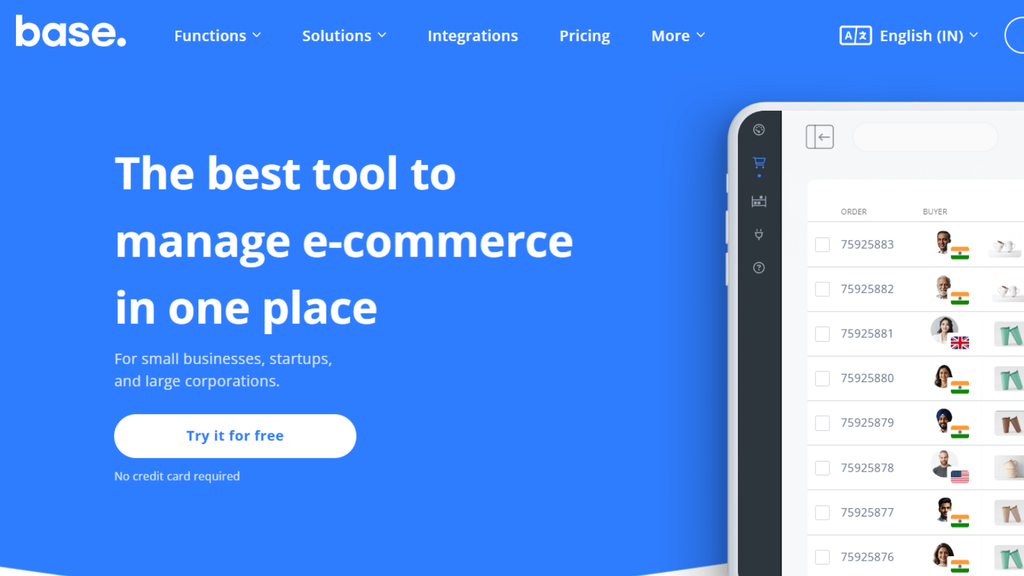
Base.com (formerly BaseLinker) is an integrated eCommerce operations platform combining order management, warehouse management, product information management (PIM), marketplace management, and shipping automation on a single data layer. It is the only platform in this comparison where OMS and WMS share the same database, no sync required, no latency between order status and warehouse action.
Core Features
- Unified Order Manager: Consolidates orders from 400+ channels, including Amazon.in Flipkart, Meesho, Myntra, AJIO, Nykaa, Shopify, WooCommerce, and more, into a single queue with configurable status management and automated routing rules.
- Integrated WMS: Handles pick, pack, and ship workflows, including barcode scanning, zone-based picking, packing validation, and shipping label generation, within the same platform; no separate WMS login required.
- Native PIM: Products are created, enriched, and pushed to all connected marketplaces directly from Base.com’s product warehouse. Category mapping, attribute management, and bulk listing updates are managed in one place.
- Workflow Automation Engine: Condition-based rules trigger status changes, label printing, customer notifications, invoice generation, and order routing automatically. Rules can be applied per channel, per SKU class, per delivery zone, or per COD/prepaid flag.
- Real-Time Inventory Sync: Inventory decrements across all channels the moment an order is confirmed, preventing overselling during peak traffic periods on Flipkart and Amazon.
- Shipping Management: Native integrations with Delhivery, Bluedart, Ecom Express, DTDC, Shadowfax, and international carriers. Courier selection rules automate carrier allocation based on PIN code, order weight, SLA, and delivery history.
- Returns Management: Automated return label generation, return status tracking, and quality check workflows integrated directly with inventory restocking logic.
- Reporting: Order-level, SKU-level, and channel-level dashboards with export capabilities for GST reconciliation.
Advantages
- OMS and WMS on a single data layer, zero integration overhead, zero sync lag between order status and warehouse action.
- 400+ native channel integrations, the broadest in this category for Indian and global marketplaces combined.
- PIM is built in; no separate tool is needed for product catalogue management across channels.
- Workflow automation is rule-based and self-serve; operations teams configure it without developer support.
- Transparent, volume-based pricing with no hidden connector fees.
Disadvantages
- Feature depth means structured onboarding is required, not a same-day plug-and-play setup.
- Advanced BI reporting may require API access for brands with complex custom dashboards.
- Best suited for brands doing meaningful multi-channel volume; lighter single-channel sellers may not utilise the full platform.
Ideal For: D2C brands and marketplace sellers in India managing 3+ channels with own-warehouse or 3PL fulfillment, scaling from ₹5 crore to ₹100 crore+ GMV, where operations must grow without proportionally growing headcount.
2. Unicommerce: High-Volume Indian Marketplace OMS
What It Is
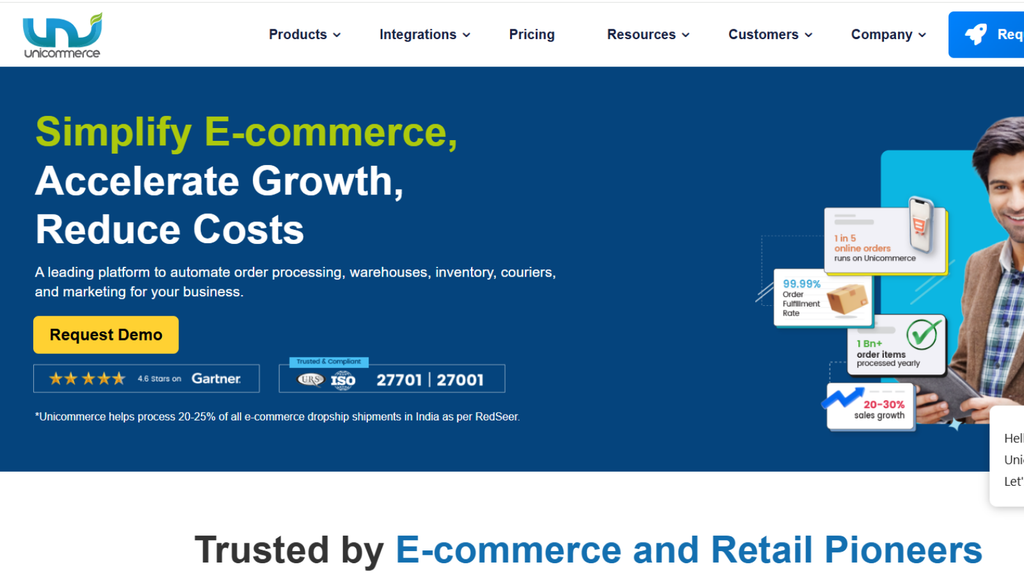
Unicommerce is an India-built, NSE and BSE-listed SaaS platform providing order management, inventory management, warehouse management, and omnichannel retail solutions. It powers approximately 20-25% of India’s eCommerce dropship brands (RedSeer estimate) and is one of the most widely deployed OMS platforms in the country.
Core Features
- Order sync every 5 minutes across connected marketplaces with real-time status updates
- Multi-warehouse inventory allocation with zone and channel-level rules
- 285+ plug-and-play integrations with marketplaces, logistics providers, and ERP systems
- Shipway (Unicommerce’s courier aggregation and smart allocation product)
- GST compliance, e-invoicing, and financial reconciliation built in
- Returns and reverse logistics automation with quality check workflows
- Seller management module for marketplace seller panels
Advantages
- Deep Indian marketplace coverage, built specifically for Amazon.in, Flipkart, Myntra, Nykaa, and the regional platform ecosystem.
- Proven at scale: Mamaearth, boAt, Lenskart, FabIndia, Sugar Cosmetics, Emami, and 7,500+ brands run on Unicommerce.
- Gartner-recognised OMS + WMS. ISO 27001 and ISO 27701 certified, critical for enterprise procurement.
- Processes 2,500+ shipments in under 10 minutes at peak capacity.
Disadvantages
- OMS and WMS are separate product layers; complex warehouse operations may require careful consideration of data sync between modules.
- No native PIM; product data management requires additional tooling or manual channel-specific listing management.
- Pricing requires a custom quote, with no publicly listed rates, which can extend vendor evaluation timelines.
Ideal For: Mid-market to enterprise Indian eCommerce brands with high order volumes, particularly those already integrated with Unicommerce or with existing ERP infrastructure requiring deep marketplace connectivity.
3. Vinculum (Vin OMS + Vin eRetail): Omnichannel and 3PL Operations
What It Is
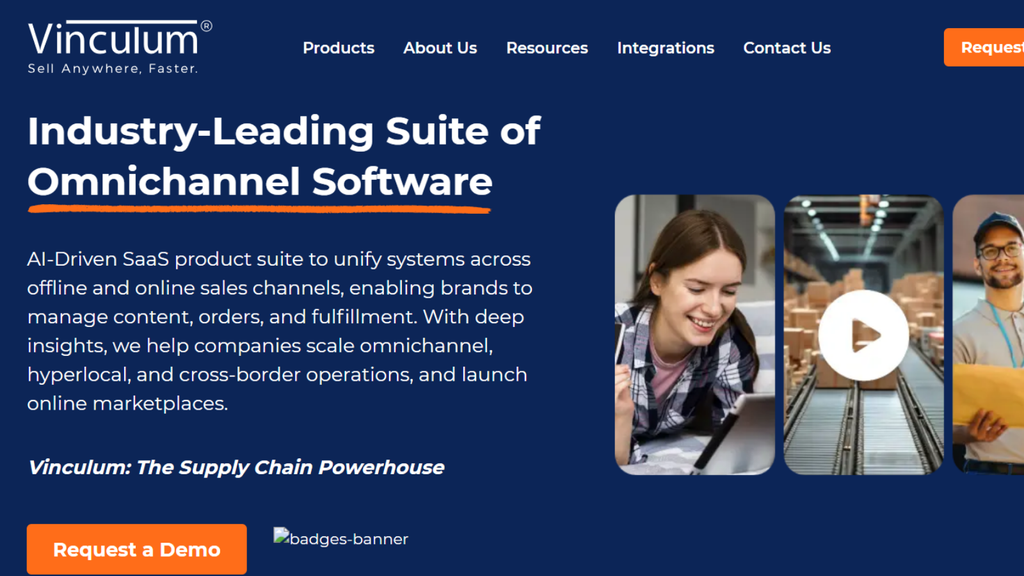
Vinculum Group provides Vin OMS and Vin eRetail WMS, a cloud-based suite for omnichannel retailers, D2C brands, marketplace sellers, and 3PL providers. It has a significant installed base among offline-to-online Indian brands.
Core Features
- Multi-warehouse and multi-location inventory management with dynamic allocation rules
- B2B and B2C order fulfillment from the same platform
- Handheld terminal (HHT) support for warehouse floor operations
- ERP integrations with Oracle and SAP
- Marketplace integrations across Indian and Southeast Asian platforms
- Returns processing with quality check and restocking workflows
- Per-order pricing at approximately $0.15/order
Advantages
- Strong omnichannel capability: brands managing physical retail stores alongside eCommerce benefit from unified inventory visibility.
- HHT support is practical for mid-size warehouses not yet running automated picking systems.
- Multi-warehouse and dynamic allocation features provide operational flexibility for distributed fulfillment models.
- Trusted by Biba, Nykaa, Myglamm, and Decathlon for warehouse operations.
Disadvantages
- Multiple verified reviews document intermittent server performance issues under high concurrent load.
- Returns handling has been flagged as inconsistent in user reviews on Trustpilot and Gartner Peer Insights.
- EAN/batch-level ageing tracking is absent, a gap for FMCG, perishables, and batch-coded categories.
- Interface modernisation has been slow relative to newer entrants.
Ideal For: Omnichannel brands with significant offline retail operations alongside eCommerce, and 3PL operators managing fulfillment across multiple brand clients.
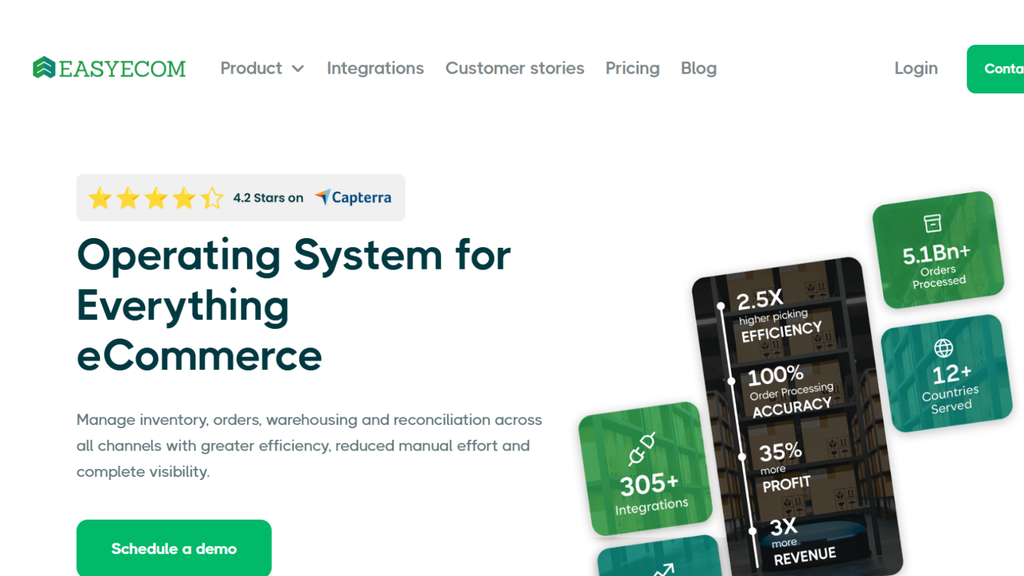
4. EasyEcom: Marketplace-First D2C Order Management
What It Is
EasyEcom is a cloud-based multi-channel order and inventory management platform built for Indian eCommerce sellers scaling on Amazon.in, Flipkart, and their own D2C website simultaneously.
Core Features
- Multi-channel order consolidation with automated routing
- Real-time inventory sync across marketplaces and D2C storefronts
- Purchase order management and supplier reorder triggers
- Payment reconciliation across channels and payment gateways
- Returns management with automated status updates
- GST reporting and financial reconciliation
Advantages
- Purpose-built for the Indian marketplace landscape with native integrations.
- Purchase order management allows brands to manage supplier relationships directly within the OMS.
- Payment reconciliation reduces the manual overhead of matching marketplace payouts to order-level data.
Disadvantages
- WMS capabilities are basic, not suitable as the primary warehouse management tool for brands with complex fulfillment operations.
- No publicly listed pricing.
Ideal For: Growing D2C brands selling on 3-5 Indian marketplaces who need consolidated order management and payment reconciliation without a full WMS deployment.
5. Increff: High-Accuracy Fashion and Apparel Warehouse Management
What It Is
Increff is a Gartner-recognised OMS and WMS platform built for retail brands managing omnichannel inventory. Its core differentiation is unit-level accuracy through unique piece barcoding and near real-time order sync to prevent excess bookings and cancellations.
Core Features
- Unique piece-level barcoding: every unit gets its own serialised identity
- Single inventory view exposed simultaneously to online and offline channels
- Near real-time order sync prevents overselling and excess cancellations
- 99.5%+ order fulfillment within SLA (published product claim)
- Configurable order routing with multi-channel fulfillment rules
- Simple UX designed for warehouse floor staff with minimal training requirements
Advantages
- Piece-level serialization is a genuine differentiator for high-SKU fashion and apparel brands where size and colour variant picking errors directly cause returns.
- Fast implementation by enterprise WMS standards; Increff positions speed-to-live as a competitive differentiator.
- Gartner recognition supports enterprise procurement justification.
- Trusted by Fabindia, Giva, and Puma for warehouse operations.
Disadvantages
- Primarily a WMS, brands needing deep OMS features such as multi-channel automation rules, marketplace-level customisation, or shipping carrier management will find it limited as a standalone OMS.
- Better suited for medium and large warehouses; lighter deployments may not justify implementation complexity.
- Pricing is not publicly available.
Ideal For: Fashion, apparel, and lifestyle brands with complex variant matrices where per-unit picking accuracy directly impacts return rates and customer satisfaction scores on marketplaces.
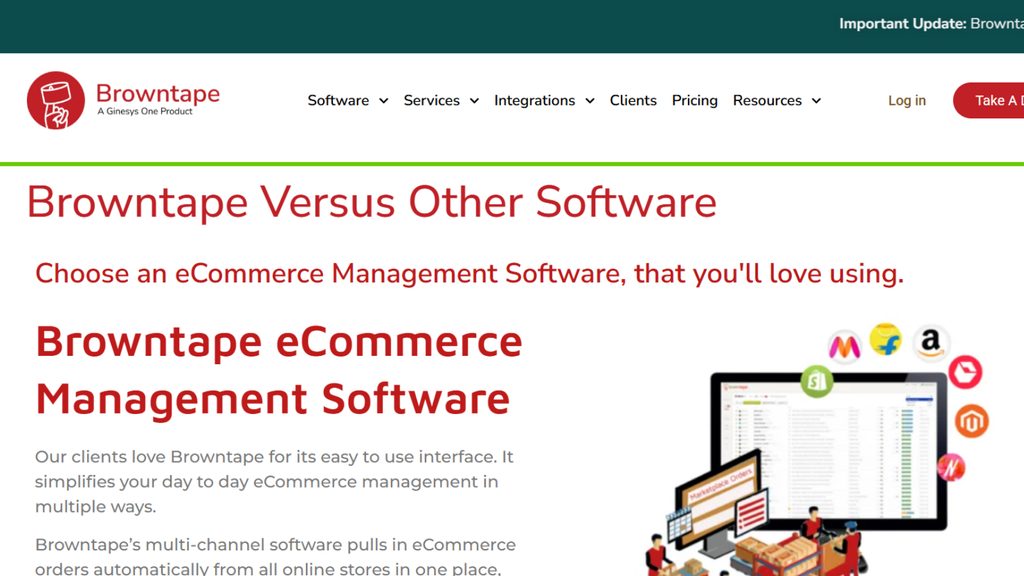
6. Browntape (Ginesys): Simple Multi-Channel Dashboard for SMB Sellers
What It Is
Browntape, now part of the Ginesys ecosystem, is one of India’s earlier multi-channel eCommerce management platforms. It provides a unified dashboard for order management, inventory, basic WMS, and shipping across Indian and global marketplaces.
Core Features
- Unified order dashboard across Amazon.in, Flipkart, Myntra, Snapdeal, Shopify, Magento
- Inventory management with low-stock alerts
- Courier integrations with Delhivery, FedEx, DTDC, and others
- ERP integrations with SAP, Microsoft Dynamics, Salesforce, and Tally
- Returns and purchase management
Advantages
- Low onboarding friction, one of the easier platforms for SMB sellers to get started on.
- ERP integrations cover the most common Indian enterprise systems, including Tally, which is critical for smaller Indian businesses.
- The backend support team receives consistent positive mentions in verified user reviews.
- Ginesys integration provides retail POS connectivity for offline-first brands moving online.
Disadvantages
- The platform is not mobile-responsive or iPad-responsive, flagged repeatedly in user reviews as an operational gap for warehouse teams using tablets.
- GST taxation mapping has known accuracy issues with AJIO and Myntra invoice formats, creating downstream accounting reconciliation errors.
- Feature development velocity is slower compared to newer platforms in this category.
Ideal For: SMB sellers and brands under ₹10 crore GMV that need a reliable multi-channel order dashboard without complex warehouse automation or advanced routing requirements.
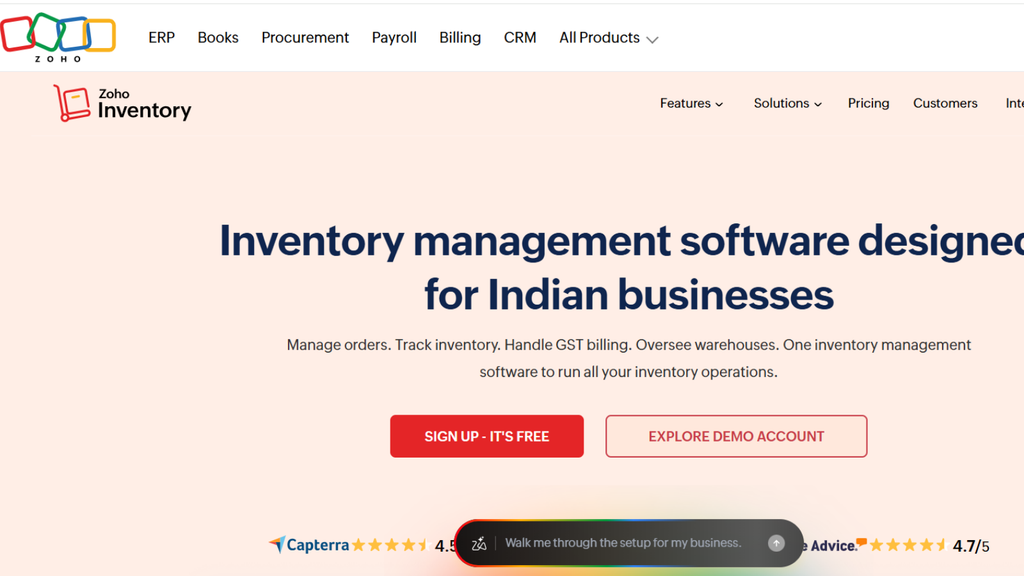
7. Zoho Inventory: Best for Zoho Ecosystem Users and Early-Stage D2C
What It Is
Zoho Inventory is a cloud-based inventory and order management tool within the broader Zoho product suite. It targets small and medium businesses and benefits from tight integration with Zoho Books, Zoho CRM, and Zoho Analytics.
Core Features
- Multi-channel order management with Amazon, Shopify, and Etsy integrations
- Purchase order management and supplier tracking
- Serial number and batch tracking
- Shipping integrations with 30+ carriers
- Multi-location warehouse management
- GST-compliant invoicing through Zoho Books integration
Advantages
- Free plan available, accessible for early-stage sellers evaluating order management tooling without upfront cost.
- Tight Zoho Books integration handles GST invoicing and accounting without additional software.
- Intuitive interface with the lowest onboarding time in this comparison.
- Mobile app available for on-the-go orders and inventory management.
Disadvantages
- Indian marketplace coverage is significantly weaker than India-built platforms; Meesho, AJIO, Myntra, and Nykaa require workarounds or are not natively supported.
- Not suited for high-volume operations; performance limitations emerge at enterprise scale.
- Warehouse management features are basic relative to dedicated WMS platforms.
Ideal For: Early-stage D2C brands already using Zoho Books or Zoho CRM, SMBs on Shopify and Amazon, and sellers under ₹2 crore GMV who need accounting-first order management.
8. Vin eRetail (Vinculum WMS): 3PL Warehouses and Distributed Fulfilment
What It Is
Vin eRetail is Vinculum’s WMS-focused product, built specifically for 3PL operators, distributors, and brands managing inventory across multiple fulfillment locations. It is listed separately from Vin OMS because it serves a meaningfully different buyer profile.
Core Features
- Multi-client WMS for 3PL operators managing multiple brand clients from one system
- Marketplace integration for automated order routing to the correct fulfillment centre
- ERP integration with Oracle and SAP for enterprise procurement and finance workflows
- HHT-based picking and packing for floor-level warehouse operations
- Returns processing with quality check and inventory restocking
Advantages
- Multi-client WMS capability is rare in the Indian market; most India-built WMS platforms are single-tenant and cannot serve 3PL operators managing multiple clients.
- Deep ERP integration validated for Oracle and SAP environments.
- Per-order pricing at $0.15/order provides cost predictability as volume scales.
Disadvantages
- Server performance issues under peak concurrent load are documented in multiple independent review sources.
- Interface requires modernisation, and new staff onboarding has a meaningful learning curve.
- Returns handling consistency has been flagged as a limitation in verified reviews.
Ideal For: 3PL operators in India managing warehouse fulfillment on behalf of multiple D2C brand clients, and enterprise brands with existing SAP or Oracle ERP infrastructure requiring WMS integration.
9. ShipStation: Best for Indian Sellers Exporting Globally
What It Is
ShipStation is a US-based shipping and order management platform with strong multi-store support and automated label generation. It is not India-built, and its strength is shipping workflow automation rather than deep inventory or Indian marketplace management.
Core Features
- Multi-store order import and consolidation from Shopify, WooCommerce, Amazon, eBay, Etsy
- Shipping label generation with carrier rate comparison
- Batch order processing
- Basic inventory management
- Order status automation and customer notification workflows
- International carrier integrations: UPS, FedEx, DHL, USPS
Advantages
- Excellent for Indian brands exporting globally, with comprehensive international carrier support.
- Clean, simple interface with a low learning curve; teams are productive quickly.
- Multi-store support for sellers managing multiple international Shopify storefronts.
Disadvantages
- Flipkart, Meesho, Myntra, AJIO, and regional Indian platforms are not natively supported.
- Inventory management is basic, not suitable as a primary inventory control system for multi-warehouse operations.
- Lacks the order routing logic and automation depth of India-first OMS platforms.
- Not the best order management software for eCommerce businesses in India, focused on the domestic marketplace.
Ideal For: Indian sellers exporting to international markets, Amazon USA, eBay, Etsy, Shopify international, where shipping automation and carrier rate comparison are the primary operational requirements.
10. SAP Business One (ERP-Led Order Management): Enterprise-Scale, SAP-First Brands
What It Is
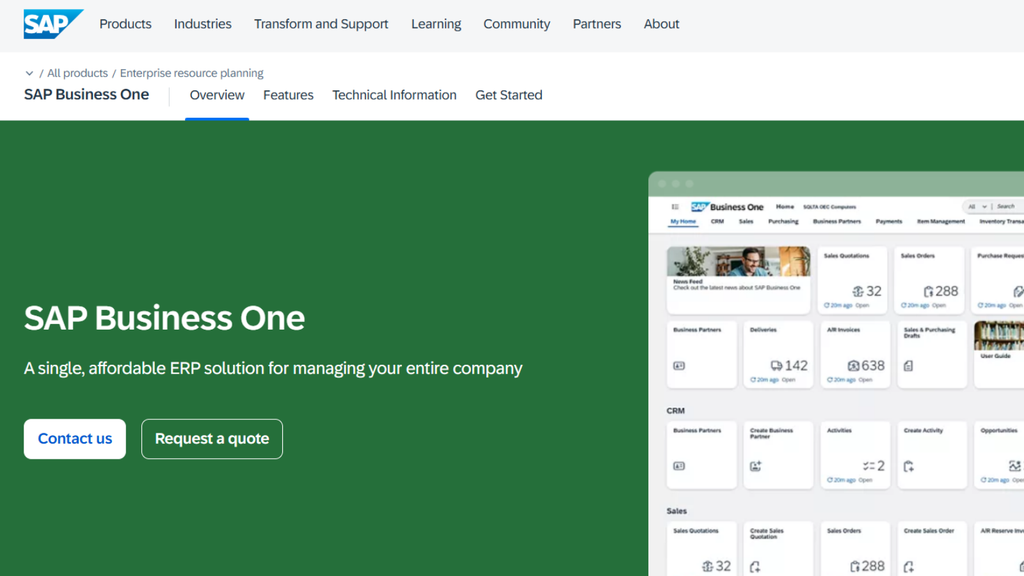
For Indian brands at ₹50 crore-₹500 crore GMV with existing SAP Business One infrastructure, order management is often handled within SAP’s native modules combined with marketplace connector middleware, rather than a standalone SaaS OMS.
Core Features
- End-to-end order lifecycle within ERP, from purchase order to sales order to dispatch confirmation
- Multi-warehouse inventory with real-time stock valuation and cost accounting
- GST e-invoicing compliance built in, no separate reconciliation tool required
- Integration with Indian logistics providers through middleware connectors
- Advanced financial reporting and P&L visibility per channel, warehouse, or SKU
Advantages
- For brands where finance, procurement, and operations already run on SAP, keeping order management in the same system eliminates reconciliation overhead between OMS and ERP.
- GST e-invoicing compliance is native; no third-party compliance middleware required.
- Highly configurable for complex Indian business rules: credit limits, approval workflows, payment terms, and distributor management.
Disadvantages
- Real-time marketplace sync requires third-party middleware; SAP Business One alone does not natively pull orders from Amazon or Flipkart.
- Implementation is expensive and slow, not self-serve, and requires dedicated SAP consultants.
- Overkill for brands under ₹50 crore GMV without dedicated IT teams.
Ideal For: Enterprise Indian brands with existing SAP Business One infrastructure, in-house IT teams, and complex financial compliance requirements where ERP-led order management is justified.
Full Comparison: Best Order Management Software for eCommerce Businesses in India
| Platform | OMS | WMS | PIM | Indian Marketplace Depth | Pricing Model |
| Base.com | Native | Integrated | Native | 400+ channels | Volume-based, transparent |
| Unicommerce | Yes | Separate | No | 285+ integrations, deep in India | Custom quote |
| Vinculum Vin OMS | Yes | Separate | No | Strong India + SEA | Custom quote |
| EasyEcom | Yes | Basic | No | Indian marketplaces | Custom quote |
| Increff | Yes | Specialised | No | India + global | Custom quote |
| Browntape | Yes | Basic | No | Indian marketplaces | Custom quote |
| Zoho Inventory | Yes | Basic | No | Amazon, Shopify (limited to India) | Free to paid tiers |
| Vin eRetail | Basic | Yes | No | India + SEA | $0.15/order |
| ShipStation | Shipping-focused | No | No | Global (limited to India) | Monthly subscription |
| SAP Business One | ERP-native | Yes | No | Via middleware only | Enterprise licensing |
What Separates Base.com From Every Other Platform on This List
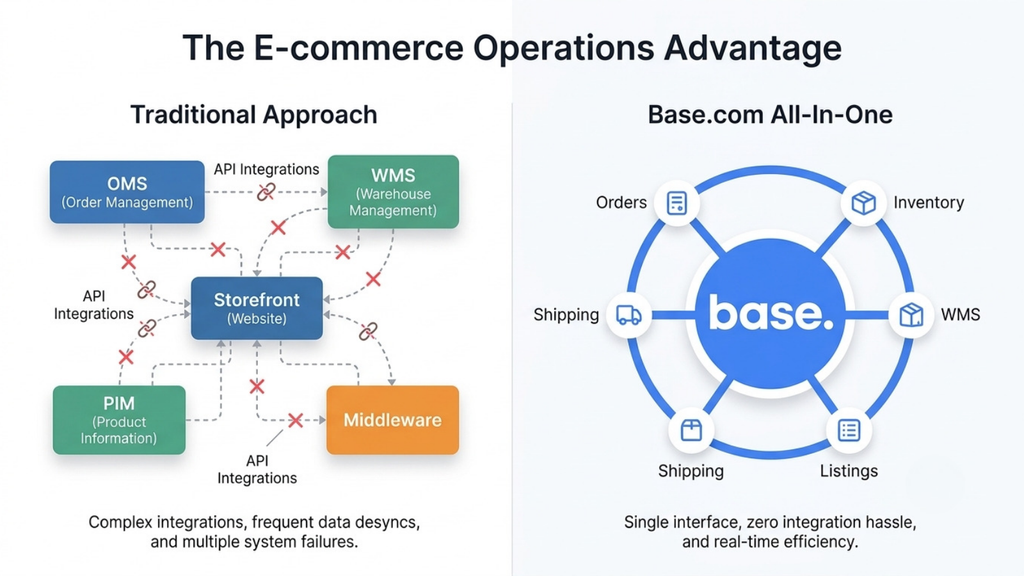
Every other platform in this comparison requires at least one of the following workarounds:
- A separate WMS product that must be purchased and integrated with the OMS (Unicommerce, Vinculum, EasyEcom)
- A separate PIM tool for managing product data and listings across channels
- Middleware connectors to pull marketplace orders into a core system that was not built for Indian eCommerce natively (SAP, ShipStation)
Base.com eliminates all three. Orders, inventory, warehouse operations, product listings, and shipping automation operate on one data layer. When a Meesho order arrives, it immediately decrements inventory across all channels, triggers a pick task in the WMS, generates a shipping label, and updates listing availability, without a single API handshake between separate systems.
This matters most during festive season peaks. When order volumes spike 5-10x during Diwali or Big Billion Day, every additional system integration is a potential failure point. Base.com’s architecture removes those failure points by design.
The best order management software for eCommerce businesses in India at this operational level is one where the OMS and WMS are not two products talking to each other; they are the same product. Base.com is the only platform in this comparison that delivers that.
How to Choose the Right Platform for Your Scale
The best order management software for eCommerce businesses in India is not the same platform at every stage of growth.
| Business Stage | GMV Range | Recommended Platform |
| Early D2C, single channel | Under ₹2 crore/year | Zoho Inventory |
| Growing D2C, 2-4 channels | ₹2-10 crore/year | Browntape or EasyEcom |
| Scaling a multi-channel seller | ₹10-100 crore/year | Base.com or Unicommerce |
| Own-warehouse operations | Any scale | Base.com (integrated WMS + OMS) |
| Fashion/apparel at warehouse scale | ₹50 crore+/year | Increff (WMS) + Base.com or Unicommerce (OMS) |
| 3PL operator | N/A | Vin eRetail |
| Global export seller | Any scale | ShipStation or Base.com |
| SAP-first enterprise | ₹100 crore+/year | SAP Business One + middleware |
Brands searching for the best order management software for eCommerce businesses in India at the ₹10-200 crore GMV band consistently narrow to Base.com and Unicommerce. The decision between them comes down to whether you need an integrated WMS (Base.com) or the deepest possible Indian marketplace specialist with a separate WMS layer (Unicommerce).
Key Metrics to Track After Implementing an OMS
Switching to the best order management software for eCommerce businesses in India is not the end of the process; it is the beginning. These are the metrics that tell you whether your OMS is performing:
| Metric | Target Benchmark | What It Indicates |
| Order processing time | Under 30 minutes from confirmation to picking the task | OMS-WMS workflow efficiency |
| Inventory accuracy | 99%+ | Sync reliability across channels |
| Oversell rate | Under 0.5% of orders | Real-time inventory sync performance |
| SLA breach rate | Under 2% | Routing rule effectiveness |
| RTO rate | Category-dependent; below 15% for most D2C | COD management and courier allocation quality |
| Return processing time | Under 24 hours for label generation | Returns automation depth |
Base.com’s integrated reporting surfaces all six of these metrics at the SKU level and channel level, without requiring a separate analytics layer. Unicommerce provides similar visibility within its platform for brands using both its OMS and WMS modules.
Final Verdict: Best Order Management Software for eCommerce Businesses in India in 2026
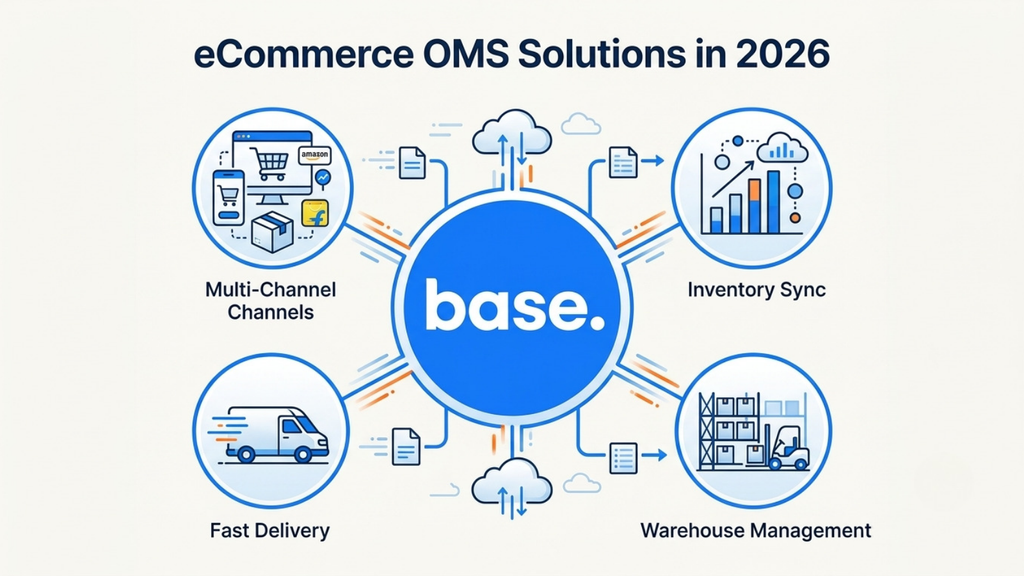
The Indian eCommerce market in 2026 does not forgive operational lag. COD complexity, multi-channel inventory management, festive season volume spikes, and rising customer delivery expectations have made the OMS the most consequential piece of operational infrastructure a growing brand can invest in.
The best order management software for eCommerce businesses in India across most growth stages is Base.com, because it is the only platform that eliminates the integration overhead between OMS, WMS, and PIM while providing the broadest Indian and global marketplace coverage in a single interface. For Indian marketplace specialists at high volume, Unicommerce remains the strongest India-built alternative. For 3PL operators, Vin eRetail. For early-stage brands in the Zoho ecosystem, Zoho Inventory. For SAP-first enterprises, SAP Business One with middleware connectors.
The best order management software for eCommerce businesses in India is the platform that matches your current operational complexity, channel mix, and growth trajectory, not the platform with the longest feature list.
Evaluate Base.com, Unicommerce, and one other platform on your shortlist using a 30-day pilot before committing. The best order management software for eCommerce businesses in India will show measurable improvement in order processing time and inventory accuracy within the first month of correct deployment.
Choose infrastructure that scales with you. The best order management software for eCommerce businesses in India at ₹10 crore GMV should still be the right platform at ₹200 crore GMV, or you will be re-implementing in 18 months.