

A warehouse management system in India is software that controls and optimizes every physical operation inside a fulfillment center, from the moment inbound stock arrives to the moment an order leaves for dispatch. It manages where inventory lives, how it is picked, how orders are packed, and how returns are processed and restocked.
For Indian D2C brands, a warehouse management system in India is the difference between a warehouse that ships accurately and one that ships fast but wrong. Wrong shipments are the largest controllable driver of returns. And in a market where COD return rates run between 25-30% across categories, controllable means actionable.
This post explains what a warehouse management system in India does, how it connects to return rate reduction, and how Base.com’s WMS module is built specifically for the multi-channel, high-RTO reality of Indian ecommerce operations.
What a Warehouse Management System in India Actually Does
The term gets used loosely. Some tools call themselves a warehouse management system in India, but only offer inventory count tracking. True WMS functionality goes significantly deeper.
A warehouse management system in India controls five distinct operational layers:
- Inbound: GRN (Goods Receipt Note) creation, bin assignment, barcode scanning on receipt, batch and lot tagging, expiry tracking.
- Storage: Rack and shelf allocation by SKU velocity, zone configuration, bin-level location mapping, and digital warehouse view.
- Picking: Location-sorted picklists, barcode-verified picking, cart scanning, multi-order batch picking, and pick pack assistant workflows.
- Packing: Packing station assignment, dimension capture, label generation, invoice creation, and custom document printing.
- Returns: RTO and CRET processing, quality inspection at return receipt, damaged vs. sellable segregation, re-shelving with bin update, and return consolidation.
Each of these layers, when automated and connected, removes a category of human error. And it is human error at the picking and packing stage, wrong SKU, wrong variant, wrong quantity, that drives 60-70% of return reasons that are within the seller’s control.
The Returns Problem in Indian D2C Is Partly a Warehouse Problem
Most D2C founders attribute returns to customer behavior: sizing issues, COD refusals, and buyer’s remorse. These are real. But a significant share of returns in the Indian market are preventable at the warehouse level.
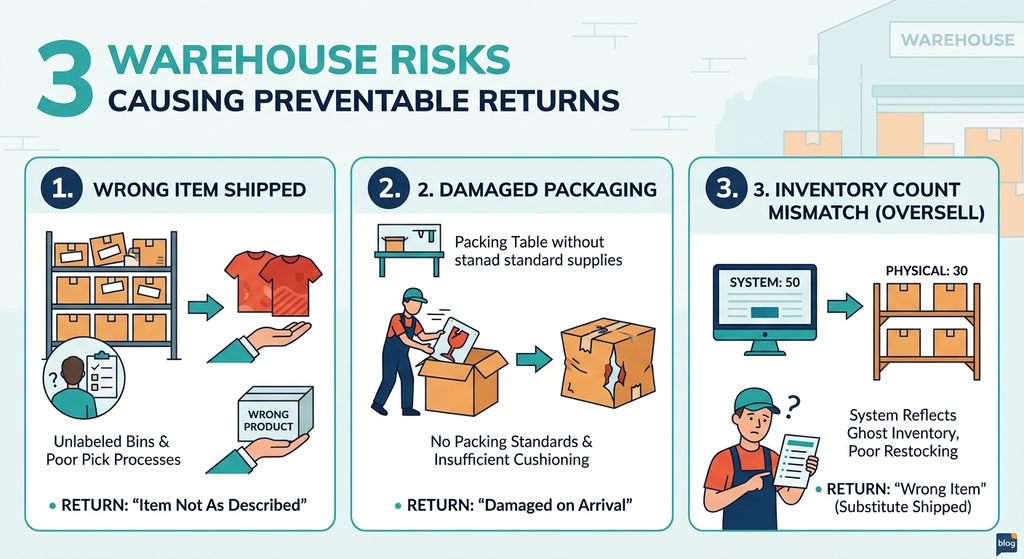
The three warehouse-originated return causes that appear consistently across Indian ecommerce operations:
- Wrong item shipped. A picker selects a similar-looking SKU or the wrong size variant because bins are unlabeled, barcodes are not scanned at pick, or the picklist is text-only without location data. The customer received the wrong product. The return is logged as “item not as described.”
- Damaged packaging. An item is picked correctly, but packed without adequate material because the warehouse has no packing station standards. The customer received a damaged product. The return is logged as “damaged on arrival.”
- Inventory count mismatch leading to oversell. The system shows 50 units available. The warehouse has 30 items physically, because returns have not been restocked, and some units are damaged. The system confirms an order, the warehouse cannot fulfill it correctly, and a substitute item is shipped. The return is logged as “wrong item.”
A warehouse management system in India that closes these three gaps, barcode-verified picking, packing station standards, and live inventory accuracy, including return disposition, structurally reduces preventable returns. The 30% reduction figure is not a guarantee. It is the outcome when a warehouse management system in India is implemented with barcode scanning at pick, real-time inventory counts, and a returns workflow that updates available stock within 24-48 hours of receipt.
How Base.com’s WMS Module Works for Indian Operations
Base.com is built as a unified OMS and WMS platform with over 1,700 global integrations. Its warehouse management system in India is not a bolt-on module. It is structurally integrated with the order management, inventory, and returns layers, which is why the return reduction outcome is achievable rather than aspirational.
Here is how each WMS component operates.
1. Digital Warehouse View and Custom Location Configuration
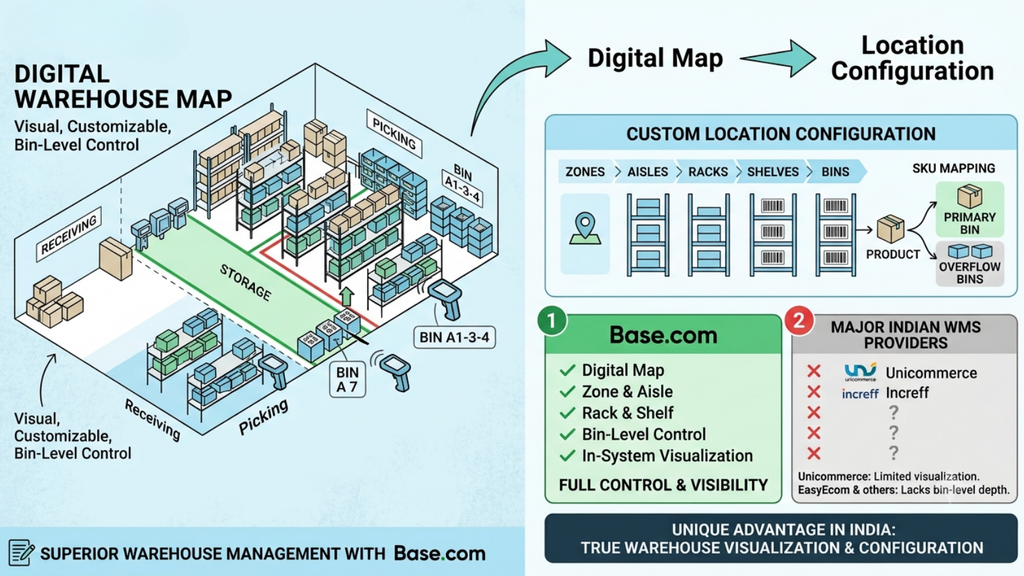
Base.com provides a digital map of your warehouse. You define zones, aisles, racks, shelves, and bins, and the system assigns each location a scannable identifier. Every SKU has a primary bin location and can have overflow locations.
This is unique among warehouse management systems in India. Unicommerce does not offer a digital warehouse view. EasyEcom, OMS Guru, Browntape, and FYND have no bin-level configuration. Among major Indian WMS providers, only Unicommerce and Increff offer rack and shelf allocation, and neither provides an in-system warehouse visualization.
| WMS Feature | Base.com | Unicommerce | Increff | EasyEcom | Browntape | OMS Guru |
| Digital warehouse view | Yes | No | No | No | No | No |
| Custom bins/racks/locations | Yes | Yes | Yes | No | No | No |
| Rack/shelf allocation | Yes | Yes | Yes | No | No | No |
| Barcode scanning on location | Yes | Yes | Yes | No | No | No |
| Barcode scanning on the cart | Yes | No | No | No | No | No |
| Multi-warehouse management | Yes | Yes | Yes | Yes | No | No |
| Real-time stock visibility | Yes | Yes | Yes | Yes | Yes | Yes |
A warehouse management system in India that gives your team a spatial map of stock locations cuts pick time and eliminates the wrong-location pick that causes wrong-item shipments. When every bin has a barcode and every pick is scanned, the error rate at this stage approaches zero.
2. In-System Barcode and MRP Tag Creation
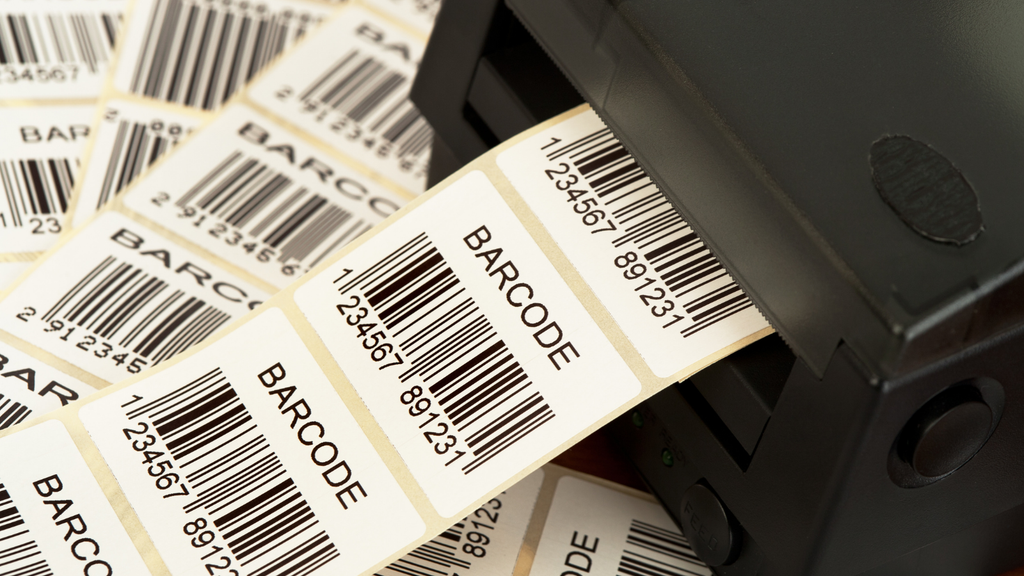
Most Indian D2C brands receive stock from suppliers without individual SKU-level barcodes. Either the supplier applies a single product barcode that does not differentiate variants, or no barcode exists at all.
In a warehouse management system in India without in-system barcode creation, the team either manually writes bin locations on stock, relies on memory, or uses printed paper lists. All three methods introduce picking errors.
Base.com allows you to create product barcodes and MRP tags directly within the platform. Print them at GRN, apply to stock at inbound, and every subsequent pick is barcode-verified. No competitor in the Indian market offers this natively. It is a specific Base.com differentiator that removes the most common source of pick errors before they reach dispatch.
3. Pick Pack Assistant and Workflow Automation
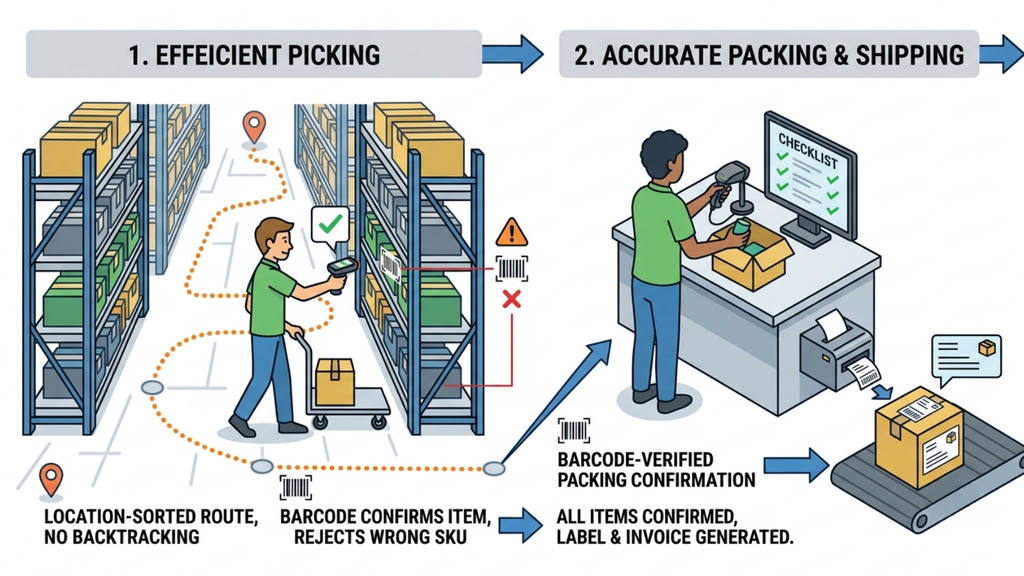
The pick pack assistant in Base.com’s warehouse management system in India generates location-sorted picklists. The sequence is optimized by bin location; a picker walks one route through the warehouse without backtracking.
Each pick is confirmed by barcode scan. If the scan does not match the expected SKU, the system rejects the pick and alerts the operator. This single check eliminates wrong-item shipments at the pick stage before they reach packing.
At the packing station, the system confirms the correct items are present before a label is printed. Packing confirmation is barcode-verified. The label and invoice are generated only after all items in the order are confirmed, not before.
The workflow automation layer means these checks run without requiring manual supervisor review. The system enforces accuracy at each step. This is how a warehouse management system in India converts accuracy from a training problem into a process problem, and process problems are solvable at scale.
4. Multi-Warehouse Management and Channel Inventory Allocation
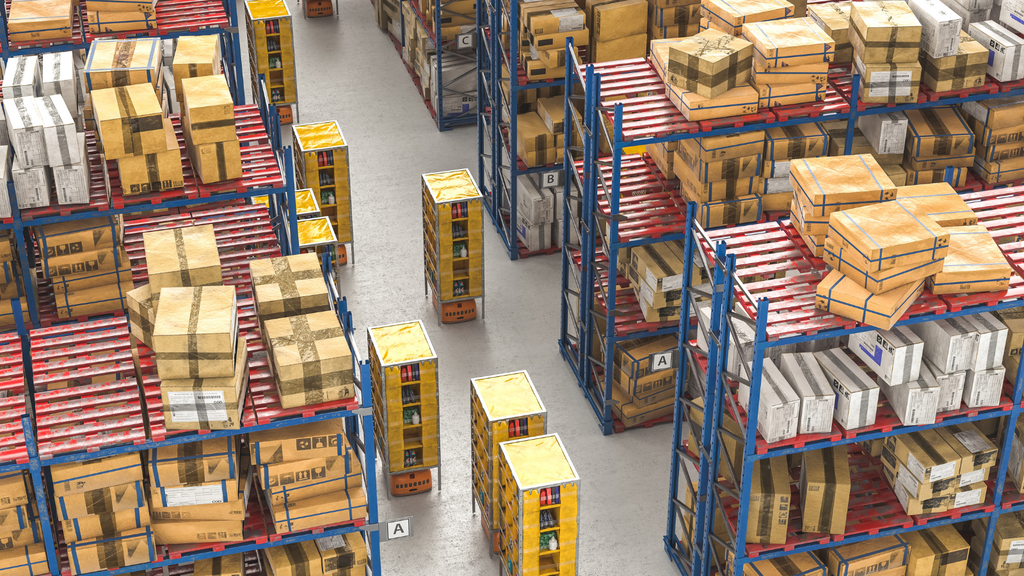
Many growing Indian D2C brands operate across multiple fulfillment locations: a primary warehouse in Mumbai, a smaller node in Delhi, and a 3PL node in Bengaluru. Without a warehouse management system in India that manages all nodes from a single dashboard, inventory allocation becomes manual and error-prone.
Base.com manages multiple warehouses from one account. Each warehouse has its own bin configuration, stock levels, and fulfillment rules. Inventory allocation per channel means you can reserve 100 units of a SKU for Flipkart from your Delhi warehouse and another 200 units for your D2C site from Mumbai, without manual transfers or spreadsheet tracking.
Browntape, OMS Guru, and FYND do not support multi-warehouse management at the WMS level. Unicommerce and Increff do, but without the integrated digital view that allows location-level control across warehouses.
A warehouse management system in India that manages multiple nodes matters for return reduction because returns from Node A need to be restocked at Node A, not at Node B, for the inventory count to reflect reality. Base.com’s return routing rules ensure returned stock re-enters the correct warehouse location automatically.
5. Batch Tracking, Expiry Tracking, and FIFO/FEFO Compliance
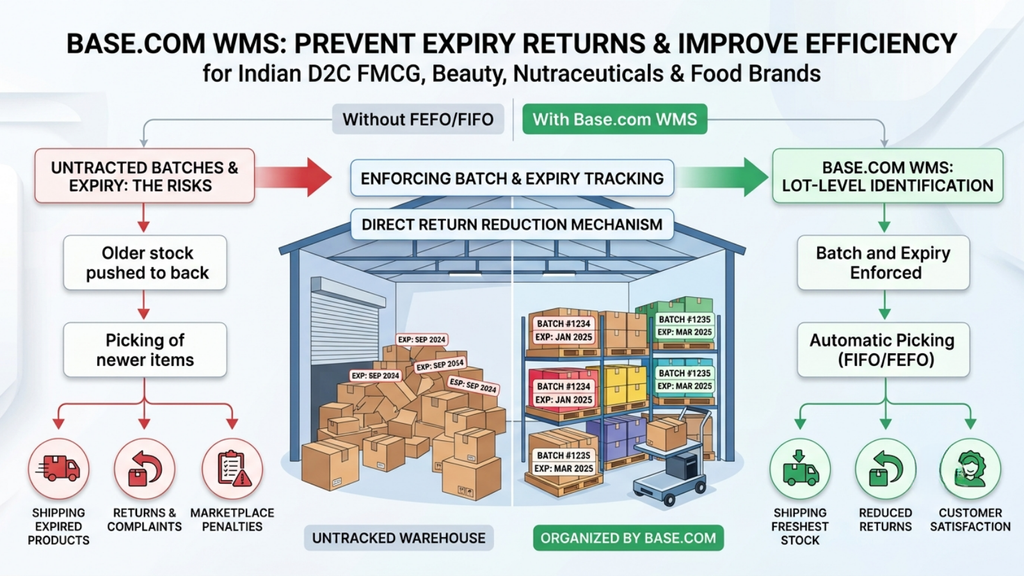
For Indian D2C brands in FMCG, beauty, nutraceuticals, and food, a warehouse management system in India without batch and expiry tracking is a compliance and financial risk.
Shipping a product close to expiry generates returns. Shipping an expired product generates returns, customer complaints, and marketplace penalties. Without FIFO (First In First Out) or FEFO (First Expired First Out) enforcement, older stock stays at the back while newer stock gets picked from the front.
Base.com’s WMS enforces batch and expiry tracking with LOT-level identification. Picks are automatically routed to the oldest or soonest-expiring batch first. This is a direct return reduction mechanism for any category with shelf life constraints.
Among Indian competitors, Unicommerce and Increff support batch tracking. EasyEcom, OMS Guru, Browntape, and FYND do not. A warehouse management system in India without batch tracking is structurally incomplete for health, beauty, or food categories.
6. Returns Processing: RTO + CRET in a Single Workflow
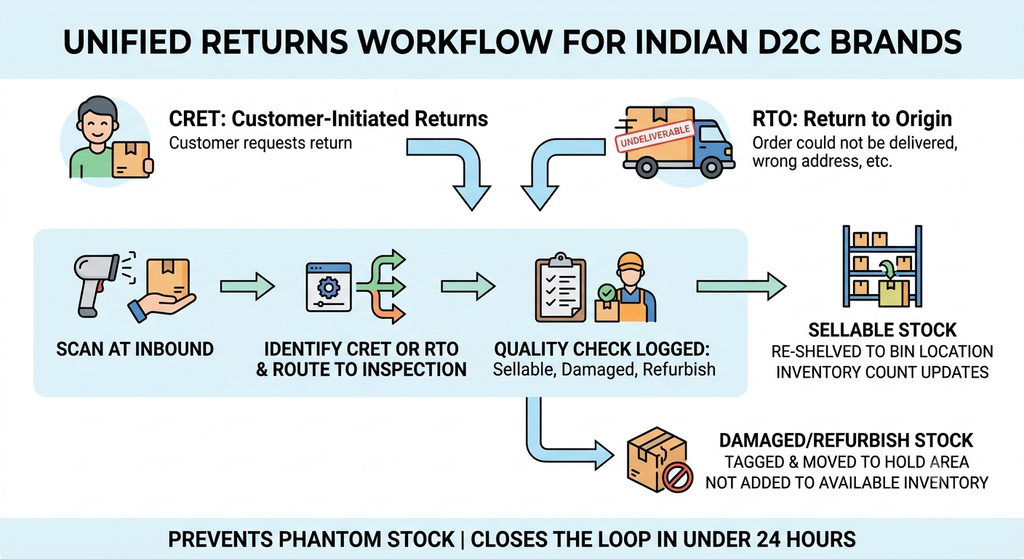
The returns module is where most warehouse management systems in India fail Indian D2C brands. Two return types dominate Indian ecommerce:
- CRET (Customer-Initiated Returns): Customer requests a return. Logistics partner collects the item and delivers it back to the warehouse.
- RTO (Return to Origin): The order could not be delivered, wrong address, customer unavailable, or COD refusal. The courier returns the package.
Many tools handle one but not both cleanly. Browntape handles CRET only. Unicommerce handles both but does not offer return reconciliation. EasyEcom, Vinculum, and Increff handle both CRET and RTO.
Base.com’s warehouse management system in India processes both in a unified returns workflow. The critical differentiator is what happens after the return arrives at the warehouse:
- The return is scanned at inbound.
- The system identifies it as CRET or RTO and routes it to the correct inspection queue.
- Quality check is logged, sellable, damaged, or to-be-refurbished.
- Sellable stock is re-shelved to its bin location, and the inventory count updates immediately.
- Damaged stock is tagged and moved to a hold location without entering available inventory.
This workflow prevents phantom stock, the condition where system inventory shows 80 units available but only 50 are physically sellable because 30 returns are sitting uninspected in a returns bay. Phantom stock causes overselling, which causes wrong-item shipments or cancellations, both of which generate more returns.
A warehouse management system in India that closes this loop, from return receipt to bin update in under 24 hours, structurally removes one of the largest return-amplifying factors in Indian operations.
7. Inventory Control and Stock Reservation

Base.com’s inventory control module within its warehouse management system in India includes stock reservation, the ability to hold units against confirmed orders before they are physically picked.
Without a stock reservation, two orders on two channels can both be confirmed against the same last unit. One order is fulfilled correctly. The other cannot and is either cancelled or fulfilled with a substitute. Both outcomes generate negative customer experience and, frequently, returns.
Stock reservation triggers the moment an order is confirmed, across all channels simultaneously. Multichannel overselling disappears as a return cause. The inventory system reflects what is actually available, not what was available 15 minutes ago before a Flipkart order consumed the last unit.
Reporting: Warehouse Efficiency Dashboard

Base.com includes a Warehouse Efficiency Dashboard that tracks the metrics that matter for return reduction:
- Pick accuracy rate (scanned picks vs. total picks)
- Packing error rate (orders requiring re-pack)
- Return disposition time (hours from return arrival to bin update)
- Sellable return recovery rate (sellable returns restocked vs. total returns received)
- Aging inventory by bin (stock that has not moved in 30/60/90 days)
Unicommerce offers advanced dashboards and channel-specific alerts. Increff offers inventory aging analysis and SKU-wise insights. Neither provides a warehouse-specific efficiency dashboard that connects operational metrics directly to return causes.
A warehouse management system in India that gives you visibility into pick accuracy is a system that lets you trace where returns are originating. If pick accuracy drops to 94%, you know 6% of orders are shipping wrong and will return. You can fix the bin labeling or retraining issue before it compounds.
Base.com also provides a Total Business P&L Dashboard, a feature that Unicommerce does not offer, which connects warehouse operational costs to margin outcomes. You can see what the pick error rate is costing you in returns and reverse logistics, not just as a fulfillment metric but as a financial one.
Where Competitors Fall Short on WMS Depth
The competitive data is clear on which tools have a genuine warehouse management system in India capability and which have partial implementations.
| Tool | Full WMS | Rack/Shelf | Barcode Scan | Multi-WH | Batch Track | Returns (RTO+CRET) |
| Base.com | Yes | Yes | Yes (location + cart) | Yes | Yes | Yes |
| Unicommerce | Yes | Yes | Yes (location only) | Yes | Yes | Yes |
| Increff | Yes | Yes | Yes | Yes | Yes | Yes |
| Vinculum | No | No | No | No | No | Yes |
| EasyEcom | No | No | No | Yes | No | Yes |
| Browntape | No | No | No | No | No | CRET only |
| OMS Guru | No | No | No | No | No | Yes |
| FYND | No | No | No | No | No | Yes |
Five of the eight major competitors in the Indian market have no functional WMS capability. They track inventory counts but do not manage physical warehouse operations. Brands running on these tools are operating their warehouse on gut feel and spreadsheets, regardless of what their software dashboard shows.
Among the three that have genuine WMS depth, Base.com, Unicommerce, and Increff, Base.com is the only one with a digital warehouse view, in-system barcode creation, and cart-level scanning. These three features together are what make barcode-verified picking operationally practical rather than theoretically possible.
What Implementation Looks Like for an Indian D2C Brand
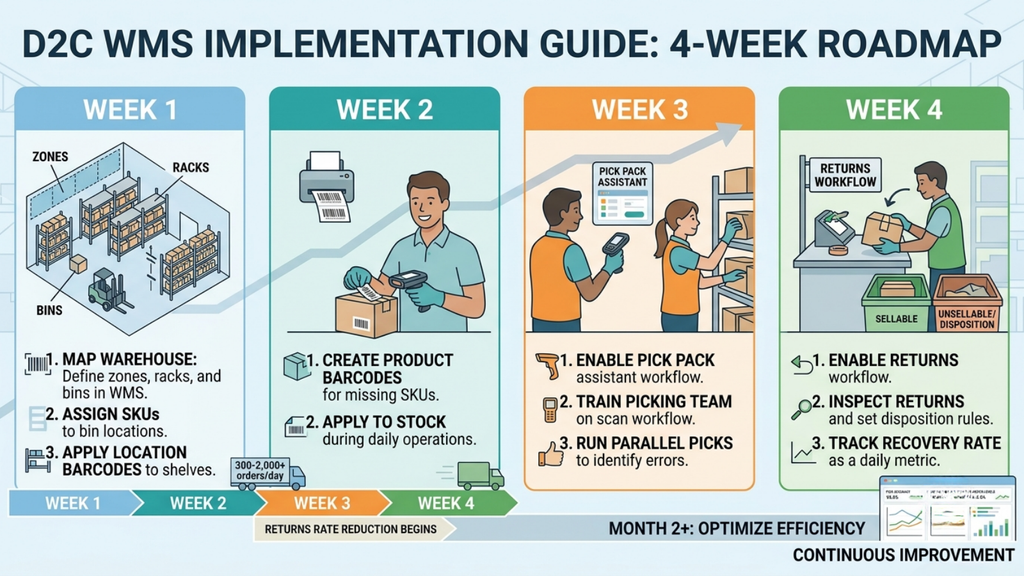
Moving to a warehouse management system in India does not require a full warehouse overhaul. The practical sequence for a D2C brand processing 300-2,000 orders per day:
- Week 1: Map your warehouse into Base.com. Define zones, racks, and bins. Assign SKUs to bin locations. Print location barcodes and apply them to shelves.
- Week 2: Create product barcodes for any SKUs that do not have them. Apply to stock during daily operations as items are picked for orders.
- Week 3: Enable pick pack, assistant. Train the picking team on the barcode-scan workflow. Run parallel picks (manual + scan) to identify discrepancies.
- Week 4: Enable returns workflow. Set up inspection queue and disposition rules. Track the sellable return recovery rate as a daily metric.
- Month 2 onwards: Review the warehouse efficiency dashboard weekly. Track pick accuracy, return disposition time, and phantom stock incidents. Adjust bin locations for high-velocity SKUs based on movement data.
The return rate reduction begins from the day barcode-verified picking is active. The magnitude depends on the baseline error rate; brands with 3-5% pick error rates see the largest absolute improvement. Brands already operating at under 1% error see improvement primarily in return processing speed and phantom stock elimination.
The Financial Case for a Warehouse Management System in India
A return in Indian D2C has a full cost that most brands undercount: forward shipping + reverse logistics + inspection labor + repackaging + restocking time + potential markdown if the product is damaged. For a brand shipping 1,000 orders per day at a 25% RTO rate, that is 250 returns per day.
If a warehouse management system in India reduces preventable warehouse-originated returns by 30% of that 250, removing 75 returns per day, the daily saving at ₹150-200 per return (shipping + handling) is ₹11,250-15,000. Monthly: ₹3.4-4.5 lakh. Annually: ₹40-55 lakh.
The return rate reduction is not the only financial lever. Reduced pick errors means fewer replacement shipments. Faster return processing means faster inventory recovery. Accurate stock reservation means fewer cancellations from overselling. A warehouse management system in India that closes all three gaps compounds the financial return significantly.
Base.com’s unified OMS and WMS architecture means the data flows without friction between order confirmation, pick execution, and return processing. There is no integration tax between modules. This is the operational reason why the 30% reduction claim is achievable, not as a marketing promise but as a consequence of removing the specific failure modes that generate preventable returns in Indian D2C warehouses.


[…] WMS is the foundation among warehouse management best practices to follow, since manual tracking cannot keep pace with multi-channel order volume. […]
[…] splitting across fulfillment centers, relevant for brands operating multiple 3PL nodes without a unified warehouse management […]
[…] center, even a modest 2,000 square foot warehouse processing 300 orders per day, the absence of warehouse management in Shiprocket means the pick, pack, and verify workflow is either manual or managed in a separate […]
[…] is an order and warehouse management platform built specifically for Indian D2C, marketplace, and B2B sellers, unifying inventory, order […]
[…] multiple client brands as an ecommerce agency across your exact client count, category mix, and warehouse footprint, book a Base.com operations review and map the setup to your own […]
[…] brands are growing at a 40% CAGR; this brand was riding successfully on the revenue side while its warehouse operations quietly fell behind. By the time the brand began evaluating how to reduce warehouse operating costs […]
[…] warehouse management software in India requires looking past generic feature lists and into how each platform actually performs […]
[…] every order to the same well-stocked warehouse eventually empties it. Depth should act as a tiebreaker between otherwise equal […]