Quick commerce is no longer just about delivering groceries fast. It has quietly become one of the most powerful growth engines for modern retail. Consumers today expect products to reach their doorstep in minutes, not days. That shift in expectation has completely changed what sells online.
What started as a convenience play for urgent groceries has expanded into a wide range of products from beauty to electronics accessories. Many D2C brands are now using quick commerce platforms like Blinkit, Zepto, and Instamart to reach customers instantly. This has opened a huge opportunity for brands that sell high-frequency, impulse-driven products.
The growth is massive. India’s quick commerce market is projected to grow rapidly with millions of active users and strong demand across categories such as groceries, snacks, personal care, and household essentials.
But not every product works well in this ecosystem. The brands that succeed are the ones selling items people need right now.
In this blog, we will break down the top quick commerce categories that are dominating the space today and why D2C brands are winning in these segments.
Why Certain Categories Win in Quick Commerce
Before diving into the list of the top quick commerce categories, it is important to understand what makes a category perform well on these platforms.
Quick commerce works best for products that solve an immediate need or trigger impulse buying. Consumers usually open these apps when they suddenly need something.
The most popular quick commerce categories typically have these traits:
- High purchase frequency
- Low decision time
- Small to medium basket size
- Easy to store in dark stores
- Fast fulfillment capability
Platforms have also expanded beyond groceries to include beauty, electronics accessories, and healthcare products to increase order value and frequency.
This shift is why many D2C brands are focusing on the best quick commerce product categories to scale faster.
The Top 10 Categories Killing It in Quick Commerce
Quick commerce in India has moved far beyond emergency grocery delivery. What started as a 10-minute milk and bread service has evolved into a powerful distribution channel for modern brands. Platforms like Blinkit, Zepto, and Swiggy Instamart now operate thousands of dark stores across major cities, allowing brands to place products within 2–4 km of consumers.
For Indian D2C sellers, this shift is important for one simple reason. Quick commerce drives high-frequency purchases, impulse buying, and instant product discovery. Unlike traditional ecommerce where discovery happens through search or ads, quick commerce apps show products based on urgency and proximity.
This is why certain product categories dominate these platforms. Below is a detailed breakdown of the high demand quick commerce categories where D2C brands are seeing real traction, along with practical insights, numbers, and use cases that Indian sellers should understand before entering this channel.
1. Snacks and Beverages
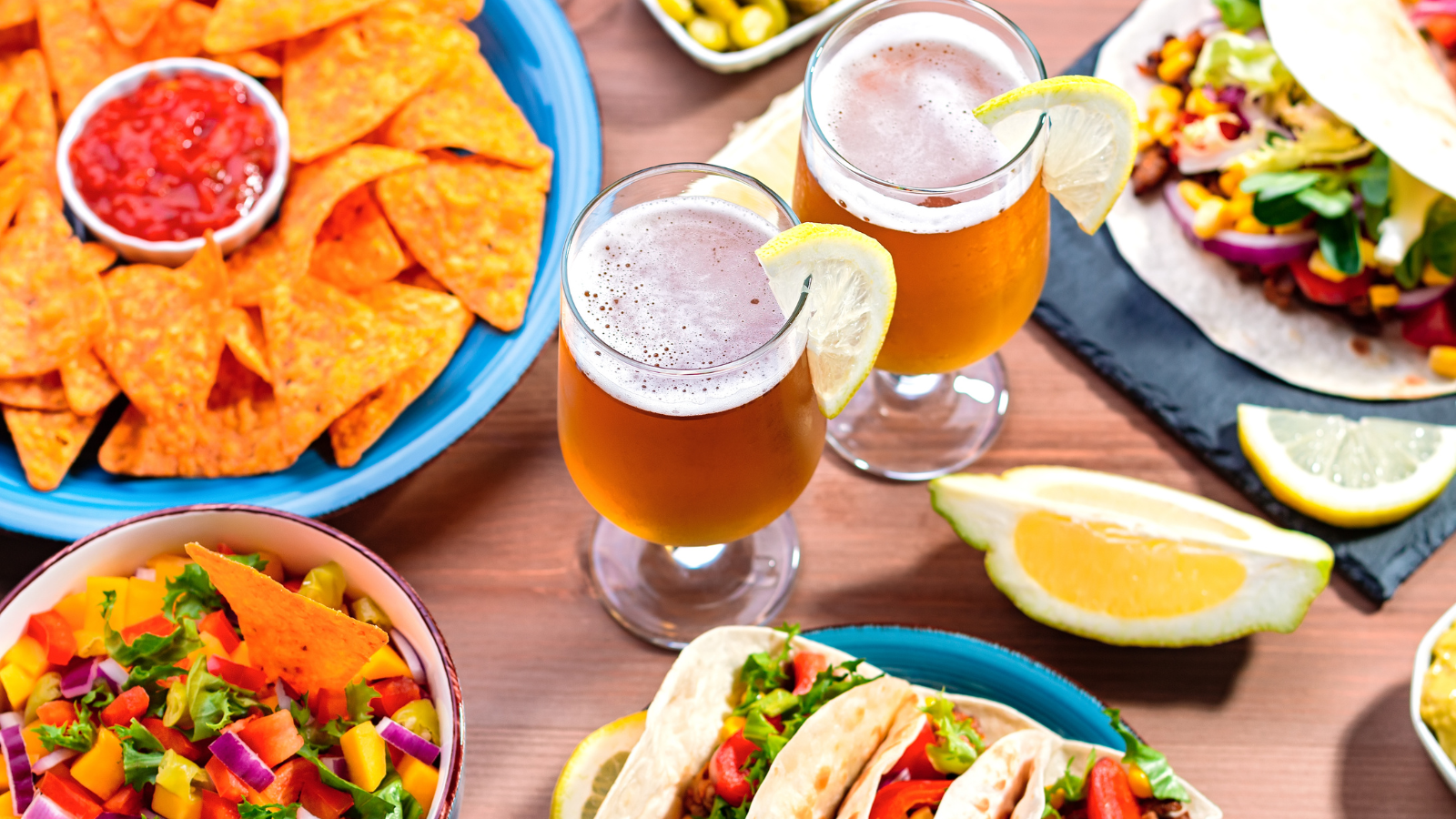 Snacks and beverages remain the largest contributor among the top quick commerce categories in India. Industry reports estimate that 25–35 percent of total quick commerce orders fall within this segment, making it one of the most reliable categories for repeat purchases.
The reason is simple. Snacks are impulse driven. Consumers usually open quick commerce apps when they want something immediately. Late-night cravings, work-from-home breaks, gaming sessions, and weekend gatherings drive frequent orders.
For D2C brands, this category offers strong advantages.
- Impulse buying behavior: Consumers do not spend time comparing brands when ordering snacks on quick commerce apps. If a product appears in the first two rows of the category page, it often gets purchased instantly.
- Small order value but high frequency: The average order value for snack items ranges between ₹150 and ₹400, but customers order them multiple times per week.
- High discovery potential: Quick commerce platforms regularly rotate new snack brands into trending or recommended sections.
Indian D2C brands performing strongly
- Paper Boat
- Rage Coffee
- Sleepy Owl
- Too Yumm
- The Whole Truth
Business insight for D2C sellers
Snack brands that perform well on quick commerce usually launch small pack sizes between ₹99 and ₹199. Smaller packs increase the chance of impulse purchases and help platforms maintain fast inventory turnover.
Another important factor is SKU velocity. Quick commerce platforms prefer products that sell at least 8–10 units per store per day, otherwise the SKU risks being delisted.
2. Fresh Produce and Dairy
Fresh produce and dairy remain one of the most dependable high demand quick commerce categories because these products are part of everyday household consumption.
Milk, curd, paneer, fruits, and vegetables are often purchased when consumers suddenly realize they are out of stock. In large cities like Bengaluru, Mumbai, and Delhi, quick commerce has replaced traditional neighborhood stores for these items.
Platforms report that milk and dairy products alone account for nearly 20 percent of morning orders.
Popular products in this category
- Milk and curd
- Paneer
- Fresh fruits
- Leafy vegetables
D2C brands scaling in this segment
- Country Delight
- FreshToHome
- Sid’s Farm
Operational insight for Indian sellers
Fresh categories require careful supply chain planning. Most quick commerce platforms use micro-warehouses called dark stores, typically between 2000 and 3000 square feet.
Perishable items must move quickly. If a SKU does not sell within 24–36 hours, it becomes a liability for the platform. This means brands must ensure consistent demand and tight inventory control.
Another nuance many sellers miss is morning demand concentration. Dairy sales spike between 6 am and 10 am, which means brands need supply planning aligned with daily consumption cycles.
3. Beauty and Personal Care
 Beauty and personal care products are rapidly entering the top quick commerce categories, especially among urban consumers aged 20 to 35.
Consumers increasingly rely on quick commerce platforms for grooming emergencies. For example, someone preparing for a meeting or event may order face wash, deodorant, or makeup within minutes.
According to industry data, personal care products contribute around 8–12 percent of quick commerce orders, and this share continues to grow.
Common purchases in this category
- Face wash
- Shampoo
- Deodorants
- Makeup products
- Skincare essentials
D2C brands gaining traction
- Mamaearth
- Minimalist
- Plum
- SUGAR Cosmetics
Important insight for D2C brands
Unlike snacks, beauty products often require trust and brand recognition. Brands entering quick commerce must already have strong visibility on social media or ecommerce platforms.
Another nuance is trial-size SKUs. Small pack formats priced under ₹299 perform better because consumers are willing to try new products when delivery is instant.
4. Ready-to-Eat and Frozen Foods
Urban lifestyles are driving strong growth in ready-to-eat meals, making this segment one of the most popular quick commerce categories.
Consumers often order frozen snacks or ready meals when they do not want to cook. This behavior is especially common during late evenings or weekends.
Industry data suggests that instant food products have seen sales spikes of nearly 20 percent during certain periods, highlighting the convenience factor driving demand.
Typical products in this segment
- Frozen snacks
- Ready-to-cook parathas
- Instant noodles
- Heat-and-eat meals
D2C brands active here
- The Whole Truth
- Slurrp Farm
- iD Fresh Food
Operational nuance
Quick commerce platforms prioritize frozen foods that can be stored easily in dark store freezers. Products requiring complicated handling or longer preparation times tend to underperform.
Another key insight is evening consumption peaks. Ready meals sell heavily between 7 pm and 11 pm, meaning brands should optimize inventory replenishment before dinner hours.
5. Health and OTC Products
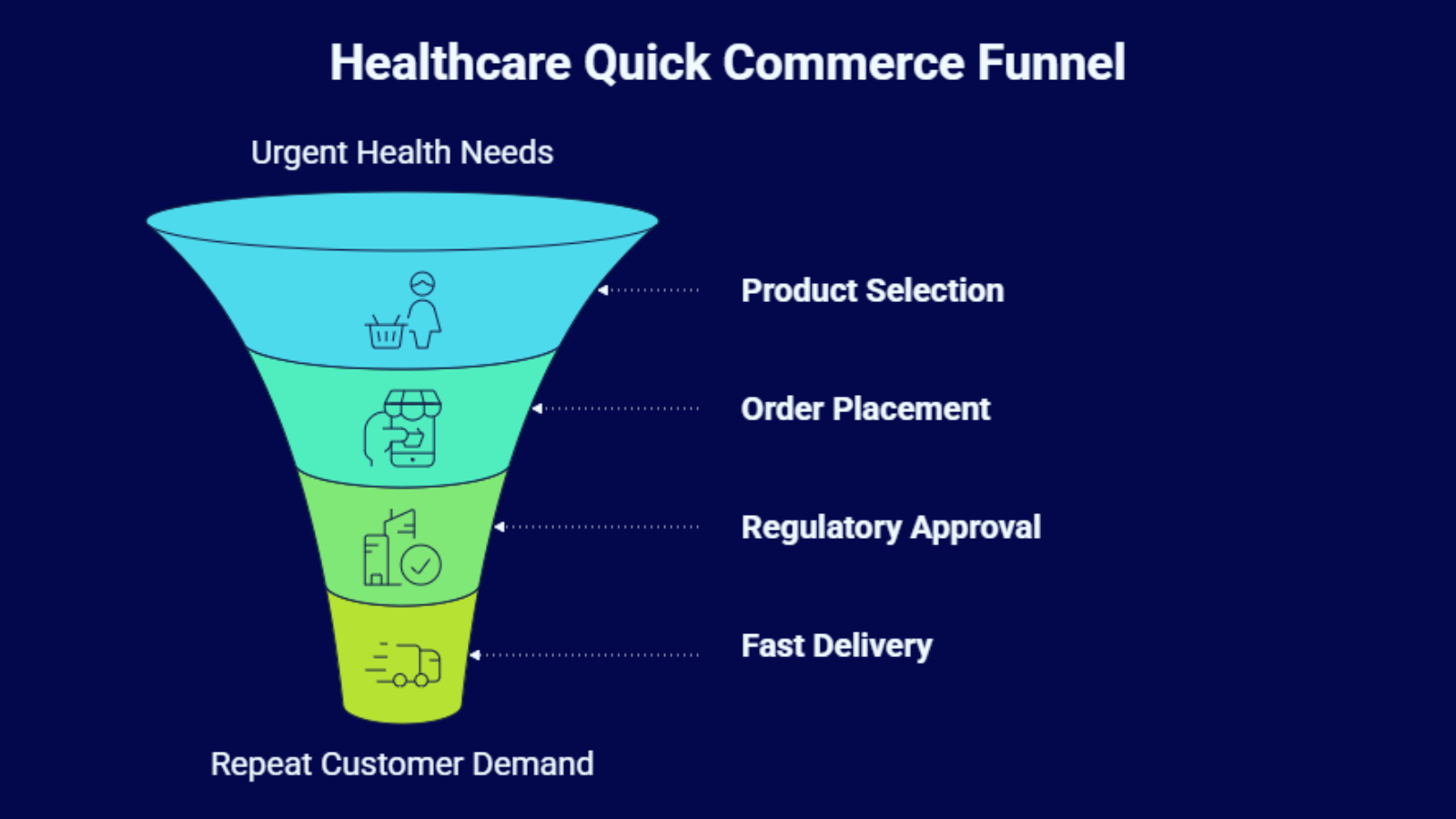 Healthcare items are quickly becoming one of the high demand quick commerce categories because they address urgent needs.
Consumers often order medicines, supplements, or pain relief products when they need immediate relief.
Typical products
- Pain relief tablets
- Cold and flu medication
- Vitamin supplements
- Antiseptic creams
Brands operating here
- Tata 1mg private labels
- HealthKart
Important insight for sellers
This category requires regulatory compliance and careful product listing approvals. However, once approved, it offers strong repeat demand.
Platforms also prioritize fast moving OTC items that solve common health issues such as headaches, acidity, or seasonal illnesses.
6. Household Essentials
Household products remain among the top quick commerce categories because they are replenishment driven.
Consumers usually realize they are out of cleaning supplies when they actually need them. Instead of visiting a store, they simply order through quick commerce apps.
Common purchases
- Dishwashing liquid
- Floor cleaners
- Tissue rolls
- Garbage bags
D2C brands performing well
- Koparo
- Bare Necessities
Business insight
Cleaning products often benefit from bundle packaging. For example, a pack containing floor cleaner, dishwash liquid, and wipes can increase the average order value.
Another nuance is subscription-like behavior. Households tend to reorder these products every two to three weeks.
7. Baby Care Products
 Baby care products sit firmly among the most popular quick commerce categories because they involve urgent parenting needs.
Parents cannot wait two days for diapers or baby wipes. When supplies run out, instant delivery becomes essential.
Popular items
- Diapers
- Baby wipes
- Infant food
D2C brands scaling here
- The Moms Co
- SuperBottoms
Key insight
Baby products require strong trust signals. Brands must highlight safety certifications and ingredient transparency because parents prioritize safety over price.
8. Pet Care Products
India’s pet ownership market is expanding rapidly. With millions of households owning dogs and cats, pet products have become one of the high demand quick commerce categories.
Pet food purchases are especially frequent. Many owners buy food every few days, making quick commerce extremely convenient.
Popular items
- Pet food
- Pet treats
- Grooming products
D2C brands
- Heads Up For Tails
- Wiggles
Interesting market insight
Pet food orders typically spike in the evening between 6 pm and 9 pm, when owners realize supplies are running low.
9. Electronics Accessories
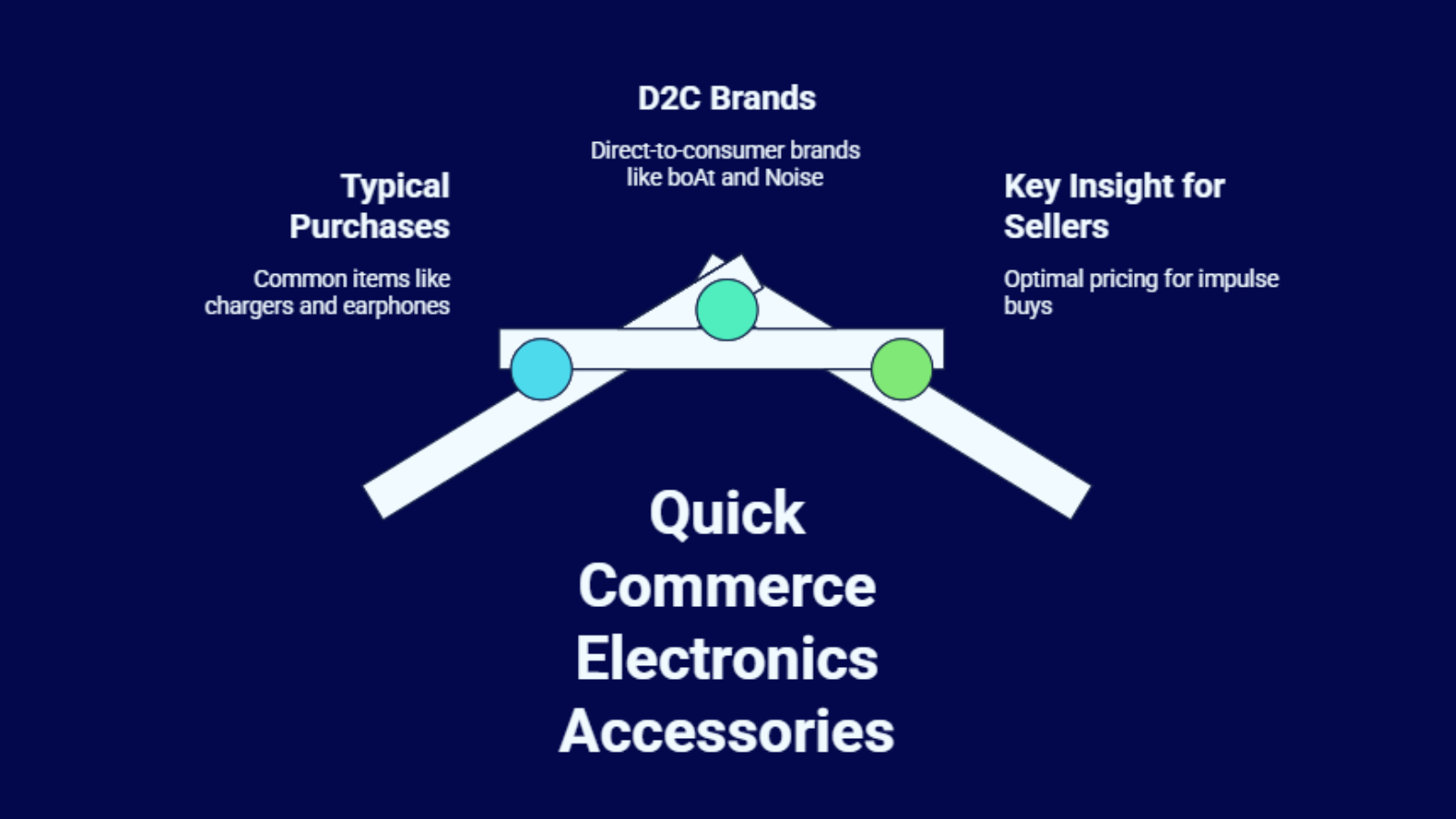 Electronics accessories have recently entered the top quick commerce categories because consumers often need replacements immediately.
When a charger stops working or earphones break, waiting several days for delivery is inconvenient.
Typical purchases
- Phone chargers
- Earphones
- Power banks
D2C brands
- boAt
- Noise
Key insight for sellers
Accessories priced between ₹299 and ₹999 perform best because they fall within impulse purchase range.
10. Instant Meal Kits
Instant meal kits are among the newest most popular quick commerce categories.
These products combine convenience with cooking experience. Instead of ordering restaurant food, consumers can cook quickly using ready kits.
Popular examples
- Biryani kits
- Pasta kits
- Curry bases
Brands active in this space
- iD Fresh
- Chef’s Basket
Unique insight
Meal kits often benefit from recipe-based marketing. Platforms highlight them during dinner hours with banners such as “Cook dinner in 15 minutes.”
How D2C Brands Are Winning in Quick Commerce
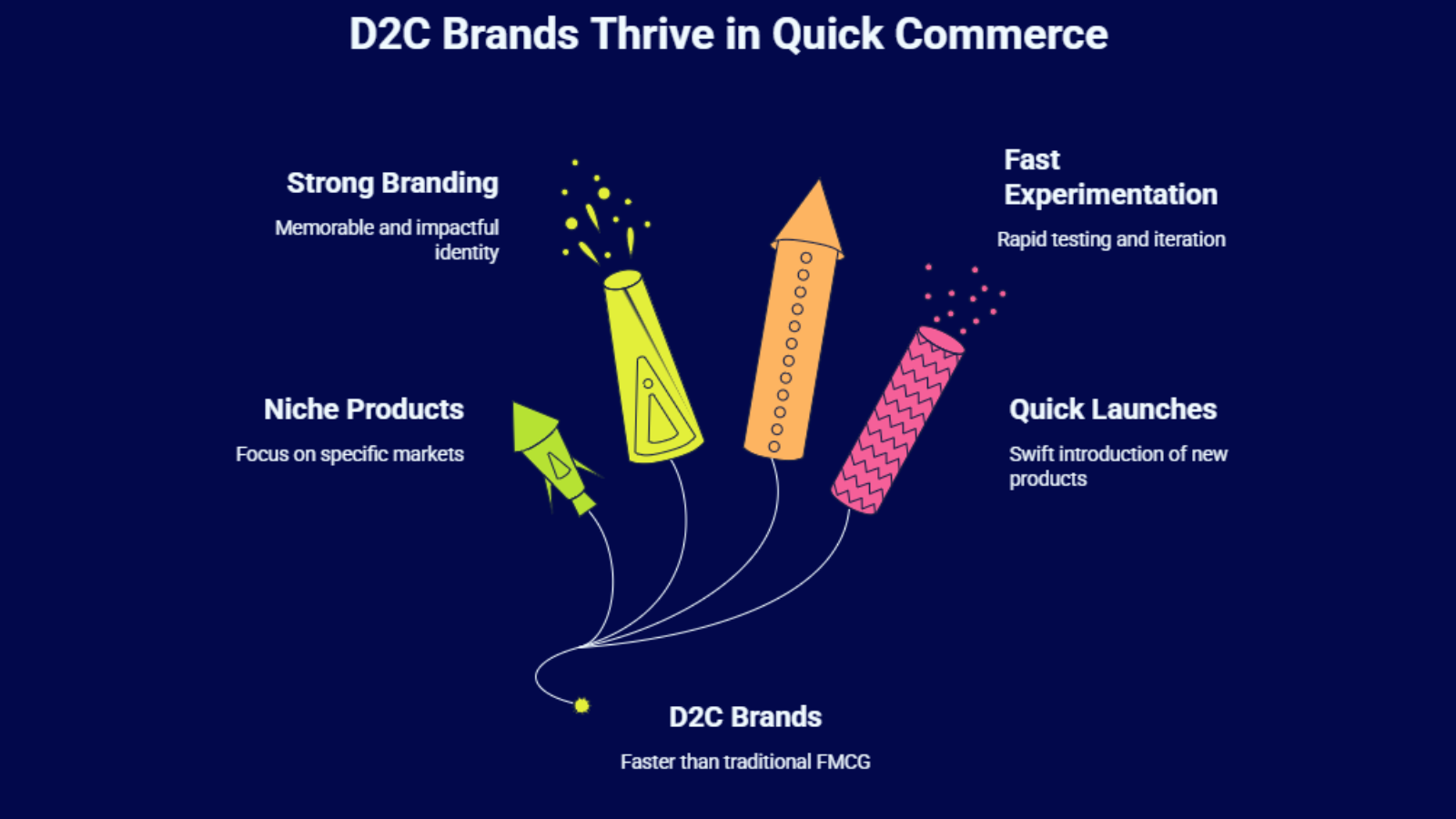 D2C brands are thriving in these top quick commerce categories because they move faster than traditional FMCG companies.
They typically focus on:
- niche products
- strong branding
- fast experimentation
- quick product launches
With quick commerce expected to grow rapidly across India, these brands are positioning themselves in the best quick commerce product categories to capture demand early.
Final Thoughts
Quick commerce has completely changed how consumers buy everyday products. Speed has become the biggest differentiator, and only certain product types thrive in this model.
The brands dominating today understand that quick commerce is driven by urgency, impulse, and convenience. That is why categories like snacks, beauty, dairy, healthcare, and electronics accessories continue to lead the market.
For brands looking to scale, focusing on the top quick commerce categories and entering the high demand quick commerce categories early can unlock massive growth opportunities.
If you are a D2C brand looking to enter the top quick commerce categories, you need the right infrastructure to scale across multiple platforms.
Base helps brands streamline operations across marketplaces, quick commerce platforms, and inventory systems in one place. From order management to real-time integrations, Base ensures your products move faster than your competition.
If you want to expand into the most popular quick commerce categories, Base can help you build a scalable commerce engine.
Frequently Asked Questions
1. Which quick commerce categories should new D2C brands prioritize first?
New D2C brands should start with categories that naturally fit fast delivery behavior. Snacks, beverages, ready-to-eat foods, personal care, and household essentials perform best because they are high-frequency purchases. These products typically sell multiple times per week, helping brands achieve the SKU velocity quick commerce platforms require.
2. How should D2C brands optimize packaging and SKU sizes for quick commerce?
Quick commerce works best with small, fast-moving SKUs. Products priced between ₹99 and ₹399 tend to perform well because they encourage impulse purchases. Compact packaging also helps dark stores store more inventory, which increases the likelihood that platforms prioritize those products.
3. What is the typical inventory model used by quick commerce platforms?
Most quick commerce companies operate through dark stores located within a 2–4 km delivery radius. Brands supply inventory to these micro-warehouses, and products are dispatched within minutes of an order. High-performing SKUs usually sell 8–15 units per store per day.
4. How can D2C brands secure placement on quick commerce platforms?
Platforms evaluate products based on demand potential, brand recognition, and supply reliability. Brands that already perform well on marketplaces or have strong consumer awareness are more likely to be onboarded. Demonstrating fast inventory turnover and reliable supply chain operations also improves approval chances.
5. How can D2C brands expand after entering quick commerce?
Once a product performs well in one city, brands typically expand to multiple dark store clusters across metros and Tier 1 cities. Successful brands often launch quick-commerce-exclusive SKUs or bundles to improve discoverability and increase average order value.