
Understanding how to handle courier failure during the summer sale in India is not optional planning. It is the difference between a successful sale event and a catastrophic one. When a courier partner freezes, throttles capacity, or starts generating NDRs at scale, your sales revenue does not sit safely in the bank; it sits in a delivery pipeline that is actively unwinding.
This post covers exactly what happens operationally when a courier fails mid-sale, and how Indian D2C brands can build systems that absorb the shock without losing orders.
What “Courier Failure” Actually Means During a Sale
Most brands think of courier failure as a service going completely offline. That is a rare case. The far more common, and far more damaging, version is a courier that keeps accepting shipments but stops delivering them at normal velocity.
During summer sale periods in India, the Amazon Great Summer Sale (typically early May), Myntra EORS (late May), and Flipkart’s parallel sale windows, daily shipment volumes across major logistics partners spike 2x to 3x above normal. A courier’s network has a physical capacity ceiling. When volumes exceed that ceiling, the degradation is not announced. It appears as:
- Pickup delays. The courier’s rider does not arrive for your scheduled pickup. Orders sit in your facility for 24-48 hours past their intended dispatch time. The buyer has already received an order confirmation with a delivery date that your courier can no longer meet.
- Sorting hub chokepoints. Parcels are picked up but accumulate at regional sorting hubs, Bhiwandi for Mumbai, Kundli for Delhi-NCR, and Whitefield for Bengaluru. Processing slows, transit times extend by 2-3 days. Tracking remains static for days.
- NDR spike. Delivery staff under volume pressure make fewer delivery attempts. More shipments get marked as “attempted, customer unavailable” without a genuine attempt. NDR rates that average 8-12% on normal days can hit 20-25% during sale peaks.
- COD remittance delays. Delhivery and Ecom Express typically remit COD within 48-72 hours. During peak periods, remittance cycles can stretch to 5-7 days. For brands running 3x normal COD volume, this creates a working capital gap that can be significant.
Each of these failures has a different operational response. Knowing how to handle courier failure during the summer sale in India means identifying which failure type you are dealing with and having the system respond before the damage compounds.
The Cascade: What Happens to Your Orders When a Courier Fails
When a courier partner degrades during a sale, the impact cascades through four distinct layers of your operation. Understanding the sequence is essential.
Layer 1: Dispatch Queue Builds Up
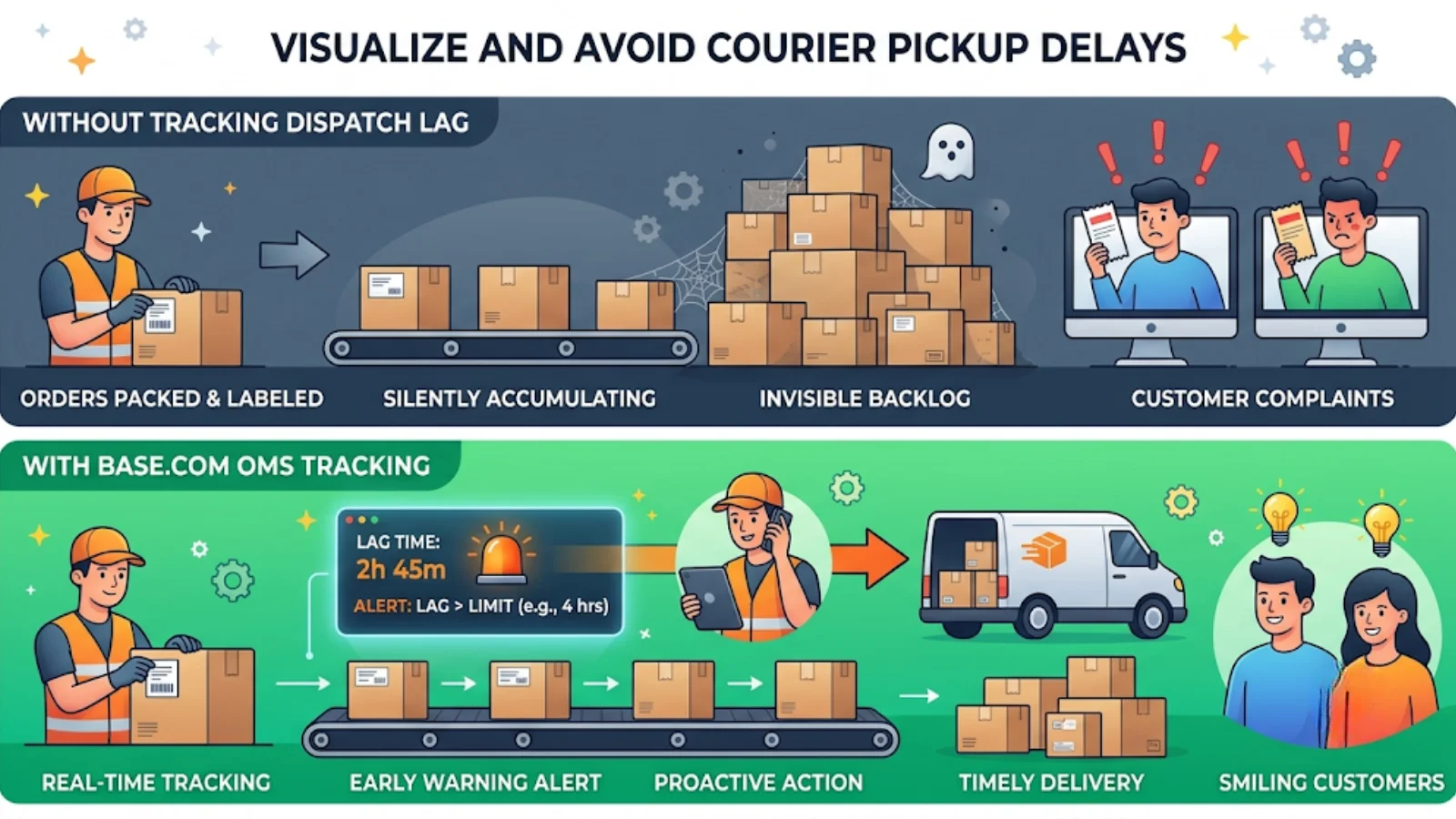
Orders that were packed and labelled but not yet picked up accumulate. Your warehouse has finished its work. The courier has not done theirs. This queue grows silently until someone manually reviews it, or until buyers start raising tickets about delayed orders.
If your OMS is not tracking dispatch lag, the time gap between AWB generation and confirmed courier pickup, this build-up is invisible until it becomes a problem. Brands using Base.com see this in real time: the OMS flags orders where AWB was generated more than X hours ago without a scan-in confirmation from the courier. This alert is the early warning that lets you act before the queue becomes a crisis.
Layer 2: Customer Expectations Break
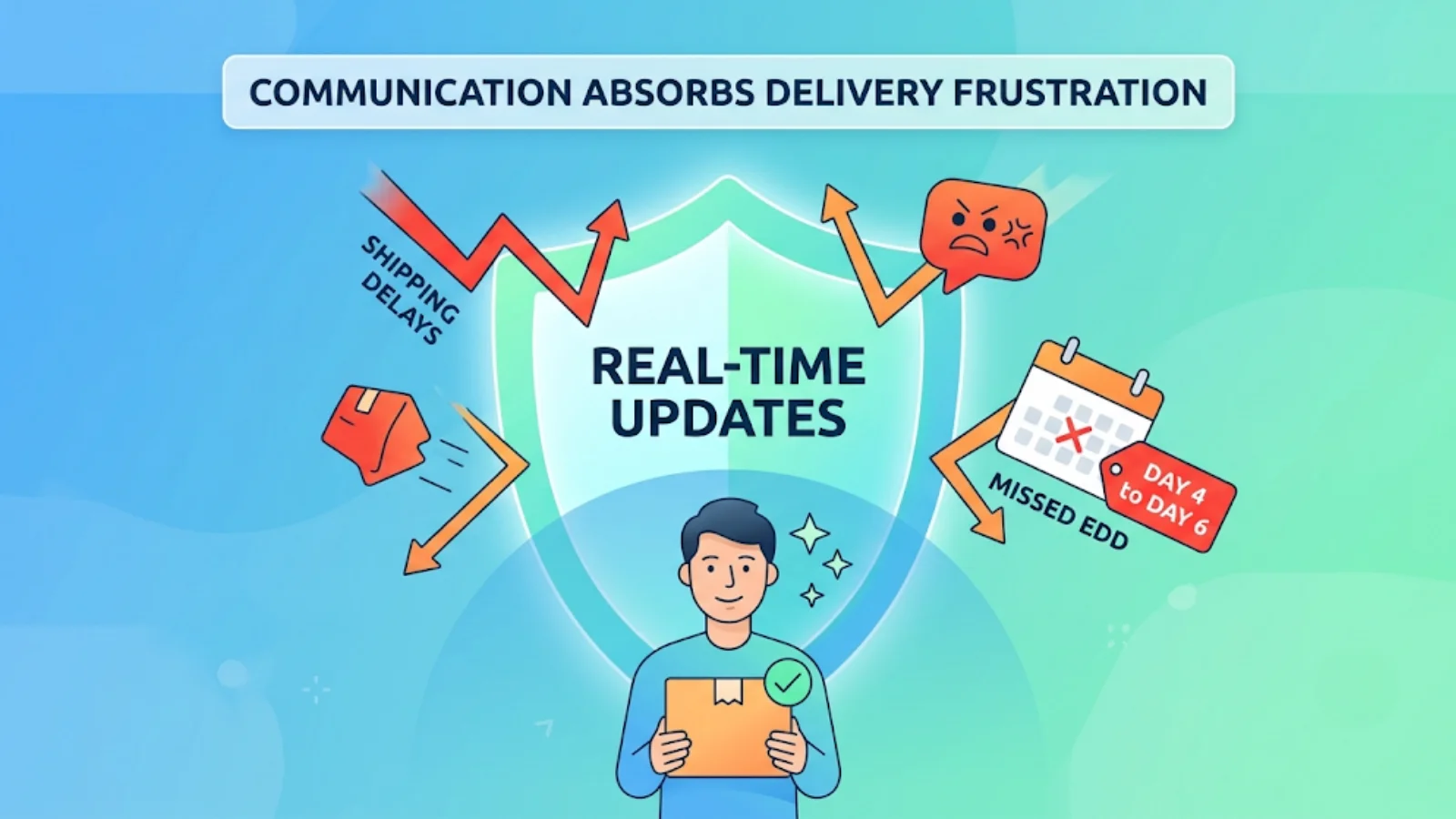
Every order placed during a summer sale carries an Expected Delivery Date (EDD) that was shown at checkout. That EDD was calculated based on your courier’s standard SLA, typically 2-5 days depending on zone and courier.
When the courier delays pickup by 24 hours, every affected order’s actual delivery date shifts by at least that much. If the buyer was expecting delivery on Day 4 and receives it on Day 6, and if Day 4 was the date they needed the product (for a gift, an event, or simply the expectation set by your checkout page), you have a service failure even if the product eventually arrives.
40% of buyers in a 2024 peak season survey cited late deliveries as their primary pain point. Brands that offered real-time delivery updates saw a 12% increase in repeat purchases. Even when delays occurred, the communication absorbed the frustration that the delay would otherwise generate.
Layer 3: NDRs Convert to RTOs
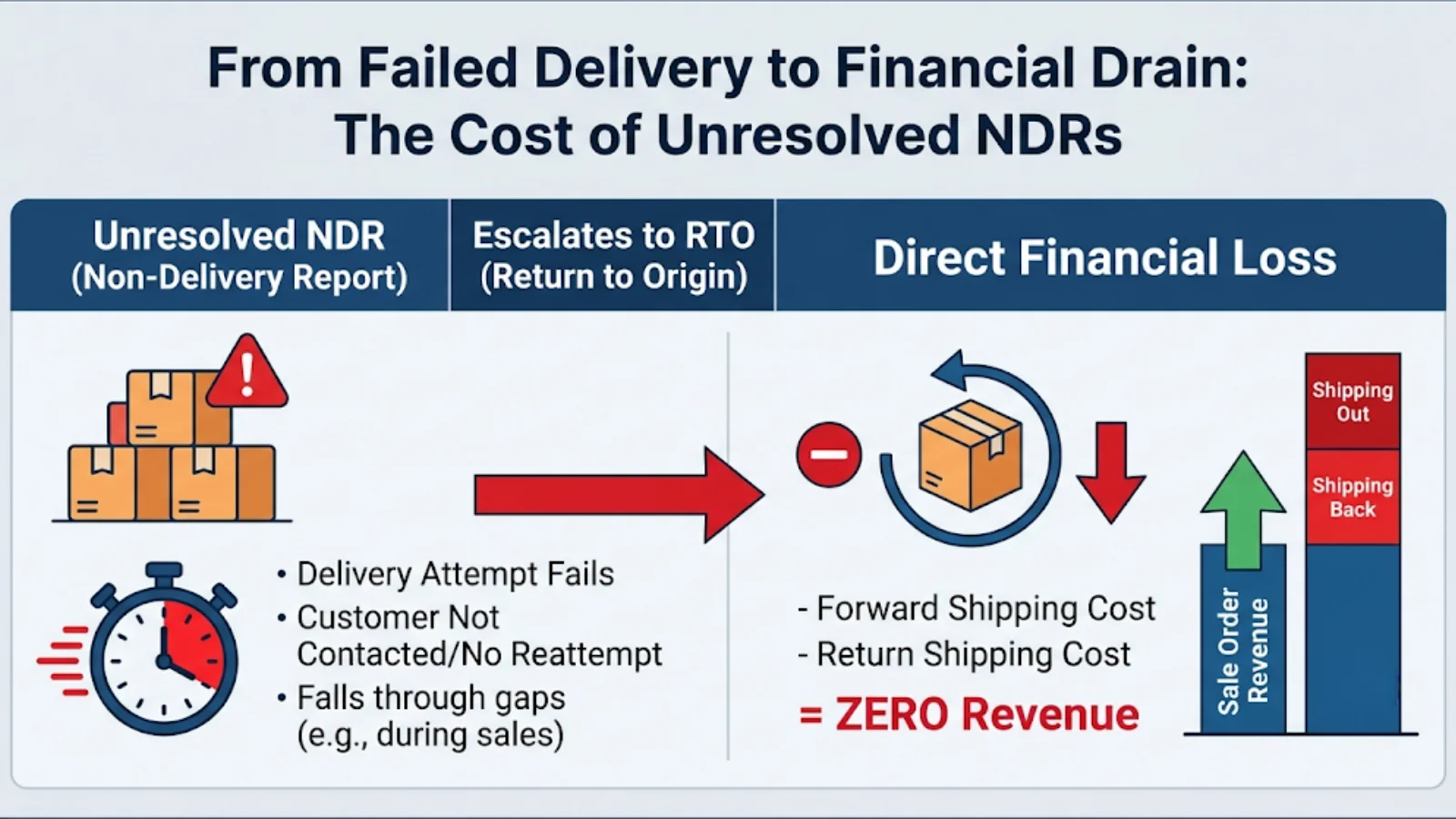
This is where courier failure becomes direct financial loss. Every unresolved NDR has a countdown clock. If the NDR is not actioned, the customer is contacted, a reattempt is scheduled, within 24-48 hours, the shipment escalates to RTO. The brand pays forward shipping and return shipping for an order that generated no revenue.
During a sale period, your customer service team is already at capacity with queries, order tracking questions, and pre-sale inquiries. NDR management falls through the gaps. Each NDR that slips to RTO costs 1.5-2x the original shipping cost, generates zero revenue, and ties up inventory that is now returning to your warehouse when you could be dispatching fresh sale orders.
Layer 4: Marketplace Metrics Deteriorate
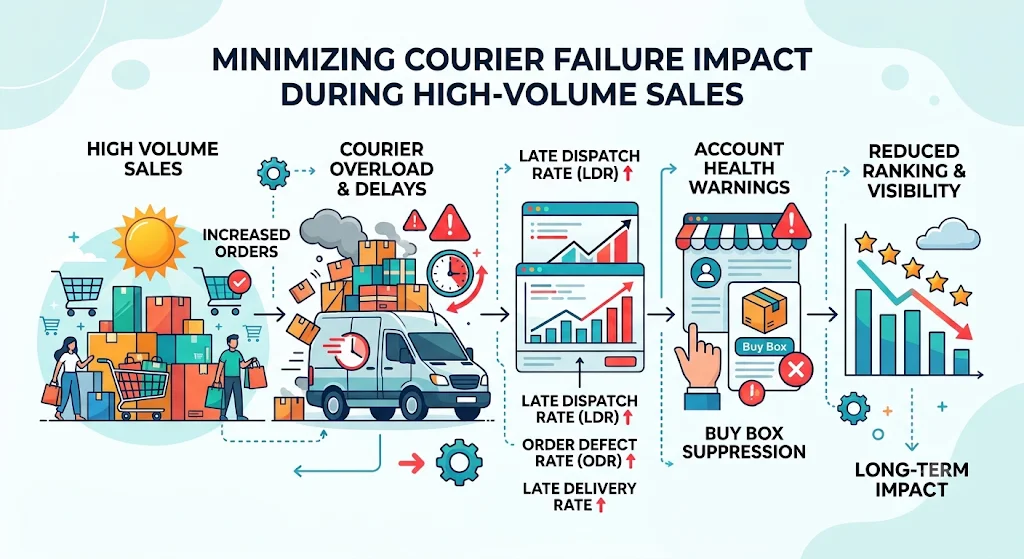
For brands selling on Amazon and Flipkart, this layer matters as much as the direct revenue loss. Both marketplaces track Late Dispatch Rate (LDR), Late Delivery Rate, and Order Defect Rate at the seller level. A courier failure during a sale period, where volume is high, and every delay is amplified, can push these metrics above threshold within 48-72 hours.
The consequences are not theoretical: Buy Box suppression, account health warnings, and, in severe cases, temporary order blocking. These are outcomes that persist beyond the sale period, affecting your ranking and visibility for weeks after the courier situation normalises.
Knowing how to handle courier failure during the summer sale in India means protecting these metrics, not just the individual orders.
The Pre-Sale Preparation Framework (6-8 Weeks Before)
The only effective response to courier failure is preparation. Sale-period courier failures are not unpredictable; they are the predictable outcome of high volume meeting fixed infrastructure. The brands that handle them well are the ones that built redundancy before the sale opened.
Step 1: Activate Multi-Courier Coverage

Brands relying on a single courier saw significantly higher risk of bottlenecks during peak 2024. Brands running 2 or more last-mile partners had 27% fewer delivery failures during the same period.
For Indian D2C brands, a three-courier stack is the standard for sale readiness:
| Courier Role | Primary Use Case | Examples |
|---|---|---|
| Primary carrier | High-volume metros, Tier 1 cities | Delhivery, XpressBees |
| Secondary carrier | Tier 2 and Tier 3 coverage, COD | Ecom Express, DTDC |
| Surge fallback | Overflow during peak, hyperlocal | Shadowfax, Smartr |
Base.com’s OMS supports rule-based courier allocation that runs automatically. Each order is assigned to the optimal carrier based on destination pincode, order value, payment type, and carrier SLA performance, without manual decision-making at the pack station.
When the primary carrier shows signs of degradation, delayed pickups, tracking scan gaps, or rising NDR rates, Base.com’s fallback rules automatically route new AWBs to the secondary carrier. The switch happens at the order level, invisibly to the customer, without any manual intervention from your operations team.
Step 2: Build a Pincode-Level Carrier Performance Map
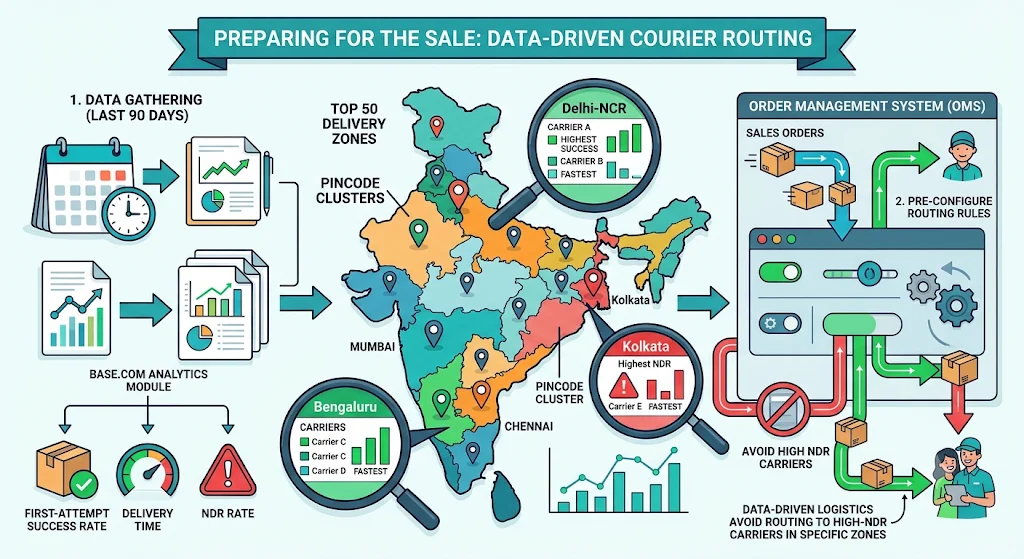
Not all courier failures are uniform. A carrier that is performing well in Delhi-NCR may be overwhelmed in Bengaluru or Kolkata during the same sales period. Knowing how to handle courier failure during the summer sale in India at the pincode level is what separates reactive brands from prepared ones.
Six to eight weeks before your sale, pull your last 90 days of delivery data from Base.com’s analytics module. For each pincode cluster in your top 50 delivery zones, identify:
- Which carrier has the highest first-attempt delivery success rate
- Which carrier has the fastest average delivery time for that zone
- Which carrier generates the highest NDR rate in that zone
This map becomes your pre-configured routing logic. Before the sale opens, your OMS is already set to avoid routing orders to high-NDR carriers in specific zones, not based on gut feel, but on verified performance data.
Step 3: Set Realistic EDDs Before the Sale Opens
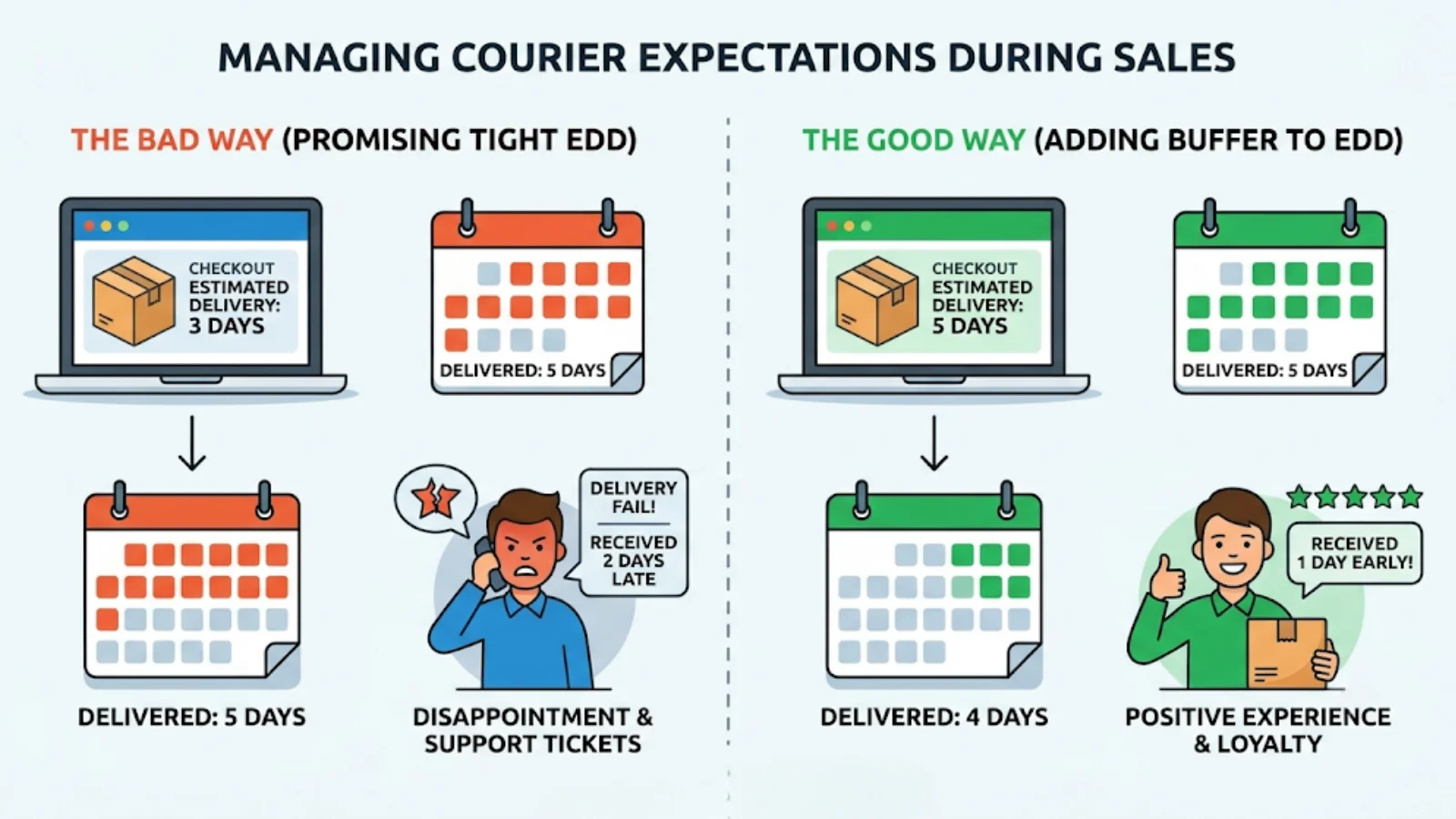
How to handle courier failure during the summer sale in India starts with managing expectations at checkout. Most brands show carrier SLA-based EDDs at the time of order placement. Those SLAs reflect normal operating conditions, not sale-period conditions.
If your courier delivers in 3 days metro-to-metro on a normal day but takes 4-5 days during a sale peak, showing a 3-day EDD at checkout is creating a promise you will not keep. The buyer who expects their product on Day 3 and receives it on Day 5 feels let down, even if 5 days is within an acceptable window; they would have accepted it if shown at checkout.
Add a buffer of 1-2 days to your EDD display during the sale period. Then beat that expectation when your operations run efficiently. A buyer who expects delivery on Day 5 and receives it on Day 4 has a positive experience. The reverse is a support ticket, a review, and a lost repeat buyer.
Step 4: Pre-Book Pickup Slots
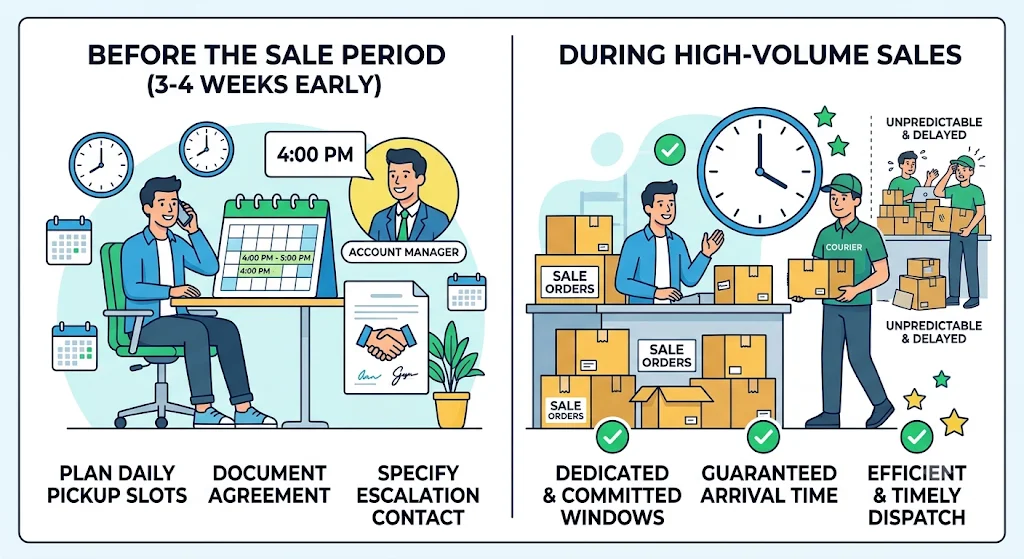
Most Indian couriers allow high-volume sellers to pre-book dedicated pickup windows. During sale periods, this means your shipments get a committed pickup time, not a “sometime today” window that gets deprioritised when the rider is overwhelmed.
Contact your courier account managers 3-4 weeks before the sale and lock in daily pickup slots for the sale duration. If your normal pickup is at 5 PM, book a dedicated 4 PM slot with a committed arrival window. For sellers dispatching 1,000+ orders daily during the sale, this agreement should be documented, not just verbal, and should specify the escalation contact if the slot is missed.
During the Sale: Operational Monitoring and Response
Preparation sets the foundation. But how to handle courier failure during the summer sale in India in real time requires active monitoring throughout the sale window.
The Metrics That Signal Courier Degradation
Base.com’s logistics dashboard surfaces these signals continuously:
| Signal | What It Means | Response Threshold |
|---|---|---|
| Pickup lag > 6 hours post-AWB | Courier rider not showing up | Flag for escalation, prepare fallback routing |
| Tracking scan gap > 12 hours in transit | Sorting hub chokepoint | Alert customer proactively, monitor for more |
| NDR rate spike > 15% daily | Courier marking without attempting | Activate NDR workflow, consider carrier switch for affected pincodes |
| COD remittance > 72 hours | Courier cash processing backlog | Inform the finance team, monitor working capital |
The difference between a manageable courier degradation and a sale-destroying crisis is how quickly you catch the signals. Brands that are reviewing these metrics once a day are already behind. During a sale period, these dashboards should be monitored every 4-6 hours.
Emergency Carrier Re-allocation
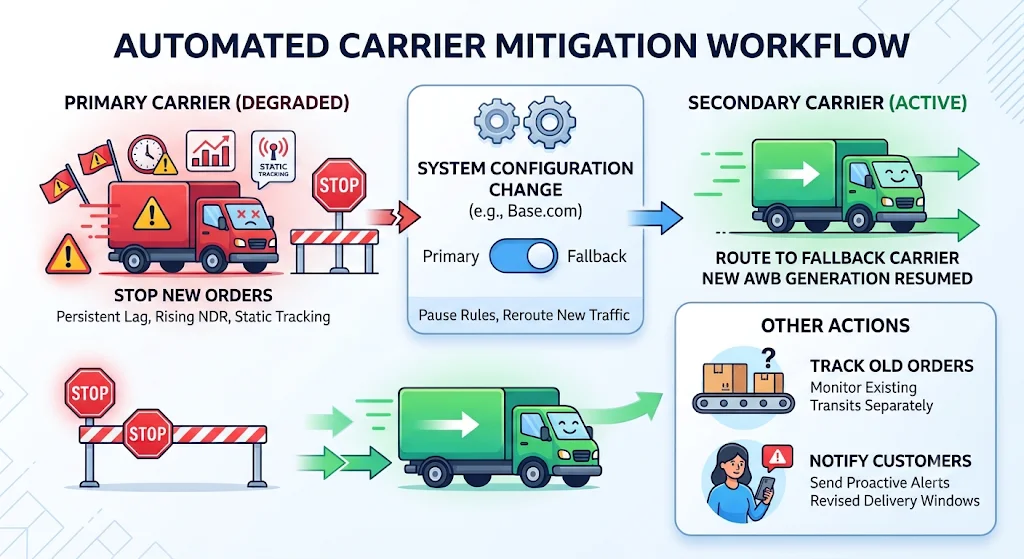
When a primary carrier is confirmed as degrading, persistent pickup lag, rising NDR rate, or static tracking, the immediate action is halting new AWB generation for that carrier and switching to fallback routing.
In Base.com, this is a single configuration change: the primary carrier’s routing rule is paused, and all new orders route to the secondary carrier. Orders already in transit with the degraded carrier are tracked separately, and customers are proactively messaged about extended delivery windows.
The keyword is “proactively.” The brands that handle courier failure well do not wait for buyers to raise tickets. They identify the affected order batch, send a WhatsApp or SMS update before the buyer notices the tracking has gone static, and reset the delivery expectation with a revised EDD. This single action reduces inbound support volume by 30-40% during a logistics disruption.
NDR Management at Sale Velocity
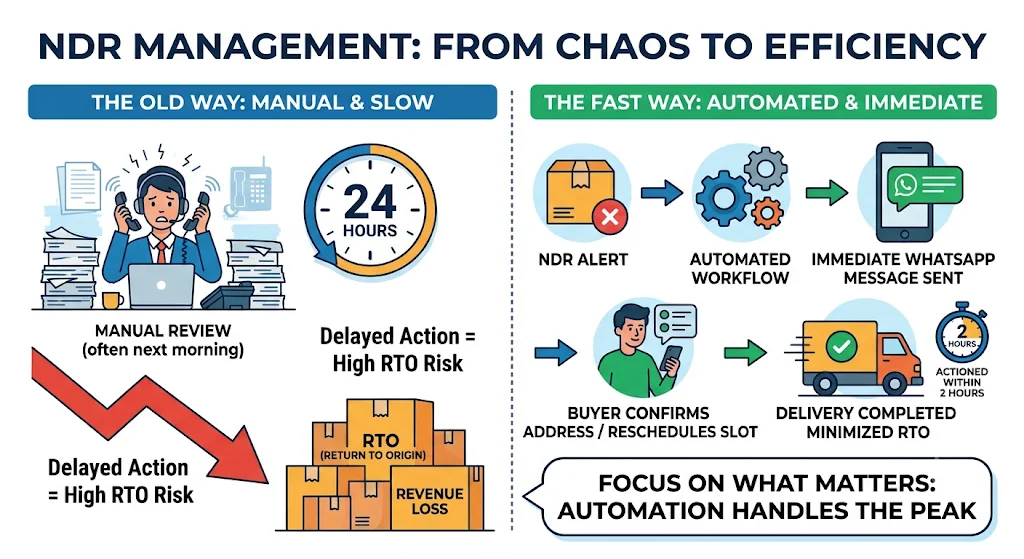
During a summer sale, NDRs need to be actioned within 2 hours of generation, not 24 hours, not the next morning. Every hour an NDR sits unactioned increases the probability of RTO.
Base.com’s automated NDR workflow triggers a WhatsApp message to the buyer immediately when an NDR is generated. The message confirms the delivery attempt, asks for rescheduling confirmation or address correction, and generates a revised delivery slot. If the buyer does not respond within 4 hours, a second message goes out. If unresolved after 12 hours, the order flags for manual review.
This automation runs without your customer service team needing to touch each case. During a sale period when your team is already handling 5x normal inquiry volume, this is the operational difference between a manageable peak and a chaos event.
What to Do When the Courier Has Already Failed (Recovery Protocol)
Despite preparation, courier failures that were not caught early enough become recovery situations. Here is the protocol.
- Identify the full affected order batch. In Base.com, filter all orders with the failing courier, AWB generated more than 36 hours ago, and no confirmed delivery scan. This is your recovery queue.
- Segment by order age and delivery zone. Orders placed in the last 24 hours can potentially be retrieved, relabelled, and re-dispatched with a fallback carrier if pickup has not occurred. Orders already in transit must be monitored, and customers must be messaged.
- Contact the courier escalation desk immediately. Every courier has an enterprise escalation contact for high-volume sellers. Not the general support line, the account manager, or operations escalation number. Raise a formal escalation with the order batch list, AWB numbers, and the specific SLA breach. Request a committed resolution timeline.
- Communicate with customers before they ask. Identify every buyer in the affected batch. Send a proactive WhatsApp update: “Your order is experiencing a delivery delay. We’re working with our courier partner to ensure delivery within [revised EDD]. We’ll update you as soon as it’s out for delivery.” Include a contact for support escalation. This message, sent before the buyer notices, converts a potential negative review into an acknowledged situation.
- Offer a tangible recovery incentive for prepaid buyers. A Rs 50-75 coupon on the next order or an extended return window for affected buyers converts a courier failure from a lost customer event into a brand trust moment. The cost is minimal relative to the retention value.
How Base.com Protects Your Sale From Courier Failure
Knowing how to handle courier failure during the summer sale in India operationally requires the right platform infrastructure. Base.com is built for exactly this operating environment, multi-channel, multi-carrier, high-velocity Indian D2C fulfillment.
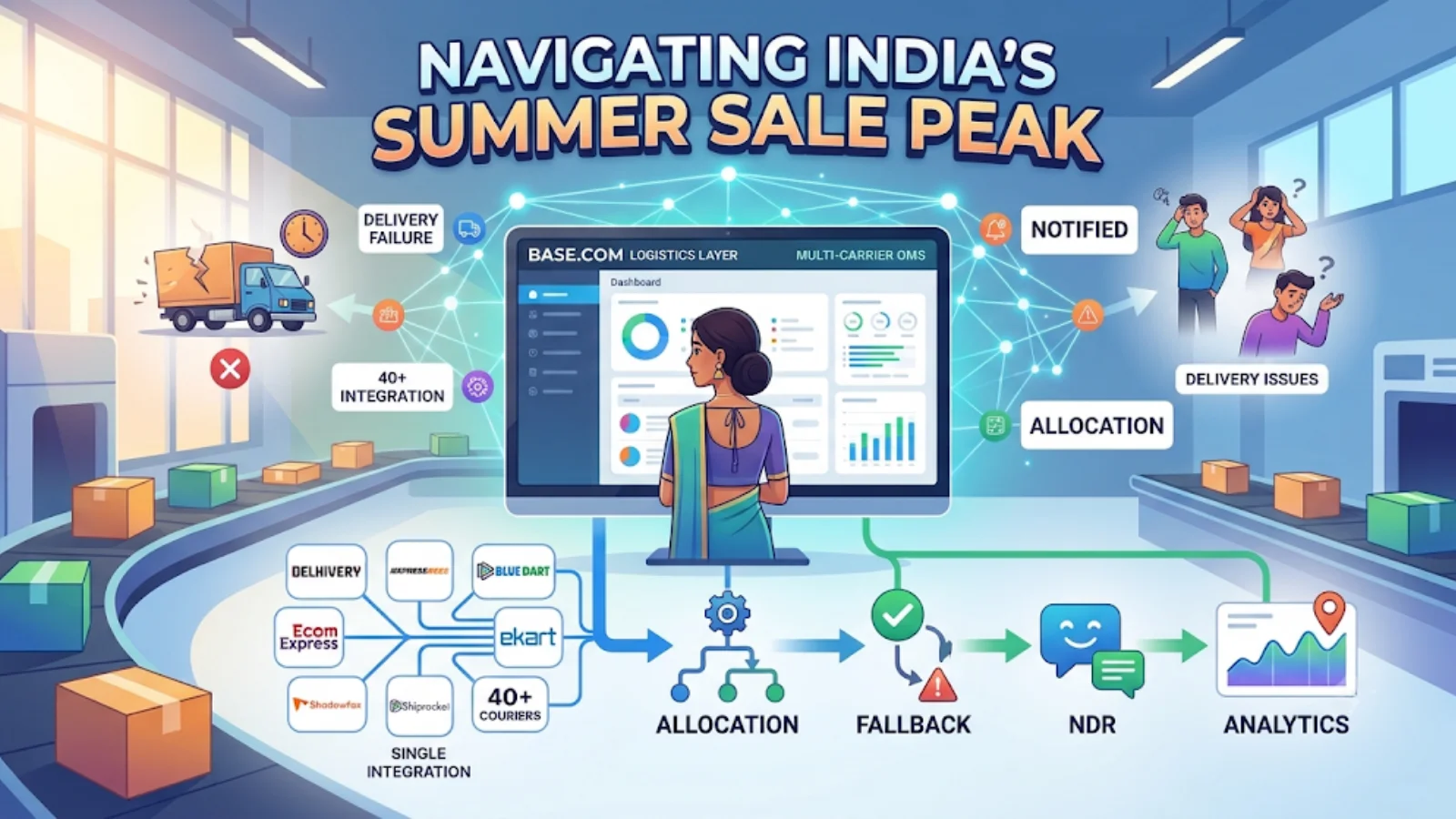
Base.com’s logistics layer integrates with Delhivery, XpressBees, Ecom Express, Shadowfax, Ekart, Smartr, DTDC, Blue Dart, Shiprocket, and 40+ other courier partners and aggregators. Every carrier is available for routing from the same OMS interface, no separate logins, no manual label re-generation when switching carriers.
The rule-based carrier allocation engine assigns each order to the optimal carrier before the label is printed. The fallback routing rules activate automatically when a carrier’s performance metrics breach configured thresholds. The NDR management module triggers customer communication without human intervention. The delivery analytics module surfaces carrier performance by pincode, by date, and by order type, giving brands the pre-sale data they need to configure their routing rules correctly.
For D2C brands processing 500-5,000 daily orders during a summer sale, Base.com is the operational control tower that keeps the fulfillment pipeline running even when individual carriers fail.
Pre-Sale Checklist for Courier Failure Readiness
Six weeks before your sale opens, run through this checklist.
| Action | Owner | Timeline |
|---|---|---|
| Activate a minimum of 2 courier partners in Base.com | Operations | 6 weeks before sale |
| Build a pincode-level carrier performance map from the last 90 days | Analytics | 5 weeks before sale |
| Configure fallback carrier routing rules in Base.com | Operations | 4 weeks before sale |
| Pre-book dedicated pickup slots with the primary carrier | Logistics | 4 weeks before sale |
| Set sale-period EDD buffers in checkout (+1-2 days) | Tech/OMS | 2 weeks before the sale |
| Configure automated NDR workflow in Base.com | Operations | 2 weeks before the sale |
| Identify courier escalation contacts for all active partners | Logistics | 2 weeks before the sale |
| Brief the customer service team on the courier failure communication protocol | CS Lead | 1 week before the sale |
| Set up a 4-hour monitoring cadence for the logistics dashboard | Operations | Day before sale opens |
Brands that complete this checklist are not eliminating courier failure risk. They are building a system where courier failure is an operational event they manage, not a crisis that manages them.