

Shipping software optimises for one thing at a time, and you have to pick which one. The best courier allocation software for D2C brands in India makes a different trade-off depending on whether you want cheaper shipments, faster delivery, higher success rates, better tracking updates, or tighter operational control.
This guide groups the best courier allocation software for D2C brands in India by the objective each tool serves. Every review ends with two questions to put to that vendor, because demos answer the questions sellers already thought to ask.
Why can’t a single shipping tool optimise cost, speed and reliability together?
Every courier decision trades one objective against another. The cheapest carrier for a Bihar pincode rarely delivers fastest, and the fastest option rarely costs least.
Software cannot escape that arithmetic. It can only apply your priority consistently across thousands of shipments, which is exactly what manual selection fails to do.
Decide your objective before you shortlist any of the best courier allocation software for D2C brands in India. The table below shows what each objective costs you elsewhere.
| Your objective | What the software optimises | What you trade away |
| Lowest cost per shipment | Rate comparison across carriers | Delivery speed and sometimes reliability |
| Fastest delivery | Distance and premium carrier selection | Higher freight cost per order |
| Highest first-attempt success | Carrier performance data by pincode | Occasionally paying more for a proven partner |
| Best post-purchase experience | Tracking, notifications and returns flow | Little, though it solves no cost problem |
| Tightest operational control | Integration with orders and inventory | Narrower courier network breadth |
India’s ecommerce market runs at roughly $226 billion, and COD return rates between 25% and 30% mean reliability usually deserves more weight than sellers give it.
Which shipping tools optimise cost per shipment for Indian D2C brands?
These two tools within the best courier allocation software for D2C brands in India focus on paying less to move each parcel. Cost optimization matters most for brands with thin margins and predictable delivery expectations.
1. Base.com
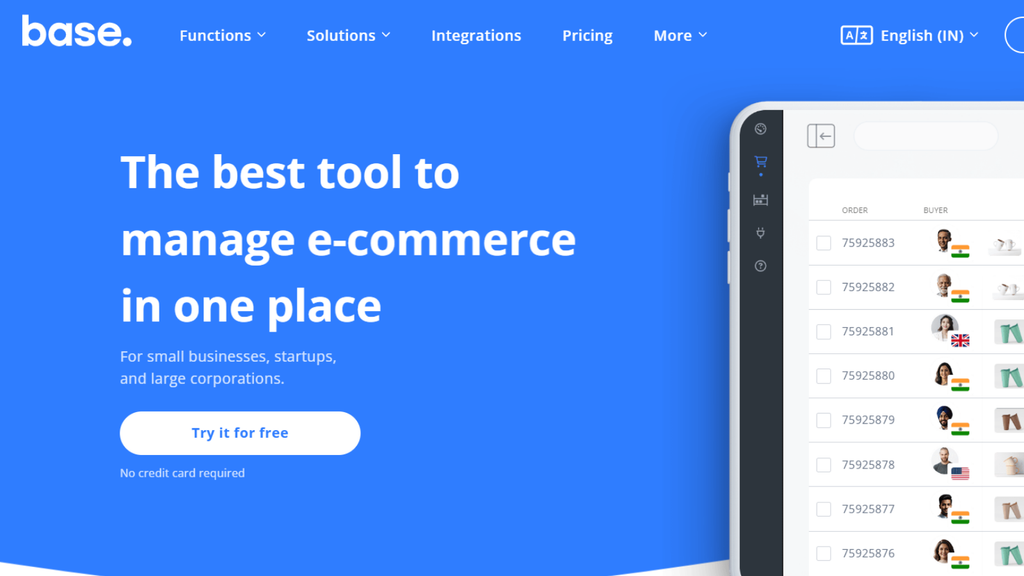
Base.com applies carrier allocation rules at the order level inside the operations platform, so the decision reflects channel priority, destination, and order value together. Because orders, warehouse, and returns run on one system, the shipping decision uses live data rather than a rule copied into a separate tool.
That integration prevents a common failure. Standalone shipping tools select carriers without knowing which SLA the order faces or how much margin it carries.
Verdict in one line: best when shipping decisions need to reflect your wider operational context.
What it automates
- Carrier selection rules applied per order rather than per account
- Label and manifest generation tied to the dispatch queue
- RTO receipts flowing back into sellable inventory
Ask this vendor
- How do allocation rules account for order value and channel SLA together?
- What happens to allocation logic when a preferred carrier suspends a pincode?
2. Shiprocket
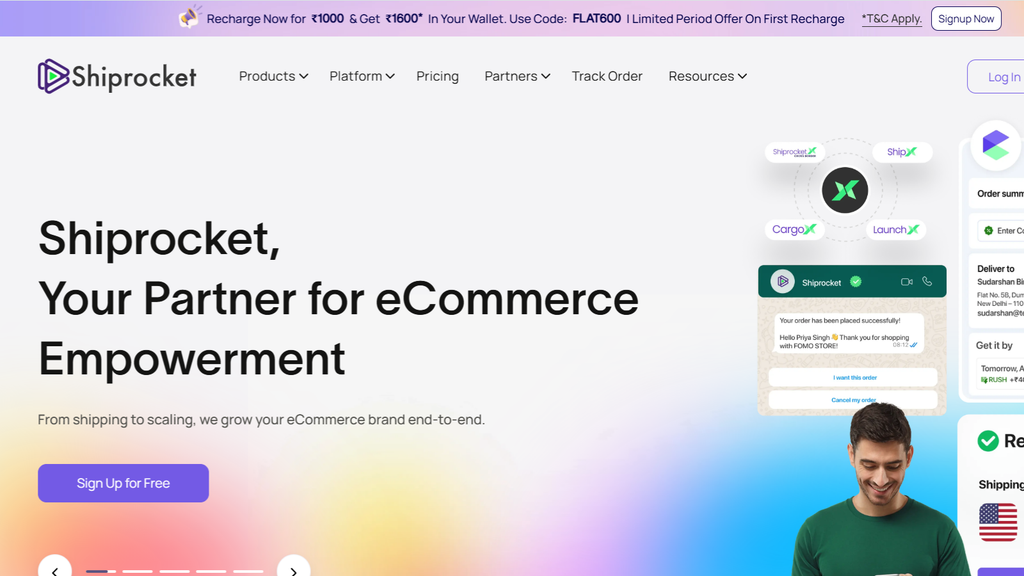
Shiprocket compares rates and serviceability across a broad courier network before each booking, so sellers stop paying a single negotiated rate everywhere. Its scale gives smaller brands access to pricing they could not negotiate alone.
Weight discrepancy handling matters here too, since disputed charges quietly inflate the freight bill sellers actually pay.
Verdict in one line: best for brands wanting the widest rate choice with minimal setup.
What it automates
- Rate and serviceability comparison per shipment
- Pickup scheduling across multiple carriers
- Weight discrepancy dispute filing
Ask this vendor
- How are weight discrepancy disputes escalated, and what proportion succeed?
- Which carriers offer your best rates in the specific states I ship to most?
Which tools optimise delivery speed rather than freight cost for Indian brands?
These two parts of the best courier allocation software for D2C brands in India shorten distance or transit time rather than negotiating the rate. Speed converts into fewer cancellations and lower refusal rates.
3. WareIQ
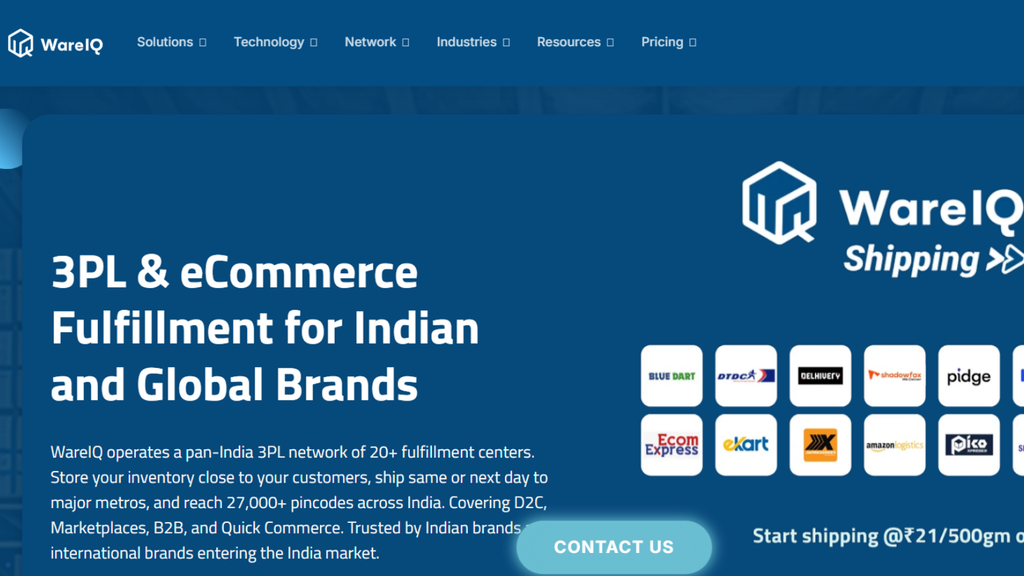
WareIQ places stock across regional fulfilment nodes so parcels start closer to the customer. Reducing distance shortens delivery more reliably than upgrading the carrier does.
Shorter transit also reduces refusal probability, since buyers have less time to reconsider a cash order.
Verdict in one line: best when delivery speed is a positioning claim rather than a preference.
What it automates
- Order routing to the node nearest the delivery pincode
- Stock rebalancing across regional locations
- Fulfilment and dispatch under one provider
Ask this vendor
- What minimum inventory depth does effective distribution require in my category?
- How is stock rebalanced when regional demand shifts unexpectedly?
4. Delhivery
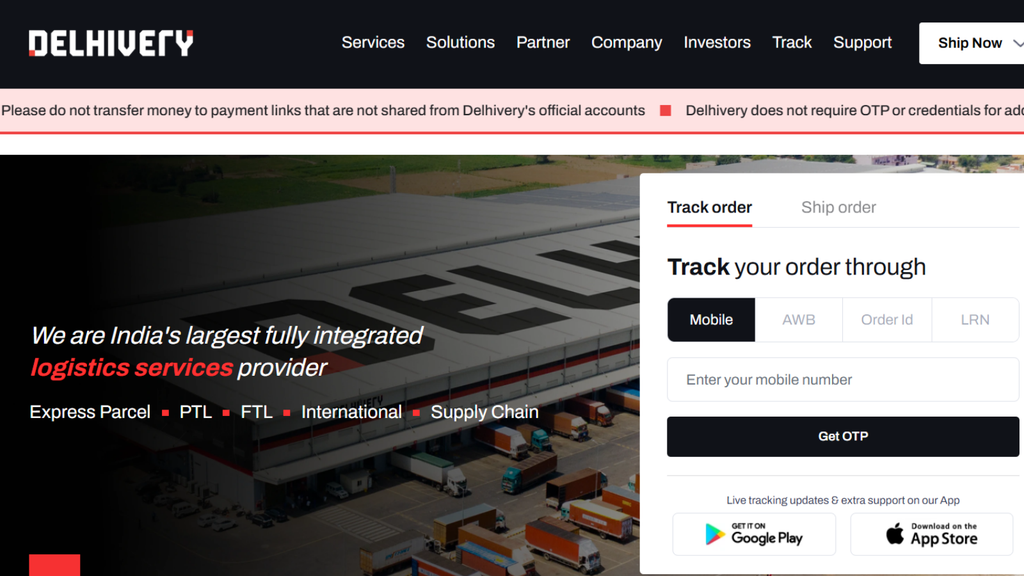
Delhivery combines a wide delivery network with fulfilment centres and supporting technology, giving brands consistent pickup across a large pincode footprint. Single-partner accountability simplifies escalation when something goes wrong.
Its software centres on logistics rather than merchandising, so inventory features run lighter than dedicated platforms.
Verdict in one line: best when network reach and pickup reliability outweigh software depth.
What it automates
- Pickup scheduling across a national network
- Tracking and delivery updates from one source
- Fulfilment centre operations where used
Ask this vendor
- What is your first-attempt success rate in the specific states I sell into?
- How does escalation work when a regional hub delays my shipments?
Which tools improve first-attempt delivery success and reliability across Indian pincodes?
The best courier allocation software for D2C brands in India uses delivery performance data rather than rate cards, and these two tools do exactly that. Reliability usually delivers a better return than cost savings in Indian conditions.
5. ClickPost
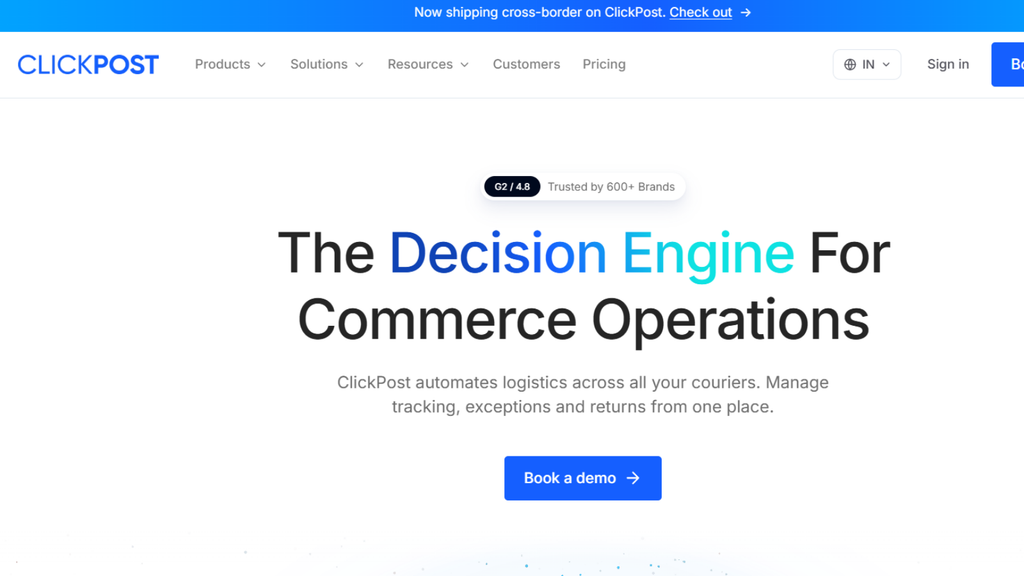
ClickPost allocates carriers using measured delivery performance by pincode, so the choice reflects who actually delivers successfully rather than who quotes lowest. Its NDR workflows work within the narrow window between a failed attempt and an RTO.
This positions it among the best courier allocation software for D2C brands in India where reliability, not price, drives the decision.
Verdict in one line: best when RTO and failed attempts cost you more than freight does.
What it automates
- Carrier allocation weighted by historical pincode performance
- NDR detection and customer contact within the reattempt window
- Tracking consolidation across multiple carriers
Ask this vendor
- How much delivery history is needed before allocation decisions improve?
- What share of NDR cases convert into successful deliveries after intervention?
6. NimbusPost
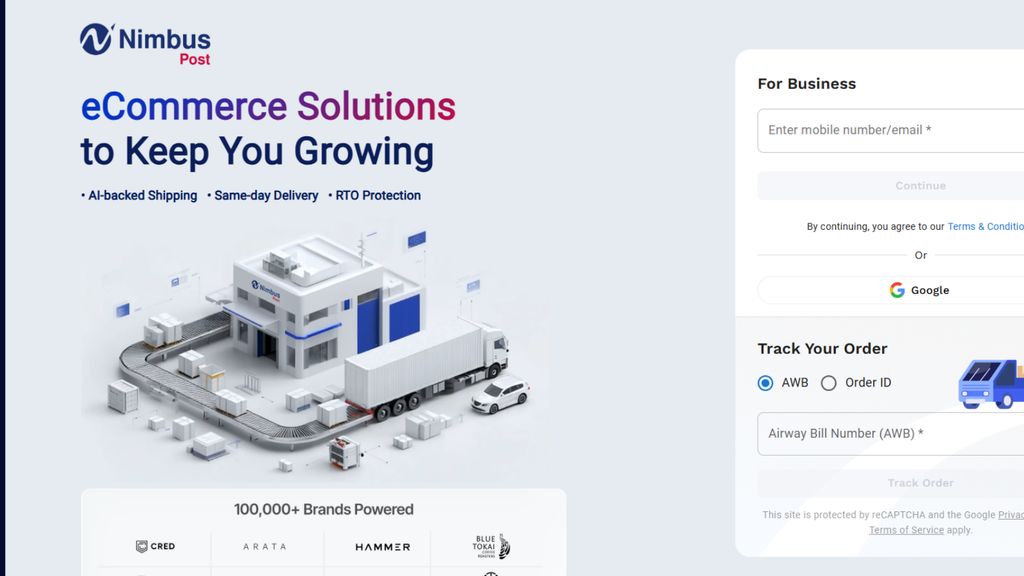
NimbusPost aggregates couriers with particular attention to tier-two and tier-three pincode coverage. Brands selling beyond metros gain partners that genuinely service those areas rather than claiming to.
Serviceability accuracy matters more than the carrier count. A partner attempting delivery casually in a small town produces RTO, not delivery.
Verdict in one line: best for brands whose orders skew heavily outside metro pincodes.
What it automates
- Carrier selection across a wide regional partner network
- Serviceability checks before booking rather than after
- Pickup coordination across multiple partners
Ask this vendor
- Which of your partners perform best in the pincodes where I ship most?
- How is serviceability data verified rather than taken from carrier claims?
Which tools improve the post-purchase experience for customers after dispatch happens?
These two tools extend the best courier allocation software for D2C brands in India past dispatch, shaping what the customer sees and feels before delivery. Better communication reduces both support load and anxiety-driven refusals.
7. Shipway
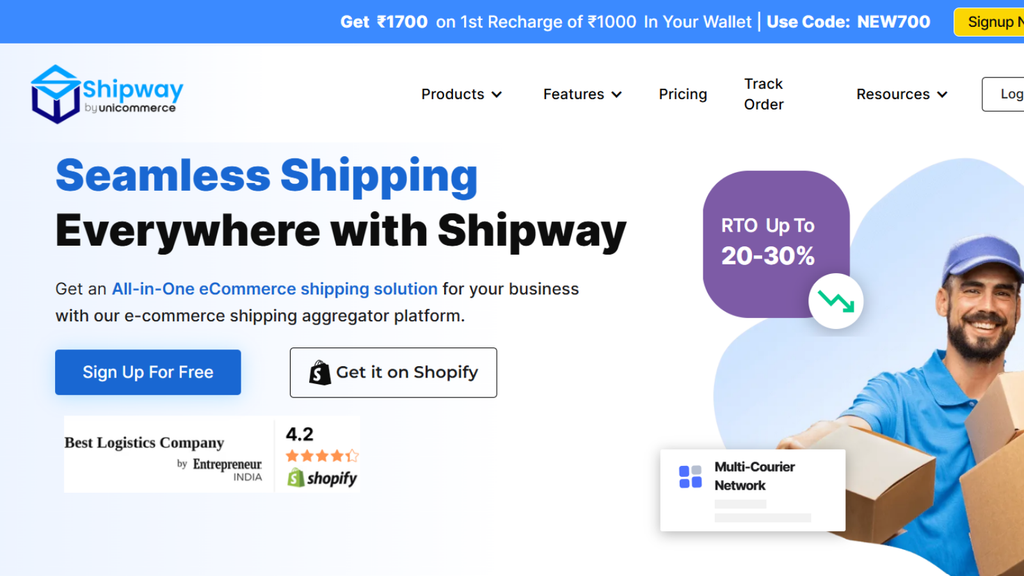
Shipway handles branded tracking pages, delivery notifications, and returns automation together. Customers who know where their parcel is raise fewer tickets and refuse fewer deliveries.
Its returns flow covers the reverse journey from request through pickup to receipt, which matters for brands facing constant returns.
Verdict in one line: best when support volume and returns experience need structure.
What it automates
- Branded tracking pages and proactive delivery notifications
- Customer-initiated return requests and pickup scheduling
- NDR follow-up without agent involvement
Ask this vendor
- Which notification channels are included, and what do they cost per message?
- How does the returns flow handle marketplace orders versus website orders?
8. FarEye
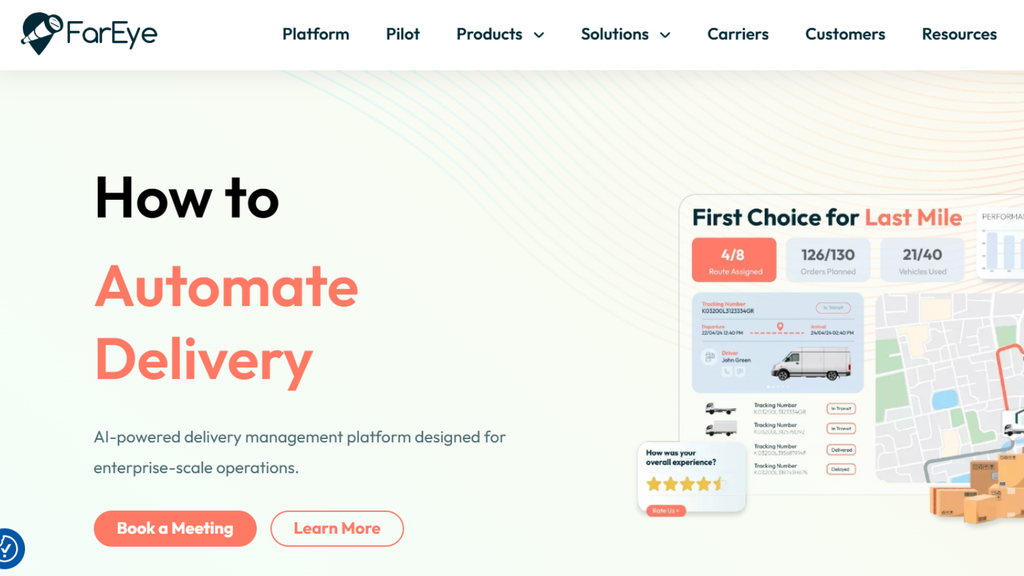
FarEye focuses on delivery orchestration and visibility across multiple carriers and delivery models. Brands running their own fleet alongside third-party couriers gain one control layer.
Its capability targets operational complexity, so smaller brands rarely use enough of it to justify the cost.
Verdict in one line: best for brands running mixed delivery models at meaningful scale.
What it automates
- Orchestration across carriers and self-operated delivery
- Route and dispatch planning for controlled fleets
- Real-time visibility across delivery partners
Ask this vendor
- What implementation effort does orchestration require at my order volume?
- Which capabilities apply if I use third-party carriers exclusively?
Which tools give you the tightest control over shipping within operations?
These two platforms fold the best courier allocation software for D2C brands in India into order management rather than treating shipping as standalone. Control matters when courier choice must follow business rules.
9. Unicommerce
Unicommerce handles courier allocation inside its order management platform, applying rules consistently across every marketplace and channel. Sellers avoid the gap that appears when shipping decisions sit outside the order system.
Its marketplace connector depth means allocation rules apply equally to Amazon, Flipkart, and Myntra dispatches.
Verdict in one line: best for multi-marketplace sellers wanting uniform shipping rules.
What it automates
- Courier allocation rules applied across every sales channel
- Manifest and label generation within the dispatch flow
- Shipment status updates pushed back to marketplaces
Ask this vendor
- How granular can allocation rules become, by pincode, value, or category?
- What happens when a marketplace mandates its own logistics partner?
10. EasyEcom
EasyEcom links shipping and order management to marketplace settlement reconciliation, so freight costs and courier deductions appear alongside the revenue they relate to. Brands see true delivered margin rather than gross revenue.
Its B2B capability also covers brands shipping wholesale consignments alongside D2C parcels.
Verdict in one line: best when you need freight cost tied to channel profitability.
What it automates
- Courier selection within the order management flow
- Freight cost allocation against orders and channels
- Settlement reconciliation including logistics deductions
Ask this vendor
- How are freight and courier deductions matched to individual orders?
- Does reconciliation cover weight discrepancy charges as well as commissions?
Which system should own each shipping decision in your stack?
Overlapping tools create conflicting decisions, so assign ownership explicitly before deploying the best courier allocation software for D2C brands in India. The table below shows where each decision belongs when you run more than one tool.
| Decision | Who should own it | Why |
| Which orders ship today | Order management platform | Only it knows SLA pressure across channels |
| Which carrier carries the parcel | Courier allocation layer | Requires performance data per pincode |
| Which node ships the order | Order or fulfilment platform | Depends on live inventory position |
| How the customer is updated | Post-purchase tool | Owns the communication templates |
| Who chases a failed attempt | NDR layer | Needs the reattempt window, not the order record |
When two systems claim one decision, the one closest to the data should win. Everything else follows its output.
Write this allocation down before go-live. Most stack conflicts trace back to two tools quietly making the same decision differently, and nobody notices until a customer complains.
What hidden shipping costs do Indian D2C brands consistently overlook?
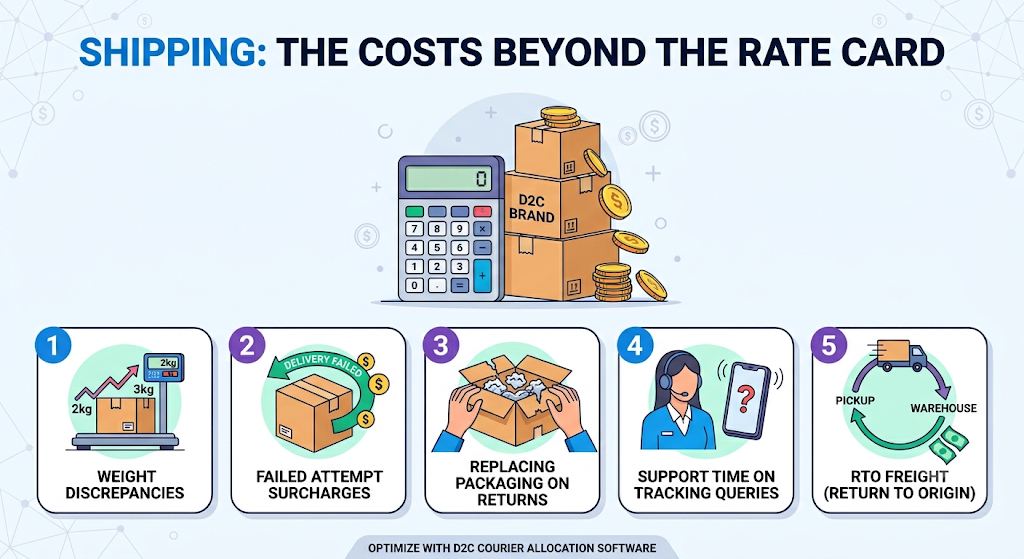
Freight rate is the number brands negotiate and rarely the number they pay, which is why the best courier allocation software for D2C brands in India should report delivered cost. These five costs sit outside the rate card and add up faster than most finance teams expect.
- Weight discrepancy charges. Carriers remeasure parcels and bill the difference, and undisputed claims become a permanent cost.
- RTO freight. A returned parcel costs shipping twice while earning nothing at all.
- Failed attempt surcharges. Some carriers bill for reattempts, turning one NDR into several charges.
- Packaging consumed on returns. Material rarely survives a round trip and gets replaced.
- Support time on tracking queries. Every unanswered tracking question becomes an agent conversation you fund.
Model these together before comparing rate cards. The cheapest rate frequently produces the highest delivered cost, and brands that negotiate hard on freight while ignoring these five often end up paying more per delivered order than competitors on worse rate cards.
Build one number and track it monthly: total logistics spend divided by successfully delivered orders. That single figure exposes problems no rate comparison will show you.
How should Indian D2C brands score the shipping vendors they shortlist?
Score vendors against your own priorities rather than their feature lists, since every provider claims to offer the best courier allocation software for D2C brands in India. Work through these five checks with every shortlisted option.
- Test your actual pincode mix. Ask for performance data on the specific states where you ship most, not national averages.
- Run a live NDR case. Raise a real failed delivery and time the resolution from failure to contact.
- Check dispute mechanics. Weight discrepancy handling reveals whether a vendor advocates for you or processes charges silently.
- Confirm integration depth. Ask whether the connector to your order platform is maintained directly or by a partner.
- Test support on a Sunday. Delivery problems arrive at weekends, which is exactly when most support desks thin out.
How do you know your current shipping setup is costing you money?
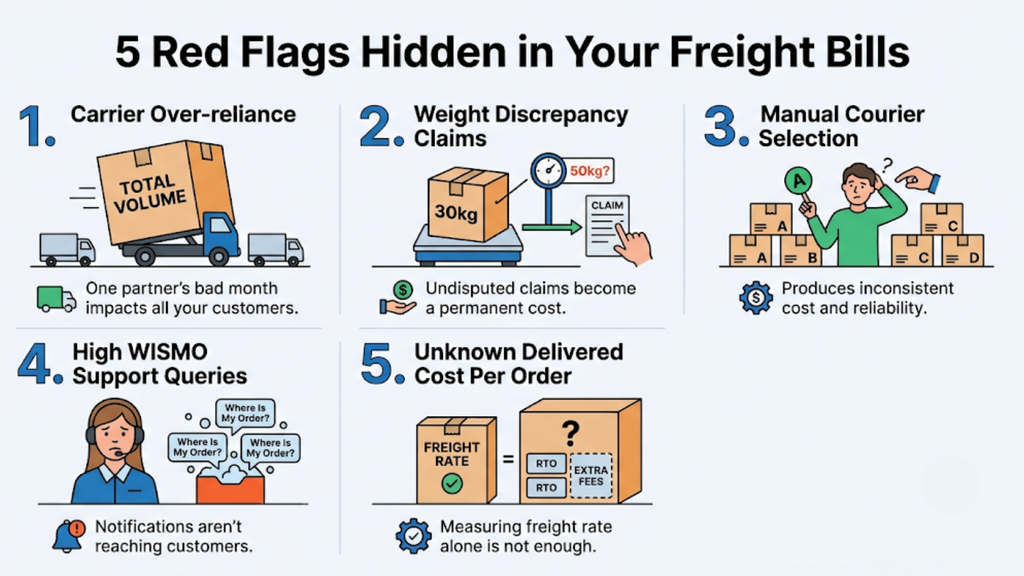
Shipping problems hide inside freight bills that look normal. These five signals show the setup needs attention before the next peak season arrives.
- One carrier handles most of your volume. Concentration means a single partner’s bad month becomes your customers’ bad month.
- Nobody disputes weight discrepancy charges. Undisputed claims become a permanent cost, and carriers notice which sellers never challenge them.
- Your team picks couriers manually. Habit-based selection produces inconsistent cost and reliability across identical orders.
- Tracking queries dominate your support inbox. Customers asking where their parcel is means your notifications are not reaching them.
- Delivered cost per order is unknown. If you track freight rate but not delivered cost including RTO, you are measuring the wrong number.
Any two of these together justify a shortlist. Three or more means the cost is already material.
Final Thoughts
Base.com approaches shipping from the operations side rather than the logistics side. Carrier decisions happen inside the platform that already knows the order’s channel, SLA pressure, value, and destination.
That position suits brands whose shipping problems stem from inconsistent decisions rather than poor rates. When every order gets a carrier chosen by rule instead of habit, both cost and reliability improve without renegotiating anything.
Brands still work with courier partners directly or through an aggregator. Base.com determines which parcel goes to which partner and why.