
If you are building a scaled D2C brand in India, investors are laser-focused on real performance numbers, not just fast growth.
In 2024, the Indian D2C sector raised around $757 million, making India the second-largest market for D2C funding globally behind the US, even as total capital dropped 18 percent from the year before, and late-stage financing halved, reflecting investor caution toward weak unit economics. (Tracxn)
For Indian sellers, this means your D2C investor metrics must show predictable revenue, controlled customer acquisition costs (CAC), and strong repeat purchasing to stand out.
Scaled D2C brands that have raised significant capital, like recent rounds for fashion and niche consumer names, combined strong retention and category leadership with clear paths to profitability. (The Economic Times)
On marketplaces like Amazon and Flipkart, investors will compare your owned-site economics with marketplace performance. High return rates, deep discounting, or poor repeat customer ratios on marketplaces can hurt margins and weaken key D2C investor metrics.
Focus on repeat sales, organic search growth, and controlled CAC, because investors evaluating funding D2C India deals are prioritising brands that can scale profitably and sustainably. (Tracxn)
Before investors commit capital, they evaluate far more than revenue. They assess whether your D2C brand shows predictable growth, strong margins, healthy retention, and operational control. In today’s tighter funding environment in India, surface-level growth is not enough to secure serious interest.
The next 10 pointers outline exactly what investors examine in scaled D2C brands. From unit economics and marketplace efficiency to supply chain discipline and profitability visibility, these factors directly influence valuation and long-term fundability.
1. Consistent Revenue Growth That Is Predictable, Not Seasonal
Investors understand that D2C in India can be seasonal. Festive spikes during Diwali, Eid, the wedding season, or year-end sales can inflate numbers. What they want to see, however, is predictable month-on-month growth outside seasonal peaks.
At an early stage, many investors expect 15 to 25 percent month-on-month growth. For brands above ₹10 crore ARR, they typically look for 3x to 5x year-on-year growth. But growth must be clean. If 60 percent of your revenue comes from one festive quarter, that signals volatility.
Indian D2C sellers often overlook channel-level consistency. Investors will ask:
- What is your monthly run rate excluding sale events?
- What percentage of revenue comes from your own website vs marketplaces?
- Is marketplace growth driven by discounts or real demand?
For example, a skincare D2C brand doing ₹2 crore per month with a stable 18 percent MoM growth across its website and Amazon signals a system. In contrast, a brand that jumps from ₹1 crore to ₹4 crore during festive sales but drops back to ₹1.2 crore post-sale looks unstable.
Predictable growth shows operational maturity. Random spikes show dependency.
2. Clean Revenue Mix Across Website and Marketplaces
 India is a marketplace-heavy ecosystem. Many D2C brands generate 40 to 70 percent of revenue from Amazon and Flipkart. Investors know this. They do not penalize marketplace revenue. But they evaluate risk.
Indian sellers often miss these nuances:
- Marketplace commissions range between 18 to 35 percent, depending on category.
- Return to Origin rates in fashion can touch 25 to 35 percent.
- Sponsored ads on marketplaces can take 8 to 15 percent of revenue.
If your website contribution margin is 35 percent but the marketplace margin is 8 percent, investors will question scalability.
A healthy mix often looks like:
- 40 to 60 percent own a website
- 30 to 50 percent marketplaces
- 5 to 15 percent offline or quick commerce
Quick commerce is rising fast in India. Platforms like Blinkit and Zepto are expanding rapidly in FMCG categories, but margins are tighter, and inventory cycles are shorter. Sellers must show clarity on channel-wise profitability.
Investors want channel-wise P&L, not blended numbers.
3. Strong Unit Economics With Real Contribution Margins
Growth without margins is risky. Investors now prioritize contribution margin over vanity GMV. Many Indian founders present high GMV but hide deep discounting and reverse logistics losses. That does not work in serious investor discussions.
Typical expectations in Indian D2C look like this:
| Metric | What Investors Expect | Why It Matters |
|---|---|---|
| Gross Margin | 55 to 75 percent | Leaves room for marketing and logistics |
| Contribution Margin | Positive or clear path to positive | Shows scalability |
| CAC Payback | 3 to 6 months | Faster recovery reduces cash burn |
| LTV to CAC Ratio | Minimum 3:1 | Indicates sustainable growth |
For example, if you spend ₹1,000 to acquire a customer and your 12-month LTV is ₹3,500, that looks strong. But if returns, COD leakage, and refunds reduce net revenue by 20 percent, your real LTV falls sharply.
Indian sellers must account for:
- Reverse logistics costs
- Payment gateway fees of 1.5 to 2.5 percent
- COD reconciliation losses
- Marketplace penalties
If your contribution margin after marketing is negative 20 percent, scaling will multiply losses, not profits.
4. Retention and Repeat Revenue Are Core Signals
 Customer acquisition costs in India have risen significantly. In competitive categories like beauty and fashion, CPMs have increased by 20 to 40 percent in recent years.
Because of this, retention is now central.
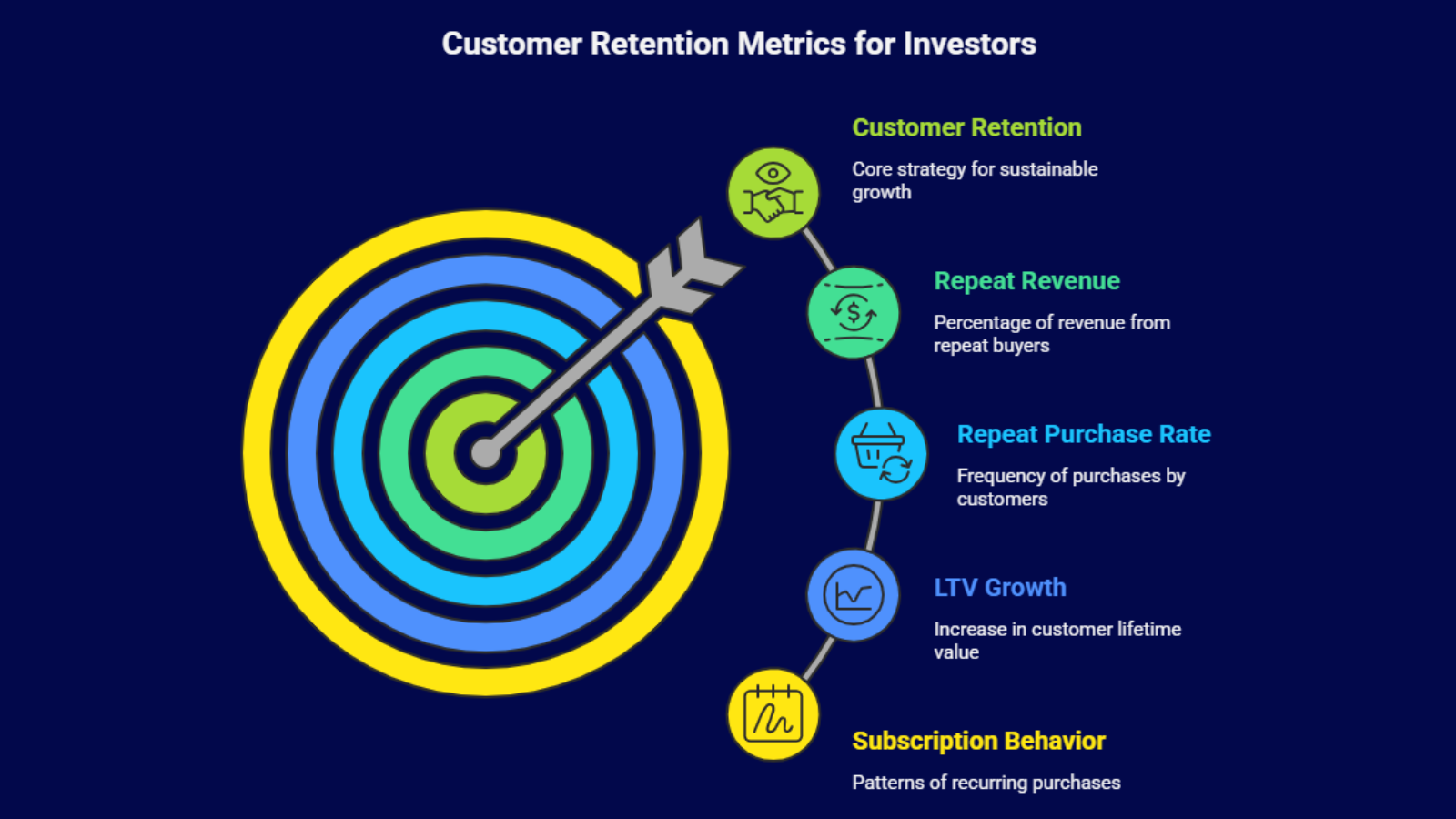
Investors look for:
- 30 to 40 percent revenue from repeat buyers
- 90-day repeat purchase rate
- Cohort-wise LTV growth
- Subscription or replenishment behavior
For example, a D2C nutrition brand showing 45 percent repeat revenue with a 60-day replenishment cycle is more attractive than a fashion brand dependent entirely on first-time buyers.
Retention lowers dependency on paid ads and improves margins.
5. Deep Cohort Analysis Instead of Top-Level Numbers
Serious investors want cohort clarity, not just blended dashboards.
They expect founders to show:
- Month-wise acquisition cohorts
- Repeat behavior over 3, 6, 9 months
- Revenue per cohort
- CAC per cohort
If January customers acquired at ₹900 CAC generate ₹4,000 LTV over 12 months, but April customers generate ₹2,000, that signals declining efficiency.
Cohort clarity shows control over growth quality.
6. Inventory and Supply Chain Efficiency
 India’s logistics landscape is complex. Delivery timelines differ across metros and Tier 2 or Tier 3 cities. Investors study backend stability closely.
They evaluate:
- Inventory turnover ratio
- Stockout frequency
- Vendor concentration risk
- Manufacturing lead times
- Return rates
Healthy D2C brands often maintain inventory turnover of 4 to 8 cycles annually, depending on category.
Operational discipline reduces working capital pressure and improves margins.
7. Marketplace-Specific Nuances Investors Evaluate
Indian D2C sellers often underestimate how deeply investors understand Amazon and Flipkart metrics. Marketplace strength is not just about GMV. It is about efficiency and defensibility.
Here is how investors usually break it down:
| Marketplace Metric | Healthy Benchmark | Investor Interpretation |
|---|---|---|
| Return Rate | Below 20 percent (fashion may be higher) | Lower working capital blockage |
| Seller Rating | 4.2 stars and above | Strong customer satisfaction |
| Sponsored Ads % of Revenue | Below 30 percent | Organic strength exists |
| Discount Dependency | Controlled, not constant | Brand has pricing power |
If 70 percent of your Amazon revenue comes from sponsored ads, your ranking may collapse if ad spend drops. Investors see that risk immediately.
Similarly, heavy participation in deep discount events may inflate revenue but shrink margins.
Marketplace growth must be profitable growth.
8. Founder Clarity and Financial Discipline
 Investors test founders rigorously in meetings.
They expect clarity on:
- CAC by channel
- Top SKUs driving the majority of revenue
- Burn rate and runway
- Fixed versus variable cost split
If your monthly burn is ₹80 lakh with a 10-month runway, investors will want to know how you plan to extend it.
Disciplined brands:
- Maintain structured MIS reporting
- Forecast cash flows monthly
- Control hiring pace
- Expand categories strategically
Capital efficiency is now valued more than aggressive expansion.
9. Category Leadership and Brand Defensibility
India has thousands of D2C brands across beauty, fashion, home, and nutrition. Investors back brands that show defensibility, not just participation.
They evaluate signals like this:
| Indicator | Strong Signal | Why It Matters |
|---|---|---|
| Branded Search Volume | Growing month-on-month | Rising brand recall |
| Direct Traffic % | 35 to 50 percent | Lower ad dependency |
| Community Engagement | High repeat interaction | Loyal customer base |
| Influencer ROI | Measurable revenue impact | Efficient marketing |
If 40 percent of your website traffic is direct or branded search, that signals brand equity. If traffic collapses when ads pause, that signals dependency.
Defensibility reduces investor risk.
10. Clear Path to Profitability and Exit
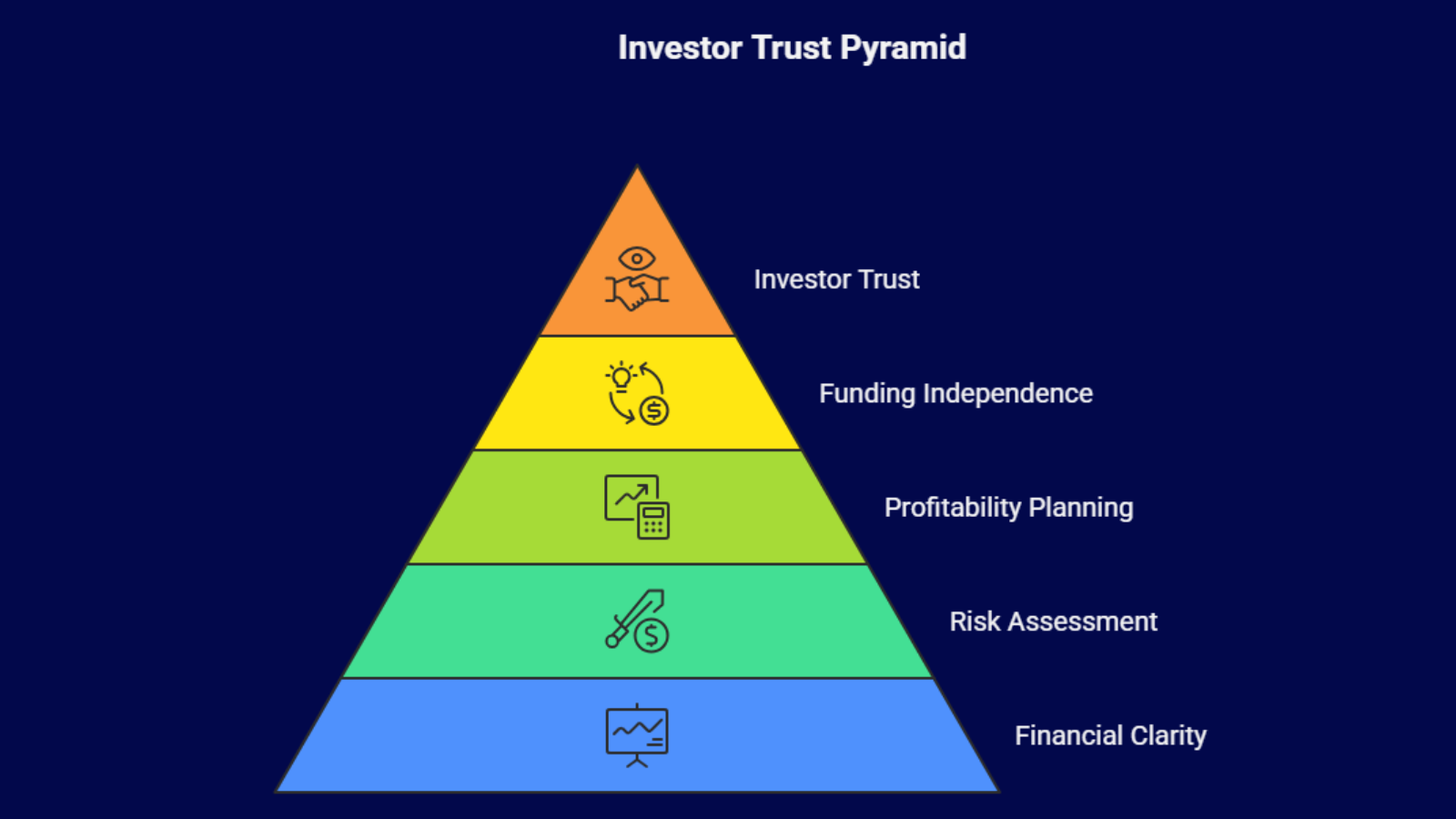 Ultimately, investors want returns. They expect clarity on:
- Break-even revenue level
- EBITDA timeline
- Sensitivity to ad costs rising 20 percent
- Offline or international expansion roadmap
For example, if your break-even point is ₹4 crore monthly revenue and you are at ₹3.2 crore with improving margins, the path looks realistic.
Many Indian D2C brands aim for acquisition by larger FMCG players. Investors evaluate strategic fit early.
Profitability planning must include:
- Marketing spend as a percentage of revenue
- Fixed cost discipline
- Scenario-based forecasting
- Clear capital allocation
If your model survives without constant funding, investors feel safer.
The brands that win investor trust in India are not just growing fast. They are growing with control, clarity, and discipline.
Final Thoughts
Scaled D2C brands raise capital not because they are trendy, but because they are predictable. In India, D2C funding has become selective, with total sector funding significantly lower than peak 2021 levels. Investors now scrutinize D2C investor metrics deeply before writing cheques.
They want proof of 3:1 LTV to CAC ratios, contribution margins moving toward 15 to 25 percent, repeat revenue above 35 percent, and CAC payback within six months. Surface-level GMV growth is no longer enough.
For Indian D2C sellers, this means tightening fundamentals. If 60 percent of your revenue comes from marketplaces like Amazon or Flipkart, you must clearly show post-commission margins, ad-spend efficiency, and return impact. Investors will adjust for marketplace fees of 18 to 35 percent, rising sponsored ad dependency, and high return rates in fashion categories. They will also examine inventory turnover, working capital cycles, and how much cash is locked in unsold stock. Clean systems matter more than aggressive expansion.
When preparing for funding D2C India, focus on structured reporting, SKU-level profitability, and cohort-based retention analysis. Capital should accelerate growth, not cover inefficiencies.
This is where Base.com becomes strategic. Base.com helps scaled D2C brands build investor-ready dashboards that track channel-wise profitability, contribution margin after marketing, CAC by source, repeat purchase cohorts, and inventory efficiency.
Instead of presenting blended revenue numbers, Base.com structures data into clear D2C investor metrics that investors expect during diligence. It also helps founders prepare funding decks backed by verified financial insights, marketplace breakdowns, and profitability roadmaps.
If you are preparing for your next round, Base.com can help you move from growth storytelling to growth proof. Reach out to Base.com and walk into your next investor conversation with clarity, confidence, and numbers that stand up to scrutiny.
Frequently Asked Questions
1. What are the most important D2C investor metrics for scaled brands?
The most important D2C investor metrics include gross margin, contribution margin, CAC, LTV, retention rate, and CAC payback period. Investors want to see predictable growth supported by clean numbers and improving profitability trends over time.
2. How does retention impact funding D2C India decisions?
Retention directly improves lifetime value and reduces marketing dependency. In funding D2C India discussions, strong repeat purchase rates signal brand strength and reduce risk for investors evaluating long-term scalability.
3. What contribution margin is considered healthy in scaled D2C?
A healthy contribution margin is typically positive or moving toward positive at scale. Investors prefer brands where marketing and logistics costs are controlled and CAC payback happens within three to six months.
4. Why do investors focus so much on unit economics?
Unit economics show whether growth is sustainable. Without healthy D2C investor metrics like an LTV to CAC ratio of at least 3:1, funding D2C India becomes difficult because scaling would increase losses instead of profits.
5. When should a scaled D2C brand raise capital?
A scaled D2C brand should raise capital when growth is consistent, unit economics are visible, and D2C investor metrics show a clear path to profitability. Raising too early without data clarity can reduce valuation and investor confidence.