Consumer expectations around delivery in India have shifted dramatically in the last three years. What once felt fast, like two-day shipping, is now considered slow in many urban markets. Today, quick commerce platforms promise delivery in 10 to 20 minutes, and consumers are increasingly choosing that convenience for everyday purchases.
This change is reflected in numbers. India’s quick commerce market crossed $3 billion in 2024 and is projected to grow at over 20 percent annually, driven largely by platforms like Zepto, Blinkit, and Swiggy Instamart.
These platforms collectively operate thousands of dark stores across cities like Bengaluru, Delhi, and Mumbai, enabling hyperlocal delivery. For many D2C brands, quick commerce is becoming an important discovery channel because these apps already attract high-intent customers who are ready to purchase immediately.
However, the real question for founders is still practical: should D2C brands use quick commerce as a growth channel or not?
For Indian sellers, quick commerce works best in specific scenarios. Brands selling high-velocity SKUs like protein bars, beverages, ready-to-cook meals, baby products, or personal care essentials often see strong traction. These products fit into small baskets where the average order value on quick commerce platforms ranges between ₹350 and ₹700.
But the economics are nuanced. Platforms typically charge 15 to 25 percent commissions and additional visibility fees, which means only brands with optimized pack sizes and repeat purchase behavior can build a sustainable quick commerce strategy.
Understanding the Quick Commerce Shift
Quick commerce refers to hyperlocal delivery where products reach customers within 10 to 30 minutes, powered by dark stores and dense logistics networks across cities.
In India, the quick commerce market generated about $3.34 billion in revenue in 2024 and is projected to grow at over 24 percent CAGR through 2029. Platforms such as Blinkit, Zepto, and Swiggy Instamart now serve tens of millions of users every month, with Blinkit alone holding around 44 to 46 percent market share.
For Indian D2C sellers, quick commerce works best in specific situations:
- High-frequency products: Categories like protein bars, beverages, ready-to-cook meals, baby products, and personal care items sell well because customers need them urgently.
- Low AOV baskets: Average quick commerce orders typically range between ₹350 and ₹700, so smaller pack sizes perform better.
- Urban demand concentration: Cities like Bengaluru, Mumbai, and Delhi drive most quick commerce orders due to dense dark store coverage.
However, when entering quick commerce, brands must account for 15 to 25 percent platform commissions and additional visibility costs, making a structured Q-commerce decision framework essential for profitability.
10 Key Considerations Before Entering Quick Commerce
 Quick commerce is rapidly reshaping how products reach consumers in India. Platforms like Zepto, Blinkit, Swiggy Instamart, Flipkart Minutes, Amazon’s quick commerce initiatives, and BigBasket BB Now are expanding their dark store networks across major cities. What started with grocery delivery has now expanded into snacks, beverages, personal care, supplements, electronics accessories, and packaged foods.
For many brands, quick commerce appears attractive because of its scale and speed. These platforms already bring millions of high-intent users who open the app with a clear purchase need. However, quick commerce is not simply another marketplace channel. Order sizes are smaller, discovery works differently, and operational planning is far more complex.
Because of this, founders must carefully evaluate whether D2C brands use quick commerce as part of their growth strategy. A structured Q-commerce decision framework helps brands understand product fit, margins, logistics readiness, and competitive dynamics before entering quick commerce.
Below are ten considerations that help brands build a sustainable quick commerce strategy.
1. Product Category Fit
The first and most critical factor in deciding whether D2C brands use quick commerce is product category fit. Quick commerce is driven by urgency. Customers typically open apps like Zepto or Blinkit when they suddenly realize they are out of something at home.
Products that perform well usually solve immediate consumption needs. Categories such as snacks, beverages, instant noodles, dairy items, personal hygiene products, baby care essentials, and OTC medicines dominate quick commerce orders. These products have high consumption frequency and do not require long decision-making.
For example, a consumer who runs out of protein bars or instant coffee may place a quick commerce order immediately rather than waiting for marketplace delivery. Similarly, categories like electrolyte drinks, baby wipes, and ready-to-cook meals see strong traction because they fit into urgent household needs.
However, products that require research, comparison, or brand storytelling often struggle. Premium skincare, high-ticket wellness products, and electronics accessories typically see slower adoption in quick commerce because shoppers rarely browse extensively on these apps.
Indian brands must therefore evaluate consumption behavior carefully before entering quick commerce.
| Factor | What to Consider | Risk | Mitigation | Impact |
|---|---|---|---|---|
| Purchase urgency | Whether the product solves an immediate need | Slow sales velocity | Focus on everyday use SKUs | Higher demand |
| Consumption frequency | Weekly or daily product usage | Low repeat purchases | Smaller refill packs | Better retention |
| Basket compatibility | Whether product fits ₹350–₹700 AOV | Low cart inclusion | Impulse price points | Higher conversions |
If the product does not match these patterns, D2C quick delivery channels may not scale effectively.
2. Unit Economics and Profitability
 One of the biggest concerns when evaluating whether D2C brands use quick commerce is profitability. Unlike traditional ecommerce, quick commerce includes several layers of cost that brands must account for.
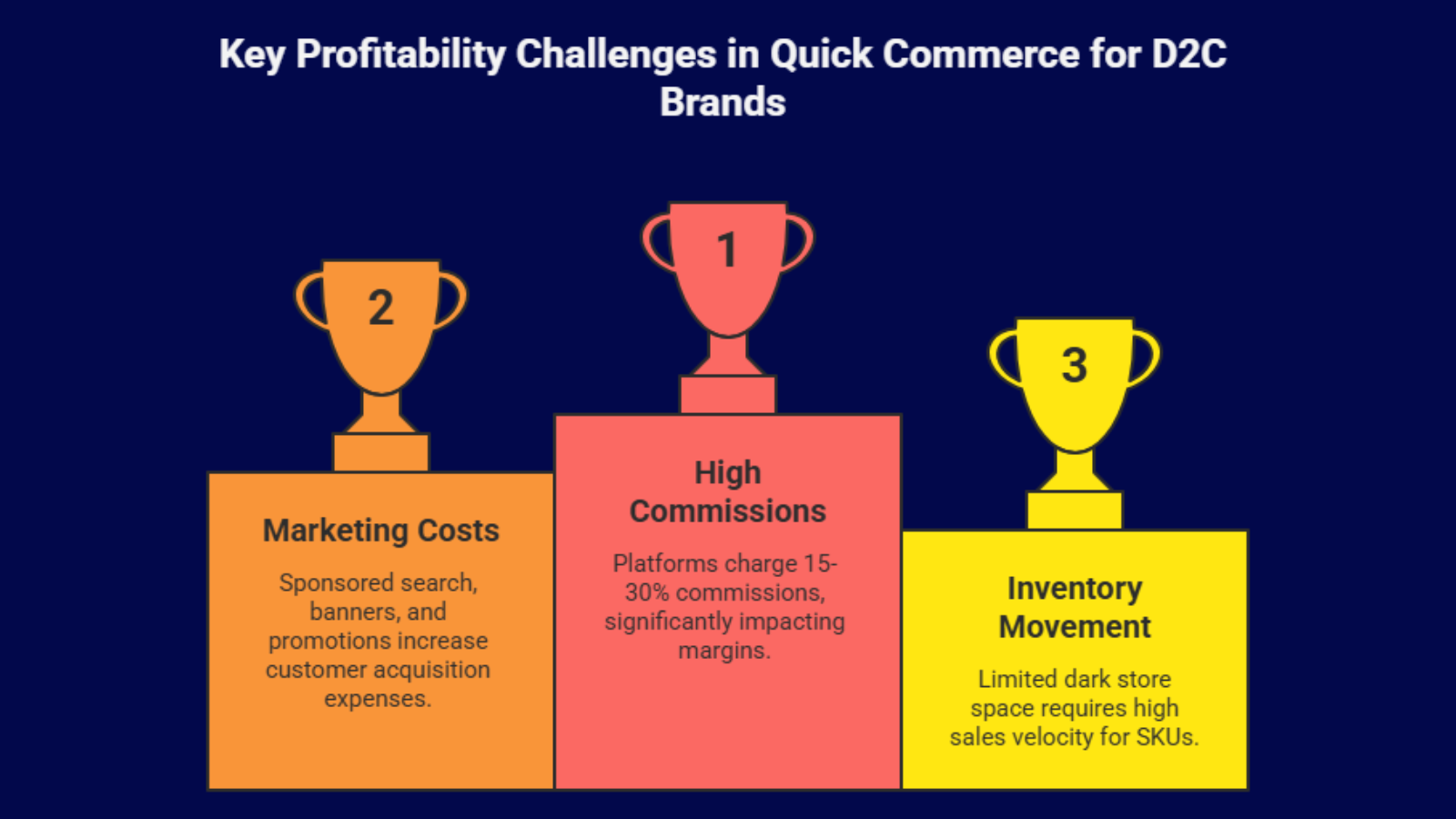
Most platforms charge 15 to 30 percent commissions on product sales. In addition to this, brands often pay for marketing placements such as sponsored search results, homepage banners, and category promotions. These costs increase customer acquisition expenses and reduce margins.
For Indian D2C sellers, profitability often depends on a careful pricing strategy. Brands that succeed in quick commerce usually redesign their SKUs or adjust pricing specifically for this channel. For example, brands may increase MRP slightly while maintaining perceived value through bundle offers or smaller packs.
Another nuance many founders overlook is inventory movement. Quick commerce requires high sales velocity because dark stores have limited space. Slow-moving SKUs can quickly get delisted or deprioritized.
Therefore, brands must run detailed financial modeling before committing to a long-term quick commerce strategy. Without proper planning, quick commerce can increase revenue while reducing overall profitability.
3. Pack Size Optimization
Quick commerce customers typically place smaller orders compared to marketplace purchases. The average order value across many quick commerce platforms in India ranges between ₹350 and ₹700, depending on the city and category.
Because of this, product pack size becomes extremely important. Large packs priced above ₹500 may struggle to convert because they occupy most of the customer’s basket value. In contrast, smaller SKUs priced between ₹99 and ₹299 often perform significantly better.
Many successful brands launch quick commerce-specific SKUs to address this behavior. For example, snack brands often introduce single-serve packs while beverage brands launch smaller bottles designed for impulse purchases.
Bundle strategies also play a role. A combo pack of two products priced at ₹199 may convert better than a single SKU priced at ₹179 because customers perceive higher value.
Pack size optimization, therefore, becomes a critical lever for brands planning D2C quick delivery expansion. Without the right SKU strategy, even strong brands may struggle to generate meaningful sales.
4. Platform Visibility and Discoverability
 Visibility is one of the biggest drivers of success in quick commerce. Unlike traditional ecommerce marketplaces, where consumers browse multiple pages, quick commerce shoppers often select products from the first few search results or category listings.
This means products that appear lower in rankings may receive very little visibility. Platforms, therefore, offer paid promotional placements to improve discoverability.
Brands must factor visibility costs into their quick commerce strategy, especially during the early stages when brand recognition is still developing.
| Factor | What to Consider | Risk | Mitigation | Impact |
|---|---|---|---|---|
| Search ranking | Product position in search results | Low discovery | Sponsored placements | Higher traffic |
| Homepage placement | Featured app sections | High competition | Seasonal campaigns | Brand awareness |
| Category ranking | Placement within category listings | Reduced visibility | Data-driven ads | Higher sales |
Brands that actively invest in visibility during the initial launch phase often build stronger momentum on quick commerce platforms.
5. Inventory and Supply Chain Planning
Quick commerce relies heavily on dark stores, which are small fulfillment centers located close to residential neighborhoods. These stores hold limited inventory and must be replenished frequently.
This creates unique supply chain challenges. Brands must ensure consistent product availability across multiple dark stores while maintaining efficient replenishment cycles.
For Indian D2C sellers, inventory planning becomes particularly complex when expanding across multiple cities. Demand patterns can vary significantly between markets. A product that sells quickly in Bengaluru may move more slowly in Delhi or Mumbai.
To manage this, brands must invest in forecasting tools and supply chain coordination with platform partners. Accurate demand forecasting reduces the risk of stockouts and helps maintain consistent availability.
Inventory reliability also influences platform ranking algorithms. Products that frequently go out of stock may lose visibility within the app. This makes supply chain reliability a critical component of a successful quick commerce strategy.
6. Customer Acquisition and Brand Recall
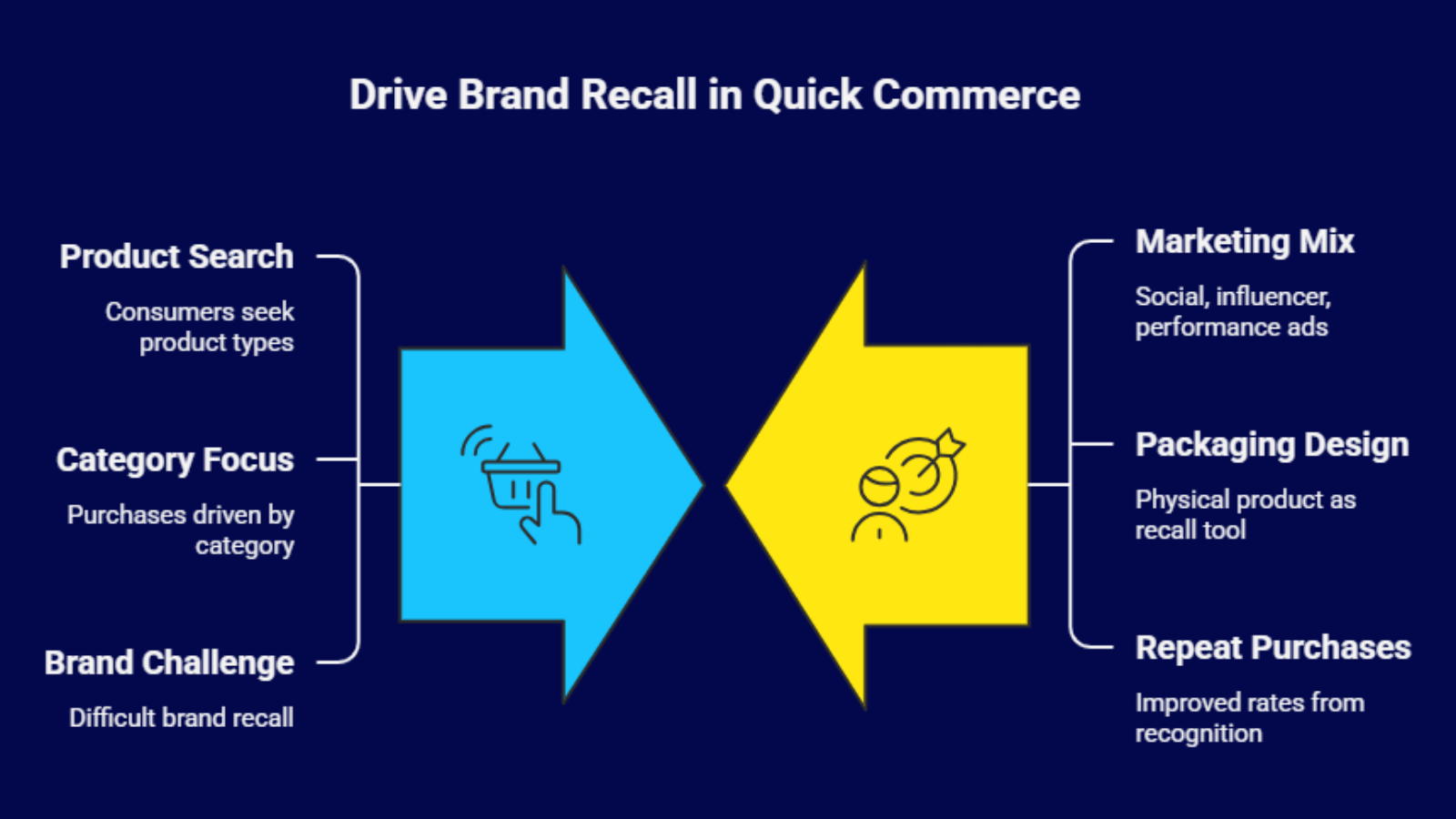 Quick commerce platforms bring significant traffic, but most purchases are category-driven rather than brand-driven. Consumers typically search for a product type instead of a specific brand.
This creates both an opportunity and a challenge for D2C brands. On one hand, quick commerce provides access to high-intent shoppers. On the other hand, building brand recall within the platform can be difficult.
Brands must therefore combine quick commerce with broader marketing strategies. Social media campaigns, influencer collaborations, and performance marketing can help drive brand awareness so customers actively search for the brand inside quick commerce apps.
Packaging also plays an important role. Since the physical product is delivered directly to the customer’s home within minutes, packaging design becomes a powerful brand recall tool.
Over time, brands that successfully build recognition can improve repeat purchase rates and reduce dependence on platform advertising.
7. Competitive Landscape
Competition within quick commerce platforms is intense. Many categories contain multiple similar products competing for the same search results and shelf space.
In addition, platforms are increasingly launching private-label products that compete directly with third-party brands. These private labels often have pricing advantages because the platform controls distribution.
For Indian D2C sellers, differentiation becomes essential.
| Factor | What to Consider | Risk | Mitigation | Impact |
|---|---|---|---|---|
| Category competition | Number of competing brands | Price wars | Unique positioning | Competitive advantage |
| Platform private labels | Platform-owned products | Margin pressure | Product innovation | Brand differentiation |
| SKU saturation | Too many listings | Visibility decline | Focused SKU strategy | Better ranking |
Brands that focus on clear product differentiation and unique value propositions tend to perform better in highly competitive categories.
8. Data and Demand Insights
 One of the biggest advantages of quick commerce platforms is access to real-time demand data. Brands can analyze sales patterns across cities, track high-performing SKUs, and understand consumer purchase behavior.
This information allows brands to refine pricing strategies, improve inventory forecasting, and optimize product assortments.
For example, a beverage brand may discover that certain flavors perform better in specific cities. Similarly, snack brands may identify peak purchase times and adjust promotions accordingly.
Over time, these insights help brands refine their quick commerce strategy and make more informed decisions about expansion.
9. Industry Evolution and Market Growth
India’s quick commerce industry is evolving quickly. Major players are aggressively expanding their dark store networks to increase delivery coverage.
Blinkit, Zepto, and Instamart are investing heavily in infrastructure and technology to improve delivery speeds. At the same time, companies like Flipkart and Amazon are exploring rapid delivery models to compete in this space.
Industry analysts expect quick commerce to become a $100 billion market in India by 2035, making it one of the most important retail channels in the coming decade.
| Trend | Implication | Risk | Mitigation | Impact |
|---|---|---|---|---|
| Dark store expansion | Faster deliveries | Infrastructure cost | Partner networks | Market reach |
| Tier 2 city expansion | New consumer segments | Logistics complexity | Gradual rollout | Growth potential |
| Platform consolidation | Competitive pressure | Vendor dependency | Multi-platform presence | Stability |
Understanding these industry shifts helps brands decide whether D2C brands use quick commerce as part of their long-term growth plan.
10. Long-Term Brand Strategy
Finally, brands must evaluate how quick commerce fits within their broader business strategy. Quick commerce works best as one channel within an omnichannel ecosystem rather than the sole revenue source.
Brands that rely entirely on quick commerce risk losing control over customer relationships and brand storytelling. Platforms own most of the customer data, making it difficult for brands to build direct connections.
For this reason, successful brands usually combine quick commerce with marketplace sales, their own D2C website, and offline retail distribution.
When integrated thoughtfully, quick commerce can become a powerful customer acquisition channel while other channels build long-term loyalty.
Ultimately, the decision on whether D2C brands should use quick commerce depends on product fit, operational readiness, and financial sustainability. Brands that evaluate these ten considerations carefully are more likely to build a successful and scalable quick commerce strategy when entering quick commerce.
How Base Helps Brands Win in Quick Commerce
Scaling on platforms like Zepto, Blinkit, Swiggy Instamart, Flipkart Minutes, Amazon Quick Commerce, and BigBasket BB Now requires more than just listing products. Quick commerce operates on tight inventory cycles, high order velocity, and strict fulfillment timelines.
Brands need operational systems that can handle frequent replenishment, SKU optimization, and real-time performance tracking across multiple platforms.
Base helps brands build the infrastructure needed to run a strong, quick commerce strategy. With Base, brands can manage inventory allocation across dark store networks, ensuring high-velocity SKUs remain in stock in cities where demand is strongest.
The platform also helps brands track product performance across different quick commerce apps, making it easier to identify which SKUs, pack sizes, and price points are driving the most orders.
For brands entering quick commerce, Base simplifies multi-platform operations by centralizing analytics, inventory insights, and demand forecasting. This helps founders answer the critical question of whether D2C brands use quick commerce while building scalable systems for long-term D2C quick delivery growth.
Should D2C Brands Use Quick Commerce?
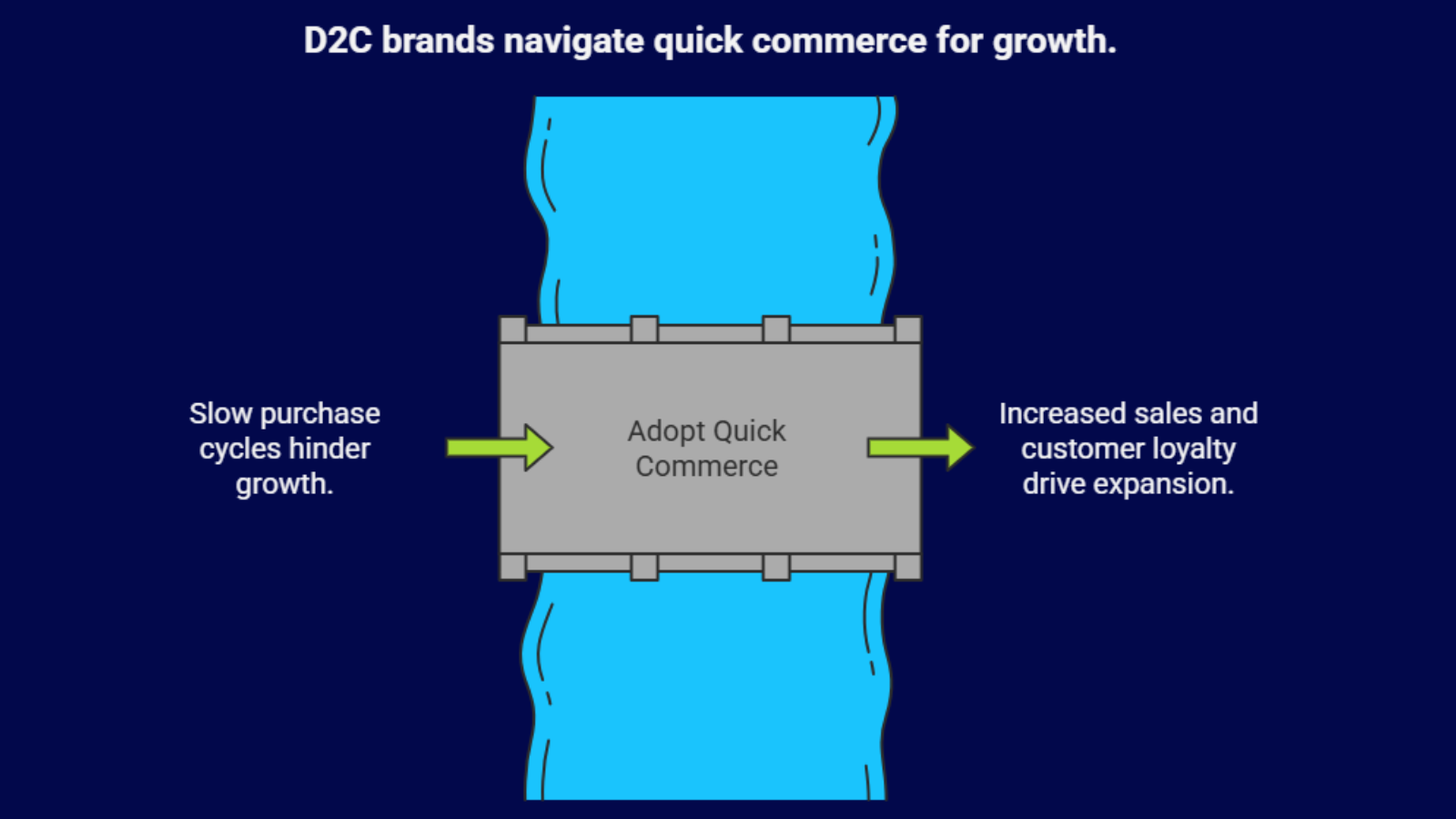 The question of whether D2C brands should use quick commerce depends on product fit, margins, and long-term strategy.
Quick commerce offers three clear advantages:
- Instant consumer access
- Faster purchase cycles
- High-frequency buying behavior
However, it also introduces risks like margin pressure, operational complexity, and platform dependence.
That is why brands should adopt a structured Q-commerce decision framework before entering quick commerce.
For many companies, the right approach is not choosing between e-commerce and quick commerce. Instead, the most successful brands combine both to build a strong, quick commerce strategy.