Every online-first brand starts with a simple idea: sell directly, connect with customers, and grow fast. But once revenue crosses a certain level, cracks begin to show. Customer acquisition costs in India have increased by 25 to 40 percent in the last three years across Meta and Google ads. At the same time, return rates in categories like fashion and beauty range between 20 to 35 percent. This is where many founders start questioning when to move toward omnichannel D2C India.
Here is what most Indian sellers do not fully account for. Nearly 88 to 90 percent of India’s total retail market is still offline, valued at over $900 billion. Yet most D2C founders build for the 10 percent online slice and assume scale will come only from ads.
In reality, brands like Mamaearth and Lenskart saw faster repeat purchases after opening physical stores because customers used stores for trials and exchanges, reducing reverse logistics costs by up to 15 percent. That operational saving alone improves margins.
In tier 2 and tier 3 cities, trust still drives purchase. Offline expansion D2C is not just about visibility. It reduces COD returns, improves average order value through assisted selling, and lowers dependency on paid ads.
Omnichannel D2C India becomes viable when your brand hits consistent monthly demand, strong repeat rates above 30 percent, and stable backend systems. That is the inflection point Indian sellers often overlook.
What Omnichannel Means for a D2C Brand in India
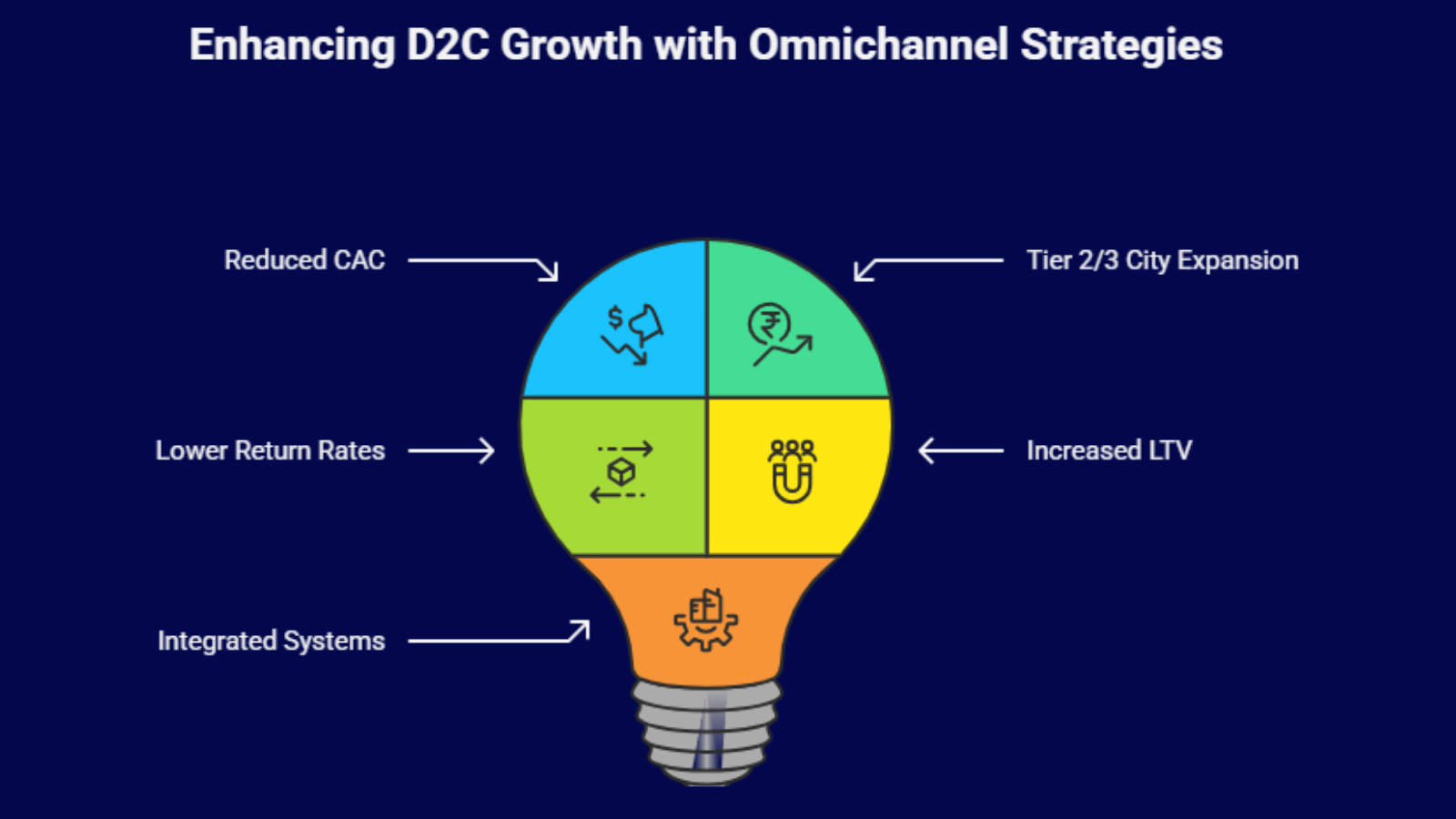 Before expanding, Indian founders need to understand that omnichannel D2C India is not about opening one flagship store in a metro. It is about building connected systems where online and offline sales feed each other.
In India, where nearly 88 to 90 percent of retail still happens offline, the gap between digital discovery and physical purchase is massive. Offline expansion D2C works only when integration is tight, not cosmetic.
Here are five specific signals Indian sellers often overlook:
1. Your CAC Has Increased 30 to 40 Percent in 18 Months
Many Indian D2C brands are now paying ₹800 to ₹1500 per customer in competitive categories like beauty and fashion. If your blended CAC keeps rising while repeat rates stay flat, omnichannel D2C India can reduce dependency on paid ads. Brands like Mamaearth improved offline conversions, which lowered their ad-heavy growth pressure.
2. 30 Percent Plus Orders Come from Tier 2 and Tier 3 Cities
If your backend data shows strong demand from cities like Indore, Lucknow, or Coimbatore, offline expansion D2C can unlock trust-led purchases. In these markets, assisted selling increases AOV by 15 to 20 percent compared to pure online checkouts.
3. Return Rates Are Above 20 Percent
In fashion and footwear, reverse logistics can eat 10 to 12 percent of revenue. Lenskart reduced returns by allowing in-store exchanges and trials. Omnichannel D2C India reduces logistics leakage that most founders ignore.
4. Repeat Purchase Rate Has Crossed 30 Percent
This is a strong signal of brand trust. Offline presence combined with unified loyalty can push LTV up by 20 to 25 percent.
5. Your Inventory and CRM Are Fully Integrated
Without real-time stock sync, offline expansion D2C creates chaos. Successful Indian brands first invested in POS and ERP integration before scaling stores.
For Indian sellers, omnichannel D2C India is not about expansion for valuation optics. It is about margin control, trust building, and operational efficiency. That difference defines success.
How Offline Expansion Complements Digital Growth
 For Indian sellers, offline expansion D2C is not a shift away from digital. It is a way to strengthen digital performance. According to a recent CBRE report, D2C brands leased nearly 6 lakh square feet of retail space in early 2025, increasing their share of retail leasing from 8 percent to 18 percent. This is not a random expansion. It reflects a strategic move where omnichannel D2C India is becoming a margin and growth play, not just a branding exercise.
One insight many Indian founders miss is that physical stores directly improve online conversion rates within a 3 to 5 km radius. Brands like Lenskart have reported that areas with stores see higher online repeat purchases because customers use stores for eye tests and trials, then reorder digitally.
Similarly, Mamaearth expanded into offline retail to increase trust in tier 2 markets, where over 60 percent of beauty purchases still happen in-store. Offline expansion D2C reduced hesitation for first-time buyers and improved assisted selling, which increased average order value by nearly 20 percent compared to online-only baskets.
Another overlooked factor is data quality. Physical stores generate real-time insights on why customers drop off. Store staff can record objections about pricing, packaging, or product fit. This qualitative data improves digital campaigns far more effectively than ad metrics alone. In emerging cities like Surat, Nagpur, and Jaipur, assisted retail often converts 1.5 to 2 times better than self-checkout ecommerce for premium categories.
For omnichannel D2C India, the biggest advantage is operational. Stores reduce reverse logistics costs by enabling exchanges instead of returns. With return rates in fashion hovering around 25 percent online, offline exchange models can protect margins significantly.
For Indian sellers, offline expansion D2C is not about visibility alone. It is about improving digital efficiency, increasing lifetime value, and reducing cost leakages across the business.
Steps to a Successful Omnichannel Transition for Indian D2C Brands
Once the signals are clear, the move toward omnichannel D2C India must be structured. Many Indian founders rush into offline expansion D2C because competitors are opening stores. But store count does not equal success. Integration does.
1. Align Your Operating Systems Before You Sign a Lease
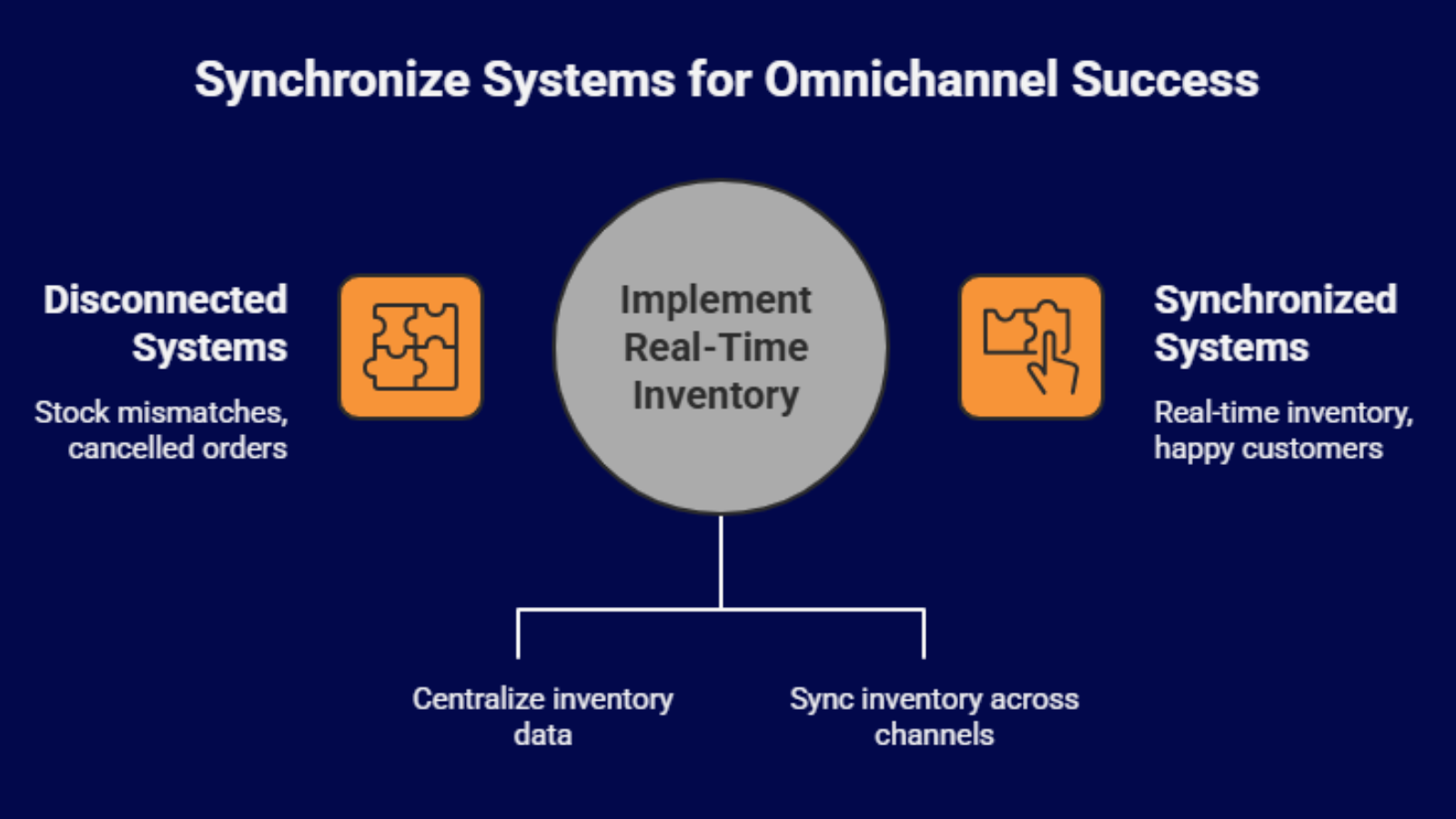 This is where most Indian brands fail. Inventory across the warehouse, website, marketplaces, and store must sync in real time. Nearly 30 to 35 percent of early offline pilots in India struggle with stock mismatches because POS and e-commerce systems are disconnected. That leads to cancelled orders and poor store experiences.
Brands like Lenskart invested heavily in ERP and real-time inventory tech before scaling to 1,000-plus stores. The lesson is simple: omnichannel D2C India begins with backend discipline, not storefront design.
2. Choose the Right Offline Model Based on Unit Economics
Not every brand needs a 1,500 sq ft flagship store in a metro mall. In India, kiosk formats of 200 to 400 sq ft often break even faster due to lower rentals. Pop-ups in high footfall malls during festive seasons can generate 1.5 to 2 times daily online sales in just a few weeks.
Offline expansion D2C should start with controlled pilots in high-density pin codes where online demand already exists. Use your order heat map before finalizing the location.
3. Train Store Staff to Close Like Your Best Online Funnel
Indian sellers underestimate assisted selling. In tier 2 cities, trained staff can increase average order value by 15 to 25 percent compared to self-checkout online purchases.
Nykaa’s beauty advisors, for example, drive cross-sell by recommending bundles, something algorithms alone cannot always achieve.
4. Integrate Customer Data Across Channels
A common mistake in omnichannel D2C India is running separate loyalty systems. Unified profiles allow targeted SMS or WhatsApp campaigns after store visits.
Brands that track mixed-channel journeys often see 20 percent higher repeat purchase rates because customers feel recognized everywhere.
5. Measure the Right KPIs, Not Just Footfall
 Indian founders often celebrate store footfall but ignore cross-channel lift. Track:
- Store-driven online sales within a 5 km radius
- Reduction in return rates due to in-store exchanges
- Channel-agnostic lifetime value
For example, fashion brands that enable store exchanges reduce reverse logistics costs by up to 10 percent of revenue. That margin recovery funds further expansion.
Omnichannel D2C India works when offline expansion D2C improves digital efficiency, not just visibility. The brands that win are the ones that treat stores as performance channels, not vanity assets.
Challenges, Real Risks, and When Indian D2C Brands Should Not Expand Offline
Moving toward omnichannel D2C India sounds exciting, but for Indian D2C brands, the real challenge begins after the first store opens. Many founders believe opening a store is a growth milestone. In reality, it is an operational test. If the backend is not strong, offline expansion D2C can expose weaknesses very quickly.
The biggest issue is inventory complexity. Adding a POS system alone does not solve the problem. If warehouse stock, marketplace listings, and store inventory are not synced in real time, overselling and stock-outs become common. In India, early offline pilots have reported stock inaccuracies of up to 15 to 20 percent within the first quarter due to poor system integration.
 This leads to cancelled orders, refund delays, and negative store experiences. Several Indian fashion D2C brands that expanded rapidly post-2021 had to shut underperforming stores because their ERP and demand forecasting systems were not built for omnichannel scale. Omnichannel D2C India demands real-time inventory visibility across all sales channels.
The second hurdle is capital pressure. Mall rentals in metro cities range from ₹250 to ₹600 per square foot per month. Add store interiors, staffing, utilities, and inventory holding costs, and break-even can take 18 to 24 months. Many Indian D2C founders underestimate how much working capital gets locked in physical inventory. Offline expansion D2C is not just about store setup. It is about sustaining fixed operational expenses every single month. Brands that succeeded often started with kiosks, pop-ups, or shop-in-shop models to reduce risk before committing to large-format stores.
The third challenge is people’s capability. Online teams focus on ROAS and CAC, while offline retail requires conversion per square foot, assisted selling skills, and in-store upselling. Without proper training, stores become expensive branding exercises. Indian beauty and eyewear D2C brands that invested in advisor training reported 15 to 25 percent higher average order values in-store compared to online checkouts.
At the same time, not every D2C brand should expand. If repeat purchase rates are below 20 percent, if CAC is volatile, or if your tech stack cannot unify customer data, staying digital is smarter. Omnichannel D2C India works best when systems, cash flow, and customer loyalty are already stable. Strengthening fundamentals first often makes offline expansion D2C far more profitable later.
Final Thoughts
Knowing when a D2C brand should move toward omnichannel D2C India is not about following trends or copying competitors. It is about reading your own numbers carefully. When customer acquisition costs are rising, repeat purchase rates are strong, and demand is coming from cities where trust still drives buying decisions, that is your signal. Offline expansion D2C should solve a real business problem, such as high return rates, low assisted selling, or overdependence on paid ads.
In India, where nearly 90 percent of retail still happens offline, ignoring physical presence can limit long-term scale. But expansion must be structured. Inventory should sync in real time. Customer data should flow across channels. Store staff should close sales with the same clarity as your best-performing landing page. Omnichannel D2C India works only when systems, people, and data are aligned.
This is where execution becomes critical. At Base.com, we help D2C brands design backend systems, channel strategies, and operational roadmaps that make offline expansion d2c profitable, not risky. From unified commerce setup to location intelligence and performance tracking, we ensure your omnichannel move is backed by data, not guesswork. If you are planning the next stage of growth, now is the time to build it right.
Frequently Asked Questions
1. What is omnichannel D2C India, and why does it matter?
Omnichannel D2C India means integrating e-commerce, marketplaces, and physical stores into one connected system. It matters because Indian consumers research online but often purchase offline, especially in tier 2 and tier 3 cities. Brands that integrate both channels see stronger trust, higher repeat purchases, and better lifetime value.
2. When should a brand consider offline expansion D2C?
A D2C brand should consider offline expansion d2c when repeat purchase rates cross 25 to 30 percent, CAC becomes unstable, and backend systems are integrated. It is also a strong signal when demand clusters appear in specific cities, indicating offline stores can unlock additional conversions and reduce return rates.
3. Does offline expansion always improve sales?
Offline expansion D2C improves sales only when supported by strong demand and operational readiness. If inventory systems are disconnected or footfall is not driven strategically, stores can increase costs without improving margins. Success depends on location intelligence, assisted selling, and cross-channel tracking.
4. What’s the first step in going omnichannel?
The first step in omnichannel D2C India is backend integration. Inventory, CRM, and POS systems must sync in real time. Without this, customers face stock issues and inconsistent experiences. Technology alignment should happen before signing store leases or investing in retail interiors.
5. How do Indian D2C brands benefit from omnichannel?
Indian D2C brands benefit through higher average order value, reduced reverse logistics costs, improved customer trust, and better market insights. Offline presence strengthens digital conversions within nearby areas and lowers dependence on paid ads, making growth more sustainable and profitable long-term.