base.blogQuick commercePage 2

TagQuick commerce

Target Plus Isn’t Like Other Marketplaces. Here’s How to Actually Succeed.

T
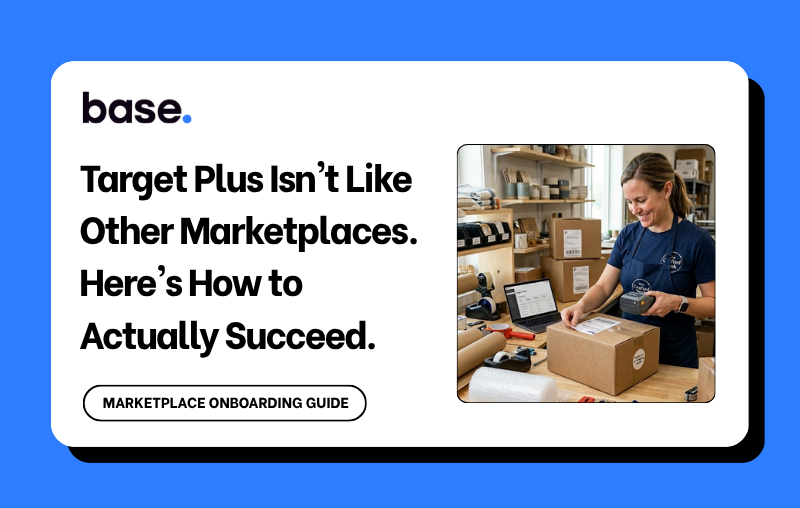
seller packing and fulfilling orders for Target Plus marketplace

  Target Plus is not like other marketplaces. You cannot sign up and start selling. There is no self-serve integration or onboarding. Target hand-selects the brands it works with, and the product data requirements are stricter than anything you will encounter on Amazon or Walmart. That exclusivity is exactly what makes it valuable. For the right brand in the right category, Target Plus is...
Hyperlocal Demand Analytics: Using Location Data to Win at Quick Commerce and D2C

H
hyperlocal analytics quick commerce illustration with location pin and data dashboard

Quick commerce works on speed, but the real engine behind it is location data. Most platforms promise delivery in 10 to 20 minutes, which means products must already sit inside dark stores within a 2 to 3-kilometer radius of customers. Because of this, city-level demand signals are almost useless. What matters is demand at the neighborhood level. A chocolate brand might sell 400 units a week in...

How to Personalize Quick Commerce Without Enough Data: A D2C Tech Guide

H
how to personalize quick commerce without enough data illustration with mobile shopping concept

Quick commerce has changed how people shop. Customers now expect groceries, snacks, medicines, and daily essentials within minutes. But this speed creates a real challenge. Brands and platforms often do not have enough customer data before they need to make recommendations. That is where practical personalization becomes important. Instead of waiting for large datasets, companies use behavioral...

Quick Commerce Marketing for D2C: How to Capture Customers at the Moment of Need

Q
quick commerce marketing for d2c illustration with mobile shopping and instant purchase concept

Quick commerce has fundamentally changed how Indian consumers buy everyday products. Earlier, customers planned weekly grocery trips or placed scheduled ecommerce orders. Today, purchases happen at the exact moment a need appears. If someone runs out of milk, cooking oil, diapers, or batteries, they expect delivery in 10–20 minutes through apps like Blinkit, Zepto, or Swiggy Instamart. This shift...

Quick Commerce vs eCommerce: Why Basket Sizes Are Smaller (And How to Fix That for D2C Brands)

Q
how d2c brands price quick commerce orders with ecommerce app and pricing strategy concept

Quick delivery has quietly reshaped how Indian consumers shop online. Platforms like Blinkit, Zepto, and Instamart have trained customers to expect essentials within 10 to 20 minutes. This convenience has fueled massive adoption. India’s quick commerce market crossed $3.3 billion in 2024 and is projected to reach nearly $10 billion by 2029, driven largely by urban millennials and Gen Z shoppers...

How to D2C Brands Should Price Quick Commerce Orders: Delivery Fees, MOVs & Margins

H
how d2c brands should price quick commerce orders illustration with ecommerce app and pricing concept

Quick commerce has reshaped how urban consumers in India buy everyday products. Platforms like Blinkit, Zepto, and Instamart now promise deliveries in 10–20 minutes, and this model is growing rapidly. According to RedSeer, India’s quick commerce market crossed $3 billion in 2024 and is expected to reach $9–10 billion by 2027. For sellers, this creates demand but also introduces complex pricing...

Top 10 D2C Brands Leveraging Quick-Commerce To Scale Like an Enterprise

T
top d2c brands leveraging quick commerce illustration with mobile shopping and instant delivery concept

The way people shop in India has changed dramatically over the past few years, especially in urban markets where speed and convenience now drive purchasing decisions. Customers who once waited two to three days for deliveries now expect groceries, snacks, and daily essentials within minutes. This behavioral shift has created massive opportunities for D2C Brands Leveraging Quick-Commerce in India...

Quick Commerce Tech Stack: Order Management System to run 30-Minute Delivery

Q
quick commerce tech stack illustration with delivery rider and 30 minute fulfillment concept

Quick commerce has completely changed how customers shop for daily essentials in India. Platforms like Blinkit, Zepto, and Swiggy Instamart have trained customers to expect groceries, medicines, and small electronics within 10 to 30 minutes. According to RedSeer, India’s quick commerce market is expected to cross $5.5 billion by 2025, growing at over 40 percent annually. For D2C sellers, this...

Last-Mile Delivery in Quick Commerce: Why It’s So Expensive (And How to Fix It)

L
last mile delivery in quick commerce illustration with delivery truck and rapid logistics concept

Quick commerce has changed how people shop in India. Today, customers expect groceries, personal care products, and medicines to arrive within 10 to 20 minutes. Platforms like Blinkit, Zepto, and Swiggy Instamart have built their promise around this speed. But behind this convenience lies one of the biggest operational challenges for brands: last mile delivery in quick commerce. For Indian...

Demand Forecasting for Quick Commerce: Real-Time Planning That Actually Works for D2C

D
demand forecasting for quick commerce illustration with analytics dashboard and growth chart

Quick commerce has fundamentally changed how customers buy everyday products in India. Platforms like Blinkit, Zepto, and Instamart promise delivery in 10–20 minutes, which means inventory must already be available in nearby dark stores before a customer even places an order. For D2C brands selling through these platforms, this creates a very different operational reality. If a product goes out...

Time of publication
Category
Tags